Selection guide
How to Choose Heat Shrink Processing Equipment
Choose heat shrink equipment by sleeve material, recovered dimensions, adhesive requirement, harness geometry, heating method, takt time and validation plan.
Read engineering guide →Heat shrink machines for wire harness production — hot-air stations, infrared shrink ovens and conveyor tunnels and tube cutting-and-inserting lines. Twenty machines cover sleeve from Ø1.5 to Ø50 mm and harness sections up to Ø100 mm, from operator-paced bench stations to 2,000 pcs/h tunnel flow. This category is for insulation and identification sleeve on wire — not pallet or food shrink-wrap. Send 2–3 meters of your tube and wire and we prove the machine on video before you order.
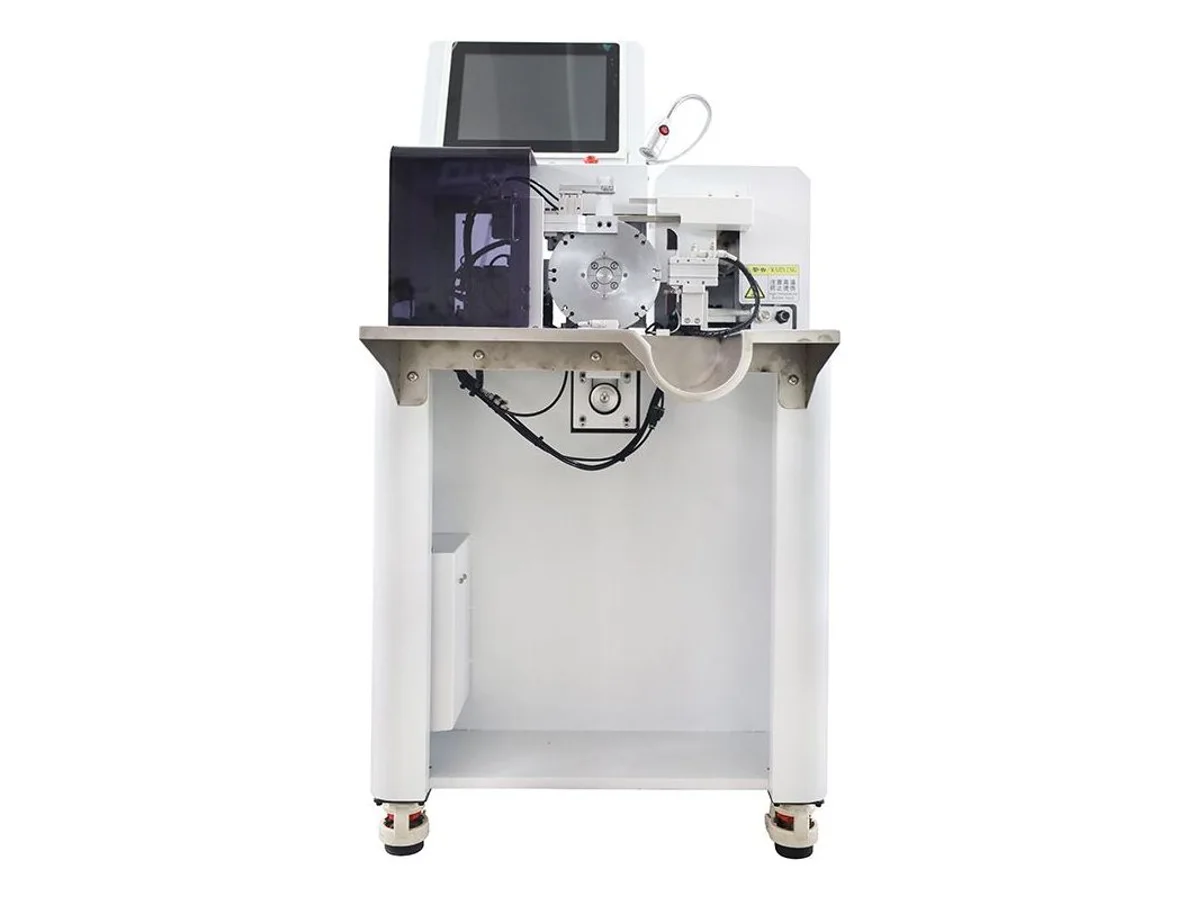
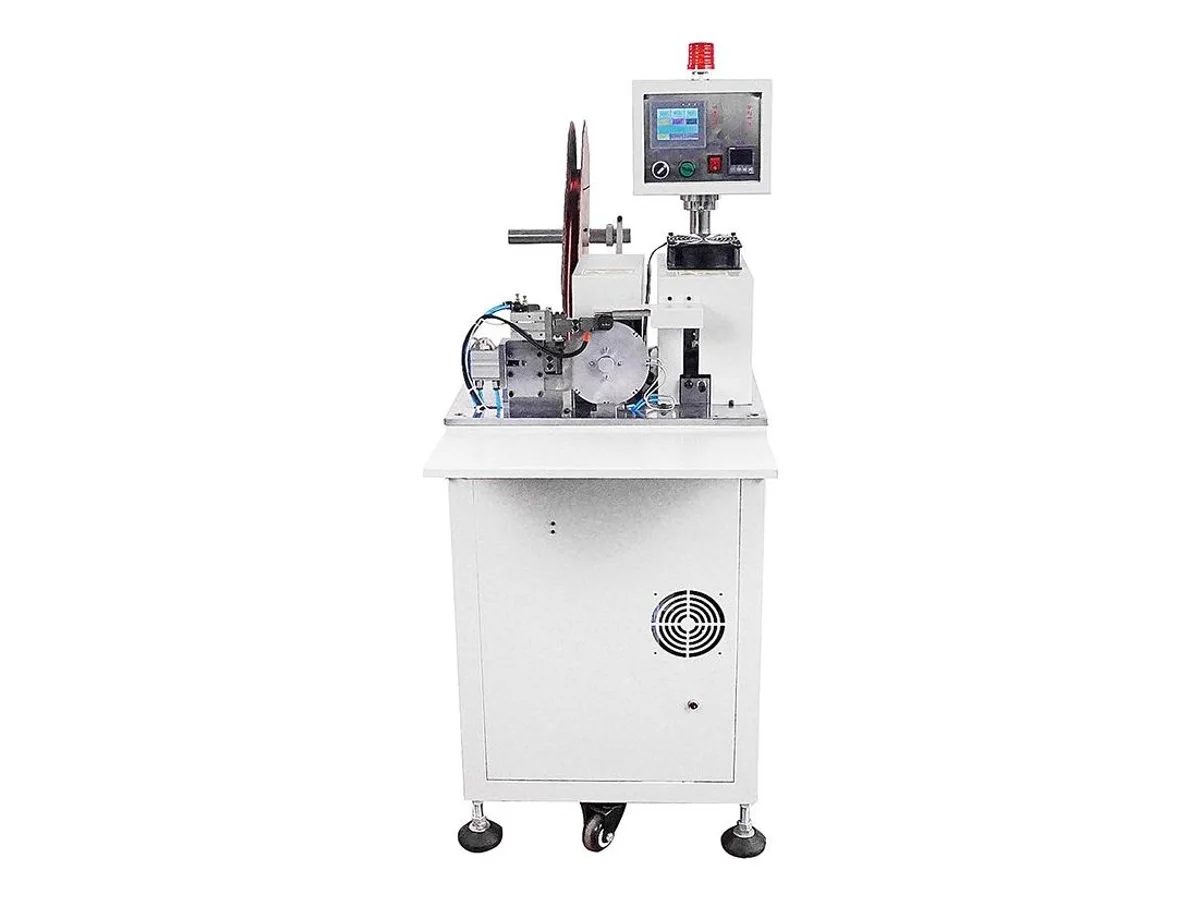
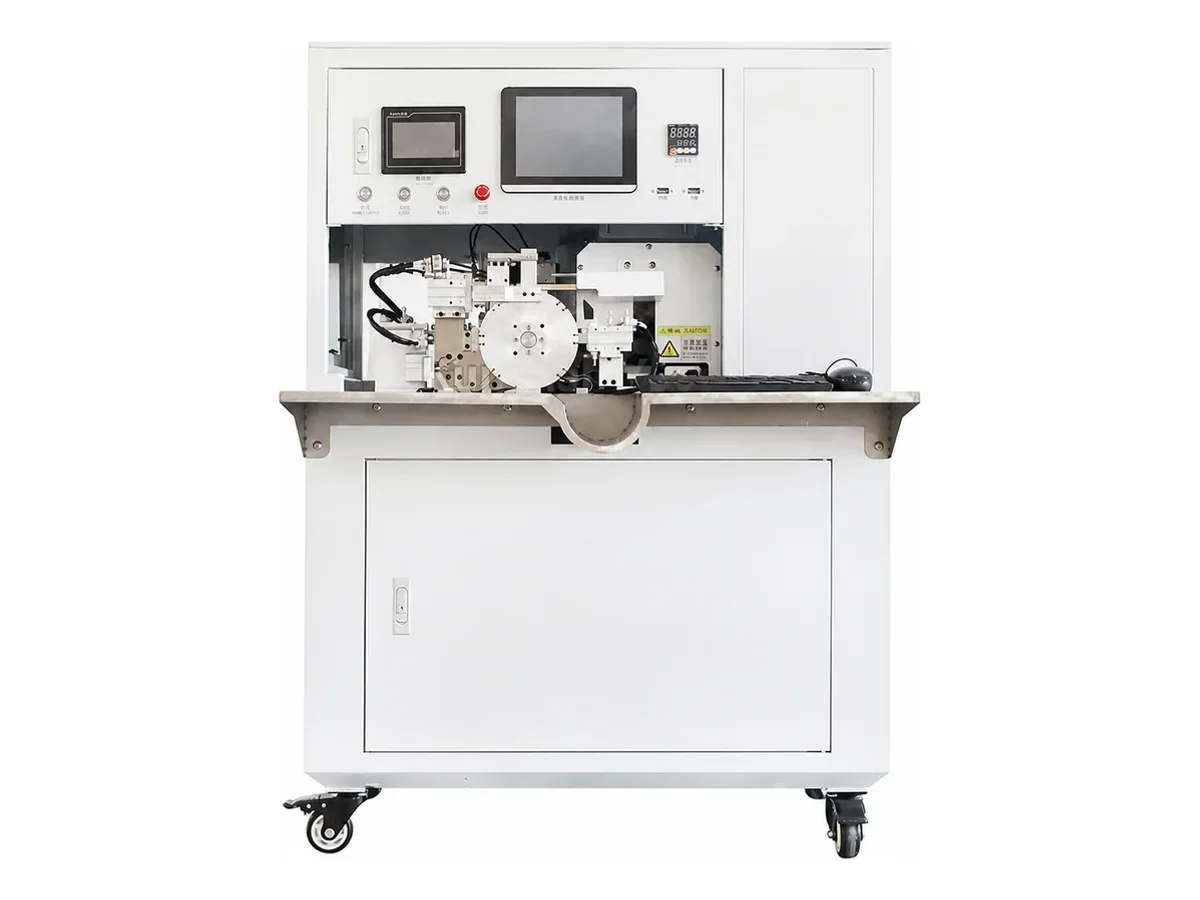
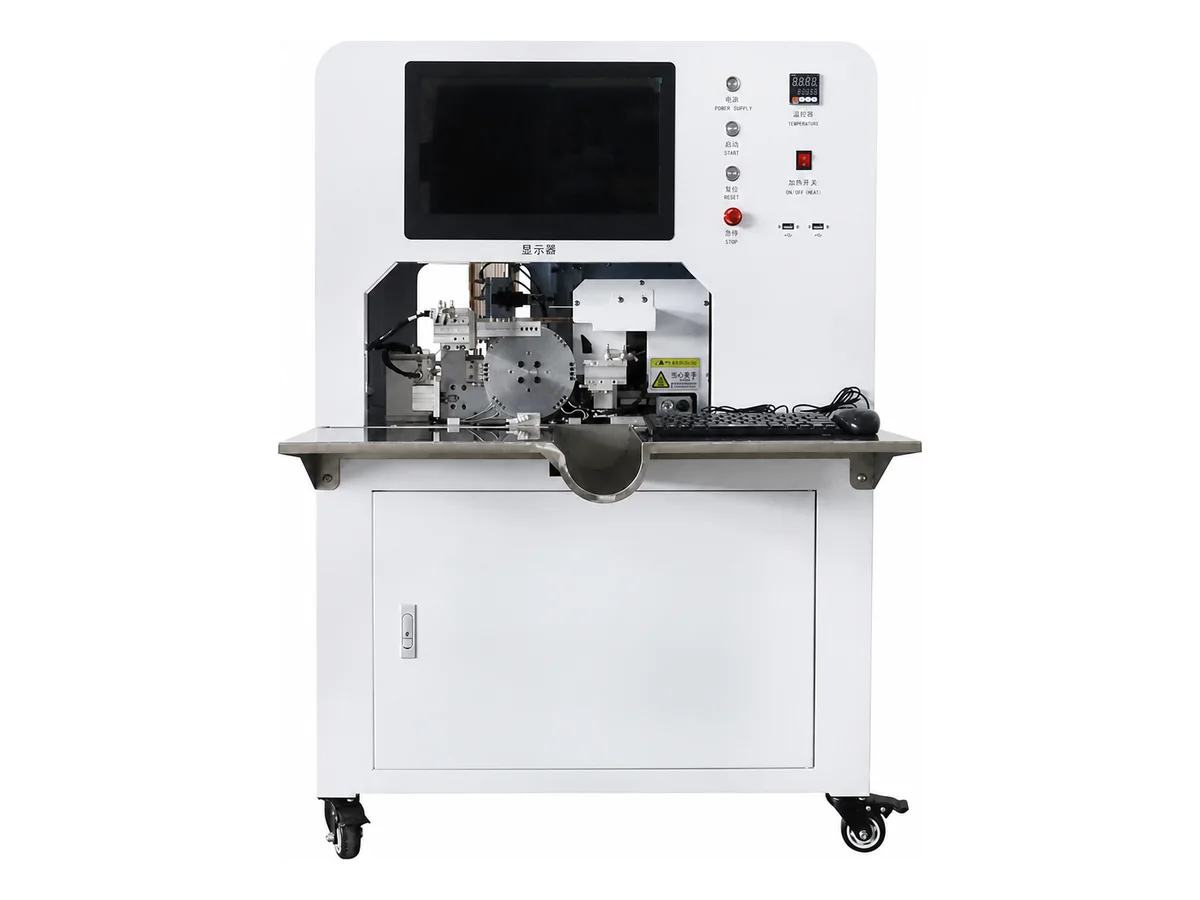
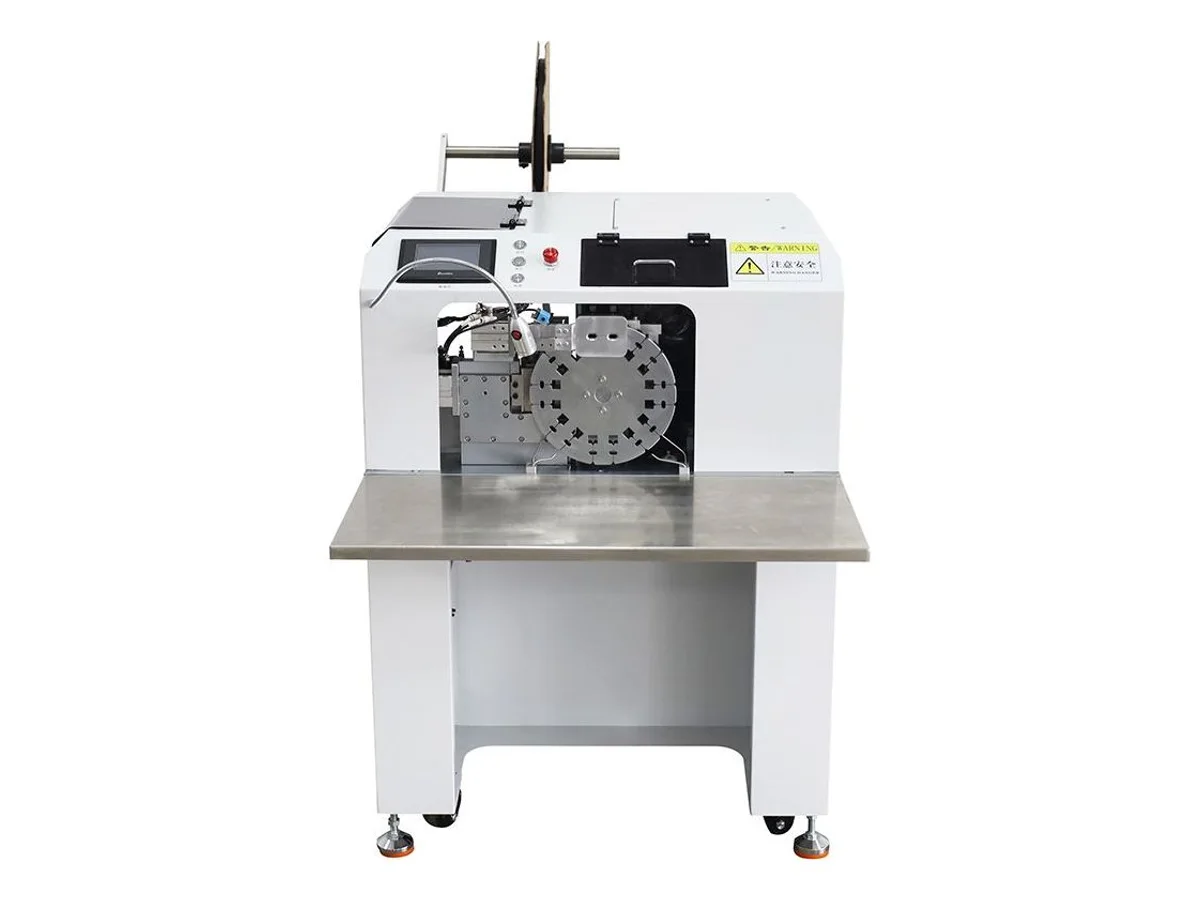
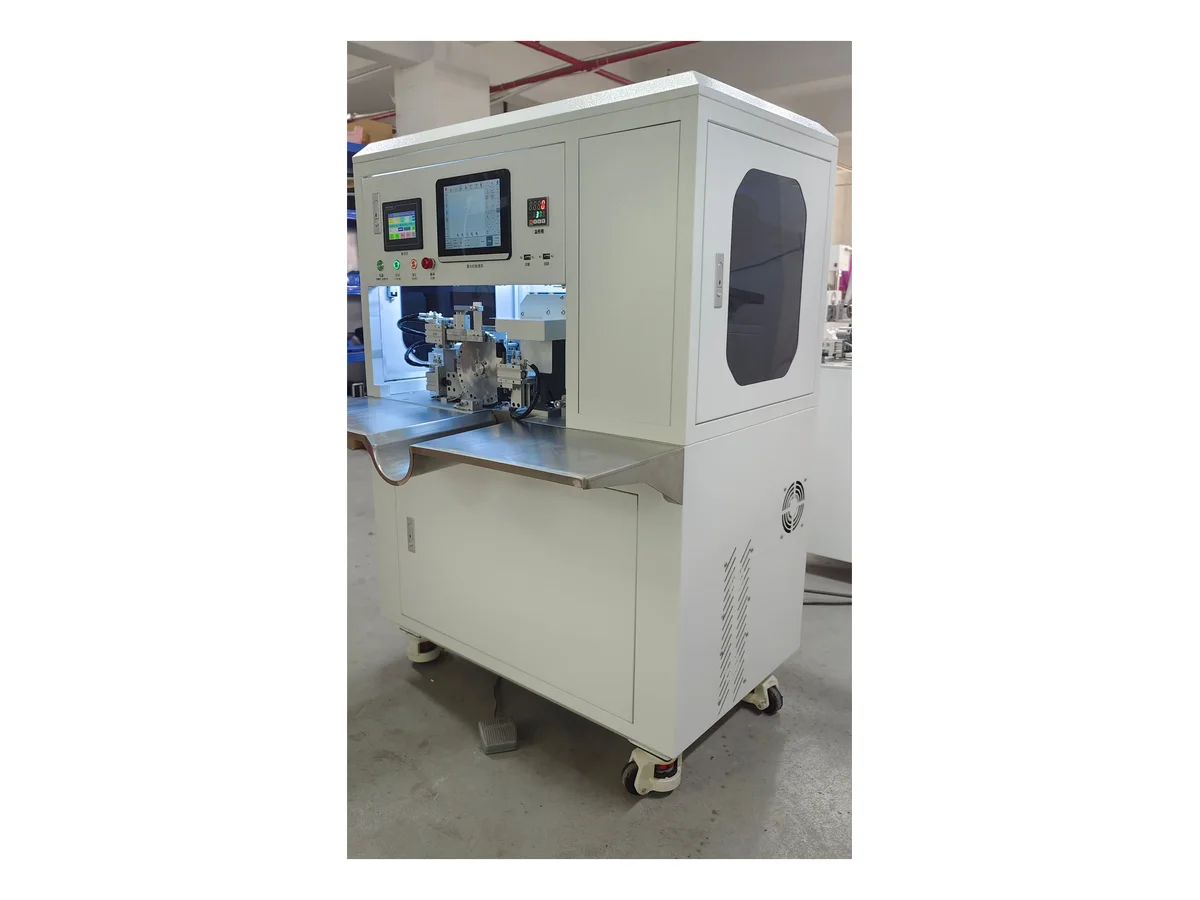
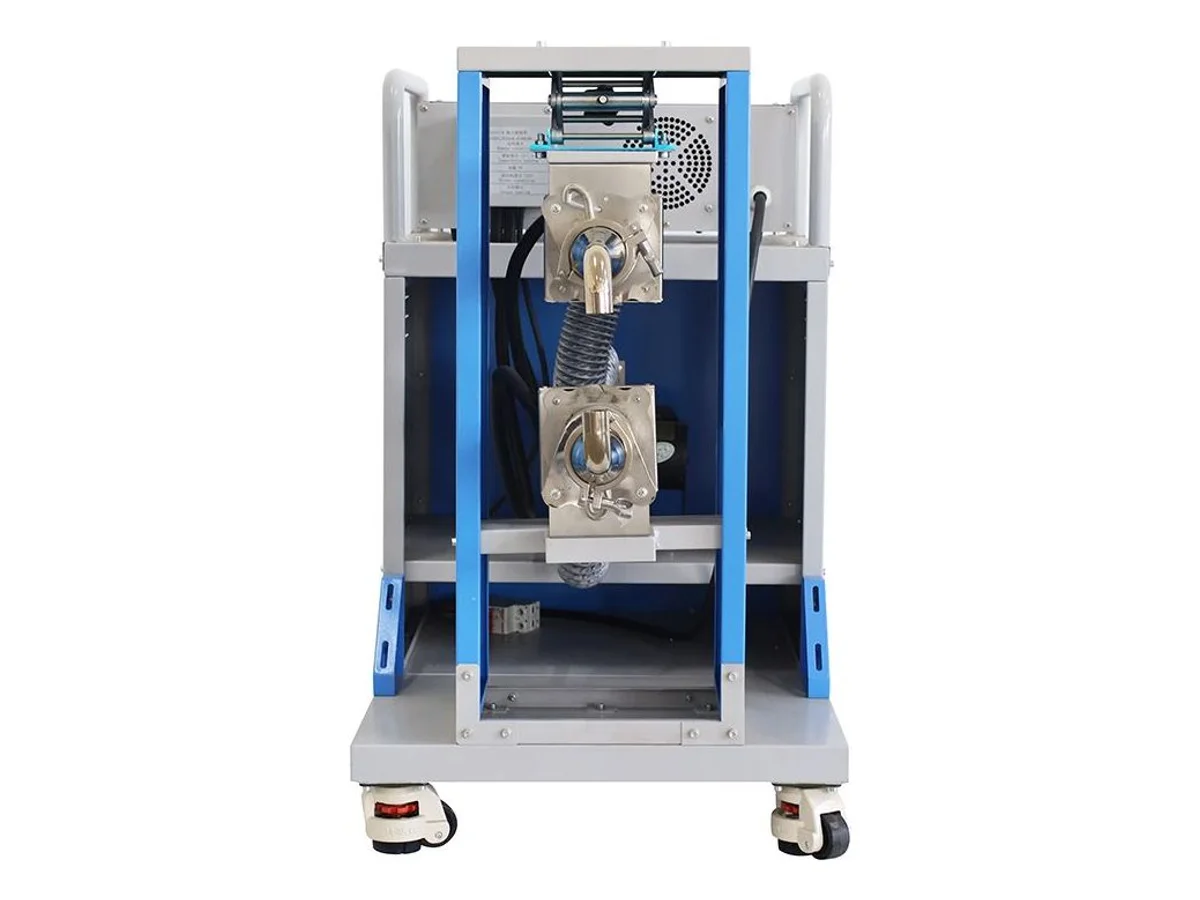
Start by separating tube preparation from heating. If the sleeve is already on the part, you only need heat — a hot-air station, an infrared oven or a conveyor tunnel from the table below. If the tube is still on a reel and has to be cut, slid onto the wire and then shrunk, that is the inserting family: the WM-663 runs Ø2–8 mm sleeve at 800–2,500 pcs/h, the WM-675 covers Ø7–16 mm with sealed ends, and the WM-669 and the WM-671JG add per-piece marking in the same pass. If the sleeve must carry printed identification, the WM-672 prints number tube on up to six channels at 8,000–12,000 pcs/h, and the WM-665JG cuts and laser-marks it.
Cutting sleeves to length only? Compare the WM-565N heat shrink tube cutter and WM-585 pneumatic tube cutter. These prepare lengths for later assembly; choose insertion or heating equipment separately when those operations are required.
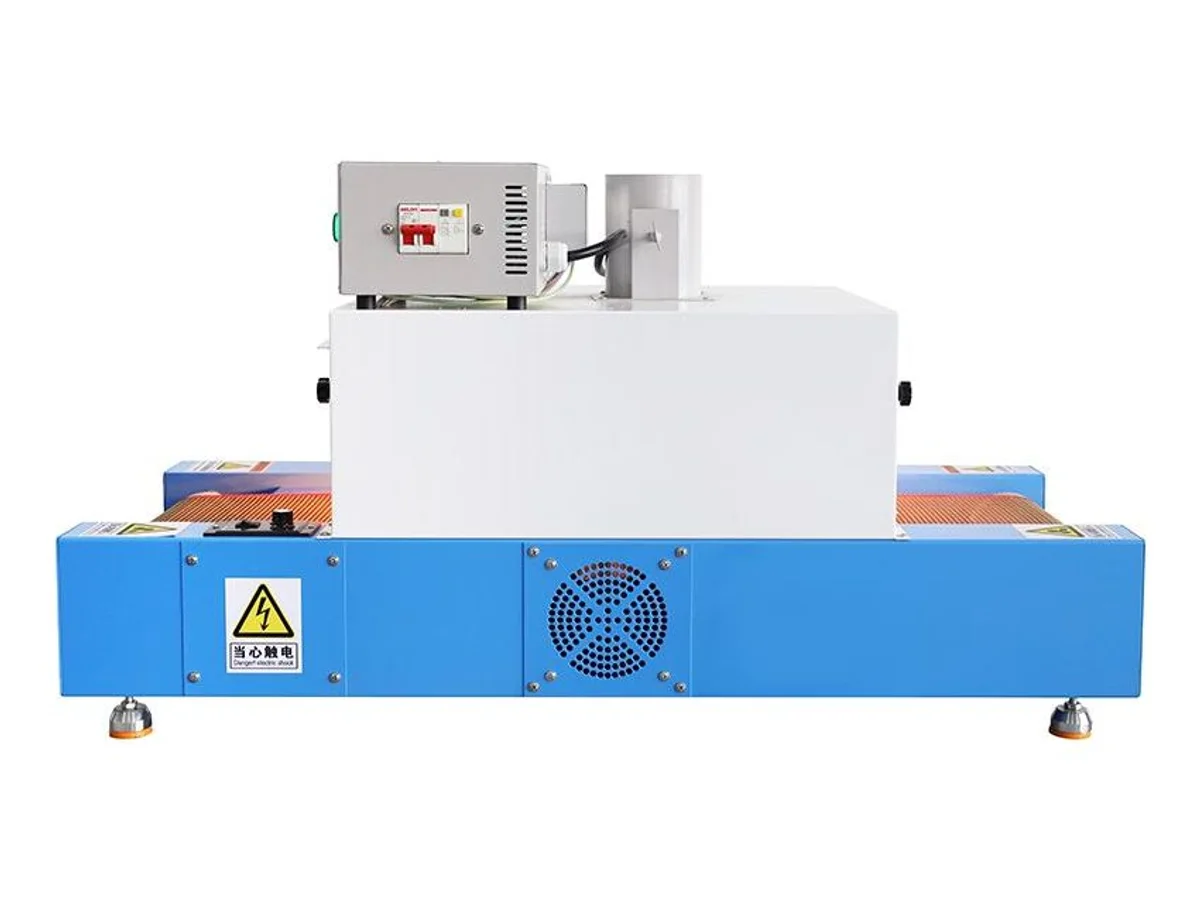
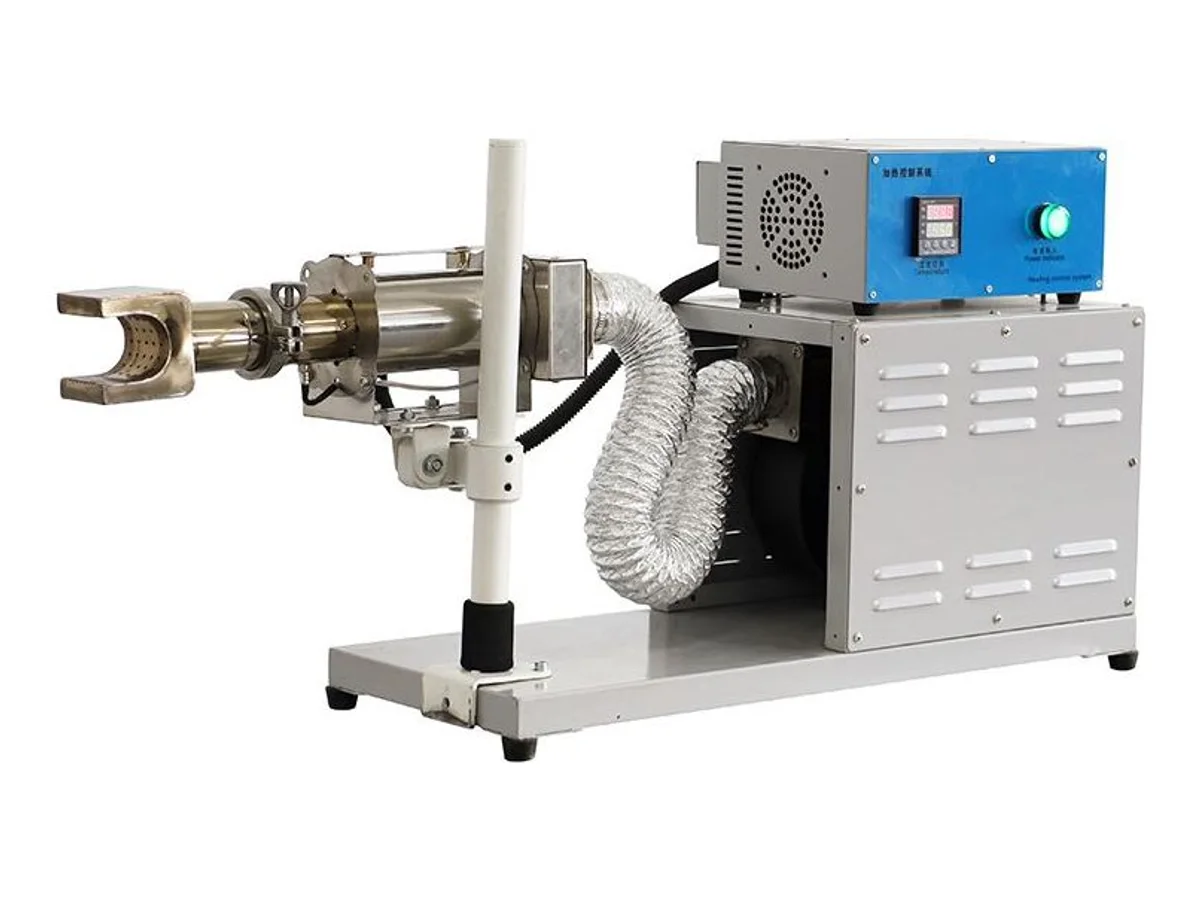
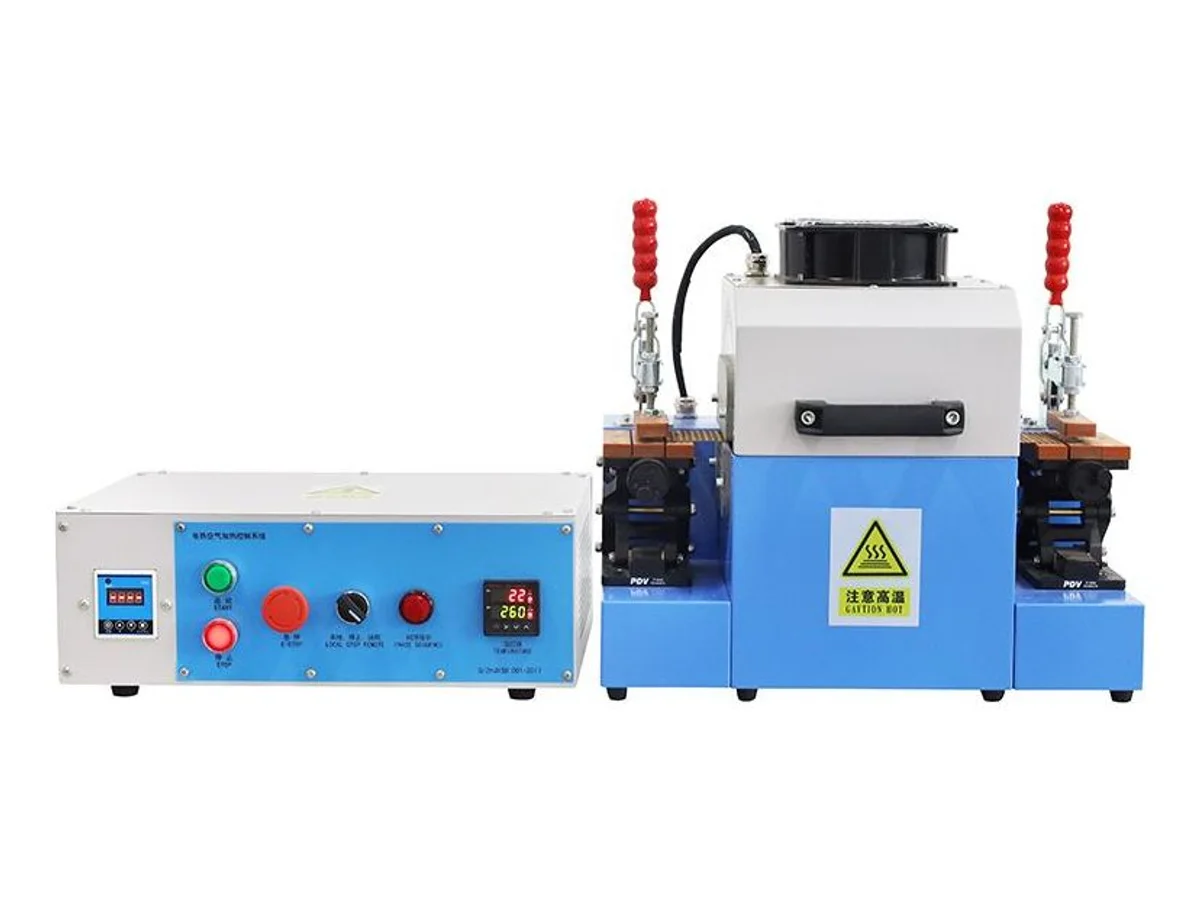
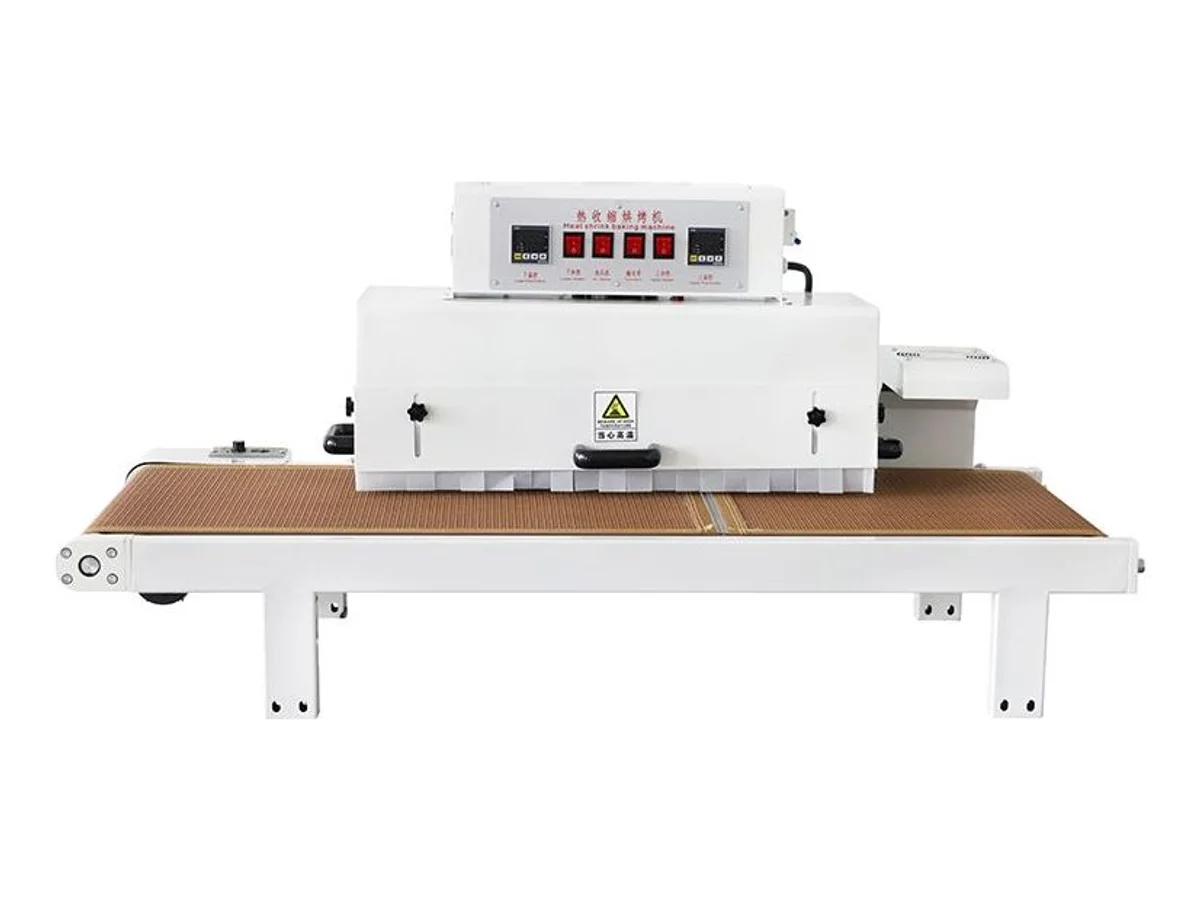
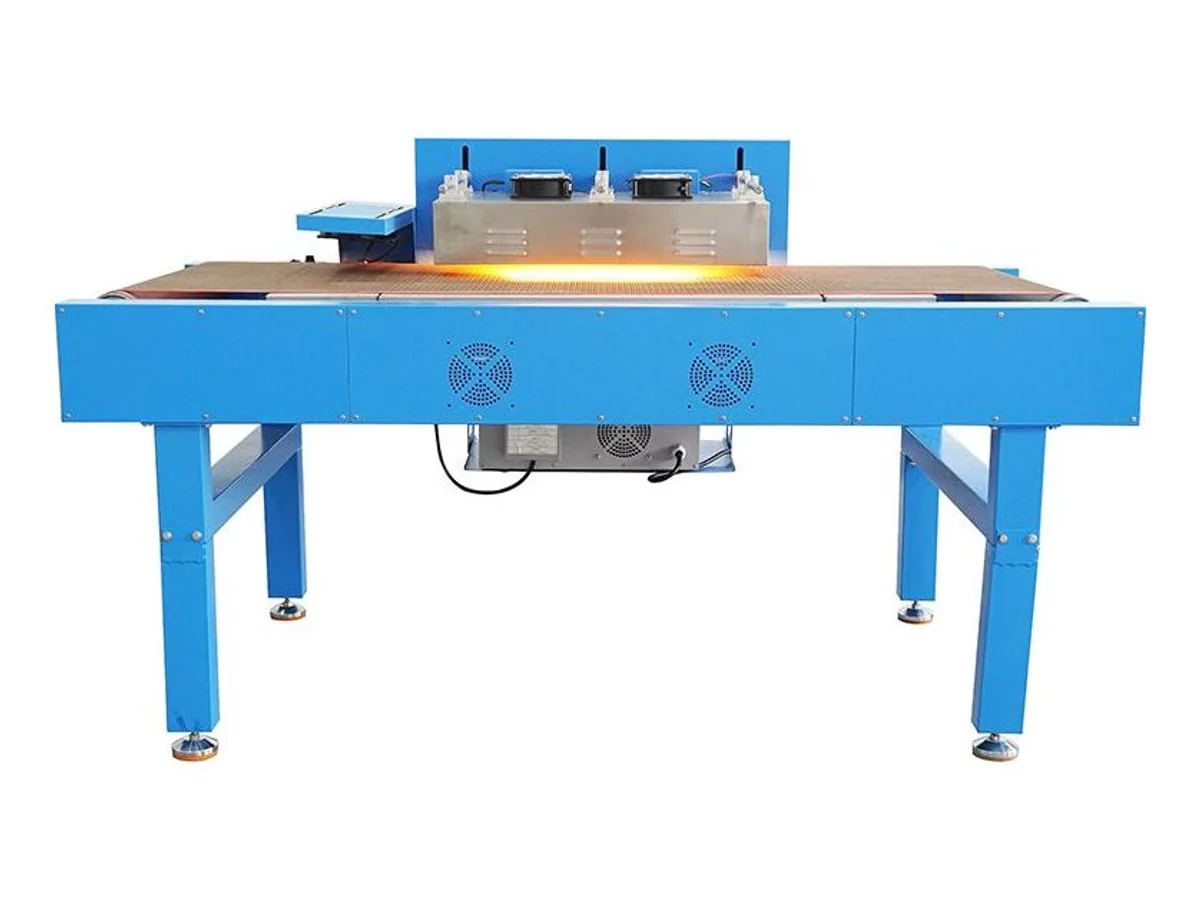
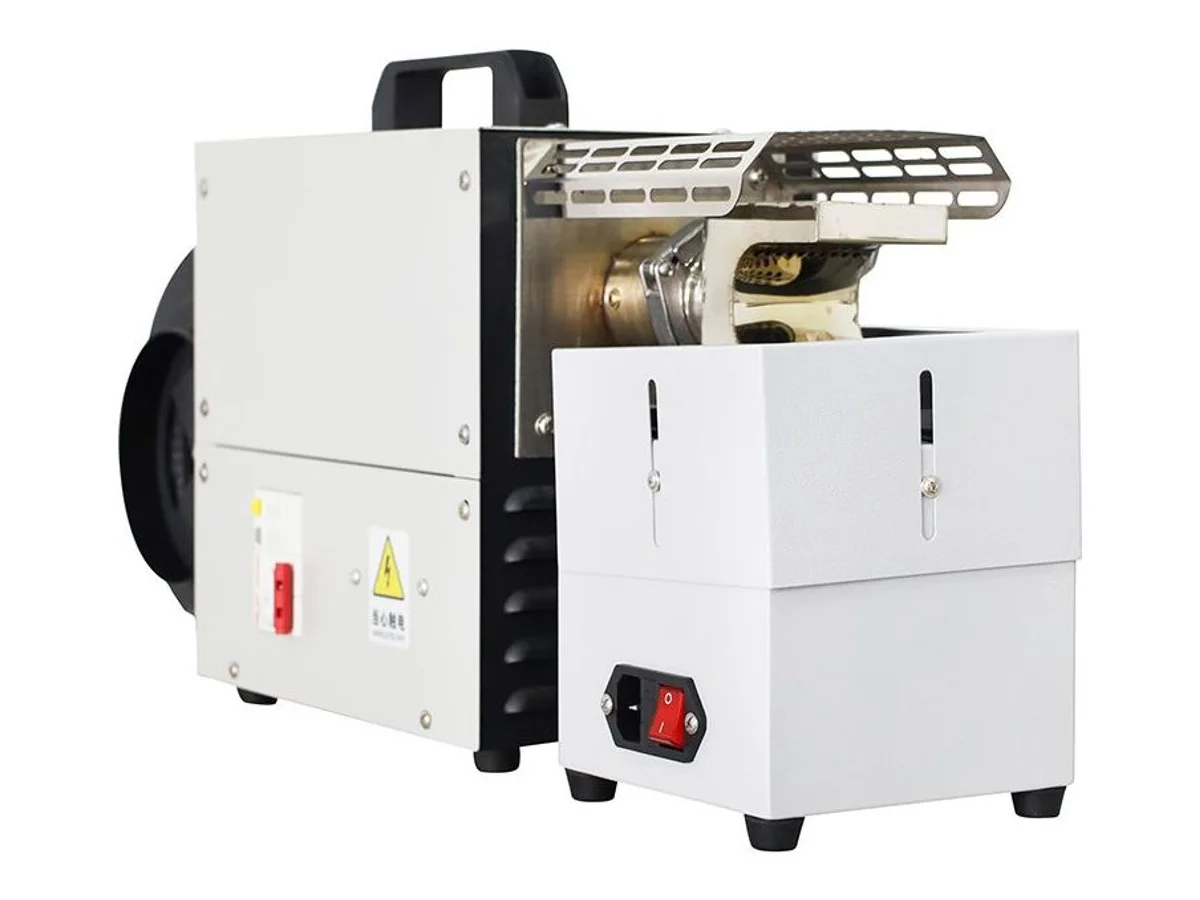
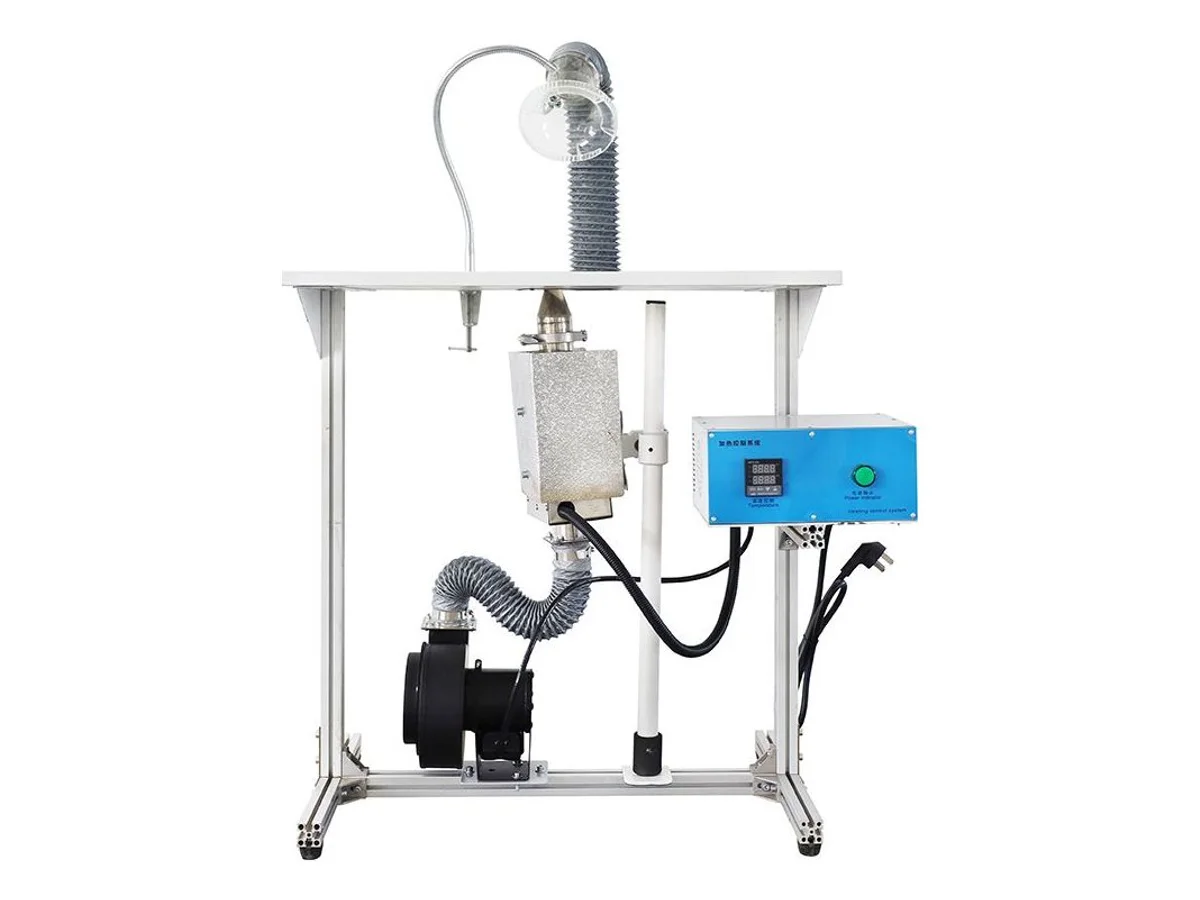
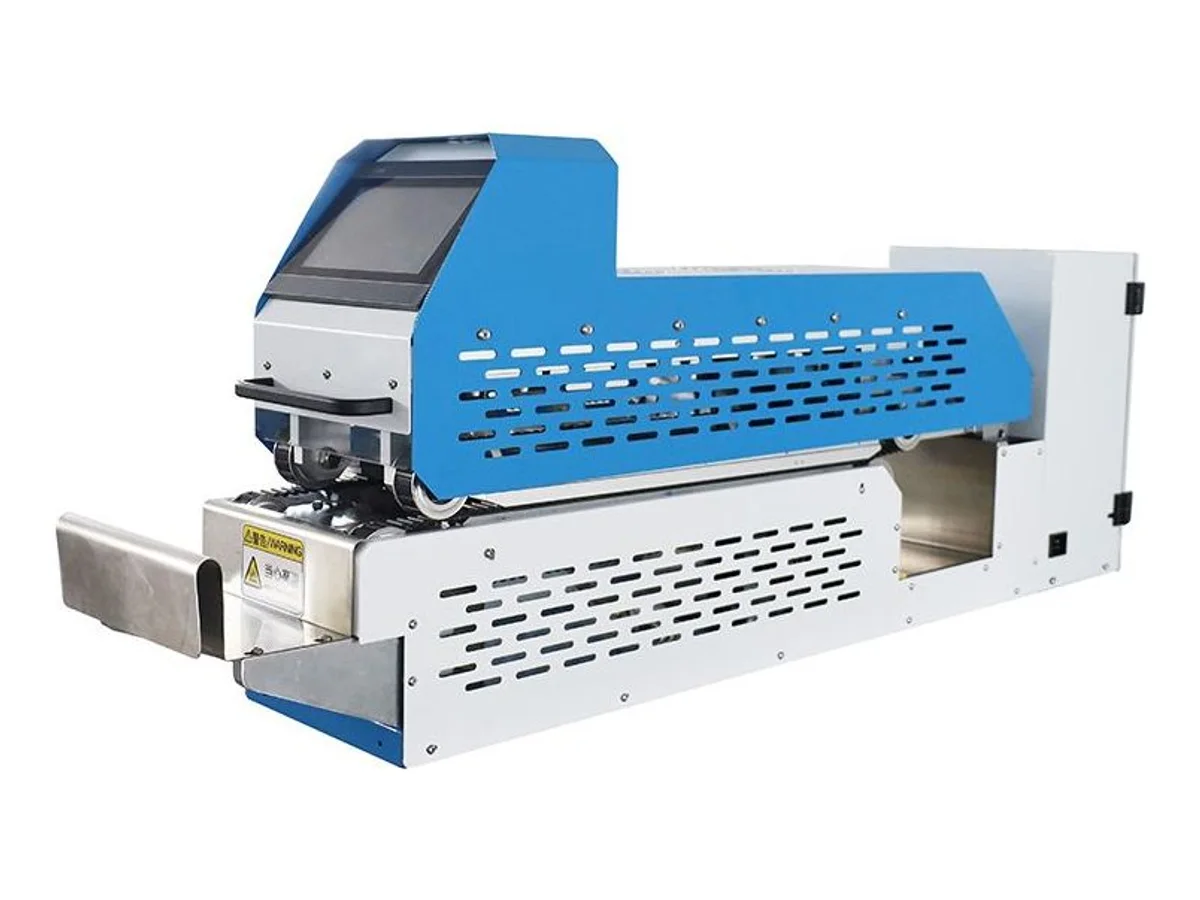
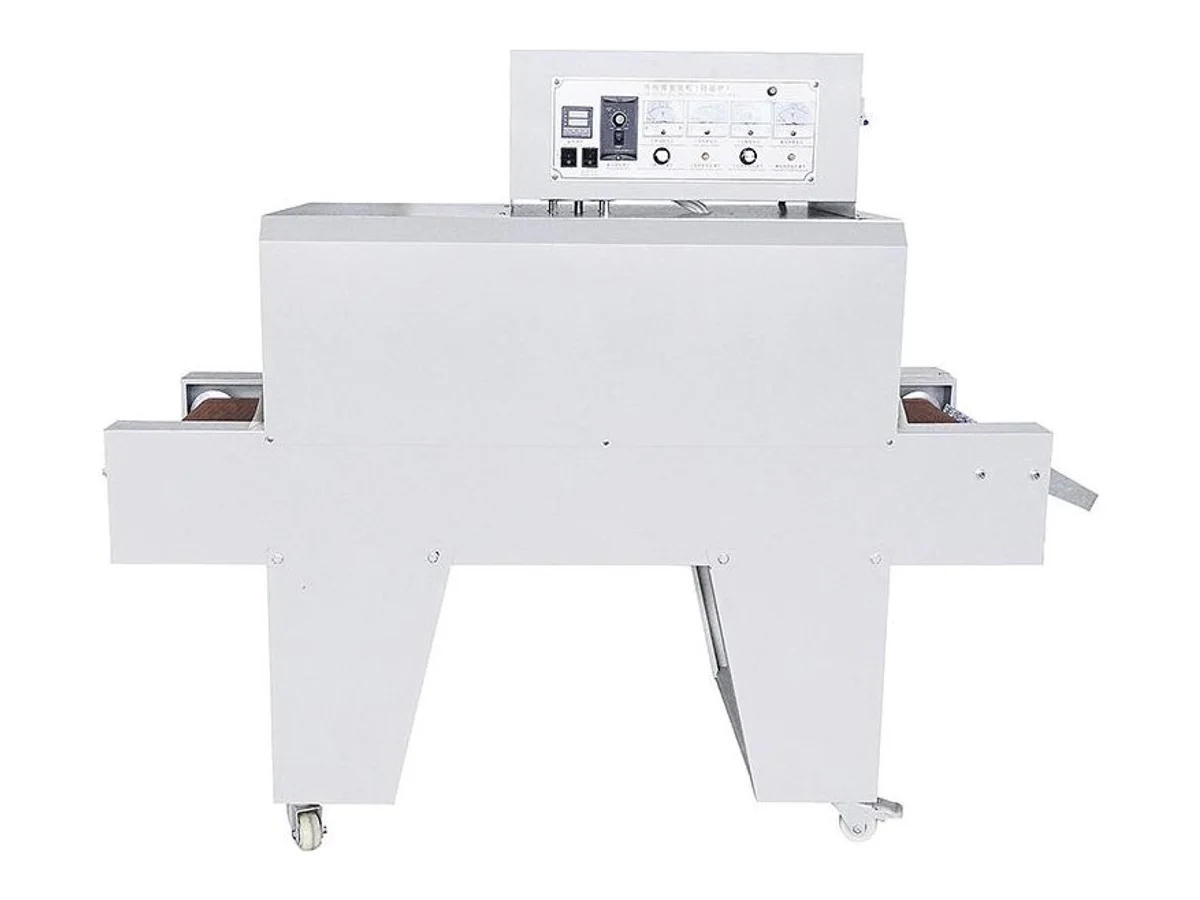
Hot air is directional: a nozzle you can aim at the joint, swap for another diameter, or fork around a bundle. Our hot-air stations run 2–3 kW resistance heaters with published element lives of 10,000 to 100,000 hours — pick them for operator-paced spot work and odd shapes: the WM-677 puts the nozzle on a 360°-adjustable arm, the WM-668F heats large tube from two opposed nozzles at once, the WM-667ZM blows up through the bench top so both hands stay on the part. Infrared is non-contact and even: radiant tubes fill a chamber or tunnel, nothing blows the sleeve out of position — the way to shrink mid-harness sections up to Ø100 mm (WM-664) or run continuous belt flow at 0.5–6 m/min (WM-662A single-sided, WM-670PH double-sided). For small sleeves under 10 mm at volume, the crawler tunnel WM-666 holds 2,000 pcs/h.
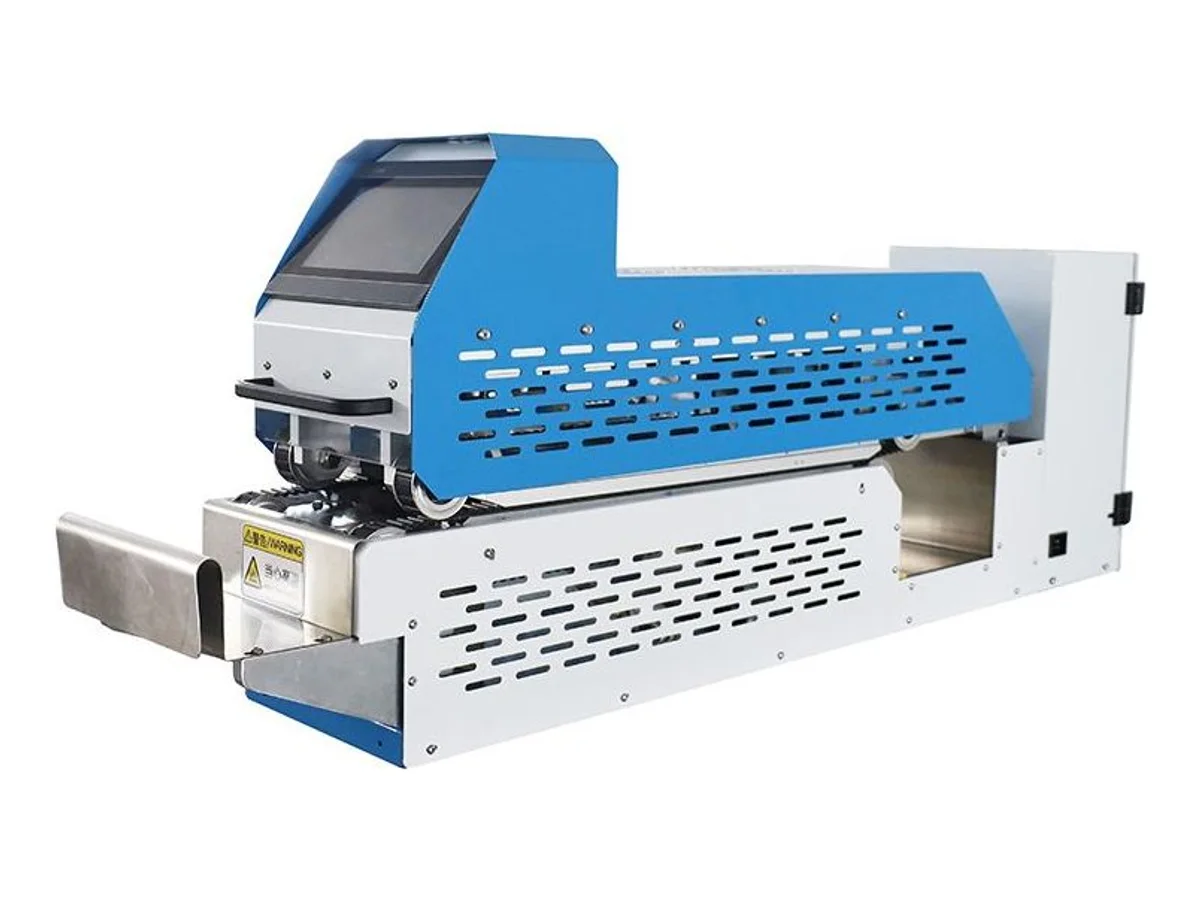
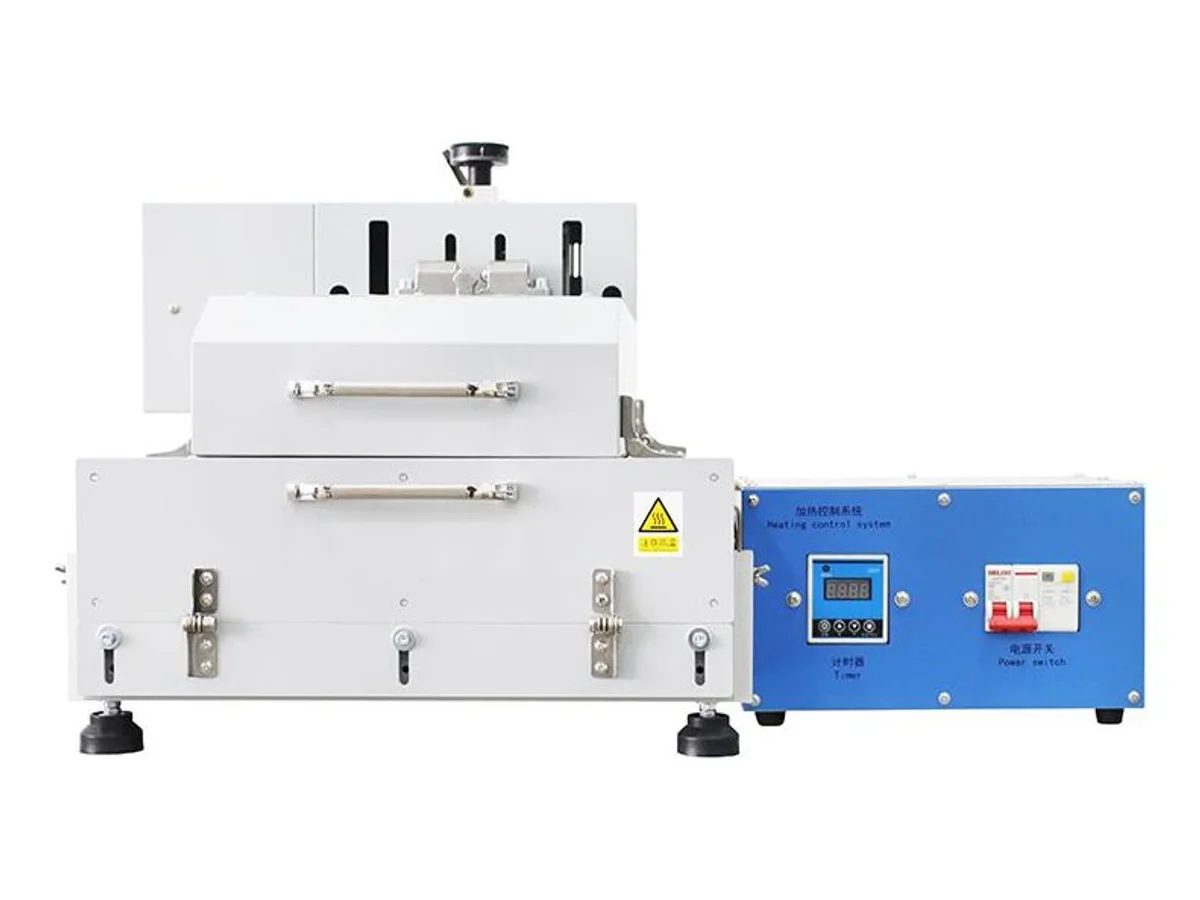
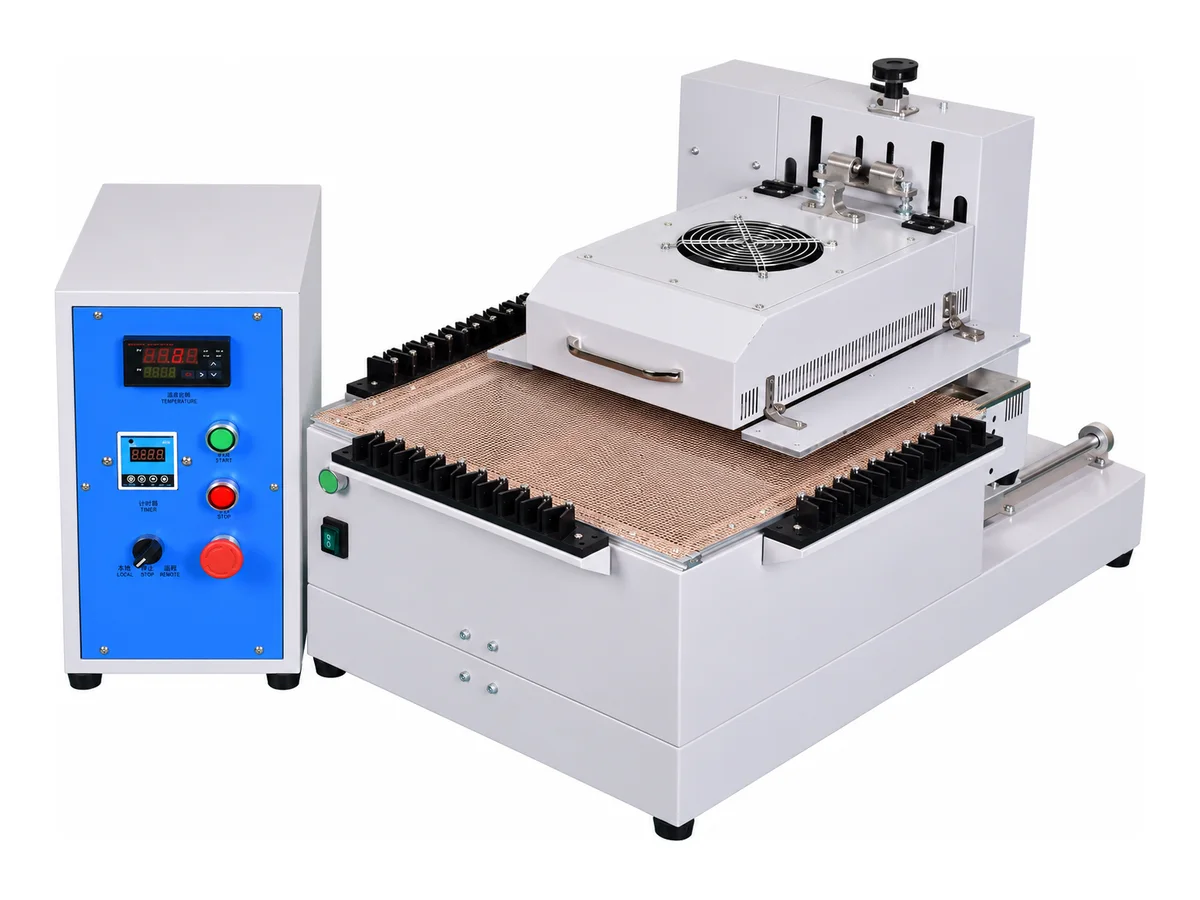
For repeat wire-harness ends, the WM-6101 belt-fed infrared workstation has a chamber of 120 × 120 × 74 mm and a specified tube diameter up to 50 mm. Check the complete assembly against the chamber dimensions, then validate temperature and exposure with your tubing. See our heat shrink selection guide and heat shrink defect checklist.
| Machine | Type | Tube / part size | Throughput | Power | Pick it for |
|---|---|---|---|---|---|
| WM-677 | Hot-air bench station | Outlet Ø50/25 mm nozzles | — | 3,050 W | Spot-shrinking at a bench; nozzle on a 360° arm |
| WM-668F | Hot air, twin opposed nozzles | Large-OD tube | — | 4,100 W | All-round heat on big tube without rotating the part |
| WM-667ZM | Hot air, through-table | Harness < 25 mm | — | 3.05 kW | Shrinking from below with both hands on the part |
| WM-661B | Hot-air station, interchangeable nozzles | — | — | 2.05 kW | Entry hot-air station with swappable nozzles |
| WM-6101 | Infrared belt chamber | Tube ≤ Ø50 mm; chamber 120×120×74 mm | — | 2,000 W | Wire ends carried through an IR chamber on a belt |
| WM-664 | Infrared oven | Sections ≤ Ø100 mm, inlet < 120 mm | — | < 2.8 kW | Mid-harness sections and thick bundles |
| WM-674 | Infrared tunnel furnace | 400 × 200 mm tunnel | — | 8 kW | The largest chamber and power in this category |
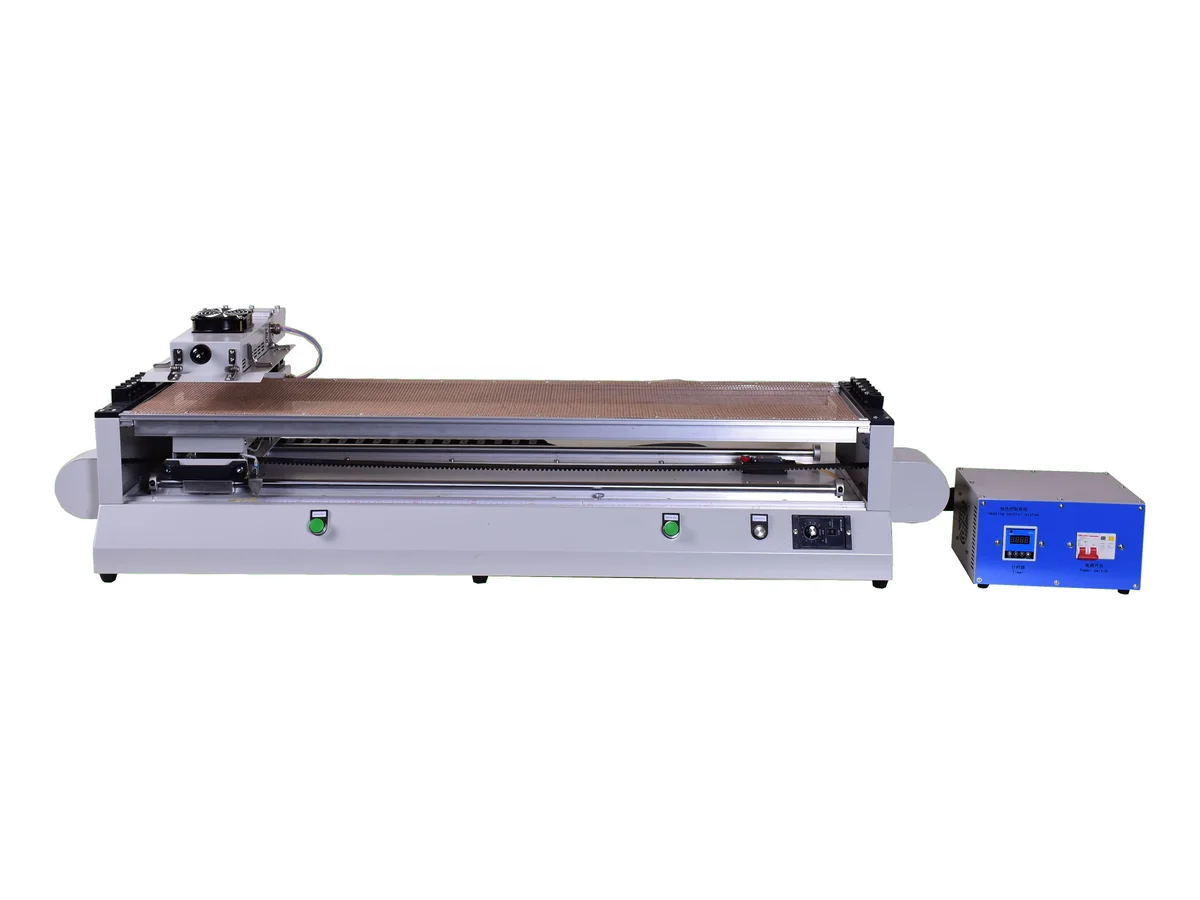
| WM-662A | Infrared conveyor, single-side | 200 mm belt, 0.5–3 m/min | Continuous | 1,860 W | Top-down shrink in continuous flow |
| WM-670PH | Far-infrared conveyor, double-sided | 630 × 180 × 80 mm zone, 0–6 m/min | Continuous | — | Even both-side shrink in continuous flow |
| WM-666 | Crawler-belt tunnel oven | Tube < 10 mm, length < 60 mm | 2,000 pcs/h | 2 × 1,000 W | High-volume small sleeves |
| WM-663 | Insert + shrink, semi-automatic | Sleeve Ø2.0 / Ø8.0 fixtures | 800–2,500 pcs/h | 850 W | Tube pre-cut on reel; machine inserts and shrinks |
| WM-675 | Insert + seal, semi-automatic | Ø7–16 mm | 300–1,000 pcs/h | — | Larger tube shrunk with sealed ends |
| WM-669 | Insert + mark + shrink | Ø2.0 / Ø6.0; heat length 6–35 mm | 2.5 s/cycle | 1,450 W | PLC/IPC line with per-piece marking |
| WM-671JG | Laser mark + insert + shrink | Ø2.0 / Ø6.5 | 1,000–2,000 pcs/h | 2,500 W | Identification and shrinking in one pass |
Neither is universally better. Hot air is a nozzle you aim — flexible for operator-held parts, odd shapes and spot work at a bench. Infrared is non-contact radiant heat filling a chamber or tunnel — even, all-round shrink with nothing blowing the sleeve out of position. If parts travel on a conveyor or the sleeve must not shift, go infrared; if an operator turns each part at a bench, hot air is usually the practical choice.
Yes — that is the inserting family. The WM-663 handles Ø2–8 mm sleeve at 800–2,500 pcs/h, the WM-675 covers Ø7–16 mm with sealed ends, the WM-669 runs a 2.5-second cycle with per-piece marking, and the WM-671JG adds laser identification at 1,000–2,000 pcs/h. Fixtures are size-matched, so these machines are quoted against your actual tube and wire samples.
Printing the sleeve is a marking job and lives in our taping, labeling and marking category: the WM-672 prints number tube on up to six channels at 8,000–12,000 pcs/h across Ø1.5–40 mm, and the WM-665JG cuts and laser-marks number tube. If marking and shrinking should happen in one pass on the wire, the WM-669 and WM-671JG here do both inline.
Published limits in this category: the WM-667ZM bench station is rated for harness under 25 mm; the WM-664 infrared oven takes harness sections up to Ø100 mm through a 120 mm inlet; the WM-6101 chamber accepts tube up to Ø50 mm; the WM-668F heats large-diameter tube with twin opposed nozzles; and the WM-674 tunnel furnace offers a 400 × 200 mm opening at 8 kW. Above these figures, tell us the actual bundle size and our engineering team confirms the configuration before quoting.
Five things get you a precise quotation in one round: tube size and material, wire or harness OD, where the sleeve sits on the part, target pieces per hour, and whether the sleeve needs printed identification. Then courier 2–3 meters of your actual tube and wire — we run them on the machine, on camera, before you order.
Engineering guidance for choosing this process and correcting the defects that affect finished-wire quality.
Selection guide
Choose heat shrink equipment by sleeve material, recovered dimensions, adhesive requirement, harness geometry, heating method, takt time and validation plan.
Read engineering guide →Troubleshooting guide
Troubleshoot incomplete recovery, wrinkles, splits, scorching, sleeve movement, trapped air, uneven adhesive flow and heat damage.
Read engineering guide →Selection guide
Choose tube and pipe cutting equipment by material, diameter, wall thickness, rigidity, cut mechanism, tolerance, end quality and chip-control requirements.
Read engineering guide →Troubleshooting guide
Troubleshoot angled cuts, crushed tube, burrs, stringing, length drift, corrugated-tube splitting errors and feed slippage.
Read engineering guide →