Belt-Fed Infrared Heat Shrink Machine for Wire Harness Ends WM-6101
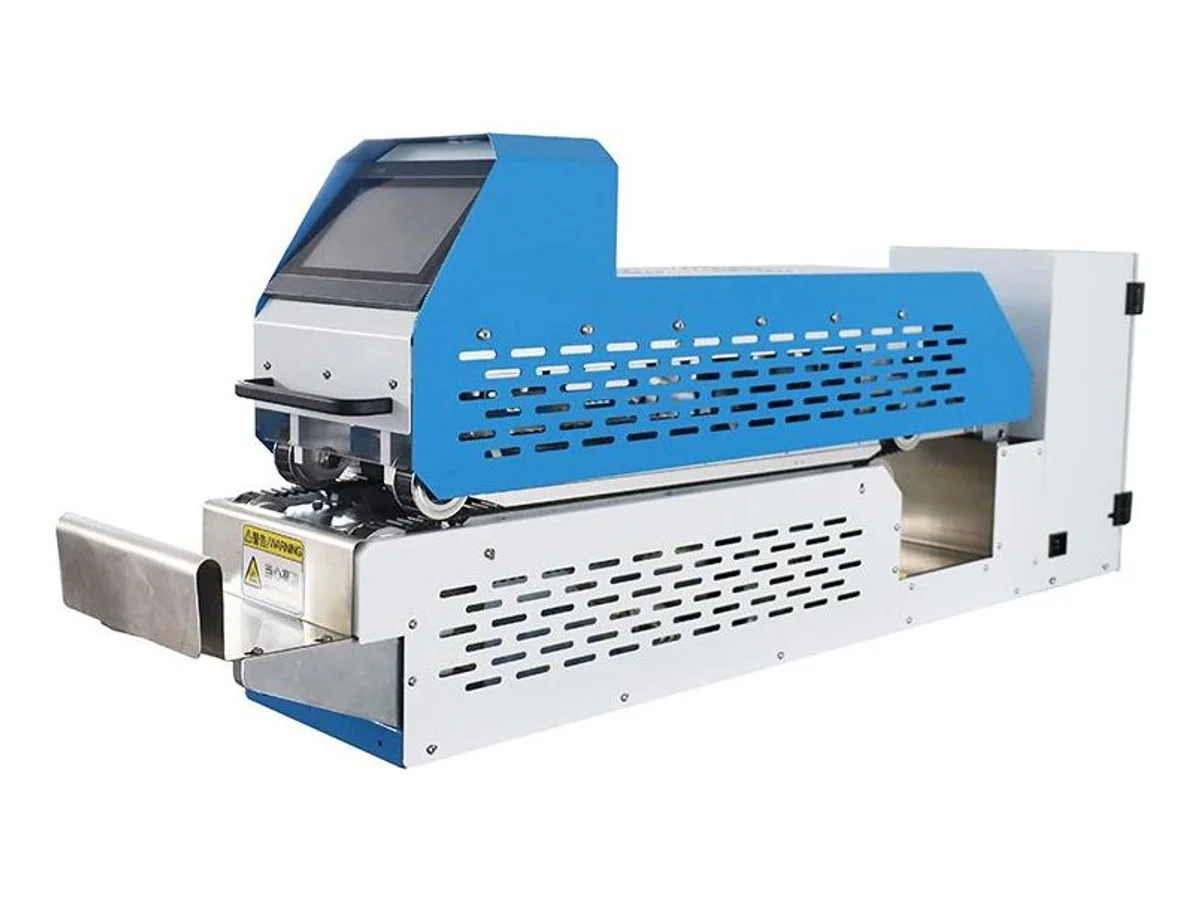
The WM-6101 is a benchtop heat shrink workstation that carries wire-harness ends through an infrared heating chamber on a conveyor belt, shrinking the tube evenly from above and below in one pass. Temperature is adjustable from 250 to 550 °C with K-type thermocouple feedback, and the chamber accepts parts up to 120 × 120 × 74 mm with tube diameters up to 50 mm. Unlike a hand-held heat gun, every piece gets the same heat for the same time, so the finish is uniform and repeatable. It runs on 220 V, draws up to 2,000 W and needs a 0.6 MPa compressed-air supply.
Specifications
| Model | WM-6101 |
|---|---|
| Function | Heat shrink tube heating and shrinking (belt-fed benchtop workstation) |
| Heating | Infrared elements above and below the chamber |
| Working temperature | 250 – 550 °C |
| Temperature sensor | K-type thermocouple |
| Heat shrink chamber | Max. 120 × 120 × 74 mm |
| Tube diameter | Max. 50 mm |
| Power supply | Reference configuration: 220 V, 50 Hz |
| Power | Max. 2,000 W |
| Air pressure source | 0.6 MPa |
| Dimensions | 530 × 500 × 400 mm |
| Weight | 35 kg |
| Electrical configuration | We configure the machine’s electrical supply for your installation before shipment. Your quote confirms the voltage, phase, frequency, current and the power cord with plug or industrial connection for your site. Common site supplies are 120 V, 60 Hz with grounded Type B outlets in the US and Canada, with 208 V or 240 V also found at industrial sites. The UK and Ireland use 230 V, 50 Hz with Type G. Australia and New Zealand use nominal 230 V, 50 Hz with Type I, and some Australian sites list 240 V. Three-phase installations in the UK, Ireland, Australia and New Zealand commonly use 400 V at 50 Hz, with 415 V at some Australian sites. |
| Lead time | Your quote confirms the machine configuration, included accessories and dispatch date. |
| Warranty and support | One-year machine warranty and free remote video support for the life of the equipment. |
| Wear parts | For wear parts, every quote lists them with unit price and the location they ship from. |
| HS Code | 8419.89 (common reference — final classification confirmed by your customs broker) |
| Certification | CE (certificate provided with shipment) |
Key features
- Infrared heat from above and below shrinks the tube all round in a single pass — no turning the part over, no cold side
- Conveyor belt carries each harness end through the chamber at a set feeding speed, so heat and dwell time are identical piece after piece
- Upper and lower heater temperatures set separately on the touch screen across a 250 – 550 °C range, held steady by K-type thermocouple feedback
- Takes tube diameters up to 50 mm and parts up to 120 × 120 × 74 mm — from small printed marker sleeves to bundle sheathing
- Benchtop footprint of 530 × 500 mm at 35 kg — it sits beside the crimping bench, right where the harness ends are made
What it processes
- Shrinking printed marker sleeves and insulation sleeves onto wire ends after crimping
- Shrinking tube over splices and solder joints in harness assembly
- Batch jobs where a hand-held heat gun gives uneven, operator-dependent results and ties up one hand
Suited for: repeatable heat shrinking at the wire end — marker sleeves, insulation sleeves and splice covers on harness ends, tube up to 50 mm diameter, with every pass coming out the same because temperature and belt speed are fixed settings, not hand skill. For other jobs and machine options: parts larger than the 120 × 120 × 74 mm chamber or shrinking long runs along the middle of a cable — for that, pick the WM-664 infrared harness heat shrink oven, which heats mid-harness sections up to Ø100 mm that this chamber cannot take.
Send us a bundle of your wires with the exact shrink tube you use — we run them through this machine on camera, so you judge the finish on your own parts before you order. For a WM-6101 quote, share the sleeve size and the approximate dimensions of the part it covers. We’ll check which configuration fits your assembly.
Engineering knowledge
Choose and troubleshoot this process
- How to Choose Heat Shrink Processing EquipmentChoose heat shrink equipment by sleeve material, recovered dimensions, adhesive requirement, harness geometry, heating method, takt time and validation plan.
- Heat Shrink Defects: Causes and Corrective ActionsTroubleshoot incomplete recovery, wrinkles, splits, scorching, sleeve movement, trapped air, uneven adhesive flow and heat damage.
WM-6101 — common questions
What is the advantage over a heat gun?
A heat gun blows hot air at one side of the tube from whatever distance and angle the operator happens to hold, so the result depends on the person and the part usually needs turning. The WM-6101 surrounds the tube with infrared heat at a set temperature while the belt moves it through at a set speed — every piece gets the same heat for the same time, both hands stay free for loading, and a whole tray of ends comes out looking identical.
What tube and part sizes fit?
Tube diameters up to 50 mm, and the heating chamber accepts parts up to 120 × 120 × 74 mm. That covers marker sleeves, end insulation and bundle sheathing on typical automotive, appliance and control-cabinet harnesses.
What does it need to run?
A 220 V, 50 Hz mains connection good for 2,000 W, plus a compressed-air supply at 0.6 MPa. The machine itself weighs 35 kg and takes 530 × 500 mm of bench space, so it fits an ordinary workbench next to your crimping station.
Related machines in Heat Shrink & Tube Insertion
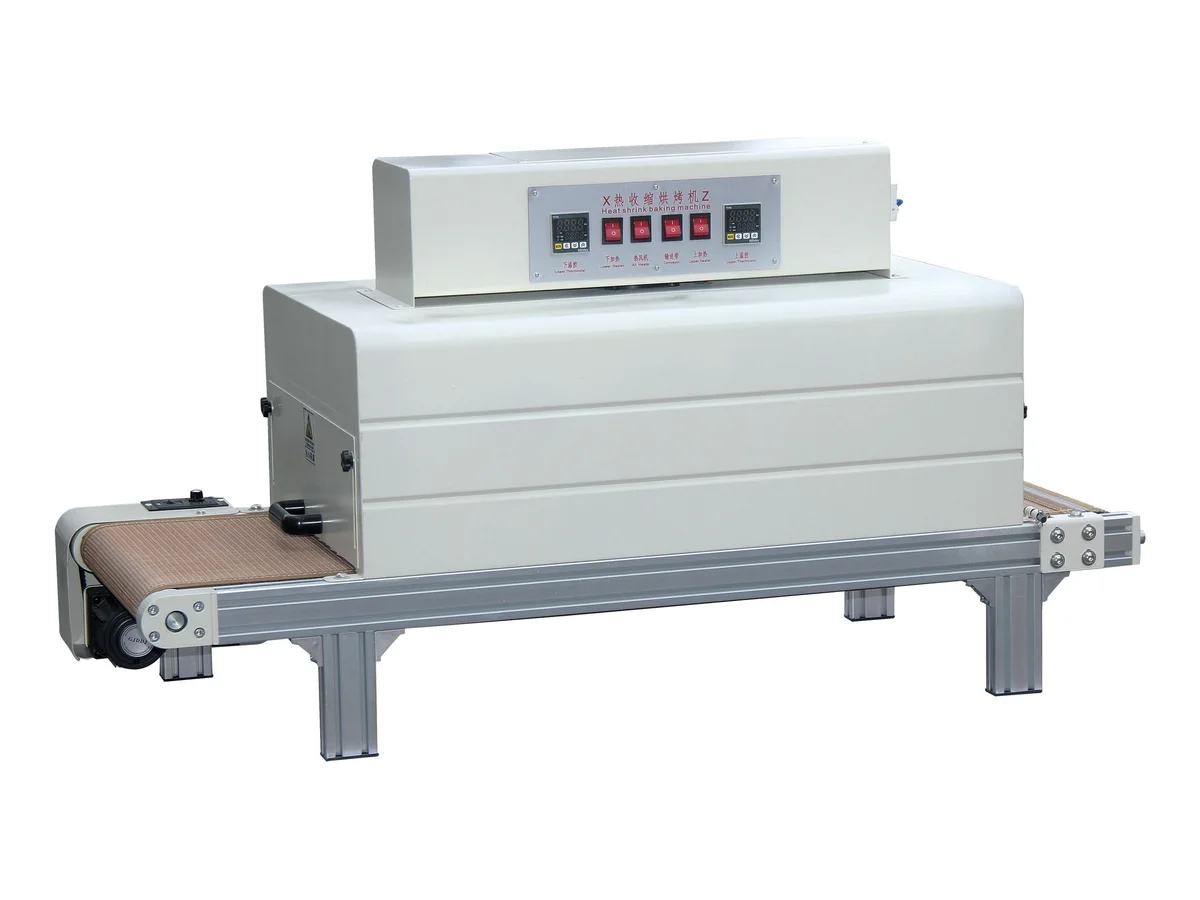
Aluminum-Frame Bench Heat Shrink Conveyor Oven, 800 × 400 × 150 mm
Model WM-690
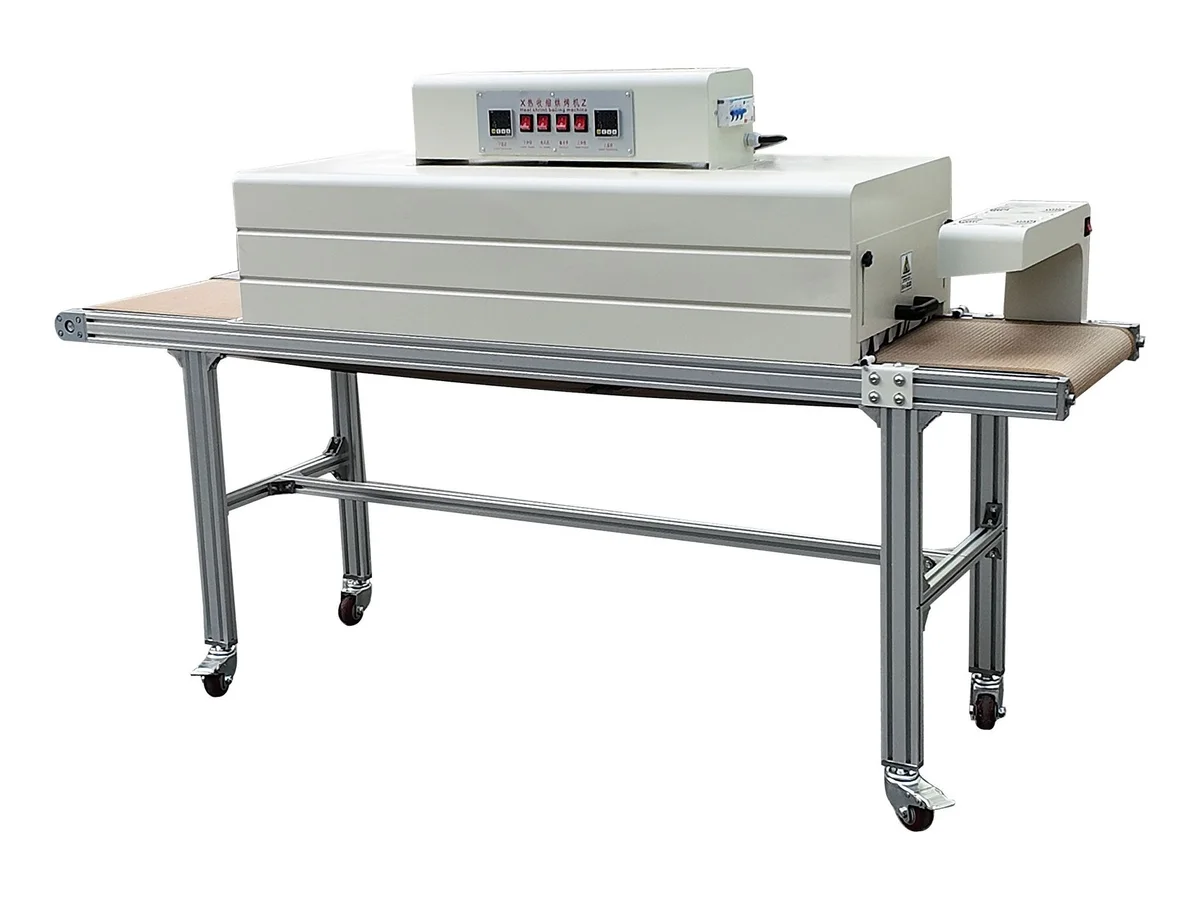
Aluminum-Frame Heat Shrink Conveyor Oven, 1200 × 400 × 150 mm
Model WM-698
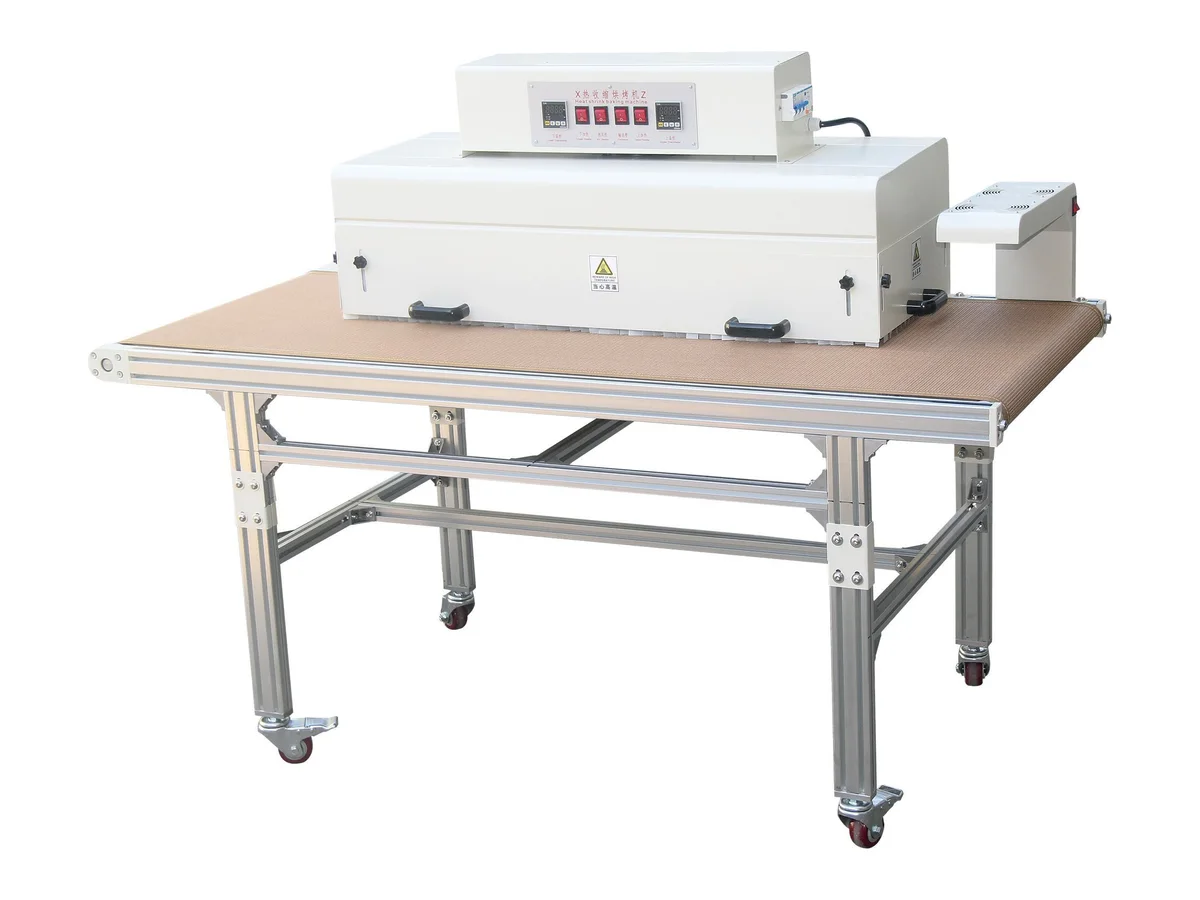
Aluminum-Frame Heat Shrink Conveyor Oven with 360 mm Heating Width
Model WM-694