Traveling Infrared Heat Shrink Machine for Sleeves up to 1,000 mm WM-680
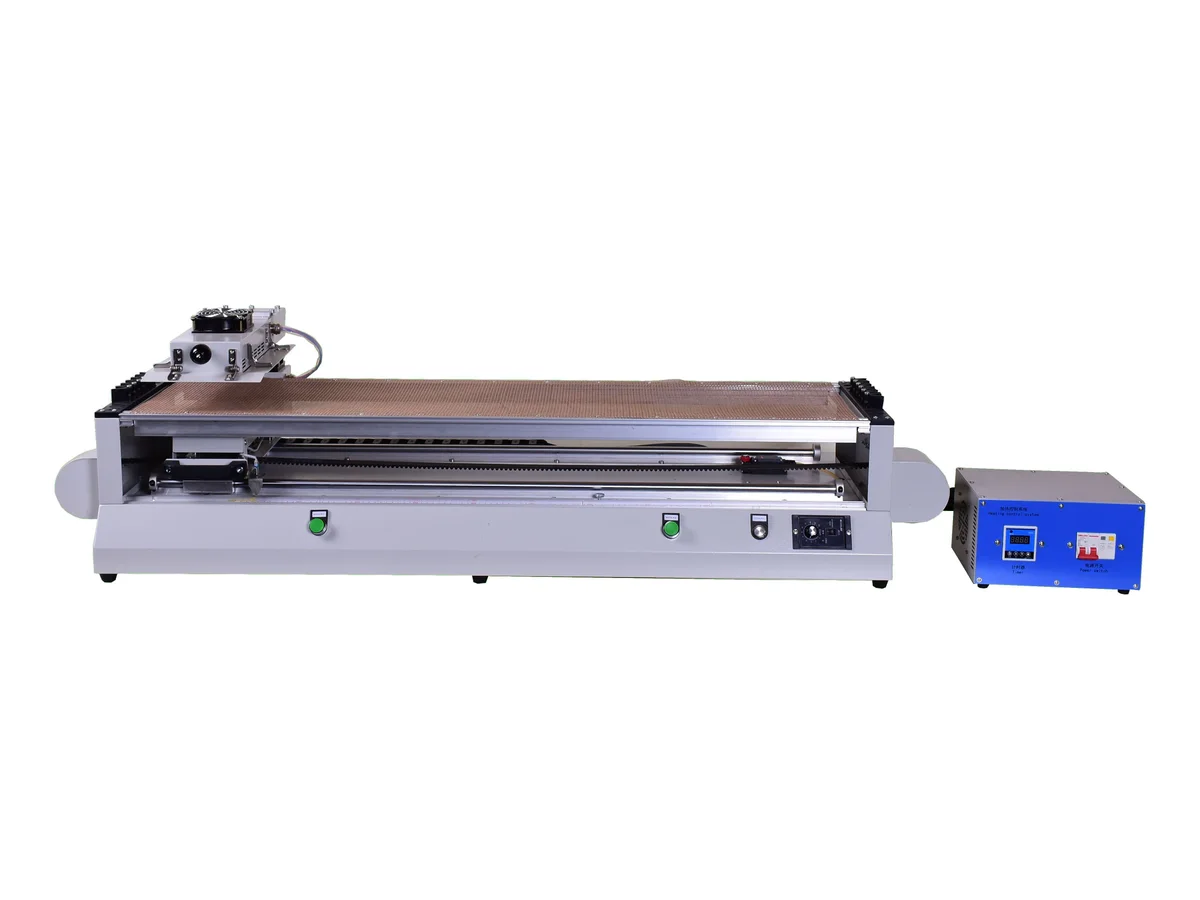
The WM-680 heats long heat-shrink sections while the harness stays flat on a 1,000 mm work bed. Four 500 W infrared lamps move over tubing up to Ø30 mm at an adjustable 0–3.8 m/min, so the operator does not have to sweep a heat gun along the sleeve by hand. The upper heater opens for loading and adjusts up to 55 mm above the bed.
Specifications
| Model | WM-680 |
|---|---|
| Equipment dimensions | 1,555 × 458 × 382 mm |
| Package dimensions | 1,900 × 600 × 550 mm |
| Heating method | Infrared lamp heating |
| Heater power | 2,000 W (500 W × 4 lamps) |
| Heating area | 45 × 145 mm (datasheet); ≤56 × ≤145 mm (printed manual) — confirm before ordering |
| Heater stroke | ≤1,000 mm |
| Heater walking speed | 0–3.8 m/min, adjustable |
| Travel adjustment | Manual |
| Upper heater clearance | ≤55 mm, adjustable |
| Applicable product length | ≤1,000 mm |
| Applicable product diameter | ≤30 mm |
| Power supply | Reference configuration: AC 220 V, 50 Hz |
| Total power | 2,500 W (datasheet); 2,100 W standard, input ≥2.5 kW (printed manual) — confirm before ordering |
| Net / packed weight | 39 / 70 kg |
| Safety protection | PE ground |
| Electrical configuration | We configure the machine’s electrical supply for your installation before shipment. Your quote confirms the voltage, phase, frequency, current and the power cord with plug or industrial connection for your site. Common site supplies are 120 V, 60 Hz with grounded Type B outlets in the US and Canada, with 208 V or 240 V also found at industrial sites. The UK and Ireland use 230 V, 50 Hz with Type G. Australia and New Zealand use nominal 230 V, 50 Hz with Type I, and some Australian sites list 240 V. Three-phase installations in the UK, Ireland, Australia and New Zealand commonly use 400 V at 50 Hz, with 415 V at some Australian sites. |
| Lead time | Your quote confirms the machine configuration, included accessories and dispatch date. |
| Warranty and support | One-year machine warranty and free remote video support for the life of the equipment. |
| Wear parts | For wear parts, every quote lists them with unit price and the location they ship from. |
| HS Code | 8514.20 (common reference — final classification confirmed by your customs broker) |
| Certification | CE (certificate provided with shipment) |
Key features
- The harness stays supported while the heater travels over a sleeve up to 1,000 mm long, giving the operator a straight, repeatable pass instead of sweeping a gun by hand
- Upper and lower infrared heating use four 500 W lamps, so both sides of a long sleeve receive heat without turning the cable
- Adjustable 0–3.8 m/min travel lets us set the exposure on the buyer's actual tubing wall and adhesive before shipment
- Two-hand heater controls stop the lamps and carriage together; the operator manually returns the heater after the pass
- Adjustable stroke, upper-heater clearance and fixture rails accommodate long cable sections up to Ø30 mm without forcing the full harness through a tunnel
What it processes
- Long heat-shrink sleeves on high-voltage cables, charging leads and battery harnesses
- Localized shrinking on harness sections up to 1,000 mm long and Ø30 mm
- Repeated batches where the sleeve position can be held on a fixture while the heater travels
Suited for: long heat-shrink sections that must stay supported while a heater makes one controlled pass over the sleeve.
For other jobs and machine options: continuous belt-fed batches — use the WM-678. For a compact batch under a lid, use the WM-679; for a 260 × 180 mm zone with automatic heater return, use the WM-681.
Send the cable, sleeve and required heated length. We set stroke and travel speed on the actual material and show the shrink result on video before you order. For a WM-680 quote, share the sleeve size and the approximate dimensions of the part it covers. We’ll check which configuration fits your assembly.
Engineering knowledge
Choose and troubleshoot this process
- Heat Shrink Defects: Causes and Corrective ActionsTroubleshoot incomplete recovery, wrinkles, splits, scorching, sleeve movement, trapped air, uneven adhesive flow and heat damage.
- How to Choose Heat Shrink Processing EquipmentChoose heat shrink equipment by sleeve material, recovered dimensions, adhesive requirement, harness geometry, heating method, takt time and validation plan.
WM-680 — common questions
Does the cable move through a conveyor?
The harness stays on the bed while the heater travels over it. For continuous belt-fed batches, use the WM-678.
Does the heater return automatically?
The working pass is motor-driven. After the pass stops, the operator manually pulls the heater back to its starting position.
Which heating width and power should I use for planning?
The datasheet gives a 45 × 145 mm heating area and 2,500 W total power. The printed manual gives ≤56 × ≤145 mm and 2,100 W standard with input ≥2.5 kW. We keep both source values visible and confirm the supplied build before ordering.
Is it suitable for short batches under a lid?
A compact row of sleeves is better matched to the WM-679 clamshell oven or the WM-681 automatic-return heater.
What voltage, interface and wear parts arrive?
We set the voltage for your country and ship the English interface and manual. Every quote lists the wear parts with unit price and the location they ship from.
Related machines in Heat Shrink & Tube Insertion
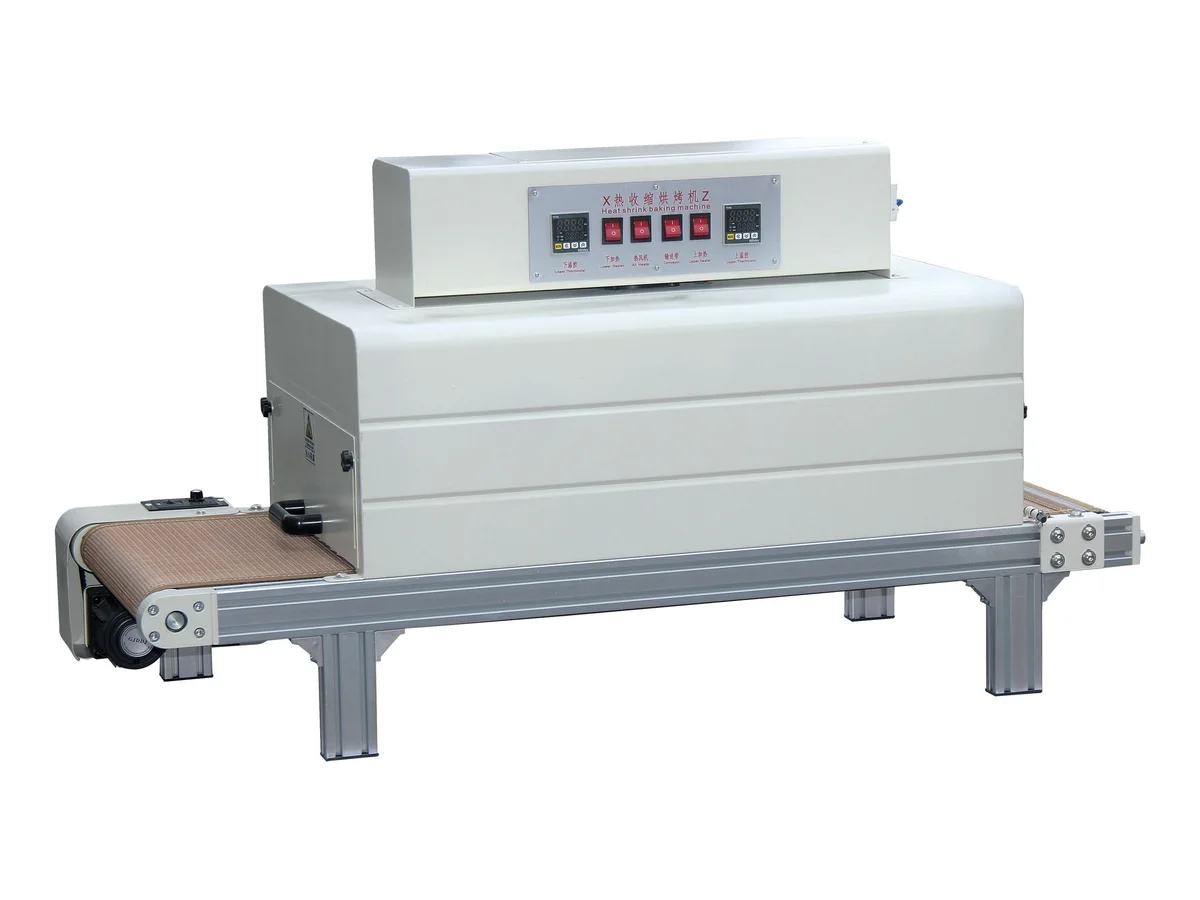
Aluminum-Frame Bench Heat Shrink Conveyor Oven, 800 × 400 × 150 mm
Model WM-690
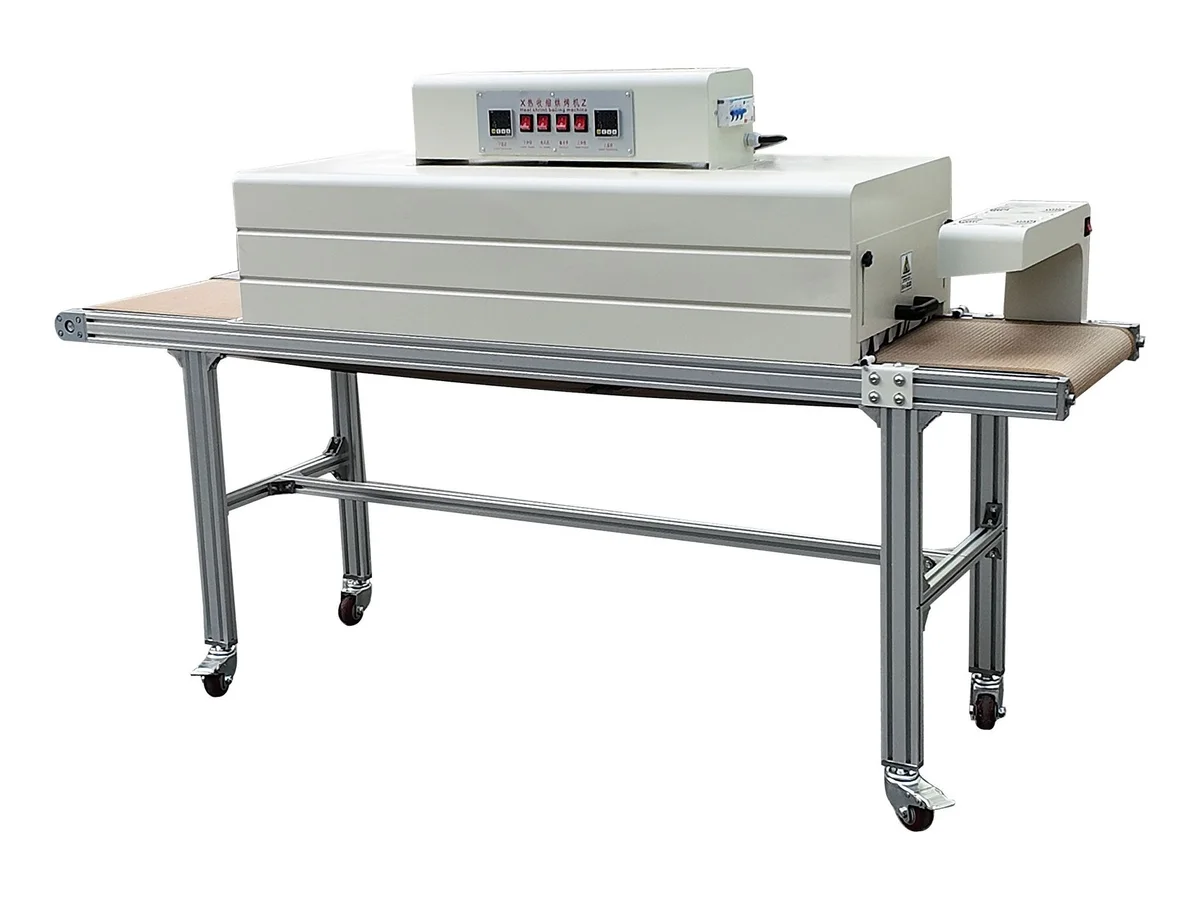
Aluminum-Frame Heat Shrink Conveyor Oven, 1200 × 400 × 150 mm
Model WM-698
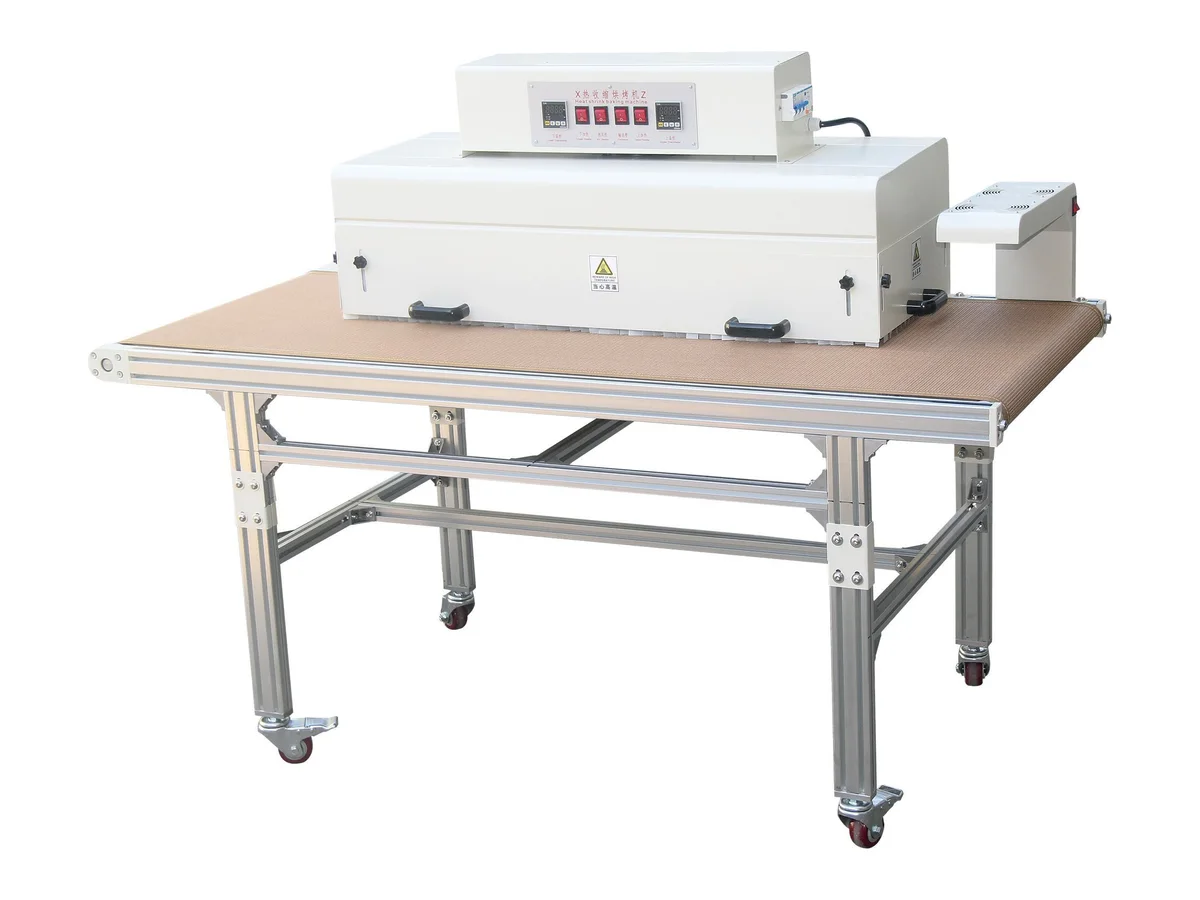
Aluminum-Frame Heat Shrink Conveyor Oven with 360 mm Heating Width
Model WM-694