Power cord manufacturing: the complete line
A cord set is a short product with a long process: sheathed cable in, plug on one end, connector or bare ends on the other, every piece electrically tested, then coiled and tied for the box. Here is the equipment in process order — and where the throughput bottleneck usually sits.
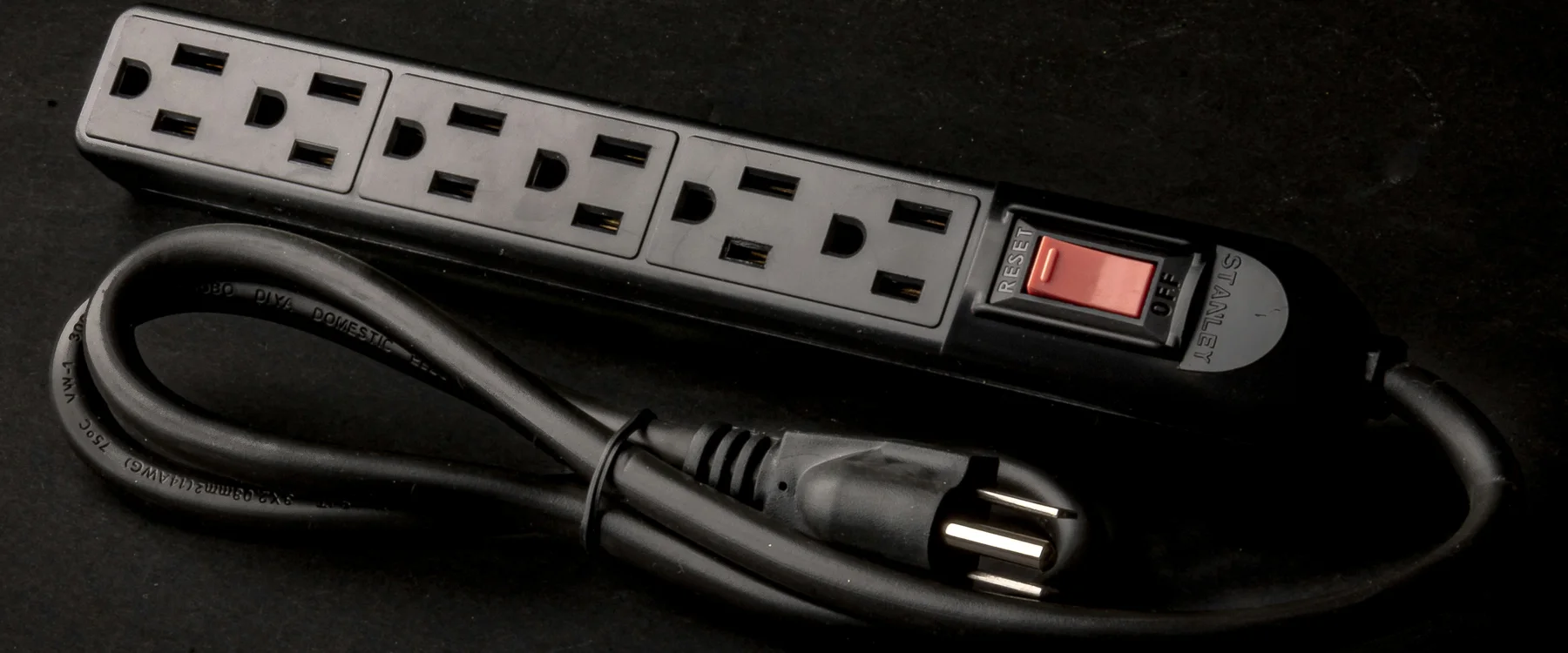
| Step | Equipment | Why it's needed |
|---|---|---|
| 1. Cut & strip | Multi-core sheathed cable cut & strip machine | Jacket opened and 2–8 cores stripped in one pass, Φ3–10 mm cable at 1,100 pcs/h |
| 2. Core preparation | Twisting and tinning machine | Strands twisted so they do not flare — tinned only where the termination is soldered or screwed |
| 3. Plug termination | Pin riveting or plug crimping machine | Pins riveted into the plug body, or the whole cord set run on a dedicated cord line |
| 4. Other end | Terminal crimping or connector housing insertion | Ferrules, ring terminals, IEC connector or bare tinned ends, depending on the product |
| 5. Electrical test | Power cord plug tester | 100% polarity, insulation and hi-pot — non-negotiable for a mains product |
| 6. Coil & tie | Figure-8 winding and tying machine | Twist-free coils that pay out straight, tied automatically at 1,100–1,400 pcs/h |
Watch the machines on this line running real wire
Close-ups of the heads listed above, 10–30 seconds each, on wire like yours. If one answers your question, send 2–3 metres of your own and we run it on that head, on video, before you order.
More clips on these questions:Is tinning the slowest step on your bench? · Will the die match my terminal? · Coils and ties that pack themselves
Where the bottleneck really is
Most people size a cord line by the cutting machine, then discover the queue forms somewhere else. Run the arithmetic across the whole chain: cut-and-strip on sheathed cable holds around 1,100 pcs/h (WM-168HT), a dedicated cord-set line runs 800–1,200 pcs/h, coiling and tying manages 1,100–1,400 pcs/h (WM-4820) — and electrical testing is per-piece and operator-paced. On most floors the test bench, not the machinery, sets the shift output. Buy the second tester before you buy the faster stripper.
Molded plugs or assembled plugs?
The two routes need different equipment and the choice is made upstream of everything here. Molded plugs are injected over the cable — you need a molding machine (outside this catalog) and the cord arrives at our equipment already plugged; the line then handles the far end, testing, coiling and tying. Assembled plugs use riveted or crimped pins in a plastic body: the WM-372 rivets European plug pins at 1,800–2,200 pcs/h, the WM-3216 handles French plug inserts on RVV and H05VV-F at 800–1,000 pcs/h, and the WM-380C crimps 2-pin round plugs at 900–1,100 pcs/h. Tell us which route you are on — it changes half the quotation.
Power cord equipment — common questions
What machines does a power cord production line need?
In process order: a sheathed-cable cut and strip machine, a twisting (and where specified, tinning) station for the cores, plug termination — either pin riveting for assembled plugs or a full cord-set line, terminal crimping or connector insertion for the far end, a 100% electrical tester for polarity, insulation and hi-pot, and a coiling-and-tying machine to pack the finished cord.
Which machine tests finished cord sets?
The WM-823 double-head power cord plug tester: conductive polarity, insulation resistance at DC 500 V with six selectable thresholds from 2 to 200 MΩ, and high-voltage withstand, with test times freely set. For a mains product this is not optional — every piece is tested, and testing is usually what sets the line rate.
Why are power cords coiled in a figure-8?
A round coil wound in one direction stores a twist in every turn, so the cord kinks when the customer unwinds it. A figure-8 alternates direction each loop and cancels the torsion — the cord pays out straight. The WM-4820 winds and ties cord sets at 1,100–1,400 pcs/h; the WM-4808 measures, cuts, coils and ties from the drum in one machine.
Should the cores be tinned before termination?
Only if the termination is soldered or clamped under a screw. Tinned strands can cold-flow under a crimp and loosen it over time, which is why many specifications forbid tinned wire in crimped terminals. If you crimp, twist the strands and leave them bare — a twisting-only machine is the right tool.
What should an inquiry include?
The cable specification (cores, mm², outer diameter), the plug type and whether it is molded or assembled, what terminates the far end, the finished cord lengths, and target pieces per shift. Then courier a few finished cords and a reel of your cable — we run them on the machines, on camera, before you order.
Get a price in 12 hours
Tell us your wire and volume — a specialist (not a bot) replies with a full quotation.
✓ Request received
Your reference:
Our engineering and sales team will contact you with a quotation proposal within 12 hours from sales@wiromac.com.