Automatic Double-End Loose Pre-Insulated Terminal Crimping Machine with Strand Twisting WM-3212
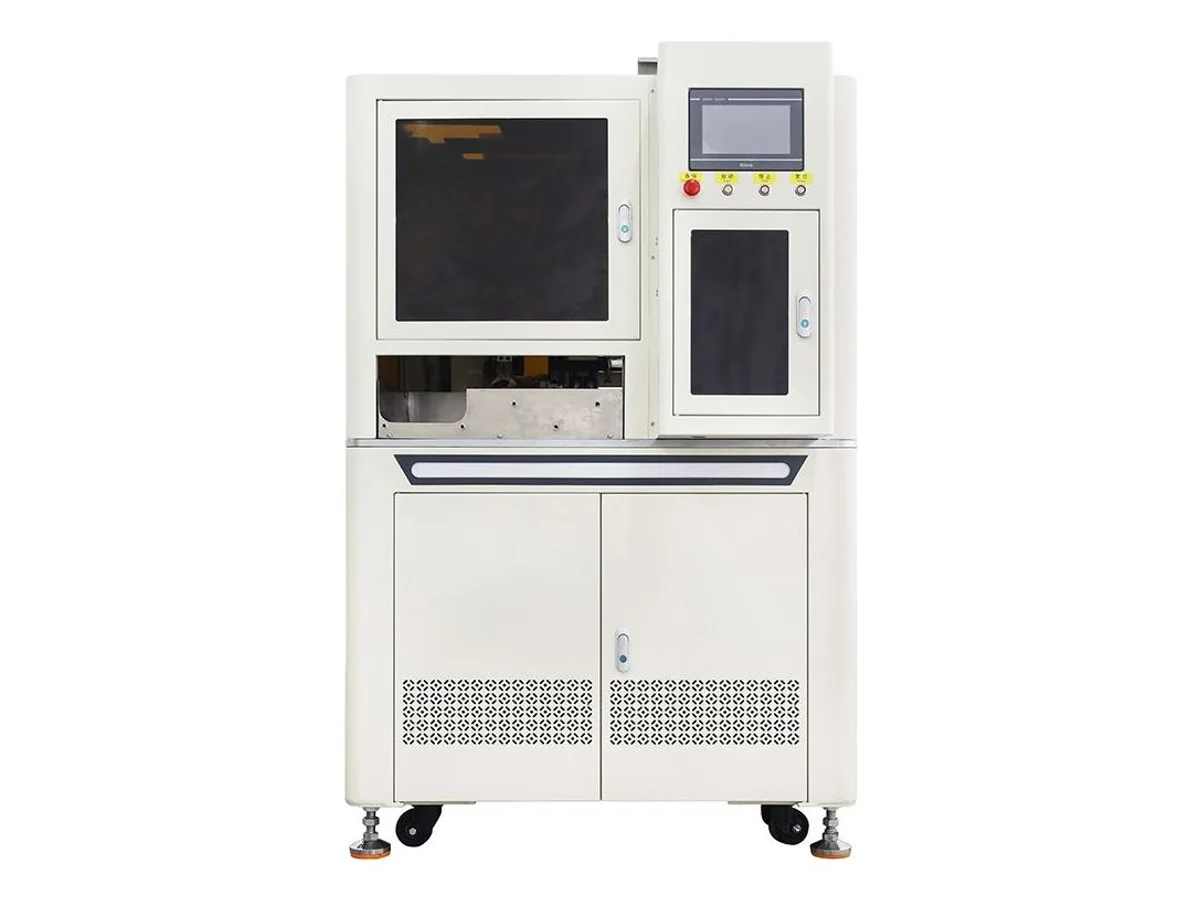
The WM-3212 finishes a lead end to end with nobody standing at it. It cuts the wire, strips 0.1 to 15 mm at the front and rear ends, twists the loose strands, then presses a loose pre-insulated terminal onto one end or both. Terminals are poured into a vibratory bowl instead of being threaded off a reel, wire runs from AWG 24 up to AWG 10, and the enclosed 550 kg cell turns out around 900 finished leads an hour while four in-process detectors watch air pressure, wire presence, wire feed and every crimp.
Specifications
| Function | Wire cutting, single- or double-end stripping, single- or double-end crimping, single- or double-end twisting; stripping length, twisting parameters and crimping position can be set and adjusted |
|---|---|
| Wire specifications | AWG 24# – 10# |
| Production capacity | 900 pcs/hour (depending on material specification and length) |
| Accuracy | Length < 100 mm — error 0.2 + (length × 0.002) mm; length > 100 mm — error 0.5 + (length × 0.002) mm |
| Length | Insulation left in the middle ≥ 40 mm (can be shortened by modification) |
| Stripping length | Front end 0.1 – 15 mm; rear end 0.1 – 15 mm |
| Detecting items | Low air pressure detection, wire presence detection, incoming wire abnormality detection, crimping abnormality detection |
| Power supply | AC 200 – 250 V, 50/60 Hz, 10 A |
| Air source | 0.5 – 0.7 MPa (5 – 7 kgf/cm²), clean and dry air |
| Dimensions | W1,220 × D1,000 × H1,560 mm (excluding accessories such as terminal rods, terminal plates and extension boards) |
| Weight | About 550 kg |
| HS Code | 8463.90 (common reference — final classification confirmed by your customs broker) |
| Certification | CE (certificate provided with shipment) |
Key features
- Loose pre-insulated terminals feed from a vibratory bowl — nothing is threaded off a reel and no applicator strip is involved, so a terminal change is a bowl refill and a feed-track setting
- Strands are twisted before every crimp, so fine-strand flexible conductor enters the insulated barrel gathered instead of splayed and no stray strand ends up outside the sleeve
- Front and rear stripping lengths are set independently anywhere from 0.1 to 15 mm, and crimp position is programmable, so asymmetric leads run without re-tooling
- Four in-process detectors — low air pressure, wire presence, incoming wire abnormality and crimping abnormality — stop the cycle instead of filling a bin with bad leads
- One machine spans AWG 24 to AWG 10, roughly 0.2 to 5 mm² in metric terms, from signal wire to panel power leads
- Cutting, stripping, twisting and both press stations sit behind guard panels; the touchscreen and the control cabinet stay outside the enclosure
What it processes
- Appliance, power-tool and battery leads with a pre-insulated terminal on both ends
- Control cabinet and switchgear jumpers in flexible wire from AWG 24 to AWG 10
- Harness shops running mixed pre-insulated terminal types that arrive loose in bags rather than on reels
Suited for: single discrete wire from AWG 24 to AWG 10 that needs a loose pre-insulated terminal on one end or both, with the strands twisted before each crimp — the job most shops still do by hand because the terminals do not come on a reel. Not suited for: wire heavier than AWG 10 or cable lugs — those belong on the 35-ton servo cable lug crimping machine, which crimps terminals up to 120 mm². Multicore sheathed cable is a different process; start with the sheathed cable crimping and tinning machine for 2–10 core cable, OD 2.0–6.5 mm. If the crimped lead has to end up inside a connector housing, the WM-376 double-end crimping and housing insertion machine does both in one pass for AWG 32–16.
Where it sits against our other two automatic double-end crimpers. The WM-3202 is the volume machine for AWG 18–28 reel terminals — 3,800 or more pieces an hour in an 800 × 700 mm footprint at 330 kg. The WM-3210 is the precision machine for AWG 30–14, five servo axes, ±0.02% cut tolerance and strip lengths to 35 mm, also on reel terminals. The WM-3212 is neither: it is the machine for the terminal type the other two cannot take. Loose pre-insulated terminals from a bowl, strand twisting in the cycle, and the heaviest wire of the three at AWG 10 — paid for with speed, 900 pieces an hour, and with mass, 1,220 × 1,000 mm and 550 kg. Pick by terminal supply first: reel means WM-3202 or WM-3210, loose and pre-insulated means WM-3212.
Terminals and wire vary more than datasheets do. Send 2–3 metres of your wire and a handful of your terminals — we set the machine up, run your sample on camera, and you judge the crimp before you commit to the order.
Engineering knowledge
Choose and troubleshoot this process
- Ferrule Crimping: Strip Length, Terminal Fit and Chain-Fed vs Loose-Fed MachinesCompare chain-fed and loose-ferrule crimping machines by wire preparation, changeover, terminal fit and batch output. Check WM-3243 and WM-3246 specifications.
- How to Choose a Terminal Crimping MachineChoose a terminal crimping machine by terminal presentation, wire range, applicator standard, required process steps, inspection method and production mix.
- Terminal Back-Out After Housing Insertion: What to CheckFind why a crimped terminal backs out of its connector housing. Check part matching, orientation, crimp shape, primary retention and secondary locks.
WM-3212 — common questions
What kind of terminals does the WM-3212 crimp?
Loose pre-insulated terminals — the kind that arrive in a bag rather than on a reel. They are tipped into the vibratory bowl, the bowl orients them, and the feed track presents them to the press one at a time. There is no terminal reel and no applicator strip to load. Send us a bag of your terminals with 2–3 metres of your wire and we will run the pair on the machine and film the result before you order.
Why does the machine twist the strands before crimping?
A pre-insulated terminal has a nylon or vinyl sleeve already fitted over the crimp barrel, so you cannot see what happened inside once the press closes. If a strand of flexible conductor splays and misses the barrel, it hides under the sleeve and shows up later as a loose connection. Twisting gathers the strands into one bundle first. Twisting parameters are set on the screen alongside stripping length and crimp position.
What is the shortest lead the WM-3212 can make?
The rated limit is at least 40 mm of untouched insulation left between the two stripped ends — this can be shortened by modification, subject to confirmation, so tell us your shortest lead when you enquire. Length accuracy is 0.2 mm plus 0.002 × length below 100 mm, and 0.5 mm plus 0.002 × length above it.
Why 900 pieces an hour when other double-end crimpers quote 4,000?
Because the terminal supply is different. Reel-fed machines pull a continuous strip of terminals through an applicator; this one orients loose parts in a bowl, feeds them up a track and twists the conductor before each press, and it does it on wire up to AWG 10. If your product is thin wire with reel terminals and volume is the deciding factor, the WM-3210 and WM-3202 linked below are the faster machines. If your terminals only come loose and pre-insulated, speed is not the comparison to make.
Related machines in Crimping & Connector Assembly
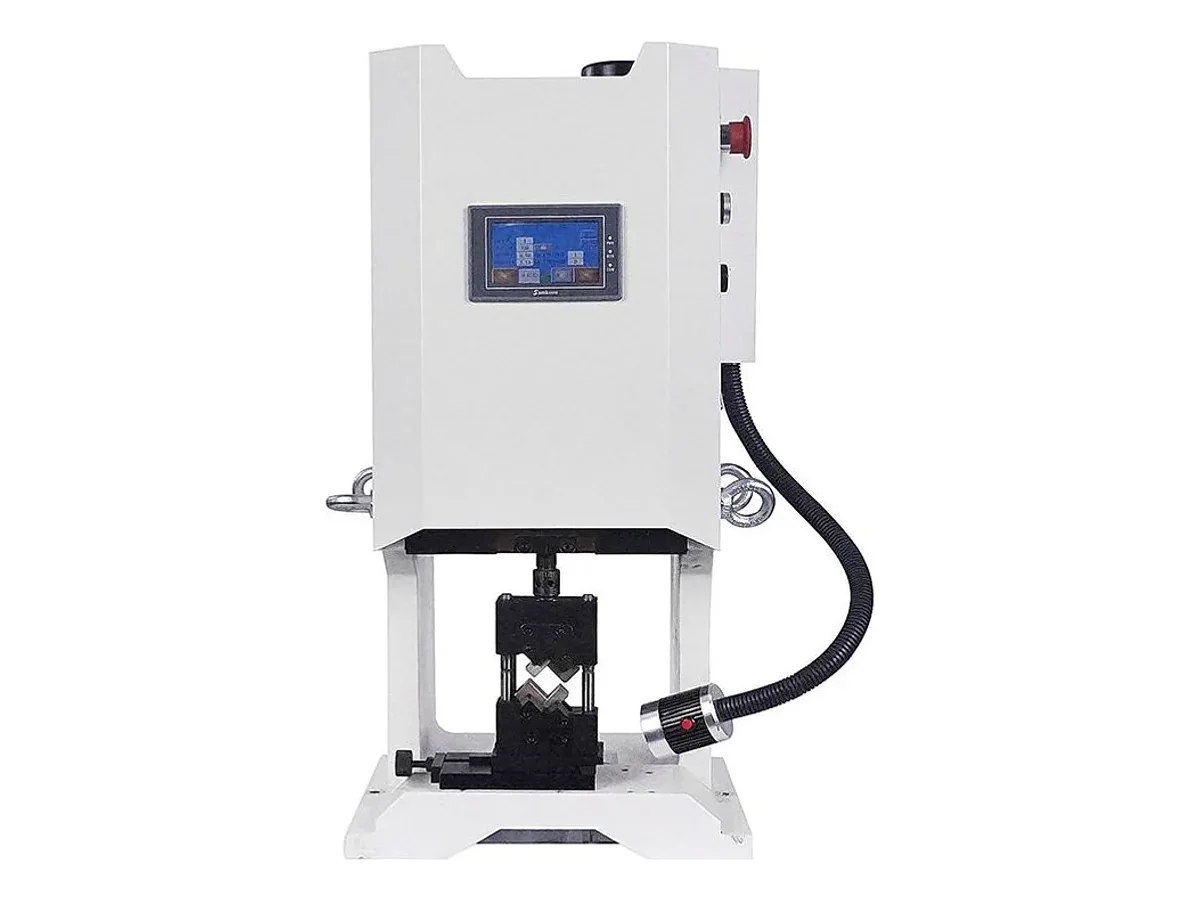
100 kN Semi-Automatic Servo Terminal Crimping Machine
Model WM-3110T
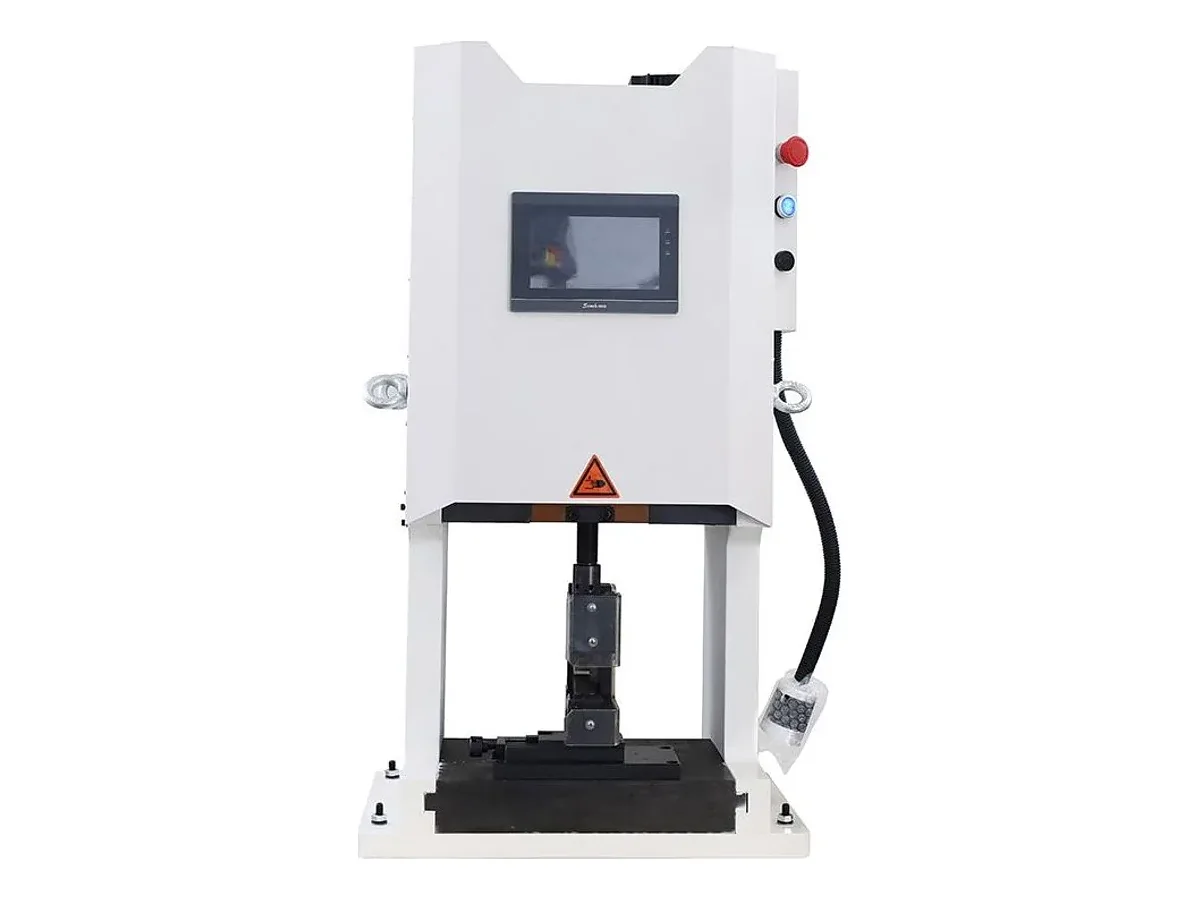
200 kN Semi-Automatic Servo Cable Lug Crimping Machine
Model WM-3120T
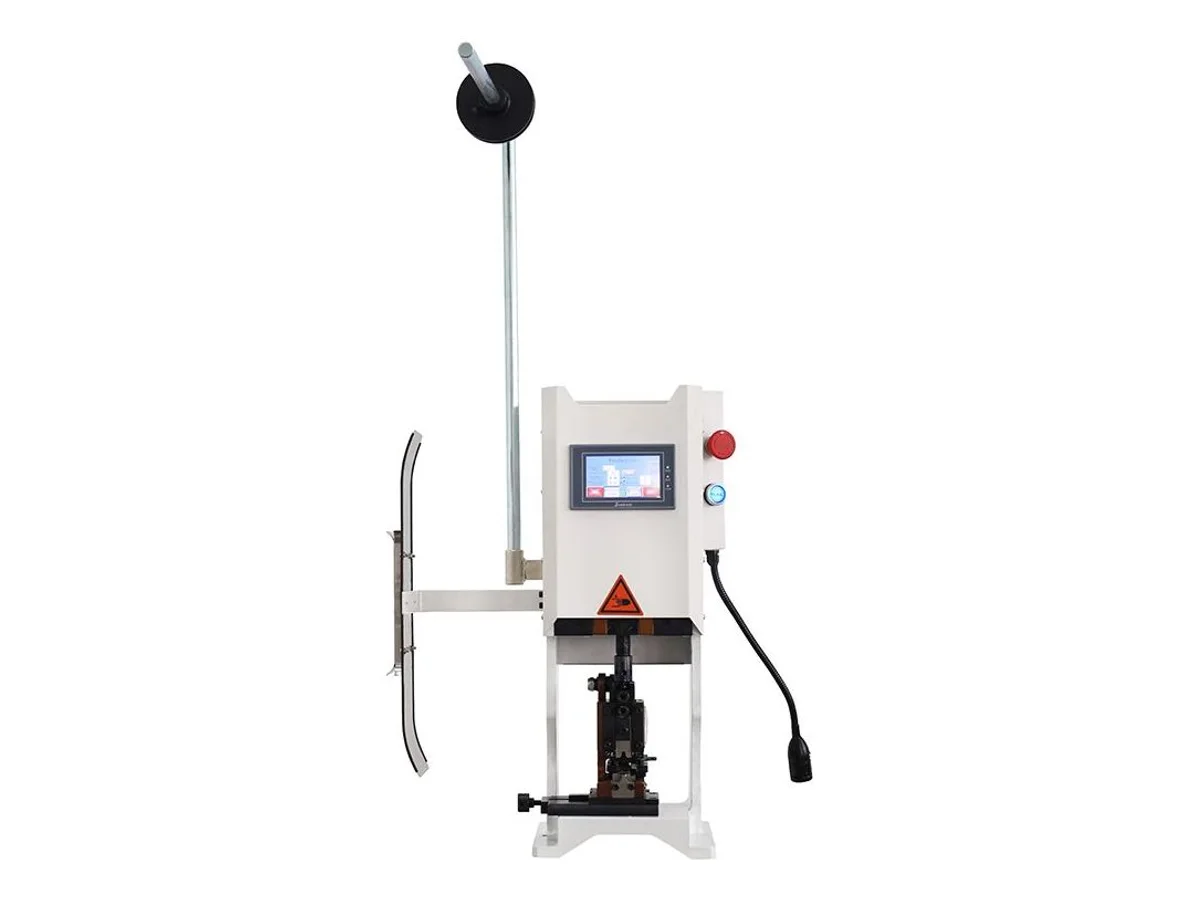
20 kN Semi-Automatic Servo Terminal Crimping Machine
Model WM-3102S