Automatic AC Power Cord Coiling and Twist Tying Machine WM-4820
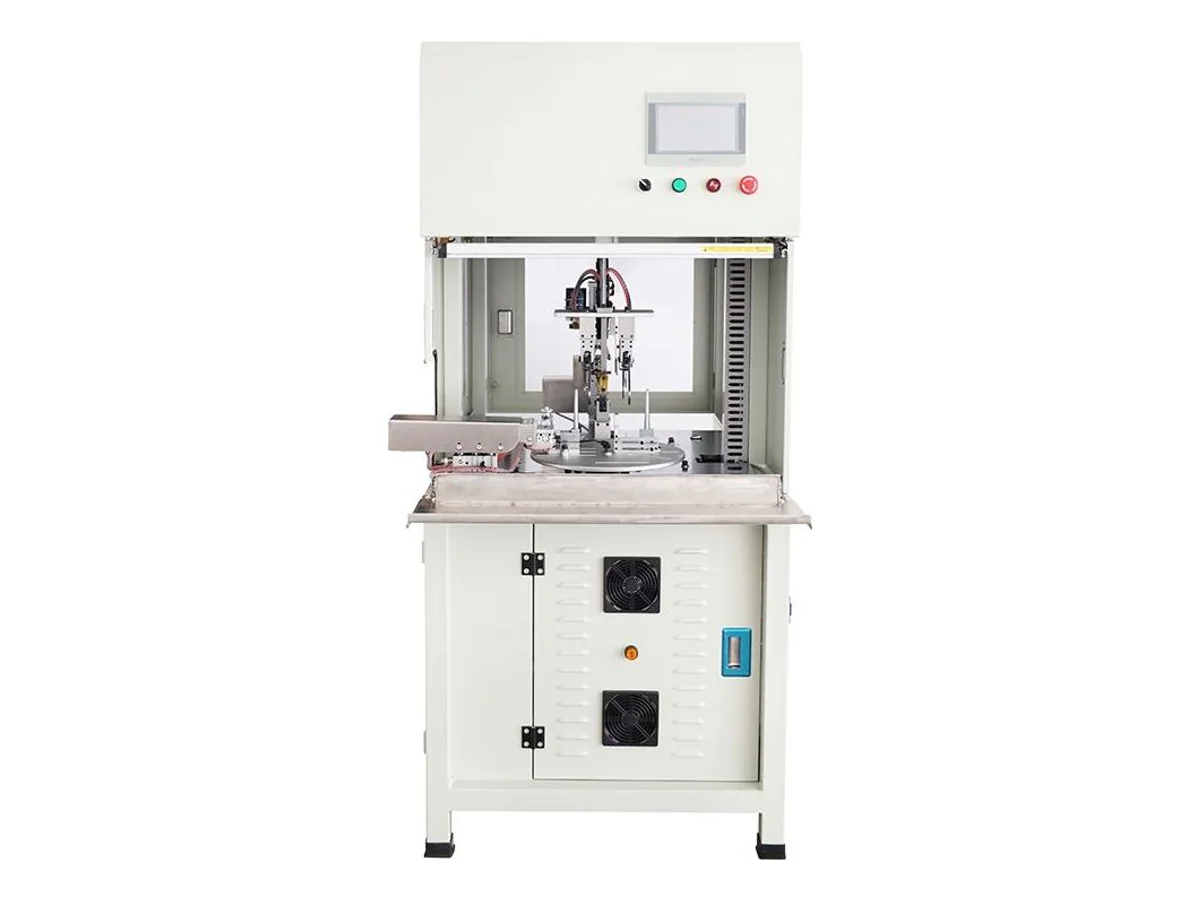
The WM-4820 is an enclosed, floor-standing cell that coils finished AC power cords and closes each coil with a twist tie in one cycle, at 1,100 to 1,400 pieces per hour. It takes cords up to 4,000 mm long, winds them over two posts set 120 to 220 mm apart on a rotary table, and leaves a programmable free head of 0 to 100 mm and a free tail of 30 to 400 mm so the moulded plug and the appliance end stay outside the coil. The guarded cabinet measures 1,500 × 900 × 1,920 mm and weighs 384 kg, running on 0.5–0.7 MPa air and no more than 1.6 kW.
Specifications
| Function | Coil winding and twist tying of AC power cords in one operation |
|---|---|
| Capacity | 1,100 – 1,400 pcs/h |
| Wire head size | 0 – 100 mm |
| Wire tail size | 30 – 400 mm |
| Wire winding length | 120 – 220 mm |
| Wire length | Max. 4,000 mm |
| Operating air pressure | 0.5 – 0.7 MPa |
| Power | ≤ 1.6 kW |
| Machine weight | 384 kg |
| Machine size | 1,500 × 900 × 1,920 mm (150 × 90 × 192 cm) |
| Enclosure | Built as a customised machine with a protective cover |
| Key components | SMC cylinders, Panasonic PLC and servo motors, Omron sensors (source-listed) |
| HS Code | 8479.89 (common reference — final classification confirmed by your customs broker) |
| Certification | CE (certificate provided with shipment) |
Key features
- Winding and tying run as one cycle — the cord is coiled on the rotary table and the tie is twisted shut before the coil is lifted out, so no second station and no hand tying is needed
- Two winding posts slide in slots on the rotary table, setting the winding length anywhere from 120 to 220 mm without changing tooling
- Free head 0–100 mm and free tail 30–400 mm — the moulded plug stays outside the coil at one end and a long tail can be left hanging at the other, which is what cord-set packing specs usually call for
- Fully enclosed cabinet with viewing windows and a protective cover instead of an open bench frame — 384 kg of machine on levelling feet, sized 1,500 × 900 × 1,920 mm
- Twist-tie head feeds coated tie wire, wraps it around the coil and twists it closed; an overhead gripper then lifts the tied coil off the posts and clears the table for the next cord
- Touch screen switches between English and Chinese and carries batch and total counters, a strap-feed key and a manual jog page for setup
- Free sample test — send us your finished cords, we wind and tie them on this machine and send you the video before you order
What it processes
- Finished AC power cords and cord sets coiled and tied after cutting, stripping and plug moulding
- Appliance leads, extension cords and mains cables up to 4 m long
- Packing lines that need a repeatable coil size and tie position at 1,100–1,400 pieces per hour
- Plants that want the winding and tying cycle inside a guarded cabinet rather than on an open bench
Suited for: finished AC power cords up to 4 m — plug already moulded on — coiled at a 120–220 mm winding length and closed with a twist tie inside a guarded 384 kg cabinet, at 1,100 to 1,400 pieces per hour. Not suited for: cord still on the reel that has to be measured and cut first — that is the WM-4808 cutting, figure-8 coiling and tying machine, which measures, cuts, coils and ties cable of OD 3–12 mm at 3–10 m. Cords longer than 4 m, or a small open station where floor space and budget matter more than an enclosure, point to the WM-4815 figure-8 winding and binding machine (cord up to Φ6.2 mm and 6 m, 800 × 600 mm footprint). Wire drawn off a reel that has to be metered before coiling belongs on the WM-4813 meter counting coil winding and tying machine for 1–8 mm wire, and occasional bundles presented by hand are cheaper on the WM-4807 semi-automatic winding and twist tie machine covering Ø 5–35 mm.
The two numbers that decide whether this machine fits your cord set are the head and the tail. Head runs from 0 to 100 mm, so the moulded plug can be held clear of the coil where a packer grabs it. Tail runs from 30 to 400 mm, a far longer free end than a general-purpose coiler leaves — that is the length a socket end, a control box or a stripped tail needs to hang outside the bundle. Cords that must be wound in completely flush at both ends are not this machine’s job; cords that have to present a plug at one end and a long tail at the other are exactly what the 30–400 mm window is for.
Everything else is the automation that hand coiling cannot repeat: the same turn count, the same 120–220 mm winding length and the same tie position on piece 1 and piece 1,200 of the shift, inside a closed cabinet rather than on an open table. The machine is built to order around the cord it will run, so send us a box of your finished cords with the coil size and tie position you want — we set it up, run them, and send the trial video with the measured cycle time before you commit.
Finished coils that then have to be stretch-wrapped before palletising can be handed to the WM-4818 cable coil stretch film wrapping machine, which takes coils with an inner diameter ≥120 mm and an outer diameter ≤400 mm at about 120 coils per hour.
Engineering knowledge
Choose and troubleshoot this process
- Cable Coiling Defects: Causes and Corrective ActionsTroubleshoot inconsistent coil diameter, crossed loops, stored twist, unstable lead length, loose binding and cable surface damage.
- How to Choose a Cable Coiling and Winding MachineChoose cable coiling equipment by cable construction, finished coil geometry, length control, binding method, product handling and batch mix.
- Spiral Cable Production: Winding, Heat Setting, Cooling and Reverse WindingPlan a retractile cable process around winding, heat setting, cooling and finishing. Define coil dimensions and accepted shift output before buying machines.
WM-4820 — common questions
Does the WM-4820 cut the cord to length?
No. It winds and ties cord that is already cut, stripped and fitted with its plug, which is why it sits at the end of a cord-set line rather than at the start. If measuring, cutting, coiling and tying have to happen in one machine, the WM-4808 does all four for cable OD 3–12 mm at finished lengths of 3–10 m.
What cord diameter can it handle?
We configure this machine for your cord size and length and confirm the diameter limit against your sample on the quote. If you need a stated diameter limit on the datasheet today, the WM-4815 covers cord up to Φ6.2 mm and the WM-4811 up to Φ10 mm.
What do "head" and "tail" mean on this machine?
Head is the free length of cord left before the first turn, adjustable from 0 to 100 mm, so the moulded plug can sit outside the finished coil where a packer can grab it. Tail is the free length left after the last turn, from 30 to 400 mm — note the 30 mm minimum, which means this machine always leaves a short tail rather than winding the cord in flush.
Is 1,100–1,400 pieces per hour realistic on my cord?
That is the specified reference range. Actual accepted output depends on cord length, number of turns, coil size and loading, and can fall outside that range. We run your own cords during the sample trial and send you the video with the measured cycle time, so the rate you plan against is your rate and not a brochure number.
What tie does it apply, and can it use nylon zip ties?
The tying head shown in the gallery feeds coated tie wire and twists it closed around the coil — the same style of tie used across this category. It is not a nylon zip-tie machine; if your packaging spec requires plastic zip ties, add the WM-4809 tie gun station at 1,500–1,800 ties per hour, or the WM-4814 for inline tying on harness and conduit.
Is the touch screen in English?
Yes. The screen in the gallery is the English page, with a key that switches to Chinese, production and total counters, a clearing key, a strap-supply key and a manual regulation page for setup. Machines ship with the English interface selected.
Related machines in Winding, Coiling & Binding
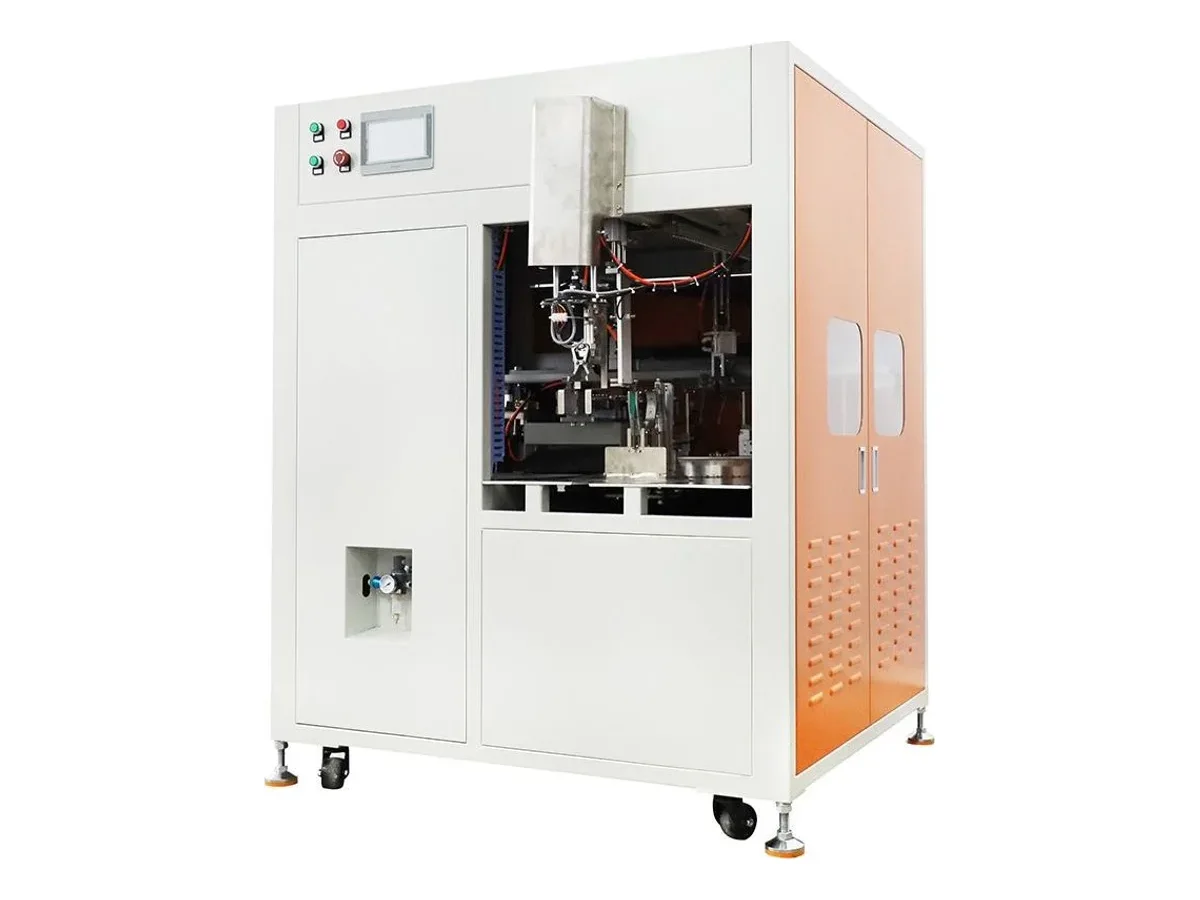
Automatic Cable Cutting, Figure-8 Coiling and Tying Machine
Model WM-4808
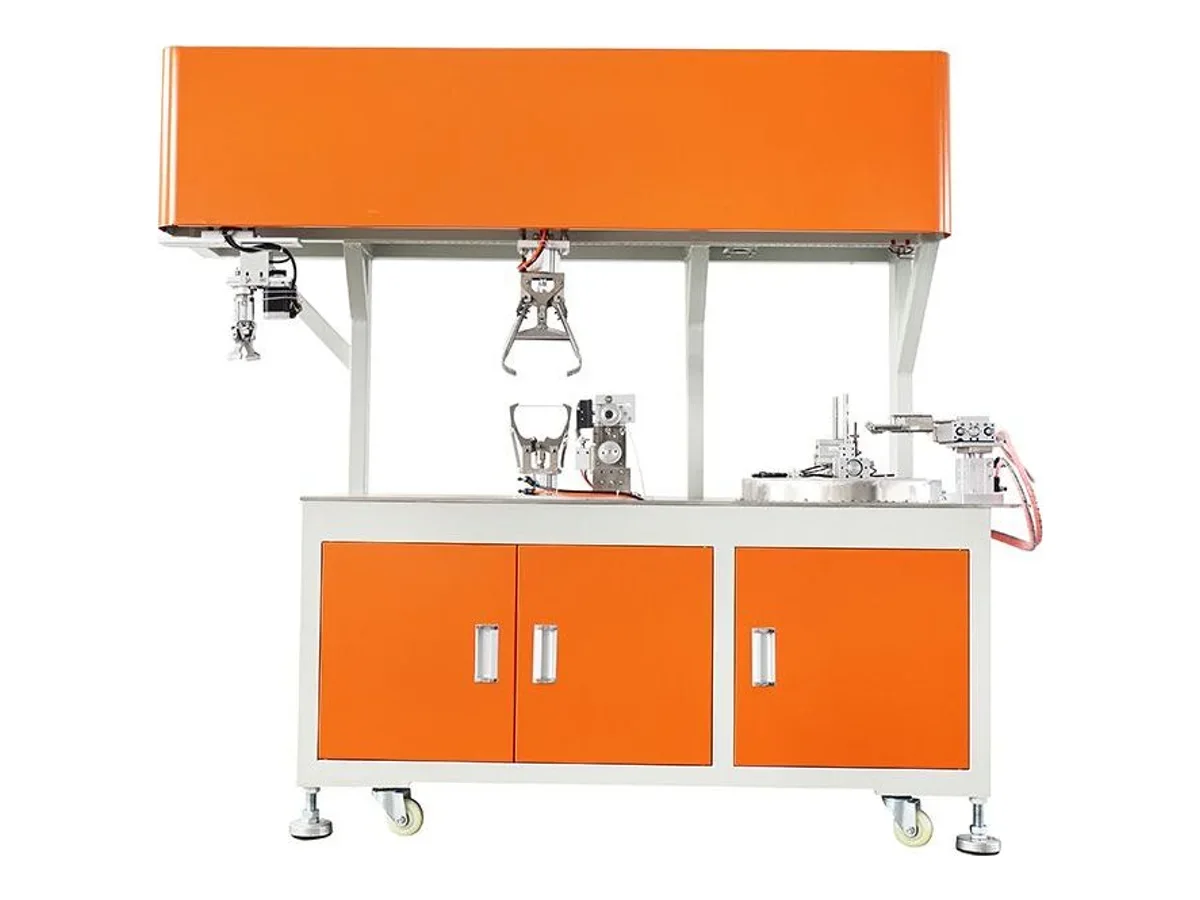
Automatic Cable Winding and Tying Machine for Figure-8 and Round Coils
Model WM-4811
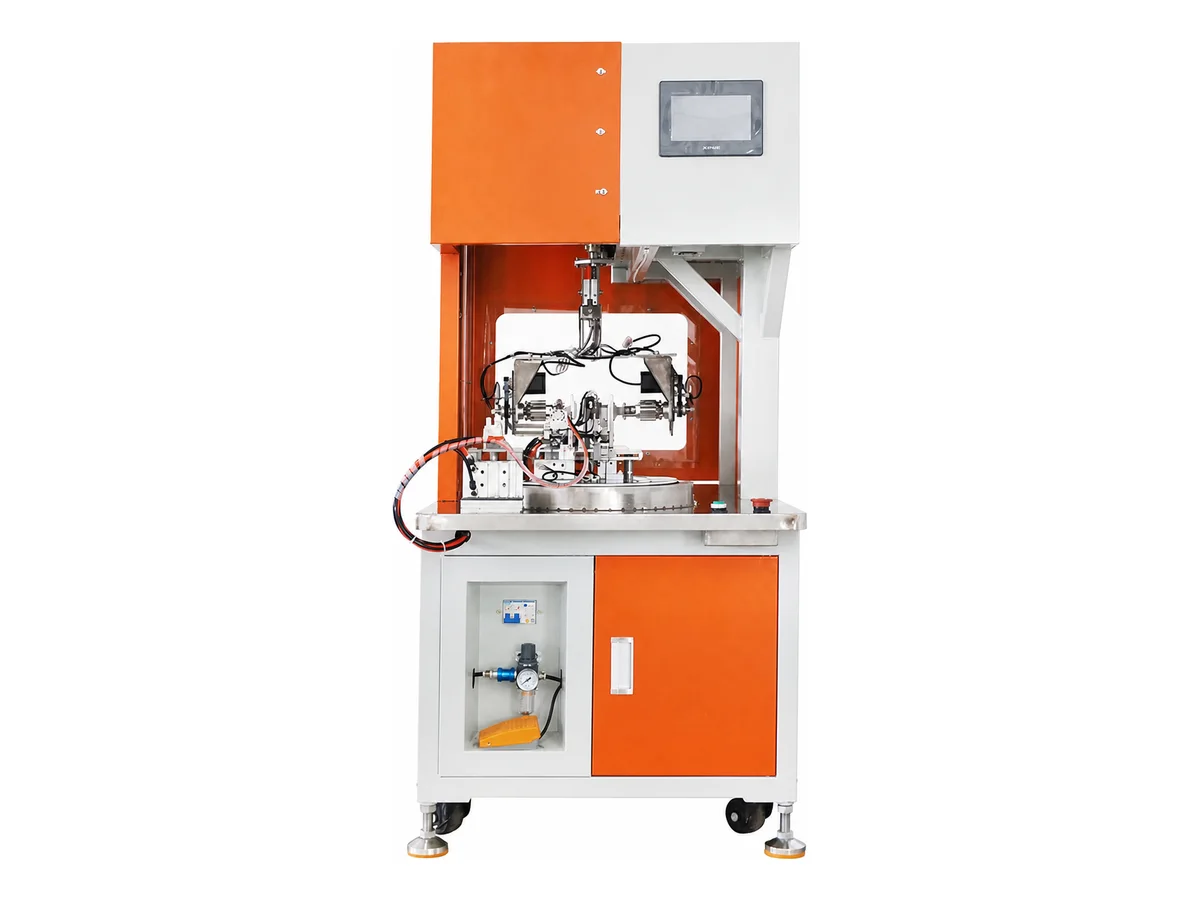
Automatic Figure-8 Cable Coiling and Paper Banding Machine
Model WM-4827