Automatic Figure-8 Power Cord Coiling and Twist Tying Machine WM-4815
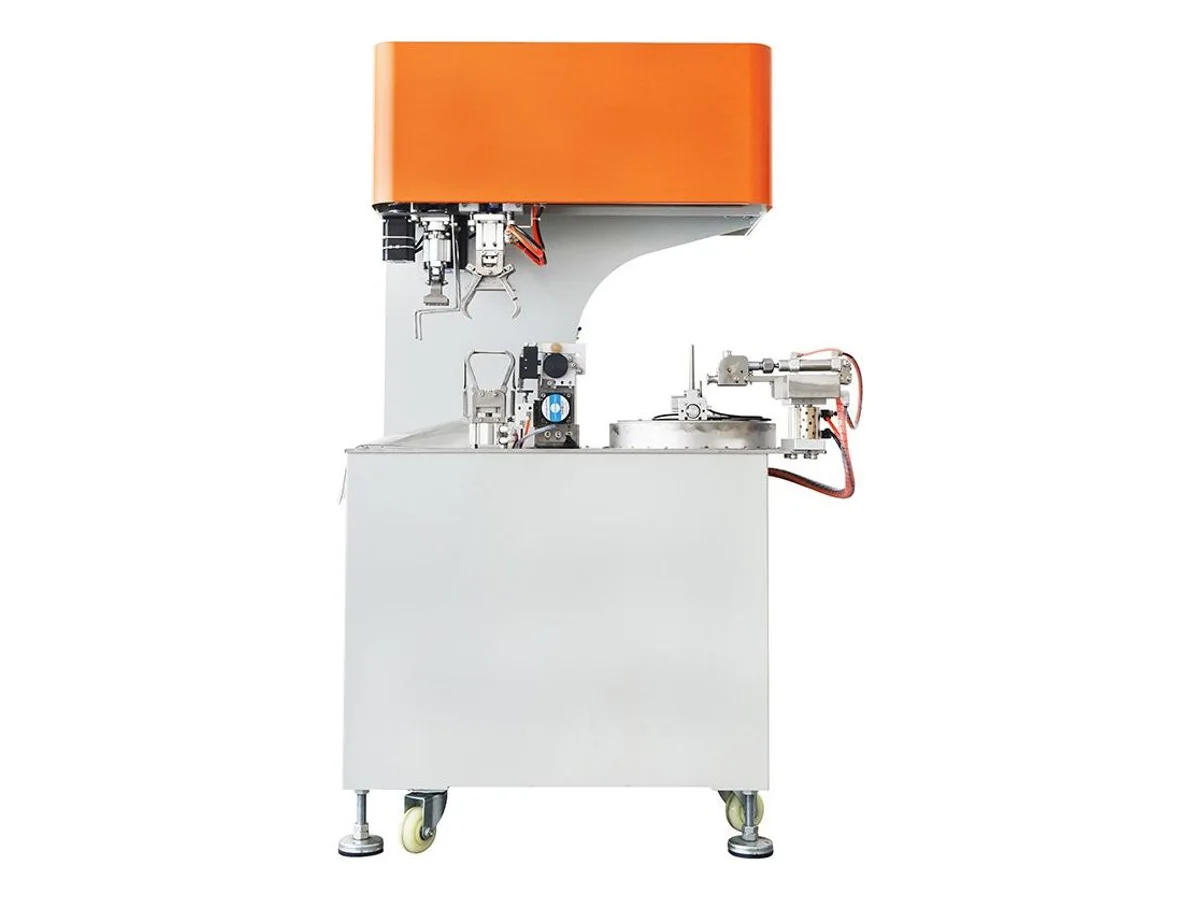
The WM-4815 winds pre-cut cord up to Φ6.2 mm and 6 m long into a figure-8 coil and closes it with a single twist tie, at a theoretical output of 1,500 pieces per hour. Winding distance is set from 65 to 240 mm on the scale-marked rotary table, the tied bundle stays under 45 mm across, and head length is programmable from 0 to 100 mm so plug ends stay outside the coil. Winding turns, winding speed, tie feed length and clamp time are entered on the touch screen, and the whole station occupies only 800 × 600 mm of floor space.
Specifications
| Finished type | Figure-8 winding with a single tie |
|---|---|
| Suitable material | AC wires, DC wires, etc. |
| Applicable diameter | ≤ Φ6.2 mm |
| Applicable length | ≤ 6 m |
| Winding distance | 65 – 240 mm |
| Head length | 0 – 100 mm |
| Tail length | > 0 mm |
| Bundled diameter | ≤ 45 mm |
| Suitable cable tie | Rubber core or coreless tie wire |
| Theoretical yield | 1,500 pcs/h |
| Number of turns and speed | Adjustable |
| Main motor | Servo and stepper motor |
| Voltage | 210 – 240 V, 5 A |
| Air pressure | 0.4 – 0.55 MPa |
| Size | 800 × 600 × 1,400 mm |
| HS Code | 8479.89 (common reference — final classification confirmed by your customs broker) |
| Certification | CE (certificate provided with shipment) |
Key features
- Figure-8 coil closed with one twist tie — the crossing pattern keeps the bundle from spinning loose when the tie is cut open at the packing line
- Two forming posts slide along a scale-marked rotary table, so winding distance from 65 to 240 mm is a ruler setting rather than a tooling change
- Head length 0–100 mm and free tail length — the plug or connector end can be left outside the coil, or head and tail can be wound in together for a plain bundle
- Winding turns, winding speed, tie feed length, clamp time and cycle interval are all entered on the touch screen, with total and batch counters and a batch set-point on the same page
- Reel-fed twist-tie head feeds, wraps and cuts the tie wire in one motion, with a tie-test key on screen for setting up a new tie material
- Overhead gripper lifts the tied coil off the forming posts and drops it clear of the table so the next cord can be loaded immediately
- Free sample test — send us your cut cords, we wind and tie them on this machine and send you the video before you order
What it processes
- USB cables, AC power cords and DC power cords bundled after cutting, stripping and plug molding
- Pre-cut leads up to 6 m long and Φ6.2 mm outside diameter, packed as tied figure-8 coils
- Cord sets that go straight from the winder into a polybag or blister tray
- Small-footprint packing cells where floor space, not throughput, is the constraint
Suited for: pre-cut cord up to Φ6.2 mm and 6 m — USB cables, AC and DC power cords after plug molding — wound into a figure-8 coil and closed with one twist tie, in a station that takes up 800 × 600 mm of floor. Not suited for: cord still on the reel that has to be measured and cut first — the WM-4808 cutting, figure-8 coiling and tying machine integrates measure–cut–coil–tie for cable OD 3–12 mm. Heavier cord, hose or soft tube up to Φ10 mm, or bundles that must alternate between figure-8 and round shape, belong on the WM-4811 winding and tying machine — though if that Φ10 mm cord still has to be wound as a figure-8 tighter than 180 mm, the WM-4822 figure-8 winding and twist tie machine is the one that reaches 110 mm at that diameter; round coils that need two ties instead of one are the job of the WM-4800 double-tie coiling machine. For occasional bundles of Ø 5–35 mm presented by hand, the WM-4807 semi-automatic winding and twist tie machine provides a semi-automatic workstation for this handling pattern. AC cord sets that must keep a long free tail outside the coil, or lines that want the winding and tying cycle inside a guarded cabinet instead of on an open bench, are the job of the WM-4820 AC power cord winding and tying machine — cords up to 4 m, tail 30–400 mm, 1,100–1,400 pieces per hour in a 384 kg enclosed cell.
The 65–240 mm winding distance is the setting that decides how the finished cord looks in the bag. Both forming posts slide in slots on the rotary table against a printed scale, so a change from a 1.5 m appliance lead to a 5 m extension cord is a repeatable ruler setting, not a trial-and-error rebuild. Head length from 0 to 100 mm keeps the plug end outside the coil where a packer can grab it, or you can wind head and tail in together when the cord is going straight into a sealed bag.
The rest of the cycle is ordinary automation doing what hand-winding cannot: identical turn count, identical tie position and identical coil diameter on piece 1 and piece 900. A servo drives the winding table, a stepper feeds the tie wire, the twist-tie head wraps and cuts the tie, and the overhead gripper lifts the finished coil clear. Send us a box of your cut cords with the target coil size and tie position — we run them on this machine and send the trial video before you commit to the order.
Engineering knowledge
Choose and troubleshoot this process
- Cable Coiling Defects: Causes and Corrective ActionsTroubleshoot inconsistent coil diameter, crossed loops, stored twist, unstable lead length, loose binding and cable surface damage.
- How to Choose a Cable Coiling and Winding MachineChoose cable coiling equipment by cable construction, finished coil geometry, length control, binding method, product handling and batch mix.
- Spiral Cable Production: Winding, Heat Setting, Cooling and Reverse WindingPlan a retractile cable process around winding, heat setting, cooling and finishing. Define coil dimensions and accepted shift output before buying machines.
WM-4815 — common questions
Does the WM-4815 measure and cut the cord?
No. It winds and ties cord that is already cut to length — which is why it sits at the end of a cut-strip-crimp or plug-molding line rather than at the start. If measuring, cutting, figure-8 coiling and tying have to happen in one machine, the WM-4808 does all four for cable OD 3–12 mm and finished lengths of 3–10 m.
How many ties does it apply per coil?
One. The tie lands at the waist of the figure-8, where the crossing already holds the coil together. If your packing spec calls for two ties holding the coil at two separate points, that is the WM-4800 — it forms a round coil and applies two ties with 70–180 mm spacing on material up to Ø10 mm.
What is the largest cord it can wind?
Φ6.2 mm outside diameter, up to 6 m long. Heavier cord, hose or soft tube up to Φ10 mm belongs on the WM-4811, which also offers a round-coil mode in addition to figure-8.
Is 1,500 pieces per hour a guaranteed rate?
It is the source-listed theoretical yield. Real output depends on cord length, number of winding turns, coil size and how fast the operator feeds the machine, so we confirm the rate on your own cord during the sample trial and send you the video with the cycle time.
What tie wire does it use?
Rubber-coated iron-core or coreless tie wire from a reel, with the tie feed length set on the touch screen — 140 mm in the screen shown in the gallery. It does not apply nylon zip ties; if your packaging spec requires those, pair the coil with the WM-4809 cable tie station.
What is the WM-4815B?
An alternate build of this machine with the same specification. The WM-4815B is quoted separately — tell us which page you are looking at when you ask for a price.
Related machines in Winding, Coiling & Binding
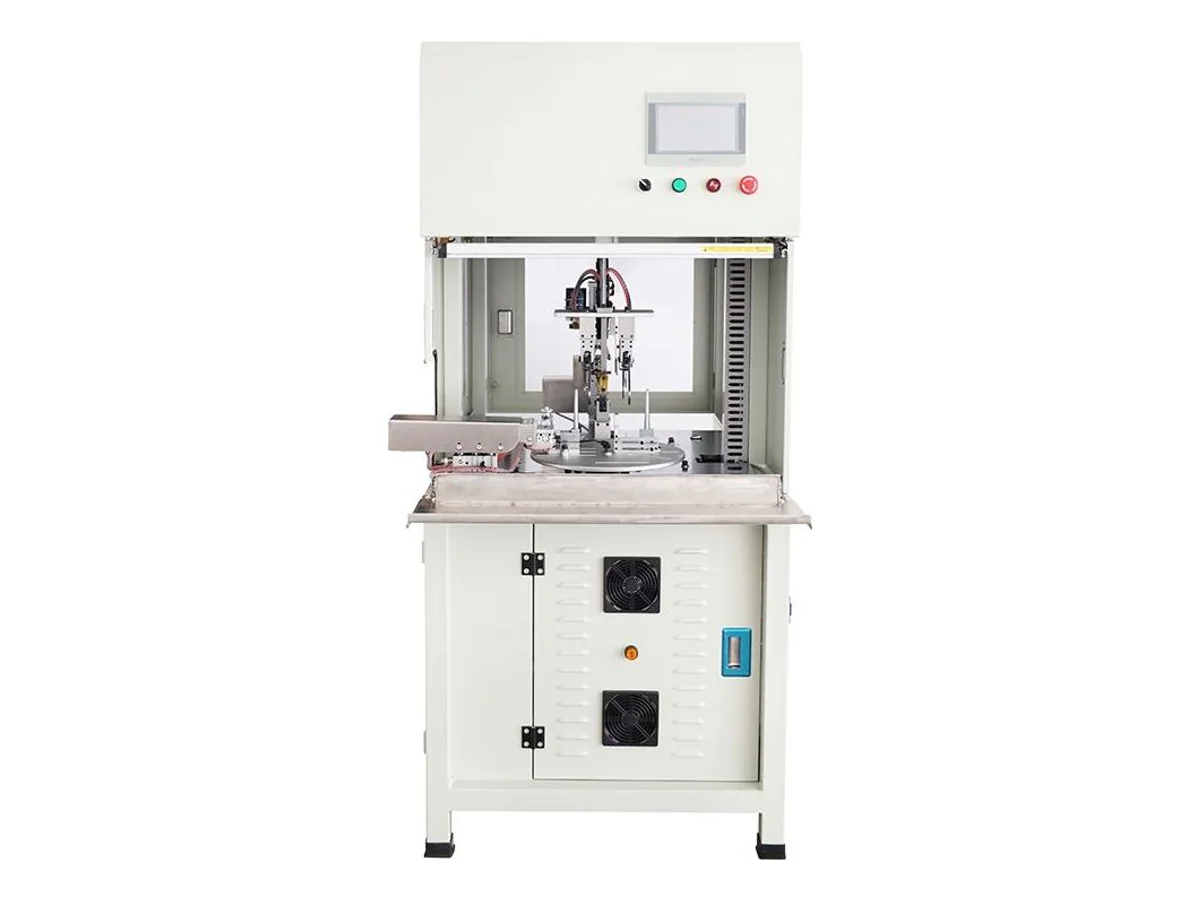
Automatic AC Power Cord Coiling and Twist Tying Machine
Model WM-4820
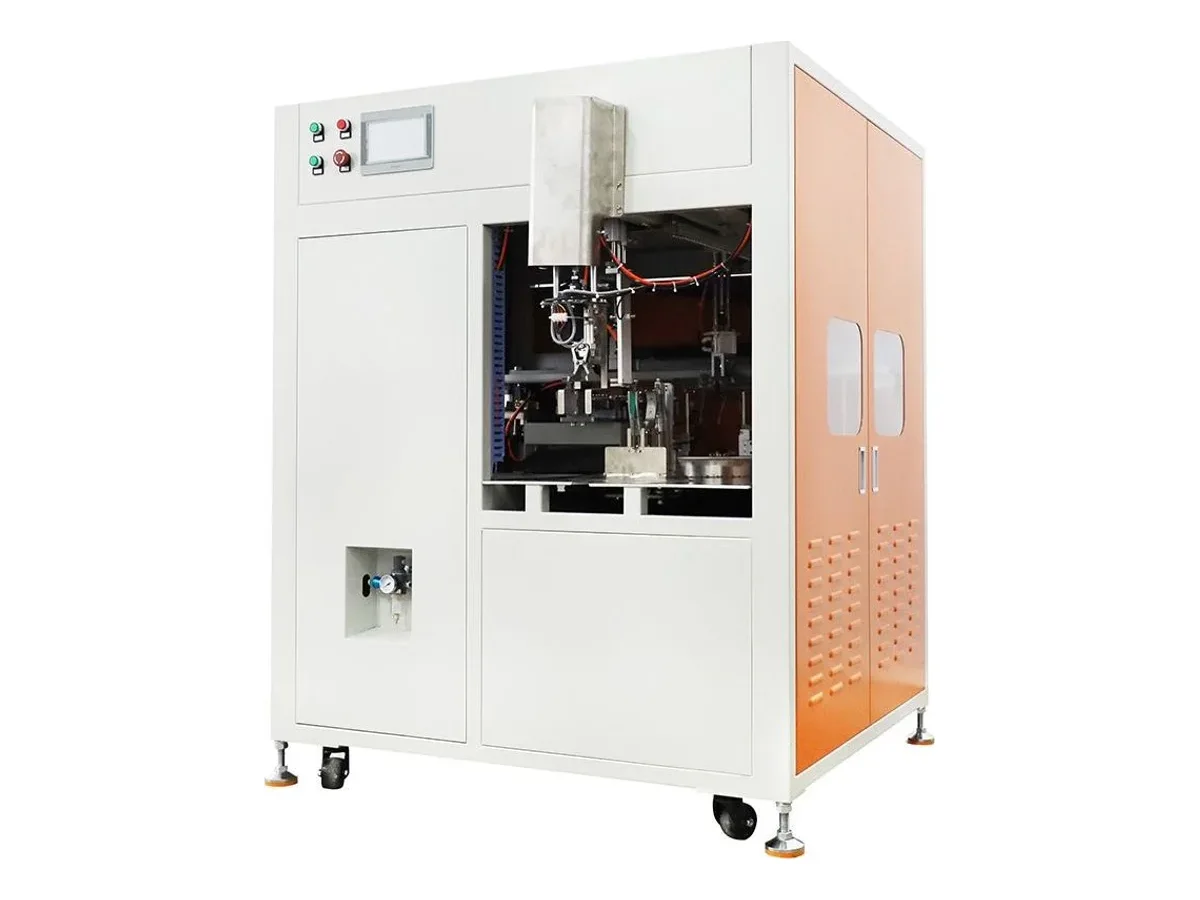
Automatic Cable Cutting, Figure-8 Coiling and Tying Machine
Model WM-4808
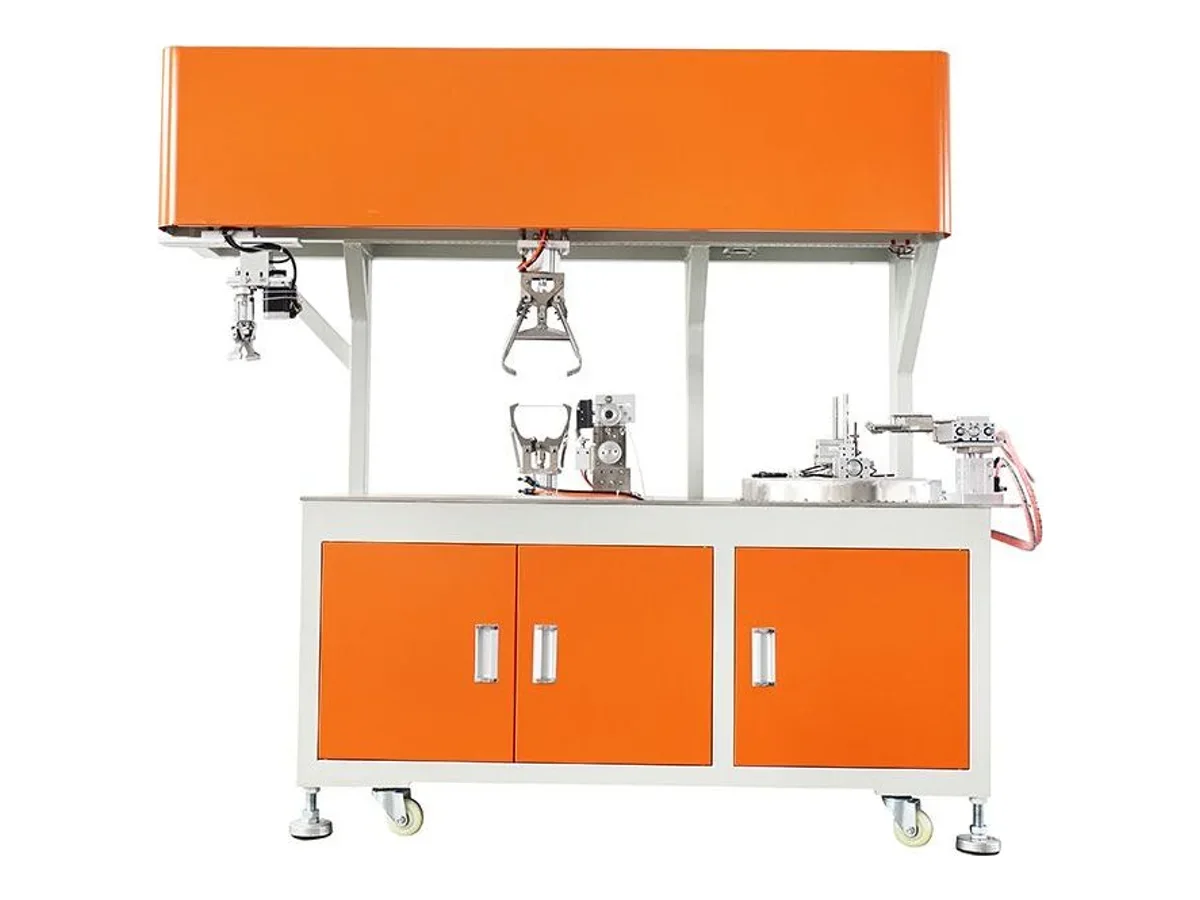
Automatic Cable Winding and Tying Machine for Figure-8 and Round Coils
Model WM-4811