Figure-8 Cable Coiling and Twist Tying Machine, up to 10 mm Cable WM-4822
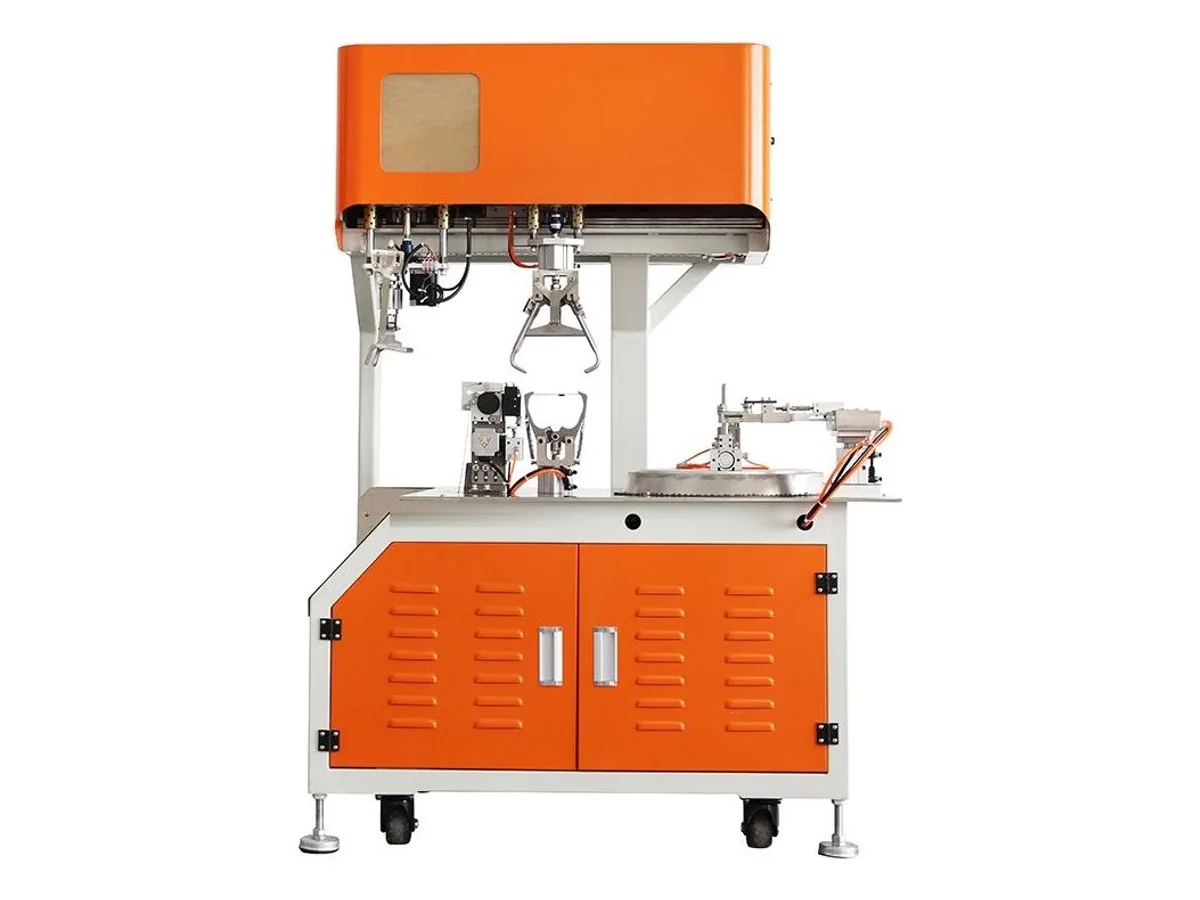
The WM-4822 winds pre-cut cable up to Φ10 mm into a figure-8 coil and closes it with a twist tie, over a winding distance adjustable from 110 to 300 mm. The tied bundle stays within 48 mm across, head length is set from 0 to 100 mm and tail length from 0 to 500 mm, so a moulded plug can sit outside the coil with a long free lead. Winding turns, winding speed, tie feed length and clamp time are entered on the English touch screen, a 1,000 W double-servo drive runs the rotary table and the overhead gripper, and the station occupies 1,170 × 772 mm of floor.
Specifications
| Winding appearance | Figure-8 coil with twist tie |
|---|---|
| Applicable outer diameter | ≤ Φ10 mm (depending on the wire) |
| Winding distance | 110 – 300 mm |
| Tie-in diameter | ≤ 48 mm |
| Head length | 0 – 100 mm |
| Tail length | 0 – 500 mm |
| Number of turns and speed | Adjustable |
| Main motor | 1,000 W double servo |
| Air pressure requirement | 0.4 – 0.55 MPa |
| Dimensions | 1,170 × 772 × 1,485 mm |
| HS Code | 8479.89 (common reference — final classification confirmed by your customs broker) |
| Certification | CE (certificate provided with shipment) |
Key features
- Figure-8 coil closed with a twist tie at the waist, where the crossing already holds the bundle, so the coil does not spring open when the tie is cut at the packing bench
- Winding distance adjustable from 110 to 300 mm on cable at the full Φ10 mm size — the coil is formed over two posts on the rotary table, one of them sliding along a radial slot, so coil length is a setting rather than a tooling change
- Head length 0–100 mm and tail length 0–500 mm are set independently, which is what lets a moulded plug stay outside the coil at one end and a long free lead run out of the other
- 1,000 W double-servo main drive — one axis turns the winding table, the other carries the overhead gripper on its rail, and turn count and winding speed are entered on screen instead of set by mechanical stops
- English touch screen carries winding turns, winding speed, tie feed length, clamp time and cycle interval on one page, with total and batch counters, a batch set-point and Send Tie / Cut Tie / Tie Test service keys for setting up a new tie material
- Reel-fed twist-tie head draws the tie wire through three ball-bearing guide rollers and a rubber drive wheel, then wraps and cuts the tie in one motion
- Overhead four-finger gripper lifts the tied coil clear of the winding posts so the next cable can be loaded straight away
- Imported AirTAC cylinders, sensors, solenoid valves and hand slide valves throughout the pneumatic circuit, fed from an on-board filter-regulator at 0.4–0.55 MPa
- Free sample test — send us your cut cords, we wind and tie them on this machine and send you the video before you order
What it processes
- AC power cords and USB data cables bundled after cutting, stripping and plug moulding
- Pre-cut cable, flexible cord and soft tube up to Φ10 mm outside diameter
- Short figure-8 coils of 110–180 mm winding distance on heavier cable, where a wider winding table cannot close the coil that tightly
- Packing cells where the coil has to be tied, dropped and bagged without an operator holding it
Suited for: pre-cut cable, cord and soft tube up to Φ10 mm — AC power cords and USB data cables after plug moulding — wound into a figure-8 coil of 110 to 300 mm and closed with a twist tie, head and tail set independently so the connector ends stay free. Not suited for: cable still on the reel that has to be measured and cut first — the WM-4808 cutting, figure-8 coiling and tying machine integrates measure–cut–coil–tie for cable OD 3–12 mm and 3–10 m lengths. Nor for packing specs that alternate between figure-8 and round coils, or that need the published 800–1,200 pcs/h reference rate — that is the WM-4811 winding and tying machine, which runs both shapes on one station at up to Φ10 mm. Round coils held by two ties at 70–180 mm spacing belong on the WM-4800 double-tie coiling machine; lighter cord up to Φ6.2 mm and 6 m, in an 800 × 600 mm footprint, goes on the WM-4815 figure-8 winding and binding machine. And if the coil needs a measured length but no tie at all, the WM-4810 coiling machine with meter counter winds counted lengths of wire from 0.5 to 16 mm.
The 110 mm figure-8 on Φ10 mm cable
Figure-8 packing is chosen for a specific reason — the crossing at the waist stops the coil unwinding into a tangle when the tie is cut, which is why appliance and power-cord makers prefer it over a plain round coil. The awkward part is doing it on heavy cable. A thick jacket has memory and a minimum bend radius, so most figure-8 stations that accept Φ10 mm cable need a long winding distance to close the loop cleanly. This one is specified from 110 mm, against 180 mm on the wider WM-4811 at the same Φ10 mm cable size, and the finished bundle is held under 48 mm across. That is the whole reason this machine exists next to its siblings — a short, dense figure-8 on cable that is not thin.
The coil is formed over two vertical posts standing on a large rotary table. One post is fixed, the other rides a pneumatic slide along a radial slot, and the distance between them sets the coil length. The table itself is driven through a ring gear by one half of the 1,000 W double-servo drive; the other half carries the overhead gripper along its rail under the hood. Because both axes are servo-driven, turn count and winding speed are entered on the screen rather than dialled in at a mechanical stop.
What the screen controls
The English touch screen puts the whole recipe on one page: number of winding turns, winding speed in revolutions per second, tie feed length in millimetres, clamp time and cycle interval, next to total and batch counters with a batch set-point. Three service keys — Send Tie, Cut Tie and Tie Test — run the twist-tie head on its own, which is what you use when you change to a different tie wire and need to check the wrap before running a batch. A Half Auto mode lets the operator step the cycle for setup.
The twist-tie head itself is reel-fed. The tie wire threads through three ball-bearing guide rollers and a rubber drive wheel, is measured to the length set on screen, wrapped around the waist of the coil and cut in one motion. When the tie is closed, the four-finger gripper overhead drops, lifts the finished coil off the posts and releases it clear of the table so the next cable can be loaded without waiting.
Confirm the working configuration and output
Output, machine weight, supply voltage and tie-material compatibility are confirmed on the quote. We run your own cable — send 20 to 30 finished pieces with the plugs already moulded on, tell us the target coil length, the head and tail you need and the tie you buy, and we return a video with the measured cycle time, the coil dimensions and a tied sample. That video is the number that goes in your capacity plan.
Cable behaviour is the other thing a datasheet cannot tell you. Jacket friction, conductor count and how long the cable has sat on the reel all change whether a Φ10 mm cord will hold a 110 mm figure-8 or spring back once the gripper lets go. The trial is where that gets settled, before a purchase order, not after.
Engineering knowledge
Choose and troubleshoot this process
- Cable Coiling Defects: Causes and Corrective ActionsTroubleshoot inconsistent coil diameter, crossed loops, stored twist, unstable lead length, loose binding and cable surface damage.
- How to Choose a Cable Coiling and Winding MachineChoose cable coiling equipment by cable construction, finished coil geometry, length control, binding method, product handling and batch mix.
- Spiral Cable Production: Winding, Heat Setting, Cooling and Reverse WindingPlan a retractile cable process around winding, heat setting, cooling and finishing. Define coil dimensions and accepted shift output before buying machines.
WM-4822 — common questions
Does the WM-4822 measure and cut the cable?
No. It winds and ties cable that is already cut to length, so it belongs at the end of a cut-strip-crimp or plug-moulding line rather than at the start. If measuring, cutting, figure-8 coiling and tying all have to happen in one machine, the WM-4808 covers cable OD 3–12 mm at finished lengths of 3–10 m.
What does the 110 mm minimum winding distance buy me?
A shorter, denser figure-8 on heavy cable. Our wider figure-8 and round machine, the WM-4811, also takes cable up to Φ10 mm but its figure-8 winding distance starts at 180 mm; the compact WM-4815 winds from 65 mm but only up to Φ6.2 mm cord. The WM-4822 sits between them — full Φ10 mm capability with the coil closing down to 110 mm — which matters when the finished bundle has to drop into a small carton or a blister tray.
How many ties does it apply, and what tie material?
One tie, laid at the waist of the figure-8. The tie wire is reel-fed and the feed length is set on the touch screen. The source specification does not name a tie material for this model, so send us a sample of the tie you already buy and we run it on the machine during the trial. If your packing spec calls for two ties holding the coil at two separate points, that is the WM-4800, which forms a round coil and ties it twice with 70–180 mm spacing on material up to Ø10 mm.
What output per hour should I plan for?
Output is confirmed on the quote after a trial using your cable. For comparison, other models list 800–1,200 pcs/h at Φ10 mm and a theoretical 1,500 pcs/h at Φ6.2 mm; those rates are not specifications for the WM-4822. We send your trial video with the measured cycle time for capacity planning.
What is the machine weight and the power supply?
Neither is published for this model. What is published is the footprint of 1,170 × 772 × 1,485 mm, the 1,000 W double-servo main motor and the 0.4–0.55 MPa air requirement. If you need a crate weight for a freight quotation or a supply voltage for the electrical drawing, ask and we get both in writing before you commit.
Can it wind a plain round coil instead of a figure-8?
No — this machine forms the figure-8 shape only. If your packaging alternates between figure-8 and round coils on the same station, the WM-4811 switches between the two by recipe, covering 180–300 mm in figure-8 mode and 120–300 mm in round mode on cable up to Φ10 mm.
What is the WM-4822B?
An alternate build of this machine with the same specification. The WM-4822B is quoted separately — tell us which page you are looking at when you ask for a price.
Related machines in Winding, Coiling & Binding
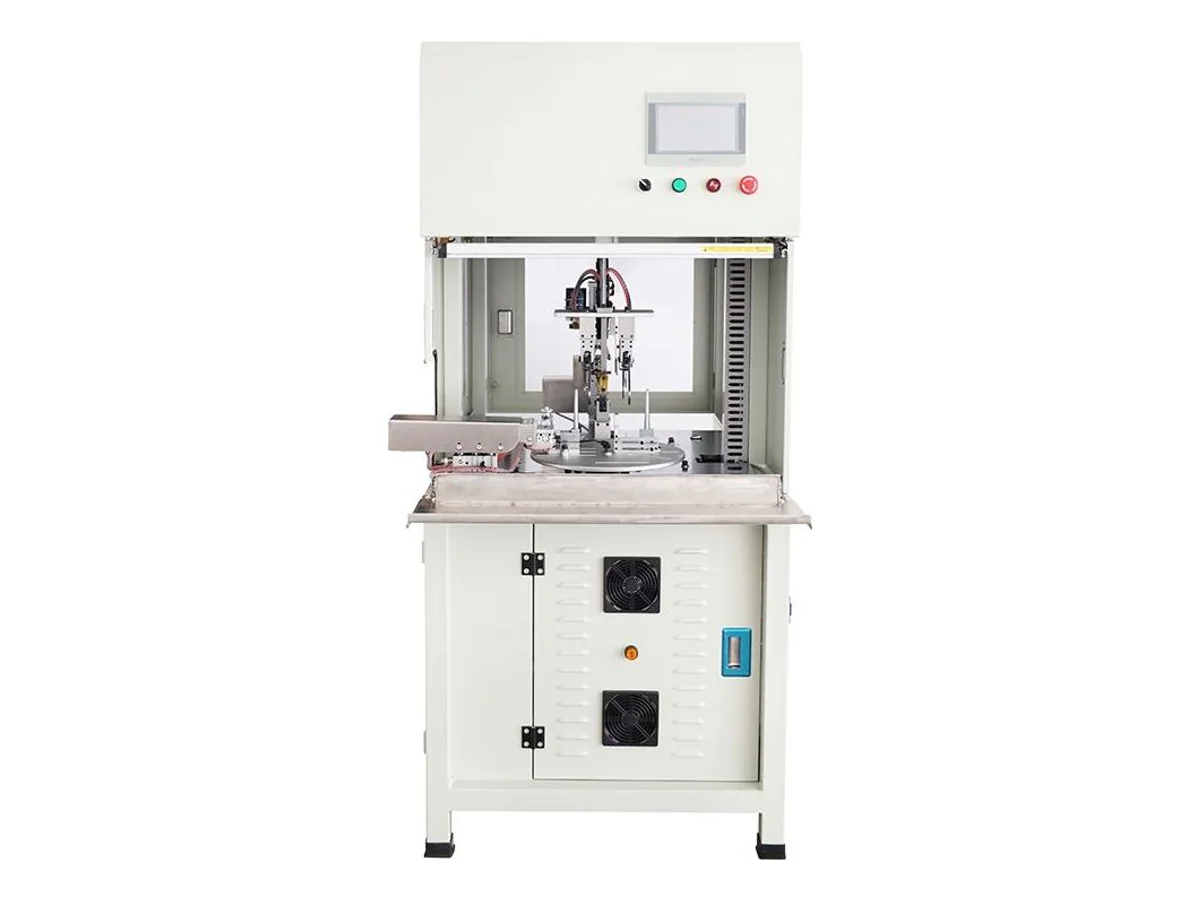
Automatic AC Power Cord Coiling and Twist Tying Machine
Model WM-4820
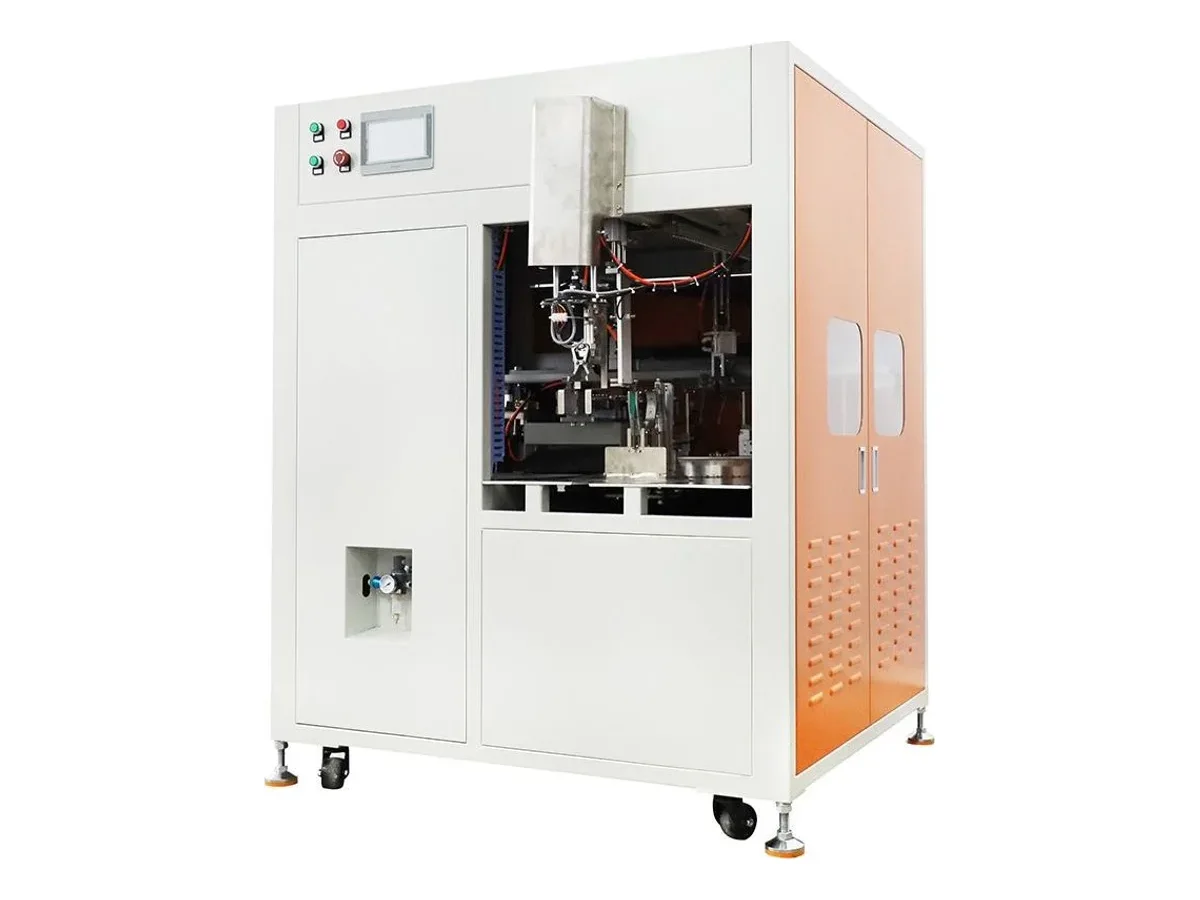
Automatic Cable Cutting, Figure-8 Coiling and Tying Machine
Model WM-4808
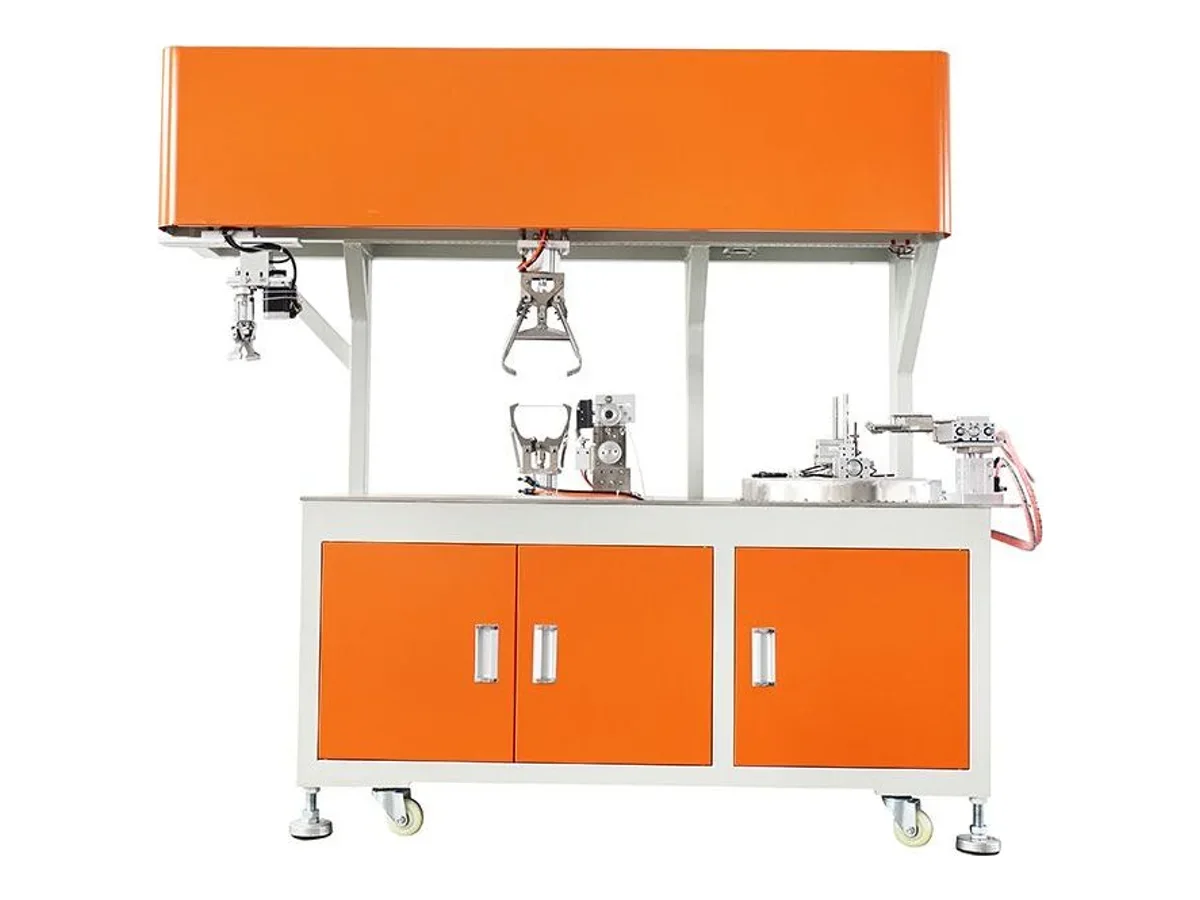
Automatic Cable Winding and Tying Machine for Figure-8 and Round Coils
Model WM-4811