Automatic Power Cord Manufacturing Line with Plug Insert Crimping and Injection Molding WM-361C
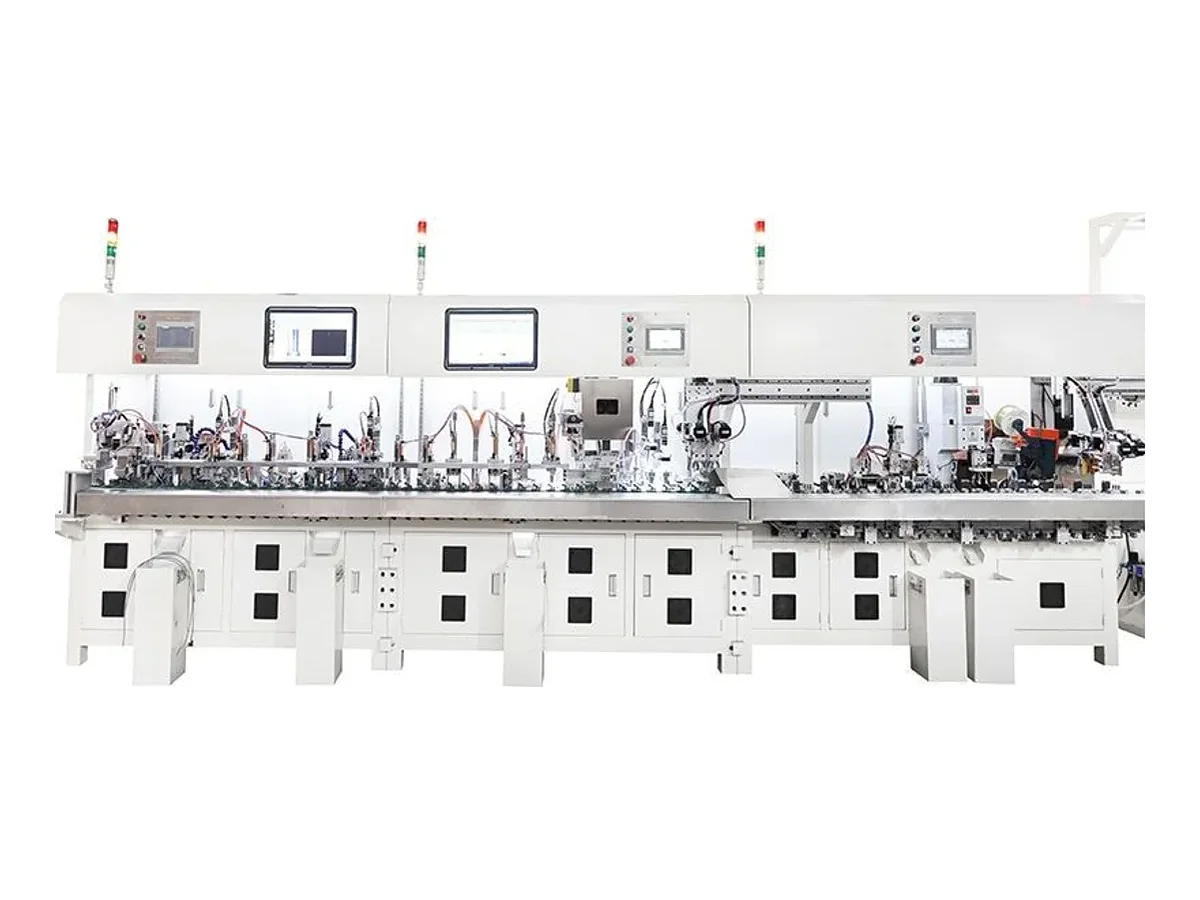
The WM-361C is a complete power cord manufacturing line — it cuts and strips the cable, crimps the plug inserts at 4 tons, processes the tail end, injection-molds the plug body over the crimped inserts and electrically tests the finished cord. Output is 800–1,200 cords per hour depending on cutting length, at a yield rate of 99% or better, with vision cameras inspecting stations along the transfer line. The full line occupies 12,500 × 5,500 × 1,900 mm, weighs 16,000 kg and runs on 0.5–0.8 MPa compressed air.
Specifications
| Model | WM-361C |
|---|---|
| Function | Power cord manufacturing — plug insert crimping and injection molding line |
| Capacity | 800 – 1,200 pcs/h (subject to the cutting length) |
| Crimping force | 4 T |
| Yield rate | ≥ 99% |
| Voltage | Reference configuration: AC 220 V, 50 Hz. We confirm the line supply and phase on your quote. |
| Operating pressure | 0.5 – 0.8 MPa |
| Power | ≤ 38 kW |
| Machine size | L 12,500 × W 5,500 × H 1,900 mm |
| Machine weight | 16,000 kg |
| Electrical configuration | We configure the machine’s electrical supply for your installation before shipment. Your quote confirms the voltage, phase, frequency, current and the power cord with plug or industrial connection for your site. Common site supplies are 120 V, 60 Hz with grounded Type B outlets in the US and Canada, with 208 V or 240 V also found at industrial sites. The UK and Ireland use 230 V, 50 Hz with Type G. Australia and New Zealand use nominal 230 V, 50 Hz with Type I, and some Australian sites list 240 V. Three-phase installations in the UK, Ireland, Australia and New Zealand commonly use 400 V at 50 Hz, with 415 V at some Australian sites. |
| Lead time | Your quote confirms the machine configuration, included accessories and dispatch date. |
| Warranty and support | One-year machine warranty and free remote video support for the life of the equipment. |
| Wear parts | For wear parts, every quote lists them with unit price and the location they ship from. |
| HS Code | 8463.90 (common reference — final classification confirmed by your customs broker) |
| Certification | CE (certificate provided with shipment) |
Key features
- From bulk cable to finished plug in one line — cutting, stripping, insert crimping at 4 tons, tail processing, plug-body injection molding and end-of-line electrical testing
- 800–1,200 cords per hour at a specified yield rate of 99% or better, with throughput set mainly by cutting length
- Vision cameras inspect the crimp stations along the transfer line, catching defects before a plug body is ever molded over them
- One integrated line replaces separate crimping, molding and testing cells — and the trays of work-in-progress between them
What it processes
- French-type and European two-pin plug cord sets for home appliances
- Power tool and small-appliance cords crimped, molded and tested in volume
- Cord set factories consolidating crimp, mold and test into one automated flow
Suited for: cord set manufacturers producing molded two-pin plug cords — French-type and European formats — in steady volume, where crimping, molding and electrical testing should run as one flow with one loading point. For other jobs and machine options: loose-terminal wire processing or frequent short-run format changes — for those, pick from the benchtop and automatic terminal crimping machines in this category, which cover that work at a fraction of the footprint.
Send 2–3 meters of your actual cable plus your plug insert and molding samples, and we run the full sequence on camera — crimp sections, molded plugs and test results verified on video before you commit to the line. To price the WM-361C for your job, start with the wire size and a terminal part number or photo. We’ll check which tooling to quote.
Engineering knowledge
Choose and troubleshoot this process
- 135.8 mm Shut Height Crimping Press Guide: Reusing Existing ApplicatorsCompare a new bench press and applicator package with a tooling reuse quote by checking shut height, base and ram interfaces, stroke and first-piece results.
- Can a Crimping Line Fit Different Terminals at Each End?Specify double-end crimping with separate end-A and end-B requirements, lead-length references, component feeds, changeover and finished-part inspection.
- Crimp Applicator Parts: Shut Height, Stroke and Tooling FitIdentify crimp applicator parts and separate shut height, press stroke and finished crimp height before reusing tooling or ordering a bench press.
WM-361C — common questions
What does the line do from end to end?
It pays off bulk cable, cuts and strips it, crimps the plug inserts at 4 tons of force, processes the free tail end, injection-molds the plug body over the crimped inserts and electrically tests every finished cord. Transfer clamps carry each cord between stations, so no manual handling happens inside the line.
What throughput and utilities should we plan for?
800–1,200 cords per hour, with the exact rate set mainly by the cutting length of the cord, and a specified yield rate of 99% or better. The line needs compressed air at 0.5–0.8 MPa and a floor area of 12,500 × 5,500 mm for its 16,000 kg installed weight.
What is this line not meant for?
Loose-terminal harness work, benchtop crimping of discrete wires, or short runs with frequent plug-format changes — it is a dedicated cord-set line. For wire-by-wire terminal work, look at the terminal crimping machines in this category.
Related machines in Crimping & Connector Assembly
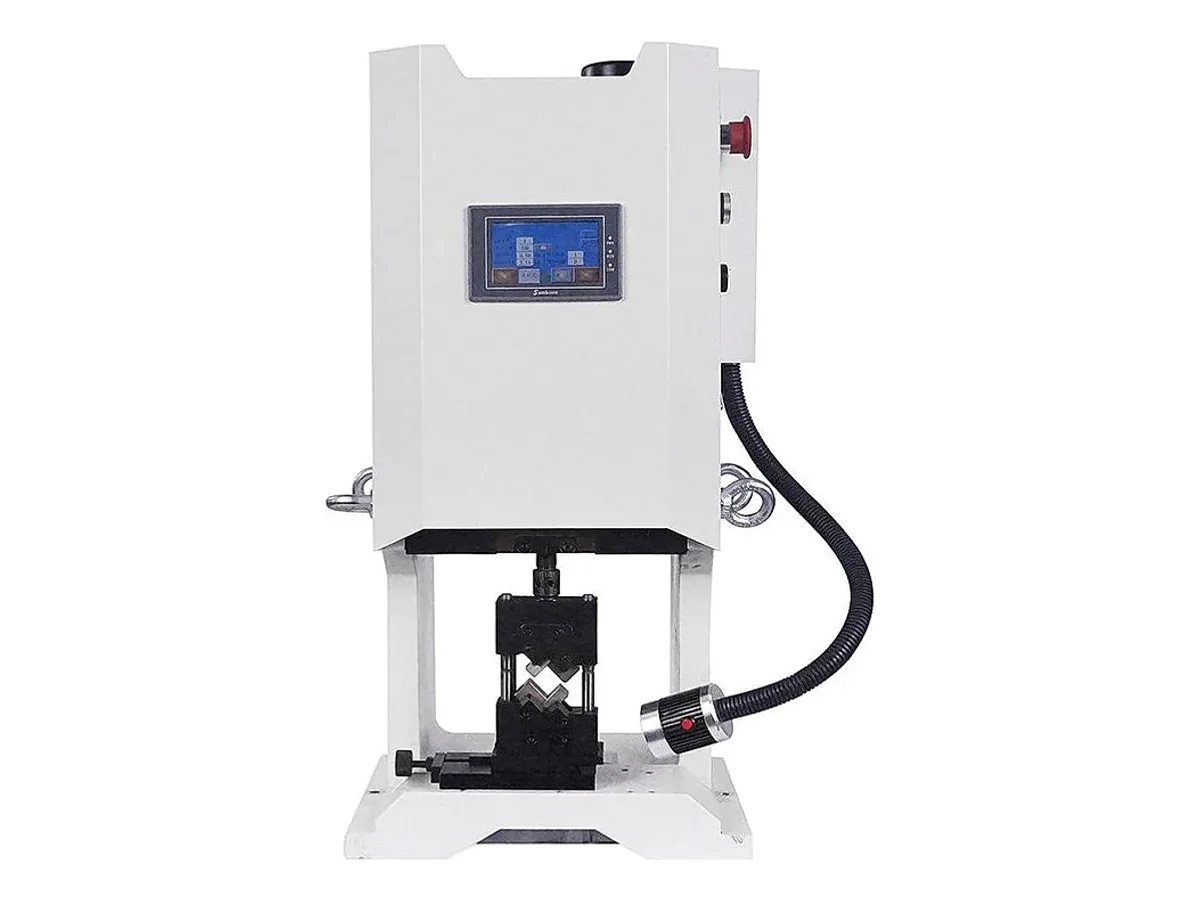
100 kN Semi-Automatic Servo Terminal Crimping Machine
Model WM-3110T
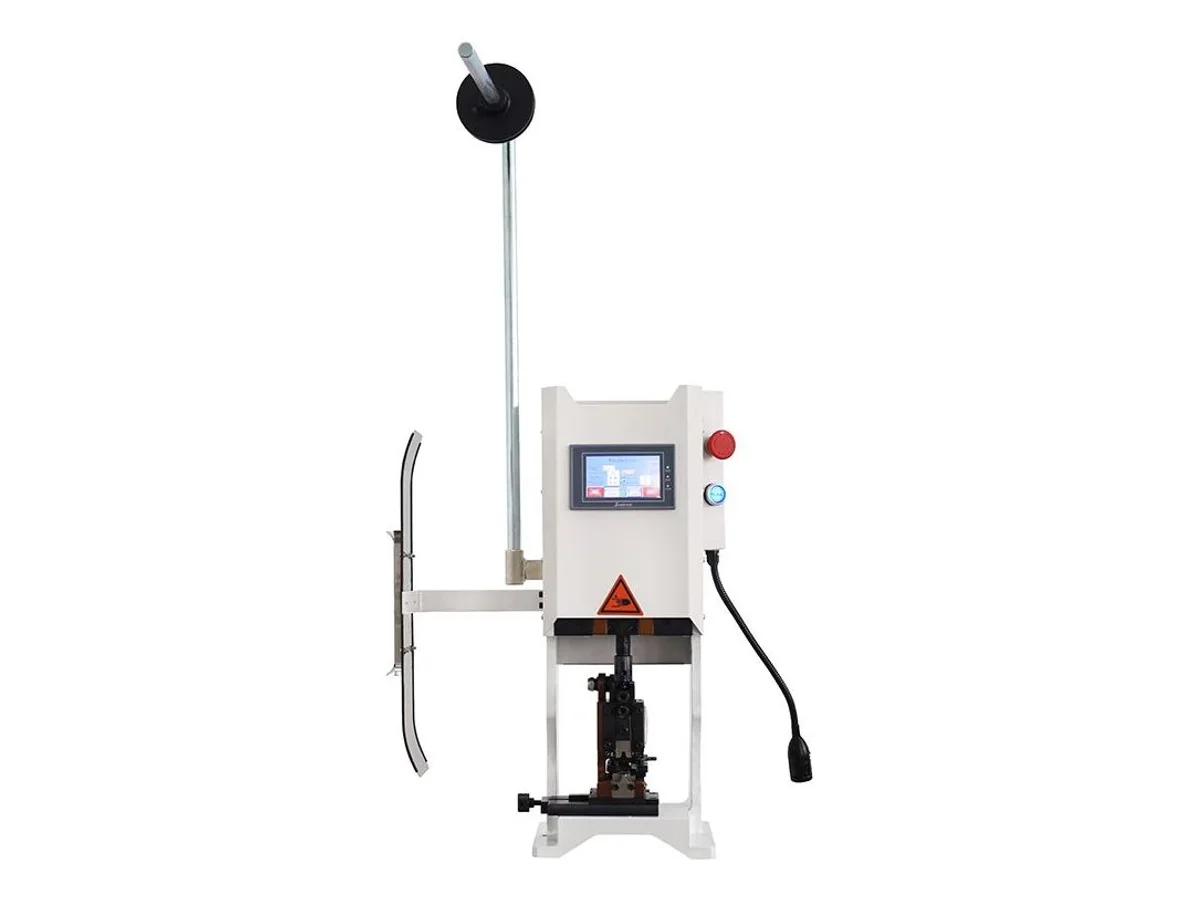
20 kN Semi-Automatic Servo Terminal Crimping Machine
Model WM-3102S
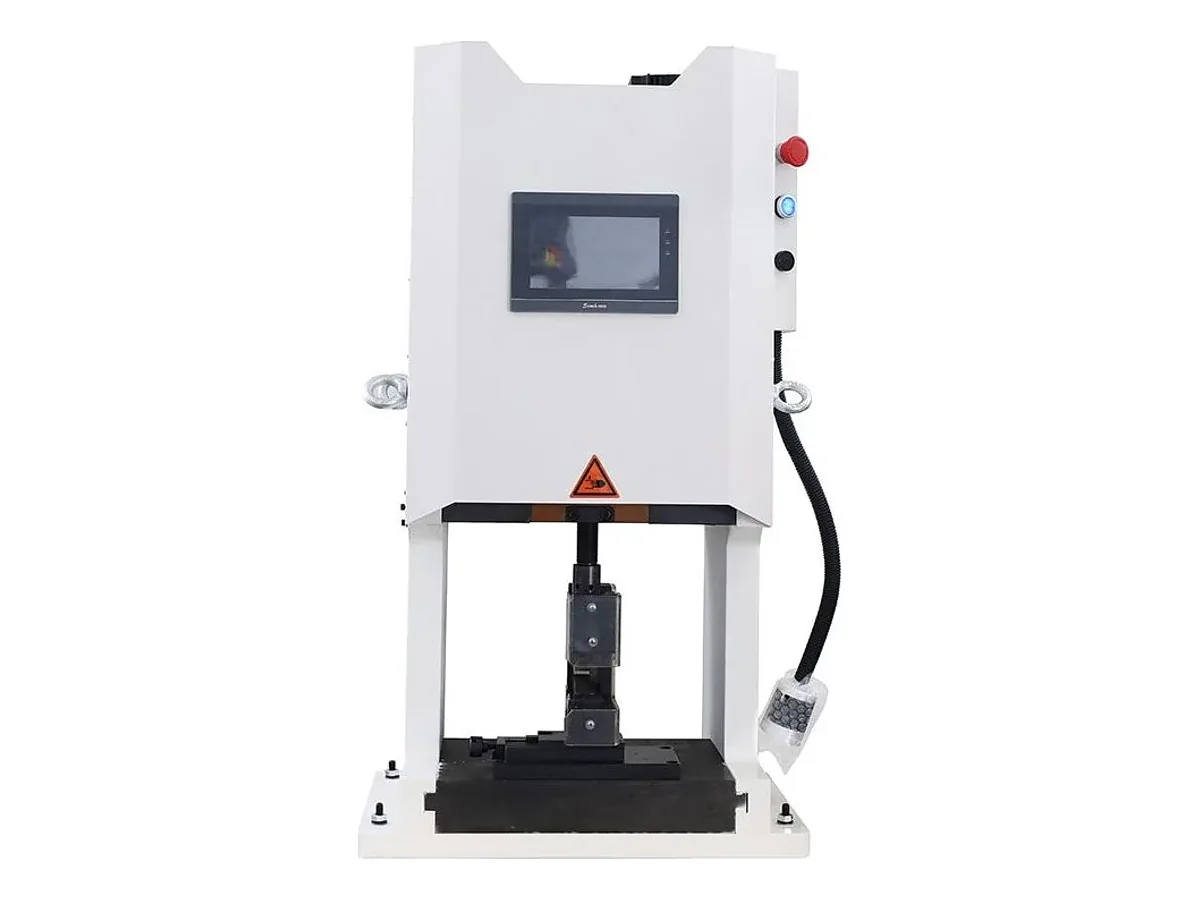
200 kN Semi-Automatic Servo Cable Lug Crimping Machine
Model WM-3120T