Portable Electric Terminal Crimping Machine, 12.7 kN Bench Crimper for 0.25–10 mm² Wire WM-3239
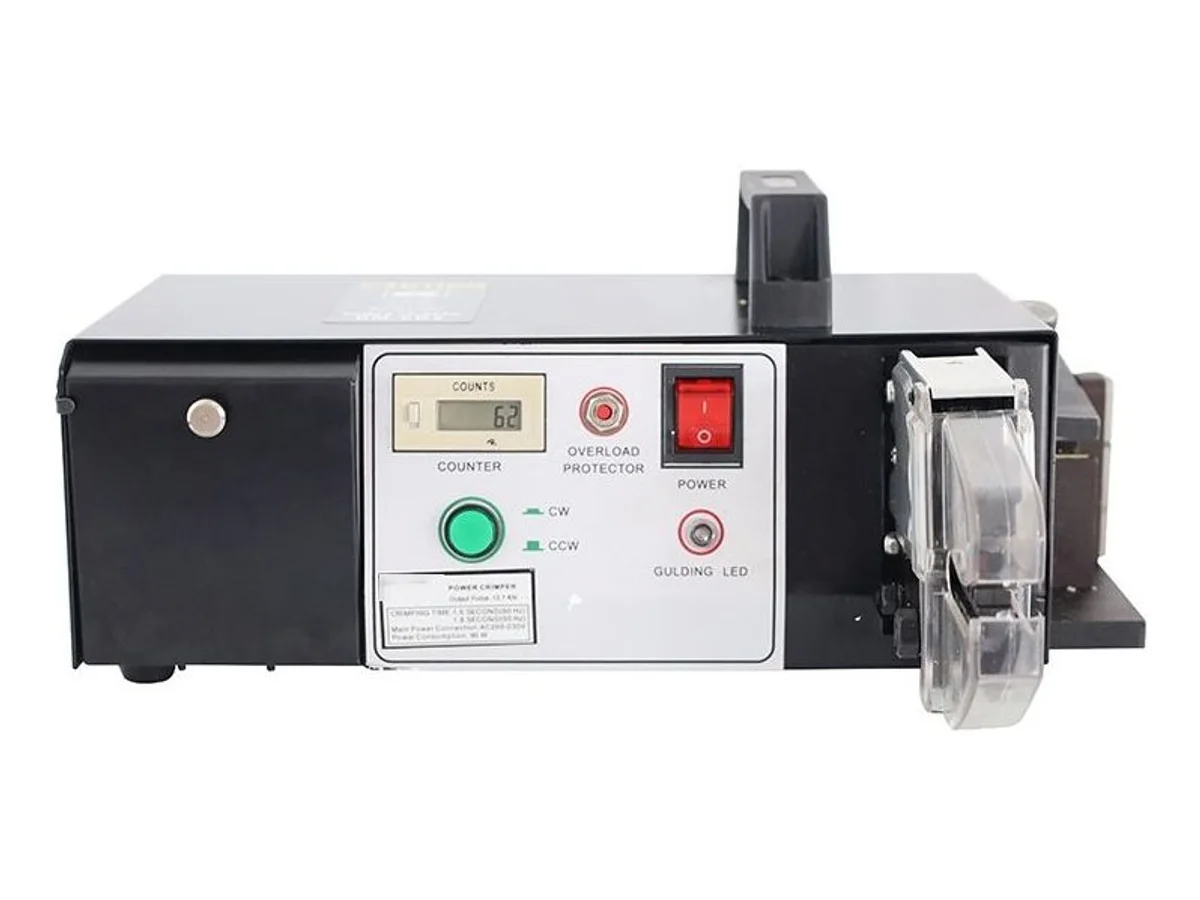
The WM-3239 is a 12 kg mains-powered bench crimper that puts 12.7 kN behind a pair of changeable crimping dies, covering wire from 0.25 to 10 mm². It plugs into a wall socket — no compressor, no air line — and the die sets are interchangeable with compatible manual crimping tools, so the same machine can be re-tooled for different terminal families. Its nameplate rates the crimp stroke at 1.5 seconds on 60 Hz and 1.8 seconds on 50 Hz for a 90 W draw. At 325 × 265 × 150 mm it takes a corner of a bench, and the front panel carries a lockable cycle counter, an overload protector, a start button and CW/CCW indicators.
Specifications
| Function | Electric terminal crimping, motor driven |
|---|---|
| Crimping range | 0.25 – 10 mm² |
| Output force | 12.7 kN |
| Voltage range | AC 220 – 110 V (datasheet); the machine nameplate reads AC 200 – 230 V — confirm your supply before ordering |
| Crimping time | 1.5 s on 60 Hz, 1.8 s on 50 Hz (machine nameplate) |
| Power consumption | 90 W (machine nameplate) |
| Dimensions | 325 × 265 × 150 mm |
| Weight | 12 kg |
| HS Code | 8463.90 (common reference — final classification confirmed by your customs broker) |
| Certification | CE (certificate provided with shipment) |
Key features
- 12.7 kN of crimping force from a fixed-speed motor — mains powered, so there is no compressor, no air line and no air preparation to maintain
- Published wire range 0.25 – 10 mm², wider at the top end than the bench ferrule crimpers, so heavier building-wire terminals stay on the same machine
- Die sets are changeable and interchangeable with compatible manual crimping tools — the die pictured is stamped 0.5–1, 1–2.5 and 4–6 mm² along the jaw
- A 1.5-second crimp stroke on 60 Hz mains, 1.8 seconds on 50 Hz, drawing 90 W — both figures come off the machine's own nameplate, not from a brochure
- Lockable cycle counter on the front panel — an operator-level piece count without any extra instrumentation
- Overload protector with a reset button, a lit power rocker and CW/CCW direction indicators, all labelled in English
- Transparent guards over both die positions, so the crimp zone stays visible but the fingers stay out
- 12 kg with a carry handle on a 325 × 265 mm footprint — moves bench to bench, or into a service van
- Free sample crimp — send your wire and a strip of your terminals, we run them on this machine and send you the video and the crimped samples before you order
What it processes
- Bench crimping of loose terminals onto prepared wire ends in switchgear, panel and appliance wiring
- Maintenance and service shops that crimp mixed wire sizes and cannot run an air line to the bench
- Small-batch harness work where terminal families change often enough that changeable dies beat fixed tooling
- Prototype and repair benches that need a powered crimp instead of hand pliers, without a floor-standing press
Suited for: powered bench crimping of loose terminals on wire from 0.25 to 10 mm², at benches that have mains power but no compressed air, and where the terminal family changes often enough that a changeable die set is worth more than fixed tooling. Not suited for: bootlace ferrules across many sizes without die changes — the WM-398 pneumatic ferrule crimper covers 0.08–6 mm² with one stepless adjustable die — and not suited for reel-fed continuous terminals, where the WM-3102T 2-ton applicator press takes OTP applicators and 2000# molds. It is also not the tool to carry up a ladder: if the bench already has compressed air and the work is 0.25–6 mm², the WM-3238 pneumatic crimping tool does the same swappable-die job at 1.3 T and 2.0 kg on 0.5–0.6 MPa shop air.
The argument for this machine is what it does not need. Most bench crimpers in this size class are air tools: they want a compressor, a regulator, a dryer and a hose reaching the bench, and in a service van or a rented unit that is a project of its own. The WM-3239 plugs into the wall and delivers 12.7 kN through the dies from a fixed-speed motor, one crimp every 1.5 seconds on 60 Hz mains or 1.8 seconds on 50 Hz, for a 90 W draw — the figures are printed on the machine’s own nameplate. What arrives at the bench is a 12 kg box with a handle, 325 × 265 mm on the bench and 150 mm tall.
The second argument is reach. The specified range is 0.25 to 10 mm², which is wider at the top end than the small ferrule crimpers on this site cover, and it gets there through changeable dies rather than one adjustable die — the die sets are interchangeable with compatible manual crimping tools, confirmed for the chosen tooling. The die fitted for the photographs is a multi-nest open-barrel type with 0.5–1, 1–2.5 and 4–6 mm² stamped along the jaw, and the finished crimp is shown on a female spade terminal: wire barrel closed on the strands, insulation grip closed on the jacket, in one stroke. Which die you need depends entirely on your terminal, so we quote the die with the machine rather than assume it.
The front panel is plain and in English: a lockable counter reading cycles, an overload protector with a reset button, a lit power rocker, a green start button and CW/CCW indicators for the motor direction. On the back are the IEC mains inlet and a round multi-pin socket for an external switch. Both die positions sit behind clear guards, which is the part worth looking at closely if the machine is going to be used by seasonal staff.
Stroke length, crimp-height adjustment, motor configuration, die selection and included accessories are confirmed on the quote. Electrical entries differ: AC 220 – 110 V in the datasheet and AC 200 – 230 V on the machine nameplate. We confirm the winding for your site supply before ordering.
Above 10 mm² this machine stops. For copper cable lugs from 0 to 75 mm² the WM-3218 hydraulic hexagonal lug crimper presses 13 tons with a change-free die, and for bootlace ferrules up to 16 mm² the WM-3116 servo ferrule press strips, twists, inserts and crimps in about 4 seconds a piece. When the volume outgrows an operator at a bench, the WM-3202 automatic double-end crimping machine cuts, strips and crimps AWG 18–28 leads at 3,800+ pcs/h, and the WM-3220 ring and fork terminal machine feeds pre-insulated 0.3–6 mm² terminals from a bowl feeder at 600 pcs/h.
Engineering knowledge
Choose and troubleshoot this process
- Why the Same AWG Is Not the Same Crimp Die: Matching the Applicator to Your Terminal Before You Buy the PressTwo bags of terminals marked 22 AWG can need different dies. What decides the match — barrel shape, insulation crimp, tab geometry — how to send terminals for a die fit, and how many crimps a year justify a press instead of a hand tool.
- Ferrule Crimping: Strip Length, Terminal Fit and Chain-Fed vs Loose-Fed MachinesCompare chain-fed and loose-ferrule crimping machines by wire preparation, changeover, terminal fit and batch output. Check WM-3243 and WM-3246 specifications.
- How to Choose a Terminal Crimping MachineChoose a terminal crimping machine by terminal presentation, wire range, applicator standard, required process steps, inspection method and production mix.
WM-3239 — common questions
What terminals and dies does the WM-3239 take?
The specified wire range is 0.25 – 10 mm² across changeable die sets. A single die covers only part of that range. The photographed open-barrel die has nests marked 0.5–1, 1–2.5 and 4–6 mm². Send your terminals and 2–3 metres of wire; we confirm the matching die, manual-tool compatibility and included tooling on the quote, then return sample crimps before ordering.
How does it compare with the WM-398 pneumatic bench crimper?
They are close in size and force but not interchangeable. The WM-3239 makes 12.7 kN from a mains socket, covers 0.25 – 10 mm² and works through changeable die sets, weighing 12 kg at 325 × 265 × 150 mm. The WM-398 makes 13.5 kN from 0.4 – 1 MPa shop air, covers 0.08 – 6 mm² and crimps tubular ferrules only, using one steplessly adjustable die that never needs changing, at 5 kg and 350 × 220 × 140 mm. Choose the WM-3239 if there is no compressed air at the bench, if terminals other than ferrules are involved, or if you need to reach 10 mm². Choose the WM-398 if the job is bootlace ferrules across many sizes and a compressor is already there.
How is the crimp cycle triggered — is a foot pedal included?
The pictured machine has a green start button on the front panel and a round multi-pin socket beside the rear IEC mains inlet. The trigger arrangement, included pedal and cable length are confirmed on the quote before ordering.
What should be confirmed before ordering?
Confirm stroke length, crimp-height adjustment, motor configuration, die set and included accessories on the quote. The nameplate gives a 1.5 s crimp stroke on 60 Hz, 1.8 s on 50 Hz and 90 W consumption. Electrical entries differ: AC 220 – 110 V in the datasheet and AC 200 – 230 V on the nameplate. We confirm the supplied winding for your site voltage before ordering.
Does it strip the wire, or feed terminals from a reel?
Neither. The operator presents an already stripped wire end with the terminal in the die, and the machine closes the crimp. For reel-fed continuous terminals on an OTP applicator you need a press such as the WM-3102T, and for wire that arrives on a spool and leaves as a finished crimped lead you need an automatic machine — both are linked below.
Can it crimp copper cable lugs above 10 mm²?
No — 10 mm² is the published ceiling and it is a working limit, not a suggestion. For lugs from 0 to 75 mm² the WM-3218 is a 13-ton hydraulic bench unit with a change-free hexagonal die, and for bootlace ferrules from 0.3 to 16 mm² the WM-3116 is a servo press that also strips, twists and inserts.
Related machines in Crimping & Connector Assembly
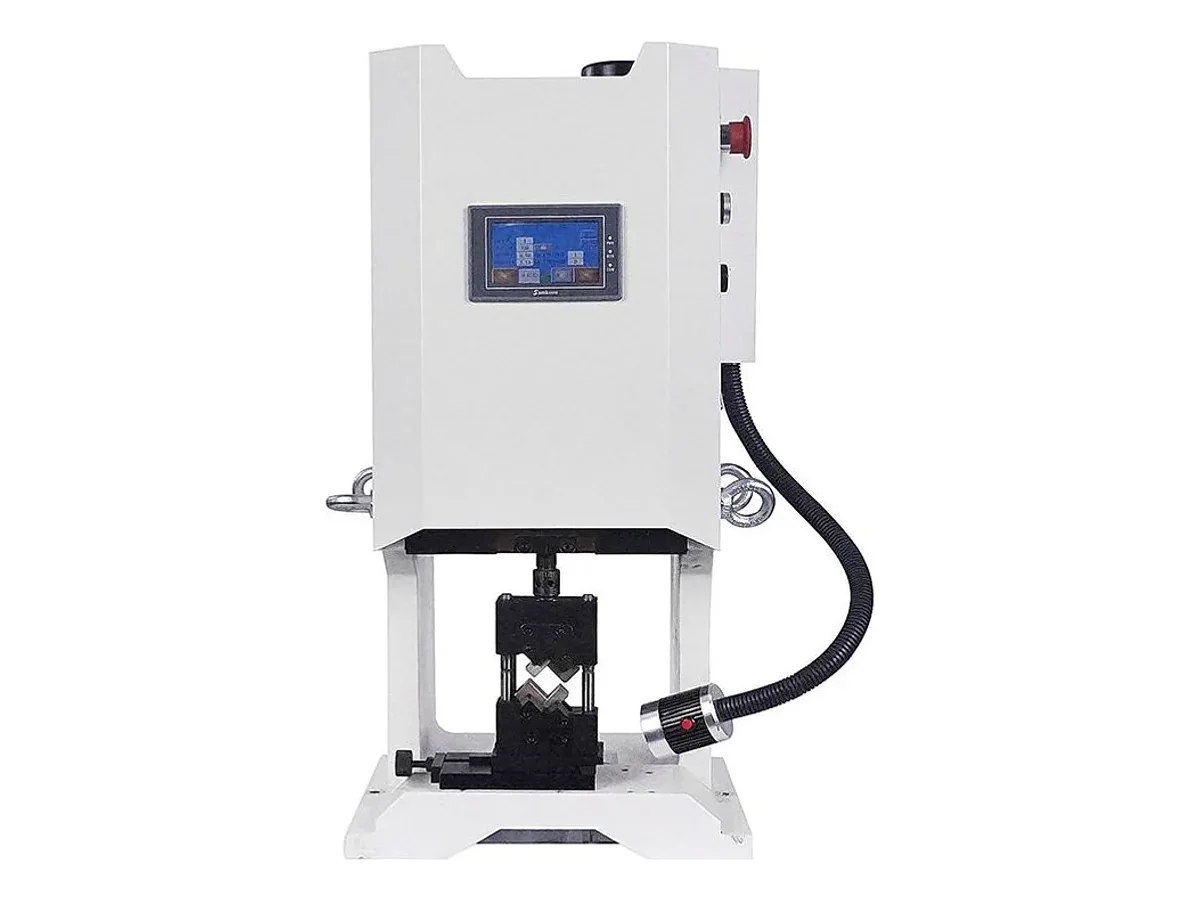
10-Ton Servo Terminal Crimping Machine, 100 kN Bench Press
Model WM-3110T
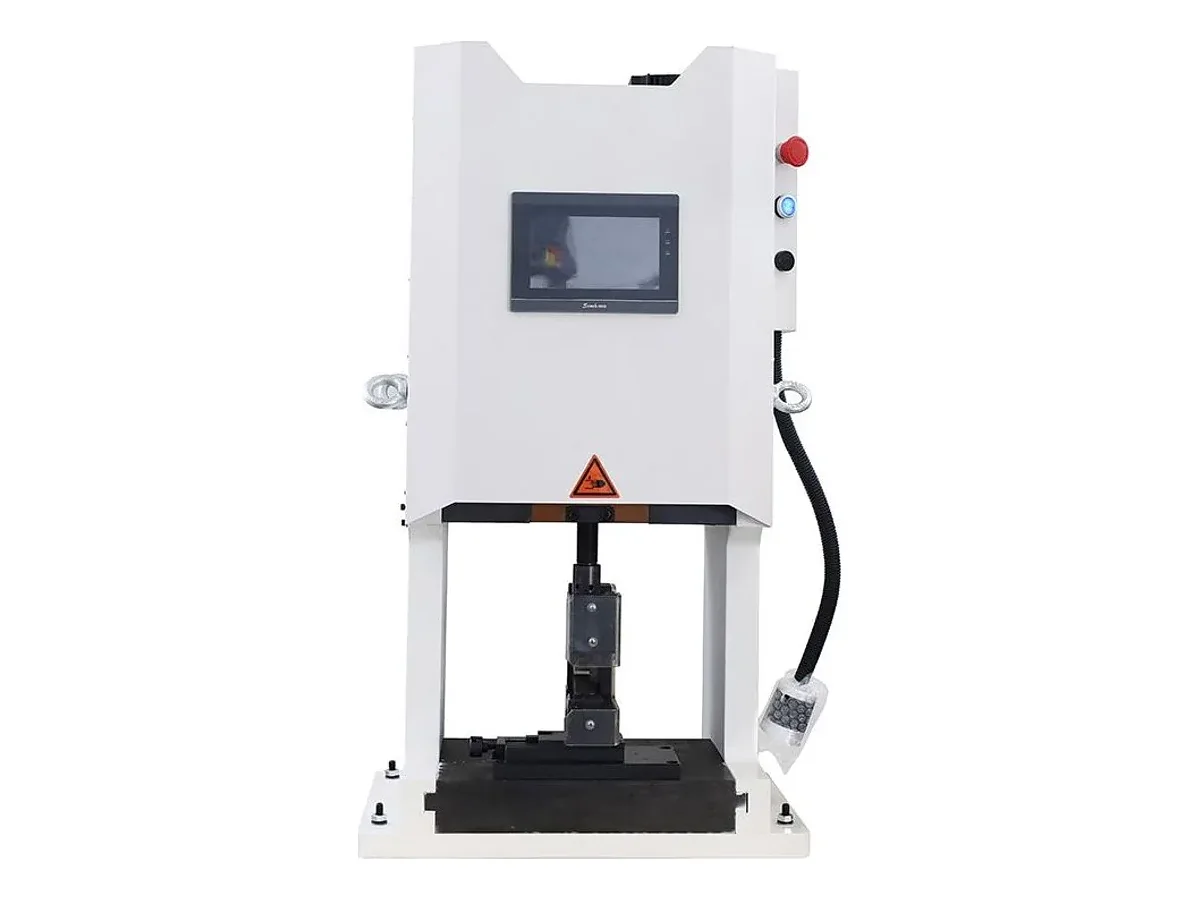
20-Ton Servo Cable Lug Crimping Machine, 200 kN and 40 mm Stroke
Model WM-3120T
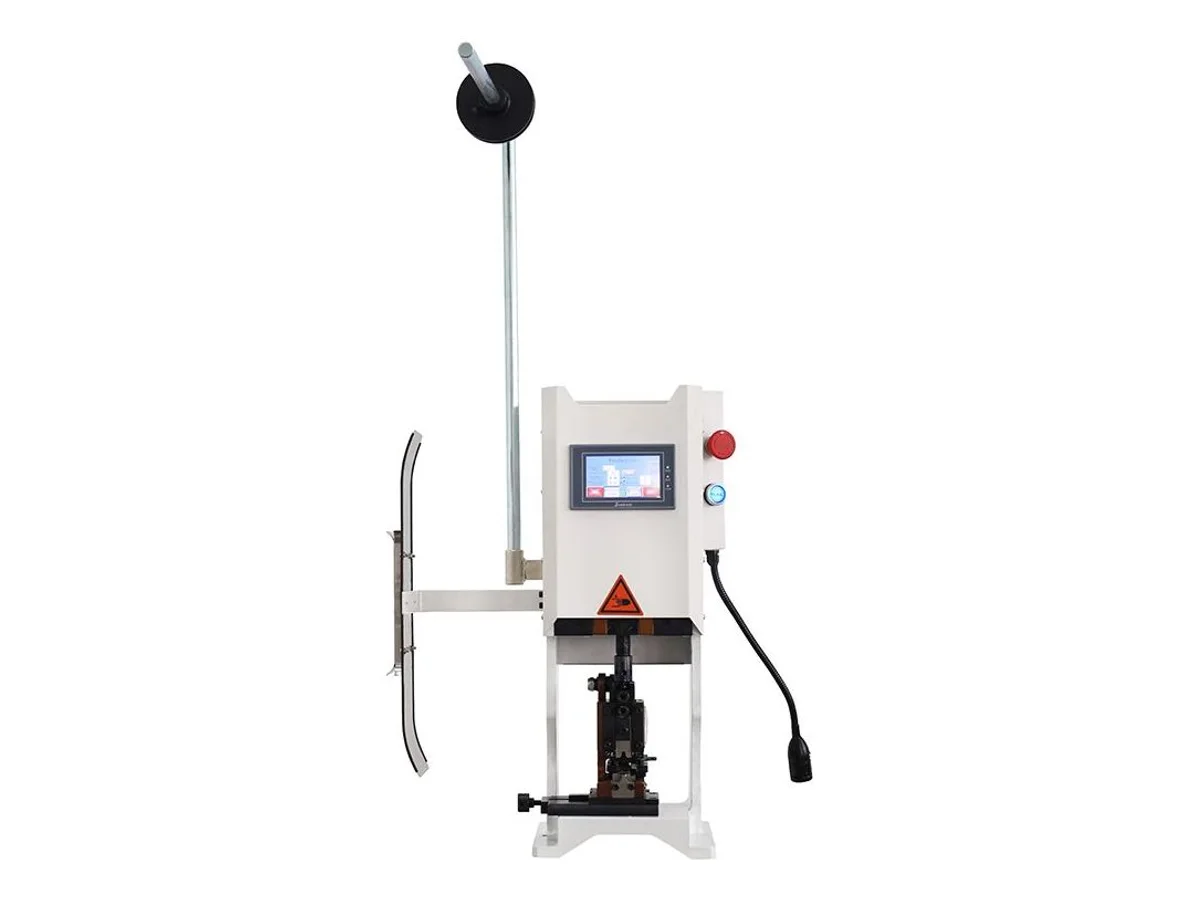
2-Ton Servo Terminal Crimping Machine, 20 kN Touchscreen Bench Press
Model WM-3102S