Wire Stripping and Pre-Insulated Ring/Fork Terminal Crimping Machine, 0.3–6 mm² WM-3220
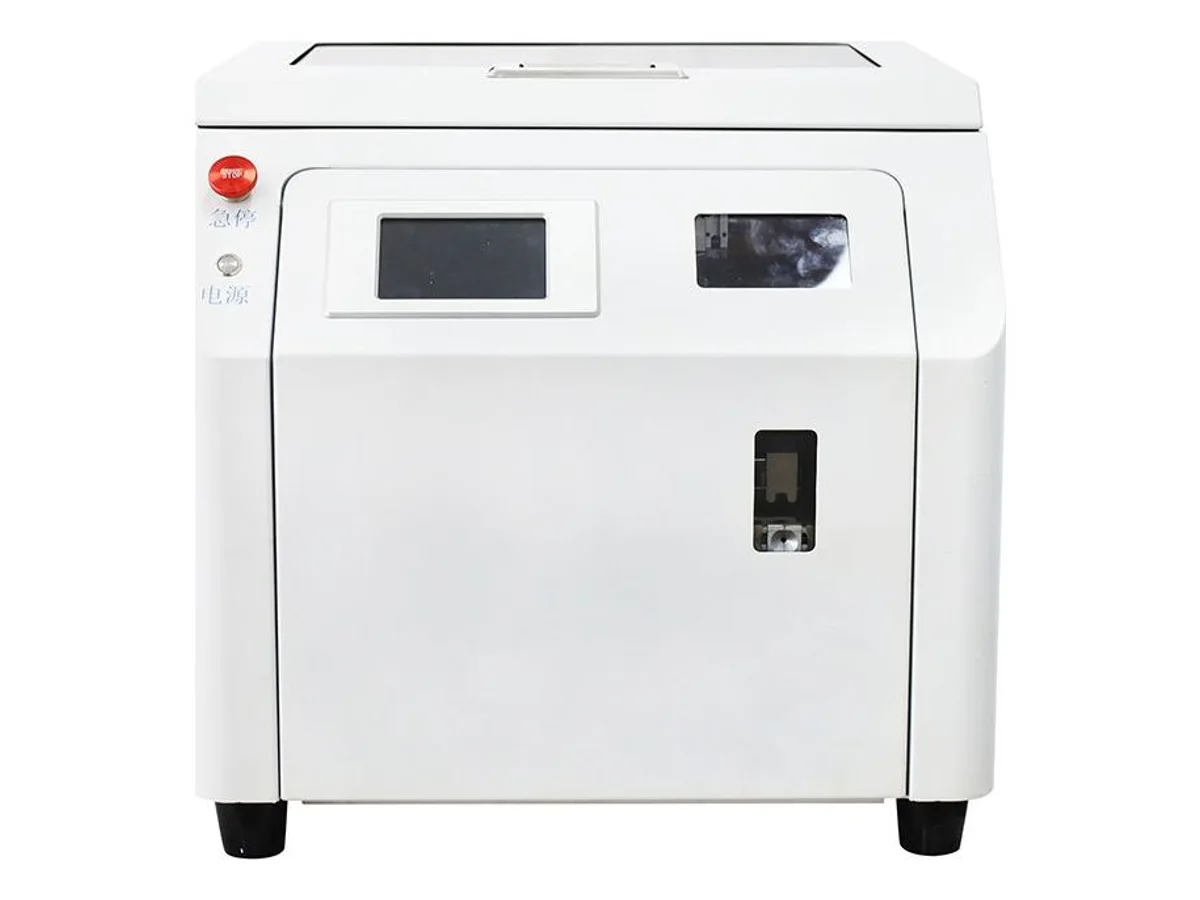
The WM-3220 strips a pre-cut lead and presses a loose pre-insulated fork (U-type) or ring (O-type) terminal onto it in one cycle, covering 0.3 to 6 mm² wire at 600 finished pieces an hour. Terminals are tipped loose into a vibratory bowl instead of being threaded off a reel, two imported tungsten-steel rotary blades do the stripping, and the crimp is formed four-sided or double-sided up to a maximum crimp length of 12 mm. It runs on single-phase AC 220 V at 400 W, weighs 70 kg and takes up 540 × 570 mm of bench.
Specifications
| Wire crimping range | 0.3 – 6 mm² (maximum crimping length 12 mm) |
|---|---|
| Crimping shape | Four-sided crimping, double-sided crimping |
| Stripping length | Shortest outer-skin stripping length 65 mm |
| Production capacity | 600 pcs/h |
| Control mode | Touch screen + ARM motherboard |
| Drive mode | Motor / imported ball screw |
| Rotating blade | 2 pieces (material: imported tungsten steel) |
| Wire clamping device | Motor drive, clamping force control program |
| Detection device | Terminal shortage detection |
| Power supply | AC 220 V, 50/60 Hz, 400 W |
| Working environment | 0 – 50 °C, moderately dry (please use a clean and dry air source) |
| Dimensions | L540 × W570 × H520 mm |
| Weight | 70 kg |
| Terminal feeding | As pictured — loose pre-insulated terminals orientated by a vibratory bowl feeder and carried to the press on an inclined track |
| Control screen | As pictured — colour touchscreen headed O/U TERMINAL AUTO MACHINE, English and Chinese versions, with preset keys for 0.3, 0.5, 0.75, 1.0, 1.5, 2.5, 4.0 and 6.0 wire |
| HS Code | 8463.90 (common reference — final classification confirmed by your customs broker) |
| Certification | CE (certificate provided with shipment) |
Key features
- Loose ring and fork terminals feed from a vibratory bowl — nothing is threaded off a reel and no applicator strip is loaded, so a terminal change is a bowl refill and a feed-track setting
- Strip and crimp in one cycle: two imported tungsten-steel rotary blades take the insulation off and the press closes on the terminal, so the operator only presents the lead and takes it away
- Eight wire sizes are preset on the touchscreen — 0.3, 0.5, 0.75, 1.0, 1.5, 2.5, 4.0 and 6.0 — so moving between sizes is a key press rather than a tooling change
- Motor and imported ball screw drive the press, and the wire clamp is motor-driven with clamping force held by the control program rather than by shop air pressure
- Terminal shortage detection stops the cycle when the feed track empties, so no lead leaves the machine with a bare crimp
- 70 kg on a 540 × 570 mm footprint — a bench machine that sits beside the operator, not a floor cell that needs its own bay
- Free sample test — send your wire and a bag of your terminals, we run them on this machine and send you the video and the crimped samples before you order
What it processes
- Control panels, switchgear and distribution boxes, where insulated fork and ring lugs land on screw terminal blocks
- Appliance, motor and transformer lead sets in 0.3 to 6 mm² flexible wire
- Battery, inverter and combiner-box leads that bolt down through an insulated ring terminal
- Job shops that buy pre-insulated terminals loose in bags and currently crimp them with hand tools or a foot press
Suited for: pre-cut leads from 0.3 to 6 mm² that need a loose pre-insulated fork or ring terminal — the insulated spade and eyelet lugs that go onto screw terminal blocks, bolted studs and busbars. The wire is stripped and the terminal is pressed in the same cycle, and the terminals go in loose, the way they arrive from the supplier.
If you need a different strip-and-crimp architecture on the same SV/RV family. The WM-3241 is a separate platform: 0.5–6 mm² listed sizes, 6–30 mm rotary/parallel/twist strip, M-type crimp, about 2.8 s automatic, 1,500 W, 62 kg. Its listed sizes start above 0.3 mm²; confirm the processing method for your terminal.
Not suited for: bootlace and tube ferrules — a ferrule is a different tool and a different feed. For those, the WM-397 E-tube terminal crimping machine does strip, twist and crimp in 2.5 seconds across 0.3–4 mm² and 2.5–6 mm², and the WM-3116 servo bootlace ferrule crimping machine runs 0.3–16 mm². Terminals that come on a reel belong on an applicator press — the WM-3102T 2-ton low-noise terminal crimping machine takes OTP and 2000# applicators. Conductors heavier than 6 mm² and bare copper cable lugs need tonnage this machine does not have; the WM-3135T 35-ton servo cable lug crimping machine presses terminals up to 120 mm².
If the volume outgrows an operator. This is a hand-paced bench machine at 600 pieces an hour and 70 kg. The WM-3212 fully automatic double-end pre-insulated terminal crimping machine feeds loose pre-insulated terminals from a bowl in the same way but pulls the wire off a reel, cuts it, strips both ends, twists the strands and crimps both ends unattended — AWG 24 to AWG 10, about 900 leads an hour, 550 kg. The trade is footprint and price against the operator you no longer need standing at the machine.
Tell us the terminal part number, the wire size and the lead length you run, and we will confirm the bowl tooling and crimp dies before quoting.
Engineering knowledge
Choose and troubleshoot this process
- Why the Same AWG Is Not the Same Crimp Die: Matching the Applicator to Your Terminal Before You Buy the PressTwo bags of terminals marked 22 AWG can need different dies. What decides the match — barrel shape, insulation crimp, tab geometry — how to send terminals for a die fit, and how many crimps a year justify a press instead of a hand tool.
- Ferrule Crimping: Strip Length, Terminal Fit and Chain-Fed vs Loose-Fed MachinesCompare chain-fed and loose-ferrule crimping machines by wire preparation, changeover, terminal fit and batch output. Check WM-3243 and WM-3246 specifications.
- How to Choose a Terminal Crimping MachineChoose a terminal crimping machine by terminal presentation, wire range, applicator standard, required process steps, inspection method and production mix.
WM-3220 — common questions
Does it crimp ring terminals as well as fork terminals?
The machine's own control screen is headed O/U TERMINAL AUTO MACHINE — O for the ring form and U for the fork form of the same pre-insulated terminal family. The finished samples we hold from this machine are fork terminals. Ring terminals vary in tongue diameter and barrel length, so send us a bag of the exact parts you buy together with 2–3 m of your wire; we run them on the machine and send you the video and the crimped samples before you commit.
What does the machine not do?
It does not cut wire to length — leads arrive pre-cut and the machine strips and crimps the end presented to it. There is one crimp station, so a lead that needs a terminal at both ends passes through twice. It also does not twist the strands before crimping; if your conductor is very fine-strand and you want it gathered before it enters the insulated barrel, say so in your enquiry and we will point you at the machines that add that step.
Is 600 pieces an hour realistic?
That is the specified rating — one finished lead every six seconds, which is the pace of an operator picking up a wire, presenting the end and clearing the finished lead. It is a hand-paced machine, so the figure holds only while somebody keeps feeding it. If the number you need is thousands per hour and the wire can come off a reel, this is the wrong class of machine and the alternatives are linked below.
Which terminals will the bowl feed?
Loose pre-insulated terminals inside the 0.3 to 6 mm² wire range, with a crimp length no longer than 12 mm. A vibratory bowl and feed track are tuned to the parts they orientate, so tell us the terminal part numbers and the sizes you intend to run and we will have the feed set for them before the machine ships.
What power and air does it need?
Single-phase AC 220 V, 50/60 Hz, 400 W total, in a working environment of 0 to 50 °C. Use clean, dry compressed air; the required pressure is confirmed on the quote against your site supply.
How is the WM-3220 different from the WM-3241?
Different published platform, not a size variant. This machine covers 0.3–6 mm² at 600 pcs/h, four-sided or double-sided crimp, shortest outer-skin strip 65 mm, 400 W, 540 × 570 × 520 mm, 70 kg. The WM-3241 starts at 0.5 mm² (listed sizes 0.5 through 6.0 mm² — 0.3 mm² is outside its listed sizes), strips 6–30 mm by rotary, parallel or twist, forms an M-type crimp, cycles in about 2.8 s automatic / 4 s manual, draws 1,500 W, and sits on 360 × 520 × 425 mm at about 62 kg. Quote the machine whose gallery and sheet match the terminal and strip method you actually run.
Related machines in Crimping & Connector Assembly
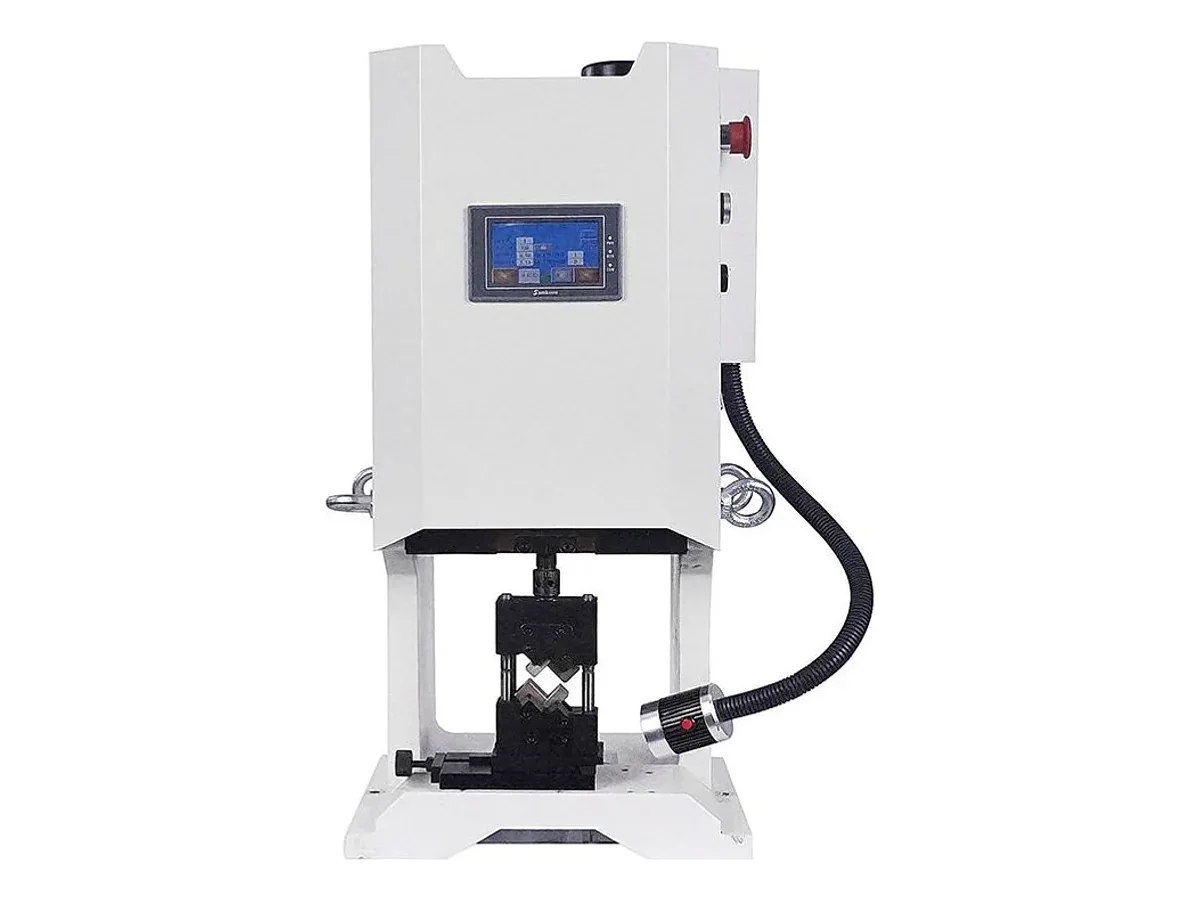
100 kN Semi-Automatic Servo Terminal Crimping Machine
Model WM-3110T
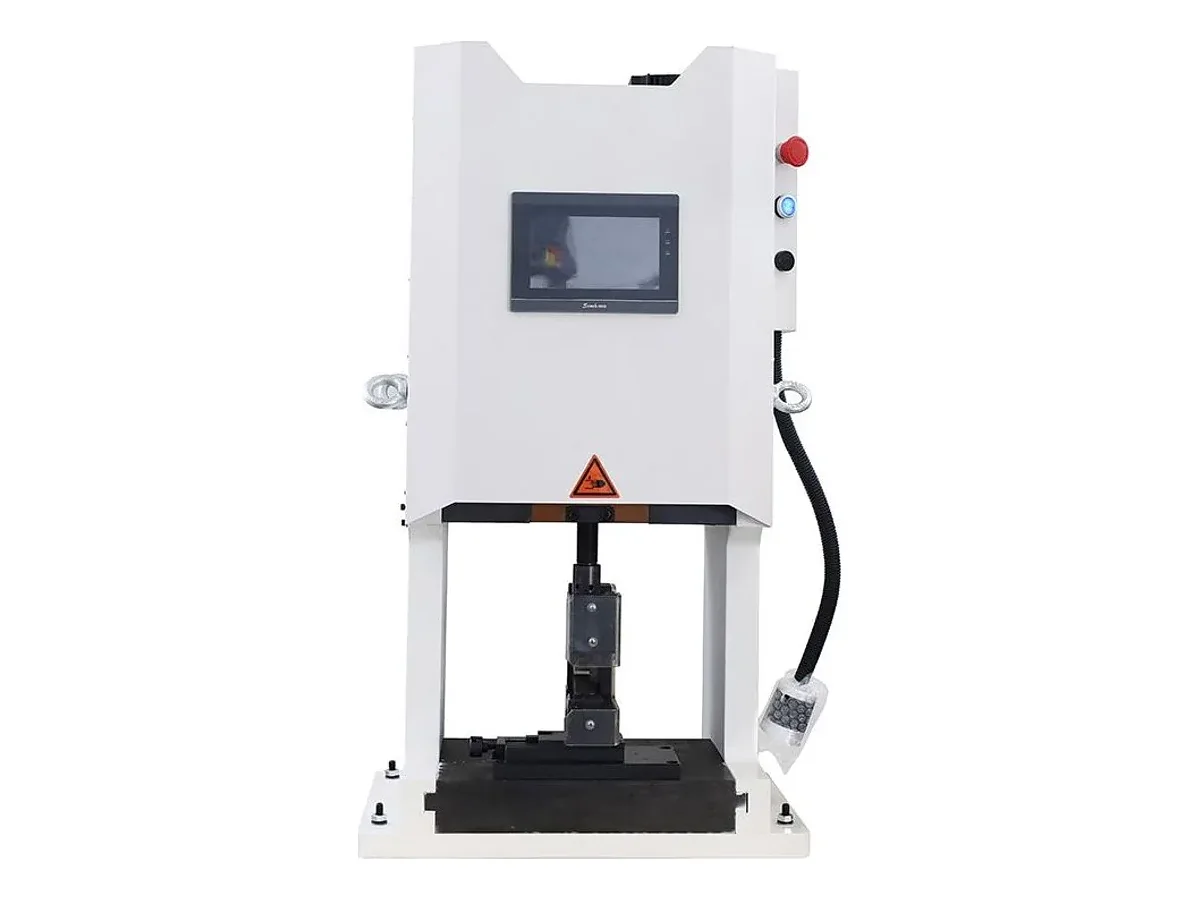
200 kN Semi-Automatic Servo Cable Lug Crimping Machine
Model WM-3120T
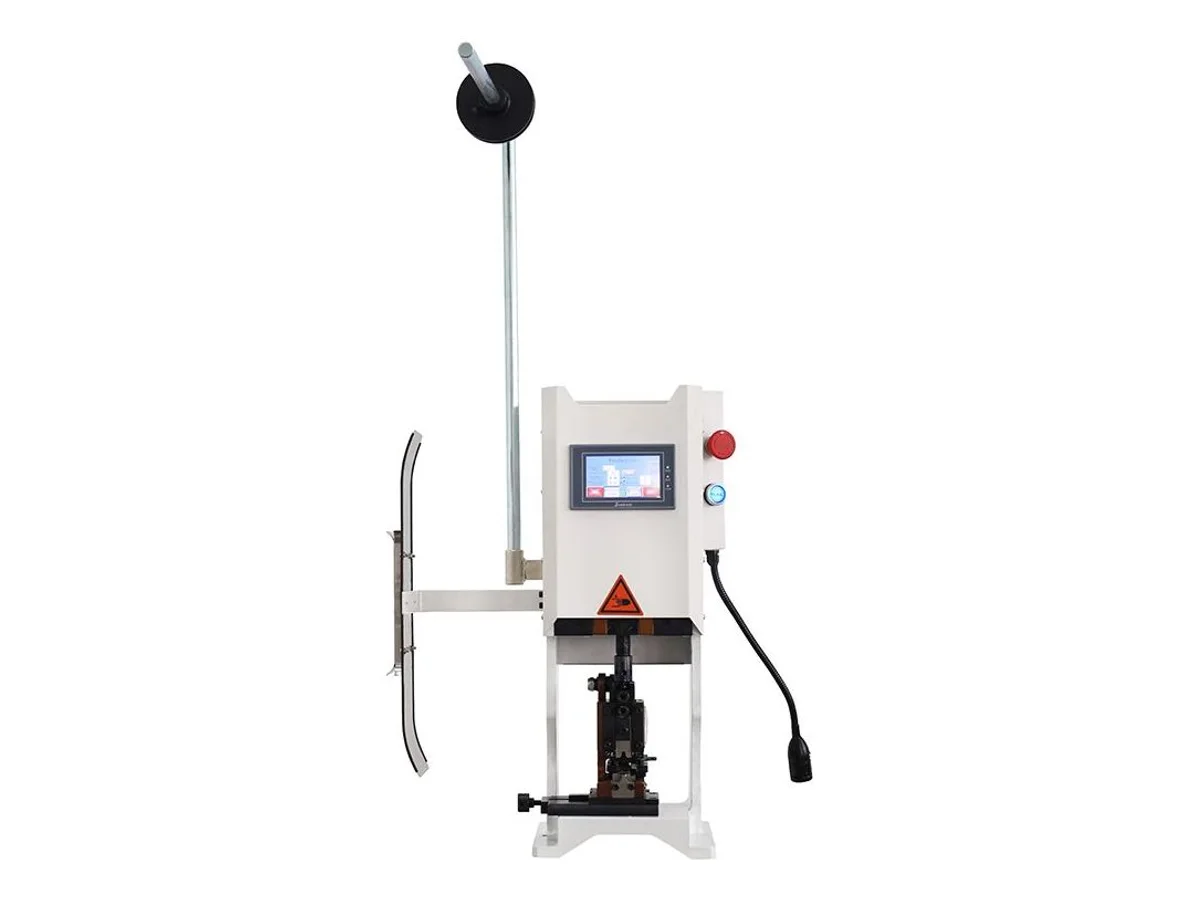
20 kN Semi-Automatic Servo Terminal Crimping Machine
Model WM-3102S