2 kg Pneumatic Terminal Crimping Tool with Interchangeable Dies, 0.25–6 mm² WM-3238
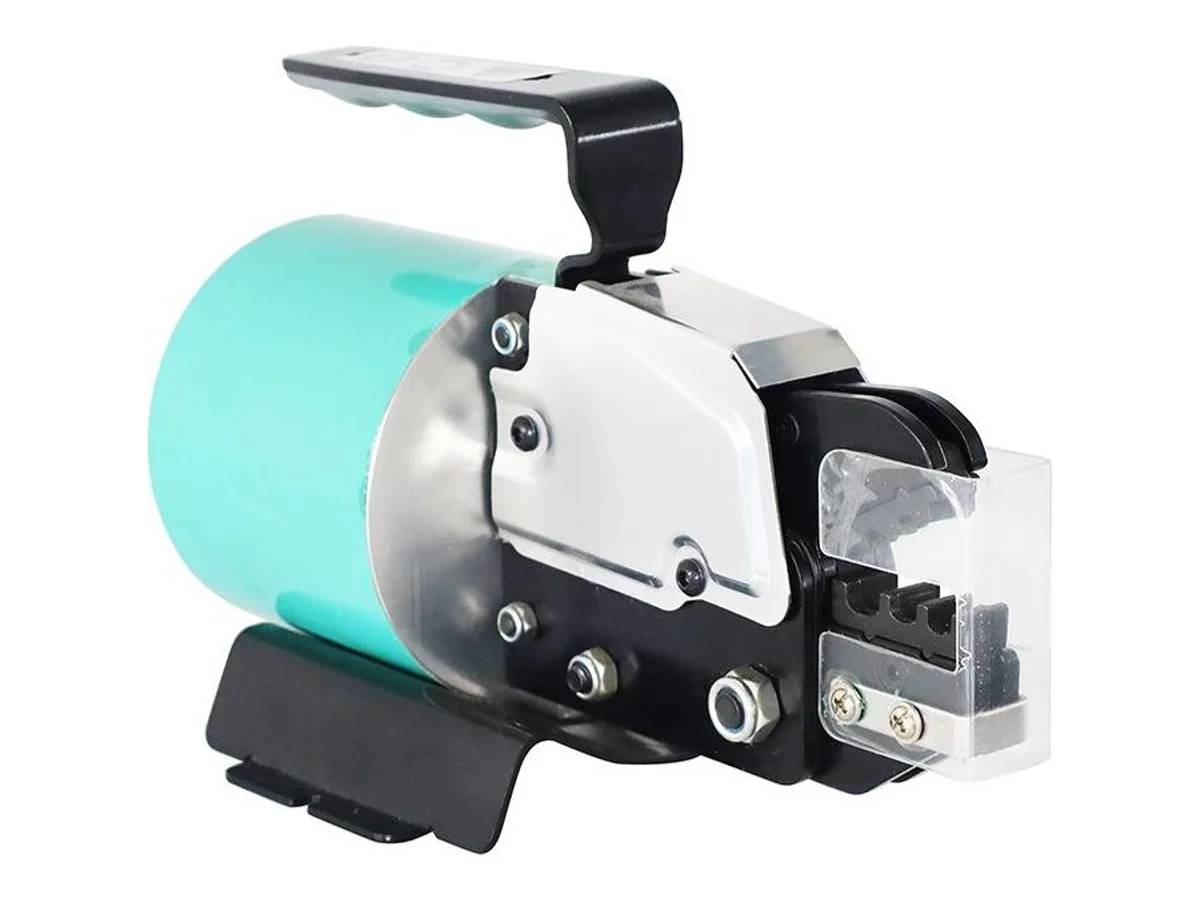
The WM-3238 is a 2.0 kg pneumatic crimping tool that puts 1.3 T (1,300 kgf) of crimping force behind a swappable die module, covering wire from 0.25 to 6.0 mm² at about 1,200 crimps per hour. It runs on 0.5–0.6 MPa shop air through the supplied regulator and foot switch, so the operator keeps both hands on the wire. The whole tool measures 230 × 187 × 100 mm and clamps to a bench bracket, and changing terminal family means changing the die module rather than the machine.
Specifications
| Function | Crimping wire terminals and connectors with interchangeable crimping dies |
|---|---|
| Crimping range | 0.25 – 6.0 mm² (wire size) |
| Output force | 1.3 T (1,300 kgf) |
| Air pressure range | 0.5 – 0.6 MPa |
| Speed | 1,200 crimps per hour |
| Tooling | Interchangeable crimping die modules — one die set per terminal family |
| Die material | Chrome-vanadium steel, oil-hardened |
| Trigger | Foot switch — standard or pressure-protected version available |
| Air preparation | Pressure regulator supplied with the tool |
| Wire entry | From the side of the tool head |
| Dimensions | 230 × 187 × 100 mm |
| Weight | 2.0 kg |
| HS Code | 8463.90 (common reference — final classification confirmed by your customs broker) |
| Certification | CE (certificate provided with shipment) |
Key features
- Die modules swap out in the head — a different terminal family means a different die block, not a different machine
- 1.3 T (1,300 kgf) of crimping force from an air cylinder running on ordinary 0.5–0.6 MPa shop air; no motor and no electrical connection
- The supplied pressure regulator sets the air, and therefore the crimp force, to one repeatable value instead of leaving it to the operator's hand
- Foot switch keeps both hands free to hold the wire and the terminal; a pressure-protected foot switch is available where an accidental step must not fire the tool
- About 1,200 crimps per hour at the bench — roughly one crimp every three seconds without hand fatigue
- Chrome-vanadium die steel, oil-hardened, so the crimp profile holds its shape over long die life
- 2.0 kg and 230 × 187 × 100 mm — small enough to carry to the job and light enough to reposition on the bench all day
- Clear guard sits over the die area, and the black base bracket bolts the tool down or lets it sit on its rubber feet
What it processes
- Bench crimping of insulated and non-insulated terminals on control panel, appliance and machine wiring
- Maintenance and field service work where mains power is not available but shop air is
- Small-batch and prototype harness shops that change terminal types often and want to change only the die block
- Replacing hand crimping pliers where crimp-to-crimp consistency and operator fatigue have become the problem
Suited for: operator-fed crimping of 0.25–6.0 mm² wire at a bench or on site, where terminal types change often enough that a swappable die block is worth more than a fixed profile — 1.3 T of air-driven force, foot-switch triggered, 2.0 kg, no electricity needed.
Not suited for: production runs measured in thousands of leads — 1,200 crimps an hour is a hand-fed rate, and an operator still strips every wire. For continuous ferrule work move to the WM-397 e-tube terminal crimping machine, which strips, twists and crimps 0.3–6 mm² bootlace ferrules automatically at 1,000–1,300 pcs/h. It is also not a reel-fed press: chained terminals on a reel with an OTP-style applicator belong on the WM-3229 cast iron frame terminal crimping machine (2 T, loose and continuous terminals) or the WM-3102T low-noise terminal crimping machine (2.0 T, 30 mm stroke, OTP transverse/positive/reverse and 2000# applicators). If you only ever crimp tubular ferrules and want one die for the whole range including the fine sizes below 0.25 mm², the WM-398 benchtop pneumatic crimper covers 0.08–6 mm² steplessly. Above 6 mm², copper cable lugs need the WM-3218 13-ton hydraulic cable lug crimping machine (0–75 mm²) or the WM-3135T 35-ton servo cable lug crimping machine (up to 120 mm²).
Engineering knowledge
Choose and troubleshoot this process
- Ferrule Crimping: Strip Length, Terminal Fit and Chain-Fed vs Loose-Fed MachinesCompare chain-fed and loose-ferrule crimping machines by wire preparation, changeover, terminal fit and batch output. Check WM-3243 and WM-3246 specifications.
- How to Choose a Terminal Crimping MachineChoose a terminal crimping machine by terminal presentation, wire range, applicator standard, required process steps, inspection method and production mix.
- Terminal Crimp Defects: Causes, Inspection and Corrective ActionsTroubleshoot low pull force, incorrect crimp height, strand loss, bellmouth defects, insulation support problems and inconsistent terminal feeding.
WM-3238 — common questions
What terminals can the WM-3238 crimp?
Whatever the installed die module is cut for, on wire from 0.25 to 6.0 mm². The head takes a two-part die block, and we supply die sets for the common terminal families — insulated and non-insulated terminals, tubular ferrules and open-barrel styles among them. Because the die decides the crimp profile, tell us the exact terminal part number and wire size and we will confirm which die block ships with the tool before you order.
Does it need electricity?
No. The tool is purely pneumatic — 0.5 to 0.6 MPa of compressed air from an ordinary shop compressor, through the supplied regulator, triggered by the foot switch. There is no motor, no wiring and nothing to earth, which is why it travels to installation and service jobs where a bench press cannot go.
How is this different from the WM-398 pneumatic crimper?
Different tools for different jobs. The WM-398 uses one steplessly adjustable die for tubular ferrules from 0.08 to 6 mm² — ferrules only, no size-change die swap, 5 kg. Confirm the die geometry and finished crimp profile against your terminal drawing. The WM-3238 has a swappable die block, so it is not limited to a single crimp profile, and at 2.0 kg it is the lighter of the two. Choose the WM-398 if you crimp ferrules all day and never want to change tooling; choose the WM-3238 if the terminals on your bench change from job to job.
How consistent is the crimp compared with hand pliers?
The force comes from the air cylinder and is set once at the regulator, so every crimp closes with the same pressure regardless of who is at the bench or how many they have done that shift. That is the main reason shops move up from pliers. It is still an operator-fed tool — a person strips the wire, threads the terminal and steps on the pedal — so cycle-to-cycle timing depends on the operator, not the tool.
Can it be mounted permanently on a workbench?
Yes. The base bracket underneath is drilled for bolting down, and the tool also sits stably on its rubber feet if you prefer to move it. At 2.0 kg it is not heavy enough to stay put under hard use unless it is fastened, so bolting it down is the normal choice at a fixed station.
Related machines in Crimping & Connector Assembly
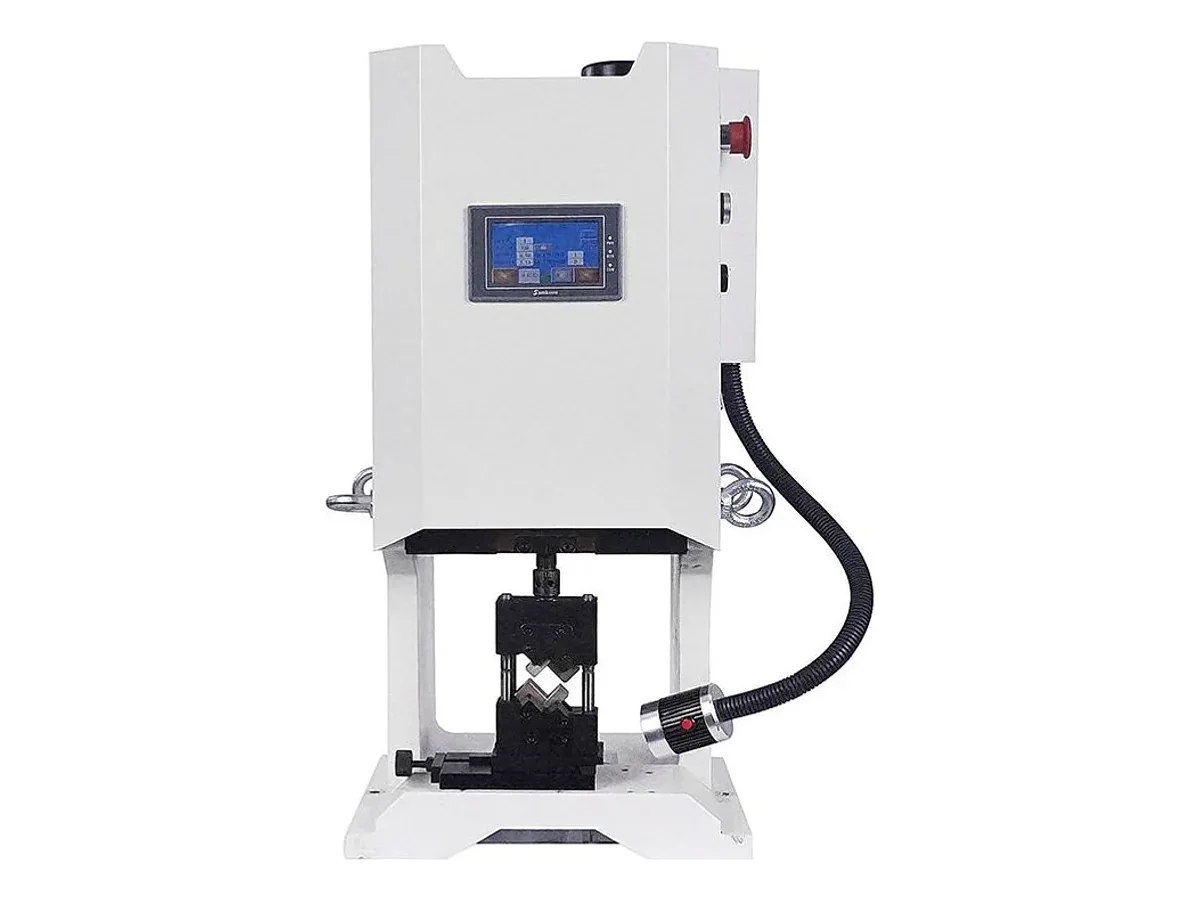
10-Ton Servo Terminal Crimping Machine, 100 kN Bench Press
Model WM-3110T
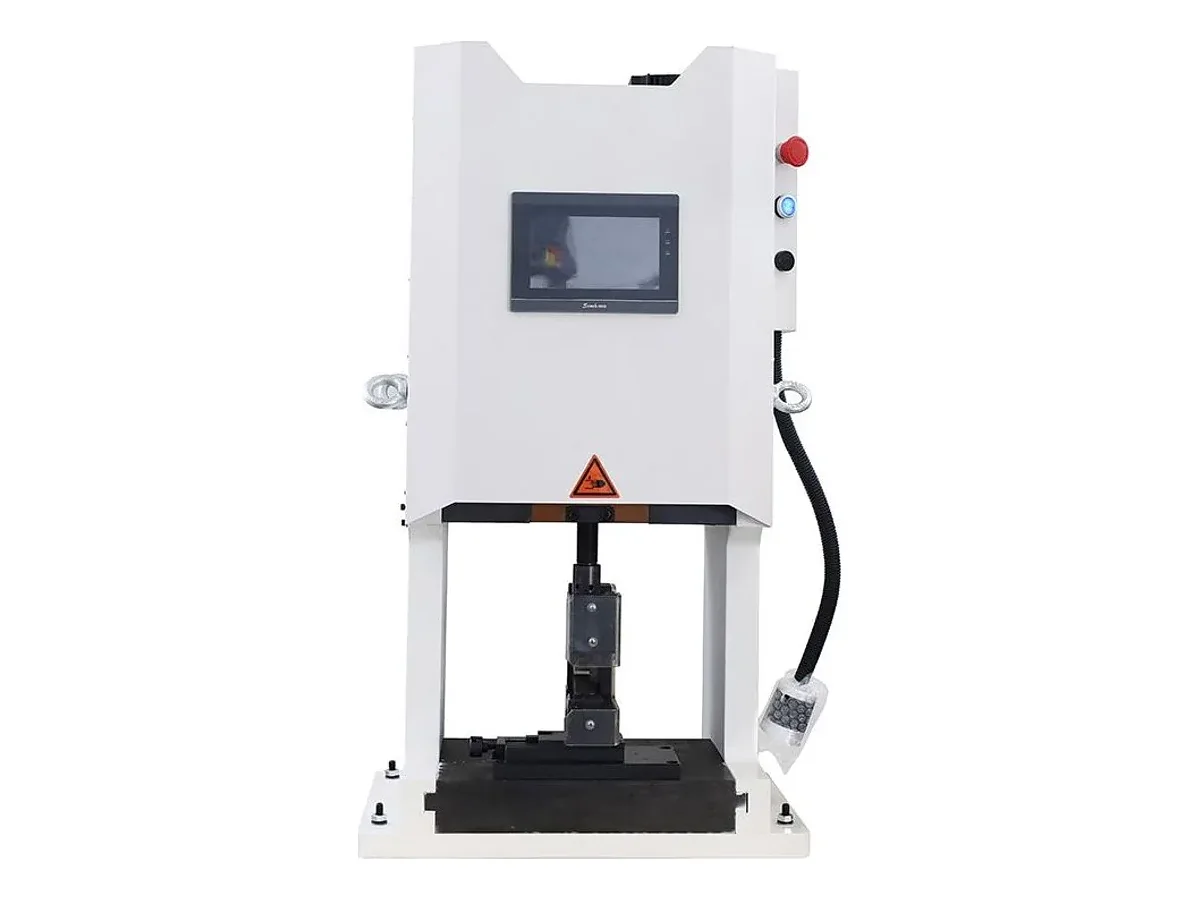
20-Ton Servo Cable Lug Crimping Machine, 200 kN and 40 mm Stroke
Model WM-3120T
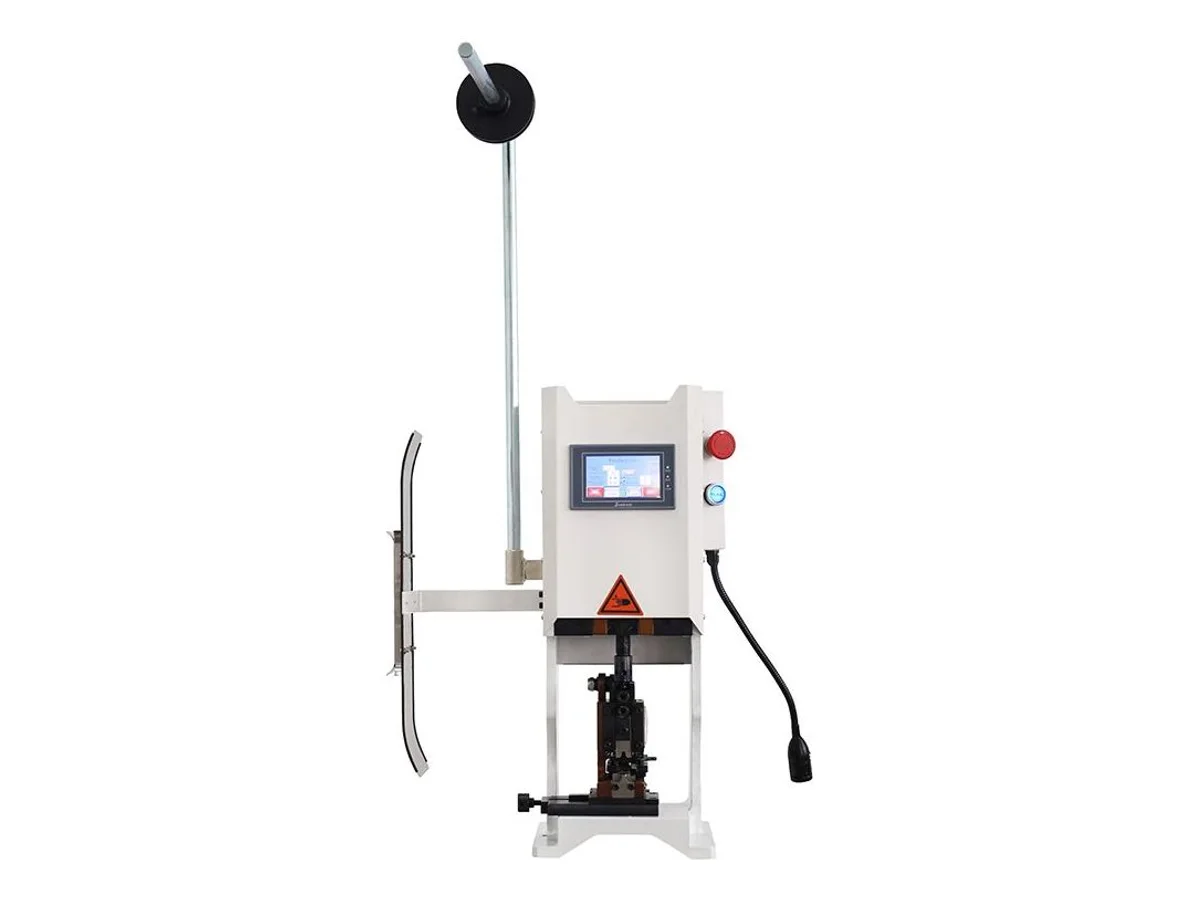
2-Ton Servo Terminal Crimping Machine, 20 kN Touchscreen Bench Press
Model WM-3102S