Automatic O-Ring Assembly Machine with O-Ring Oiling Station WM-9312
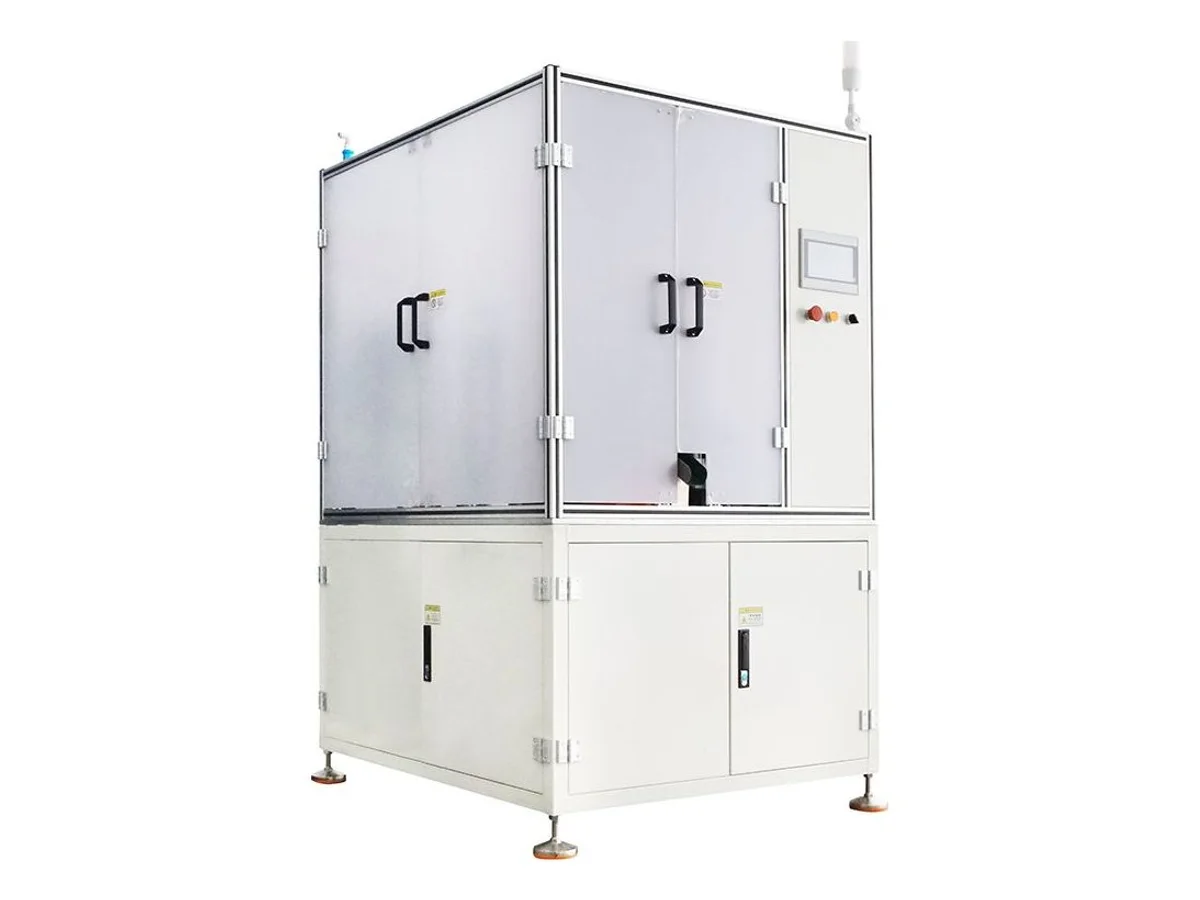
The WM-9312 fits O-rings onto molded plastic fittings at around 3,600 pieces per hour with a stated product yield rate above 98%, and it transfers and unloads defective parts by itself instead of stopping the line. Two vibratory bowls feed the bodies and the O-rings; a rotary indexing turntable then carries every part through connector feed, O-ring assembly, O-ring detection, O-ring oiling and finished-product unloading. Bowls are refilled 1,000–2,000 pieces at a time, and the pictured production run shows a 2.5-second working beat on the English-language touchscreen.
Specifications
| Function | Automatic O-ring assembly onto molded plastic fittings |
|---|---|
| Production efficiency | Around 3,600 pcs/hour |
| Bowl refill batch | 1,000 – 2,000 pieces added at a time |
| Product yield rate | > 98% |
| Defective parts | Automatically transferred and unloaded by the machine |
| Process stations | As pictured — connector feed, O-ring assembly, O-ring detection, O-ring oiling and finished-product unloading around a rotary indexing turntable |
| Working beat | As pictured — 2.5 s per part on the photographed production run |
| Component feeding | As pictured — two vibratory bowl feeders, one for connector bodies and one for O-rings |
| Control | As pictured — color touchscreen, English / Chinese interface |
| Enclosure | As pictured — full guarding with hinged doors, signal beacon and leveling feet |
| HS Code | 8479.89 (common reference — final classification confirmed by your customs broker) |
| Certification | On request |
Key features
- Dedicated O-ring oiling station — the touchscreen names it between detection and unloading, and a stainless pressure dispensing pot sits inside the cabinet, so rings go on lubricated instead of dragging dry into the groove
- Defective parts are transferred and unloaded automatically, so a bad ring does not stop production or reach the good-parts bin
- O-ring detection station after assembly; the screen counts OK product and NG product separately per shift
- Two vibratory bowls orient loose bodies and loose O-rings; the operator tops them up 1,000–2,000 pieces at a time and takes finished parts away
- Single-bay enclosed cell on leveling feet — it drops into a line beside a molding or packing station without a rebuild
- Nests, bowl tracks and assembly heads are cut for your part; send samples and we confirm feasibility and beat before you order
What it processes
- Molded plastic fittings that need an O-ring seated in a groove — as pictured, white barbed connector bodies with a black O-ring
- Pneumatic, water and fluid-line connectors produced in volume by injection molding
- Automotive, appliance and plumbing sealing components where hand-fitting rings causes rolled, twisted, missing or unlubricated rings
- Plants replacing a bench of manual assemblers on a part that runs continuously
Suited for: volume assembly of a rubber O-ring into the groove of a molded plastic fitting, where the ring needs lubricating and where defective parts must be rejected without stopping the line. Not suited for: sealing a threaded fitting with PTFE tape rather than a ring — that is the WM-461 automatic PTFE thread seal tape winding machine; rubber seals that slide onto a wire before crimping belong to the WM-377 double-end wire seal insertion and crimping machine. If your part needs a second assembly operation after the ring instead of an oiling step, the wider two-bay WM-9311 fully automatic O-ring assembly machine is the closer platform — it runs a 2.9-second beat in its photos against 2.5 seconds here. If the quantity does not justify an automatic cell, or the same bench has to switch between several part numbers, the benchtop WM-9314 semi-automatic O-ring assembly machine does the same ring feeding, oiling and seating in a 500 × 460 × 300 mm cabinet on a 220 V socket, with the operator loading each part by hand at about 1,000 pcs/hour.
Every machine on this platform is tooled around the customer’s own parts, so ordering starts with samples rather than a catalogue number: send the bodies and the O-rings, the cell is configured and trial-run on them, and you get the run figures before the machine is shipped.
Engineering knowledge
Choose and troubleshoot this process
- How to Choose a Wire Prefeeder and Pay-Off SystemChoose a wire prefeeder or pay-off system by reel mass, line speed, acceleration, allowable tension, accumulation, dereeling control and downstream interface.
- Wire Feeding Problems: Causes and Corrective ActionsTroubleshoot cable tension spikes, reel overrun, loops, jerking, twist, feed slip, encoder mismatch and downstream cut-length variation.
WM-9312 — common questions
How many parts per hour does the WM-9312 assemble?
The factory rates it at around 3,600 pieces per hour. The screen in our photos shows a 2.5-second working beat on the run that was photographed, with 714 OK parts against 19 NG at that point in the shift. Real output depends on your part geometry, O-ring size and how many steps the assembly needs, so we quote a beat only after your samples have been run.
What does the O-ring oiling station do?
It applies lubricant to the ring during the cycle — the touchscreen lists "Oil O-ring" as a station of its own, and a stainless pressure dispensing pot is plumbed inside the cabinet as pictured. A lubricated ring stretches over the body and drops into the groove without rolling or nicking, which is the usual cause of scrap on dry automatic assembly.
What happens to a part when the O-ring is missing or wrong?
A detection station checks the part after the ring is fitted, and the machine transfers and unloads defective products automatically instead of halting. The touchscreen keeps OK product and NG product on separate counters. The factory states a product yield rate above 98%.
How is this different from the WM-9311?
Both are automatic O-ring assembly machines built on a rotary indexing turntable, but they are not the same machine. The WM-9312 is a single-bay square cell whose station list includes a dedicated O-ring oiling step and automatic NG unloading, rated at around 3,600 pcs/hour with a 2.5-second beat on the pictured run. The WM-9311 is a wider two-bay cabinet whose station list has a second assembly step instead of an oiling step, running at a 2.9-second beat in its photos. Send your sample and we will tell you which platform your part belongs on.
Can it run my fitting?
The bowl tooling, turntable nests and assembly heads are made for one part family at a time, so feasibility is decided on samples. Send us the bodies and the O-rings; we run them with the factory and come back with beat, yield and price before you commit.
Related machines in Custom Machines
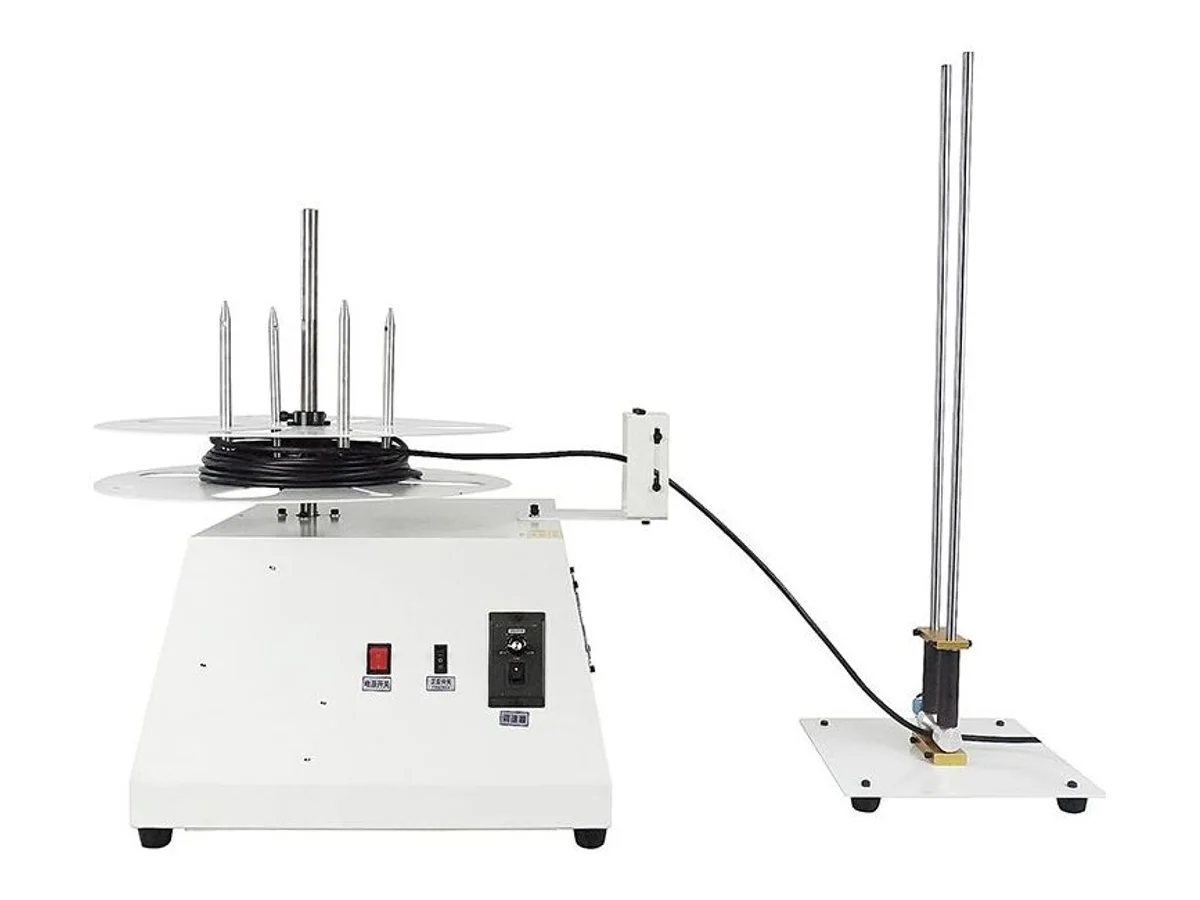
Automatic Cable and Tube Prefeeder with 20 kg Load Capacity
Model WM-9120T
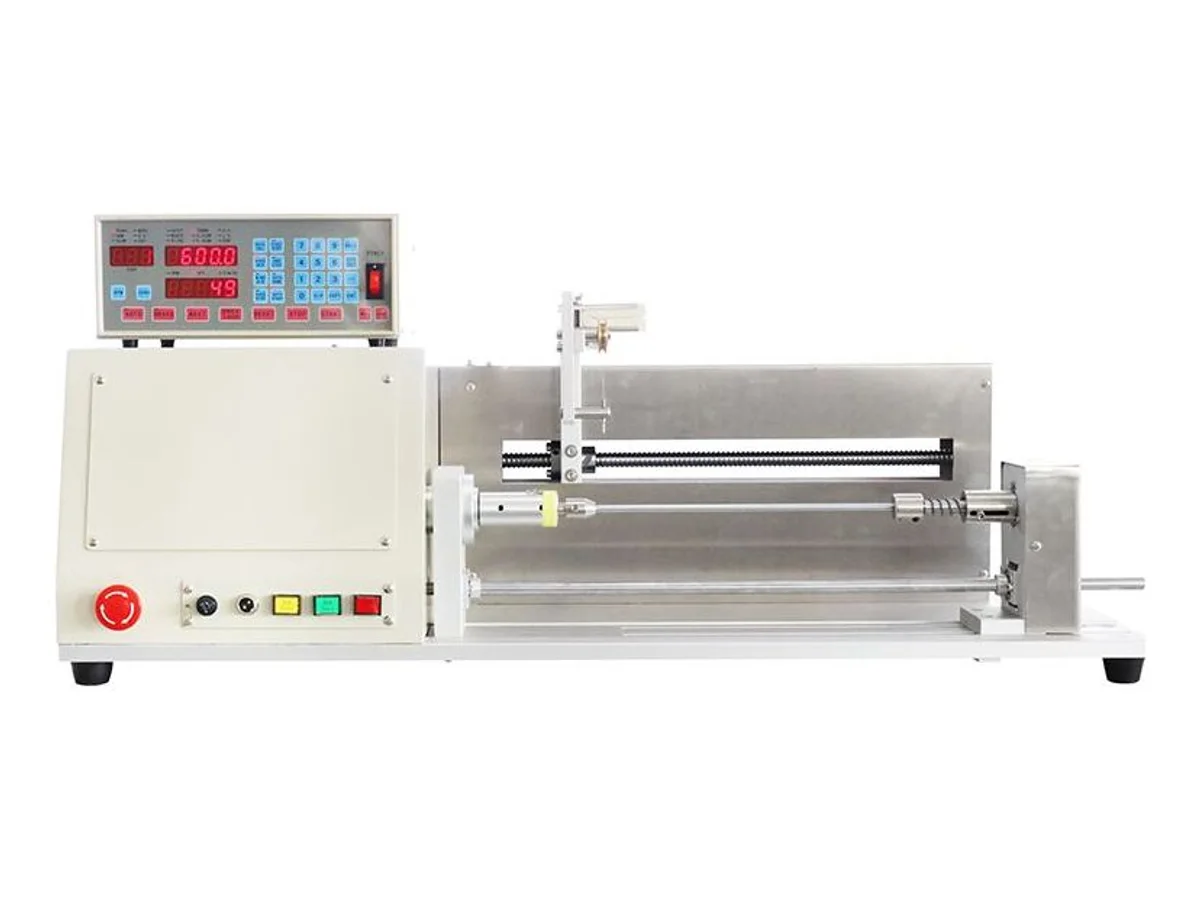
Automatic Magnet Wire Coil Winding Machine with 420 mm Programmable Traverse
Model WM-9324
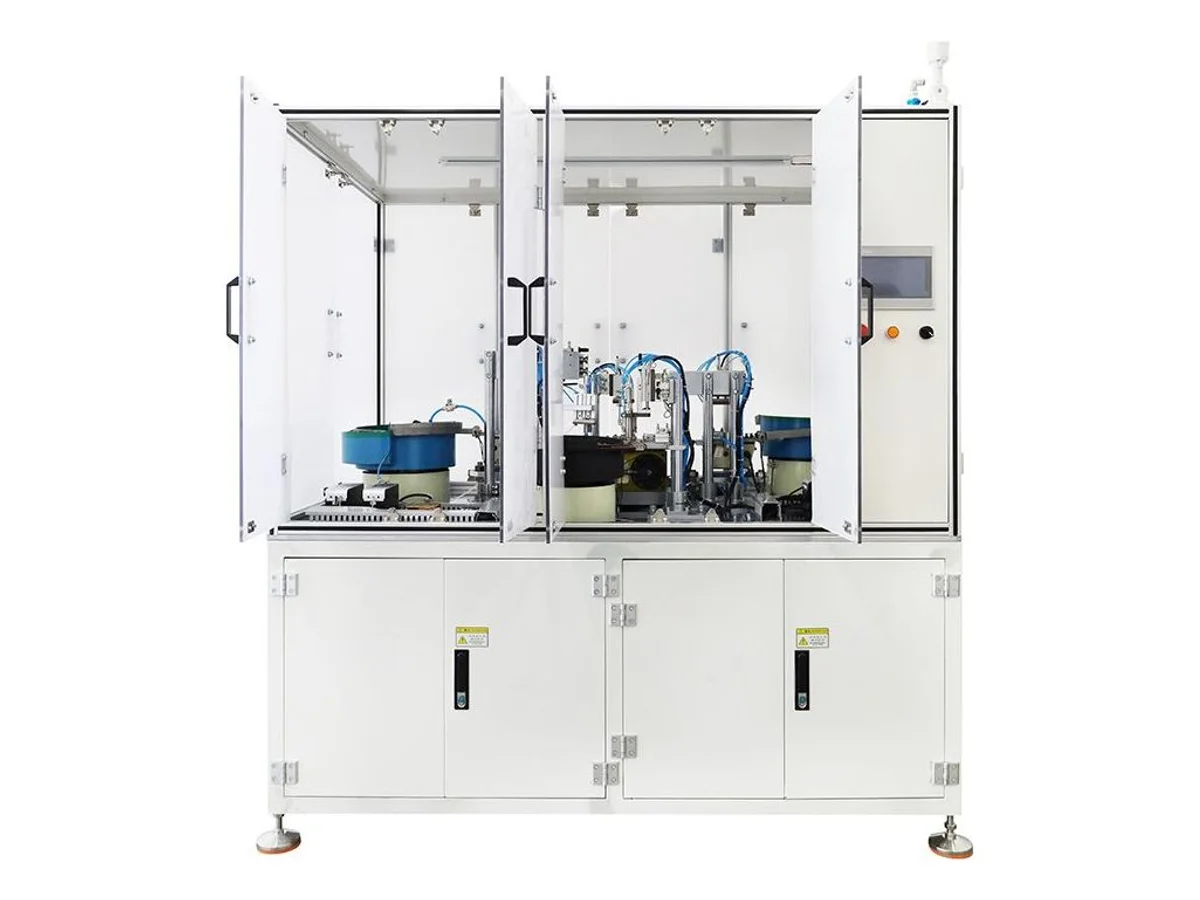
Fully Automatic O-Ring Assembly Machine with Rotary Indexing Table
Model WM-9311