Automatic O-Ring and Nut Assembly Machine for Plastic Connector Bodies WM-9336
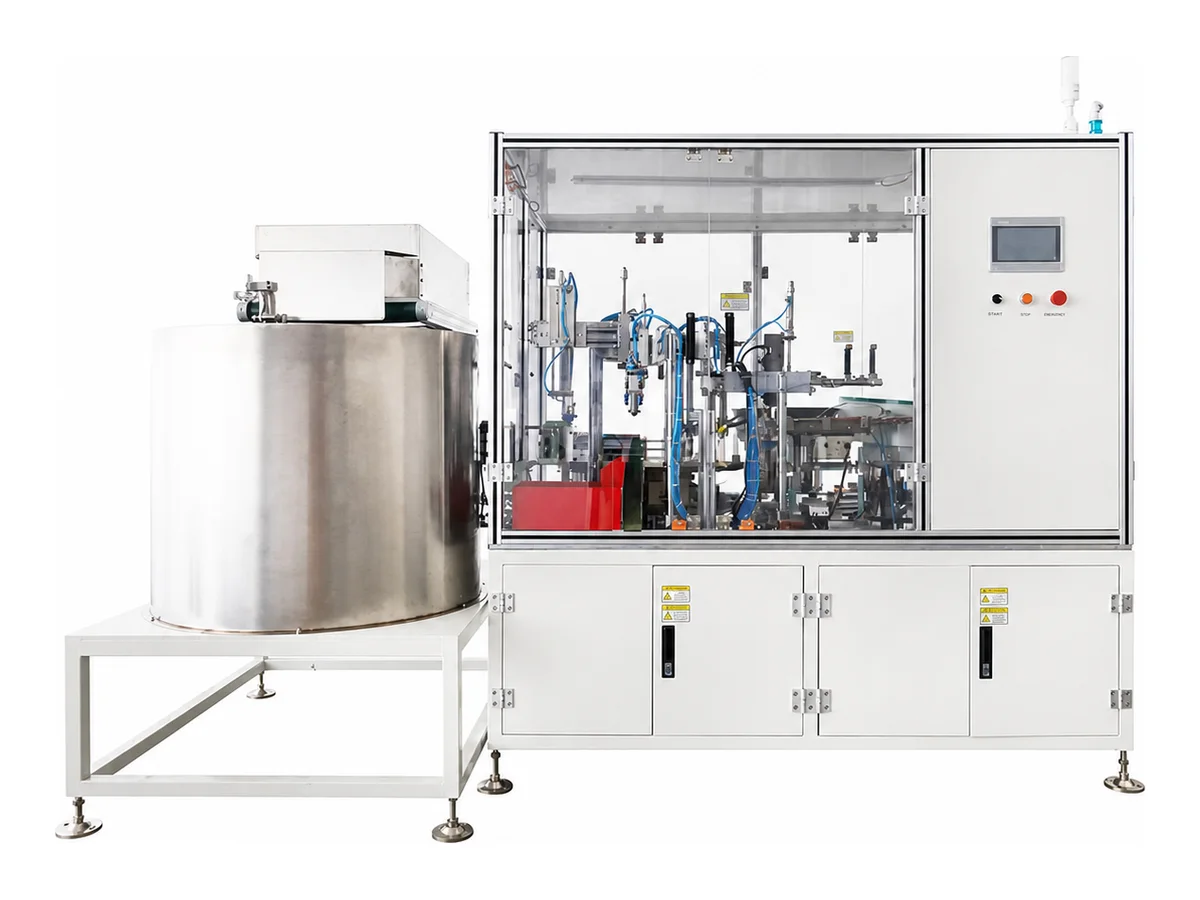
The WM-9336 is a fully automatic cell that seats upper and lower O-rings on a molded plastic body and then assembles a nut onto the same part, with a stated product yield rate above 98%. Vibratory bowls feed the green plastic bodies and the loose O-rings; a positioning fixture and transfer-press station carry each part through dual-ring seating and nut placement. The machine is customized according to customer samples — send the bodies, rings and nuts for a feasibility run before you order.
Specifications
| Function | Automatic dual O-ring assembly plus nut assembly onto molded plastic connector bodies |
|---|---|
| Product yield rate | > 98% |
| Tooling | Customized according to customer samples |
| Process | As pictured — green plastic body feeding, O-ring feeding, positioning fixture, assembly station and transfer-press nut station; finished parts show an upper ring, a lower ring and a red nut on each stem |
| Component feeding | As pictured — vibratory bowl for green plastic bodies and vibratory bowl for O-rings |
| Enclosure | As pictured — fully guarded floor cabinet with hinged doors, signal tower and levelling feet |
| HS Code | 8479.89 (common reference — final classification confirmed by your customs broker) |
| Certification | CE (certificate provided with shipment) |
Key features
- Dual O-ring plus nut in one cell — as pictured, each finished stem carries a black ring near the thread, a second black ring near the hex end, and a red nut, so three operations that would otherwise sit on separate benches share one guarded footprint
- The specification lists a product yield rate above 98%; send samples and we confirm the figure on your part during the trial run
- Positioning fixture and transfer-press station locate the body before the rings and nut are pressed, which is how changeover between part families is handled — swap fixtures rather than rebuild the cell
- Vibratory bowls orient loose green bodies and loose O-rings; the operator refills bowls and removes finished assemblies
- Fully guarded enclosure sized for a production line, not a bench
- Station tooling is cut from your samples — feasibility, cycle and price come back before anything is built
What it processes
- Molded plastic connector stems that need an upper O-ring, a lower O-ring and a nut on one body — as pictured, green tapered stems with black rings and a red hex nut
- Fluid, pneumatic or appliance fittings where hand-fitting two rings and running a nut down by hand is the scrap source
- Continuous runs of one part family where the nut station has to stay in the same cell as the ring seats
Suited for: volume assembly of molded plastic connector bodies that need upper and lower O-rings plus a nut in one automatic cell, with tooling built from your samples and a specified yield above 98%.
Not suited for: O-ring-only work with no nut station — that is the WM-9306 fully automatic rotary O-ring assembly machine or the five-station WM-9311 fully automatic O-ring assembly machine, and if the ring must be oiled as it goes on, the WM-9312 automatic O-ring assembly machine with O-ring oiling station. Also not suited for: tightening a cable-gland nut to a measured torque after the contact is already inserted — that job belongs to the WM-9316 two-station automatic nut tightening machine; rubber seals that slide onto a wire before crimping belong to the WM-377 double-end wire seal insertion and crimping machine; and PTFE tape on a thread is the WM-461 automatic PTFE thread seal tape winding machine.
Because every WM-9336 is tooled around the customer’s parts, ordering starts with samples: send the bodies, rings and nuts, the cell is configured and trial-run on them, and you receive the run results before the machine ships.
WM-9336 — common questions
Can it run my part?
The bowls, fixtures and press heads are made for one part family at a time, so feasibility is decided on samples. Send us the plastic bodies, the O-rings and the nuts; we run your parts and confirm yield, cycle and price before you commit.
How is this different from the WM-9306 and the WM-9311?
Those two are O-ring-only automatic cells. The WM-9306 photographs a three-station-plus-test rotary layout at a 1.8-second beat; the WM-9311 photographs a five-station layout at 2.9 seconds. The WM-9336 adds a nut assembly station after the rings — as pictured on the finished green stems with red nuts — so it is the platform when the nut has to go on in the same cell, not later on a separate bench.
How do I confirm the interface language and configuration?
We set the voltage for your country and ship the English interface and manual. Ask for the current interface pages with your inquiry; we provide them with the quote and confirm the cycle and stations for your configuration before ordering.
Does it oil the rings?
No oiling station is specified on the published datasheet and none is claimed in the photographs we selected. If the ring has to go on wet, say so in the inquiry — the WM-9312 carries a dedicated oiling step on an O-ring-only cell, and we will tell you whether your part needs that platform or a lubricated variant of this one.
Related machines in Component Assembly & Special Machines
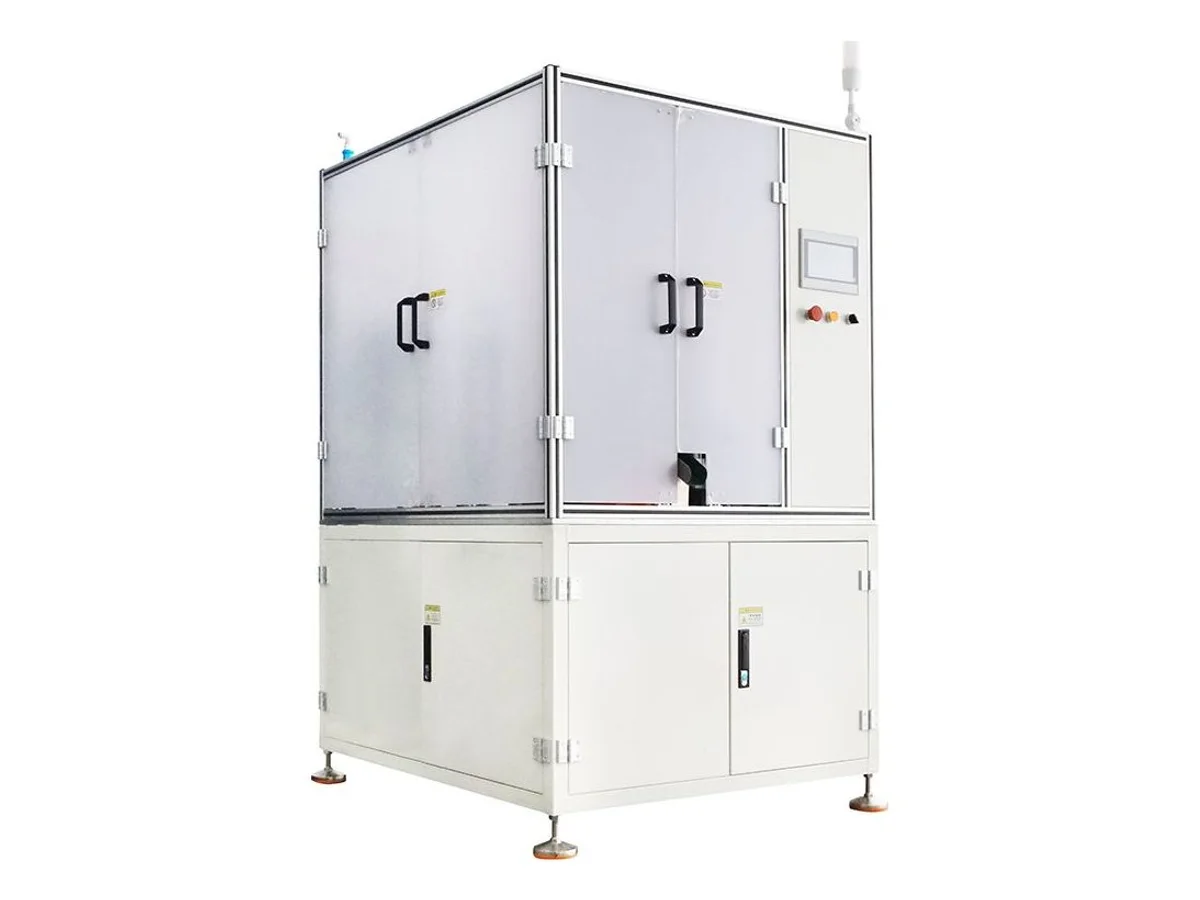
Automatic O-Ring Assembly Machine with O-Ring Oiling Station
Model WM-9312
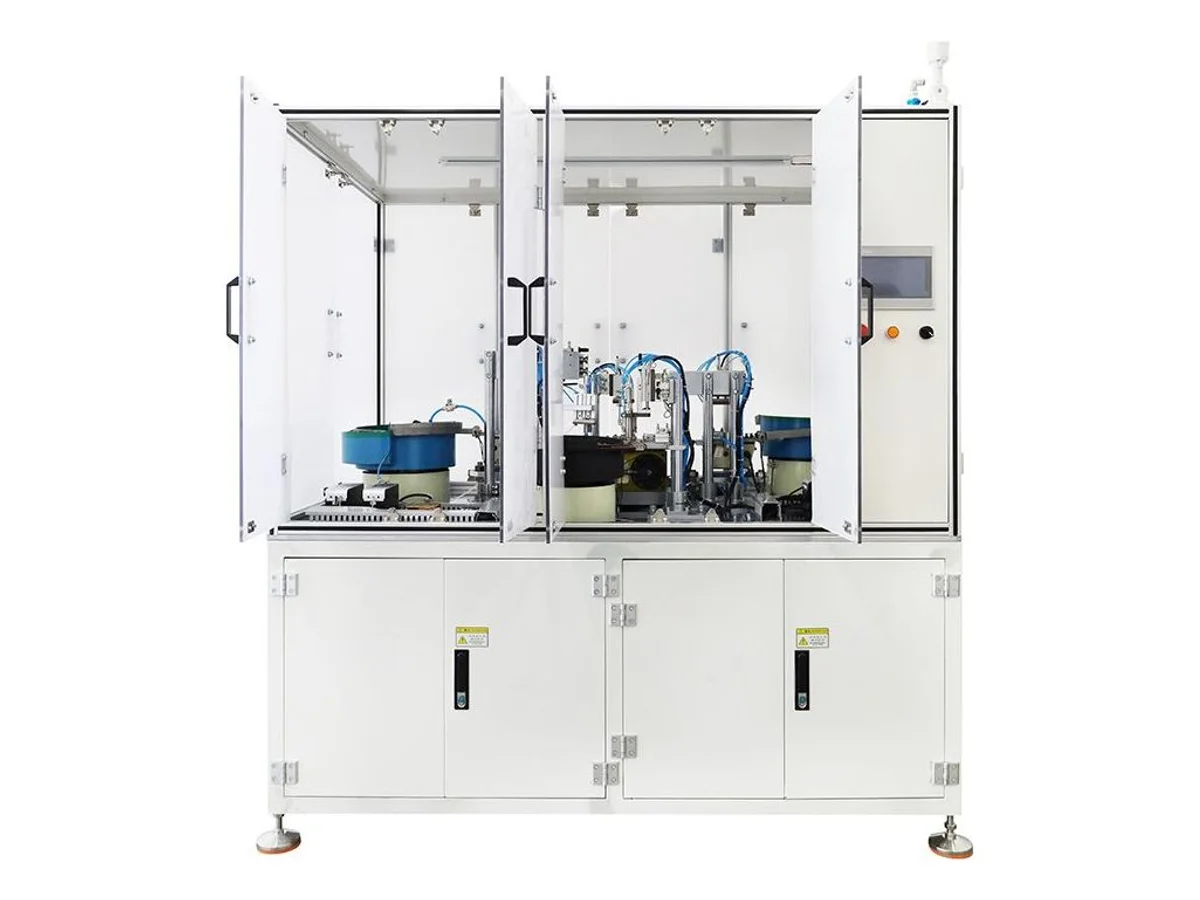
Fully Automatic O-Ring Assembly Machine with Rotary Indexing Table
Model WM-9311
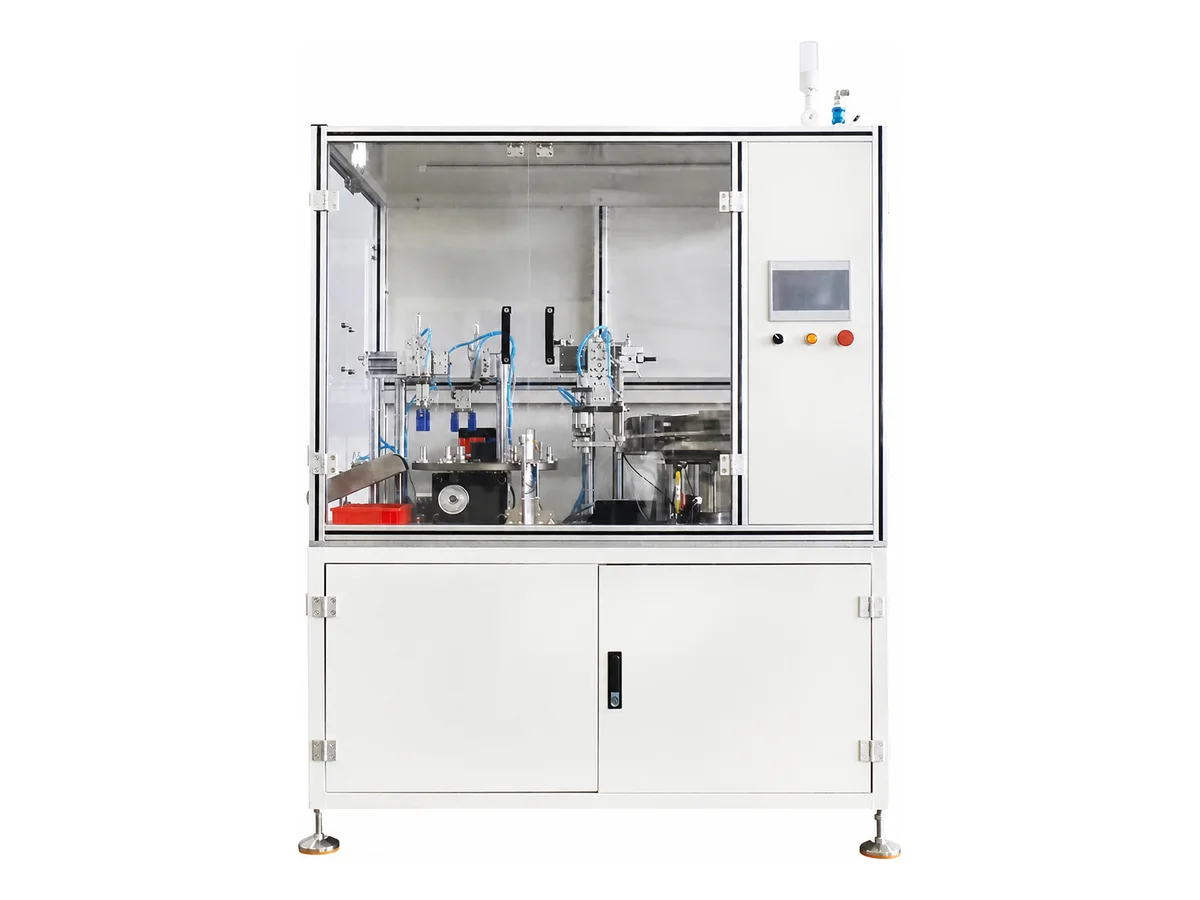
Fully Automatic Rotary O-Ring Assembly Machine for Molded Plastic Parts
Model WM-9306