Dual-Head Laser Webbing Cutting and Hole-Making Machine WM-575
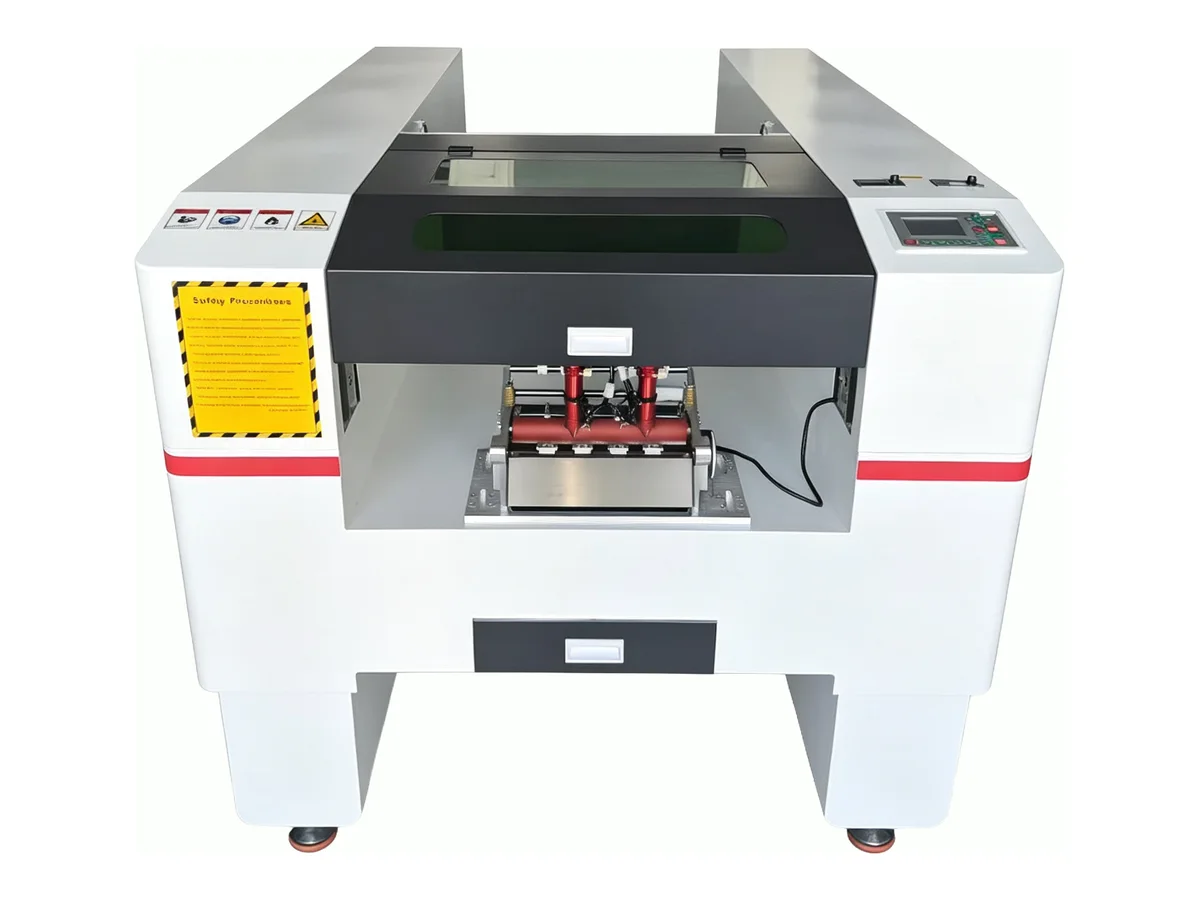
The WM-575 punches hole patterns and cuts synthetic webbing and tape with two 10.6 µm laser heads working side by side. Head spacing is freely adjustable, each head's power is controlled independently for identical results on both lanes, and a dual optical path reflection system keeps cutting depth consistent. Programs are managed on an English control panel; the machine draws 300 W at 220 V and measures 1900 × 1280 × 1330 mm at approx. 646 kg.
Specifications
| Function | Laser hole punching and cutting of webbing and tape |
|---|---|
| Laser heads | 2, spacing freely adjustable; single-head operation supported |
| Laser wavelength | 10.6 µm |
| Machine power | 300 W |
| Voltage | 220 V, 50/60 Hz |
| Power stability | ±5% |
| Dimensions | 1900 × 1280 × 1330 mm |
| Weight | Approx. 646 kg |
| HS Code | 8456.11 (common reference — final classification confirmed by your customs broker) |
| Certification | CE (certificate provided with shipment) |
Key features
- Two laser heads with freely adjustable spacing — run two webbing lanes at once, or a single head for one-lane jobs
- Independent power control per head, so both lanes come out with exactly the same hole and cut quality
- Dual optical path reflection system minimizes light loss and keeps cutting depth consistent across both heads
- Predictive control algorithm balances the workload between heads for smooth, efficient processing
- Holes and cut-offs are programmed in one recipe on the English control panel — no die or punch tooling to make or sharpen
- Free sample test — send your webbing with the hole pattern drawing, we run it on this machine and send you the video before you order
What it processes
- Hole punching and cut-to-length of synthetic webbing — lashing straps, ratchet straps, harness and sling webbing
- Garment, leather and appliqué embroidery cutting
- Ribbon, tape and label cutting where fused, fray-free edges are required
Suited for: punching hole patterns and cutting synthetic webbing, straps, tape and ribbon in one program — especially jobs where a mechanical punch die would fray the edges or need constant resharpening. Not suited for: plain cut-to-length work without holes at high volume — the WM-568 hot cutting machine for braided sleeve and webbing does sealed-end cutting up to 100 mm width at 7,200 cuts/h; for an ultrasonic process for punching and cutting, see the WM-564 ultrasonic webbing punching and cutting machine. If the hole layout is fixed and you only ever punch — no cutting — a single mold on the WM-598 ultrasonic hole punching machine is rated at 60–100 strokes a minute. We test your leather, flannel or other material to confirm the hole finish and suitable process before recommending a setup. Round tube is a different job: heat shrink tube goes to the WM-565N heat shrink tube cutting machine (up to Φ38 mm), corrugated conduit to the WM-176 corrugated tube cutting and splitting machine (Φ4–32 mm), and copper or aluminum tube to the WM-183 automatic metal tube cutting machine (Φ1–30 mm).
The machine ships with its industrial water chiller and exhaust blower as pictured; tell us your webbing width, material and hole pattern in the inquiry and we will confirm setup and lane count for your job.
Engineering knowledge
Choose and troubleshoot this process
- How to Choose a Tube and Pipe Cutting MachineChoose tube and pipe cutting equipment by material, diameter, wall thickness, rigidity, cut mechanism, tolerance, end quality and chip-control requirements.
- Spiral Cutting vs Rotary Cut-Off for Silicone TubeA 5 mm silicone-tube inquiry shows why a rotating blade does not prove spiral-cut capability. Define the helix, support and sample acceptance.
- Soft Hose Cutting: Control Stretch, Length and Cut EndsControl soft-hose cut length by checking relaxation, reel drag, feeding and measurement. Assess open bore and cut quality alongside length.
WM-575 — common questions
Why two laser heads instead of one?
The two heads sit on the same beam with freely adjustable spacing, so you can feed two webbing lanes side by side and double the output of hole-punching jobs. Software drives the power of each head separately, which keeps hole size and cut depth identical on both lanes. For one-lane work or wide material the machine also runs on a single head.
Do laser-punched holes fray at the edges?
On synthetic webbing such as polyester or nylon the laser fuses the material as it cuts, so hole edges and cut ends come out sealed rather than frayed — you can see this on the punched sample photos in the gallery. Natural fibers like cotton do not melt-seal the same way; send us a sample and we will run it and show you the actual edge before you decide.
How are hole patterns and cutting lengths set up?
Hole positions, hole sizes and the cut-off length are drawn as one program file and loaded on the English control panel via USB stick or the PC port. Changing to another strap layout is a file change, not a tooling change — there is no punch die to make, align or resharpen.
Related machines in Tube, Tape & Material Cutting
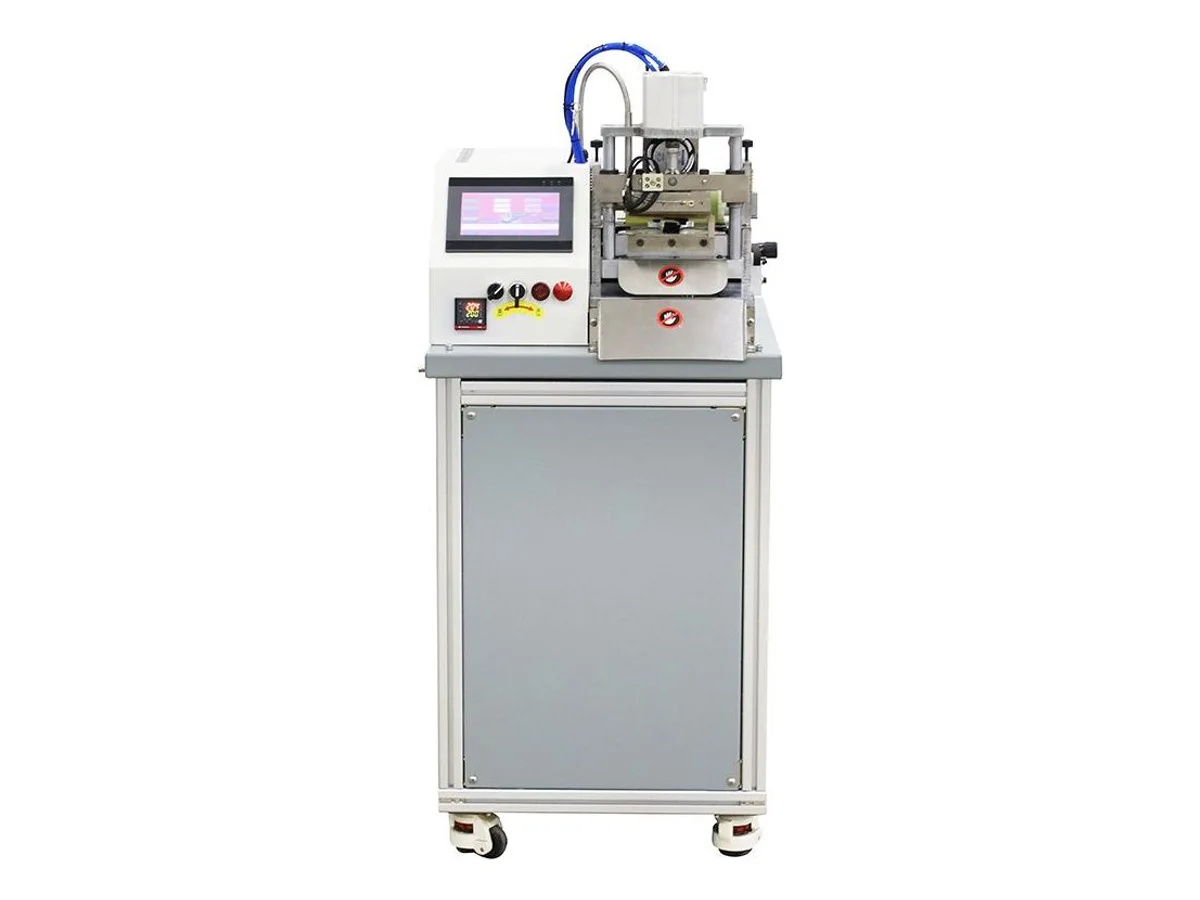
Hot and Cold Webbing Shape Cutting Machine, 45–135°
Model WM-566
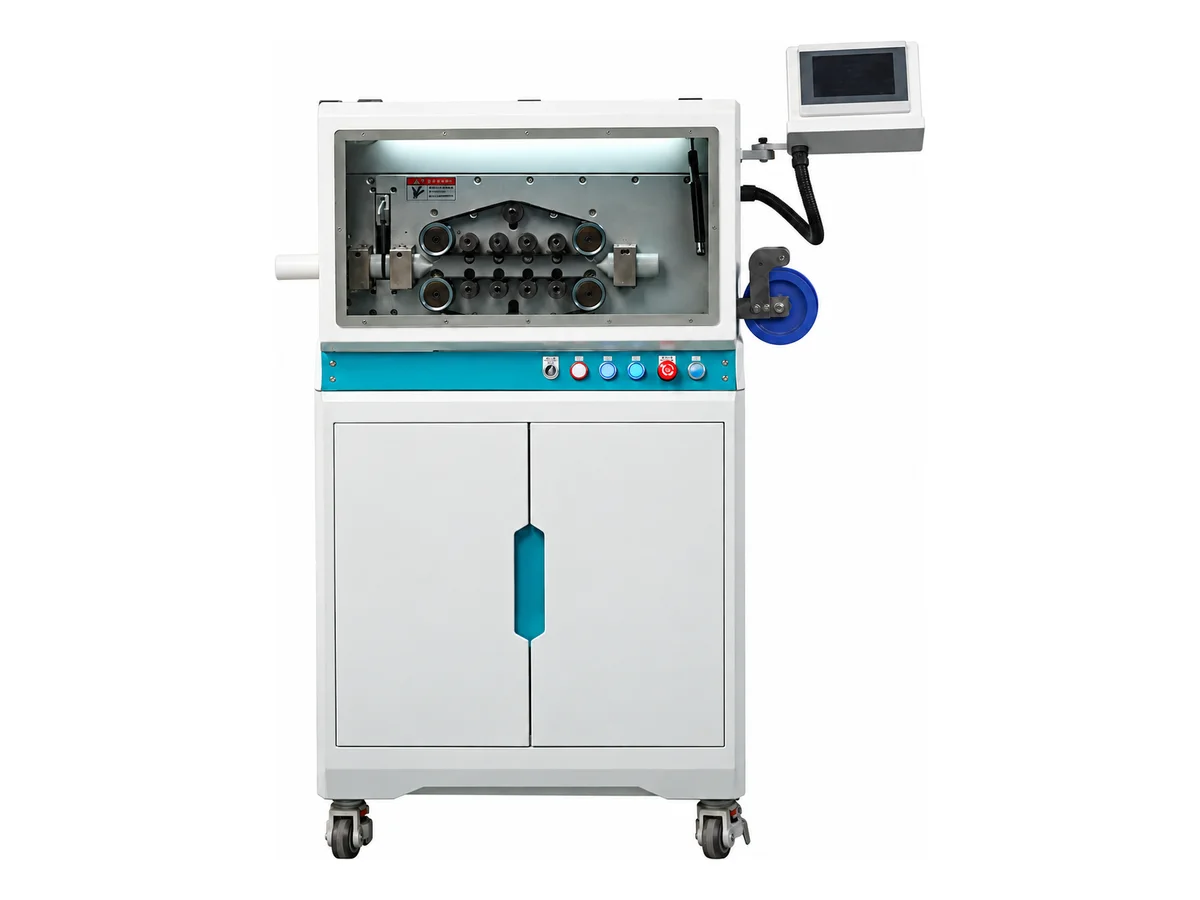
Automatic Plastic Tube Cutting Machine for Ø4–30 mm Tube
Model WM-606
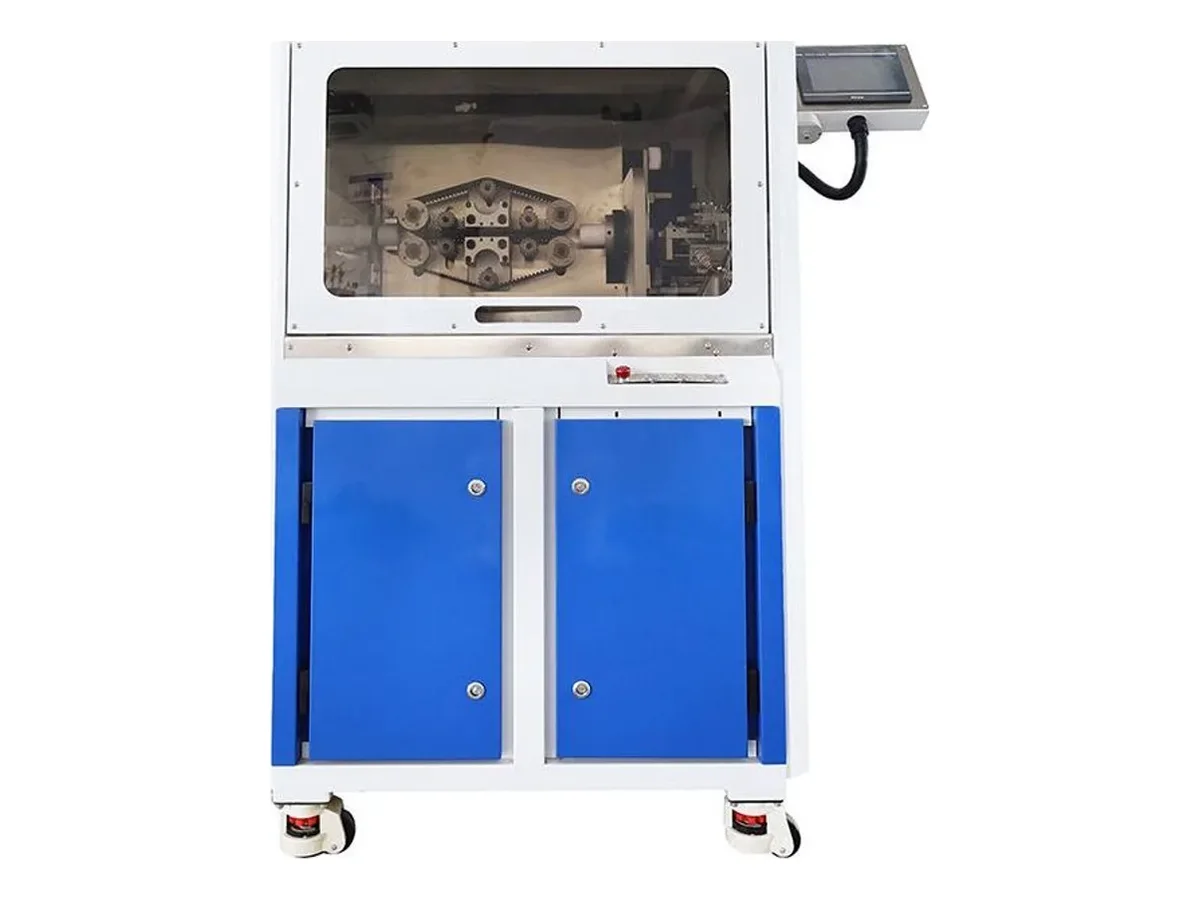
Automatic Braided Sleeve Taping and Cutting Machine for OD 8–30 mm Tube
Model WM-177