Ultrasonic Hole Punching Machine for Webbing, Zipper Tape and Leather WM-598
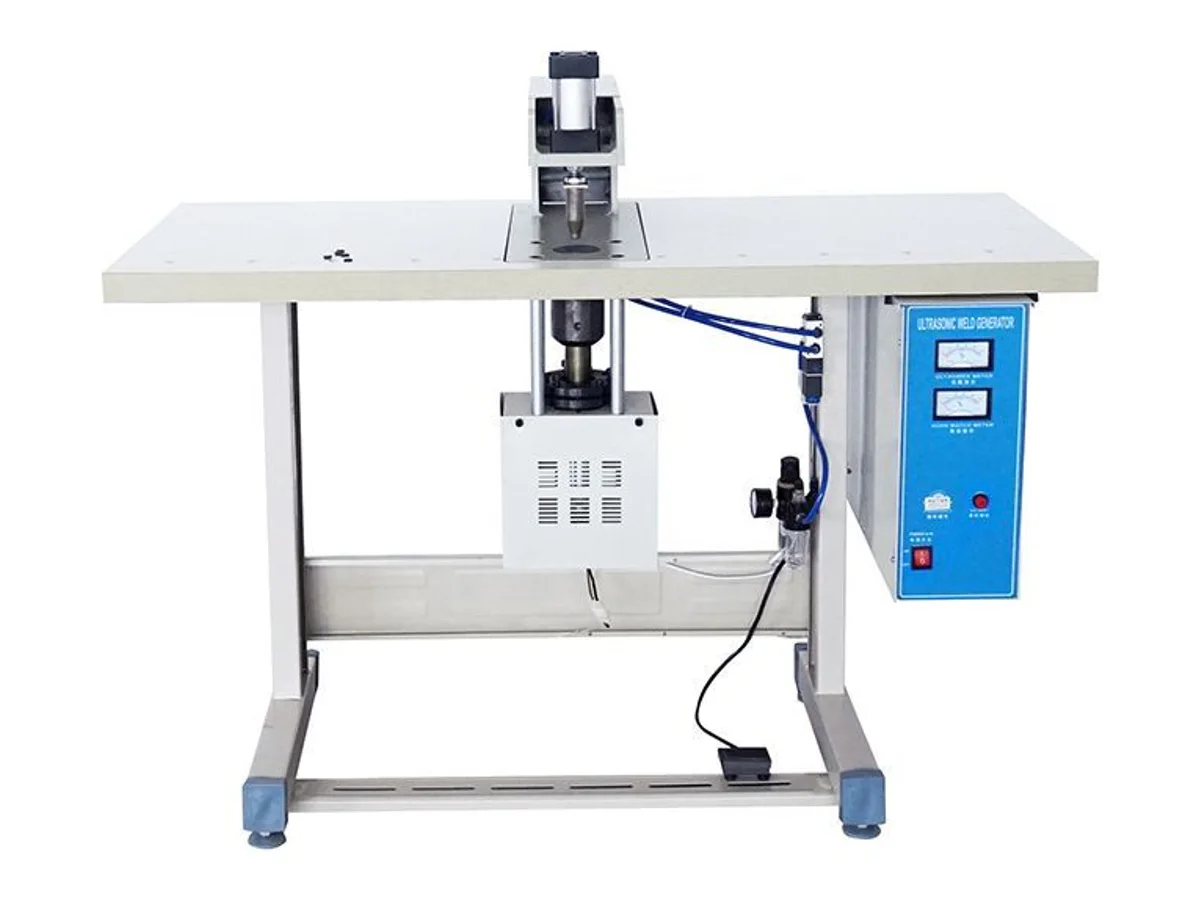
The WM-598 is a bench ultrasonic punch press: material is laid flat on the work table and one pedal stroke drives a vibrating horn through it into a pillar-guided die, to form the hole; compatible thermoplastic material can be fused at the rim in the same operation. The die is a bolt-in part, so one machine covers round holes today and a shaped mold tomorrow, and two or more layers can be punched together. It runs at 60–100 punches per minute on woven tape, hook-and-loop, lace, zipper tape, woven labels and leather. The 2,000 W generator accepts 220 V/50 Hz or 110 V/60 Hz; the table measures 1,260 × 600 × 1,260 mm.
Specifications
| Function | Ultrasonic hole punching of tape, webbing and fabric |
|---|---|
| Voltage | 220 V/50 Hz; 110 V/60 Hz (can be customized) |
| Output power | 2,000 W |
| Efficiency | 60–100 times/minute |
| Suitable material | All kinds of woven tapes, magic tapes, laces, zippers, trademarks, various leather materials and other tapes |
| Weight | 300 kg |
| Dimensions | 1,260 × 600 × 1,260 mm |
| HS Code | 8515.80 (common reference — final classification confirmed by your customs broker) |
| Certification | CE (certificate provided with shipment) |
Key features
- Punching is a different operation from cutting — the tape stays in one piece and gets a hole through it, so straps, zipper tape and woven labels come off the table ready for a rivet, screw, hook or lace with no cut-to-length step involved
- Ultrasonic tooling can fuse the hole rim on compatible synthetic tape; natural fibres, leather, coatings and reinforced holes require a sample trial to confirm cutting quality and any finishing step
- The die is bolted into a pillar-guided holder and swaps out in minutes, so one machine covers several hole sizes; different molds also punch shapes rather than plain round holes — five-pointed stars, hearts and animal outlines are standard examples
- Two or more layers of flannel or tape can be punched in one stroke, which keeps a stack of pieces registered to each other instead of punching them one at a time
- Open flat work table with a foot pedal — the operator positions each piece by hand, so odd-shaped pieces, cut leather panels and short runs are handled without threading a reel or setting up a feeder
- Analogue ultrasonic power and horn-match meters sit on the generator front, so a setter sees load and tuning at a glance while dialling in a new mold
What it processes
- Fixing holes and lacing holes in nylon and polyester strap for harness bundling, cargo lashing and sling assembly
- Hook-and-loop tape, lace trim and elastic band punched for buttons, cords, studs and rivets
- Zipper tape, woven labels and trademark tape perforated for stitching or hanging
- Leather and multi-layer flannel pieces punched to shape for bags, footwear and garment trim
Suited for: putting holes — round or shaped — through woven tape, hook-and-loop, lace, elastic, zipper tape, woven labels, flannel and leather, at 60–100 strokes a minute. It keeps the strip in one piece; a sealed rim depends on the material containing a suitable thermoplastic component and on the sample result.
Not suited for: cutting to length. If the job is one automated cycle that both punches the holes and cuts the strap off a reel, use the WM-564 ultrasonic webbing punching and cutting machine, which sets hole count and hole spacing on a touchscreen and severs each piece as it goes. If the hole pattern changes constantly and you would rather not own a mold for every layout, the WM-575 dual-head laser hole punching and cutting machine draws holes and cut-offs from a program file with no tooling at all. If there are no holes in the job and you only need tape cut and sealed to length, the WM-567 ultrasonic ribbon and tape cutting machine does straight and angled cuts at 60–80 pieces a minute. Wire and cable are a different category altogether — see the wire cutting and stripping machines.
The machine runs on compressed air; tell us your shop air pressure along with the material, its thickness and the hole size or outline you need, and we will confirm the mold and the setup before you order. Send us a metre or two of your tape or a few leather offcuts and we will punch them on this machine and mail the pieces back, so you judge the rim quality on your own material rather than on our photographs.
A listed material does not imply that it melts or forms a sealed rim. We test leather, natural-fibre and coated stock separately and confirm the required hole finish and reinforcement on the quote.
Engineering knowledge
Choose and troubleshoot this process
- How to Choose a Tube and Pipe Cutting MachineChoose tube and pipe cutting equipment by material, diameter, wall thickness, rigidity, cut mechanism, tolerance, end quality and chip-control requirements.
- Spiral Cutting vs Rotary Cut-Off for Silicone TubeA 5 mm silicone-tube inquiry shows why a rotating blade does not prove spiral-cut capability. Define the helix, support and sample acceptance.
- Soft Hose Cutting: Control Stretch, Length and Cut EndsControl soft-hose cut length by checking relaxation, reel drag, feeding and measurement. Assess open bore and cut quality alongside length.
WM-598 — common questions
How is this different from a punching machine that also cuts the tape to length?
This one only punches. The tape passes over the table in one continuous piece and comes away with holes in it, which is what you want when the strap is cut somewhere else, when the hole pattern changes from job to job, or when the piece is not a strap at all — a leather panel, a woven label, a length of zipper tape. If you need holes and a cut-to-length strap out of the same automated cycle, that is the WM-564 instead.
Why do the holes not fray?
The horn vibrates at ultrasonic frequency and the friction melts the synthetic fibres exactly where the die outline sits. Because the material is melted through rather than sheared, the fibre ends at the rim fuse back into the tape as the hole opens. You can see it on the punched black webbing and white ribbon in the gallery — the weave stops cleanly at the rim with no loose threads standing out of the hole.
Can I get a shape other than a round hole?
Yes — the shape is in the tooling, not in the machine. The mold is a bolt-in part in a pillar-guided holder, so a round hole, a slot, a star, a heart or an animal outline are each just a different mold, and several molds can be kept for one machine. Send us the outline you need with a sample of your material and we will confirm what the tooling looks like before you order.
What is this machine not suitable for?
It does not cut material to length and it has no reel or feeder — the operator places each piece. It also does not process wire or cable; that belongs with the wire cutting and stripping machines.
Related machines in Tube, Tape & Material Cutting
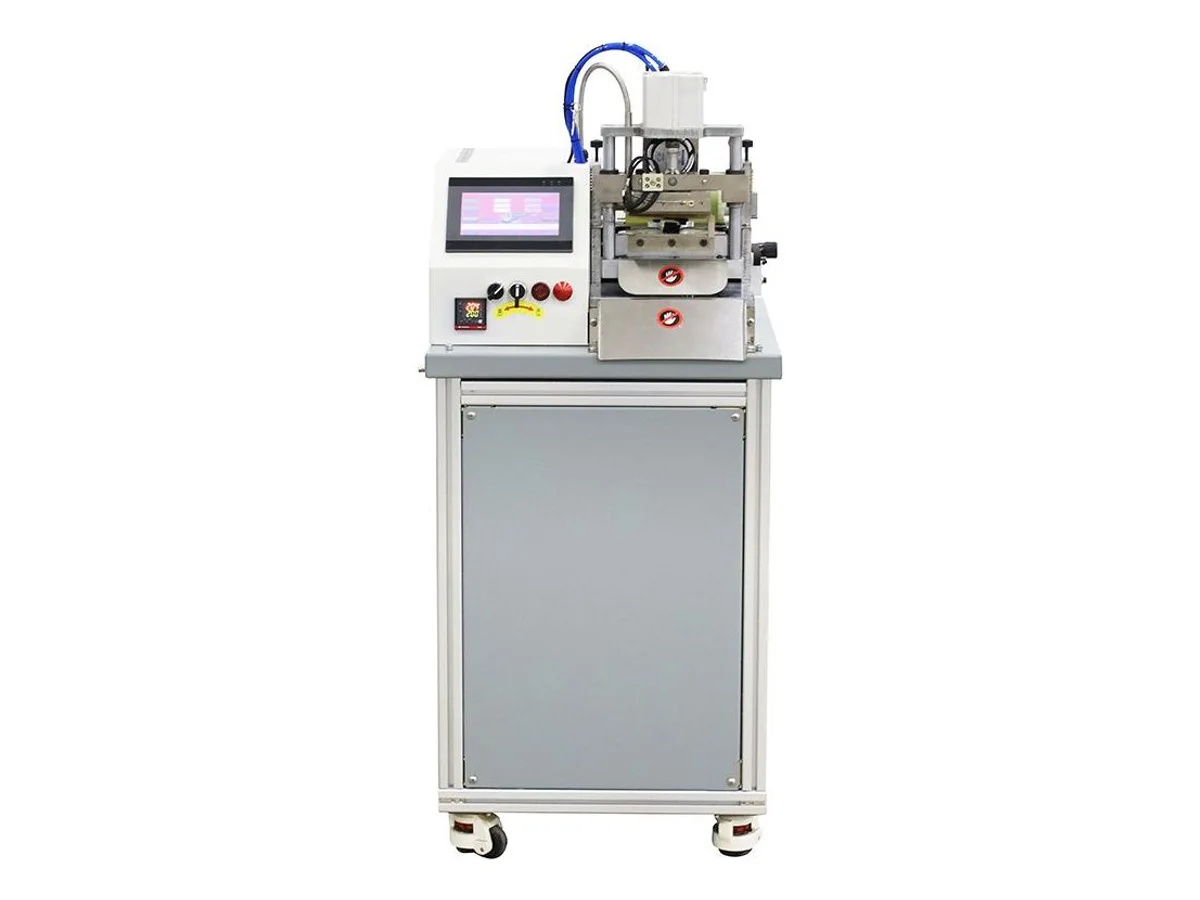
Hot and Cold Webbing Shape Cutting Machine, 45–135°
Model WM-566
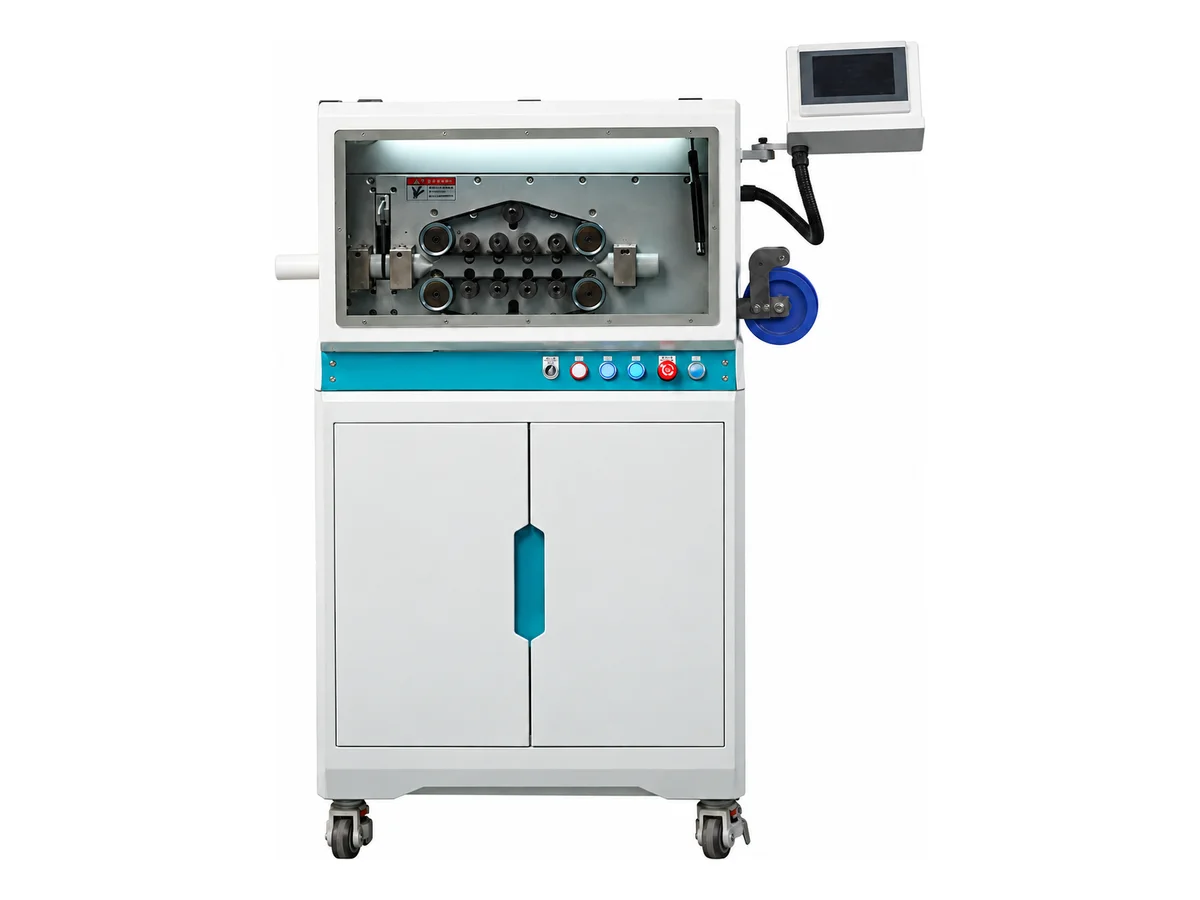
Automatic Plastic Tube Cutting Machine for Ø4–30 mm Tube
Model WM-606
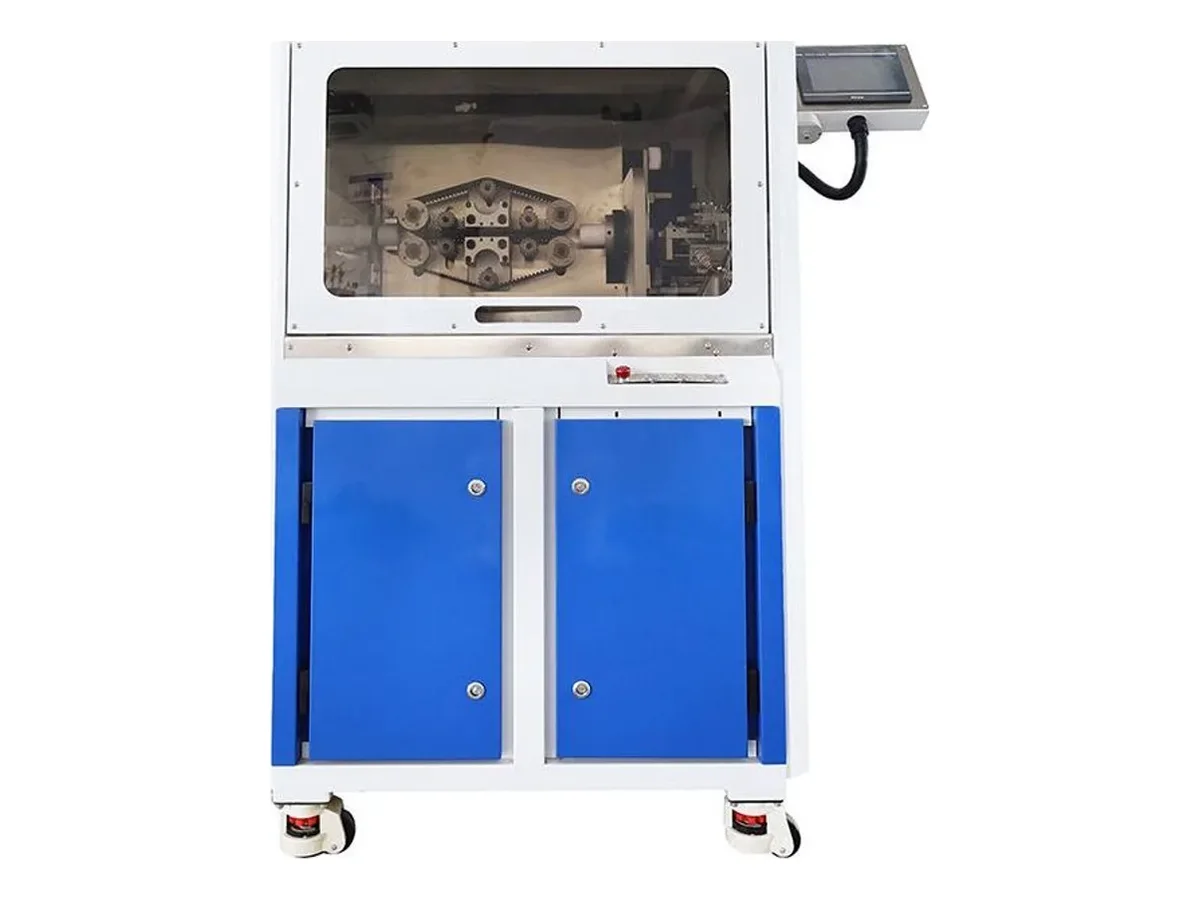
Automatic Braided Sleeve Taping and Cutting Machine for OD 8–30 mm Tube
Model WM-177