Automatic Hot Stripping, Crimping and Housing Insertion Machine for 3-Wire Assemblies, AWG 20–28 WM-3235
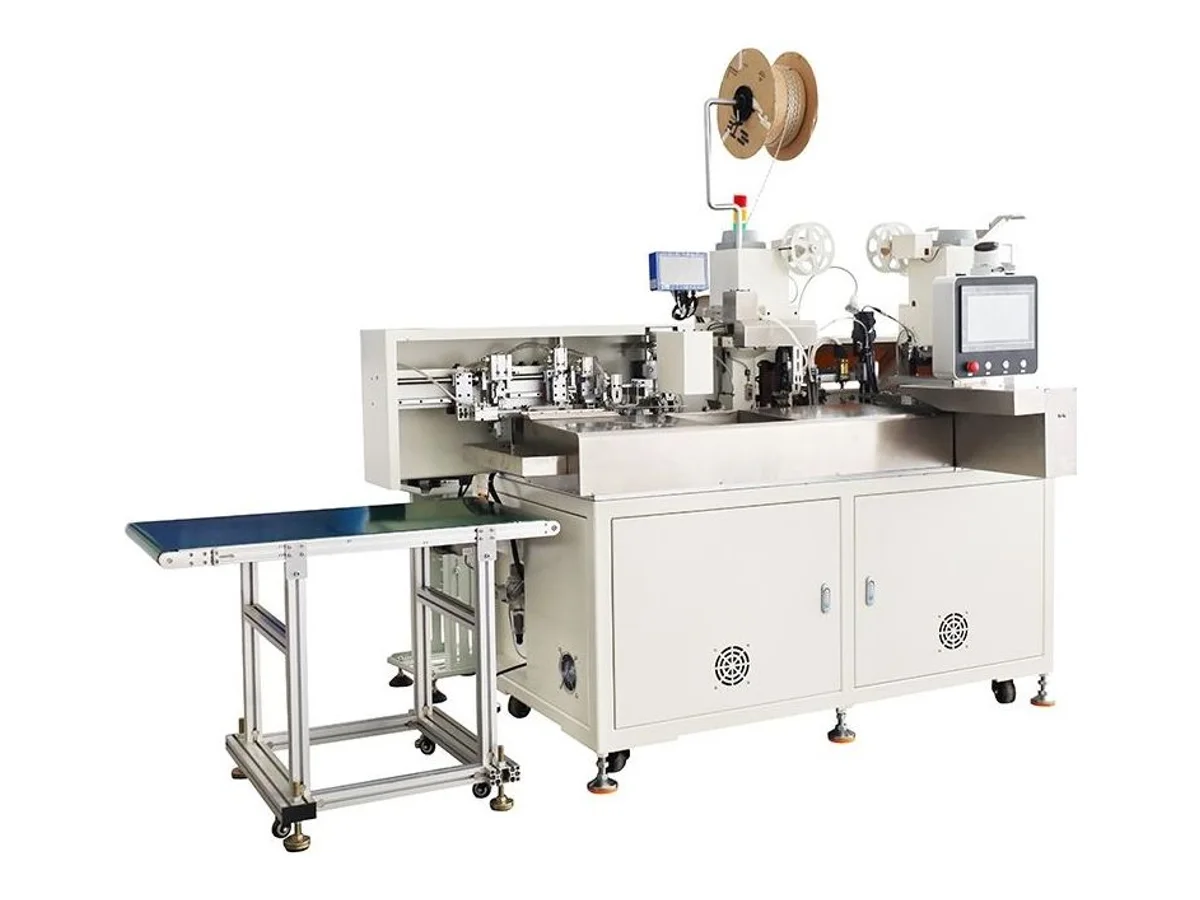
The WM-3235 builds a finished 3-wire connector assembly in one pass: it feeds three wires at once, cuts them to separate programmed lengths, opens the covering with a heated stripping tool instead of a blade, crimps terminals on both ends, and pushes the terminals of one end into a plastic housing fed from a vibratory bowl. It runs AWG 20–28 wire under Φ2.5 mm at about 450 assemblies per hour, with cut lengths from 50 to 1,000 mm set on an English touch screen.
Specifications
| Function | Wire cutting, hot stripping, two-side crimping, one-side housing inserting |
|---|---|
| Wire size | AWG 20 – 28 (wire outer diameter < Φ2.5 mm) |
| Wire color | 3 colors |
| Wire cutting length | 50 – 1,000 mm (setting unit 0.1 mm) |
| Cutting tolerance | 0.1 mm |
| Stripping length | 1.0 – 8 mm |
| Crimping force | 19,600 N (2 ton equivalent) |
| Crimping stroke | 30 mm |
| Crimping applicator | Universal OTP crimping applicator |
| Detection device | Pressure drop detection, wire presence detection, crimping error detection, terminal presence detection, terminal overload detection, terminal insertion detection, pressure sensor device (optional), CCD visual inspection (optional) |
| Control method | Single chip microcomputer control |
| Internal control voltage | DC 24 V |
| Power supply | Single-phase AC 200 V/220 V 50 Hz 10 A |
| Compressed air | 0.5 MPa, about 170 N/min (listed air-consumption entry; unit confirmed on the quote) |
| Efficiency | 450 pcs/h (calculated based on three wires) |
| Operating humidity range | 30% – 80% RH, no condensation |
| Warranty period | 2,000 hours or 1 year (excluding consumables) |
| Dimensions | 1,560 (W) × 1,100 (D) × 1,600 (H) mm |
| Weight | About 800 kg |
| HS Code | 8463.90 (common reference — final classification confirmed by your customs broker) |
| Certification | CE (certificate provided with shipment) |
Key features
- Three wires processed in the same cycle, each with its own programmed length — the screen holds a separate length, strip length and crimp position for wire 1, wire 2 and wire 3
- Thermal stripping opens compatible coverings using programmed heat, depth, pull-off and dwell settings; verify insulation removal and conductor condition on your actual wire
- Terminals crimped on both ends at 19,600 N through a universal OTP applicator, with separate piece counters for crimp station 1 and crimp station 2
- Housings fed automatically from a vibratory bowl and rail, then the crimped terminals of one end are pushed home and checked by an insertion sensor
- Layered error checking — air pressure, wire presence, terminal presence, terminal overload, crimp error and terminal seating, with front and rear CCD inspection available as an option
- Free sample test — send your wire, terminal reel and housings and we run your exact assembly on this machine, then send you the video before you order
What it processes
- Three-wire connector leads for appliances, heaters and small motors, AWG 20–28 under Φ2.5 mm
- Coated, woven and fibre-covered lead wire that frays or drags when stripped with a mechanical blade
- Two- and three-position connector assemblies where one end is housed and the other end stays as loose crimped terminals
- Harness shops replacing a bench line where cutting, stripping, crimping and housing insertion are four separate operations
Suited for: multi-wire connector leads in AWG 20–28 under Φ2.5 mm, where three wires have to be cut to different lengths, stripped without damaging a woven or coated covering, terminated at both ends and then loaded into a connector housing — all as one automated operation. Not suited for: plain PVC hookup wire run one lead at a time, where a mechanical blade strips faster and a single-wire machine costs less — the WM-383 servo double-end crimping and housing inserting machine covers AWG 18–30 one wire per cycle. Leads that need a housing on both ends belong on the WM-376 double-end crimping and housing insertion machine (AWG 32–16, up to 1,600 holes/h). If you only need one end housed and a tinned tail on the other, the WM-369B multi-color housing inserting and tinning machine handles AWG 20–30 on the same footprint. Cloth-braided wire that needs hot stripping but no housing at all runs far faster on the WM-3217 hot stripping and single-end crimping machine (AWG 18–28, 3,800–7,600 pcs/h). Wire heavier than Φ2.5 mm, or leads needing a rubber seal instead of a housing, go to the WM-3228 single-end crimping or seal inserting machine (AWG 28–16, 3,000 pcs/h).
Send us 2–3 meters of your wire together with your terminal reels and a bag of housings. We run your exact assembly on this machine, measure the crimp, and send you the trial video and sample photos before you commit to an order.
Engineering knowledge
Choose and troubleshoot this process
- Ferrule Crimping: Strip Length, Terminal Fit and Chain-Fed vs Loose-Fed MachinesCompare chain-fed and loose-ferrule crimping machines by wire preparation, changeover, terminal fit and batch output. Check WM-3243 and WM-3246 specifications.
- How to Choose a Terminal Crimping MachineChoose a terminal crimping machine by terminal presentation, wire range, applicator standard, required process steps, inspection method and production mix.
- Terminal Crimp Defects: Causes, Inspection and Corrective ActionsTroubleshoot low pull force, incorrect crimp height, strand loss, bellmouth defects, insulation support problems and inconsistent terminal feeding.
WM-3235 — common questions
Why does the WM-3235 strip with heat instead of a blade?
Thermal stripping can soften or separate compatible coverings using controlled heat. Woven, coated and fiber-covered constructions differ; do not assume that every fiber melts or that heating alone guarantees intact copper strands. We verify insulation removal and conductor condition on your actual wire. Heating depth, pull-off and dwell time are separately adjustable to match the covering.
What exactly comes off the machine?
A finished assembly. Three wires are cut to their own lengths, hot-stripped at both ends, crimped with terminals at both ends, and the terminals at one end are inserted into a plastic connector housing. The other end leaves the machine as loose crimped terminals, ready for whatever it mates to downstream.
Does it have to run three wires?
Three wire positions are what the machine is rated on — the 450 pcs/h figure is calculated on three wires per assembly, and the screen exposes three independent wire rows. Two-wire assemblies run on the same machine; tell us how many positions your connector has and which wires go in which cavity when you send your sample.
Can the two ends have different terminals?
There are two separate crimp stations with their own applicators and their own piece counters, so the two ends are not tied to the same terminal. Send both terminal reels with your sample wire and we will set the applicators and confirm the crimp heights on your parts.
How does it know a terminal actually seated in the housing?
Insertion is watched by a dedicated sensor, and the machine also checks air pressure, whether a wire is present, whether a terminal is present, terminal overload and crimping errors. A pressure sensor device and front and rear CCD visual inspection are available as options if your customer requires crimp-force curves or optical proof on every piece.
What does it need installed?
Single-phase AC 200 V/220 V, 50 Hz, 10 A, plus clean dry compressed air at 0.5 MPa. The machine is 1,560 × 1,100 × 1,600 mm and weighs about 800 kg, and the wire pay-off rack stands separately behind it. Warranty runs 2,000 hours or one year, whichever comes first, excluding consumables.
Related machines in Crimping & Connector Assembly
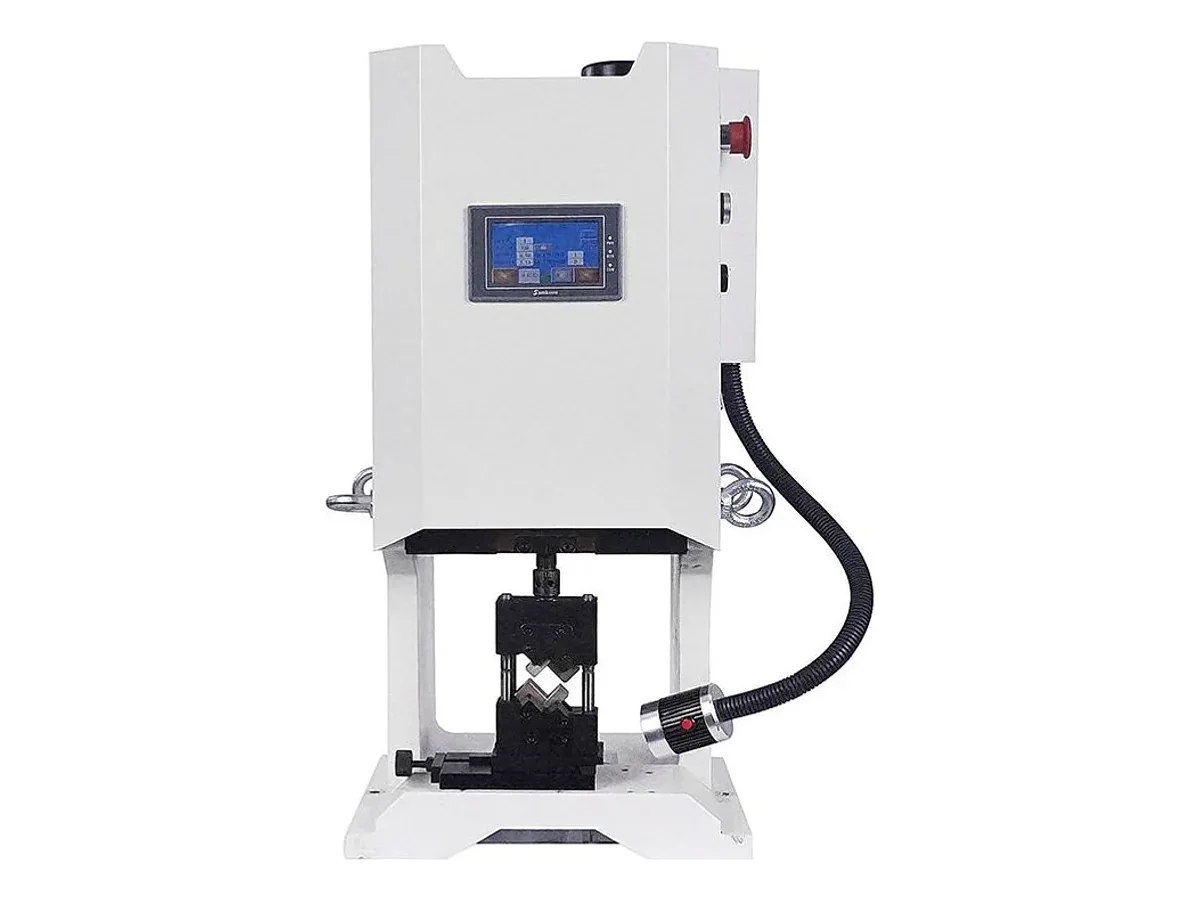
10-Ton Servo Terminal Crimping Machine, 100 kN Bench Press
Model WM-3110T
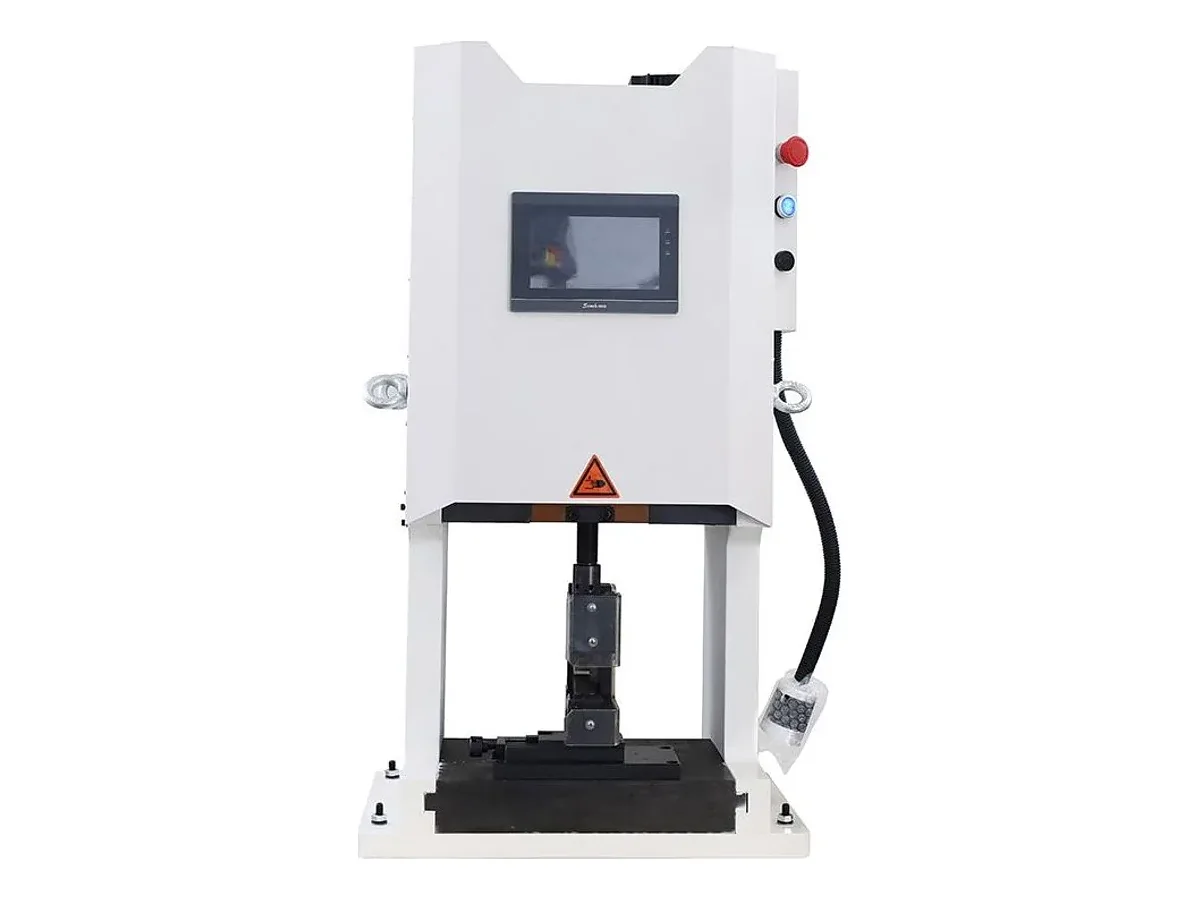
20-Ton Servo Cable Lug Crimping Machine, 200 kN and 40 mm Stroke
Model WM-3120T
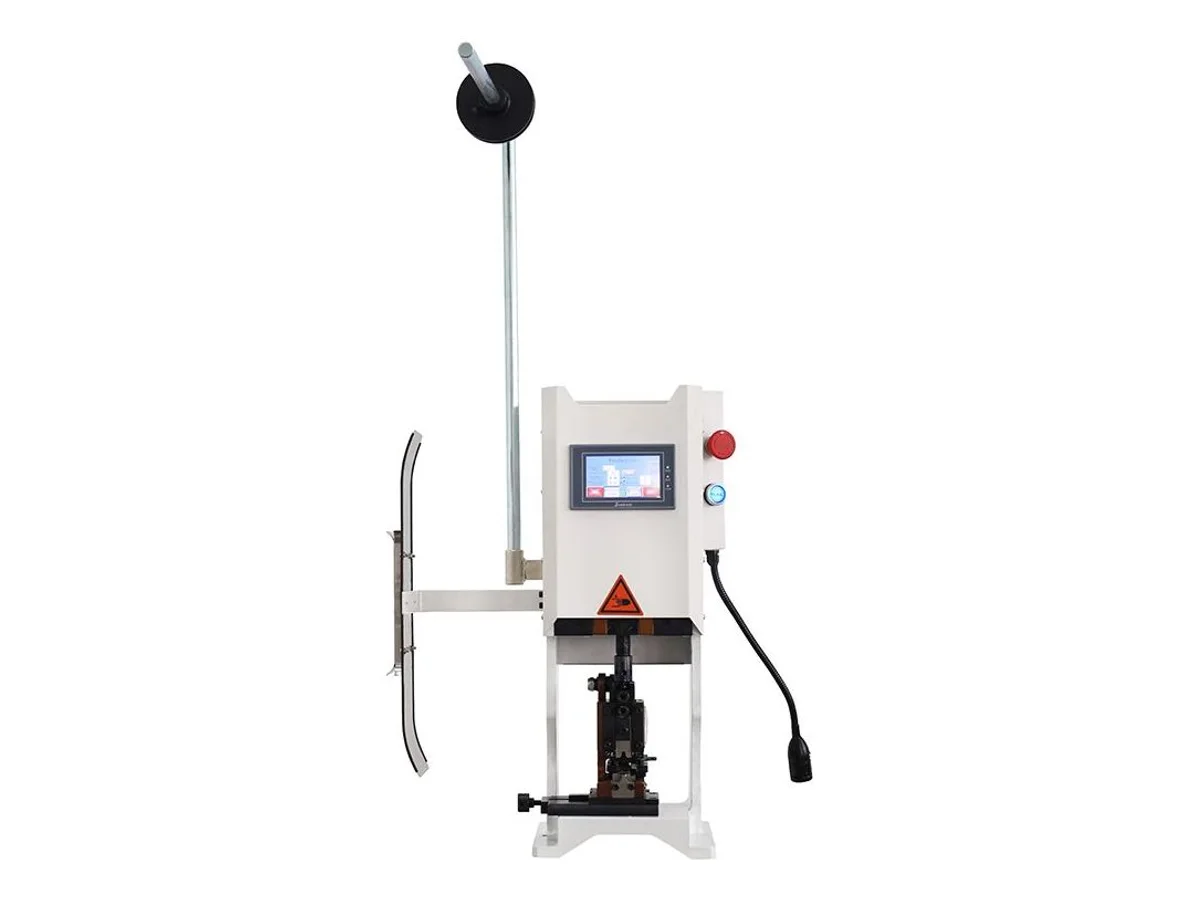
2-Ton Servo Terminal Crimping Machine, 20 kN Touchscreen Bench Press
Model WM-3102S