Servo Double-End Crimping and Housing Inserting Machine for AWG 18–30 Wire WM-383
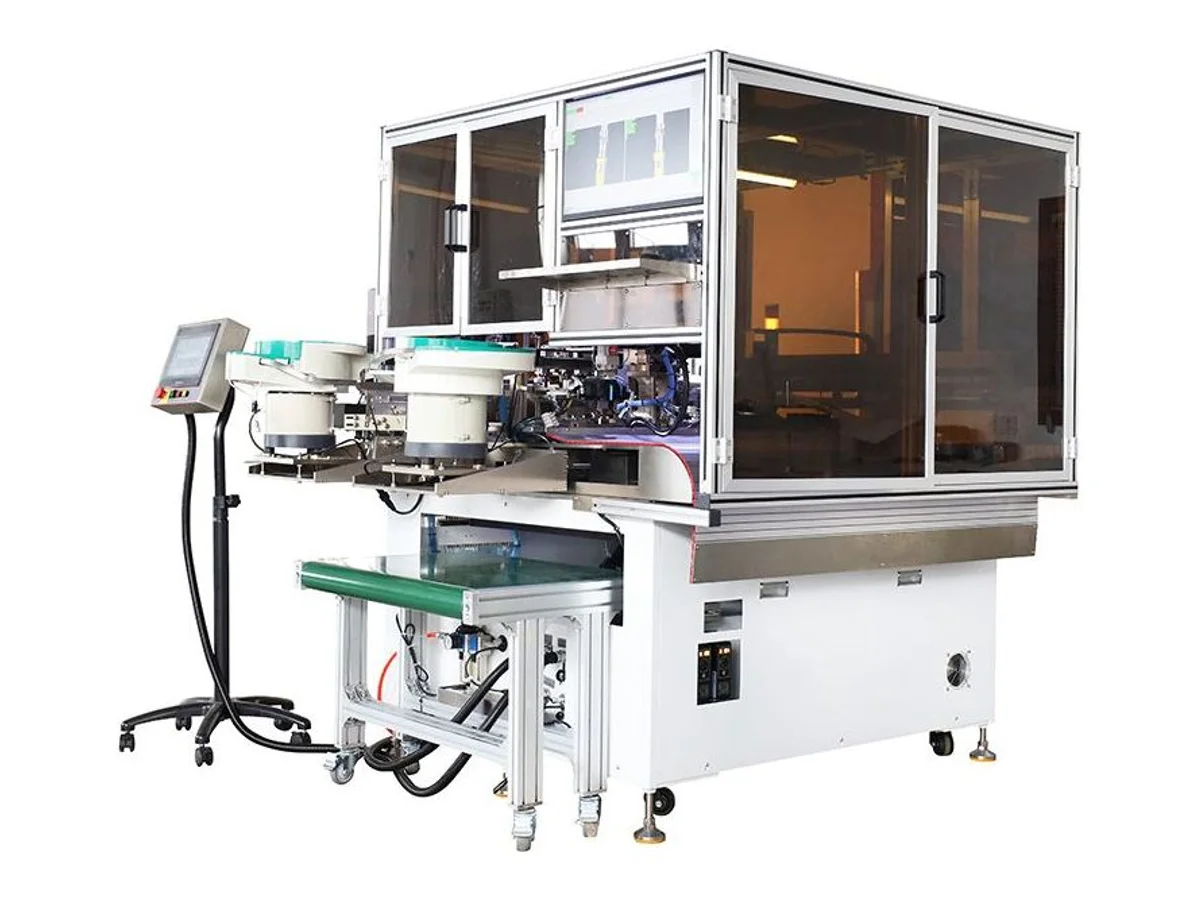
The WM-383 crimps terminals and inserts connector housings on both ends of the wire in a single pass — one wire in, one finished double-ended harness out. It processes AWG 18–30 wire with jacket diameter below Φ2.5 mm, selects among up to 10 wire colors, cuts 120–700 mm in 0.1 mm steps at ±0.5% accuracy, and strips 0–5 mm held to ±0.1 mm. Two 0.8-ton servo presses handle the crimping, while eight standard detection circuits — from wire continuity to terminal insertion — plus optional crimp-force sensing and CCD vision guard every cycle.
Specifications
| Function | Double-end terminal crimping and connector housing insertion, one wire per cycle |
|---|---|
| Wire size | AWG#18 – #30 (wire outer diameter below Φ2.5 mm) |
| Wire color | 10 colors (optional 1 – 10) |
| Cutting length | 120 – 700 mm (set in units of 0.1 mm) |
| Cutting accuracy | ±0.5% |
| Cutting precision | Maximum adjustment 2 mm (manual adjustment ±0.05 mm) |
| Stripping length | 0 – 5 mm |
| Stripping accuracy | Tolerance ±0.1 mm |
| Crimping unit | 2 sets of 0.8 T servo crimping machines |
| Detection device | Low pressure, wire presence, wire overload, crimping error, terminal presence, terminal overload, terminal insertion and wire continuity detection; pressure sensing and CCD visual inspection optional |
| Control method | PLC control |
| Power supply | Single-phase AC 200 V / 220 V, 50 Hz, 10 A |
| Compressed air | 0.5 MPa, about 170 N/min as listed; confirm air consumption and its unit before installation |
| Working temperature | 5 – 50 °C |
| Working humidity | 30% – 80% RH (non-condensing) |
| Warranty | 1 year (excluding consumables) |
| Dimensions | 1,500 W × 1,500 D × 1,600 H mm (without protrusions) + pay-off stand 1,200 W × 900 D × 1,000 H mm |
| Weight | About 700 kg + 100 kg (pay-off stand) |
| HS Code | 8463.90 (common reference — final classification confirmed by your customs broker) |
| Certification | CE (certificate provided with shipment) |
Key features
- Both ends leave finished in one pass — cut, stripped, crimped by twin 0.8-ton servo presses and seated in housings without an operator touch
- Automatic selection among up to 10 wire colors lets color-coded harness batches run without manual wire changes
- Eight detection circuits standard — from wire continuity to terminal insertion — with crimp-force sensing and CCD vision available as options
- Length programmed in 0.1 mm steps across 120–700 mm with stripping held to ±0.1 mm suits fine-pitch connector work
What it processes
- Multi-pin power and signal harnesses with housings on both ends, AWG 18–30
- Computer, server and graphics-card power cables with 6- and 8-position housings
- Electronics and appliance factories running color-coded wire sets on one machine
Suited for: double-ended multi-pin harnesses in AWG 18–30 — computer and server power cables, appliance looms and signal sets where both ends must arrive crimped and seated in housings, with up to 10 wire colors selected automatically. Not suited for: jackets of Φ2.5 mm or more, leads beyond 700 mm, or lug-class heavy terminals — for lugs, pick the WM-3135T 35-ton servo press, which takes terminals up to 120 mm²; the other terminal crimping machines cover the thicker-jacket and longer-lead jobs.
Housing and terminal tooling is matched to your exact connectors, so acceptance happens on your parts: send 2–3 meters of your wire with your terminals and housings, and we run the full double-end cycle on this machine on video before you commit.
Engineering knowledge
Choose and troubleshoot this process
- Ferrule Crimping: Strip Length, Terminal Fit and Chain-Fed vs Loose-Fed MachinesCompare chain-fed and loose-ferrule crimping machines by wire preparation, changeover, terminal fit and batch output. Check WM-3243 and WM-3246 specifications.
- How to Choose a Terminal Crimping MachineChoose a terminal crimping machine by terminal presentation, wire range, applicator standard, required process steps, inspection method and production mix.
- Terminal Crimp Defects: Causes, Inspection and Corrective ActionsTroubleshoot low pull force, incorrect crimp height, strand loss, bellmouth defects, insulation support problems and inconsistent terminal feeding.
WM-383 — common questions
What does one-to-one operation mean in practice?
One wire goes through the full cycle at a time — cut, stripped, crimped on both ends by the two 0.8-ton servo presses and inserted into housings — so each cycle delivers one finished double-ended harness. It trades headline speed for simpler setup and steady quality on multi-pin work.
How does the machine catch defects during a run?
Eight checks are standard — low air pressure, wire presence, wire overload, crimping error, terminal presence, terminal overload, terminal insertion and wire continuity. Crimp-force sensing and CCD visual inspection of the crimp zone are optional for lines with documented quality gates.
What is the WM-383 not suited for?
Wire outside AWG 18–30 or jackets of Φ2.5 mm or more will not feed reliably, leads beyond 700 mm exceed its cutting range, and lug-class heavy terminals belong to a different machine class — see the other terminal crimping machines for those.
Related machines in Crimping & Connector Assembly
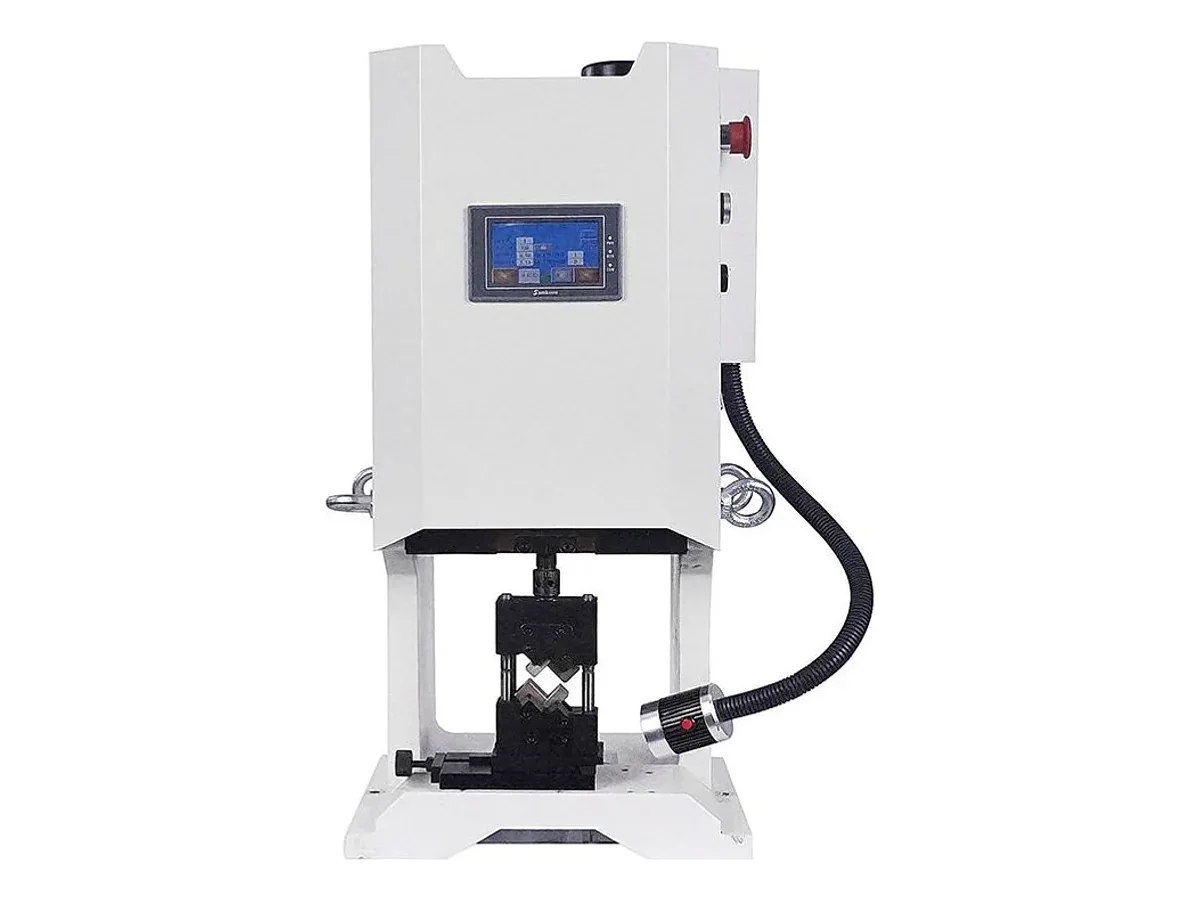
10-Ton Servo Terminal Crimping Machine, 100 kN Bench Press
Model WM-3110T
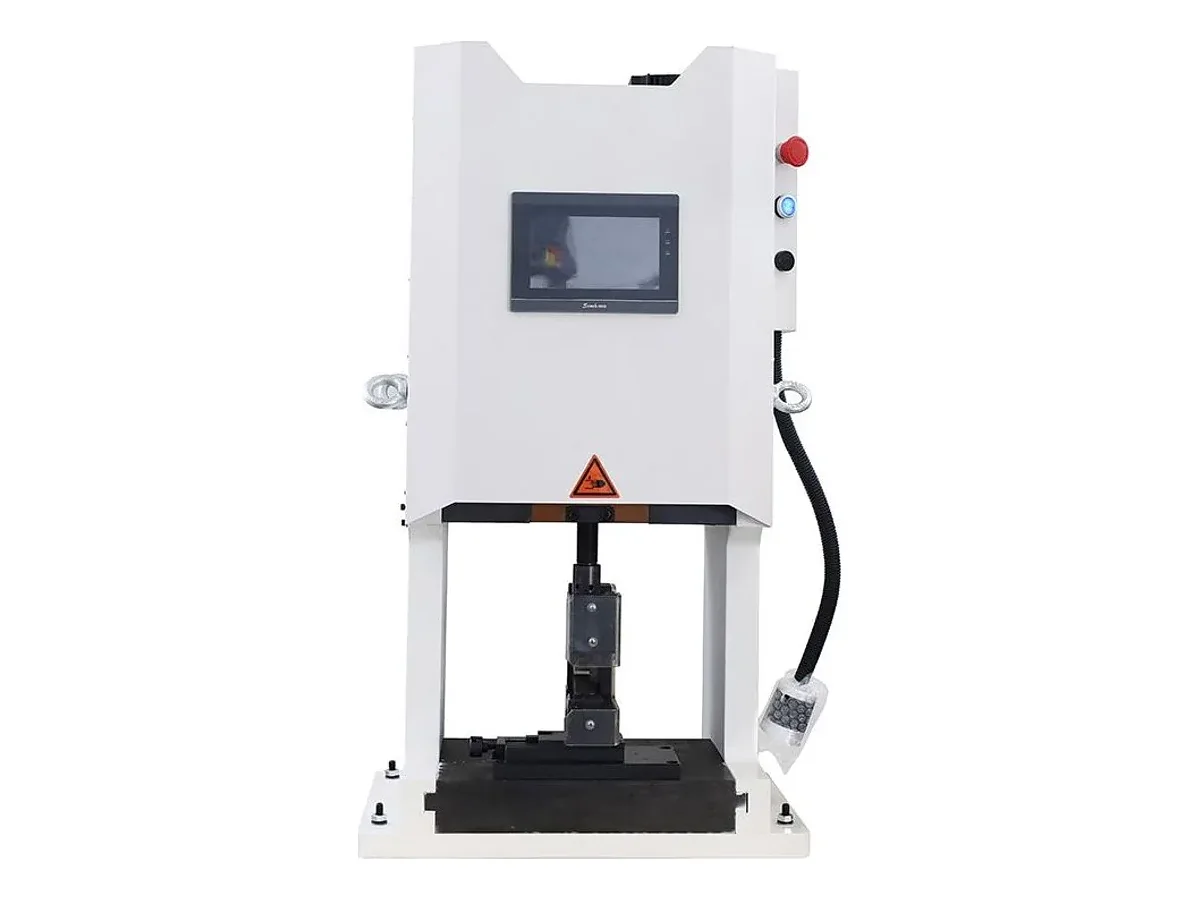
20-Ton Servo Cable Lug Crimping Machine, 200 kN and 40 mm Stroke
Model WM-3120T
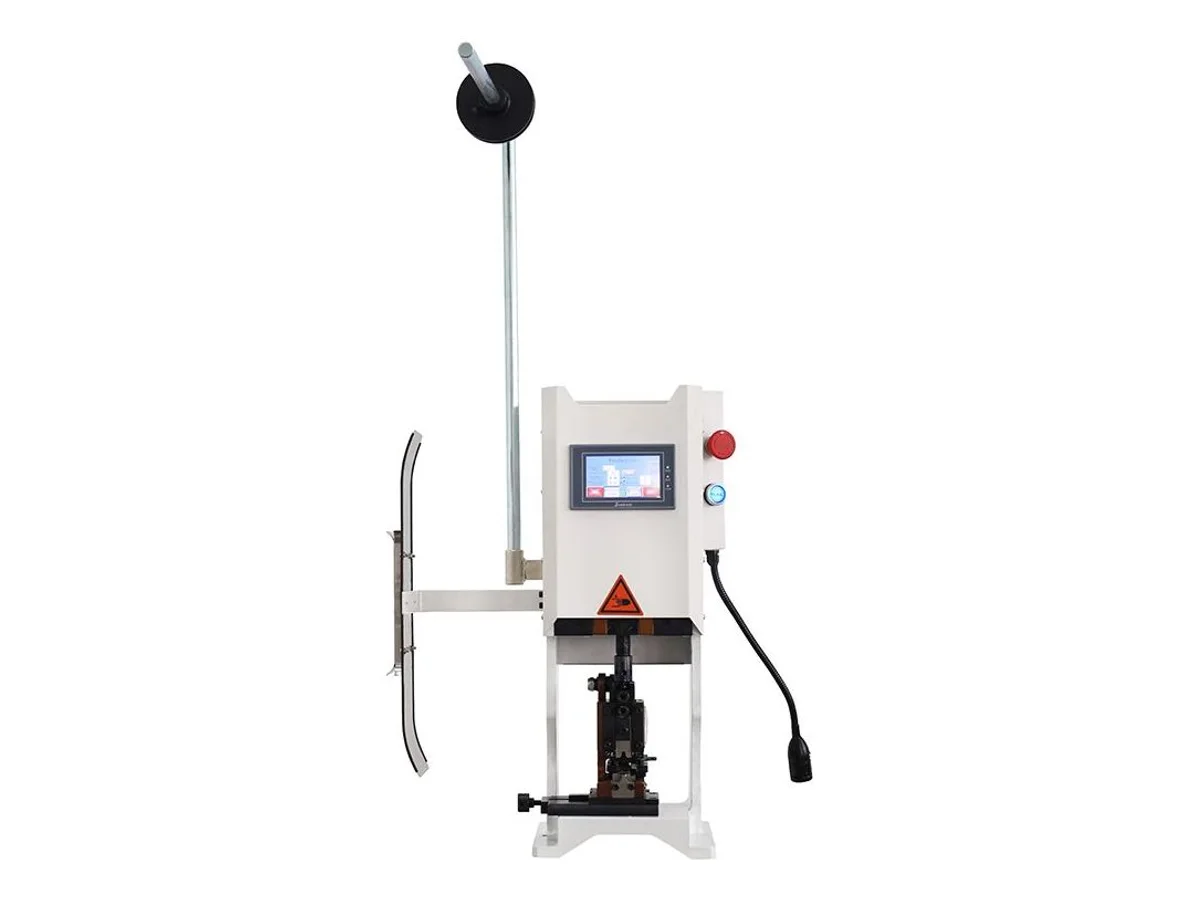
2-Ton Servo Terminal Crimping Machine, 20 kN Touchscreen Bench Press
Model WM-3102S