Multi-Color Single-End Housing Inserting and Tinning Machine, AWG 20–30 WM-369B
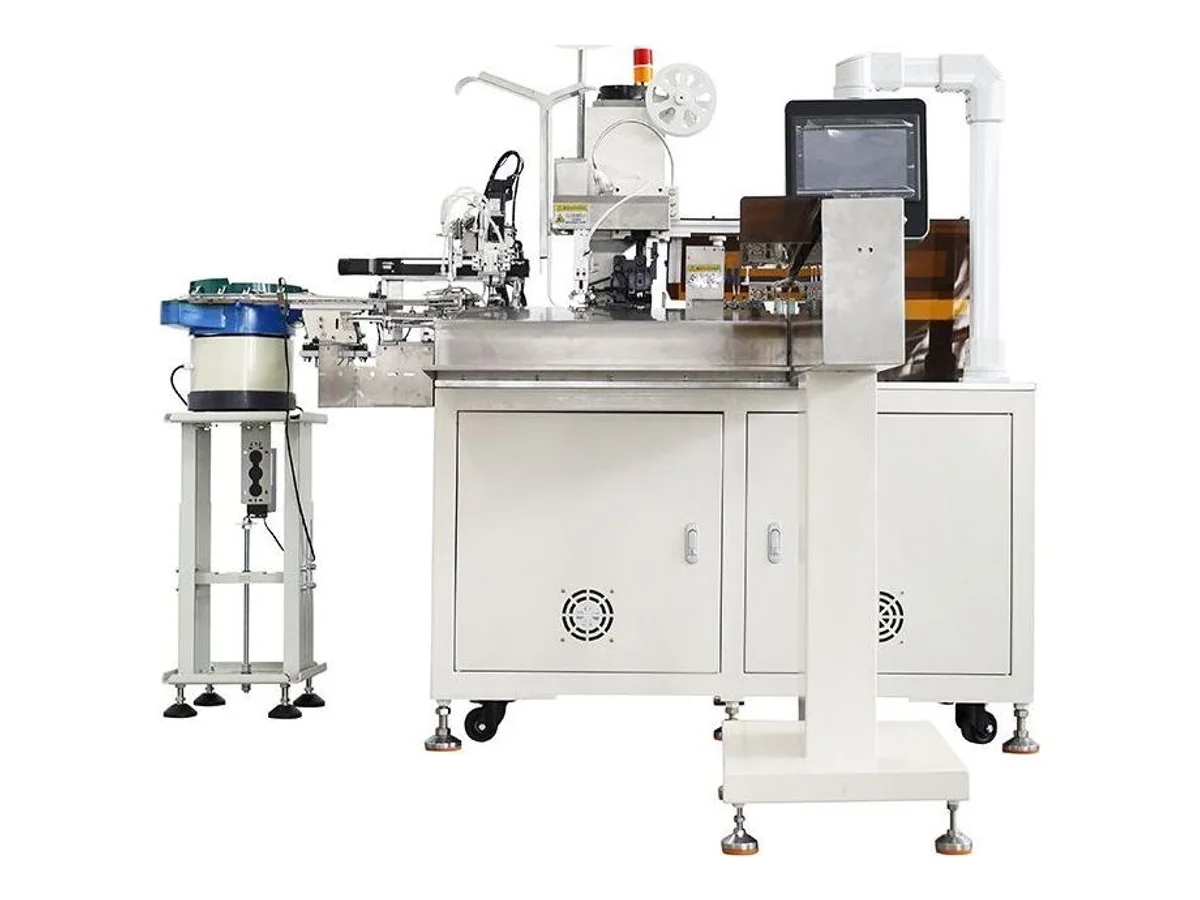
The WM-369B builds connector leads from AWG 20 to 30 wire in one automatic cycle — cut to length between 50 and 1,000 mm, strip 1 to 8 mm, crimp on a 19,600 N (2 t) press, insert the crimped end into a bowl-fed housing and tin the tail end 1 to 8 mm for soldering. Its wire changer feeds up to 10 wire colors under program control, so a mixed-color connector loom runs as one job. Seven detection checks plus optional crimp force sensing and CCD inspection stop faulty pieces before they reach the batch.
Specifications
| Function | Cutting, stripping, crimping, single-end housing insertion and tail tinning |
|---|---|
| Wire size | AWG#20 – AWG#30 (wire diameter below 2.5 mm) |
| Wire color | 10 colors (optional 2 – 10) |
| Cutting length | 50 – 1,000 mm (set in 0.1 mm units) |
| Cutting tolerance | 0.1 mm + (complete tolerance expression confirmed on the quote) |
| Stripping length | 1.0 – 8.0 mm |
| Stripping tolerance | ± 0.1 mm |
| Tinning length | 1.0 – 8.0 mm |
| Crimping force | 19,600 N (equivalent 2 t) |
| Crimping stroke | 30 mm |
| Crimping tool | Universal OTP crimp applicator |
| Detection | Low air pressure, wire missing, wire overload, clamping error, terminal missing, terminal overload, terminal insertion detect; pressure sensing and CCD visual inspection optional |
| Control mode | PLC control |
| Internal control voltage | DC 24 V |
| Power supply | Single-phase AC 200 – 220 V, 50 Hz, 10 A (110 V / 60 Hz optional) |
| Compressed air | 0.5 MPa (approx. 170 NL/min) |
| Operating temperature | 15 – 30 °C |
| Humidity range | 30 – 80% RH, non-condensing |
| Warranty | 1 year (except consumables) |
| Dimensions | 1,560 × 1,100 × 1,600 mm (W × D × H) |
| Net weight | About 800 kg |
| HS Code | 8463.90 (common reference — final classification confirmed by your customs broker) |
| Certification | CE (certificate provided with shipment) |
Key features
- Program-controlled wire changer runs up to 10 wire colors in one job — a mixed-color connector loom comes off the machine in kit order, with no manual wire swaps
- One end crimped and pushed home in its housing, the other end tinned 1 to 8 mm — leads arrive at the soldering line finished on both ends
- 19,600 N press takes universal OTP applicators, so job changeover reuses the applicator stock a crimping shop already owns
- Seven standard detection checks — from missing wire to insertion verify — plus optional crimp-force sensing and CCD camera keep bad pieces out of the shipping bag
What it processes
- Multi-color electronic leads with a housed end and a tinned tail for PCB soldering
- Appliance, controller and LED lighting internal looms in AWG 20 – 30 wire
- Kit-order production where each program step calls a different wire color
Suited for: housed-and-tinned electronic leads in AWG 20 to 30 wire — connector one end, solder-ready tail the other — especially jobs mixing several wire colors in one work order. Not suited for: double-end housing insertion or wire above 2.5 mm diameter — for housings on both ends in the same gauge band, pick the WM-383 servo double-end crimping and housing inserting machine (AWG 18–30); heavier wire belongs with the other terminal crimping machines in this category.
Housing fit is connector-specific, so we prove it on your parts. Send 2–3 meters of your wire with a bag of your housings and terminals, and we run them on this machine on video — insertion checks included — before you commit to the order.
Engineering knowledge
Choose and troubleshoot this process
- Ferrule Crimping: Strip Length, Terminal Fit and Chain-Fed vs Loose-Fed MachinesCompare chain-fed and loose-ferrule crimping machines by wire preparation, changeover, terminal fit and batch output. Check WM-3243 and WM-3246 specifications.
- How to Choose a Terminal Crimping MachineChoose a terminal crimping machine by terminal presentation, wire range, applicator standard, required process steps, inspection method and production mix.
- Terminal Crimp Defects: Causes, Inspection and Corrective ActionsTroubleshoot low pull force, incorrect crimp height, strand loss, bellmouth defects, insulation support problems and inconsistent terminal feeding.
WM-369B — common questions
How does the 10-color wire changer actually work?
Up to ten wires stay loaded in the selector block at the feed end, and the program picks which one feeds for each piece. A work order like five red, five black, two white runs as a single batch in that sequence — the machine changes color between pieces in seconds instead of an operator re-threading wire.
What confirms the terminal is fully seated in the housing?
The insertion station has a dedicated terminal-insert detect among the seven standard checks, and a CCD camera is available as an option for visual confirmation of seating and crimp position. Failed pieces stop the cycle rather than mixing into the batch.
What is it not built for?
It fits a housing on one end only — the other end is tinned for soldering. Leads that need housings or terminals on both ends belong on the double-end machines among the terminal crimping machines in this category, and wire above 2.5 mm diameter is outside its feed range.
Related machines in Crimping & Connector Assembly
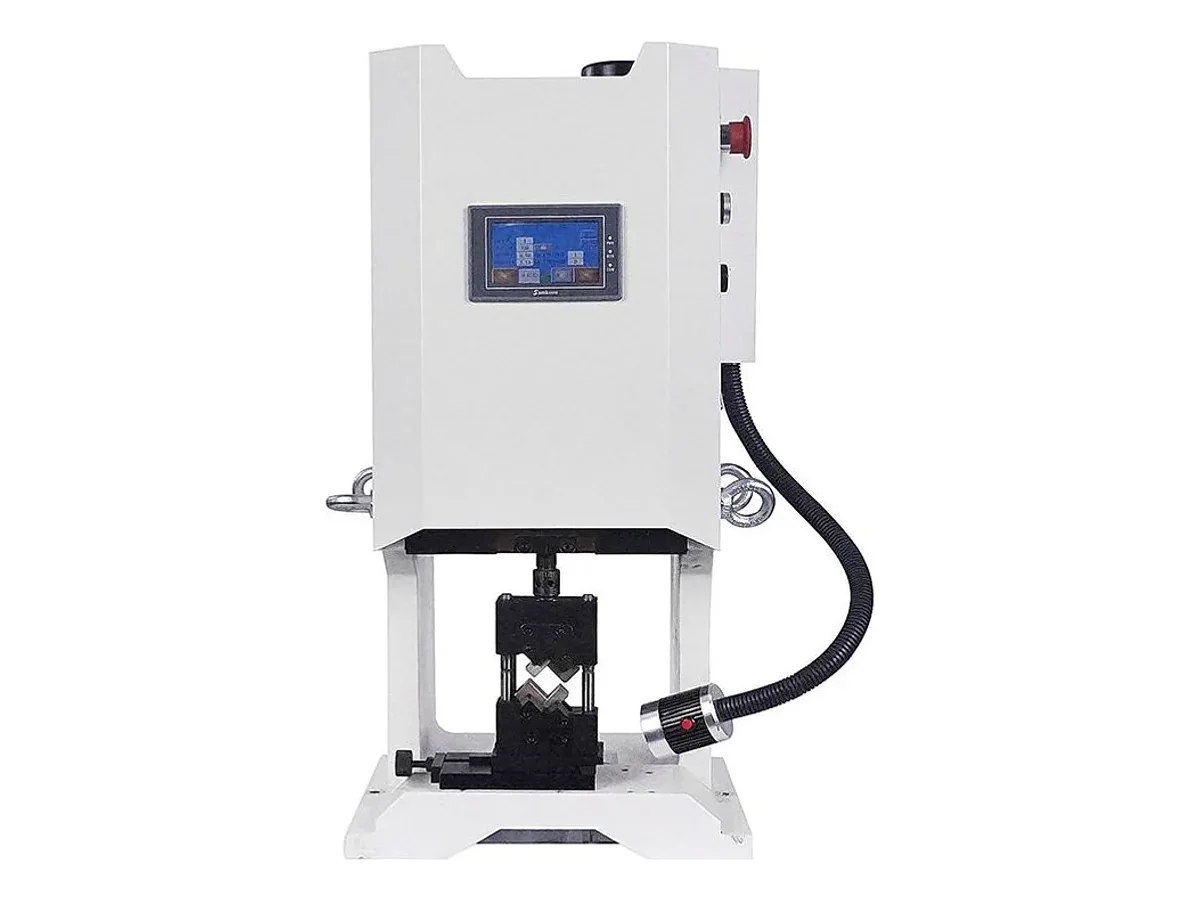
10-Ton Servo Terminal Crimping Machine, 100 kN Bench Press
Model WM-3110T
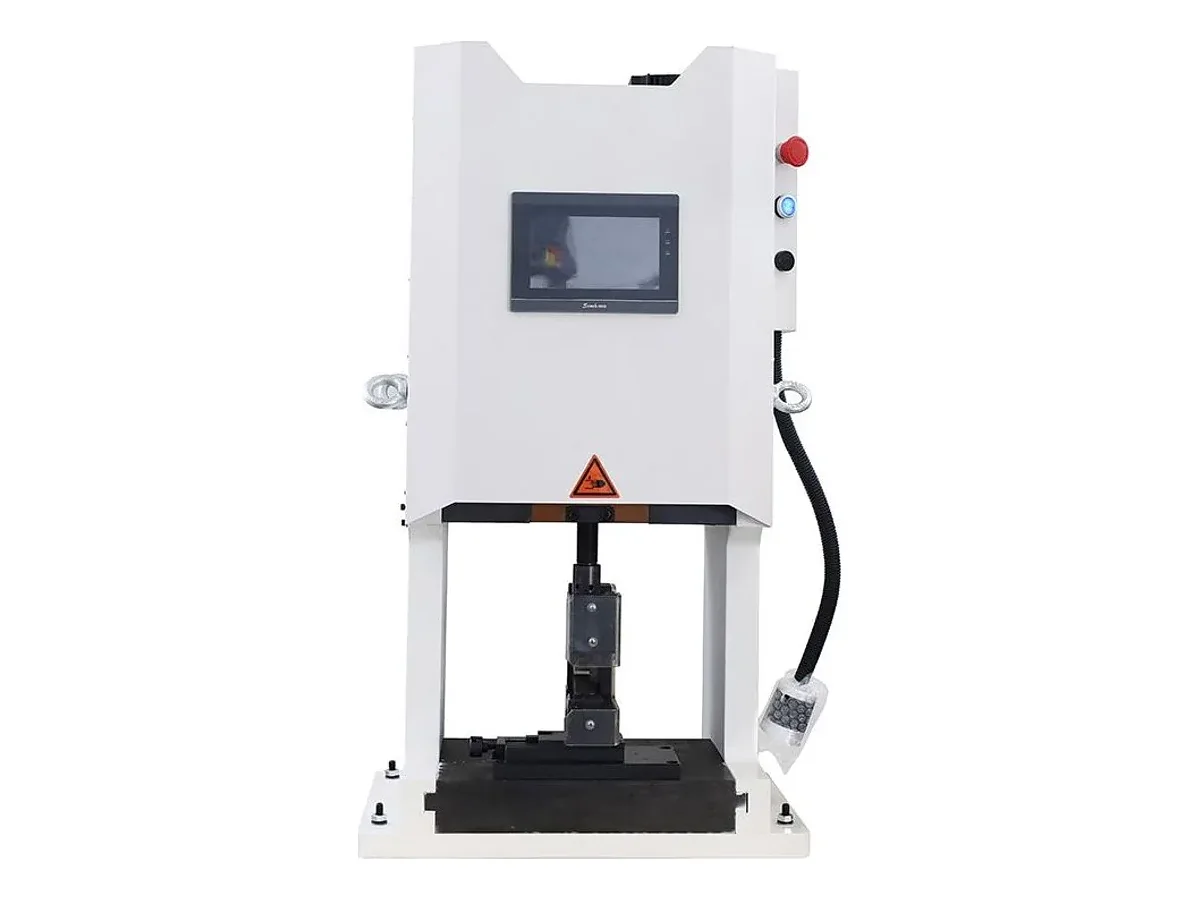
20-Ton Servo Cable Lug Crimping Machine, 200 kN and 40 mm Stroke
Model WM-3120T
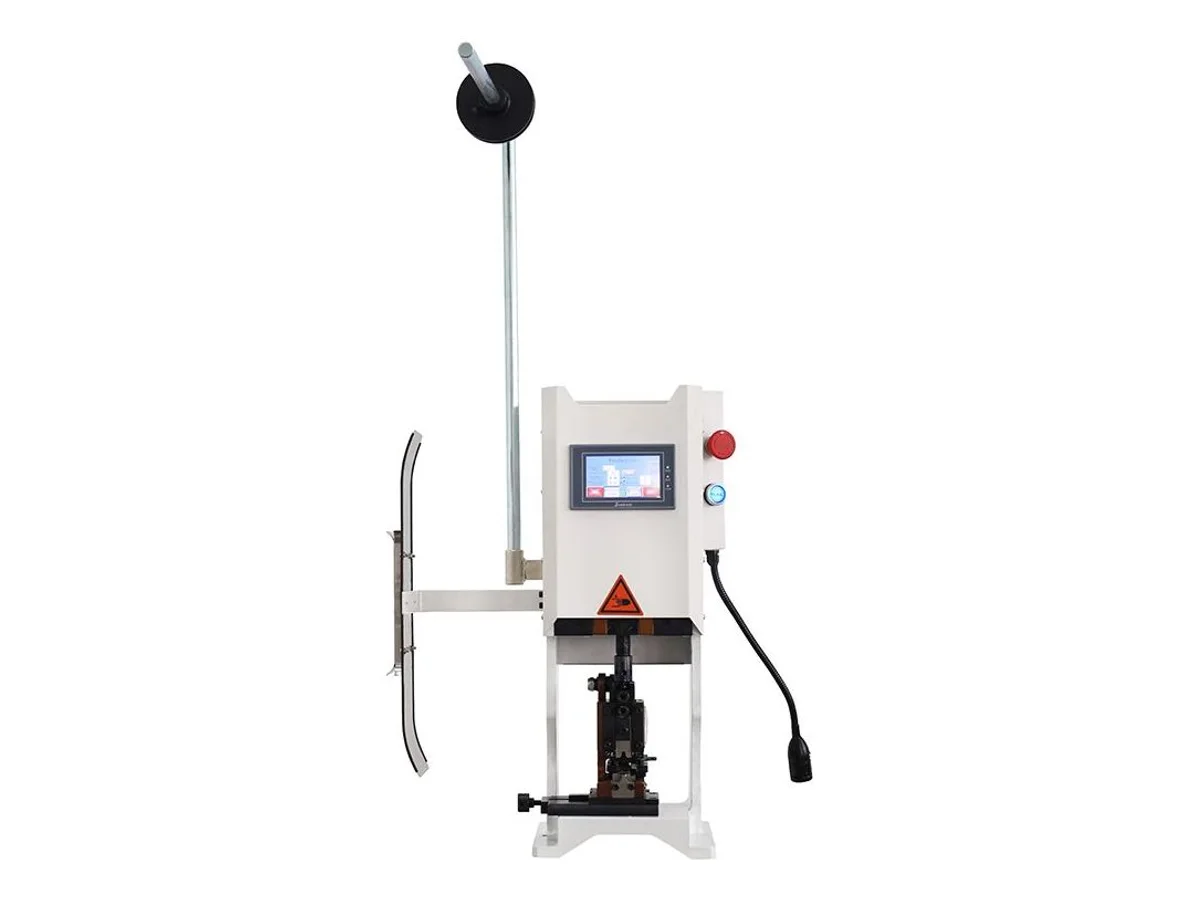
2-Ton Servo Terminal Crimping Machine, 20 kN Touchscreen Bench Press
Model WM-3102S