Semi-Automatic O-Ring Assembly Machine for Plastic Pipe Fittings WM-9317
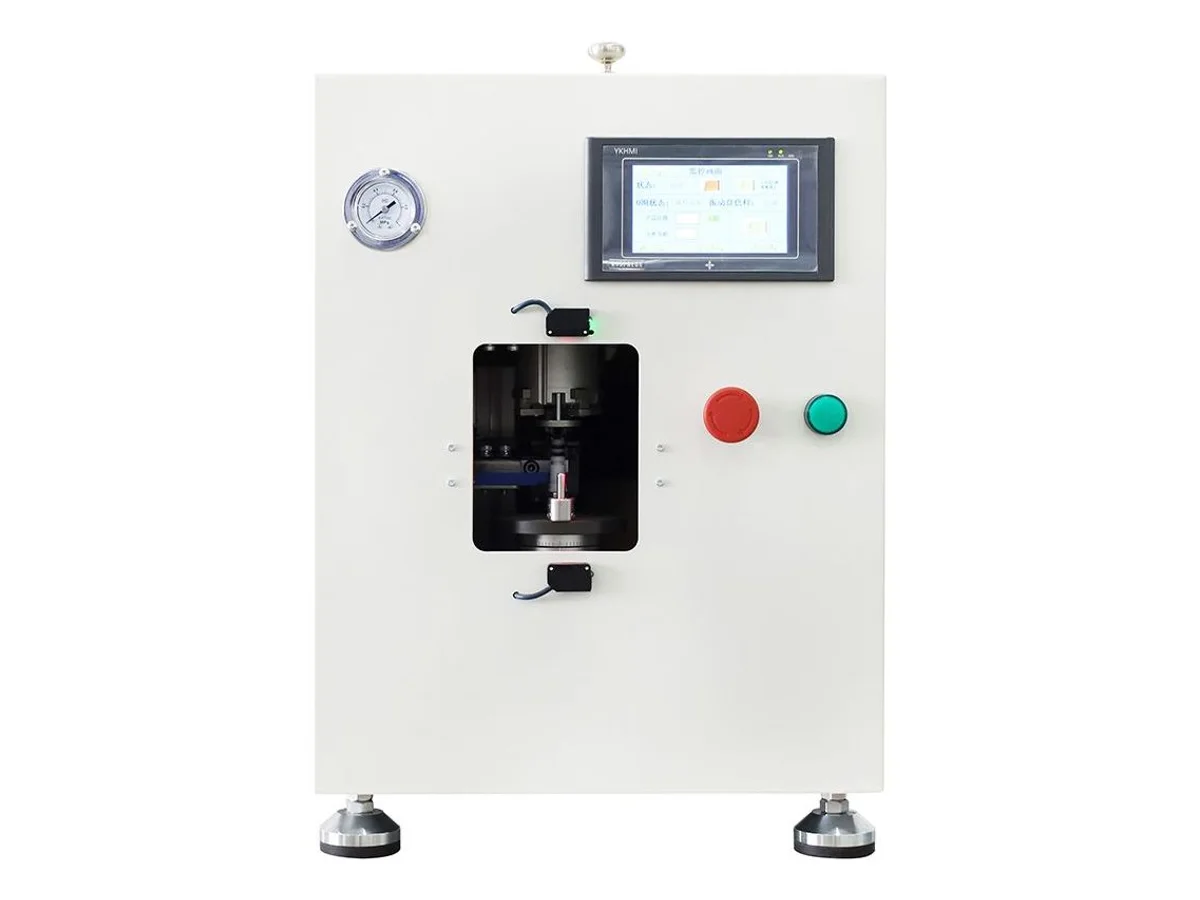
The WM-9317 seats O-rings onto pipe fittings at one piece per cycle in under 1.5 seconds, with the rings fed automatically from a vibratory bowl and the fittings loaded by hand. Inside the enclosed cabinet a rotary tooling plate carries two work posts, so one fitting stands at the operator's work window while the ring is opened and seated on the other. As pictured it runs white moulded plastic pipe fittings that take two O-rings on the ribbed stem. The machine needs only 0.4–0.6 MPa of shop air, and an English monitoring screen reports equipment status, O-ring pick-up and bowl feeding on one page.
Specifications
| Function | O-ring assembly onto pipe fittings — as pictured, white moulded plastic fittings that take two O-rings on the ribbed stem |
|---|---|
| Speed | 1 piece per cycle, under 1.5 seconds per piece |
| Feeding method | Automatic feeding of O-rings, manual feeding of pipe fittings |
| Air pressure | 0.4 – 0.6 MPa |
| Work carrier | As pictured — rotary tooling plate carrying two work posts, one at the front work window and one under the assembly head |
| Assembly head | As pictured — cross-slotted expanding mandrel with a pneumatic gripper directly above the work post |
| Ring feeding | As pictured — single vibratory bowl feeder mounted on top of the cabinet |
| Sensing | As pictured — photoelectric sensors above and below the work window |
| Control | As pictured — colour touchscreen HMI with English and Chinese monitoring screens |
| Enclosure | As pictured — fully enclosed cabinet with hinged lockable side doors, air pressure gauge, emergency stop and four levelling feet |
| HS Code | 8479.89 (common reference — final classification confirmed by your customs broker) |
| Certification | On request |
Key features
- One piece per cycle in under 1.5 seconds — the ring side is machine-paced, so your output is set by how fast fittings are loaded rather than by the tooling
- Rotary tooling plate with two work posts — as pictured one post faces the operator at the window while the other sits under the head, so loading overlaps with assembly instead of queueing behind it
- Cross-slotted expanding mandrel opens the ring before it is released, so it clears the ribbed stem instead of rolling or shaving its way down
- Rings are bowl-fed and oriented automatically; nobody picks a ring out of a bag or works out which way round it goes
- Photoelectric sensors watch the work window above and below, and the monitoring screen reports O-ring status and bowl feeding status on separate lines, so a starved bowl or a missed pick shows on screen instead of leaving the bench as a part without a ring
- Fully enclosed cabinet with hinged lockable side doors and levelling feet — the moving tooling stays behind sheet metal and only the work window is open to the operator
- Work posts, gripper and expanding head are cut for one fitting family at a time and built from your samples
What it processes
- Plastic pipe fittings that need an O-ring on a ribbed or grooved stem — as pictured, white moulded fittings carrying two rings
- Quick-connect couplings, water and fluid-line fittings, filter and appliance connectors produced in job-shop to medium volume
- Benches where an assembler fits rings by hand and the scrap comes from rolled, twisted, shaved or missing rings
- Parts that take more than one ring, since the machine is rated at one piece per cycle and places the rings one at a time
Suited for: fitting O-rings onto moulded plastic pipe fittings with an operator at the window — one piece per cycle in under 1.5 seconds on the machine’s side, on nothing more than a shop air line, with the rotary plate letting the next fitting be loaded while the current one is being assembled.
Not suited for: production that has to run with nobody at the loading point. Once the fitting bodies themselves need bowl feeding you are buying a different class of machine — the WM-9312 automatic O-ring assembly machine with O-ring oiling station bowl-feeds bodies and rings onto a rotary indexing turntable at around 3,600 pcs/hour and unloads defective parts by itself, and where the part needs a second assembly operation after the ring, the five-station WM-9311 fully automatic O-ring assembly machine is the platform instead.
Also not suited for: rings that must be lubricated as they go on, and threaded metal fittings that need clamping rather than standing on a post — for those the benchtop WM-9314 semi-automatic O-ring assembly machine carries a dosing pump and jaws sized for plated steel adapters in a 500 × 460 × 300 mm cabinet on a 220 V socket. And if the seal on your fitting is thread tape rather than a rubber ring, that job belongs to the WM-461 automatic PTFE thread seal tape winding machine, which wraps ZG and NPT threads from 1/8 to 2 inch.
Where this machine sits in our O-ring assembly range
The four are separated by one question — who puts the body in front of the tooling, and how long it stands there.
On the WM-9317 and the WM-9314 that job belongs to a person, which is what keeps both of them small and cheap to tool. The difference between the two is the carrier. The WM-9314 clamps one fitting in fixed jaws and holds it until the ring is on, so loading and assembly happen in series. The WM-9317 puts the fitting on a post on a rotary plate that carries two of them, so the operator can be loading one while the head works on the other, and the factory rates the machine side of that cycle at under 1.5 seconds.
On the WM-9312 and the WM-9311 nobody loads anything. Bodies and rings are both bowl-fed onto a rotary indexing turntable, the operator only refills bowls, and throughput moves up to around 3,600 pcs/hour on the WM-9312. That earns its cost when one part number runs continuously.
The practical rule we use when quoting: if a single part number fills a shift week after week, price an automatic cell; if the same bench sees several part numbers a week, a semi-automatic bench machine pays for itself faster and changes over in minutes, because only the posts or the jaws are dedicated.
Because the tooling on every machine in this family is built to the customer’s own parts, ordering starts with samples rather than a catalogue number. Send us the fittings and the O-rings, they are run on the machine, and you receive the trial result, the achievable rate and the price before anything is built.
Engineering knowledge
Choose and troubleshoot this process
- How to Choose a Wire Prefeeder and Pay-Off SystemChoose a wire prefeeder or pay-off system by reel mass, line speed, acceleration, allowable tension, accumulation, dereeling control and downstream interface.
- Wire Feeding Problems: Causes and Corrective ActionsTroubleshoot cable tension spikes, reel overrun, loops, jerking, twist, feed slip, encoder mismatch and downstream cut-length variation.
WM-9317 — common questions
How fast is the WM-9317?
The factory rates it at one piece per cycle in under 1.5 seconds. That covers the machine's share of the job — picking the ring, opening it and seating it on the fitting. Because the fittings themselves are loaded by hand, your real hourly output follows the operator's rhythm, and we confirm a realistic figure only after your parts have been run.
What is automatic on this machine and what is manual?
The ring side is automatic. A vibratory bowl on top of the cabinet orients loose O-rings, and the head picks each one, expands it and seats it. The fitting side is manual — the operator puts the fitting on the work post at the front window and takes the finished part away. Nothing bowl-feeds the fitting bodies, and that is what makes this a semi-automatic machine rather than an automatic assembly cell.
The fittings in your photos carry two O-rings. Can the machine fit both?
The parts photographed do carry two rings on the ribbed stem, and the factory rates the machine at one piece per cycle, so rings are placed one at a time rather than both together. How the two rings are sequenced on your particular part is settled during the sample trial. Send the fittings and the rings and you get the answer before you commit.
What services does it need?
Clean compressed air at 0.4 to 0.6 MPa. The factory does not publish a power rating, a weight or cabinet dimensions for this model, so we ask for those in writing with your quotation instead of estimating them here.
Does it lubricate the ring?
No oiling unit is specified for this model and none appears in the machine photographs. If your ring has to go on wet, say so in the inquiry — two other machines in this family carry a lubrication step, and we will point you at the right one rather than promise something this cabinet does not have.
How is this different from the WM-9314?
Both are semi-automatic, both bowl-feed the ring, and on both the operator loads the part. What differs is the carrier and the workpiece. The WM-9314 is a 500 × 460 × 300 mm benchtop unit that clamps a threaded metal fitting in fixed jaws, wets the ring with a dosing pump and is rated at about 1,000 pieces an hour. The WM-9317 is an enclosed cabinet whose rotary plate carries two work posts so loading overlaps with assembly, and it is rated at one piece per cycle in under 1.5 seconds — as pictured on moulded plastic pipe fittings rather than plated steel adapters.
Can it run my fitting and my ring size?
The work posts, the gripper and the expanding head are made for one fitting family at a time, so feasibility is decided on samples and not on paper. Send us the fittings and the O-rings, they are run on the machine, and you get the achievable rate and the price before anything is built.
Related machines in Custom Machines
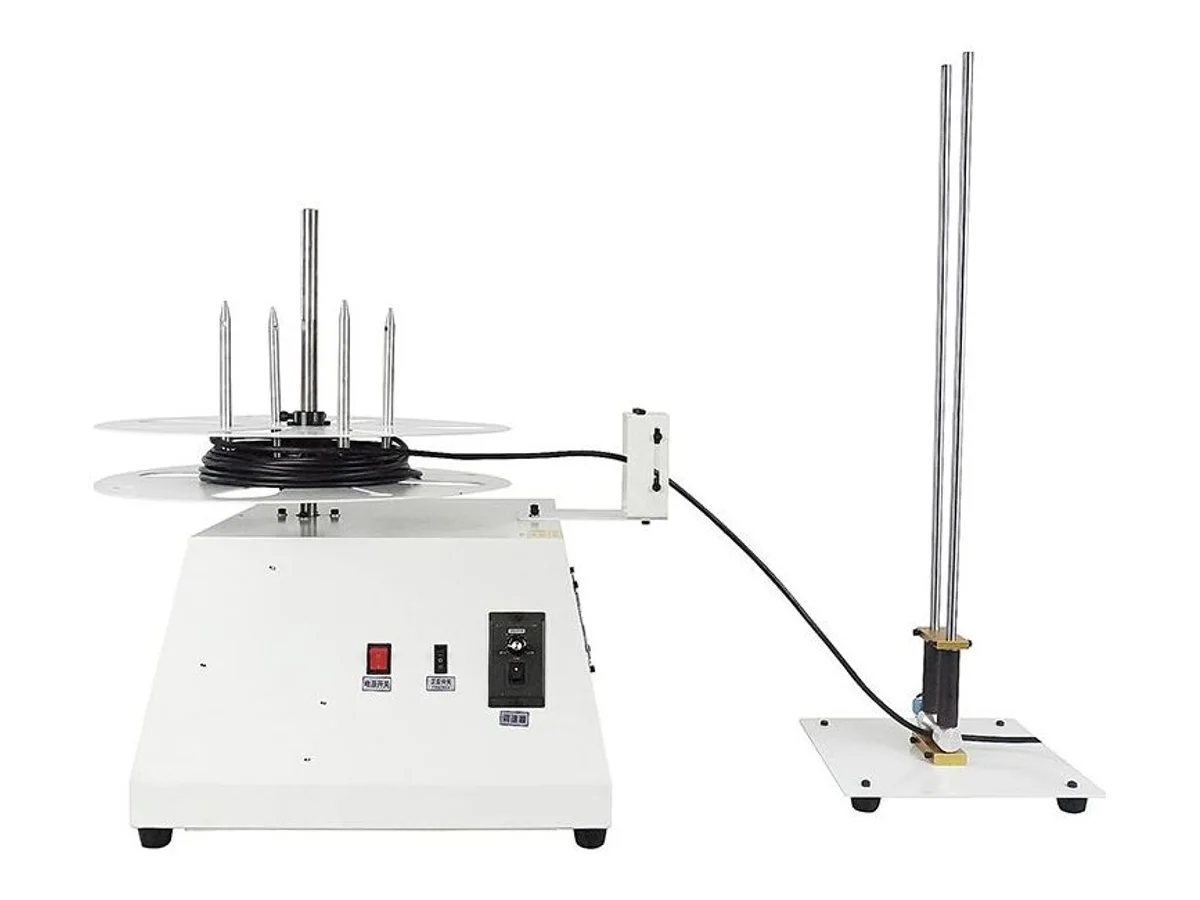
Automatic Cable and Tube Prefeeder with 20 kg Load Capacity
Model WM-9120T
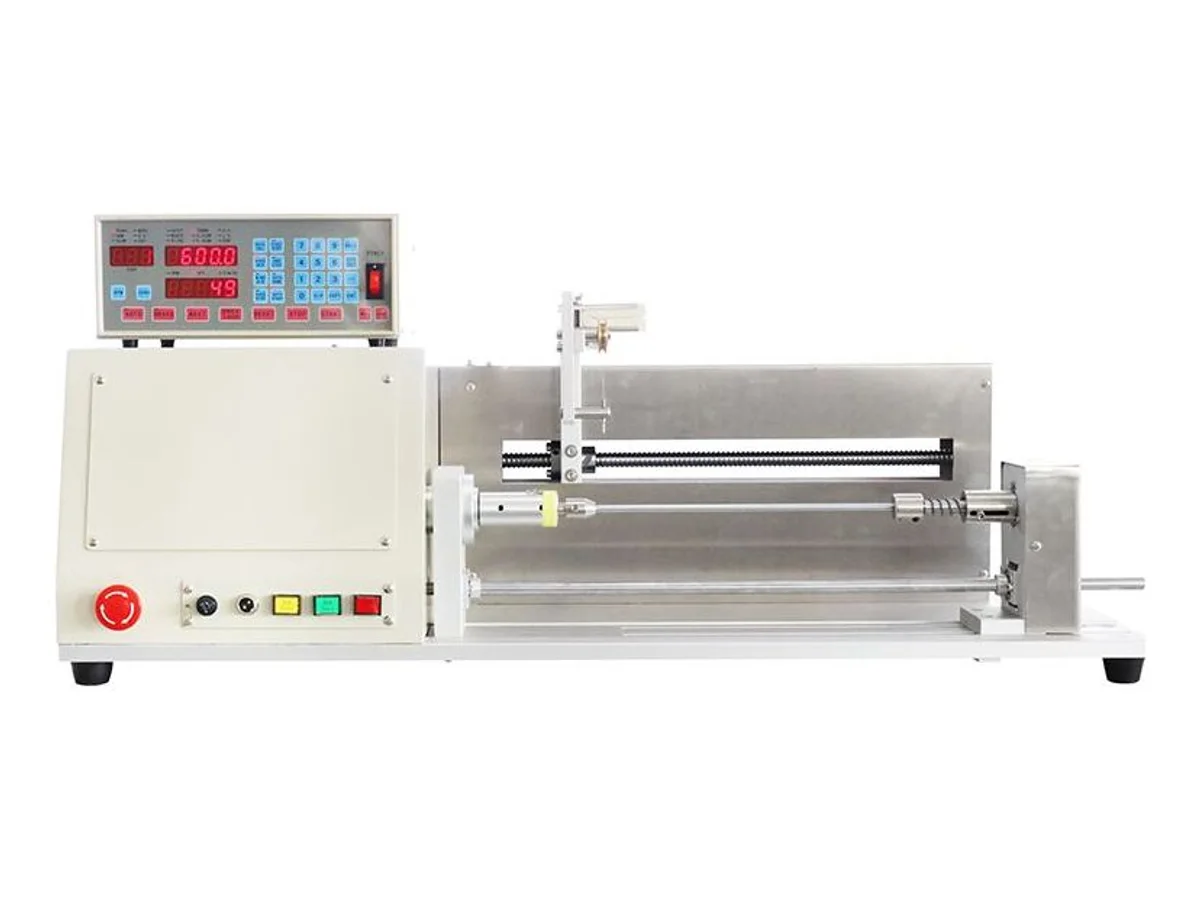
Automatic Magnet Wire Coil Winding Machine with 420 mm Programmable Traverse
Model WM-9324
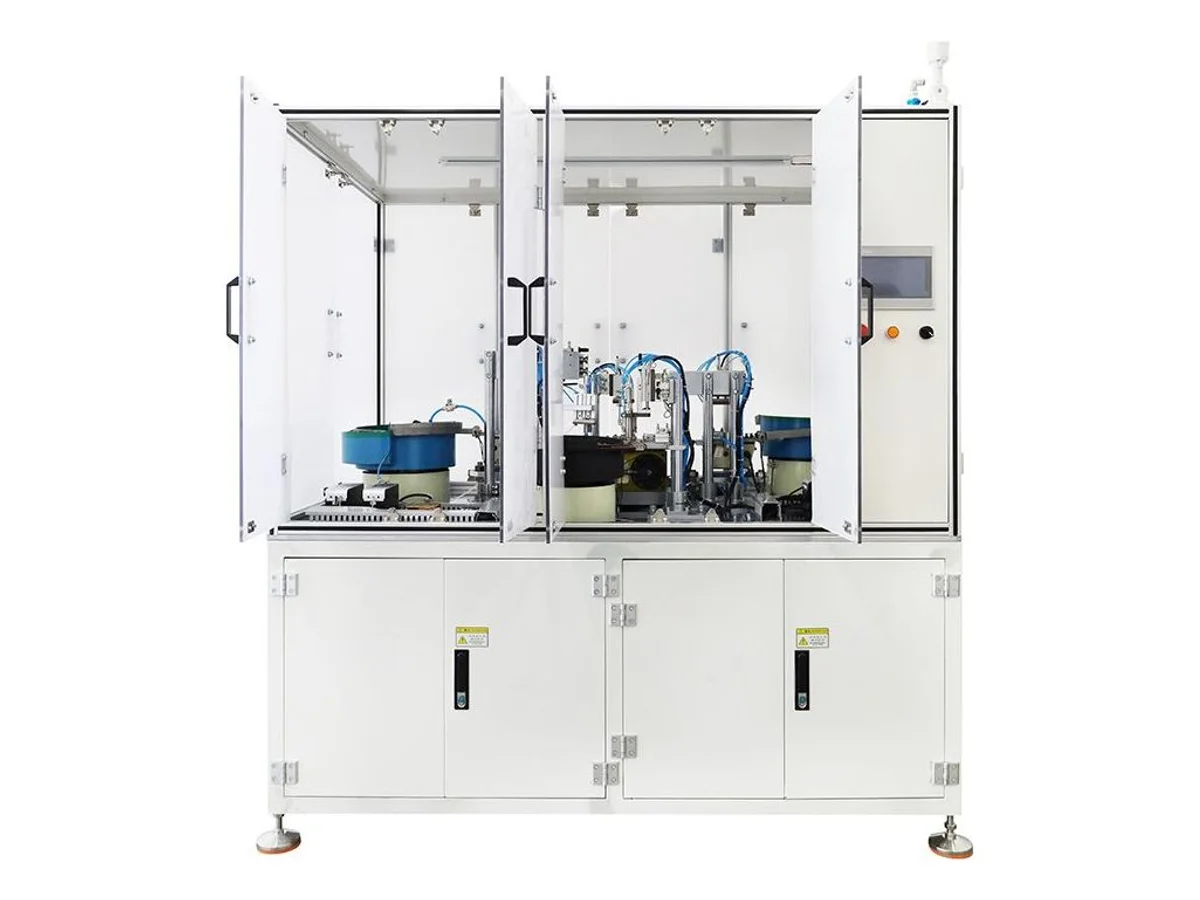
Fully Automatic O-Ring Assembly Machine with Rotary Indexing Table
Model WM-9311