Automatic O-Ring Seal Feeding and Assembly Machine for Pipe Fittings WM-9318
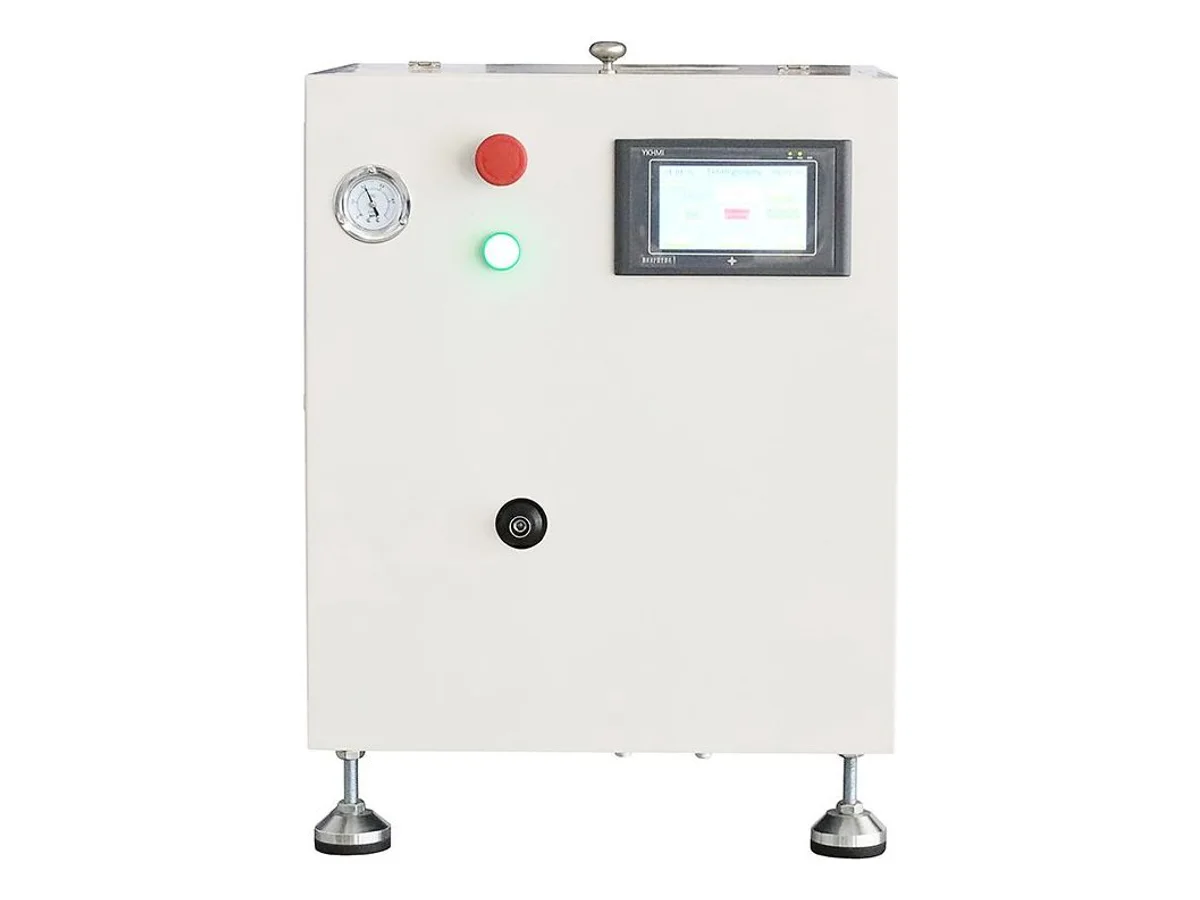
The WM-9318 seats an O-ring on a pipe fitting in one cycle, rated by the factory at one piece per cycle in under 1.5 seconds. The ring side is fully automatic — a vibratory bowl inside the cabinet orients loose O-rings and queues them along a feed rail, pneumatic jaws stretch each ring open, and a mist of oil is applied before the ring goes on. The fitting side is manual: the operator presents each body to the lower chuck, which is why the factory classifies the machine as semi-automatic. It is a closed floor-standing cabinet on four levelling feet with key-locked service doors, a front pressure gauge, an emergency stop and a touchscreen piece counter, and it runs on shop air at a constant 0.8 MPa or more.
Specifications
| Function | Assembling O-ring seals onto pipe fittings |
|---|---|
| Speed | 1 piece per cycle, under 1.5 seconds per piece |
| Feeding method | Automatic feeding of O-rings, manual feeding of pipe fittings |
| Total air source requirement | Constant pressure ≥ 0.8 MPa and test pressure +0.15 MPa (dry, free of impurities and oil) |
| Part range | Fittings of different sizes can be assembled |
| Ring lubrication | As pictured — oil mist applied before the ring is fitted, from an adjustable flexible nozzle aimed at the assembly point; oil mist before fitting is a command of its own on the screen |
| O-ring feeding | As pictured — vibratory bowl with a spiral track inside the cabinet, feeding a straight rail to the assembly head |
| Assembly head | As pictured — an upper pneumatic gripper stretches the ring open while a lower pneumatic chuck holds the fitting |
| Enclosure | As pictured — closed painted-steel floor cabinet on four levelling feet, with key-locked hinged service doors on the cabinet sides |
| Control | As pictured — colour touchscreen with a piece counter and reset, a ring-feed command, an oil-mist command, a manual mode and a parameter page; the photographed machine was supplied with a Polish / Chinese interface |
| Front panel | As pictured — air pressure gauge, emergency stop, illuminated start button and a pressure regulator knob |
| HS Code | 8479.89 (common reference — final classification confirmed by your customs broker) |
| Certification | On request |
Key features
- The ring is handled entirely by the machine — oriented in the bowl, queued on the rail, stretched open by the jaws and lubricated in the same cycle, so nothing depends on how carefully an assembler picks and rolls a ring on by hand
- Oil mist before fitting is a separate function on the screen, not a bolt-on drip — a wetted ring slides over the shoulder instead of dragging, which is where scrap comes from when rings go on dry
- One piece per cycle in under 1.5 seconds keeps the machine waiting on the operator rather than the other way round, so the loading rhythm is the only thing you have to plan around
- Closed cabinet with key-locked side doors — the bowl, the rail and the pneumatics sit behind sheet steel instead of open on a bench, and levelling feet let it stand on an uneven shop floor
- Touchscreen counter with reset, a manual mode and single commands for ring feed and oiling — enough to set the machine up, prove a part and train an operator without a laptop
- Runs on nothing but clean shop air at 0.8 MPa and up; no hydraulics and no fixture change between shifts once the tooling is set for the part family
What it processes
- Metal pipe and quick-connect fitting bodies that need an O-ring seated in a groove — as pictured, zinc-plated connector bodies with a black ring behind the head
- Small metal bodies outside plumbing as well — as pictured, lock cylinders supplied with keys, each carrying a sealing ring in a turned groove
- Job-shop and mixed-batch work where several part numbers share one bench and a fully automatic cell cannot be filled by a single part
- Benches where rings are still fitted by hand and the scrap is rolled, twisted, nicked or missing rings
Suited for: putting an O-ring on a metal pipe fitting one piece at a time, with the ring fed, oiled and seated by the machine and the fitting loaded by hand, in a closed cabinet that stands on the shop floor and needs only clean air at 0.8 MPa.
Not suited for: running unattended. As soon as the fitting bodies themselves have to be fed, this is the wrong class of machine — the WM-9312 automatic O-ring assembly machine with O-ring oiling station bowl-feeds bodies and rings onto a rotary indexing turntable at around 3,600 pcs/hour and unloads defective parts by itself, and where the part needs a second assembly operation after the ring, the five-station WM-9311 fully automatic O-ring assembly machine is the platform instead. Also not suited for: sealing a thread with PTFE tape rather than a rubber ring — that is the WM-461 automatic PTFE thread seal tape winding machine, which wraps ZG and NPT threads from 1/8 to 2 inch; and rubber seals that slide onto a wire before crimping belong to the WM-377 double-end wire seal insertion and crimping machine.
Where the WM-9318 sits next to the benchtop WM-9314
Both machines leave the part in the operator’s hands and do the ring themselves, so the choice is about the cabinet, the lubrication and the cycle, not about the principle.
The WM-9314 semi-automatic O-ring assembly machine is a benchtop box, 500 × 460 × 300 mm, that plugs into a 220 V socket and is rated by its factory at about 1,000 pieces an hour with a peristaltic pump wetting the ring. It goes on the bench beside the assembler and moves when the work moves.
The WM-9318 is a floor cabinet. Its rating is written as a machine cycle rather than an hourly output — one piece per cycle in under 1.5 seconds — and its ring is lubricated by an oil mist that is fired before the ring is pushed on. The two ratings are not measured the same way, so we will not tell you on paper that one is faster than the other; what we will do is time your own fittings on both and give you the two figures.
Pick the WM-9318 when the machine is going to stand in one place on a production floor, when the fittings are metal bodies rather than bench-scale adapters, and when you want the ring lubricated as a spray rather than a dosed drop. Pick the WM-9314 when bench space, a wall socket and portability matter more.
Two things the factory has not published for this model: overall dimensions and the electrical supply. We do not print numbers we have not been given — ask for them in your enquiry and they come back confirmed, along with the trial-run result on your own fittings and rings.
Engineering knowledge
Choose and troubleshoot this process
- How to Choose a Wire Prefeeder and Pay-Off SystemChoose a wire prefeeder or pay-off system by reel mass, line speed, acceleration, allowable tension, accumulation, dereeling control and downstream interface.
- Wire Feeding Problems: Causes and Corrective ActionsTroubleshoot cable tension spikes, reel overrun, loops, jerking, twist, feed slip, encoder mismatch and downstream cut-length variation.
WM-9318 — common questions
Is the WM-9318 fully automatic?
No, and the factory does not describe it that way. The O-ring side is automatic — bowl feeding, rail queuing, oiling and seating are all machine-paced. The fitting side is manual: the operator presents each body to the chuck and takes the finished part away. That split is what the factory calls semi-automatic, and it is the reason the machine has no parts bowl and no indexing table.
How fast is it?
The factory rates the machine at one piece per cycle in under 1.5 seconds. That is the machine's own cycle, not an output figure — because you load the fittings by hand, the pieces you actually get per hour follow the operator's rhythm. We quote a realistic hourly figure only after your fittings have been run.
What compressed air does it need?
A constant pressure of 0.8 MPa or more, with a test pressure of +0.15 MPa, and the air must be dry and free of impurities and oil. A front-panel gauge and regulator knob let the operator see and set the working pressure. The factory has not published a power supply, weight or footprint for this model — ask us and we will get the figures confirmed in writing before you order.
Does it lubricate the O-ring?
Yes. Oil mist before fitting is a command of its own on the touchscreen, and in our photos an adjustable flexible nozzle is aimed straight at the assembly point. The ring is misted before the jaws push it over the fitting, so it stretches and drops into the groove instead of dragging and shaving.
Can it handle my fitting and my ring size?
The factory states that fittings of different sizes can be assembled, but the jaws, the feed rail and the bowl track are set for one part family at a time. Feasibility is settled on parts, not on paper — send us the fittings and the O-rings, they are run on the machine, and you get the result and the price before anything is built.
What language is the touchscreen in?
The machine in our photographs was delivered with a Polish and Chinese interface, switchable from the top-left corner of the home screen — the counter, ring feed, oil mist, manual mode and parameter pages are all there. Tell us which interface language you need when you enquire so it is confirmed with the factory before the machine is built.
Related machines in Custom Machines
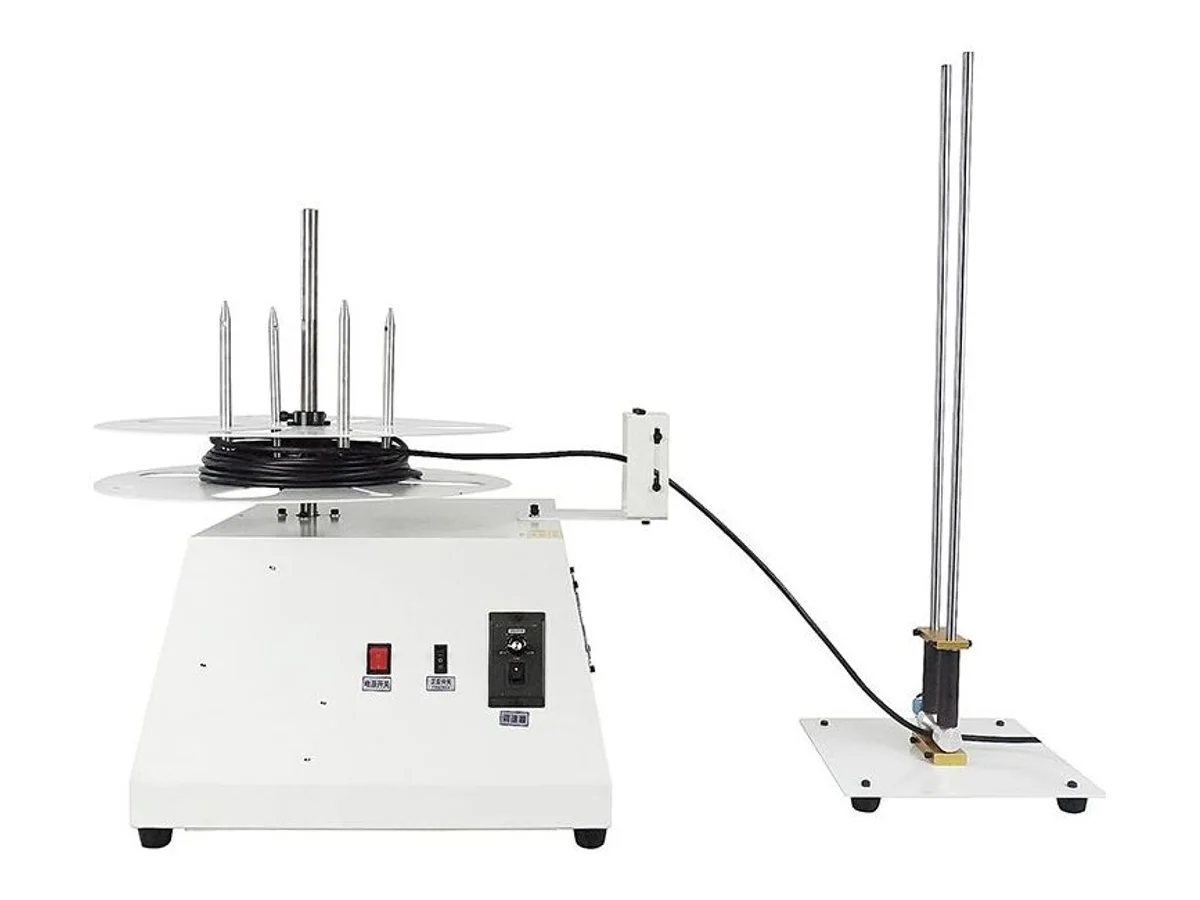
Automatic Cable and Tube Prefeeder with 20 kg Load Capacity
Model WM-9120T
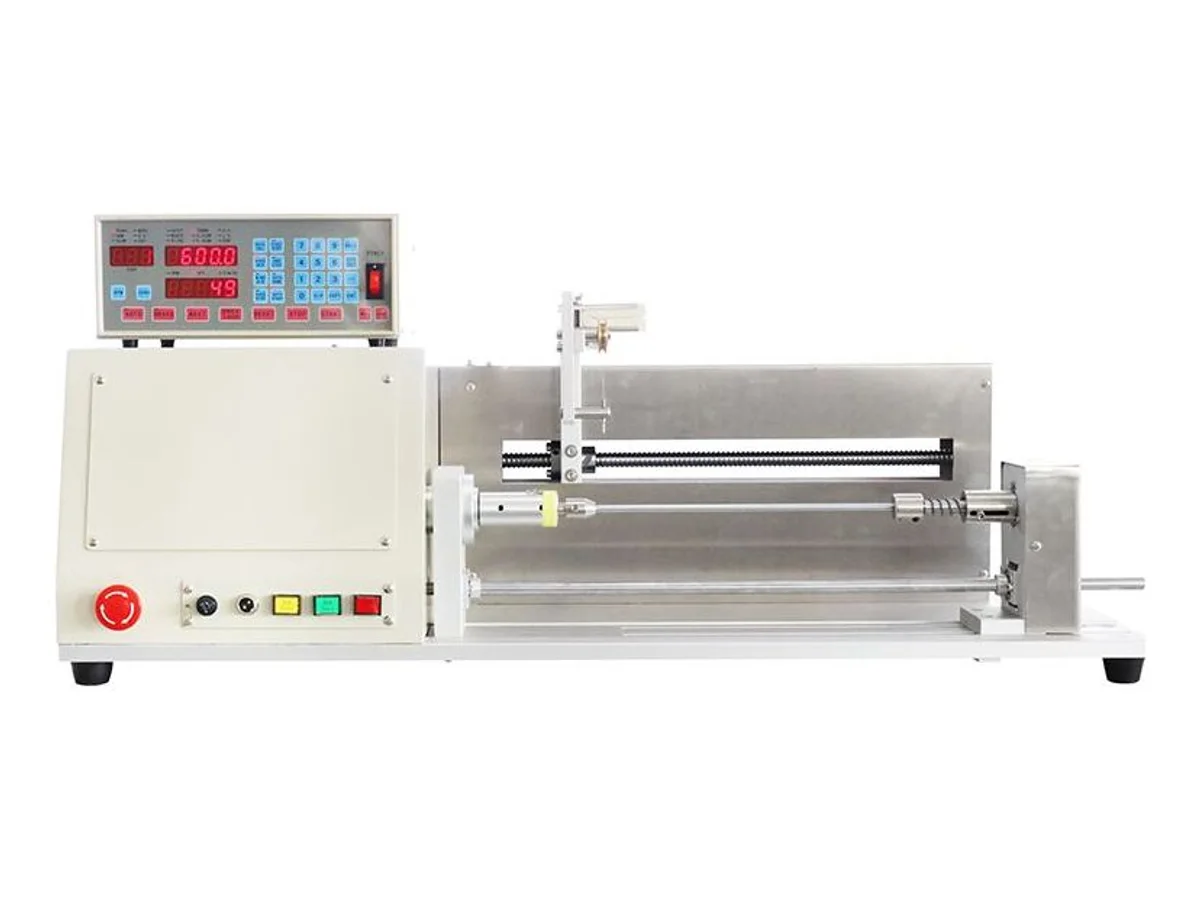
Automatic Magnet Wire Coil Winding Machine with 420 mm Programmable Traverse
Model WM-9324
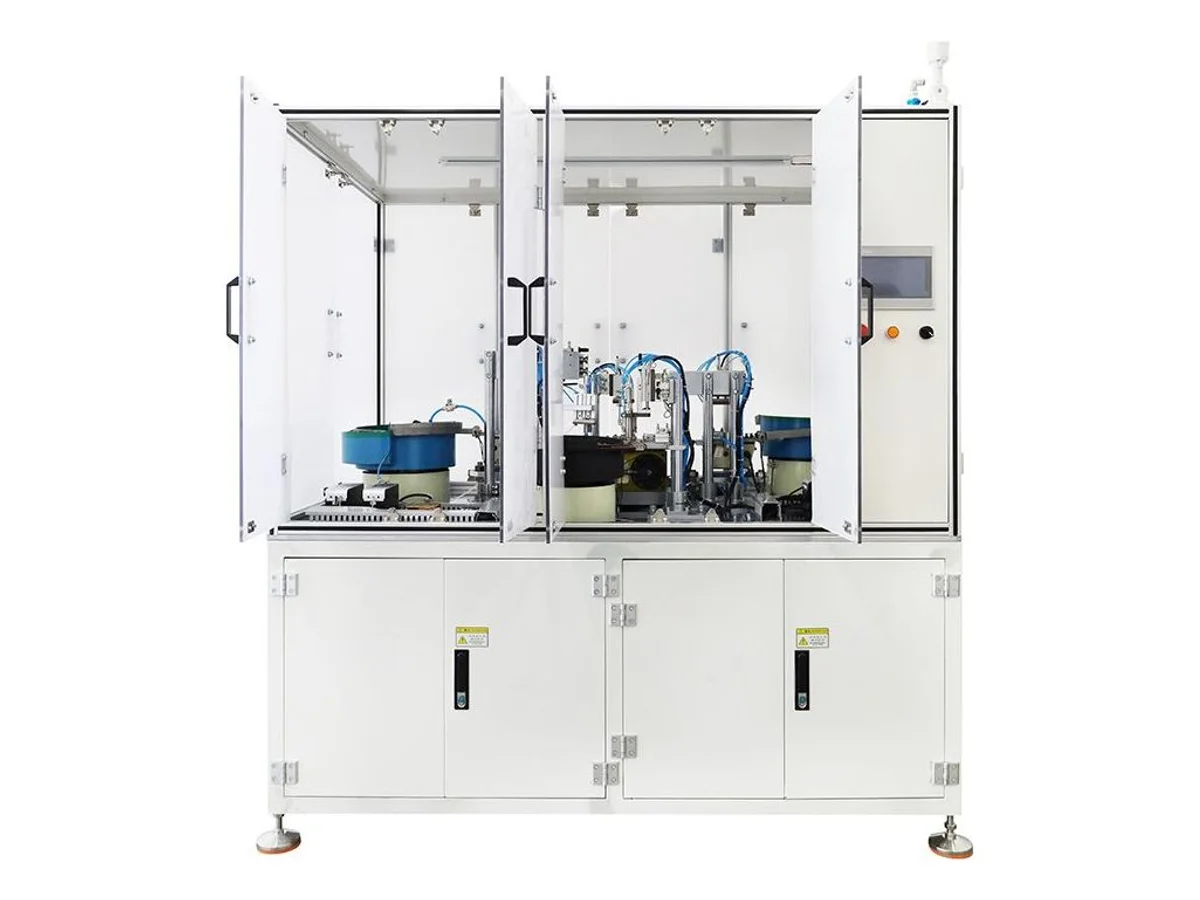
Fully Automatic O-Ring Assembly Machine with Rotary Indexing Table
Model WM-9311