Ultrasonic Ribbon Cutting, Sealing and Stacking Machine with Print-Mark Positioning WM-580
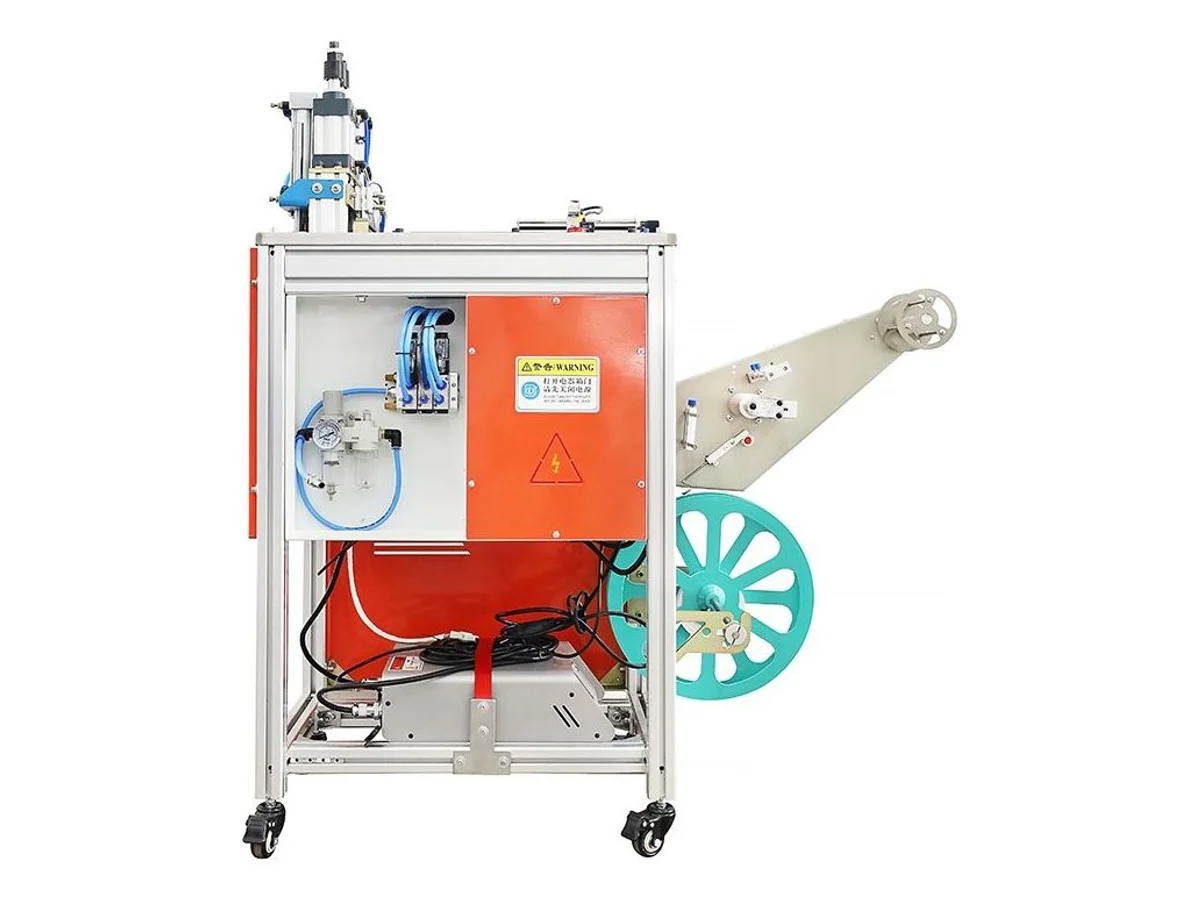
The WM-580 cuts satin ribbon, printed tape and woven trim against an 18 kHz ultrasonic head, fusing the weave along the cut so every piece leaves sealed and fray-free. What separates it from a plain ultrasonic cutter is what happens either side of the cut: a photoelectric sensor over the material path registers each cut to a printed mark, so the blade lands at the same point of a repeating design piece after piece, and the finished lengths are received and stacked at the discharge instead of dropping loose. Length, speed, cut time, batch quantity and running count are set on a touch screen that switches between English and Chinese. The floor-standing unit runs at 60–80 pieces per minute, draws 1.8 kW at 220 V on 3–6 kg/cm² air and weighs 130 kg.
Specifications
| Function | Ultrasonic cutting of satin ribbon and tape with mark positioning and stacking |
|---|---|
| Efficiency | 60 – 80 pcs/min |
| Ultrasonic frequency | 18 kHz |
| Power | 1.8 kW |
| Voltage | 220 V |
| Air pressure | 3 – 6 kg/cm² |
| Weight | 130 kg |
| Packing size | 670 × 860 × 1030 mm (L × W × H) |
| HS Code | 8515.80 (common reference — final classification confirmed by your customs broker) |
| Certification | CE (certificate provided with shipment) |
Key features
- Print-mark positioning is the reason to choose this machine — a photoelectric sensor sits over the material path ahead of the cutting head and triggers on a printed mark or repeat, so a logo ribbon, care label tape or repeat-printed trim is cut at the same point in the pattern on every piece rather than at a blind fixed pitch that drifts across a roll
- 18 kHz ultrasonic head fuses the weave as it severs it, so polyester and nylon satin, grosgrain and woven trim come off sealed with no separate flame or hot-knife singeing station and no stiff melted bead along the edge
- Receiving and stacking at the discharge — the screen carries a receiving open/close control, so cut lengths are collected in order at the end of the machine instead of scattering across the bench for someone to gather and square up
- Touch screen switches between English and Chinese on a single button, and carries length setting in mm, feed speed, cut time in seconds, a live pcs/min readout, total-quantity and single-batch targets with a completed counter, plus trial cut, jog feed and pinch-roller controls and separate debug, setup, I/O and manual pages
- Powered pre-feed with its own millisecond timing controller pays ribbon off a large-diameter reel and buffers it before the cutting head, so tension stays even and thin satin is not stretched into a length error on the way in
- Adjustable guide clamps on a stainless rail set the material track by hand for each ribbon width, and the whole machine stands on a castered aluminium-profile frame with the ultrasonic generator carried on the lower shelf — it rolls to the line rather than occupying a bench
- Free sample test — send us a roll of your ribbon or printed tape and we cut it on this machine, register the cut to your print mark and send you the video and the cut pieces before you order
What it processes
- Satin, grosgrain and polyester ribbon cut to length with sealed, fray-free ends for gift packaging, florist and garment trim
- Repeat-printed ribbon, logo tape and woven care-label tape where every piece has to be cut at the same point in the printed repeat
- Hook-and-loop tape, elastic band and narrow synthetic webbing cut in counted batches and collected in order for the next assembly station
Suited for: narrow synthetic flat stock — satin and grosgrain ribbon, printed logo tape, woven care-label tape, hook-and-loop and elastic band — on jobs where the end must be sealed and soft, where the cut has to land at the same point in a printed repeat, and where the pieces have to come off the machine collected and counted rather than loose.
Not suited for: holes, shaped ends, heavy stock, or anything that must not be fused. For sealed edges plus punched holes in one pass, use the WM-564 ultrasonic webbing punching and cutting machine. For beveled and arrow-point end shapes on the same ribbon and tape, the WM-567 ultrasonic ribbon and tape cutting machine is the shape-cutting member of this family. For wider or thicker material — 1 to 80 mm wide, up to 8 mm thick — round rope and cord, or custom shaped dies, step across to the WM-574 ultrasonic rope and webbing cutting machine. Material that must not be fused at all — film, insulating sheet, paper label stock — needs a cold blade with a stacker instead: WM-579 automatic tape and webbing cutting machine with stacker, which also covers hot-blade work up to 98 mm wide. Wire, cable and conductors belong with the wire cutting and stripping machines.
Where the WM-580 sits against the WM-579, the other machine here that stacks its output: the WM-579 is a 28 kg benchtop unit with a blade that runs cold or hot to 500 °C, takes material up to 98 mm wide and cuts at a fixed programmed length. The WM-580 is a 130 kg floor unit with an ultrasonic head and no blade heat at all, and it registers the cut to a printed mark rather than to a counter. Choose by the material and the cut, not by the stacker: heated or cold blade on wide or non-fusible stock is the WM-579; a soft fused edge on printed satin that has to be cut in register is this machine.
Send us a roll of your ribbon with the length, the batch size and — if it is printed — the repeat you need the cut to land on. We run it on this machine, film the sensor picking up your mark, and mail the cut pieces back so you inspect the sealed edge on your own material before you commit.
Engineering knowledge
Choose and troubleshoot this process
- Printed Ribbon Cutting: Registration Marks and Cut AccuracyCheck printed ribbon cutting by finished length and print-to-cut offset. Trial mark contrast, glossy material, splices, missing marks and restarts.
- How to Choose a Tube and Pipe Cutting MachineChoose tube and pipe cutting equipment by material, diameter, wall thickness, rigidity, cut mechanism, tolerance, end quality and chip-control requirements.
- Spiral Cutting vs Rotary Cut-Off for Silicone TubeA 5 mm silicone-tube inquiry shows why a rotating blade does not prove spiral-cut capability. Define the helix, support and sample acceptance.
WM-580 — common questions
What does "mark positioning" actually do that a normal cut-to-length machine cannot?
A plain cut-to-length machine measures a fixed pitch and cuts. That is fine on plain ribbon, but on printed material the print repeat and the machine's pitch are never exactly equal, so the cut creeps through the design and by the end of a roll the logo is chopped in half. On the WM-580 a photoelectric sensor reads the printed mark or repeat as the ribbon passes and triggers the cut from that, so the cut stays locked to the artwork for the whole roll. If your ribbon is unprinted you simply run it in fixed-length mode instead.
How is ultrasonic cutting different from a hot knife?
A hot knife melts its way through with a heated blade, which works but leaves a harder, thicker bead and can scorch or discolour light and delicate material such as satin. The ultrasonic head vibrates at 18 kHz and generates the heat inside the material at the cut line itself, for a fraction of a second — the edge fuses and stays flat and soft, and the surrounding ribbon is not heated. On satin and printed trim, where the customer sees and touches the end, that difference is the whole point.
Which materials seal on this machine and which do not?
Synthetics fuse: polyester and nylon satin, grosgrain, printed polyester ribbon, hook-and-loop tape, elastic and most synthetic webbing. Natural fibres do not — pure cotton tape and paper-based label stock are severed cleanly but the ends behave like scissor-cut ends and can still fray. Blends fall in between and depend on the synthetic content. Send us a roll and we cut samples on the machine so you judge the actual edge rather than a datasheet claim.
How does it compare with the other ultrasonic cutters in this category?
The ultrasonic machines in this category split by what they do around the cut, not by the cut itself. The WM-580 is the one that registers each cut to a printed mark and receives the pieces in a stack — pick it for printed ribbon and counted batches. The WM-567 cuts the same kind of ribbon and tape but adds beveled and arrow-point end shapes instead of positioning. The WM-574 takes wider and thicker stock — 1 to 80 mm wide and up to 8 mm thick, including round rope and cord — and accepts custom shaped dies. The WM-564 punches holes as well as cutting. Links to all three are below the specifications.
What is the WM-580 not built for?
It makes straight cross-cuts on narrow flat synthetic material. It does not punch holes, it does not cut shaped or angled ends, and it does not cut wire, cable or rigid tube. Materials that must not be fused at all — film, insulating sheet, paper label stock — need a cold blade rather than an ultrasonic head. The referrals below point to the right machine for each of those.
Related machines in Tube, Tape & Material Cutting
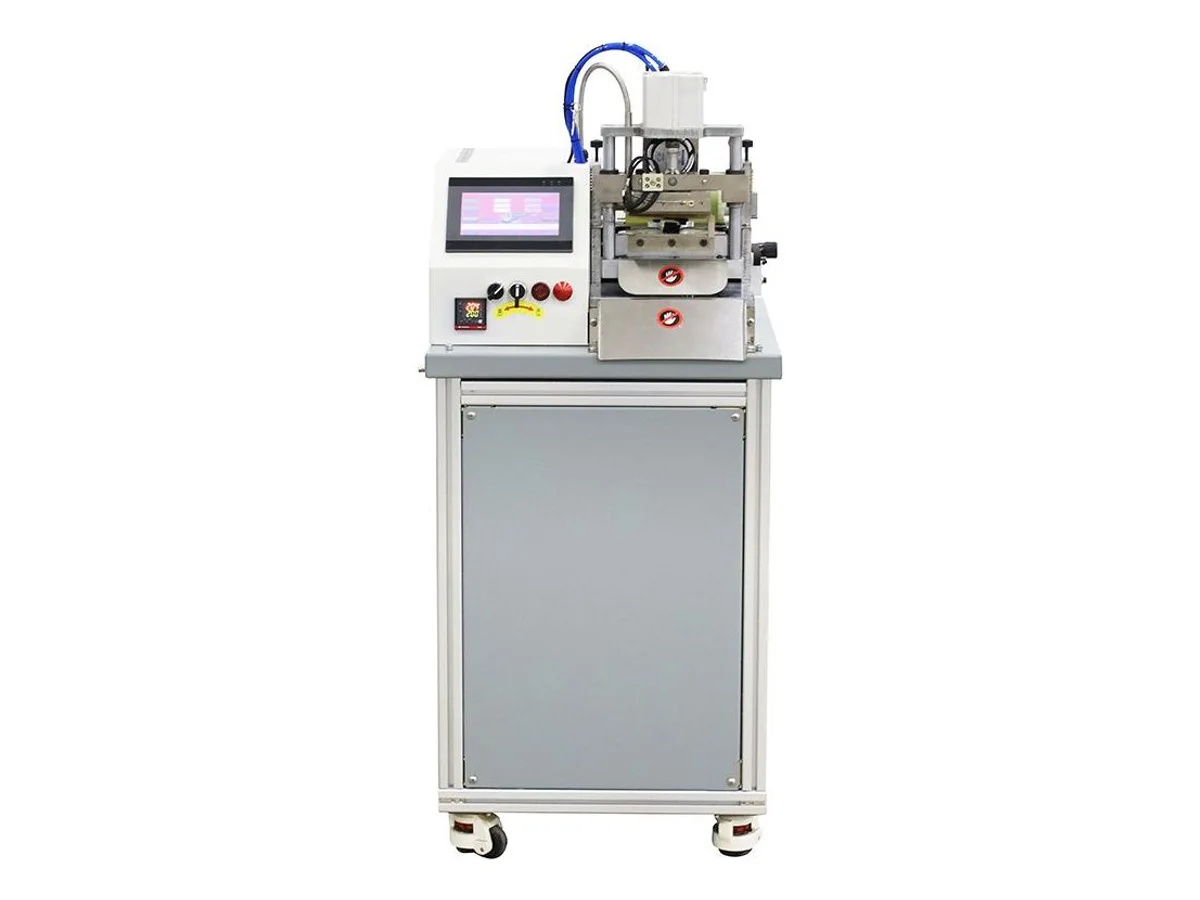
Hot and Cold Webbing Shape Cutting Machine, 45–135°
Model WM-566
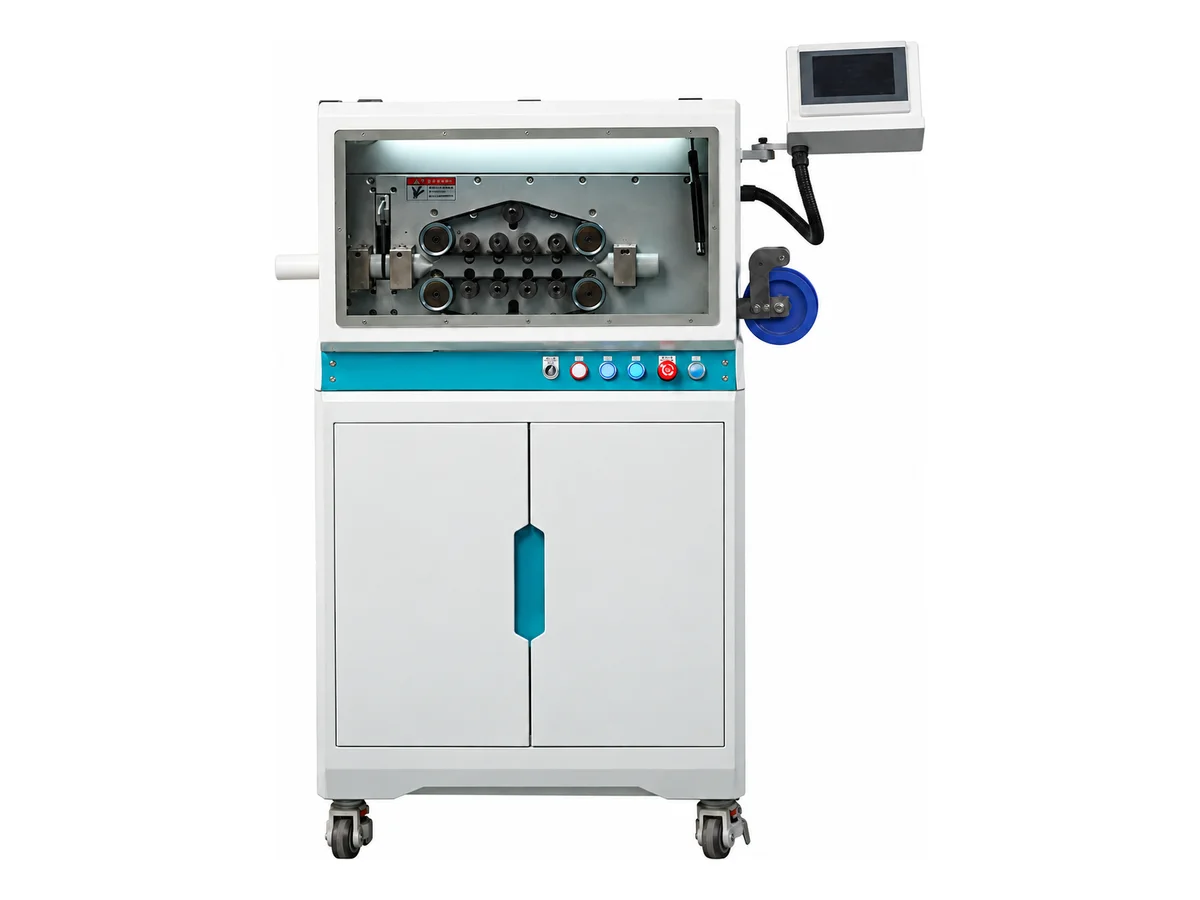
Automatic Plastic Tube Cutting Machine for Ø4–30 mm Tube
Model WM-606
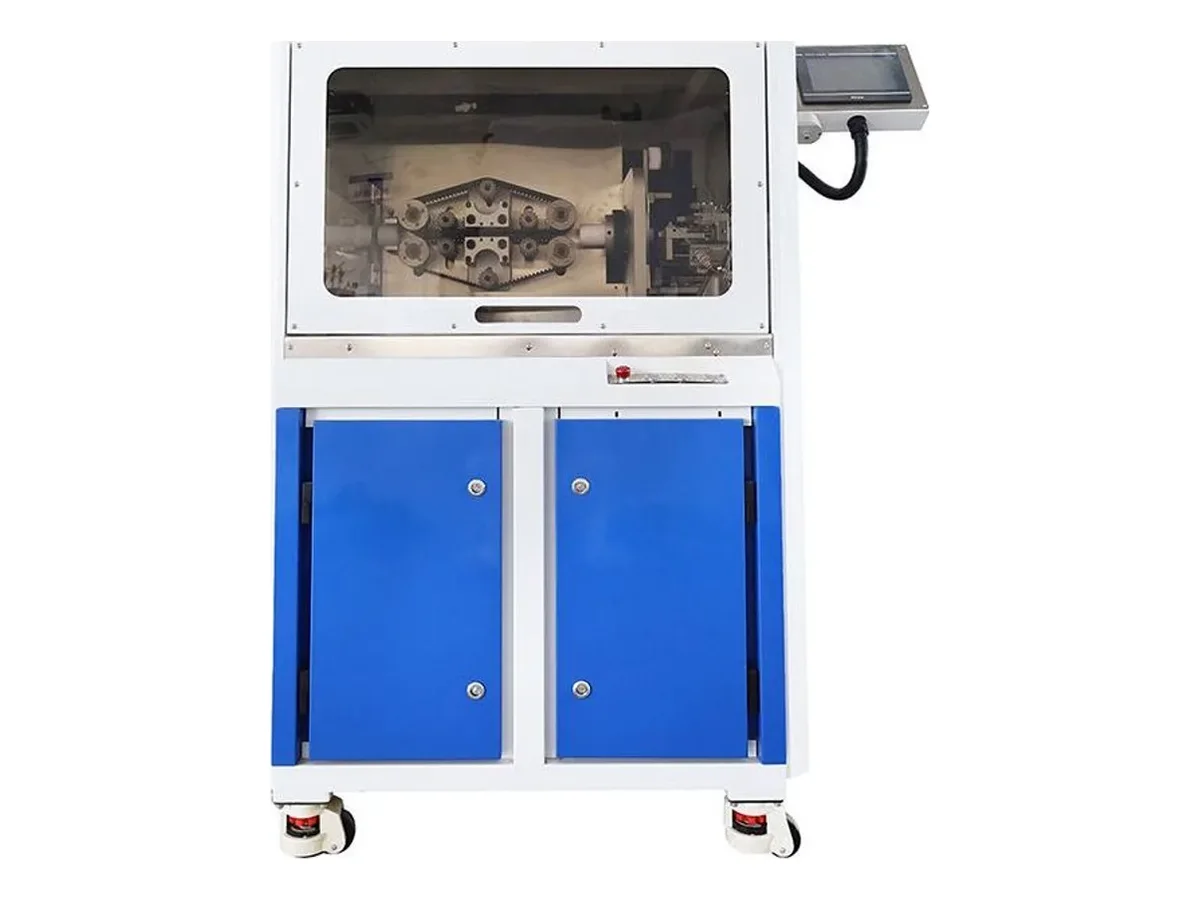
Automatic Braided Sleeve Taping and Cutting Machine for OD 8–30 mm Tube
Model WM-177