Servo Hexagonal Cable Lug Crimping Machine, 200 kN for 10–120 mm² with No Die Change WM-3240
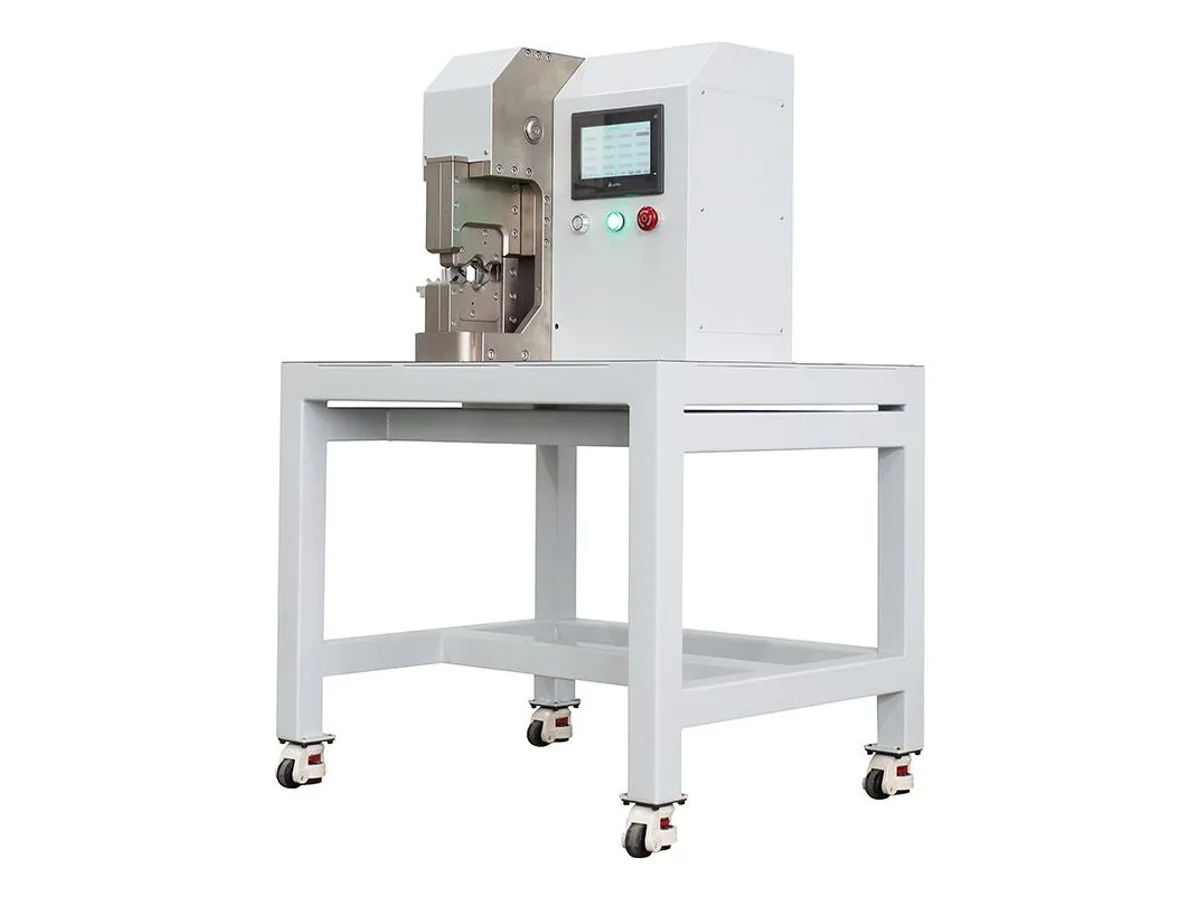
The WM-3240 is a servo-driven hexagonal compression press that covers 10 to 120 mm² without ever changing a die set — the conductor size is picked on the touchscreen and the head closes the hexagon to it. 200 kN of servo force, a maximum diameter of 38 mm and a 12.5 mm crimping width, in a 700 × 860 × 1,260 mm machine weighing 160 kg on AC 220 V, 50 Hz with a 2,300 W motor. The crimping head is separated and open at the front, so it also reaches an intermediate junction part-way along a cable and the right-angle terminals used on new-energy harnesses.
Specifications
| Function | Hexagonal compression crimping of non-standardised terminals and compression-type terminals |
|---|---|
| Wire range | 10 – 120 mm² |
| Crimping force | 200 kN |
| Max. diameter | 38 mm |
| Crimping width | 12.5 mm (customizable) |
| Drive and control | Servo control system — no die-set change across the range |
| Motor | 2,300 W |
| Power supply | AC 220 V, 50 Hz |
| Dimensions | 700 × 860 × 1,260 mm |
| Weight | 160 kg |
| HS Code | 8463.90 (common reference — final classification confirmed by your customs broker) |
| Certification | CE (certificate provided with shipment) |
Key features
- No die set to change — one hexagonal head covers 10 to 120 mm², with the size selected on the touchscreen instead of built with tooling
- Servo control system rather than a hydraulic pack, so the 200 kN closes to the same dimension every stroke and the machine runs quietly
- Separated crimping interface — the head is open at the front, which is what lets it reach an intermediate junction part-way along a cable and crimp new-energy right-angle terminals
- Position adjustment on a graduated stop at the head sets where the terminal sits in the die, and keeps the field of view over the crimp clear
- Suitable for non-standardised terminals as well as standard compression-type terminals
- Compact structure at 700 × 860 × 1,260 mm and 160 kg — light for its force because the force is servo-generated, not carried in a hydraulic mass
What it processes
- Battery, energy-storage and switchgear links terminated with copper tube lugs from 10 mm² up to 120 mm²
- New-energy harnesses using right-angle terminals that a closed-frame press cannot present to the die
- Intermediate joints and through-splices crimped part-way along an already-terminated cable run
- Mixed-size lug batches where a conventional press would spend the shift on die changes
- Panel and switchgear shops moving off hand hydraulic crimping tools onto a repeatable powered press
Suited for: hexagonal compression crimping of copper cable lugs, tube terminals and non-standardised compression terminals from 10 mm² to 120 mm² — mixed-size batches above all, because nothing is unbolted between sizes, and awkward geometry, because the head is open at the front for intermediate junctions and right-angle terminals. Not suited for: conductors below 10 mm², which fall under this machine’s rated range — the WM-3218 13-ton hydraulic hexagonal press is change-free too and rated 0–75 mm²; small loose ferrules, which belong on the WM-3103 loose ferrule crimper for 0.35–4 mm² or the WM-398 benchtop pneumatic crimper for 0.08–6 mm². For reel-fed harness terminals, see our terminal crimping machines. For conductors above 120 mm², tell us the section and terminal geometry on the custom machines page so we can assess a suitable configuration.
Two decisions in this machine are worth understanding before you compare it on price. The first is that the hexagon is made by the servo, not by the tooling. Every other route to a 120 mm² hexagonal crimp on this site involves a mold or an applicator that matches the conductor size, which means a die change every time the batch changes section. Here the die stays put and the screen holds the sizes, so the cost of a mixed-size order collapses from a changeover per size to a button press. That is the same idea as the WM-3218, carried up from 75 mm² to 120 mm² and from a hydraulic pack to a servo drive.
The second is the shape of the head. Most presses in this class close around the terminal inside a frame, which fixes what you can present to the die: a lug on the end of a free cable, and nothing else. The separated crimping interface here is open at the front, which is why the specification claims intermediate junctions and new-energy right-angle terminals — a cable that is already terminated at the far end, or a terminal that leaves at 90°, still reaches the die. On an EV wire harness line that is often the difference between one operation and a rework.
Against the heavier presses, the trade is honest: at 200 kN this is not the WM-3135T, which puts 35 tons behind the same 120 mm² ceiling with stored work orders and 385 kg of machine, and it is not the WM-3234, which runs 20 to 40 crimps a minute on shop air. Buy the WM-3240 when the die changes are what cost you the day.
Lug crimping is geometry-specific, so we prove it before you pay for it. Send a handful of your lugs and two or three metres of your cable — we crimp them on this machine, film the run, and send you the video and the crimped samples back.
Engineering knowledge
Choose and troubleshoot this process
- Ferrule Crimping: Strip Length, Terminal Fit and Chain-Fed vs Loose-Fed MachinesCompare chain-fed and loose-ferrule crimping machines by wire preparation, changeover, terminal fit and batch output. Check WM-3243 and WM-3246 specifications.
- How to Choose a Terminal Crimping MachineChoose a terminal crimping machine by terminal presentation, wire range, applicator standard, required process steps, inspection method and production mix.
- Terminal Crimp Defects: Causes, Inspection and Corrective ActionsTroubleshoot low pull force, incorrect crimp height, strand loss, bellmouth defects, insulation support problems and inconsistent terminal feeding.
WM-3240 — common questions
What does "no die change" mean on a machine that reaches 120 mm²?
The hexagonal head stays in place. You select the conductor size on the touchscreen and the servo closes the hexagon to that size, so a batch that mixes 25, 50 and 95 mm² runs without stopping to swap die halves. The screen photographed on this page carries eight stored sizes — 10, 16, 25, 35, 50, 70, 95 and 120 SQM — on a page with further empty slots and a next-page key. That is the difference from a mold-change press such as the WM-3135T 35-ton servo lug press, which reaches the same 120 mm² but with six-sided, four-sided or M-type mold sets that are physically changed for the profile.
How is this different from the WM-3218, which is also change-free and hexagonal?
Force, range and drive. The WM-3218 is a 13-ton hydraulic bench press rated 0–75 mm², 110 kg on a 500 × 380 × 935 mm footprint — an option for smaller conductors in mixed-size batches. The WM-3240 is servo-driven at 200 kN and rated 10–120 mm², at 160 kg on 700 × 860 × 1,260 mm. Note the bottom of the range — the WM-3240 starts at 10 mm², so if your work includes conductors below that, the WM-3218 is the press that covers them.
Can it really crimp a joint in the middle of a cable?
That is what the separated crimping interface is for. The head is open at the front rather than enclosed in a C-frame, so a cable that is already terminated at both ends can be laid into the die at a mid-span point for an intermediate junction, and a right-angle new-energy terminal can be presented at an angle a closed head has no room for. Send us the joint you need to make — we set it up on this machine and film it before you order.
What do the 38 mm and 12.5 mm figures mean for my parts?
The specification gives a maximum diameter of 38 mm and a crimping width of 12.5 mm, and the crimping width is listed as customizable. Between them they decide whether your particular lug barrel fits the head and how wide a band each stroke leaves. Lug geometry varies more than conductor size does, so send us a few of your lugs and two or three metres of your cable — we crimp them on this machine, film the run, and confirm in writing which of your parts the head takes before any money moves.
What does it need from my shop, and when is a different press the better buy?
Single-phase AC 220 V at 50 Hz for a 2,300 W motor, 700 × 860 mm of floor, 1,260 mm of height and 160 kg to move. If your terminals are reel-fed harness terminals rather than lugs, this is the wrong machine — the WM-3130T servo press in the 30-ton configuration uses matched tooling and alarms on overlap crimps, un-stripped cable, cut cores and missing terminals. If you need cycle rate on EV charging cable rather than change-free tooling, the WM-3234 does 20–40 crimps a minute on shop air across 1–70 mm² or 6–120 mm² depending on the build.
Related machines in Crimping & Connector Assembly
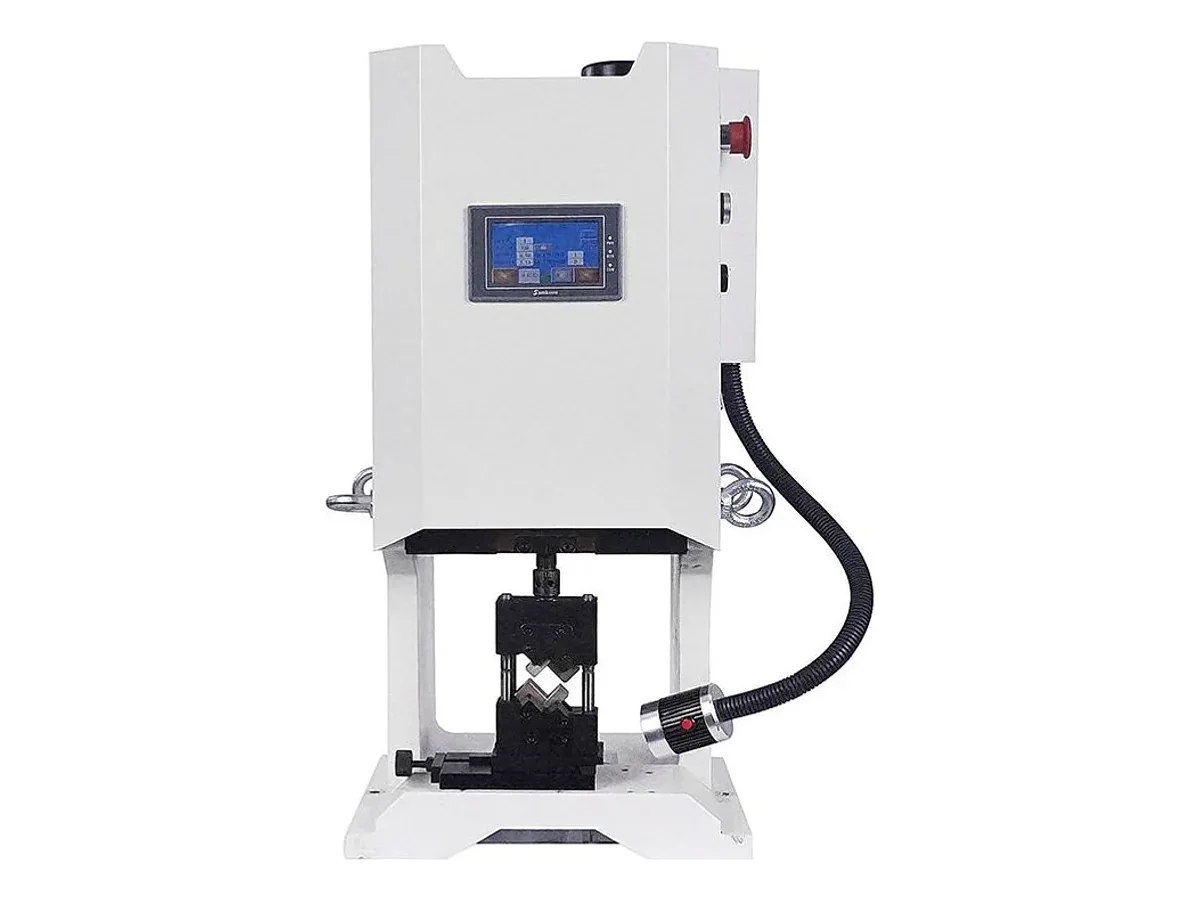
10-Ton Servo Terminal Crimping Machine, 100 kN Bench Press
Model WM-3110T
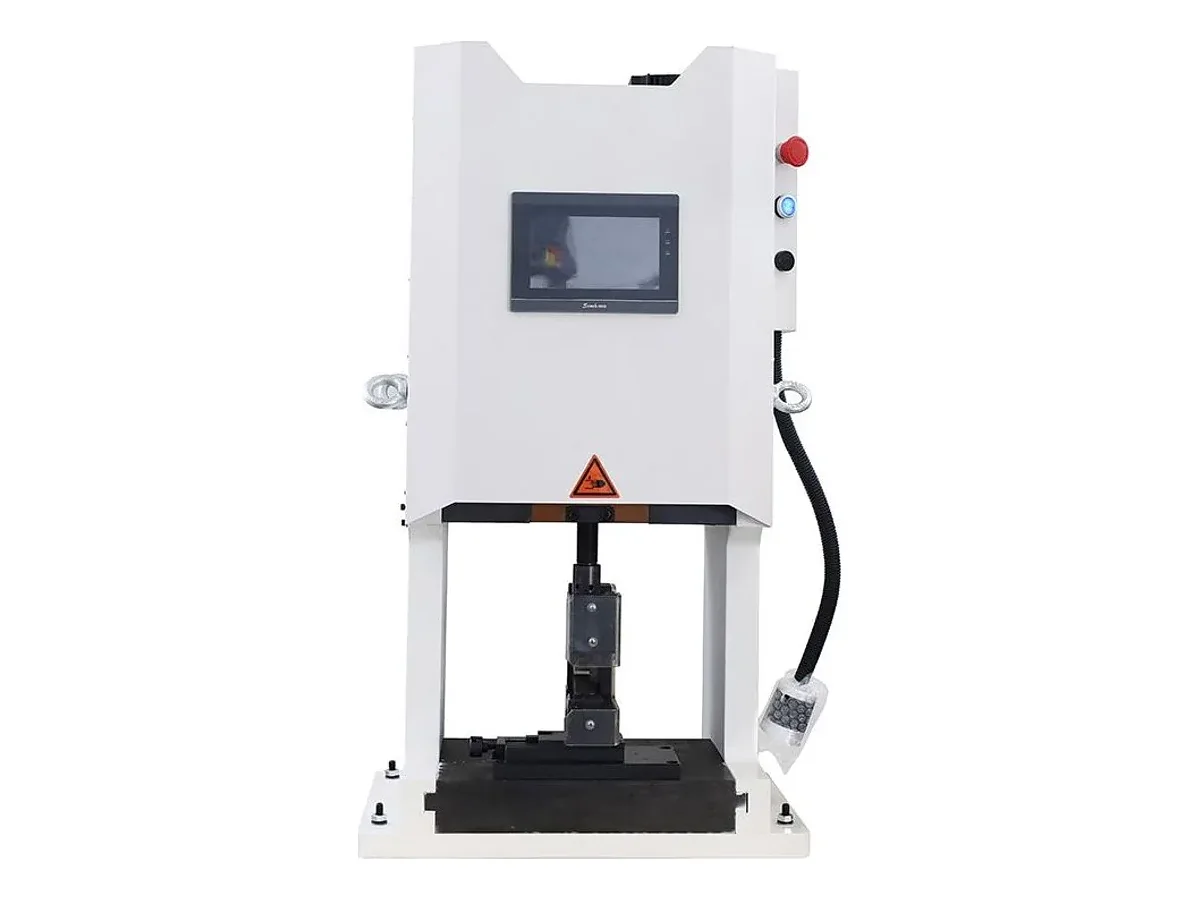
20-Ton Servo Cable Lug Crimping Machine, 200 kN and 40 mm Stroke
Model WM-3120T
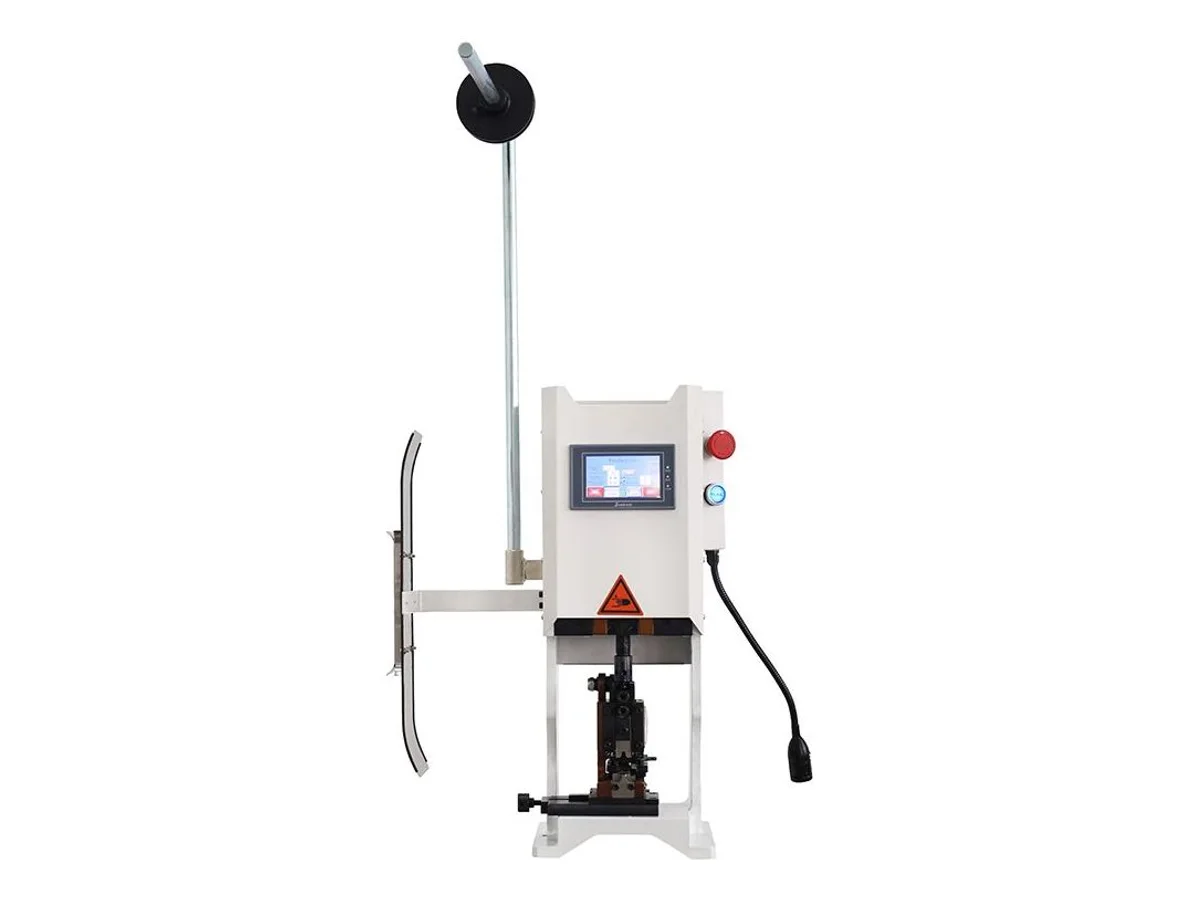
2-Ton Servo Terminal Crimping Machine, 20 kN Touchscreen Bench Press
Model WM-3102S