EV Charging Cable Hydraulic Lug Crimping Machine in 10 T and 30 T Versions WM-3234
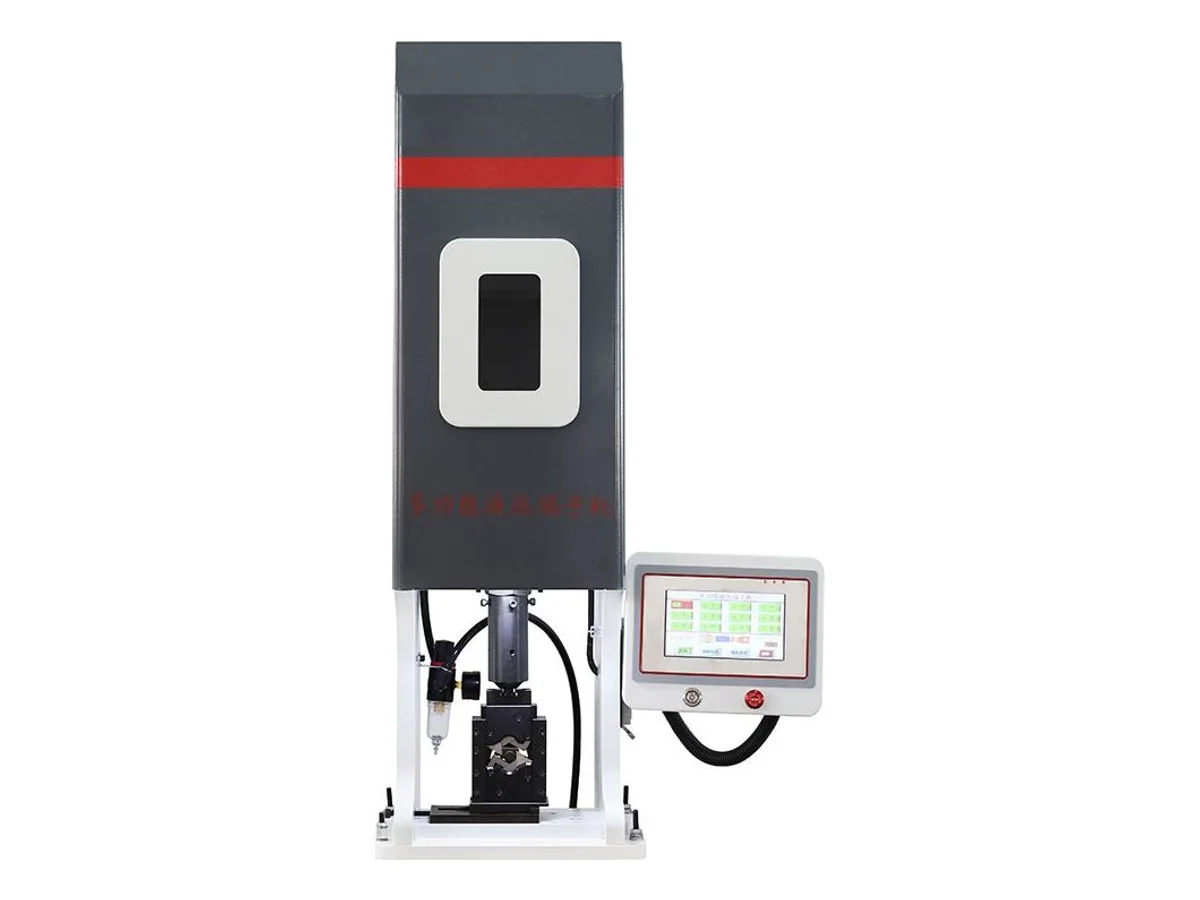
The WM-3234 is an air-over-hydraulic crimping press built for the large-section end of the harness shop — EV charging connectors, copper tube lugs and other big square terminals. It ships in two force builds — 10 tons covering 1–70 mm² and 30 tons covering 6–120 mm² — in a 530 × 400 × 900 mm frame quoted at 100 or 150 kg depending on the build. Compressed air at 0.5 MPa is the only power source for the crimp stroke, which is 50 mm long and repeats 20 to 40 times a minute. Crimp height, speed, stroke, force and dwell time are all set on the English touchscreen and stored per terminal, and the press accepts 2000-series single-grain, four-point, upper-and-lower and new-energy shielding-ring applicators.
Specifications
| Function | Hydraulic crimping of large square terminals, including new-energy vehicle charging connectors |
|---|---|
| Working capacity | 10 T for 1 – 70 mm²; 30 T for 6 – 120 mm² |
| Crimping force | 10 T – 30 T |
| Hydraulic crimping stroke | 50 mm |
| Work efficiency | 20 – 40 times/minute |
| Power source | Compressed air |
| Working air pressure | 0.5 MPa (0.3 – 0.7 MPa) |
| Power supply | AC 220 V, 50/60 Hz |
| Applicable applicators | 2000 single-grain, four-point, new-energy shielding-ring, upper and lower crimping applicators |
| Dimensions | 530 × 400 × 900 mm |
| Weight | 100 / 150 kg |
| HS Code | 8463.90 (common reference — final classification confirmed by your customs broker) |
| Certification | CE (certificate provided with shipment) |
Key features
- Two force builds on one frame — 10 T for 1–70 mm² or 30 T for 6–120 mm², so the tonnage is bought against the conductor rather than guessed
- Compressed air drives the hydraulic booster for the crimp stroke; the specified shop-air pressure is 0.5 MPa
- 50 mm hydraulic stroke clears tall lugs and connector bodies that a short-stroke bench press cannot open far enough to load
- Crimp height, speed, stroke, force and crimp time are adjustable per product and per applicator, then stored and recalled with one key
- Takes 2000-series single-grain, four-point, upper-and-lower and new-energy shielding-ring applicators — one press covers reel terminals, lugs and shield rings
- Rated at 20–40 cycles per minute; actual output depends on loading, tooling and inspection, with bench operation and automatic-line integration available
What it processes
- EV charging gun and charging-pile cable assemblies terminated with large-section contacts
- Copper tube lugs and ring terminals on battery, energy-storage and power-distribution cable
- Shielded new-energy harnesses needing a shielding-ring crimp as well as a conductor crimp
- Panel and switchgear shops replacing hand hydraulic crimping tools with a repeatable powered press
Suited for: large-section terminations on EV charging and power cable — copper tube lugs, ring terminals and new-energy charging-connector contacts from 1 mm² up to 120 mm², processed with an air-driven hydraulic booster rated at 20–40 cycles a minute, with the height stored per terminal. Actual output depends on loading, tooling and inspection. Not suited for: small ferrules and reel-fed harness terminals, which are the wrong end of this press — for tubular ferrules pick the WM-3103 loose ferrule crimper covering 0.35–4 mm² or the WM-398 benchtop pneumatic crimper for 0.08–6 mm²; for conductors above the specified 120 mm² limit, tell us the section on the custom machines page and we review a custom configuration.
Three things separate this press from the other lug machines on this site. The first is where the force comes from: compressed air drives a booster cylinder, so a 30-ton crimp lives in a 150 kg machine instead of a 385 kg one. The second is the 50 mm stroke — long enough that a charging-connector body or a tall lug loads without fighting the tooling, where a 30 or 40 mm bench press runs out of daylight. The third is the applicator list: as well as lug dies it takes 2000-series single-grain, four-point and upper-and-lower applicators and a new-energy shielding-ring applicator, so a shielded charging cable can be crimped on the conductor and on the shield ring at the same station.
Against the WM-3218 13-ton hydraulic lug press, which covers 0–75 mm² with a change-free hexagonal die, the WM-3234 offers a different tooling architecture and a specified range up to 120 mm² in the 30 T version. For an EV wire harness line, confirm the required tooling, process monitoring and line interface against your actual termination.
Applicator fit is the one thing worth proving before money moves. Send two or three meters of your cable and a handful of your lugs or charging contacts — we crimp them on this machine, film the run, and send you the video and the crimped samples back.
Engineering knowledge
Choose and troubleshoot this process
- Ferrule Crimping: Strip Length, Terminal Fit and Chain-Fed vs Loose-Fed MachinesCompare chain-fed and loose-ferrule crimping machines by wire preparation, changeover, terminal fit and batch output. Check WM-3243 and WM-3246 specifications.
- How to Choose a Terminal Crimping MachineChoose a terminal crimping machine by terminal presentation, wire range, applicator standard, required process steps, inspection method and production mix.
- Terminal Crimp Defects: Causes, Inspection and Corrective ActionsTroubleshoot low pull force, incorrect crimp height, strand loss, bellmouth defects, insulation support problems and inconsistent terminal feeding.
WM-3234 — common questions
Which of the two force versions do I need?
Size it to the largest conductor you terminate. The 10 T build is rated 1–70 mm²; the 30 T build is rated 6–120 mm². Both share the same 530 × 400 × 900 mm frame, the same 50 mm stroke and the same control, so operators do not retrain if you later add the bigger one — the shipping weight is quoted as 100 or 150 kg, and we confirm which figure applies to your build in writing on the quotation. If your cable sits near 70 mm², send us a sample and we crimp it at both tonnages on camera before you decide.
Is this really an EV charging machine, or a general lug press?
Both, and it is worth being exact about which part is which. The force range, the 50 mm stroke and the 120 mm² ceiling are what EV charging cable needs, and the applicator list includes a new-energy shielding-ring applicator that a plain lug press does not carry. The samples in the photographs on this page are copper tube lugs on blue power cable, not charging connectors — charging-connector contacts are an applicator and tooling question, so send us the actual contact and cable and we confirm the applicator before quoting.
What does it need from my shop?
Single-phase AC 220 V at 50 or 60 Hz for the control, and clean compressed air at 0.5 MPa — the working window is 0.3 to 0.7 MPa. The crimp force itself comes from the air, not from the mains, which is why the machine is only 100 to 150 kg for its tonnage. Floor space is 530 × 400 mm and it stands 900 mm tall, so it sits on a bench or its own stand rather than needing a press bay.
Can it be built into an automatic line?
Yes — the machine is listed for manual bench operation and for integration into an automatic assembly line, with a specified rate of 20–40 cycles per minute. Actual output depends on loading, tooling and inspection. Crimp height, speed, stroke, force and crimp time are all parameters on the screen, stored per product, so a line controller sees a station with repeatable settings rather than a hand-adjusted press. Tell us the line interface you need and we confirm what the integration takes before quoting.
How does it compare with the servo presses in this category?
This press uses an air-driven hydraulic booster and is rated at 20–40 cycles per minute. Compare the required force, tooling, process monitoring and actual loading cycle when choosing between this configuration and a servo press. If your crimps have to be logged and alarmed, the WM-3130T servo press in 8–30 T versions carries overlap, un-stripped, cut-core and missing-terminal alarms. If you want servo force plus stored work orders on lugs up to 120 mm², that is the WM-3135T 35 T press at 385 kg.
Related machines in Crimping & Connector Assembly
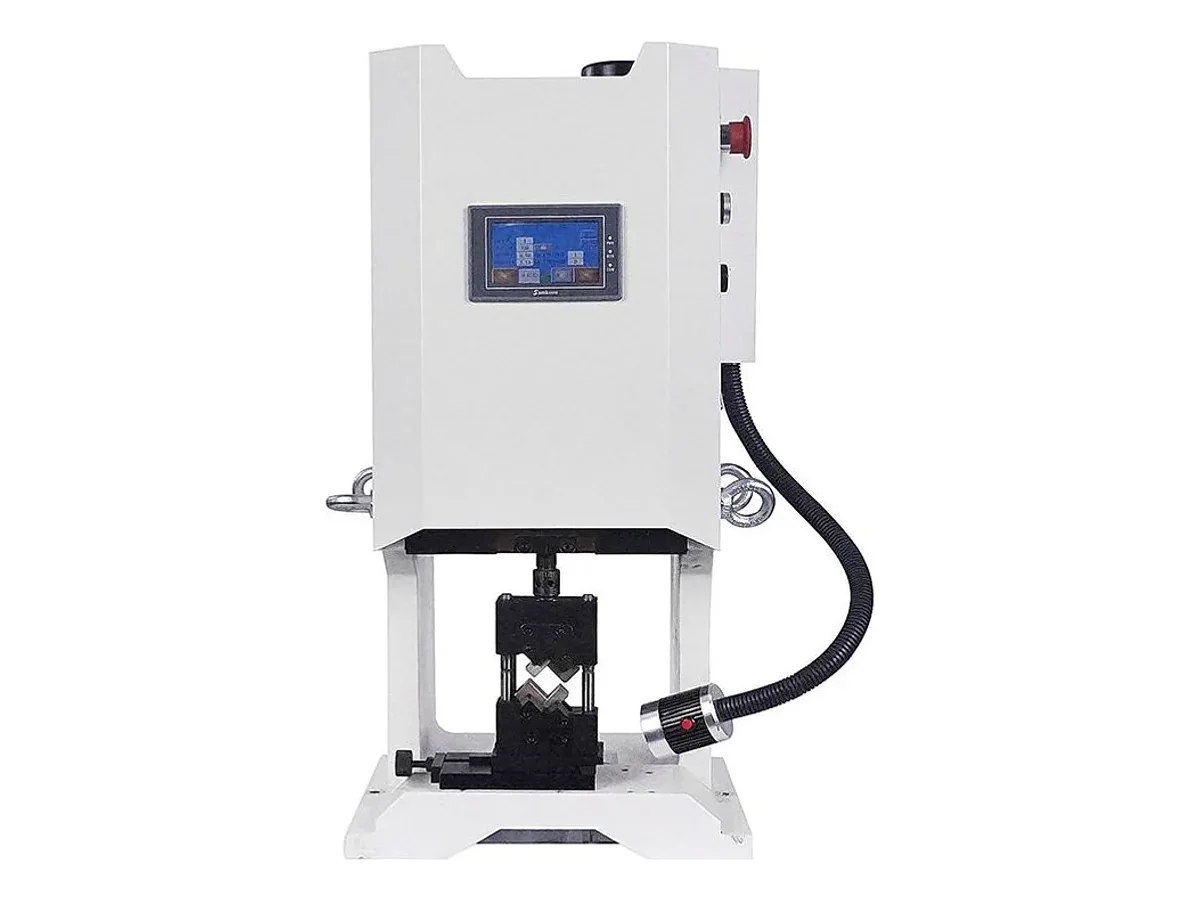
10-Ton Servo Terminal Crimping Machine, 100 kN Bench Press
Model WM-3110T
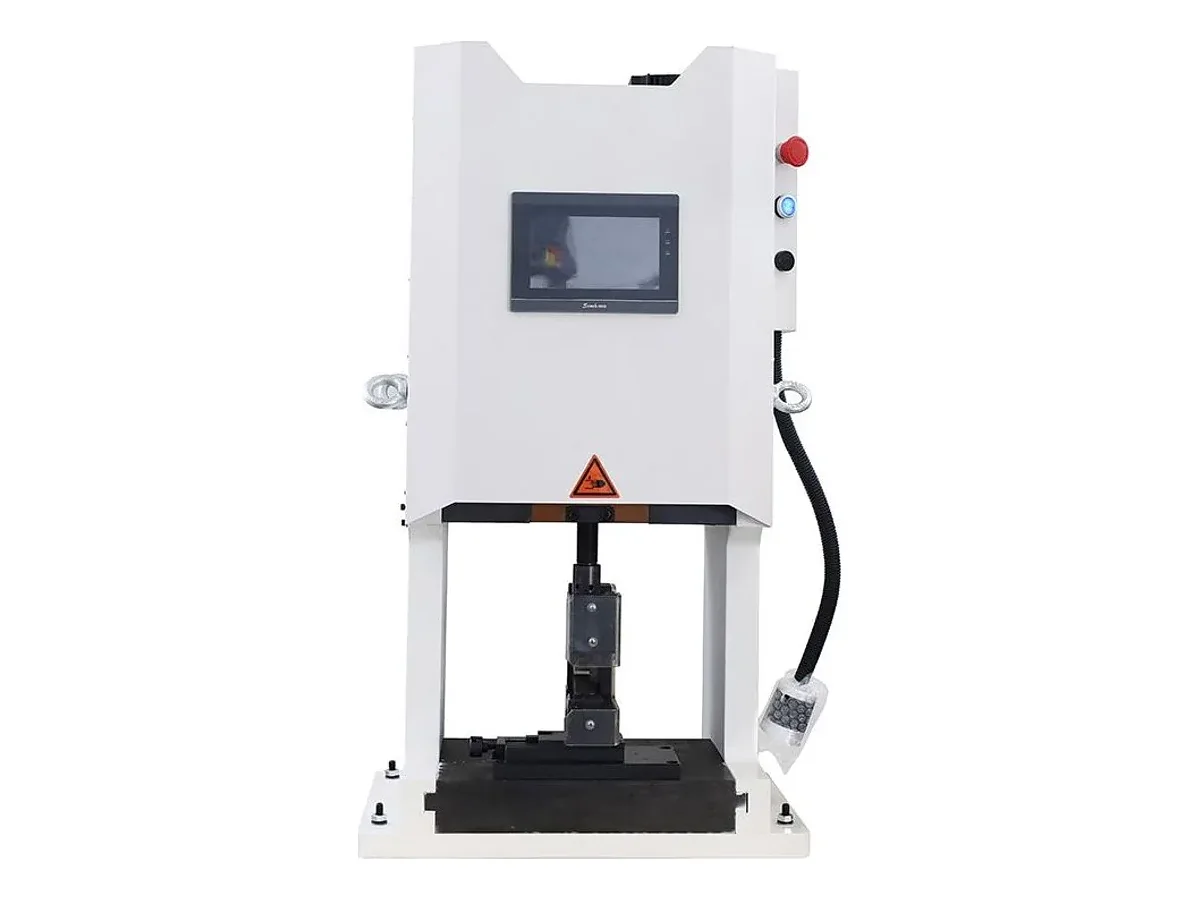
20-Ton Servo Cable Lug Crimping Machine, 200 kN and 40 mm Stroke
Model WM-3120T
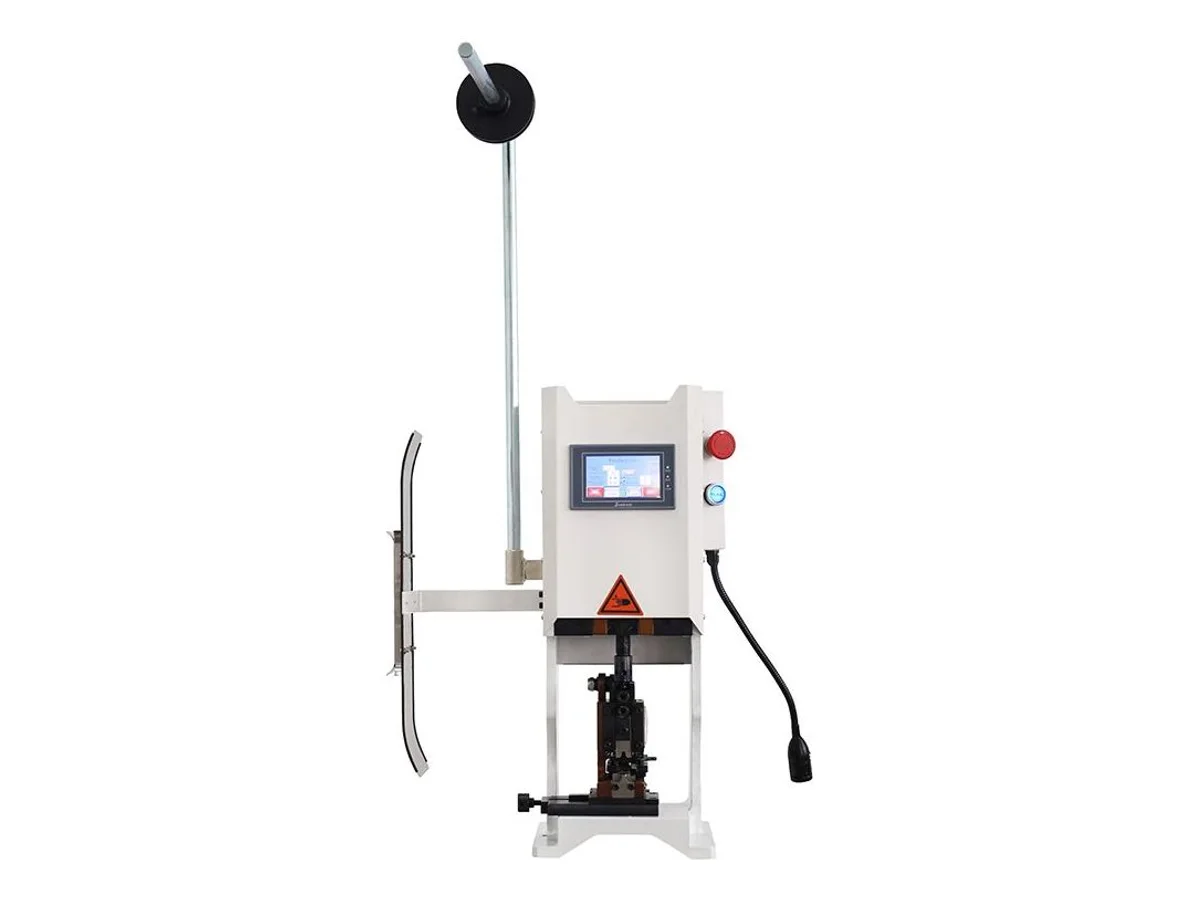
2-Ton Servo Terminal Crimping Machine, 20 kN Touchscreen Bench Press
Model WM-3102S