Wire Harness Tape Wrapping Machine with Automatic Cable Pulling, 1,050 mm WM-471
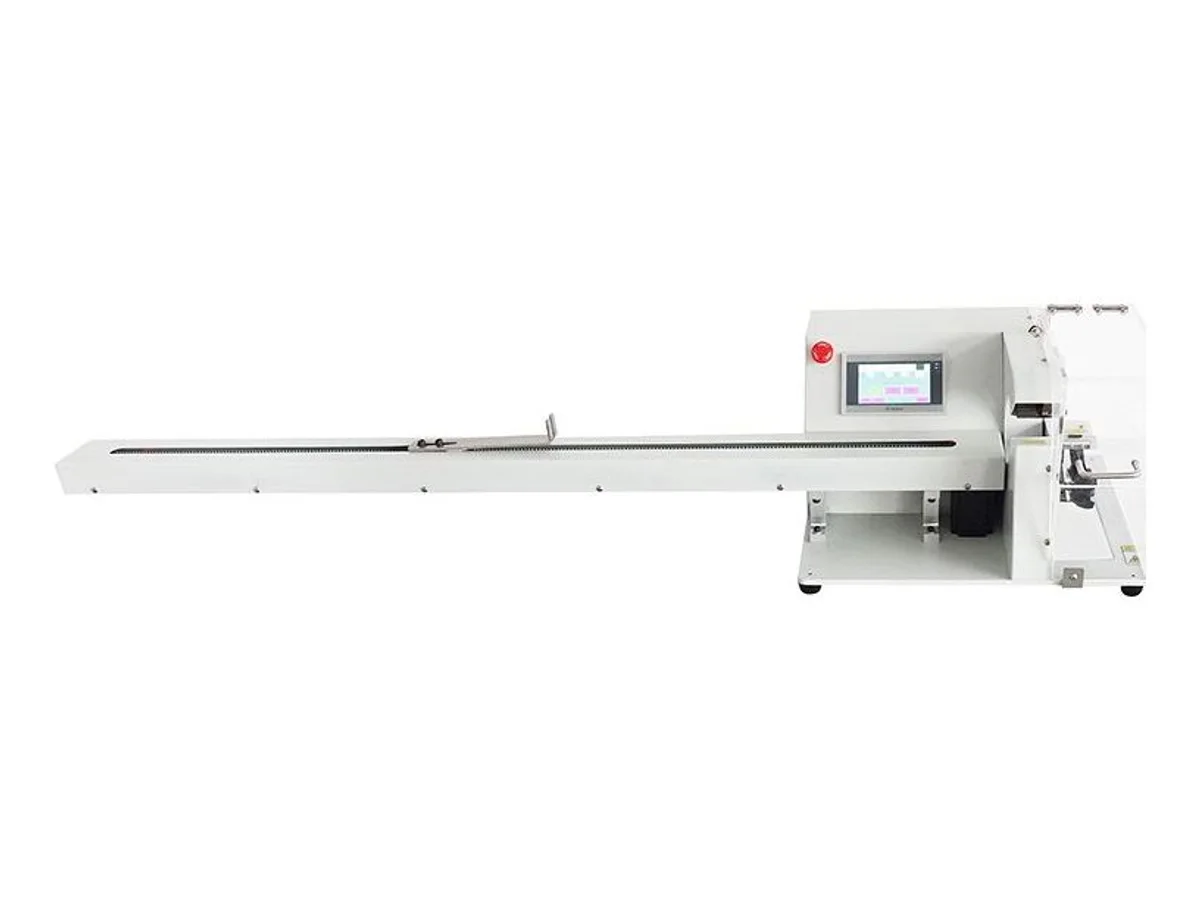
The WM-471 pulls the cable through the taping head instead of asking the operator to feed it by hand. A 1,050 mm traction rail draws the harness past a rotating tape disc while the head lays flannel, acetate, electrical or polyester tape at ±1 mm wrapping position accuracy, each turn overlapping the previous one by half its width. Spot taping and continuous taping are both selected on the touch screen (English interface), head speed is continuously adjustable from 300 to 2,500 rev/min, and the pull length can be extended on request.
Specifications
| Function | Tape wrapping of wire and harness with powered cable traction |
|---|---|
| Taping method | Spot taping, continuous taping |
| Wire pulling length | 1,050 mm (longer can be customized) |
| Wrapping position accuracy | ±1 mm |
| Taping density | Adjustable |
| Tape overlap | Each turn overlaps the previous turn by 1/2 |
| Applicable tape | Flannel tape, acetate tape, electrical tape, polyester tape and similar tapes without release paper |
| Tape width | 5 – 25 mm (other sizes need to be customized) |
| Tape inner hole size | Φ37 mm, Φ32 mm |
| Host speed | 300 – 2,500 rev/min, continuously adjustable |
| Power supply | AC 220 V / DC 24 V, 50/60 Hz |
| Weight | 36 kg |
| Dimensions | 1,470 × 380 × 280 mm (L×W×H) |
| HS Code | 8479.89 (common reference — final classification confirmed by your customs broker) |
| Certification | CE (certificate provided with shipment) |
Key features
- Powered traction rail carries the cable through the head over a 1,050 mm stroke — the operator loads the lead once instead of walking the wrap along the run by hand
- Wrapping position repeats to ±1 mm, so spot bands land at the same distance from the connector on every piece
- Half-lap wrapping is built into the motion — each turn covers half of the previous turn, which is what keeps a flannel wrap flat and free of wrinkles
- Spot taping and continuous taping share one screen with an English interface, so the same machine does marking bands and full-length insulation wraps
- Head speed is continuously adjustable from 300 to 2,500 rev/min, letting you trade cycle time against pitch on soft tapes
- Takes ordinary harness tape without release paper — flannel, acetate, PVC electrical and polyester — on Φ37 mm or Φ32 mm cores, 5 to 25 mm wide
- Cutting blade sits under a guard plate behind the head, marked and shielded so the tape is severed without exposing the edge
- 36 kg benchtop frame, 1,470 × 380 × 280 mm, running on AC 220 V with a DC 24 V control side
- Free sample test — send your cable and tape, we wrap it on this machine and send you the video before you order
What it processes
- Straight cable and lead assemblies up to the 1,050 mm traction stroke — power cords, appliance leads, single-branch harness runs
- Spot bands at programmed distances from a connector, where the position has to repeat piece to piece
- Continuous spiral insulation and protection wraps in flannel, acetate, PVC or polyester tape
- Automotive, appliance, power cord and electronics assembly shops replacing hand taping on repetitive straight runs
Suited for: repetitive straight cable and lead assemblies that fit the 1,050 mm traction stroke — power cords, appliance leads and single-branch harness runs that need either a continuous spiral wrap or spot bands placed to ±1 mm. The black spiral-wrapped power cord in the gallery came off this machine. Not suited for: runs longer than the traction stroke, or branched harnesses that have to be guided by hand — the WM-467 automatic wire harness taping machine has no limitation on wrapping length, covers bundles Φ3–30 mm and adds a multi-segment mode for branches. For a small bench unit that wraps Φ2–15 mm bundles the operator feeds through by hand, take the WM-465 desktop continuous tape wrapping machine. And for harnesses already built into a vehicle or cabinet, where nothing can be brought to a bench, the handheld WM-4110 tape wrapping gun goes to the work instead, covering Φ8–35 mm.
The traction stroke is the one dimension worth checking against your own parts before you enquire — send us the finished length you tape most often and we will confirm whether the standard 1,050 mm rail covers it or whether the extended build is the right one.
Engineering knowledge
Choose and troubleshoot this process
- How to Choose a Wire Harness Taping MachineChoose harness taping equipment by harness geometry, tape material, overlap, branch handling, wrap length, tension control and production mix.
- Wire Harness Taping Defects: Causes and Corrective ActionsTroubleshoot tape gaps, excessive overlap, wrinkles, lifted edges, bundle deformation, tension variation and unstable start or finish positions.
- Two-Point Taping of Small Wire Coils: Check the Fixture Before the MachineA small-coil taping application analysis: distinguish wire diameter from bundle size, check head clearance and define a two-band trial.
WM-471 — common questions
What does the traction rail actually do?
It pulls the cable through the rotating taping head over a stroke of 1,050 mm. On a hand-fed taping machine the operator has to draw the harness through at a steady rate, and the wrap pitch follows the operator's hand. Here the feed is driven by the machine, so the pitch and the finish repeat piece to piece. Longer strokes can be built to order — tell us the length you need.
What tape fits the machine?
Tape from 5 to 25 mm wide on cores with a Φ37 mm or Φ32 mm inner hole. It runs the usual harness tapes that carry no release paper — flannel (fleece) tape, acetate cloth tape, PVC electrical tape and polyester tape. Widths outside 5–25 mm need a customized head.
How accurate is the wrapping position?
The wrapping position is accurate to ±1 mm, which is what makes the machine worth using for marking and fixing bands — a band programmed 120 mm from the connector lands there on every piece. Taping density is adjustable, and head speed is continuously variable from 300 to 2,500 rev/min.
My harness is longer than the rail, or branched. Which machine then?
Take the WM-467 automatic wire harness taping machine — it has no limitation on wrapping length, covers bundles from Φ3 to 30 mm, and adds a multi-segment mode for branched harnesses, with the operator guiding the bundle by hand. The WM-471 is the better choice when the run is straight, repeated, and fits the traction stroke.
What is the WM-471B?
An alternate build of this machine with the same specification. The WM-471B is quoted separately — tell us which page you are looking at when you ask for a price.
Related machines in Tape Wrapping
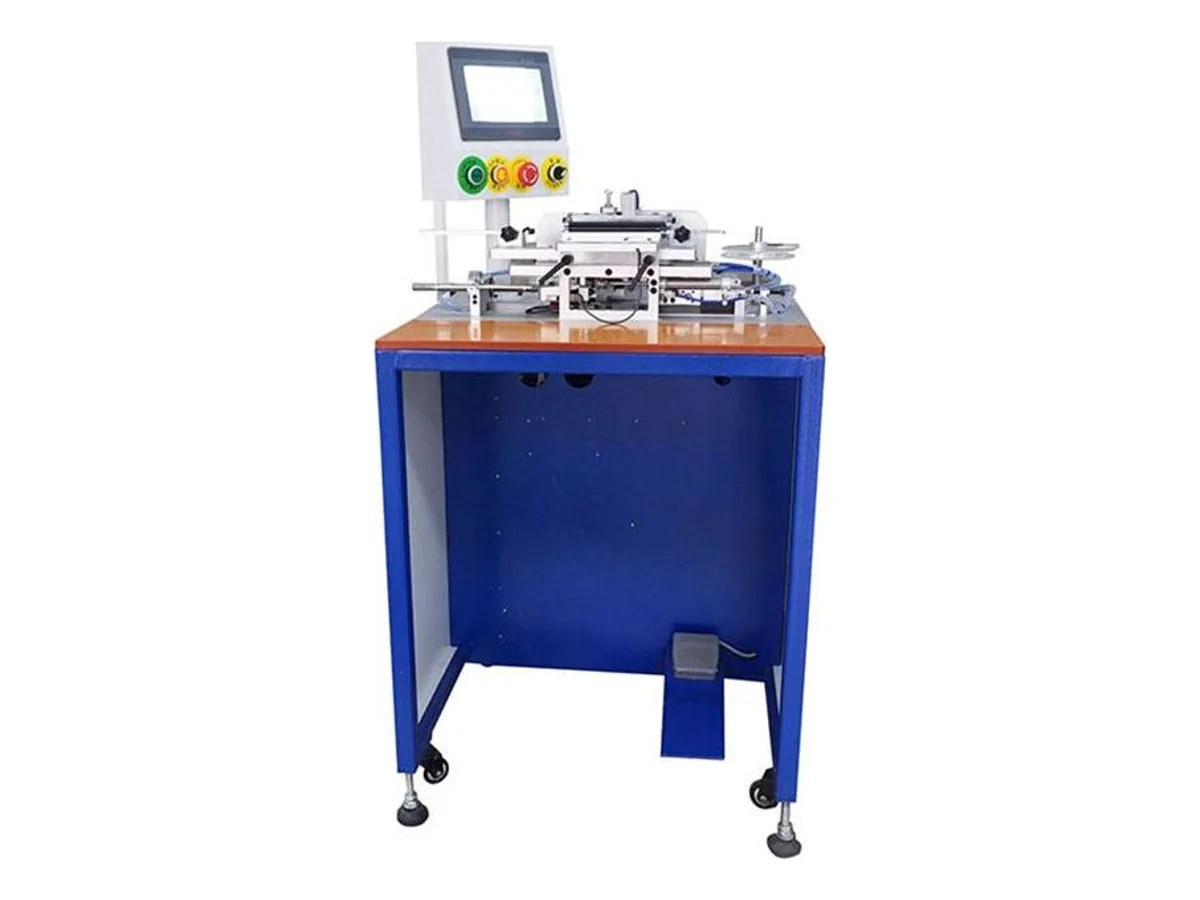
Flat Battery Cell High-Temperature Tape Applying Machine, 150 × 150 mm
Model WM-477
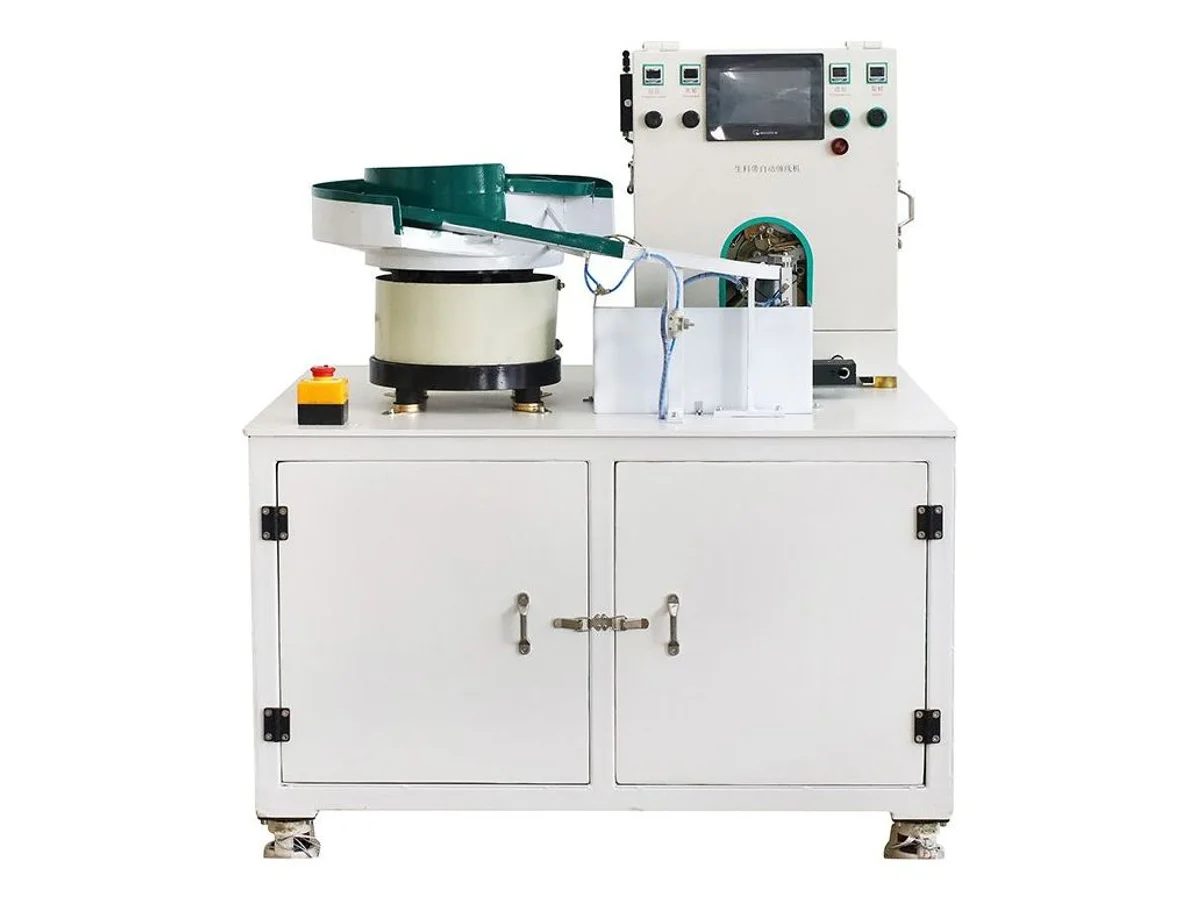
Automatic PTFE Thread-Seal Tape Wrapping Machine with Fitting Feeder
Model WM-461
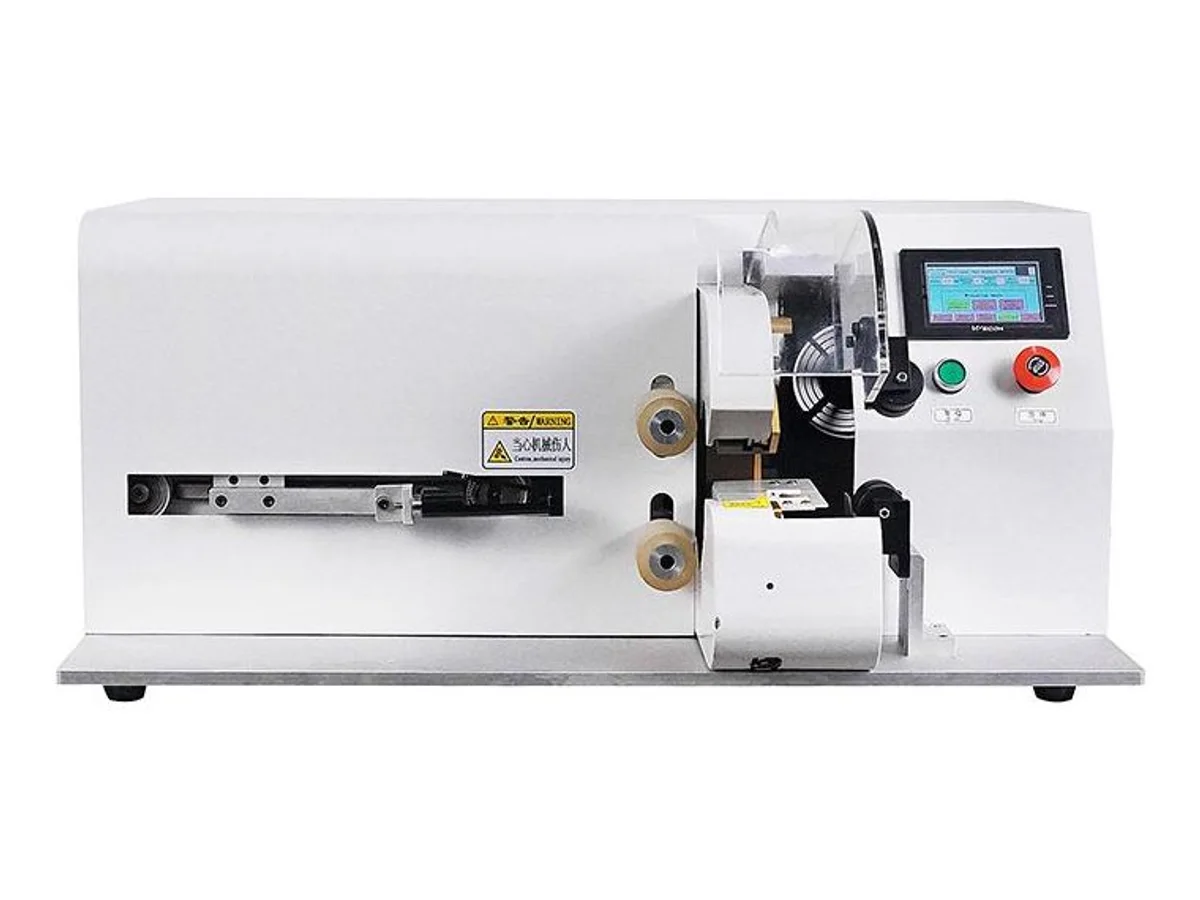
Wire Harness Spot and Continuous Tape Wrapping Machine, 3–30 mm
Model WM-467