Benchtop Electric Wire Strand Twisting Machine for Pre-Stripped Ends WM-4720
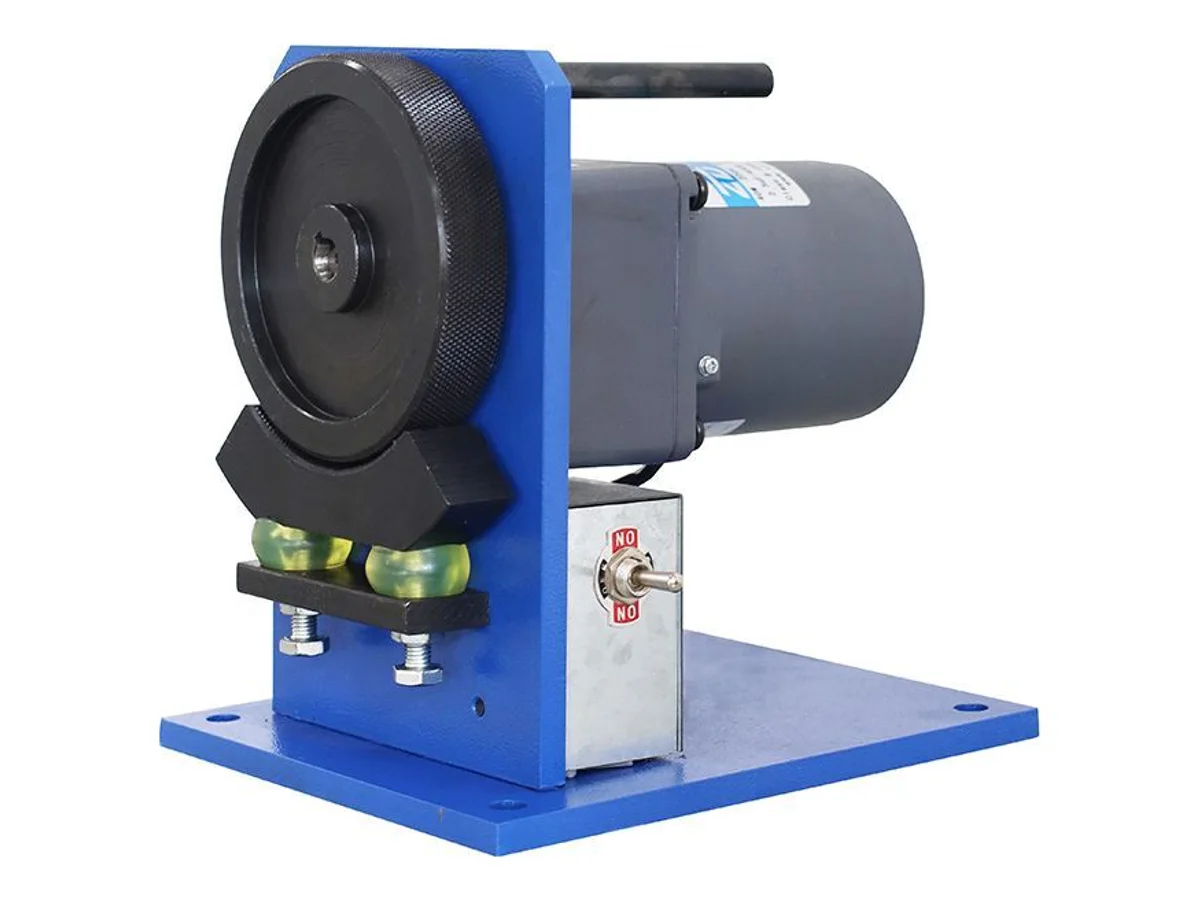
The WM-4720 is a single-purpose bench twister: it takes a wire whose end is already stripped and rolls the loose copper strands into a tight, straight pigtail ready for a solder pot, a terminal barrel or a screw clamp. A driven, tooth-patterned wheel runs against a pair of urethane rollers whose height is adjustable, so one machine covers wire from 1 to 3 mm diameter at a rated 3,000 pieces per hour. There is no clamping cycle to wait on and no air line to plumb — the 120 W drive runs from a 220 V outlet, and the whole unit is a 12 kg block that bolts to any bench through its base plate.
Specifications
| Function | Wire end strand twisting only — no cutting, no stripping, no tinning |
|---|---|
| Wire preparation required | The wire must be stripped before it reaches this machine |
| Wire diameter | 1 – 3 mm (diameter, not conductor area) |
| Twisting length | Within 20 mm |
| Capacity | 3,000 pcs/hour |
| Drive | Electric geared drive with tooth-patterned twisting wheel running against twin rollers |
| Roller height | Adjustable, to suit different wire diameters |
| Roller tooth pattern | Thickness configured to order |
| Wire types | Single-conductor multi-strand copper cable, electronic wire, multi-core wire, AC/DC power cord |
| Power supply | AC 220 V, 50 Hz |
| Power | 120 W |
| Dimensions | 300 × 360 × 240 mm |
| Weight | 12 kg |
| HS Code | 8463.90 (common reference — final classification confirmed by your customs broker) |
| Certification | CE (certificate provided with shipment) |
Key features
- No compressed air anywhere in the machine — it needs a 220 V outlet and nothing else, which is what separates it from pneumatic twisting stations on benches that have no air line
- Wheel-and-roller twisting instead of a chuck, so there is no clamp-and-release cycle — the operator presents the stripped end, the strands lay up, the wire comes away, and the next one goes straight in
- Roller height adjusts to the wire, and the thickness of the wheel's tooth pattern is configured to order, so the grip can be matched to fine electronic wire or to 3 mm power cord
- Rated 3,000 pieces per hour on a 12 kg frame that bolts down through the base plate — a per-station machine, not a line
- Free sample test — send us 20–30 pre-stripped leads, we twist them on this machine and send the video and the samples back before you order
What it processes
- Loose strands on stripped electronic wire tightened before hand soldering or dip tinning
- AC/DC power cord and appliance lead ends laid up straight before they go into screw terminals or crimp barrels
- Rework and repair benches where leads arrive already stripped and only the strand condition needs fixing
- Small-batch and prototype harness work that does not justify an inline strip-twist-tin line
Suited for: tightening the loose strands on wire ends that are already stripped — 1 to 3 mm wire, a twist of 20 mm or less, 3,000 pieces an hour at one bench station, mains power only. Not suited for: anything upstream of the twist. It does not cut and it does not strip, so if the leads still need both, the WM-187 wire cutting, stripping and twisting machine does all three on 0.1–4.5 mm² wire at 4,000–10,000 pcs/h. It does not tin either — for stripping, twisting and solder-tinning up to ten separate wires in one automatic cycle, the WM-4706W automatic multiple-wire twisting and tinning machine covers 18–28 AWG. Twisting two whole leads into a twisted pair is a different process altogether — the WM-4717 benchtop wire twisting and stranding machine lays up strands to 6 m at 12–36 AWG. If your twist has to be longer than 20 mm, the WM-822 pneumatic wire twisting machine covers 0.1–2 mm² with twist lengths of 5–80 mm on a pneumatic chuck — it needs a shop air line, which this machine does not. For shield braid preparation, send a sample through our shield-processing category so we can confirm the process.
Frayed strands are a quiet defect: they catch on terminal barrels, they leave a stray whisker inside a housing, and they wick solder unevenly. Fixing them by hand is a twist-between-the-fingers job that nobody times and nobody does the same way twice. This machine’s answer is deliberately narrow — one wheel, one pair of rollers, one adjustment — because the whole point is that every lead leaves the bench with the same strand lay. Send us 20–30 of your pre-stripped leads and we will twist them and send them back before you order.
Engineering knowledge
Choose and troubleshoot this process
- Wire Tinning Defects: Causes and Process AdjustmentsDiagnose poor solder wetting, excessive wicking, solder bridges, uneven tin length, oxidation and strand deformation in wire tinning.
WM-4720 — common questions
Does the WM-4720 strip the wire first?
No. This machine has one function — twisting — and that the wire must already be stripped when it reaches the wheel. If you need cutting, stripping and end-twisting in one pass, the WM-187 wire cutting, stripping and twisting machine handles 0.1–4.5 mm² single wire at 4,000–10,000 pcs/h, and for fine wire the WM-185S covers AWG 22–28 with a 0.1–20 mm twist.
Does it twist two wires together into a twisted pair, or twist the strands on one end?
The strands on one end. The twist is 20 mm or less at the tip of a single stripped lead — the insulation on the rest of the wire is untouched. Laying two whole leads into a twisted pair along their full length is a different machine: the WM-4717 benchtop twisting and stranding machine runs 12–36 AWG up to 6 m, and the WM-4716 six-axis wire twisting machine does six pairs at a time.
Is the 1–3 mm figure the conductor area or the outside diameter?
The 1–3 mm range is a diameter in millimetres, not conductor area in mm², and the nameplate uses that basis. Insulation thickness and strand construction affect fit. Send two or three pre-stripped leads so we can check the wheel and roller setting.
Does it need compressed air?
No. It is a 220 V, 50 Hz, 120 W machine with an on/off toggle and nothing pneumatic in it. For longer end twists with pneumatic clamping, see the WM-822 referral below. For shield braid preparation, send a sample through our shield-processing category.
Can the wheel be matched to my wire?
Two things are adjustable. The twin rollers under the wheel sit on adjuster bolts, so the gap is set to the wire diameter, and the thickness of the tooth pattern on the wheel rim is configured when the machine is built. Tell us the wire you run and we will confirm the tooth pattern on the quote.
What twist quality should I expect at 3,000 pieces per hour?
That figure is the specified throughput for an operator feeding continuously, and real output tracks how fast leads are presented rather than the machine. What we can show you is the result — send pre-stripped samples of your actual wire and we will return them twisted, so you can judge tightness and strand break yourself rather than from a number.
Related machines in Twisting, Untwisting & Straightening
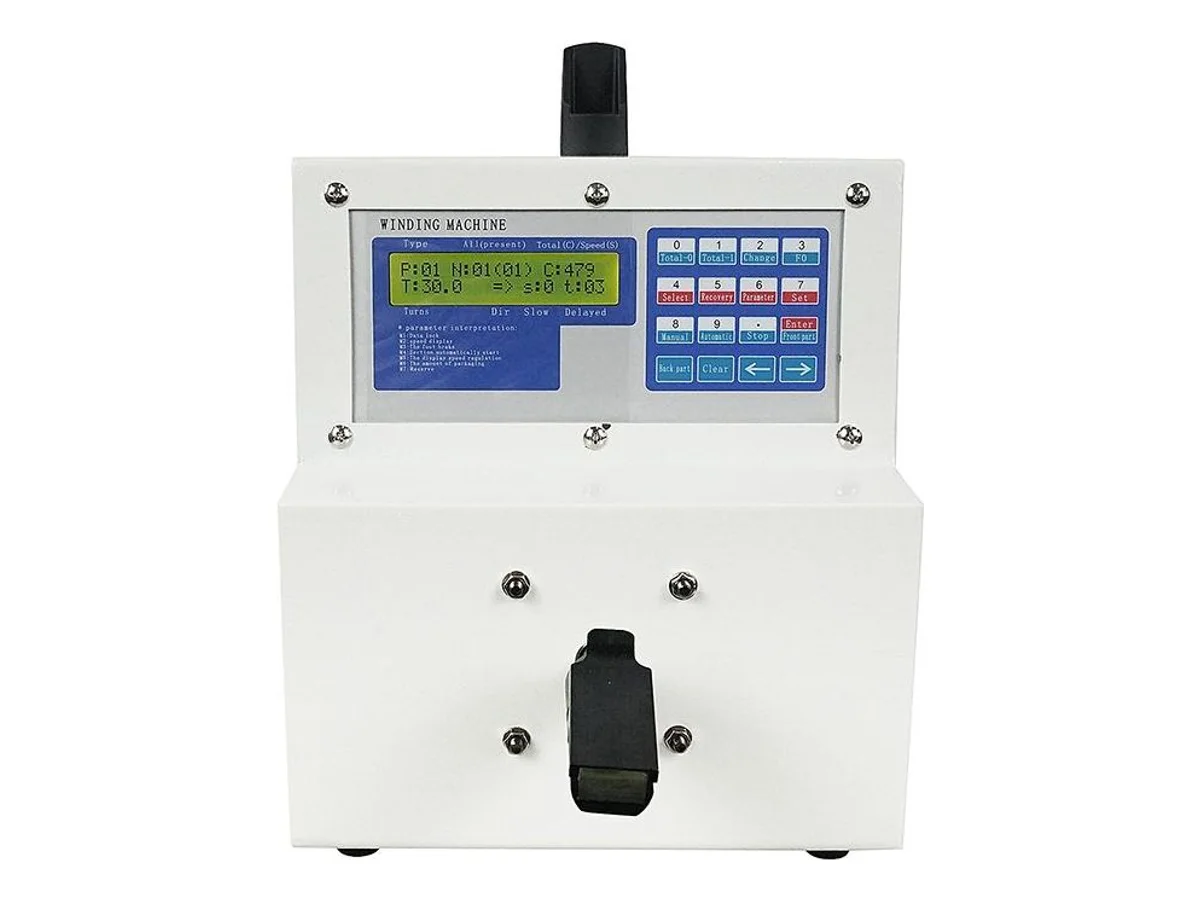
High Speed Benchtop Wire Twisting and Stranding Machine
Model WM-4717
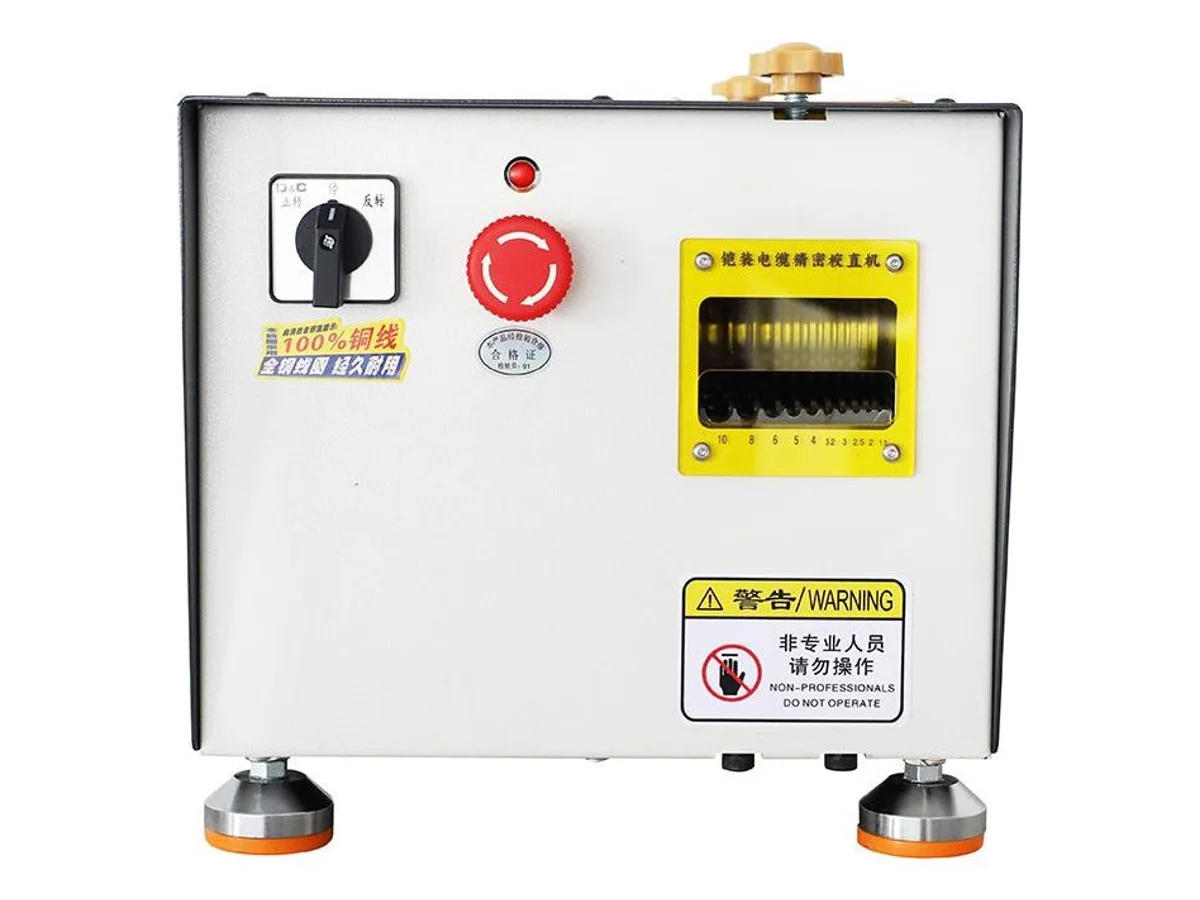
MI Cable Straightening Machine for Mineral Insulated and Armoured Cable
Model WM-9320
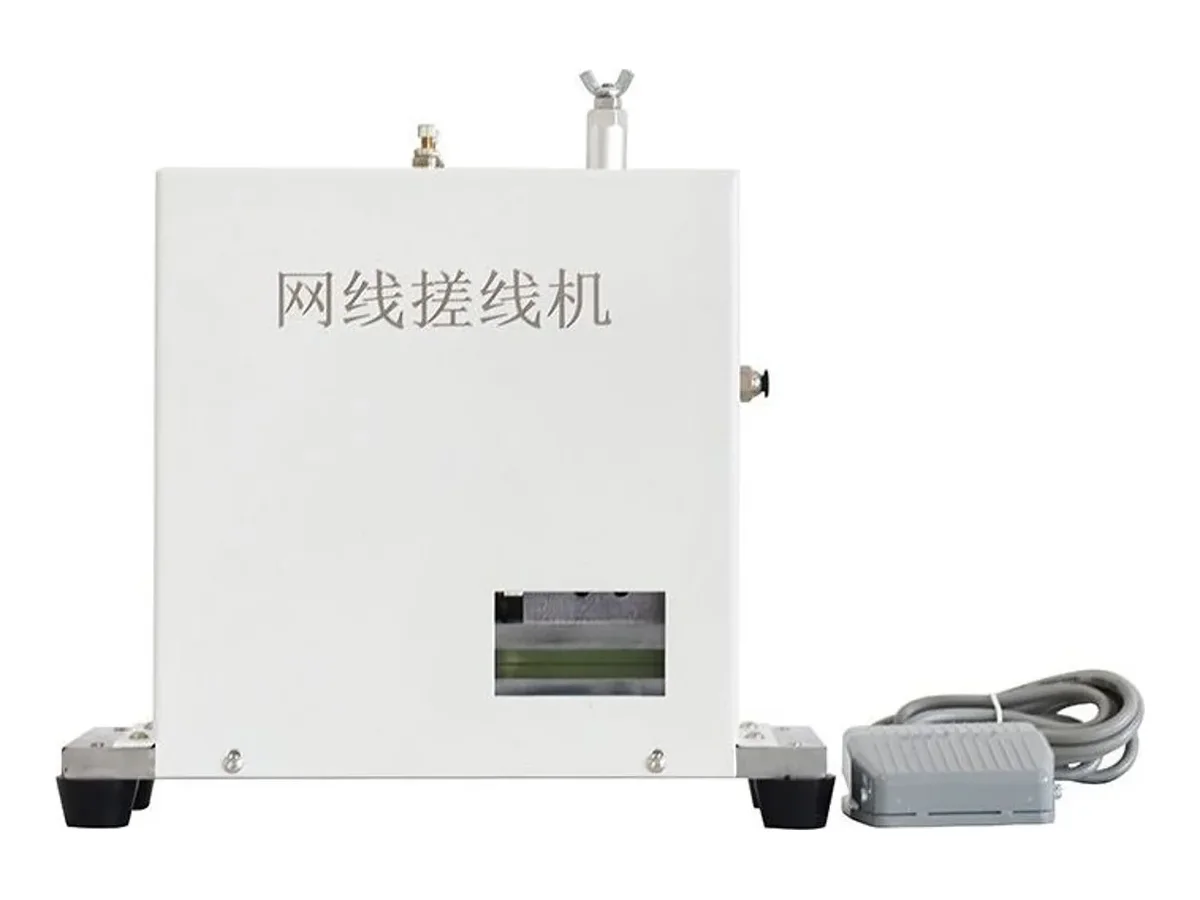
Network Cable Untwisting and Straightening Machine for Cat-5, Cat-6 and Multi-Core Cable
Model WM-1216