Network Cable Untwisting and Straightening Machine for Cat-5, Cat-6 and Multi-Core Cable WM-1216
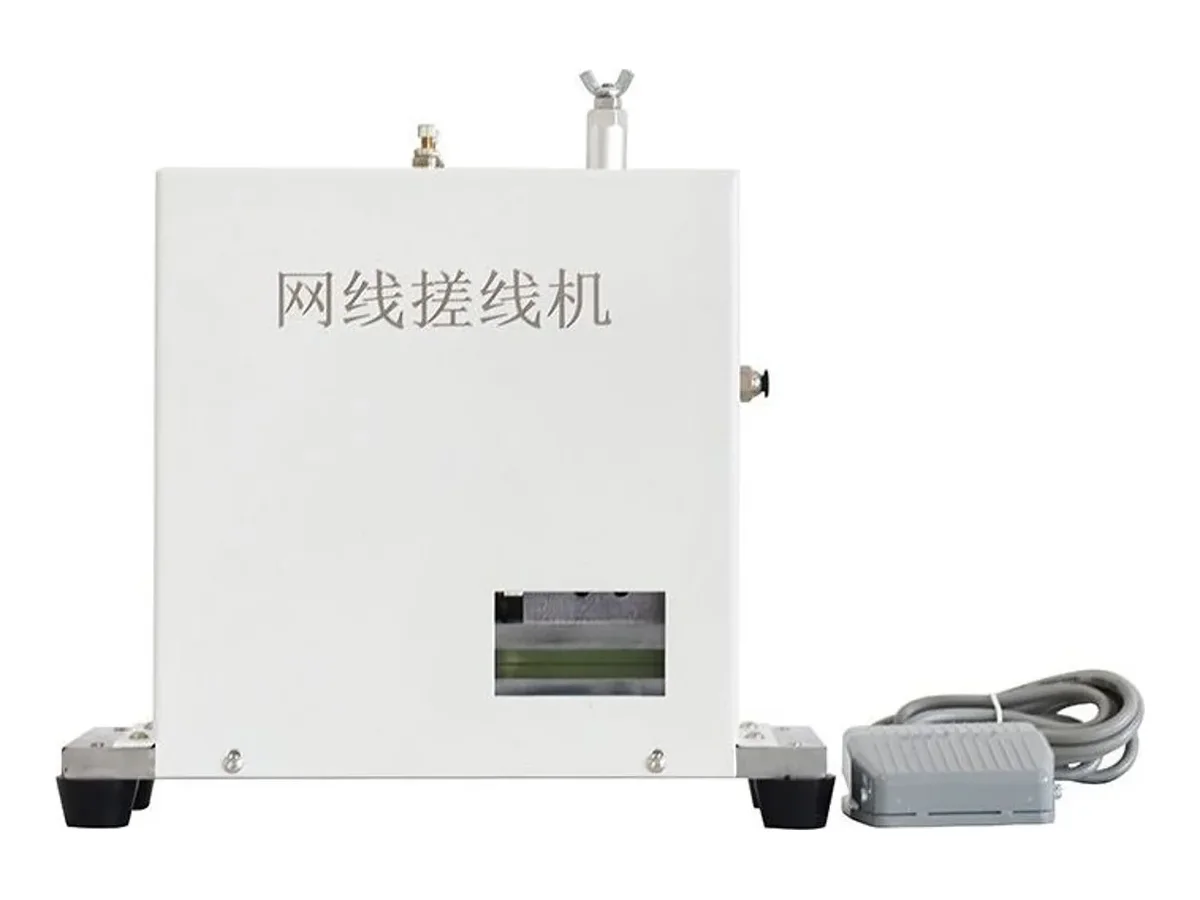
The WM-1216 opens the twisted pairs of network and multi-core cable and lays the cores out straight, so they can be colour-sorted and terminated instead of fought with by hand. Untwist length is set anywhere from 10 to 60 mm, the stroke is pneumatic and triggered from a foot pedal, and the machine takes Cat-5 and Cat-6 Ethernet cable, HDMI, USB 3.1, multi-core Type-C and multi-core industrial control cable. At 7 kg and 21 × 11 × 23 cm it sits on the corner of a termination bench.
Specifications
| Function | Untwisting and straightening the pairs and cores of network and multi-core cable |
|---|---|
| Voltage | AC 220–240 V; DC 24 V, 3 A |
| Power mode | Pneumatic |
| Wire untwist length | 10 – 60 mm |
| Suitable wire type | HDMI cable, multi-core industrial control cable, multi-core Type-C cable, USB 3.1 wire, Cat-5 and Cat-6 Ethernet cable, etc. |
| Control mode | Foot pedal switch |
| Weight | 7 kg |
| Dimensions | 21 × 11 × 23 cm (210 × 110 × 230 mm) |
| HS Code | 8463.90 (common reference — final classification confirmed by your customs broker) |
| Certification | CE (certificate provided with shipment) |
Key features
- Does by machine what a technician's fingers do by hand — a pair of pads inside the front window closes on the cable end and sweeps along it, so the lay comes out of the pairs and the cores end up lying straight and side by side, ready to sort by colour
- Untwist length set anywhere from 10 to 60 mm, so the opened run matches the plug, module or connector the lead is going into
- Foot-pedal trigger keeps both hands on the cable — one to feed, one to hold — instead of one hand tied up on a switch
- Pneumatic stroke rather than a motor drive; we verify on your own cable that opening the pairs does not stretch or damage them before you order
- Air preparation is built onto the back panel — filter/regulator with gauge, lubricator and a quick-release coupler — so it connects to shop air and runs, with no cabinet to plumb
- Four hand valves and one wing-screw block on the top deck are the entire setup — no screen, no program, nothing for an operator to get wrong between jobs
- 7 kg and 21 × 11 × 23 cm — it shares a bench with the crimper instead of asking for its own
- Free sample test — send us a length of your cable, we run it on this machine and send you the video before you place the order
What it processes
- Cat-5 and Cat-6 Ethernet cable prepared for RJ45 plug and keystone module termination
- Patch cord and structured-cabling assembly, where every lead needs four pairs opened and colour-sorted before it can be crimped
- HDMI, USB 3.1 and multi-core Type-C cable assembly
- Multi-core industrial control cable, where cores are laid up under the jacket and have to be combed out before they can be numbered, ferruled or terminated
Suited for: flexible network and multi-core cable — Cat-5 and Cat-6 Ethernet, HDMI, USB 3.1, multi-core Type-C and multi-core control cable — whose pairs have to be opened out and laid straight before the lead can be colour-sorted and terminated. Untwist length 10–60 mm, foot-pedal triggered, pneumatic.
Not suited for: the operations either side of it. It does not cut or strip — the cable reaches this machine with the jacket already off, and the wire cutting and stripping machines are what get it there. It does not terminate: once the pairs are straight and sorted, the WM-719 RJ45 modular plug crimping machine crimps 4P to 10P modular plugs. And it is not a twisting machine — it runs the process in the opposite direction. If what you actually need is to make twisted pairs rather than open them, the WM-4716 six-axis wire twisting machine twists leads into pairs on six stations at once.
Untwisting is a step most cabling shops still do with fingernails, and it is where the minutes go on a patch-cord bench. If your cable is unusual — odd conductor count, thick-wall jacket, filler yarns that fight back — send a sample rather than a spec sheet, and we will show you the result on video before you commit.
Engineering knowledge
Choose and troubleshoot this process
- Braid Brushing vs Wire Untwisting: Choose the Right Cable Preparation ProcessSeparate braid opening, shield cutting, fold-back and wire-pair untwisting. Choose equipment from the finished cable end and connector requirements.
WM-1216 — common questions
What exactly does the WM-1216 do to the cable?
It reverses the lay. Network and multi-core cable has its conductors twisted together in pairs or in a bunch under the jacket, and that twist stays in the copper after you cut the jacket back. The machine grips the exposed end and sweeps along it so the pairs open out and the cores come to rest straight and parallel. It is the step between stripping the jacket and lining the colours up for a plug — the part that is slow, fiddly and inconsistent when it is done with fingers and a thumbnail.
How much of the cable can it open in one go?
Untwist length is adjustable from 10 to 60 mm. That covers RJ45 plug and keystone module work at the short end and longer breakouts on multi-core control cable at the other. Set it once for a job and every lead comes out the same.
Does it cut the cable or strip the jacket?
No — it only untwists and straightens, and the cable arrives at this machine already stripped. For cutting to length and taking the outer jacket off, see the wire cutting and stripping machines; if you also need the individual cores stripped after untwisting, the WM-1215C pneumatic precision stripper covers 32–14 AWG (0.03–2.08 mm²) up to 3.2 mm outer diameter, which takes in the 24 AWG conductors used in Cat-5 and Cat-6.
Is this the same thing as a cable straightening machine?
No, and the difference matters when you are choosing. A roller straightener such as the WM-9320 presses coil memory out of a rigid metal-sheathed cable by bending it between grooved rollers — the workpiece is stiff and the enemy is the bend. The WM-1216 works on flexible cable and the enemy is the twist: it takes the lay out of the pairs inside the jacket so the individual cores lie flat. Different workpiece, different physics, different machine.
What air and power supply does it need?
The stroke is pneumatic, so the machine needs shop compressed air through the coupler on the back panel; the regulator, gauge and lubricator are already fitted there. Electrical supply is AC 220–240 V, with DC 24 V / 3 A on the control side, and the machine is triggered by the foot pedal supplied with it. The required working air pressure is confirmed on the quote. Tell us your line pressure in the inquiry and we will check it against the actual machine before you order.
My cable is not on the list — will it work?
The published list covers HDMI, multi-core industrial control cable, multi-core Type-C, USB 3.1 and Cat-5 / Cat-6 Ethernet cable, but the machine works on the geometry of the cable rather than its name. Send us a metre of it. We run it on this machine, film the result and tell you plainly if the pads do not suit your jacket or conductor count — before there is an order to argue about.
Related machines in Twisting, Untwisting & Straightening
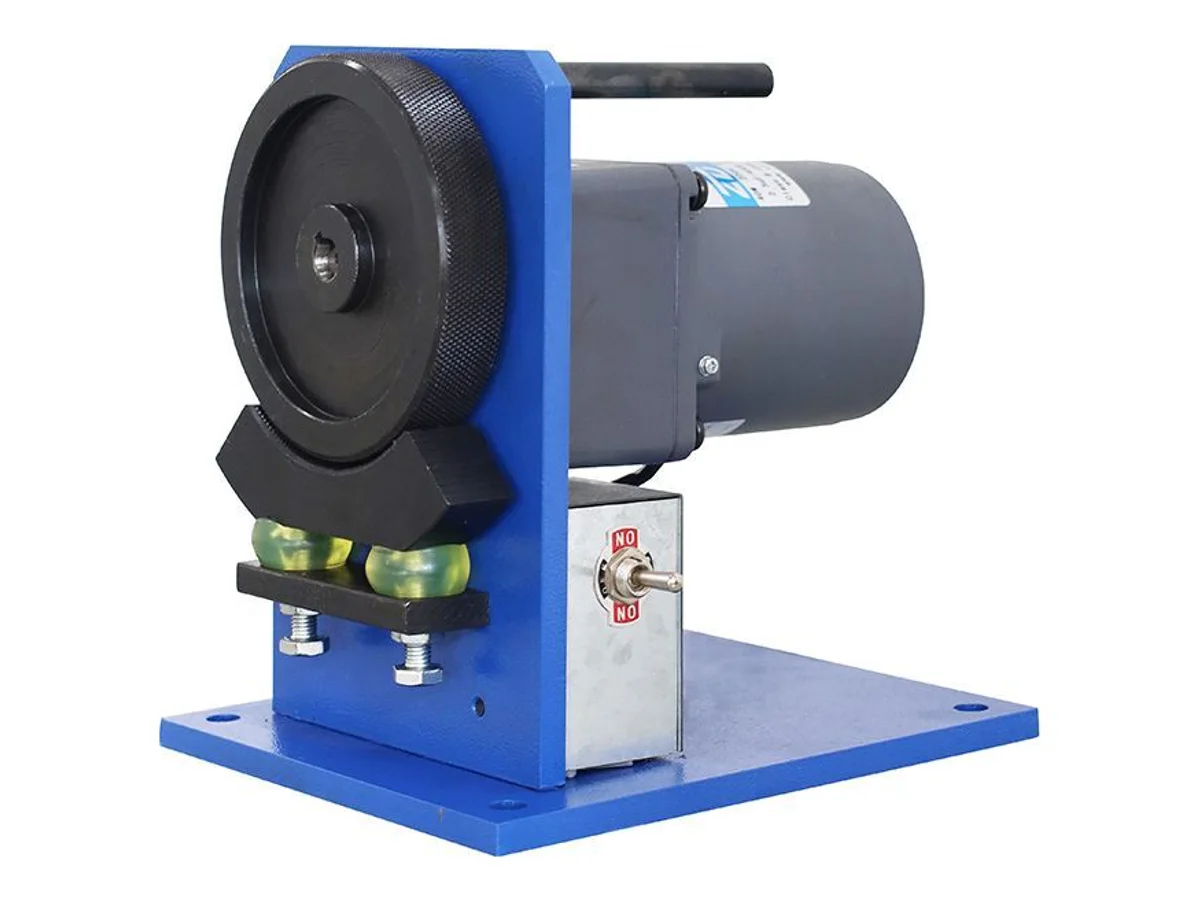
Benchtop Electric Wire Strand Twisting Machine for Pre-Stripped Ends
Model WM-4720
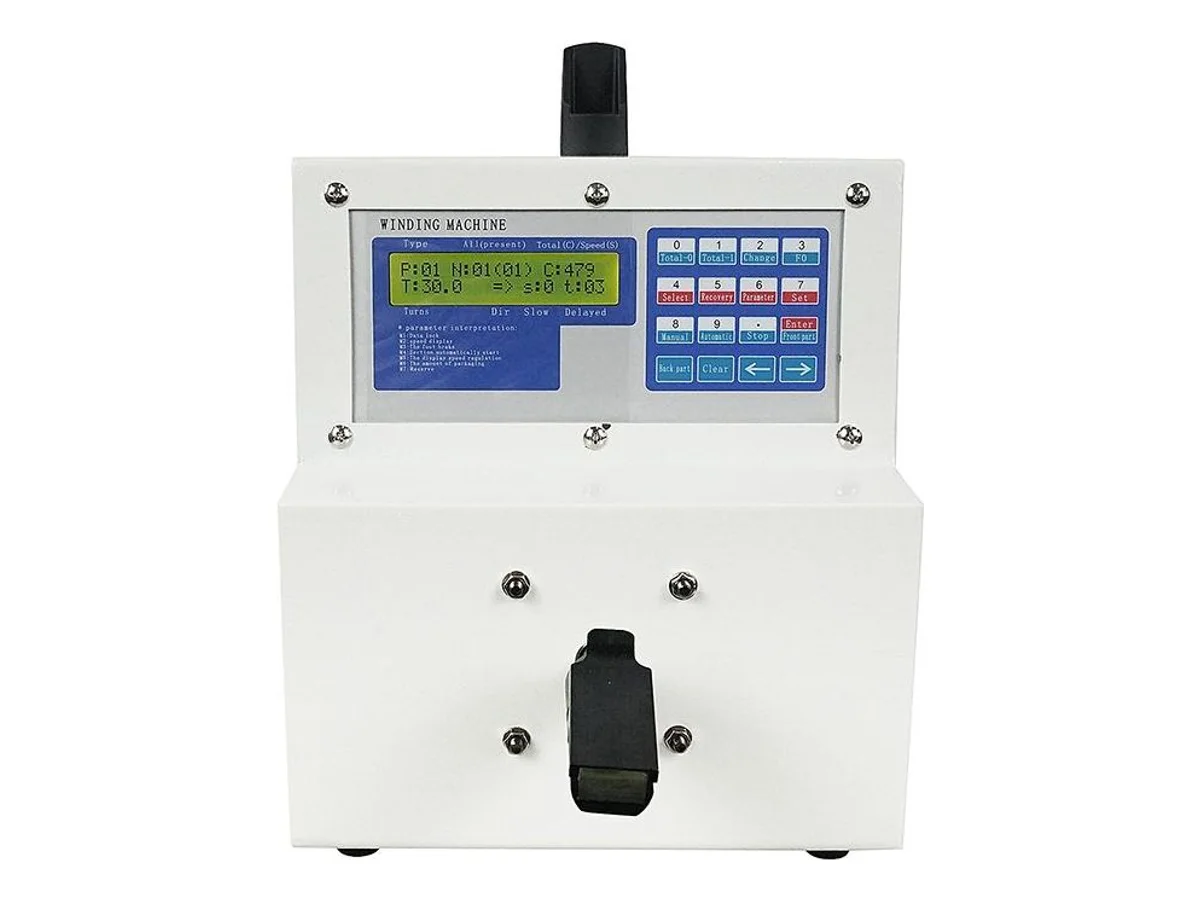
High Speed Benchtop Wire Twisting and Stranding Machine
Model WM-4717
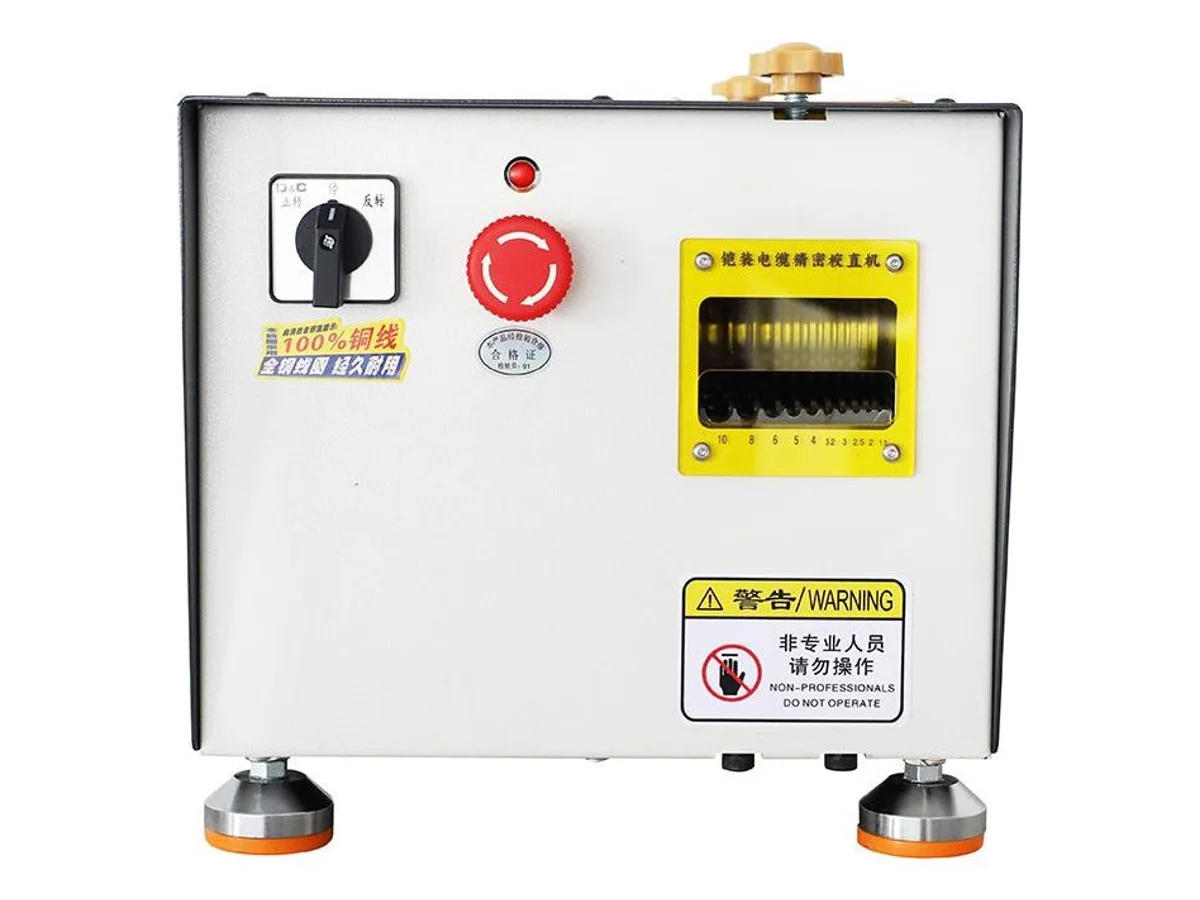
MI Cable Straightening Machine for Mineral Insulated and Armoured Cable
Model WM-9320