Automatic Wire Cutting, Stripping and End Twisting Machine for AWG 22–28 WM-185S
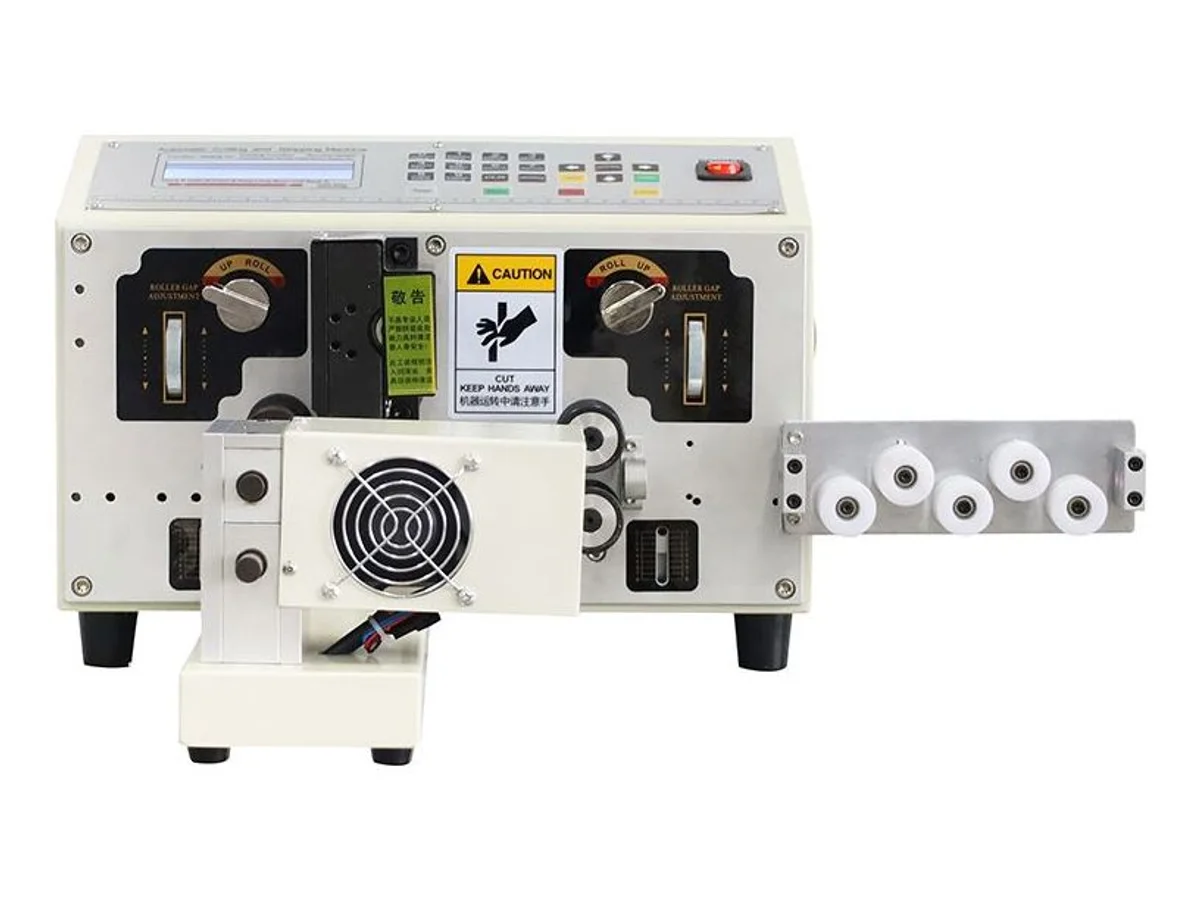
The WM-185S cuts hookup wire from AWG 22 down to AWG 28 to any length from 0.1 to 99,999.99 mm, strips up to 30 mm of insulation and twists the exposed strands over a length of up to 20 mm — so wires leave the machine ready for tinning or terminal insertion with no hand twisting. Cutting accuracy is 1 mm plus 0.2% of the cut length. The bench unit measures 755 × 650 × 305 mm, weighs 45 kg and draws only 20–220 W on 110/220 V supplies.
Specifications
| Model | WM-185S |
|---|---|
| Applicable wire size | AWG 22 – AWG 28 |
| Cutting length | 0.1 – 99,999.99 mm |
| Stripping length | 0.1 – 30 mm |
| Twisting length | 0.1 – 20 mm |
| Cutting accuracy | 1 mm + cutting length × 0.2% |
| Power supply | Reference configuration: AC 110 V / 220 V, 50/60 Hz |
| Power consumption | 20 W min – 220 W max |
| Dimensions | 755 × 650 × 305 mm |
| Weight | 45 kg |
| Electrical configuration | We configure the machine’s electrical supply for your installation before shipment. Your quote confirms the voltage, phase, frequency, current and the power cord with plug or industrial connection for your site. Common site supplies are 120 V, 60 Hz with grounded Type B outlets in the US and Canada, with 208 V or 240 V also found at industrial sites. The UK and Ireland use 230 V, 50 Hz with Type G. Australia and New Zealand use nominal 230 V, 50 Hz with Type I, and some Australian sites list 240 V. Three-phase installations in the UK, Ireland, Australia and New Zealand commonly use 400 V at 50 Hz, with 415 V at some Australian sites. |
| Lead time | Your quote confirms the machine configuration, included accessories and dispatch date. |
| Warranty and support | One-year machine warranty and free remote video support for the life of the equipment. |
| Wear parts | For wear parts, every quote lists them with unit price and the location they ship from. |
| HS Code | 8463.90 (common reference — final classification confirmed by your customs broker) |
| Certification | CE (certificate provided with shipment) |
Key features
- Strands come off the machine twisted over up to 20 mm — straight to tinning or housing insertion with no operator re-twisting ends
- Rolling twist module handles fine AWG 22–28 strands without breaking them
- Any cut length from 0.1 to 99,999.99 mm with accuracy of 1 mm plus 0.2% of length
- The benchtop drive draws 20–220 W, with 110/220 V reference options. We confirm the connection for your shop.
What it processes
- Electronics and appliance hookup wire cut, stripped and twisted before tinning
- Connector pigtails where twisted strands must enter housings without fraying
- Small-lot wire prep cells that change lengths and programs many times per day
Suited for: thin stranded hookup wire from AWG 22 to AWG 28 that needs cut, strip and twisted ends in one automatic cycle — the wire that otherwise sits at a bench being finger-twisted before tinning. For other jobs and machine options: heavier wire or middle stripping — for those, pick the WM-187 cutting, stripping and twisting machine, the same twist-capable format up to 4.5 mm² with 13-section middle stripping — or jacketed multi-core cable, which runs on the WM-168HT multi-core cut and strip machine.
Send 2–3 meters of your actual wire and we run it on this machine on camera — cut length, strip window and twist quality verified on video before you order. For a first WM-185S quote, share your wire size and the cut or strip length you need. We can use those to check the configuration.
Engineering knowledge
Choose and troubleshoot this process
- Automatic vs Semi-Automatic Wire Processing EquipmentCompare automatic lines and semi-automatic wire-processing cells using batch size, changeover, process integration, inspection and labor content.
- Cut Lengths Drifting on a Full Spool: Pay-Off Tension, Straightener Bearings and MisfeedWhy a cut-and-strip machine that held length on a loose coil walks 10–20 mm once a heavy reel goes on, how misfeed detection works, and how to check reel tension, straighteners, feed grip and encoder calibration.
- How to Choose a Wire Cutting and Stripping MachineSelect a wire cutting and stripping machine by conductor size, cable construction, strip geometry, length tolerance, batch size and downstream process.
WM-185S — common questions
Why twist the strands in the same cycle?
Stripped fine-strand wire frays as soon as it is handled. The rolling twist head works the exposed strands into a tight bundle up to 20 mm long, so wires go straight to solder pots, tinning baths or housing insertion without an operator re-twisting every end first.
What wire does it accept?
Single insulated stranded wire from AWG 22 down to AWG 28. Stripping length is programmable from 0.1 to 30 mm and cutting length from 0.1 to 99,999.99 mm, with cutting accuracy of 1 mm plus 0.2% of the cut length.
Which jobs should go on a different machine?
Wire heavier than AWG 22, jacketed multi-core cable and middle-stripping work — this machine is tuned for thin single wires with end twisting. Larger cross-sections and multi-core cable are covered by the other automatic cut and strip machines in this category.
Related machines in Wire Cutting & Stripping
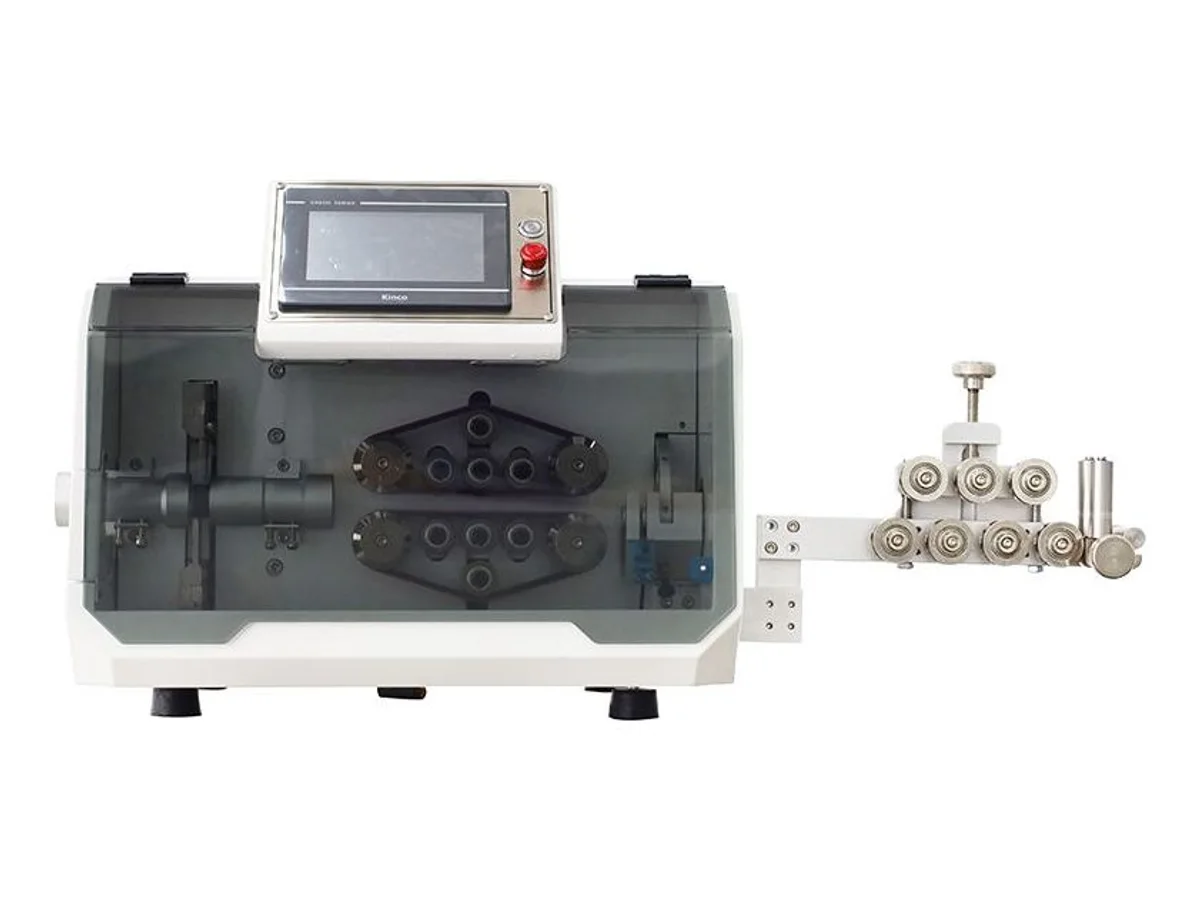
Automatic Cable and Hose Cutting Machine with 800 mm Front Cable Stripping
Model WM-1222
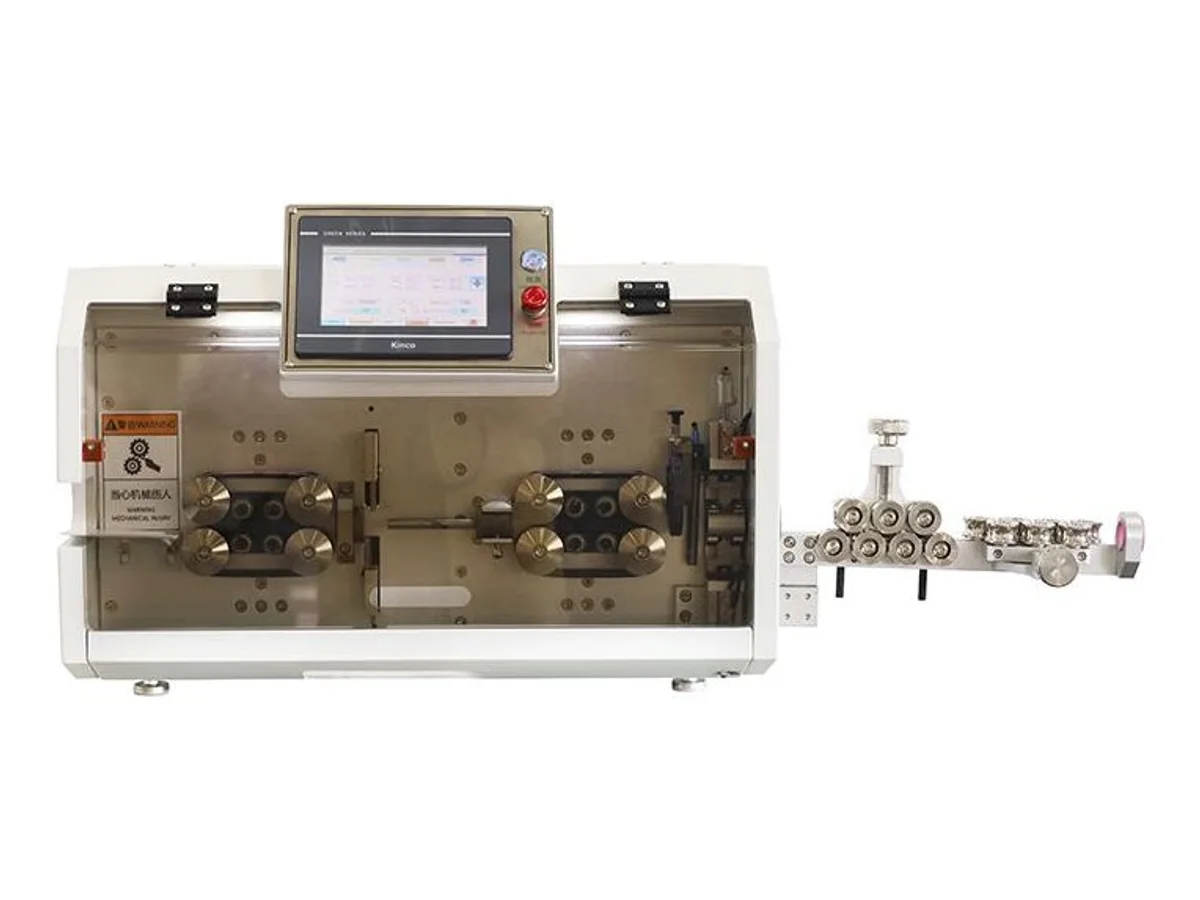
Automatic Cable Cut and Strip Machine with 50-Segment Middle Stripping
Model WM-190
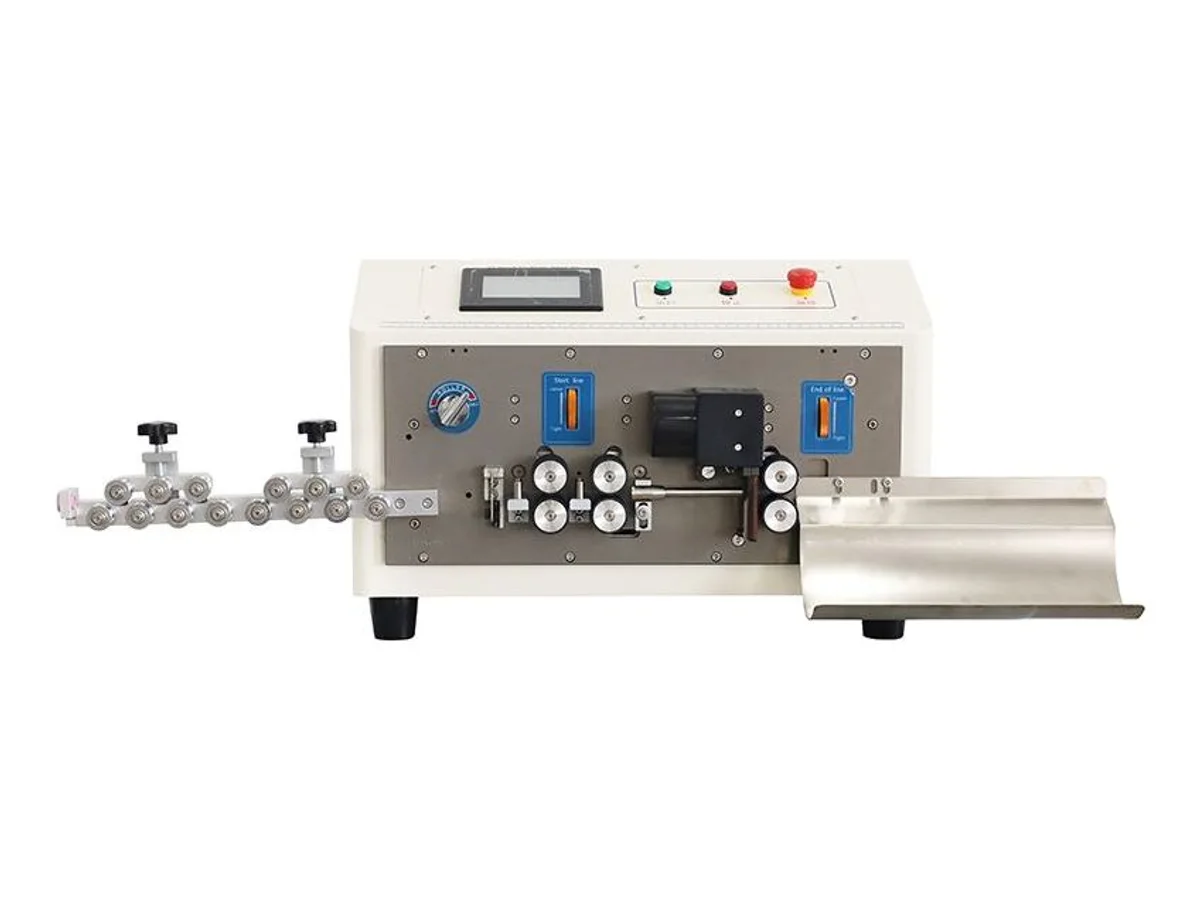
Automatic Sheathed Cable Cutting and Jacket Stripping Machine, Ø1–12 mm
Model WM-1306