Motorized Digital Crimp Terminal Pull Tester with USB WM-831
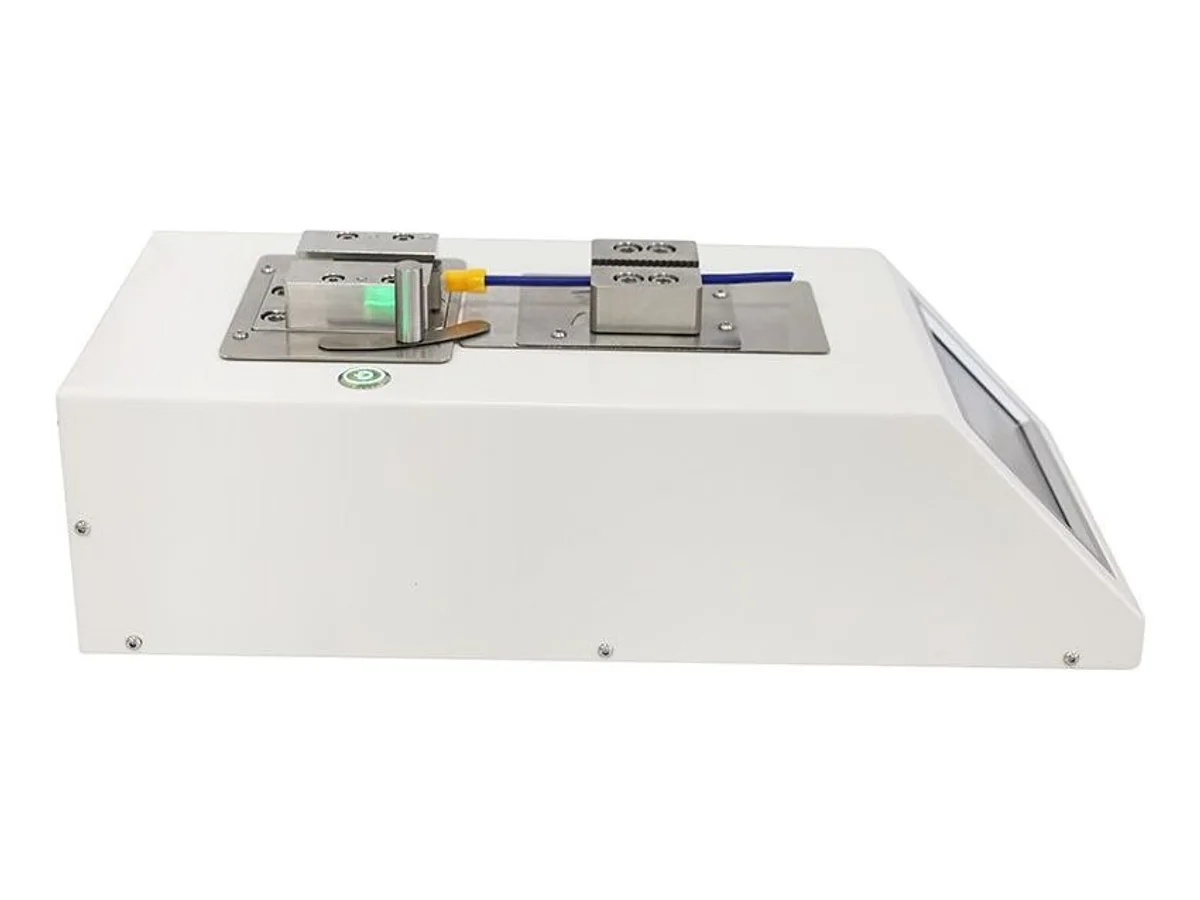
The WM-831 is a benchtop motorized pull tester for crimped terminals: clamp the wire, clamp the terminal, and it pulls at a set speed until the joint lets go, reading peak force to 0.01 N up to 1,000 N and plotting the force–time curve if you need it. It weighs about 11 kg and sits beside the crimp press, so a first pull after a die change or a spot-check on the shift takes a minute, not a walk to a lab.
Specifications
| Model | WM-831 |
|---|---|
| Measuring range | 0 – 1,000 N (datasheet); 980 N / 100 kgf / 220 lbf (printed manual) — confirm before ordering |
| Resolution | 0.01 N |
| Accuracy | 0.05% (datasheet); ±0.5% FS (printed manual) — confirm before ordering |
| Traction speed | 25 / 50 / 100 mm/min, settable (datasheet); 0 – 300 mm/min (printed manual) |
| Maximum stroke | 48 mm (datasheet); 14 mm (printed manual) — confirm before ordering |
| Clamp | Toothed automatic clamp |
| Interface | USB host, USB device |
| Electrical | 20 VDC / 20 VA (datasheet); DC 19 V (printed manual) |
| Dimensions | 404 × 154 × 120 mm (datasheet); 375 × 160 × 130 mm (printed manual) |
| Weight | 10.5 kg (datasheet); 11 kg (printed manual) |
| Electrical configuration | The machine side keeps its rated low-voltage supply. We configure the mains side of the adapter for your site and confirm the input voltage, phase, frequency, current and power cord with plug on the quote. Common site supplies are 120 V, 60 Hz with grounded Type B outlets in the US and Canada, with 208 V or 240 V also found at industrial sites. The UK and Ireland use 230 V, 50 Hz with Type G. Australia and New Zealand use nominal 230 V, 50 Hz with Type I, and some Australian sites list 240 V. Three-phase installations in the UK, Ireland, Australia and New Zealand commonly use 400 V at 50 Hz, with 415 V at some Australian sites. |
| Lead time | Your quote confirms the machine configuration, included accessories and dispatch date. |
| Warranty and support | One-year machine warranty and free remote video support for the life of the equipment. |
| Wear parts | For wear parts, every quote lists them with unit price and the location they ship from. |
| HS Code | 9031.80 (common reference — final classification confirmed by your customs broker) |
| Certification | CE (certificate provided with shipment) |
Key features
- Motorized pull at a set speed, not a hand lever — the same pull every time, so a pass/fail number means the same thing on Monday and Friday
- 0.01 N resolution to 1,000 N with a force–time curve; USB export for the record your customer asks for after a die change
- Toothed automatic clamp holds the wire without an operator adjusting jaw pressure between sizes
- About 11 kg, bench footprint — lives next to the press, which is where a pull test gets done rather than skipped
- Two documents currently give slightly different figures for stroke, accuracy and size; both are printed above and we confirm the shipping unit's figures on the quote
What it processes
- First pull after a new die or applicator is fitted
- Spot-check on crimps beside the press, per shift or per reel change
- Incoming inspection of purchased leads and pigtails
Suited for: a motorized bench pull on crimped terminals up to about 1,000 N, beside the press. For other jobs and machine options: a hand lever — WM-817. A tall column with long stroke — WM-832. Lugs in the kilonewton class — WM-811 or WM-830. Alternate build with LAN port — WM-831B.
Bring the terminal and the wire. The number that matters is the one on your crimp, and we will pull a sample for you before you order. For a WM-831 quote, tell us what you need to test and which result determines a pass. That helps us check the instrument and fixture together.
Engineering knowledge
Choose and troubleshoot this process
- Why the Same AWG Is Not the Same Crimp Die: Matching the Applicator to Your Terminal Before You Buy the PressTwo bags of terminals marked 22 AWG can need different dies. What decides the match — barrel shape, insulation crimp, tab geometry — how to send terminals for a die fit, and how many crimps a year justify a press instead of a hand tool.
- Crimp Force Monitoring vs Pull Testing, Crimp Height and Cross-SectionBuild a crimp quality plan that combines force monitoring, pull testing, crimp-height measurement and cross-section analysis without confusing their limits.
- How to Choose Wire Harness Testing EquipmentSelect harness testing equipment by test points, two-wire or four-wire resistance measurement, insulation and withstand limits, fixtures and inspection scope.
WM-831 — common questions
Why are two numbers on the same row?
Our datasheet and the printed manual for this unit disagree on peak load, accuracy, stroke, speed, voltage, size and weight. We print both rather than pick one, and we confirm the figures of the unit that ships on the quote — so do not write a procedure around 14 mm or 48 mm of stroke until you have that confirmation.
I need a lever gauge, not a motor.
That is the WM-817 — 500 N, hand lever, dial.
I need a vertical column at a set speed.
WM-832 is the 400 mm / 500 N column. Heavy lugs go to the WM-811 or the WM-830.
Is the screen in English?
Export units ship with the English interface and an English manual; tell us your supply voltage and we set the adapter for your country.
Is there another version of this tester?
Yes — the WM-831B is an alternate build of the same specification with a LAN port on the rear panel. The two are quoted separately.
Related machines in Testing & Quality Inspection
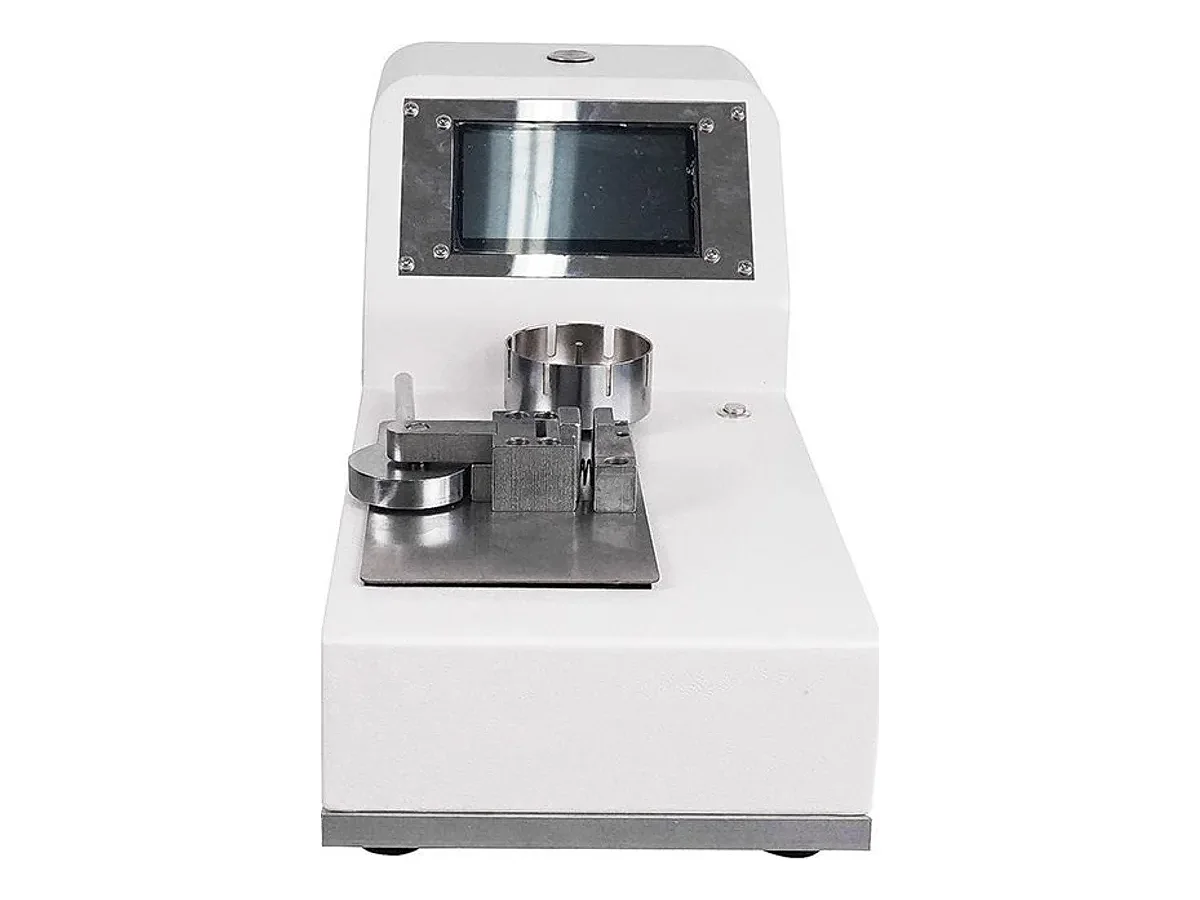
Motorized Crimp Terminal Pull Tester, 500 N
Model WM-820
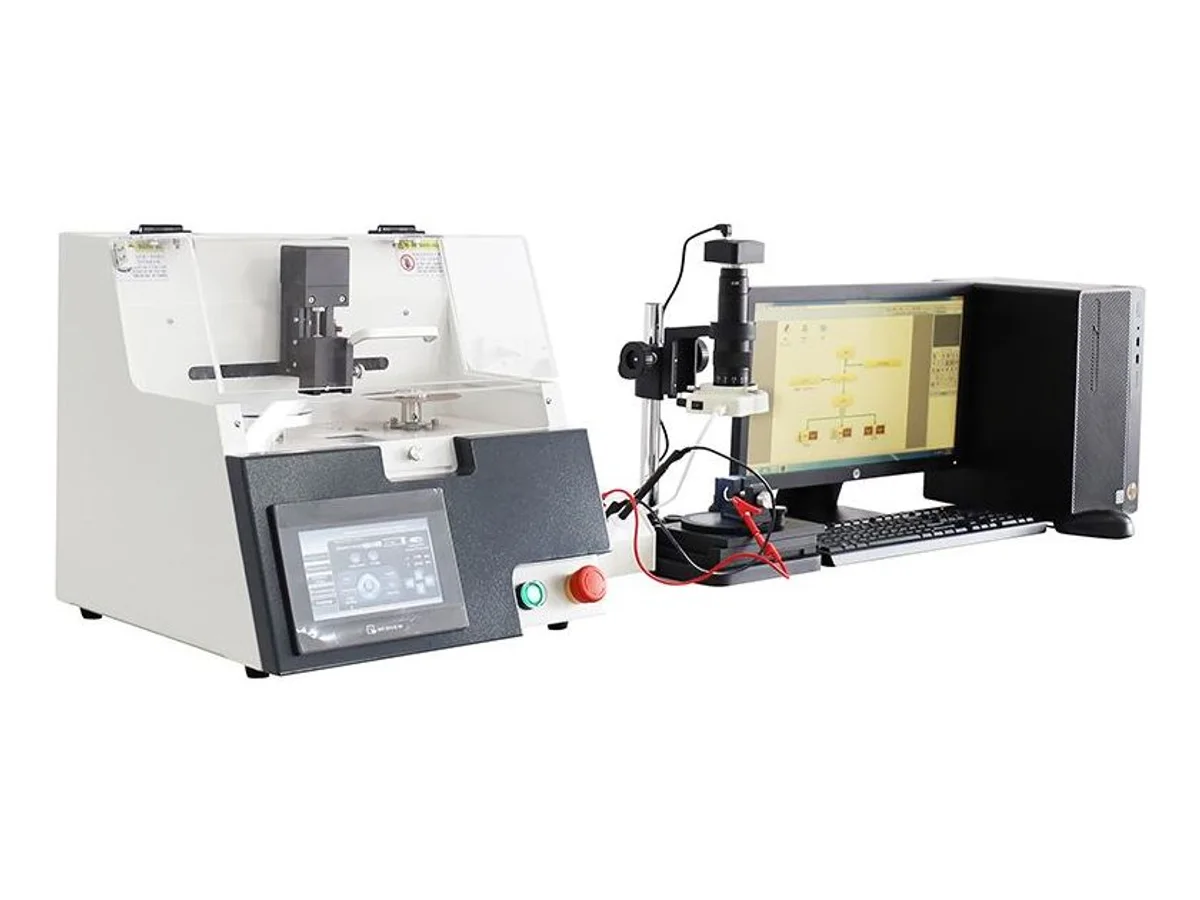
Crimp Cross-Section Cutting and Analysis System, 0.01–30 mm²
Model WM-813
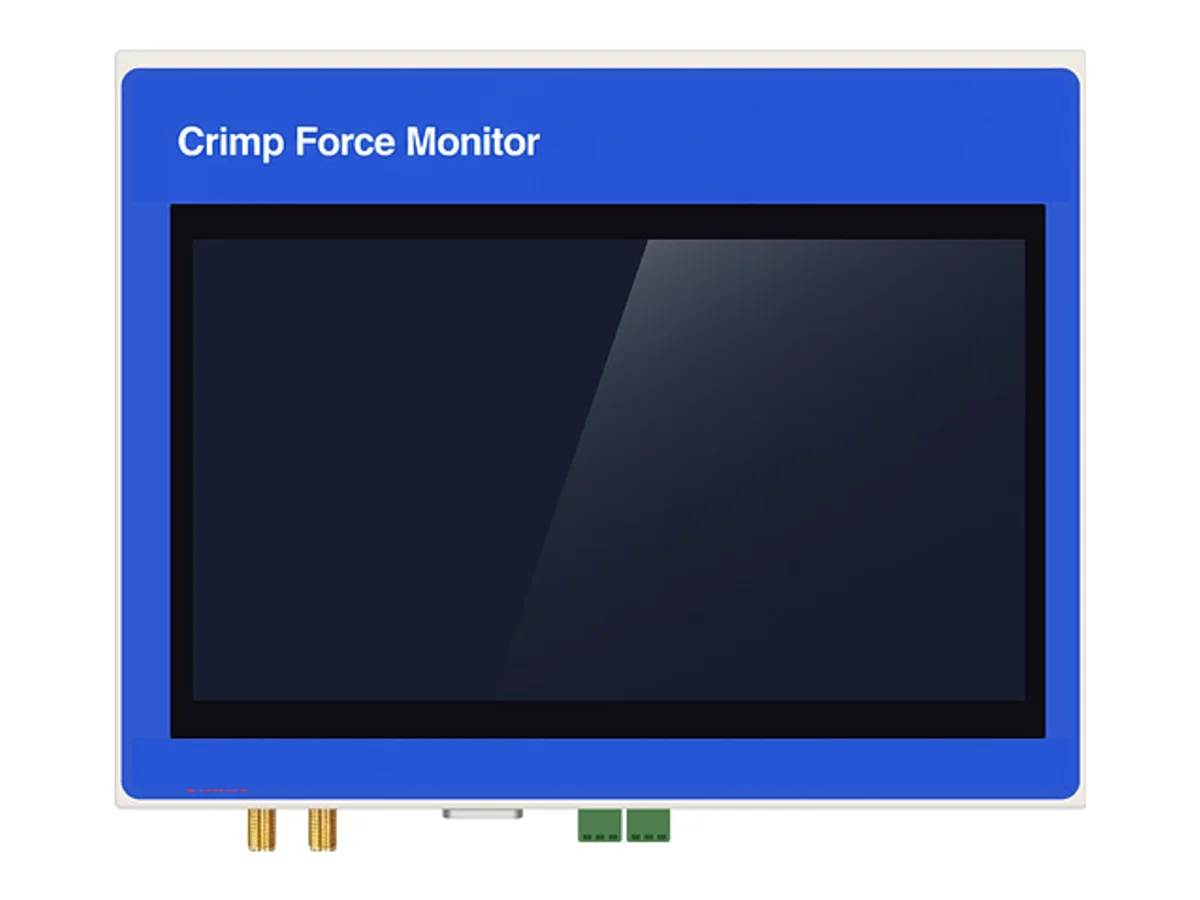
Crimp Force Monitoring System, Single or Dual Channel
Model WM-834