Crimp Force Monitoring System, Single or Dual Channel WM-834
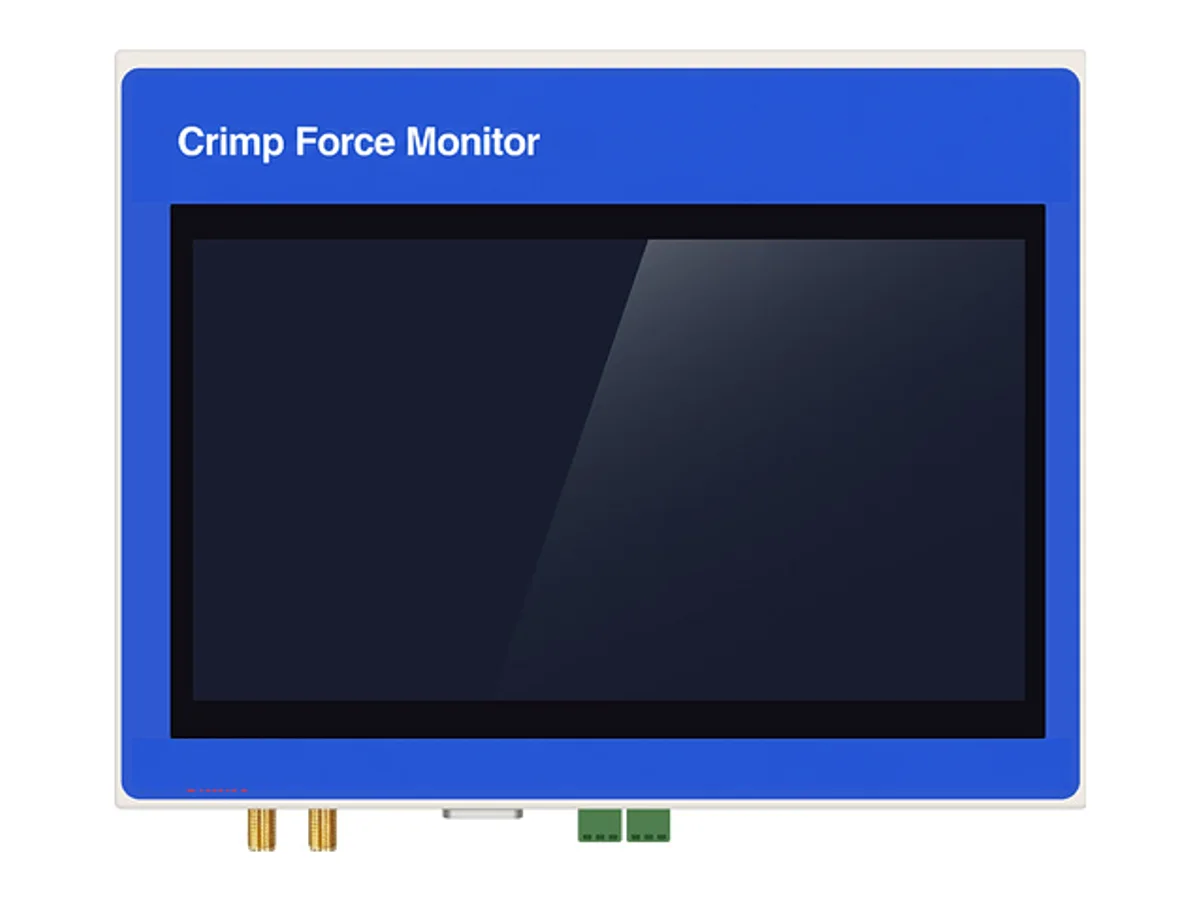
The WM-834 crimp force monitoring system compares each crimp force waveform with a learned reference and triggers an alarm when the curve falls outside the configured limits. Single- and dual-channel configurations are available for automatic and semi-automatic crimping presses. We review the press, applicator, terminal and wire together, then validate detection with agreed good and defective samples.
Specifications
| Monitoring channels | Single- or dual-channel configuration |
|---|---|
| Analysis | Crimp force waveform capture and curve analysis against learned references |
| Reference management | Multiple learned templates; individual learning curves for different wires |
| Press compatibility | Automatic and semi-automatic crimping machines; installation reviewed per press |
| Communication | Ethernet with UDP protocol |
| USB port | Firmware upgrade |
| Digital inputs | 5 inputs for triggering, alarm reset and related signals |
| Digital outputs | 2 result outputs |
| Relay output | 1 result relay output; can be integrated to interrupt a semi-automatic press foot-pedal circuit |
| Main power supply | 24 V DC ±10% |
| I/O power supply | 24 V DC ±10% |
| Operating temperature | 0–50 °C |
| Storage temperature | −20–80 °C |
| Humidity | 5–85% RH, non-condensing |
| PC software | Data query and export when configured with the PC software |
| Certification | CE (certificate provided with shipment) |
Key features
- Curve comparison checks the press stroke as it happens, helping operators respond to a process change before a long batch continues unnoticed.
- Individual learned curves for different wires reduce the need to force several wire constructions into one reference window when they use the same terminal.
- Alarm and result outputs let us connect the monitor to your existing production workflow, with press-stop or reject handling defined during integration.
- PC software can support result queries and export, giving your quality team access to the recorded data when that software configuration is included.
- We validate the chosen limits with your terminal, wire and deliberately introduced defects, so detection and nuisance-alarm behavior are checked together.
What it processes
- In-process monitoring of terminal crimping presses
- Retrofit monitoring for compatible semi-automatic and automatic presses
- Quality checks for repeated terminal and wire combinations
Prove detection on your crimp combination
A stable reference begins with an accepted crimp, not just the first part off the press. We review your terminal, wire and tooling, establish the reference curve and challenge the limits with agreed defect samples. We also check good parts so a sensitive setting does not simply create repeated nuisance alarms.
The gallery includes an example crimping station and a force-curve illustration. They explain the application; the complete press is not included with the monitoring system. Sensor mounting and the number of channels are specified on the quote.
Keep the other quality checks
Use the monitor to watch process changes while retaining the dimensional, pull-test and cross-section checks required by your acceptance plan. A normal waveform is not a direct measurement of pull force or conductor compression.
We run the agreed application trial on video. Installation hardware, software, electrical interface and operator documentation are defined before delivery. For replacement and service items, every quote lists them with unit price and the location they ship from.
Engineering knowledge
Choose and troubleshoot this process
- Crimp Force Monitoring vs Pull Testing, Crimp Height and Cross-SectionBuild a crimp quality plan that combines force monitoring, pull testing, crimp-height measurement and cross-section analysis without confusing their limits.
- How to Choose Wire Harness Testing EquipmentSelect harness testing equipment by test points, two-wire or four-wire resistance measurement, insulation and withstand limits, fixtures and inspection scope.
- Wire Harness Electrical Test Failures: Causes and Corrective ActionsDiagnose open circuits, shorts, high resistance, insulation failures, intermittent contacts, wrong cavity insertion and unstable harness test fixtures.
WM-834 — common questions
Will it detect every missing strand or damaged terminal?
No universal defect-detection guarantee applies. Insulation trapped in the crimp, missing strands, changed crimp geometry, deformed terminals and tooling damage can change the force curve. Detectability depends on the press, terminal, wire and limits; we establish it with controlled defect samples.
Does crimp force monitoring replace a pull tester or cross-section system?
No. Force monitoring tracks the process waveform. Pull testing measures mechanical retention, and cross-section analysis examines the formed joint. See our crimp inspection comparison for how they work together.
Can it stop my existing semi-automatic press?
A result relay can be integrated with a compatible foot-pedal circuit. We first review the press wiring and control logic. The result relay is a process output, not a claimed safety-rated control system.
What is the USB connection for?
The specified USB function is firmware upgrade. Ethernet supports UDP communication; result query and export are available with the configured PC software. Do not assume a USB port alone supplies a complete data-logging package.
What do you need to quote a retrofit?
Send the press model and photographs, applicator arrangement, wire and terminal samples, controller wiring information, required channel count and the defects you need to detect. We quote the sensor, monitor, installation parts, software and integration scope.
Related machines in Testing & Quality Inspection
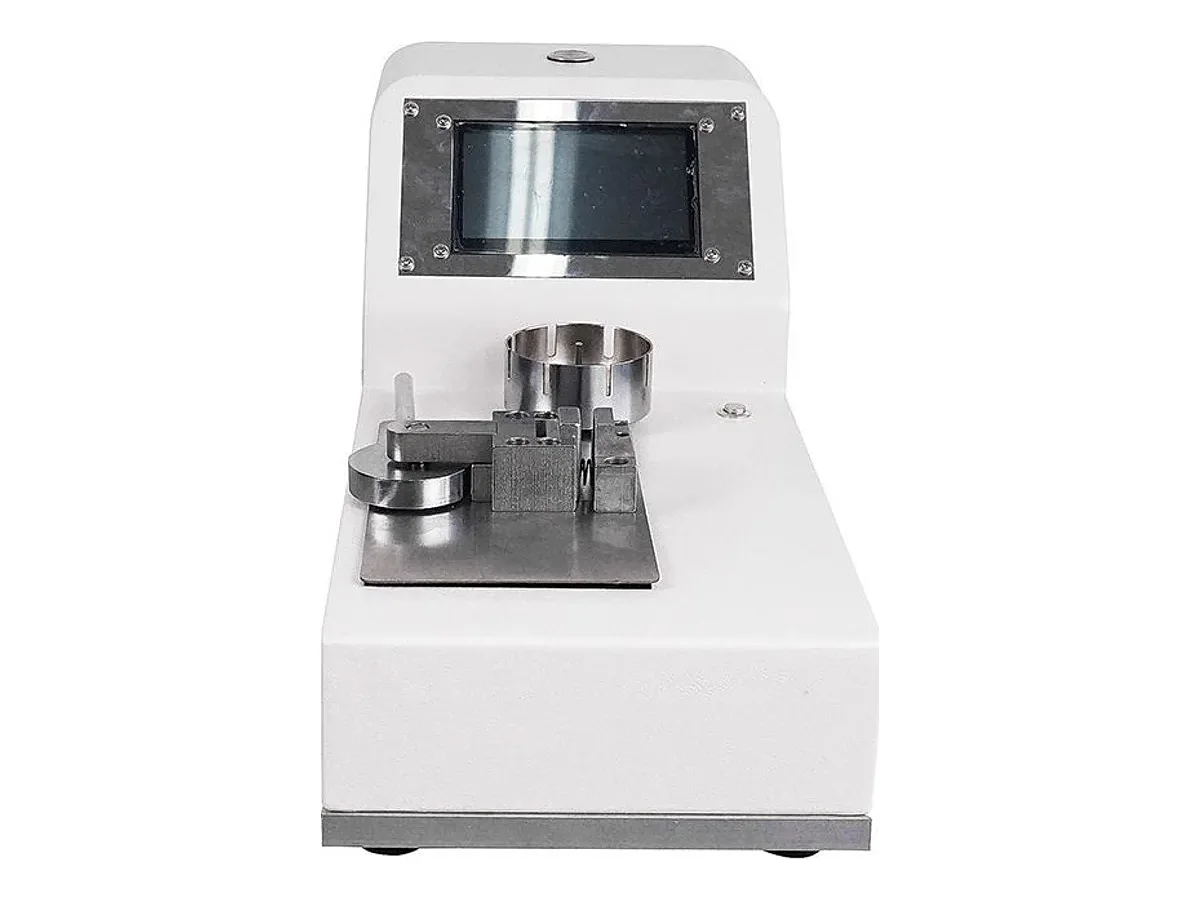
Automatic Wire Crimp Pull Tester with Touch Screen, 500 N
Model WM-820
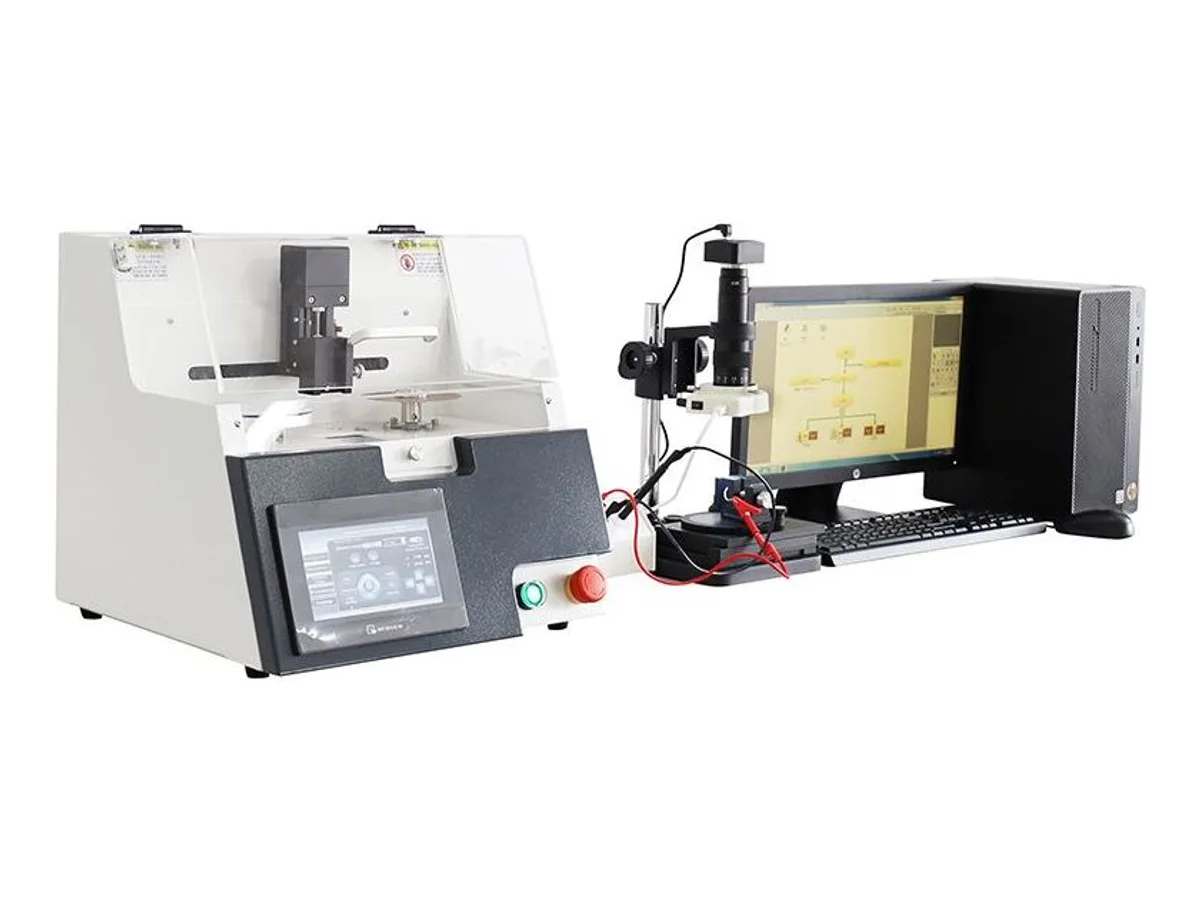
Crimp Cross-Section Analysis System with 30–312X Zoom for Terminal Quality Audits
Model WM-813
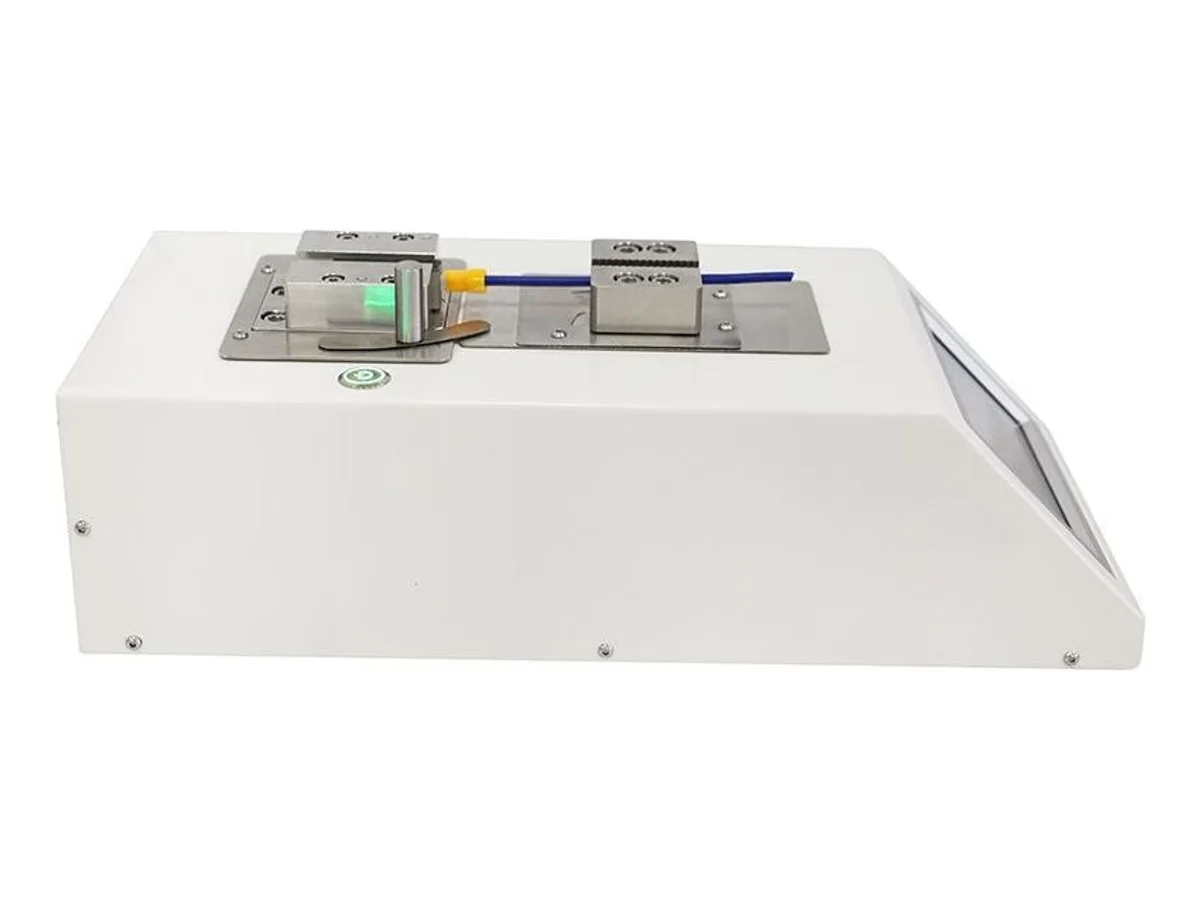
Benchtop Digital Terminal Pull Tester, 0–1,000 N, Motorized
Model WM-831