10 kN Wire and Terminal Pull Tester with Automatic Clamping WM-811
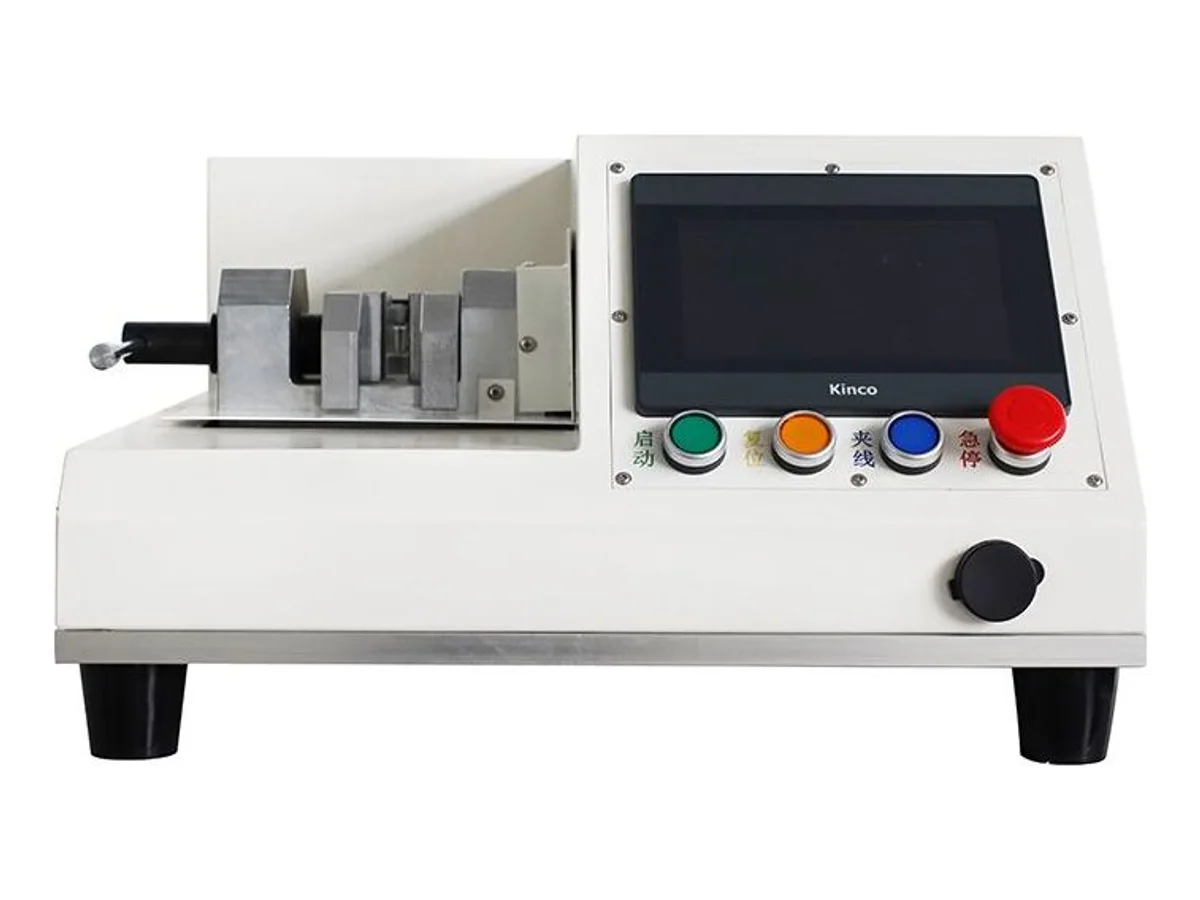
The WM-811 pulls wire-to-terminal joints apart on purpose — with up to 1,000 kg (10,000 N) of tension — and records the force curve, so crimp quality becomes a number instead of a feeling. Automatic clamping grips the wire, test speed sets from 10 to 600 mm/min over a 70 mm stroke, and the 7-inch English touchscreen stores 16 programs, prints labels and reports, and connects to MES. Peak-tension and limit-plus-hold modes cover destructive and non-destructive testing. The 65 kg bench unit measures 710 × 490 × 295 mm and draws 0.3 kW at 220 V.
Specifications
| Function | Tensile testing of wire, terminal and crimp joints |
|---|---|
| Detection range | 1 – 1,000 kg (10 – 10,000 N) |
| Detection stroke | 70 mm |
| Detection speed | 10 – 600 mm/min (settable) |
| Equipment functions | Tensile test, tension curve, automatic clamping, label and report printing, MES connection |
| Program storage | 0 – 16 (customizable number name) |
| Transmission structure | Hybrid stepper motor, precision unidirectional screw, linear guide column |
| Display | 7-inch touchscreen |
| Input power | AC 220 V / 50 Hz |
| Rated power | 0.3 kW |
| Machine weight | 65 kg |
| Dimensions | 710 × 490 × 295 mm (L × W × H) |
| HS Code | 9031.80 (common reference — final classification confirmed by your customs broker) |
| Certification | CE (certificate provided with shipment) |
Key features
- Automatic clamping and motor drive take the operator's hand out of the result — place the wire, and the machine grips, pulls, measures and displays the value the same way every test
- The screen draws the full tension curve, not just a peak number — print test reports, export data and query historical records when a customer audit asks for proof
- Non-destructive mode sets a force limit and hold time, proof-loading production samples without breaking them
- Sixteen stored programs plus interchangeable vises, pin discs and flat fixtures cover wire sizes and terminal styles from one bench; special fixtures can be customized
What it processes
- Crimp terminal pull-force verification at line start-up and per-batch process audit
- Incoming inspection on purchased cable assemblies before they enter production
- Crimp die setup validation — comparing pull force across crimp height settings
Suited for: pull-force testing of crimped and terminated joints up to 1,000 kg (10,000 N) — terminal crimps, lugs, splices and connector tails — with automatic clamping, stored programs and printable proof for audits. Not suited for: electrical continuity, wire color or cross-section inspection — those are the other instruments in the wire harness testing category — nor elongation testing of long specimens beyond its 70 mm stroke; for that, pick the WM-812 dual-column tensile testing machine, whose 800 mm test stroke covers full force-elongation runs. Joints that break above 10,000 N — battery cable lugs, welding leads, large crimped terminals — are past this machine’s ceiling; for those, pick the WM-830 electric vertical tensile testing machine, built in 5,000, 10,000, 20,000 and 30,000 N ratings with a 220 mm stroke that can be customized up to 1,000 mm.
Terminals and wire sizes grip differently, so we prove it first: send a bag of your actual crimped samples and we pull them on this machine on video — curve on screen — before you commit.
Engineering knowledge
Choose and troubleshoot this process
- Crimp Force Monitoring vs Pull Testing, Crimp Height and Cross-SectionBuild a crimp quality plan that combines force monitoring, pull testing, crimp-height measurement and cross-section analysis without confusing their limits.
- How to Choose Wire Harness Testing EquipmentSelect harness testing equipment by test points, two-wire or four-wire resistance measurement, insulation and withstand limits, fixtures and inspection scope.
- Wire Harness Electrical Test Failures: Causes and Corrective ActionsDiagnose open circuits, shorts, high resistance, insulation failures, intermittent contacts, wrong cavity insertion and unstable harness test fixtures.
WM-811 — common questions
Which test modes does the WM-811 offer?
Destructive peak testing pulls the joint to failure and records the maximum, with the full tension curve on screen. Non-destructive testing holds a set force limit for a set time, so good parts survive their own proof test. Speed is settable from 10 to 600 mm/min across a 70 mm stroke, up to 1,000 kg.
How does it fit into a documented quality system?
Tests print as labels or reports, data exports for records, and historical results are searchable on the machine. An MES connection is built in, and 16 named programs keep each wire and terminal combination testing to the same recipe every shift.
What is the WM-811 not designed to test?
It measures pull force only — electrical continuity, wire color and crimp cross-section quality are separate instruments in the wire harness testing category. The 70 mm stroke also makes it a joint tester, not an elongation tester for long material samples.
Related machines in Testing & Quality Inspection
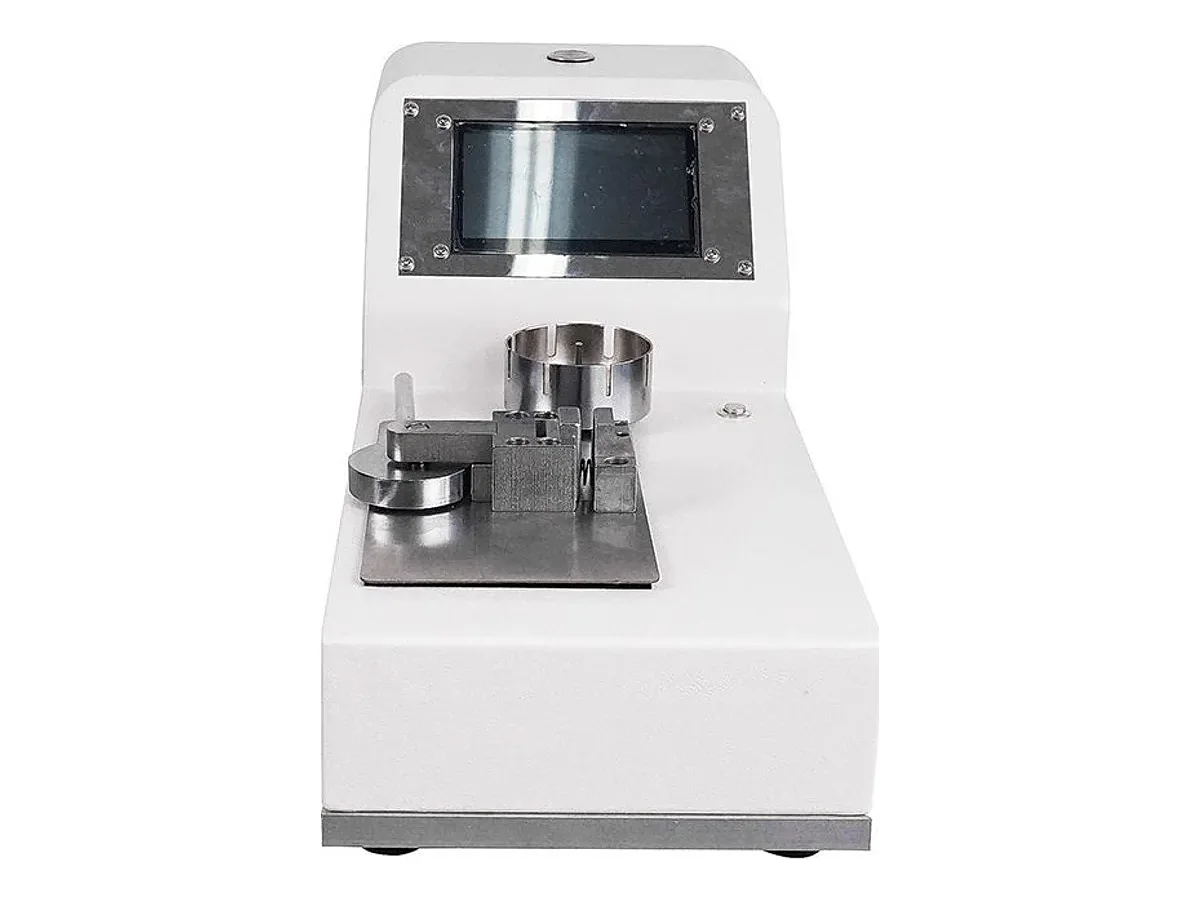
Motorized Crimp Terminal Pull Tester, 500 N
Model WM-820
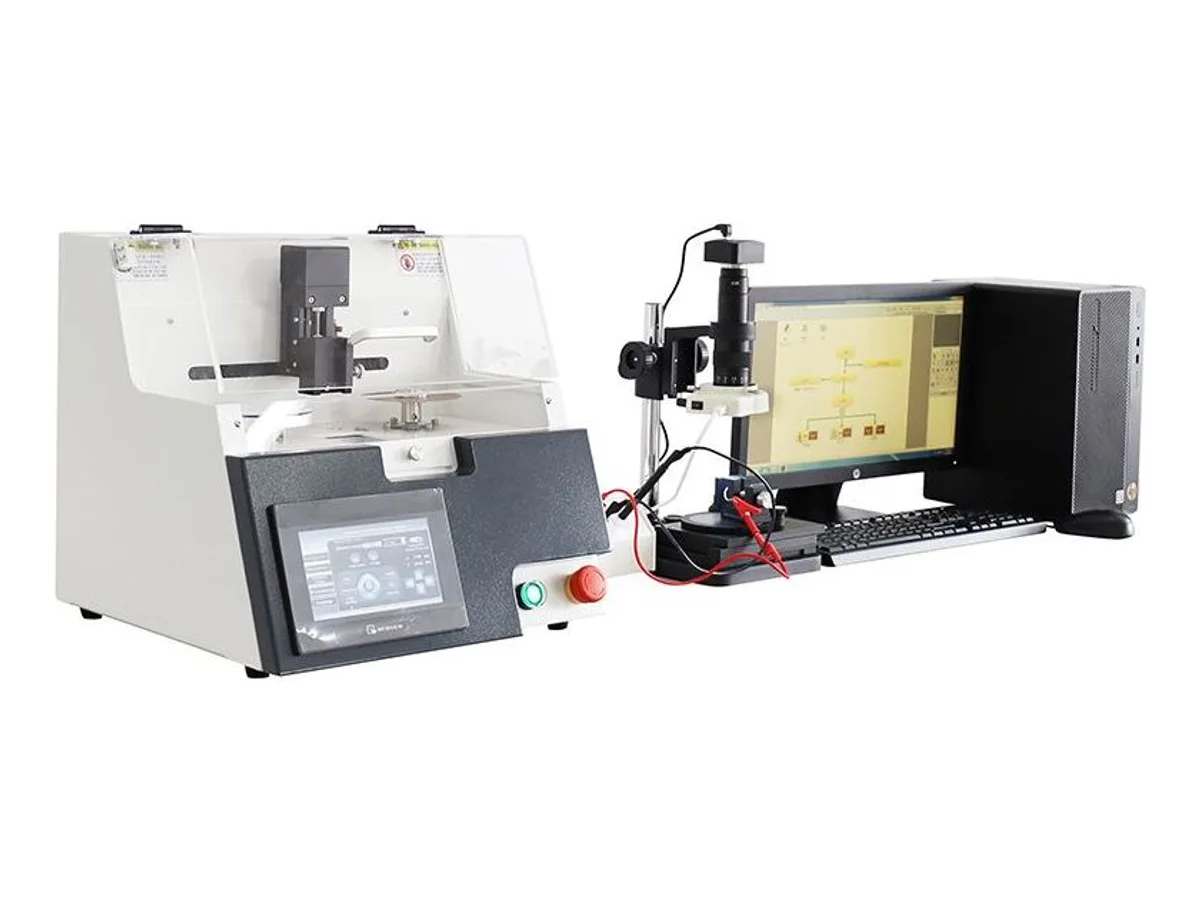
Crimp Cross-Section Cutting and Analysis System, 0.01–30 mm²
Model WM-813
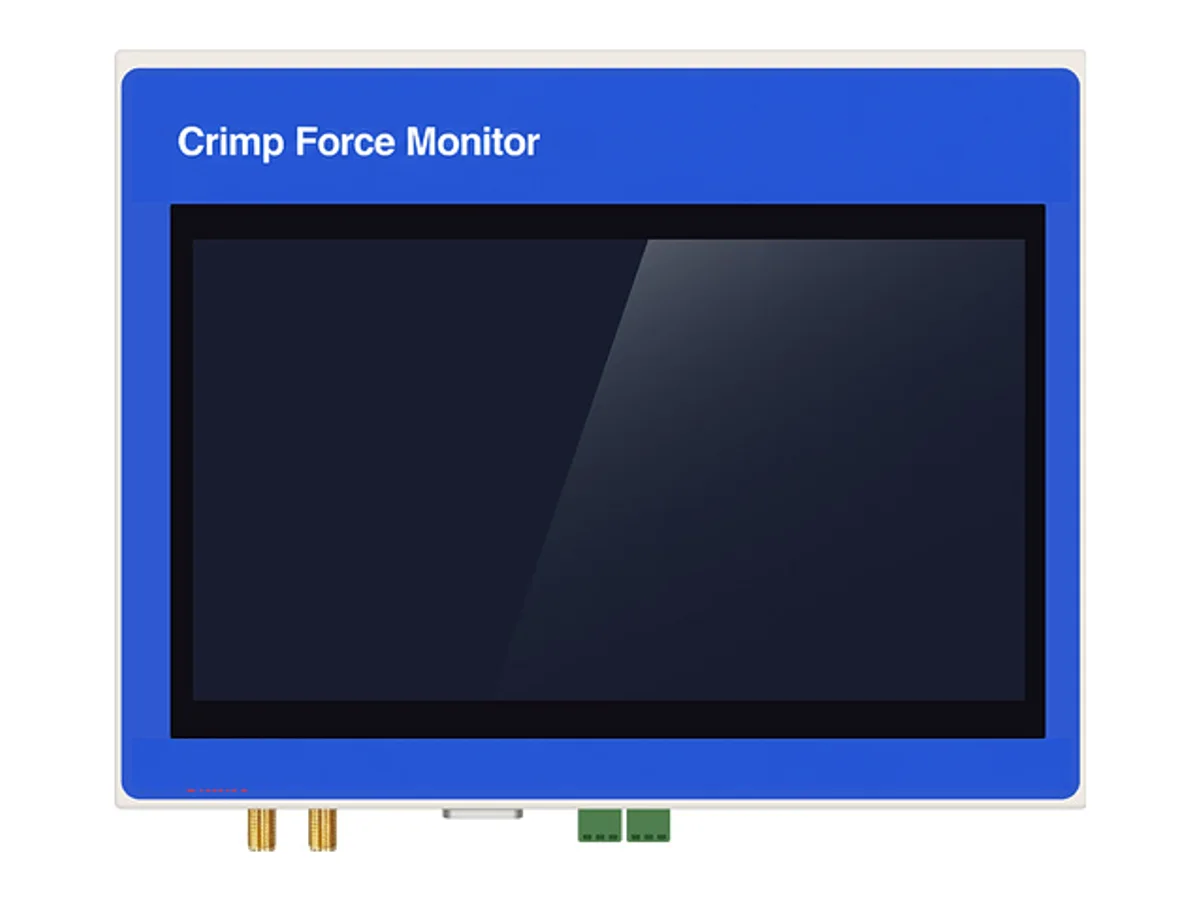
Crimp Force Monitoring System, Single or Dual Channel
Model WM-834