Sensor-Triggered Wire End Stripping Machine for 0.04–20 mm² Wire WM-1219
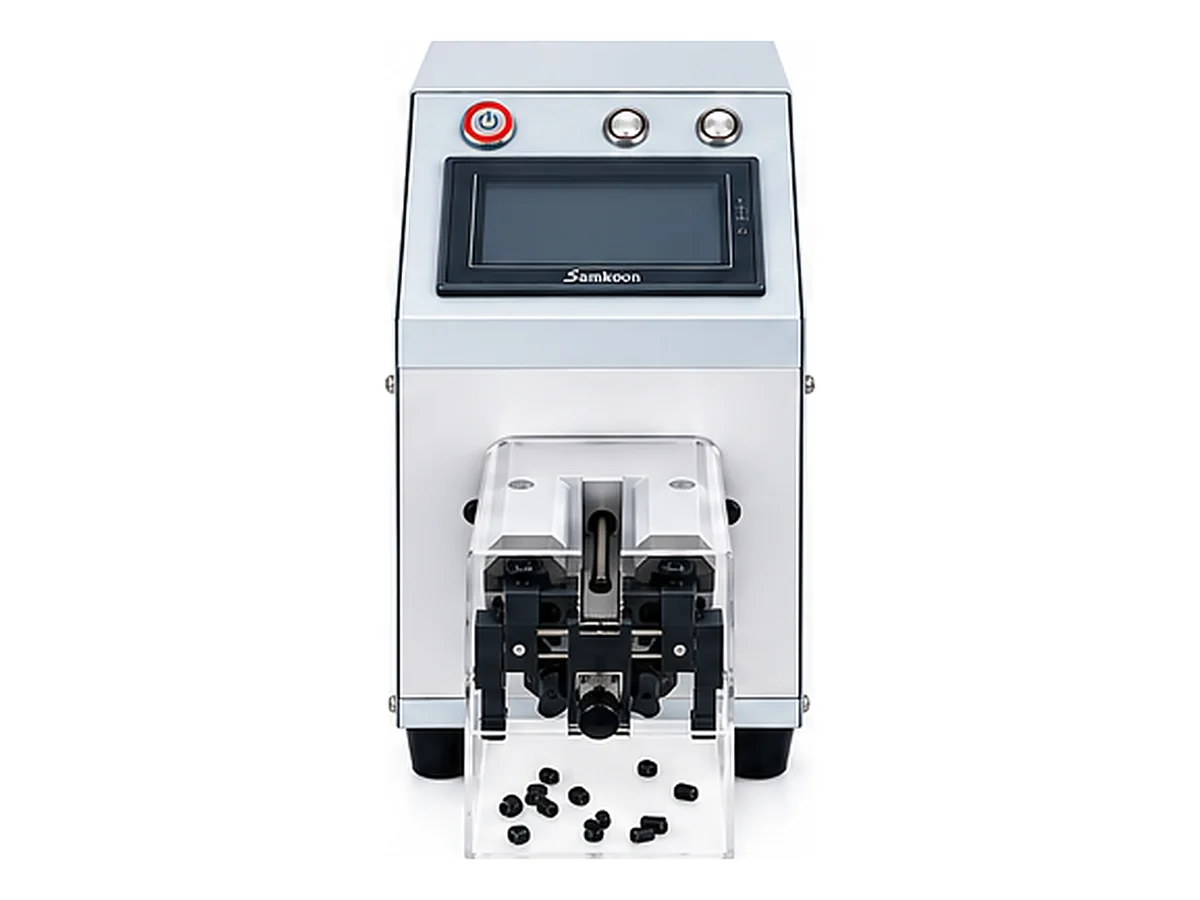
The WM-1219 is an all-electric benchtop stripper that senses the wire as you present it and strips on contact — no foot pedal, no hand switch. It covers AWG30 to AWG4 (0.04–20 mm²) on one 90° V-blade set, strips 1 to 40 mm with 0.05 mm adjustment, and runs 1,800–2,000 pieces per hour in half strip, full strip and double-layer strip modes, with up to 30 job recipes stored on the touch screen.
Specifications
| Function | Half strip, full strip, double-layer strip and similar end-stripping modes |
|---|---|
| Processing range | AWG30 – AWG4 (0.04 – 20 mm²) |
| Production capacity | 1,800 – 2,000 pieces/hour (depending on operating proficiency) |
| Stripping length | 1 – 40 mm |
| Adjustment accuracy | 0.05 mm |
| Blade | 90° V-shaped knife edge, no blade change between wire sizes |
| Stored programs | Up to 30 sets of processing parameters |
| Working voltage | AC 220 V 50/60 Hz |
| Dimensions | 500 × 620 × 300 mm |
| Weight | 20 kg |
| HS Code | 8463.90 (common reference — final classification confirmed by your customs broker) |
| Certification | CE (certificate provided with shipment) |
Key features
- Inductive start — the machine detects the wire the moment it touches the sensor and runs the cycle, so there is no foot switch to position and no pedal cable across the floor
- One 90° V-shaped blade set spans the whole AWG30–AWG4 range; changing from signal wire to 20 mm² power cable is a settings change, not a tooling change
- Gripper and blade both move on a translating axis, so the wire centre height stays put no matter which diameter is loaded — settings carry over instead of being re-found each time
- Half strip, full strip and double-layer strip on one machine, including jacket-plus-core work that normally needs two passes
- 30 stored parameter sets on the colour touch screen — recall a repeat job by number instead of dialling it in again
- All-electric drive from a 220 V outlet; no compressor, no air lines, no pneumatic maintenance
What it processes
- Harness shops running a wide gauge mix, from AWG30 signal leads to 20 mm² battery and power cable, on a single station
- Double-layer stripping of jacketed wire where outer sheath and inner insulation must come off in one setup
- Repeat production where the same handful of recipes cycles through the week and setup time is the real cost
- Benches with no compressed-air supply that still need production-rate stripping above the fine-wire class
Suited for: end-stripping pre-cut wire across an unusually wide gauge span — AWG30 to AWG4, 0.04 to 20 mm² — with strip lengths from 1 to 40 mm, half, full or double-layer, at production pace on a bench with no air supply. Not suited for: cutting wire to length. That job belongs to a cut-and-strip machine — the WM-194 8-wheel cut and strip machine covers 0.3–25 mm² at 4,000–5,000 pcs/h, and the WM-167 benchtop cut and strip machine covers 0.1–10 mm². It is also not the machine for conductors above 20 mm² — the pneumatic WM-1216C strips 0.5–25 mm², and heavier cable is served by the thick cable machines in this category.
Three electric-and-pneumatic strippers sit side by side in our range and they are not interchangeable. The WM-1215C is a 2.0 kg pneumatic unit for 0.03–2.08 mm² fine wire with a 0.01 mm diameter dial — the precision end. The WM-1215D is its 4.5 kg all-electric counterpart for 0.03–4 mm², for benches without shop air. The WM-1219 is a different class again — a 20 kg, 500 × 620 × 300 mm production machine that reaches 20 mm², strips up to 40 mm, and adds inductive start and 30 stored recipes for shift-long mixed-gauge running.
Send us two metres of the wire you actually run. We set this machine up for it, strip it on camera, and send you the footage with the parameters we used before you commit to anything.
Engineering knowledge
Choose and troubleshoot this process
- Automatic vs Semi-Automatic Wire Processing EquipmentCompare automatic lines and semi-automatic wire-processing cells using batch size, changeover, process integration, inspection and labor content.
- Cut Lengths Drifting on a Full Spool: Pay-Off Tension, Straightener Bearings and MisfeedWhy a cut-and-strip machine that held length on a loose coil walks 10–20 mm once a heavy reel goes on, how misfeed detection works, and how to check reel tension, straighteners, feed grip and encoder calibration.
- How to Choose a Wire Cutting and Stripping MachineSelect a wire cutting and stripping machine by conductor size, cable construction, strip geometry, length tolerance, batch size and downstream process.
WM-1219 — common questions
What does "inductive" mean on the WM-1219?
The machine senses the wire as it is pushed against the sensor at the stripping head and starts the cycle on that contact. There is no foot pedal and no hand button in the loop, so the operator's two hands stay on the wire and the cycle time is set by how fast wires can be presented, not by how fast a pedal is found.
Do I need to change blades between thin signal wire and 20 mm² cable?
No. The 90° V-shaped edge is a single universal geometry that closes onto whatever diameter is set, from 0.04 mm² up to 20 mm². Moving between jobs is a matter of recalling the stored parameter set — one of up to 30 — and the machine is ready.
Can it cut wire to length as well?
No — the WM-1219 strips wire ends only, on wire that is already cut. If you need cutting and stripping in one pass, the WM-194 8-wheel machine covers 0.3–25 mm² at 4,000–5,000 pcs/h, and the WM-167 benchtop covers 0.1–10 mm² at 3,000–8,000 pcs/h.
How does it compare with your smaller electric stripper?
The WM-1215D is a 4.5 kg portable unit for 0.03–4 mm² with a 20 mm maximum strip length, sized for a lab or rework bench. The WM-1219 is a 20 kg production machine — five times the top cross-section at 20 mm², double the strip length at 40 mm, inductive start and 30 stored recipes. Choose the WM-1215D for occasional fine-wire work, the WM-1219 for a mixed-gauge line running all shift.
What is the largest conductor it will take?
20 mm² (AWG4). Above that, the pneumatic WM-1216C strips 0.5–25 mm² power conductors, and for cross-sections into the 150 mm² class the dedicated thick-cable machines in this category are the right tools.
Related machines in Wire Cutting & Stripping
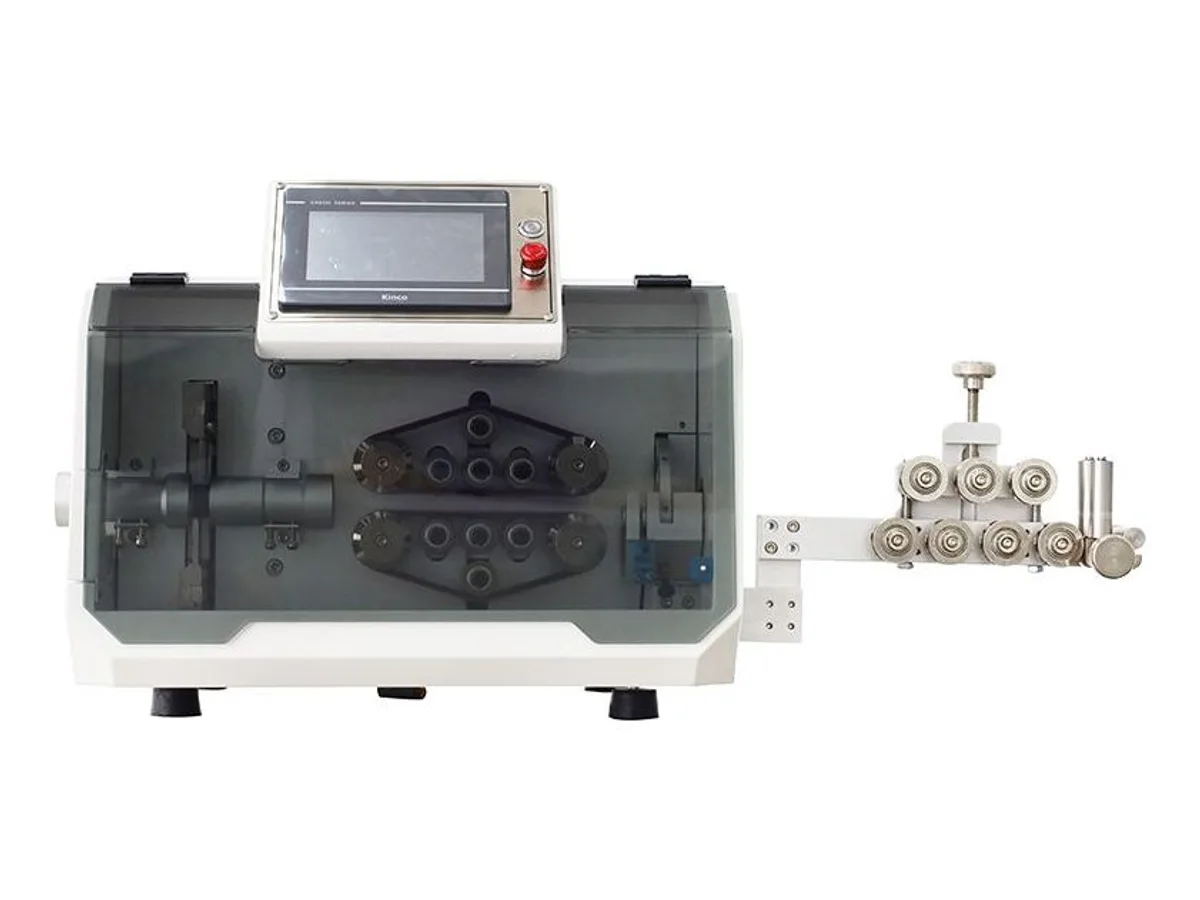
Automatic Cable and Hose Cutting Machine with 800 mm Front Cable Stripping
Model WM-1222
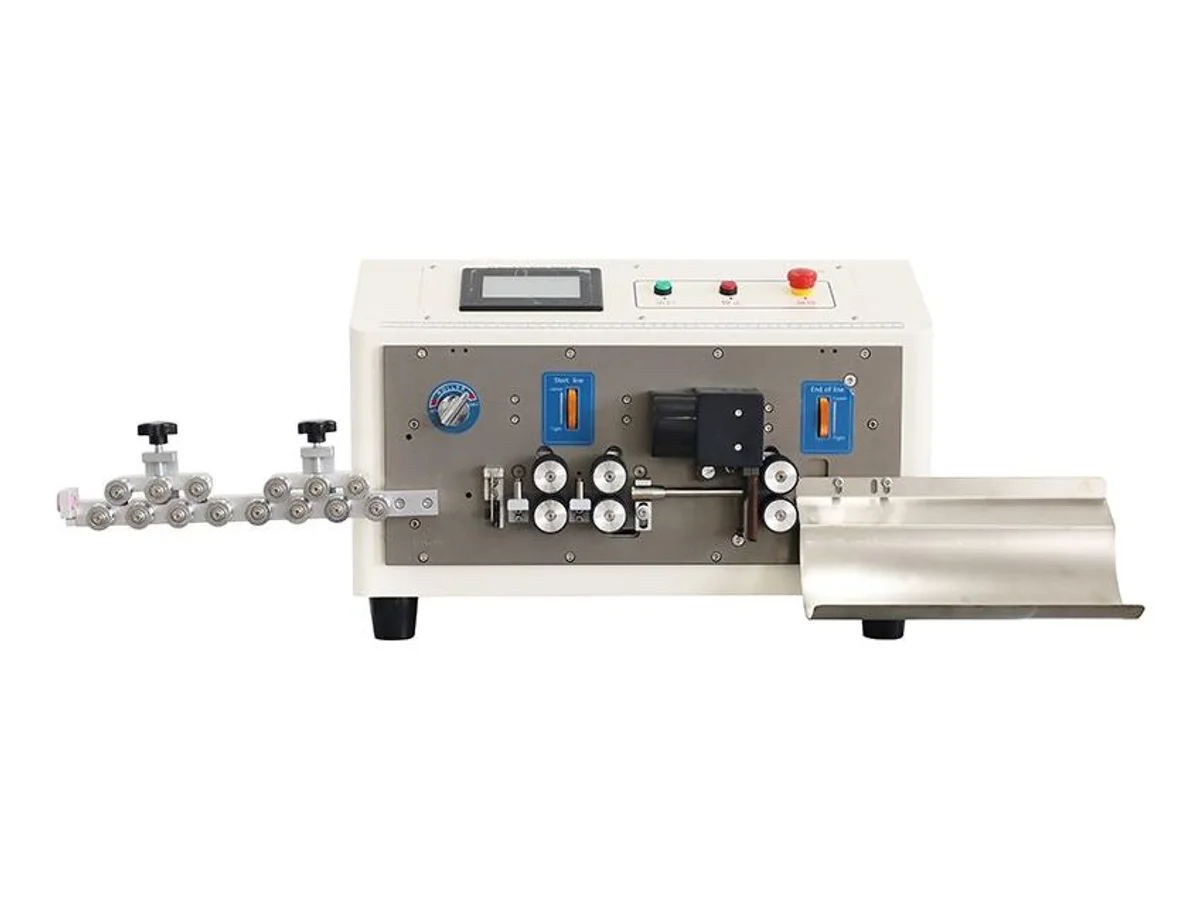
Automatic Sheathed Cable Cutting and Jacket Stripping Machine, Ø1–12 mm
Model WM-1306
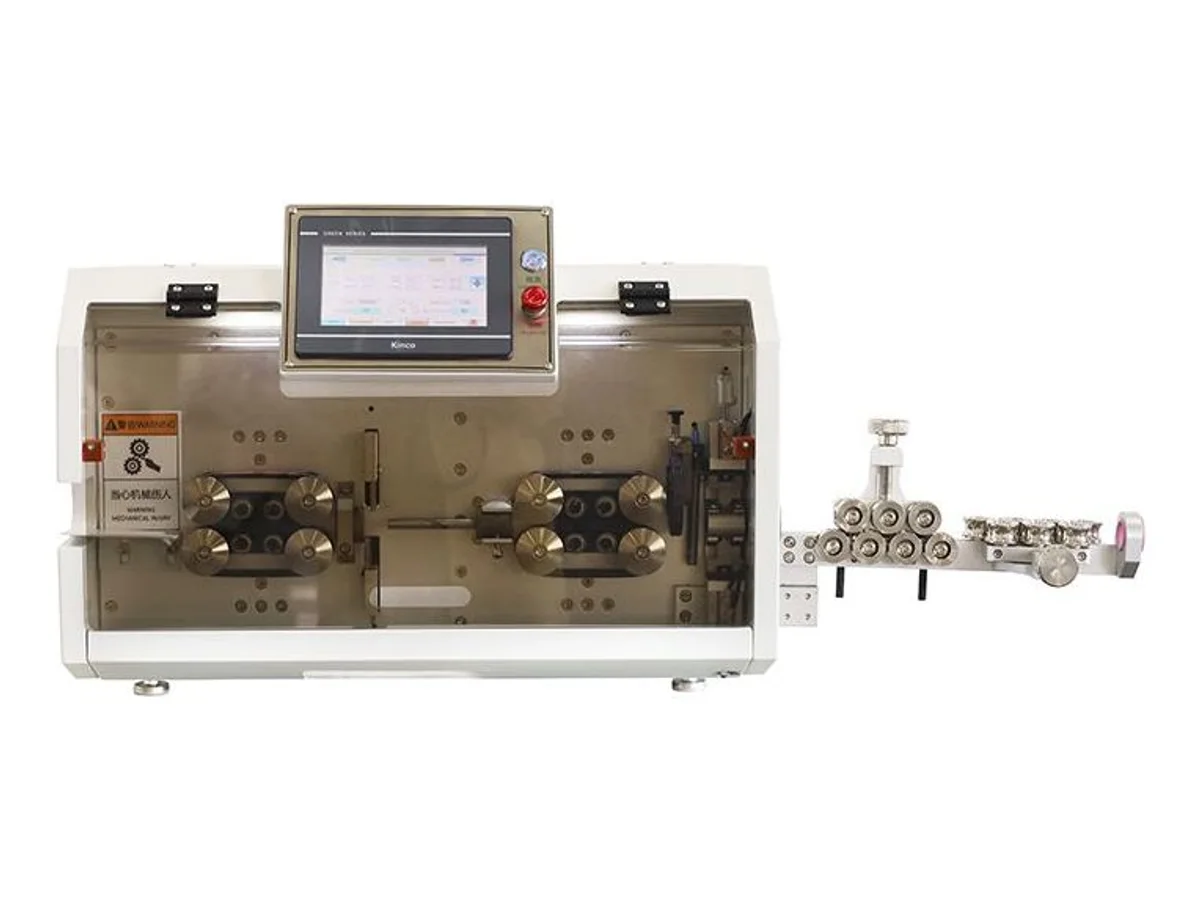
Automatic Cable Cut and Strip Machine with 50-Segment Middle Stripping
Model WM-190