Automatic Wire and Cable Bending Machine with Cut and Strip for 1–16 mm² WM-1224
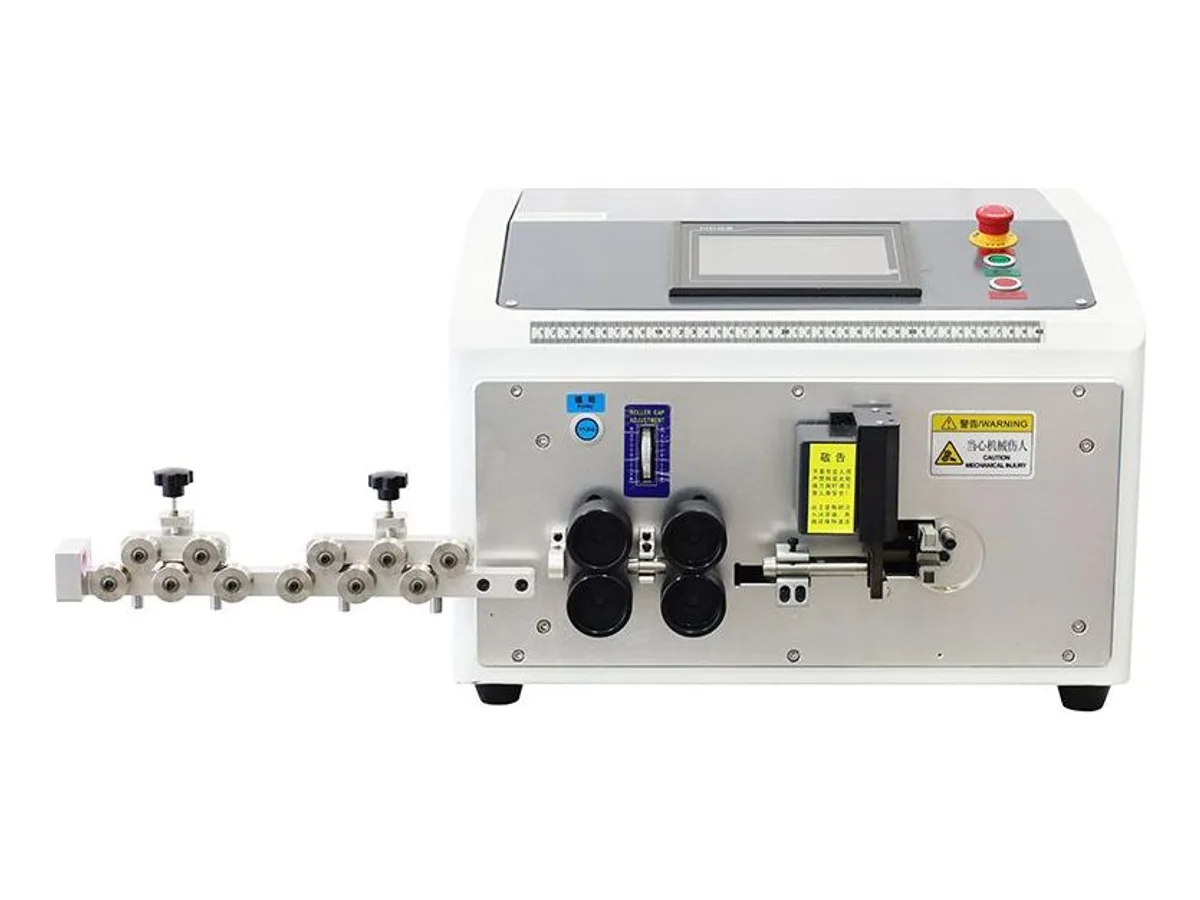
The WM-1224 is the 1–16 mm² size of the cut-strip-bend platform. One program holds the cutting length, both stripping lengths and the bend, so the lead leaves the machine already formed instead of being shaped by hand afterwards. It makes U shapes, Z shapes clockwise and counter-clockwise and fixed angles of 30°, 45°, 60° and 90°, at 2,000–3,000 pcs/h on a 100 mm part. Cutting runs 1 to 100,000 mm at ± (0.001 × L) tolerance and stripping 0.1 to 100 mm, set on a Chinese/English touch screen, in a 53 × 53 × 40 cm benchtop frame weighing 55 kg.
Specifications
| Function | Wire cutting, stripping and bending |
|---|---|
| Conductor cross-section | 1 – 16 mm² |
| Stripping length | 0.1 – 100 mm |
| Cutting length | 1 – 100,000 mm |
| Cutting tolerance | ± (0.001 × L) mm |
| Bending length | Programmable |
| Bend shape and angle | U shape; Z shape clockwise and counter-clockwise; 30°, 45°, 60°, 90° |
| Production rate | 2,000 – 3,000 pcs/h at L = 100 mm |
| Power supply | 110/220 VAC, 50/60 Hz |
| Power | 600 W |
| Conduit diameter | Generally Φ10 mm, customizable to the wire size |
| Display | Chinese/English touch screen |
| Weight | 55 kg |
| Dimensions | 53 × 53 × 40 cm |
| HS Code | 8463.90 (common reference — final classification confirmed by your customs broker) |
| Certification | CE (certificate provided with shipment) |
Key features
- A 55 kg benchtop frame at 53 × 53 × 40 cm — the small end of the bending platform, sized for 1–16 mm² hookup and control wire rather than heavy battery cable
- Cutting length, head and tail stripping lengths and the bend all live in one stored program, so a part-number change is a recipe recall instead of a fixture change
- Four powered feed wheels stacked two-by-two drive the wire through the blades and on into the bending head in the same cycle
- Inline roller straightener on the infeed rail takes the reel curvature out of the wire before it reaches the blades, so the bend lands where the program put it
- English touch screen with its own bending-setting page alongside the run counters and manual jog controls
- Free sample test — send us 2–3 m of your wire and the bend drawing, we run it on the machine and send you the video before you order
What it processes
- Control-cabinet, switchgear and distribution-box jumpers in 1–16 mm² wire that repeat one bend geometry across the whole batch
- Appliance, motor and lighting leads that have to drop onto a fixed terminal position without being coaxed by hand
- Automotive and e-mobility accessory harnesses in the 1–16 mm² range
- Any lead that is already cut and stripped by machine but still bent at the bench afterwards
Suited for: 1–16 mm² single-conductor wire and cable that has to come off the line already shaped — cabinet jumpers, appliance and motor leads, accessory harness links where the same U, Z or right-angle bend repeats through the whole batch and the stripped ends have to meet a fixed terminal position. Not suited for: conductors above 16 mm², and it does not crimp. For 2–35 mm² cable that still needs the same cut-strip-bend cycle, step up to the WM-196 wire and cable bending machine. If the leads do not need bending at all, a plain cut-and-strip machine is faster — the WM-167 benchtop cut and strip machine runs 0.1–10 mm² at 3,000–8,000 pcs/h. To press ferrules onto the finished leads, the WM-3116 bootlace ferrule crimping machine covers 0.3–16 mm² and matches this machine’s range end to end.
This is the smaller of the two bending machines we list, and the reason it exists is throughput economics rather than capability. Bending 1–16 mm² wire by hand is quick per piece and therefore rarely questioned, but the error accumulates instead of the time — a hand-formed bend never repeats to the millimetre, and on a batch of several thousand cabinet jumpers the drift is what shows up at assembly, not the labour. Putting the bend in the same program as the cut and the strip removes the variable altogether.
Conduit bore, bend radius and the clamp tooling are matched to your wire rather than fixed at one size. Send the wire specification and the bend drawing with your inquiry and we will confirm what the machine needs before quoting.
Engineering knowledge
Choose and troubleshoot this process
- Automatic vs Semi-Automatic Wire Processing EquipmentCompare automatic lines and semi-automatic wire-processing cells using batch size, changeover, process integration, inspection and labor content.
- Cut Lengths Drifting on a Full Spool: Pay-Off Tension, Straightener Bearings and MisfeedWhy a cut-and-strip machine that held length on a loose coil walks 10–20 mm once a heavy reel goes on, how misfeed detection works, and how to check reel tension, straighteners, feed grip and encoder calibration.
- How to Choose a Wire Cutting and Stripping MachineSelect a wire cutting and stripping machine by conductor size, cable construction, strip geometry, length tolerance, batch size and downstream process.
WM-1224 — common questions
How is this different from the larger bending machine on the line card?
Wire size and frame size. The WM-1224 covers 1–16 mm² in a 55 kg benchtop cabinet measuring 53 × 53 × 40 cm. The WM-196 wire and cable bending machine covers 2–35 mm² in an 88 kg frame measuring 95 × 88 × 82 cm. The bend repertoire, the cutting range and the output rate are the same on both, so the choice is simply which conductor range your parts fall in.
Does it strip the wire as well, or only bend it?
It cuts, strips and bends in one pass. Cutting length is programmable from 1 to 100,000 mm at ± (0.001 × L) tolerance, and stripping length from 0.1 to 100 mm at each end. The bend is added to the same recipe, so one machine replaces a cut-and-strip station plus a separate bending step.
Which bend shapes can it produce, and can the guide be matched to my wire?
U shape, Z shape in clockwise or counter-clockwise rotation, and fixed angles of 30°, 45°, 60° and 90°, with the bending length set in the program. The conduit is generally Φ10 mm and can be made to suit your wire size — send the wire spec with your inquiry and we will confirm the bore before quoting.
Related machines in Wire Cutting & Stripping
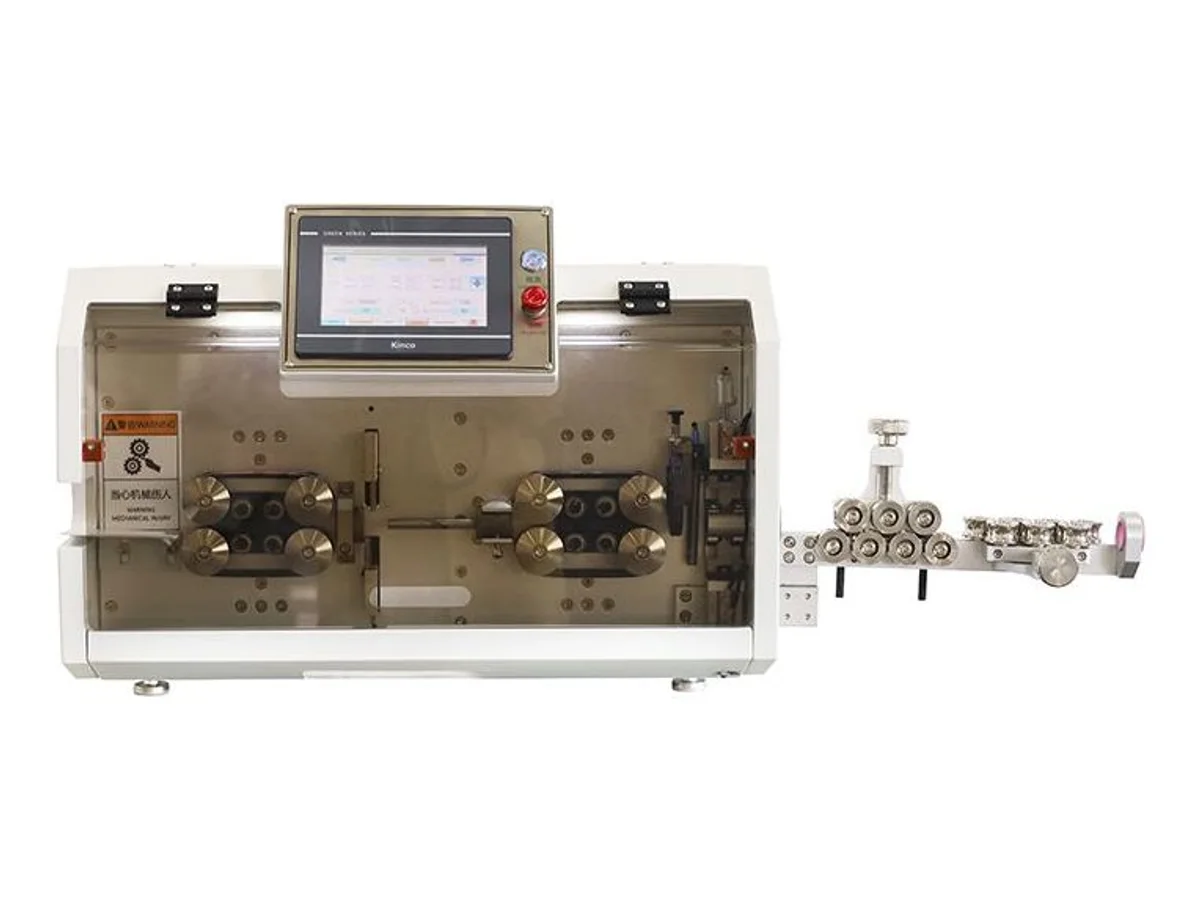
Automatic Cable Cut and Strip Machine with 50-Segment Middle Stripping
Model WM-190
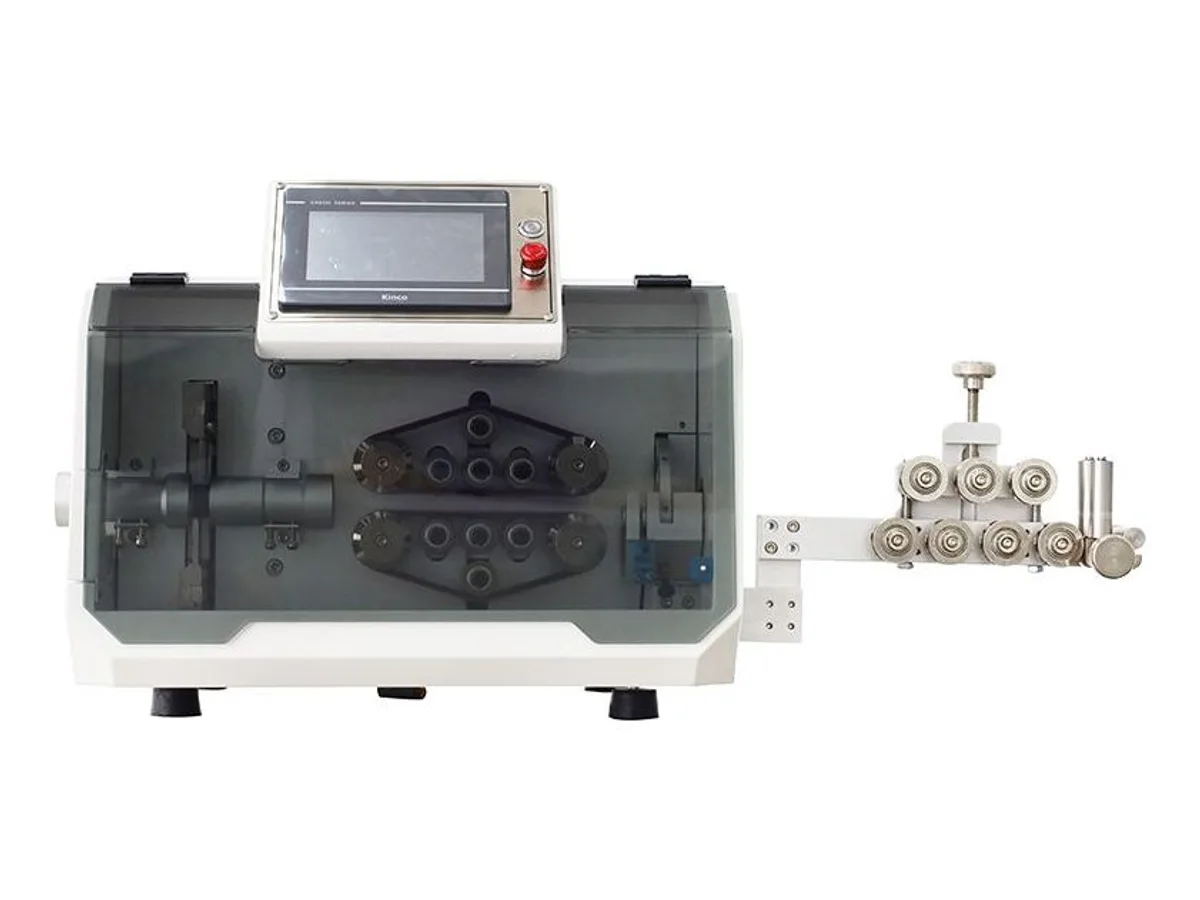
Automatic Cable Cutting Machine for 1–150 mm² Wire, Cable and Hose
Model WM-1222
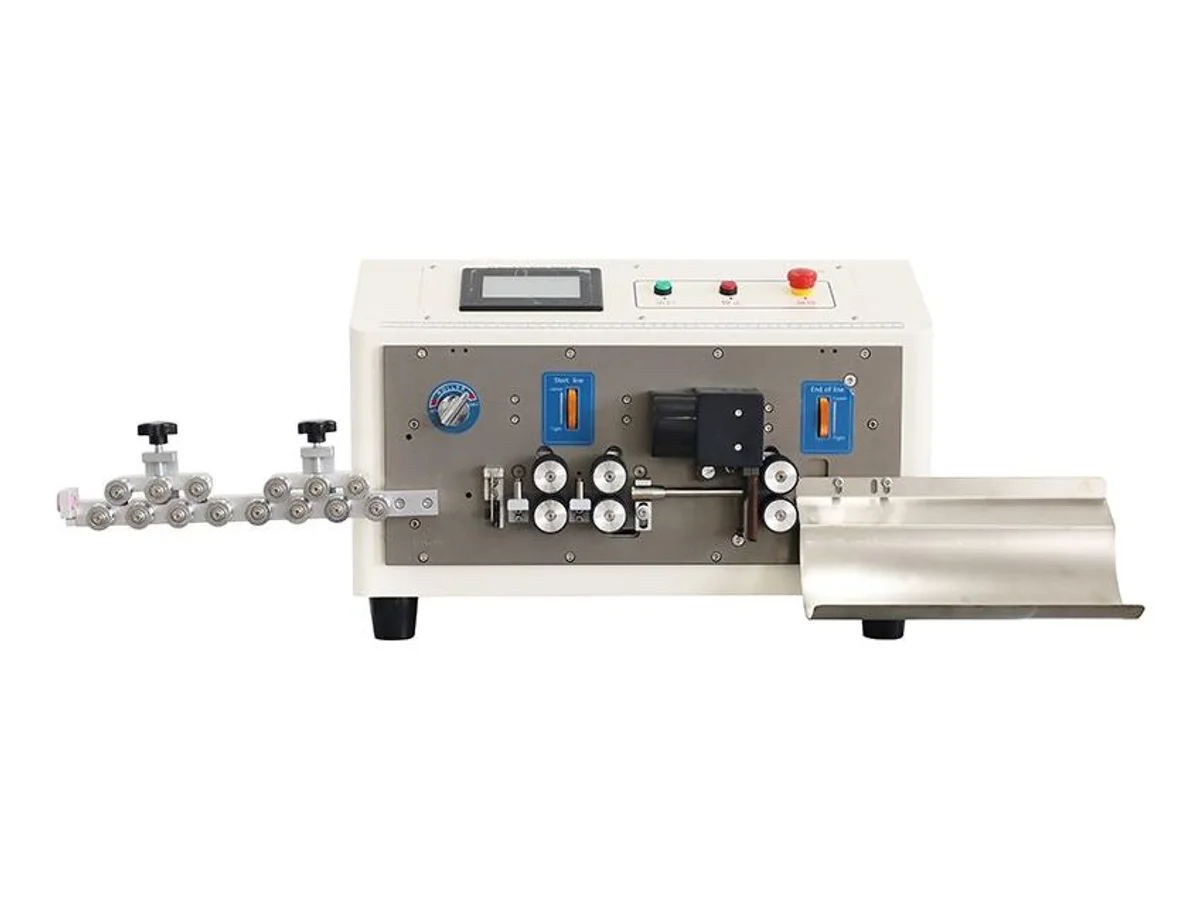
Automatic Cable Cutting and Stripping Machine for 1–12 mm Sheathed Cable
Model WM-1306