Wire Middle Stripping Machine for 0.5–4 mm² Wire, 20 mm Insulation Windows WM-1217
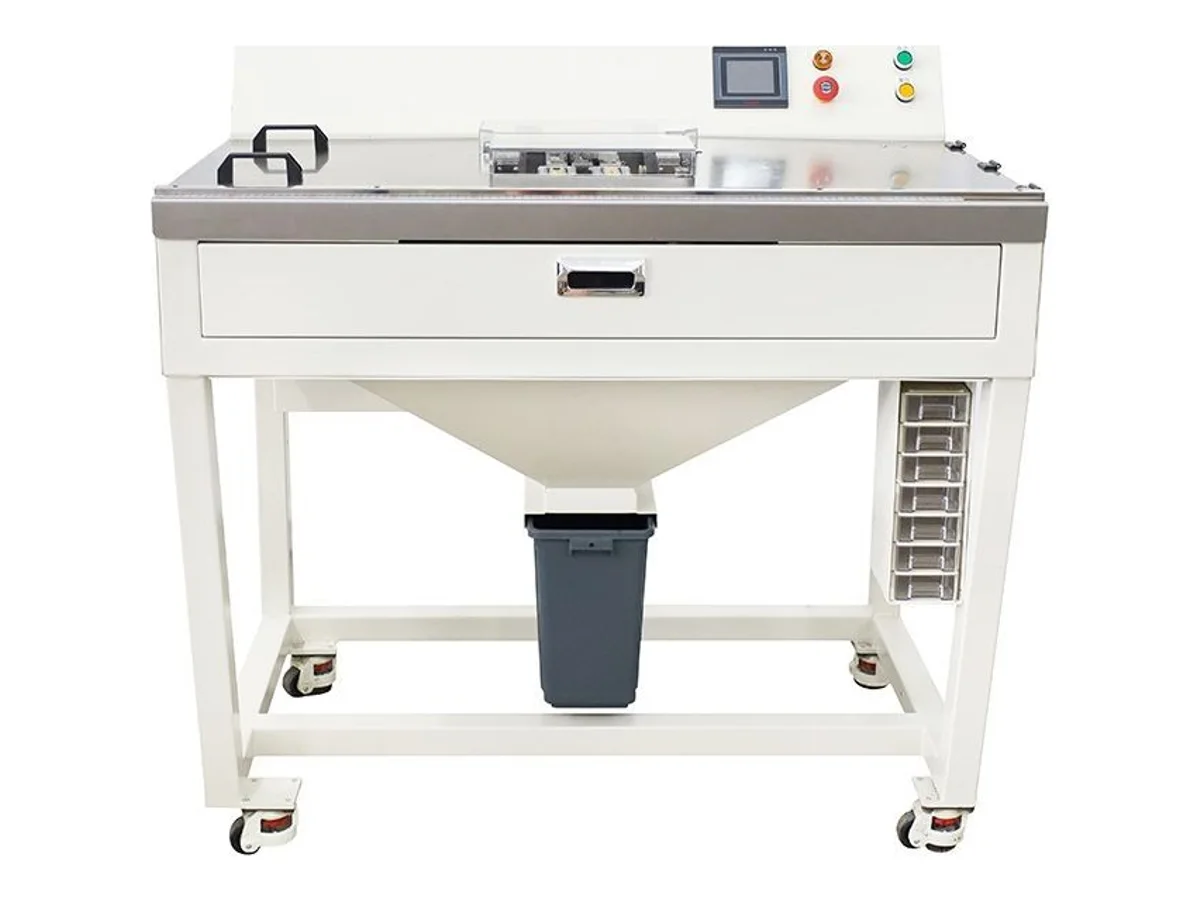
The WM-1217 opens an insulation window in the middle of a wire that is never cut. The piece lies along a 2-metre worktop with a graduated rail fitted along its full length; the operator sets the window position against the scale, and one PLC-sequenced pneumatic cycle of 3 to 4 seconds ring-cuts the insulation at both ends of the window and clears the slug into the waste chute, leaving bare conductor between two square insulation edges. Wire range is 0.5 to 4.0 mm² with a standard 20 mm window placed more than 100 mm from the wire end, running on 220–250 V and 0.5–0.8 MPa shop air.
Specifications
| Function | Middle stripping (partial stripping) — opening an insulation window on the middle section of wire and cable |
|---|---|
| Control | Fully pneumatic stripping mechanism under PLC control |
| Wire range | 0.5 – 4.0 mm² (can be customized) |
| Partial stripping length | 20 mm (can be customized) |
| Distance between stripping and wire end | More than 100 mm (can be customized) |
| Cycle time | 3 – 4 seconds |
| Voltage, frequency | 220 – 250 V, 50 Hz |
| Power | 200 W |
| Voltage fluctuation | ±10% |
| Air pressure range | 0.5 – 0.8 MPa |
| Weight | 75 kg |
| Dimensions | 2,000 × 500 × 900 mm (W × D × H) |
| HS Code | 8463.90 (common reference — final classification confirmed by your customs broker) |
| Certification | CE (certificate provided with shipment) |
Key features
- The wire is never cut — two ring cuts open a window in the middle of a continuous length, so a lead that is already cut, crimped or moulded at its ends keeps those ends exactly as they are
- Window position set against the table scale — a graduated rail runs the full 2-metre worktop, so the same window lands at the same distance from the wire end piece after piece
- Removed insulation clears itself — the slug drops through the chute under the worktop into the waste bin instead of being picked off the bench by hand between cycles
- Free sample test — send us 2–3 metres of your wire with the window length and its distance from the end, we run it on this machine and send you the video before you order
What it processes
- Grounding taps, solder joints and branch splices on 0.5–4.0 mm² wire where the connection lands mid-run rather than at an end
- Windows opened on leads that already carry a terminal, connector or moulded plug and cannot go back through a cutting machine
- Sensor, appliance and control-cabinet leads that need a bare band for piercing terminals, resistance welding or a soldered tap
Suited for: a 20 mm insulation window opened in the middle of 0.5–4.0 mm² wire that has to stay in one piece, positioned against the table scale more than 100 mm from the wire end. Not suited for: cutting to length, stripping the ends, or windows beyond the standard 20 mm without custom tooling — for cutting, end stripping and up to 32 programmed windows in one automatic pass on 1–30 mm² wire, pick the WM-174Z automatic middle stripping machine; for a die-defined 40–50 mm window on a single-station bench, the WM-185 semi-automatic middle stripping machine.
Of the middle stripping machines we list that publish a wire range, this one reaches the finest wire: the programmable machines start at 0.75 mm² (WM-190, 50 windows, 3,500 pcs/hour) and 1 mm² (WM-174Z), so 0.5 mm² sensor and signal leads land here. The trade is the other way round on flexibility — those machines program the window count, interval and length from the screen and cut the piece to length in the same pass, while this one opens one standard window on a wire you have already made.
Stripping tolerance, cable outside diameter compatibility and accepted hourly output are confirmed on the quote after a trial with your wire.
Engineering knowledge
Choose and troubleshoot this process
- Automatic vs Semi-Automatic Wire Processing EquipmentCompare automatic lines and semi-automatic wire-processing cells using batch size, changeover, process integration, inspection and labor content.
- Cut Lengths Drifting on a Full Spool: Pay-Off Tension, Straightener Bearings and MisfeedWhy a cut-and-strip machine that held length on a loose coil walks 10–20 mm once a heavy reel goes on, how misfeed detection works, and how to check reel tension, straighteners, feed grip and encoder calibration.
- How to Choose a Wire Cutting and Stripping MachineSelect a wire cutting and stripping machine by conductor size, cable construction, strip geometry, length tolerance, batch size and downstream process.
WM-1217 — common questions
Does the WM-1217 cut the wire or strip the ends as well?
No — it does one job. It opens an insulation window on the middle section of a wire that stays in one piece: there is no feeder, no length measurement and no cut-off blade on the machine. The operator lays the wire along the worktop, sets the window against the graduated rail and starts the cycle. If you need cutting to length, end stripping and programmed windows in one automatic pass, that is the WM-174Z, which covers 1–30 mm² with up to 32 windows per piece.
How long is the window, and how close to the wire end can it sit?
The standard window is 20 mm, and customization is available. The standard machine places it more than 100 mm from the wire end, also listed as customizable. Both figures depend on the tooling fitted, so tell us your window length and its distance from the end and we confirm against the actual machine before you order rather than quoting from the catalogue.
What throughput should I plan for?
The specified machine cycle is 3–4 seconds; the pictured touchscreen cycle field reads 3 seconds. Accepted pieces per hour also depends on loading, unloading and the number of windows per wire. We time your actual job during the sample trial and confirm output on the quote.
Which wire will it handle?
The specified range is 0.5 to 4.0 mm², with customization available. Cable outside diameter, insulation suitability and stripping tolerance are confirmed on the quote after a trial. Send 2–3 metres with the required window geometry and we return the trial video.
Related machines in Wire Cutting & Stripping
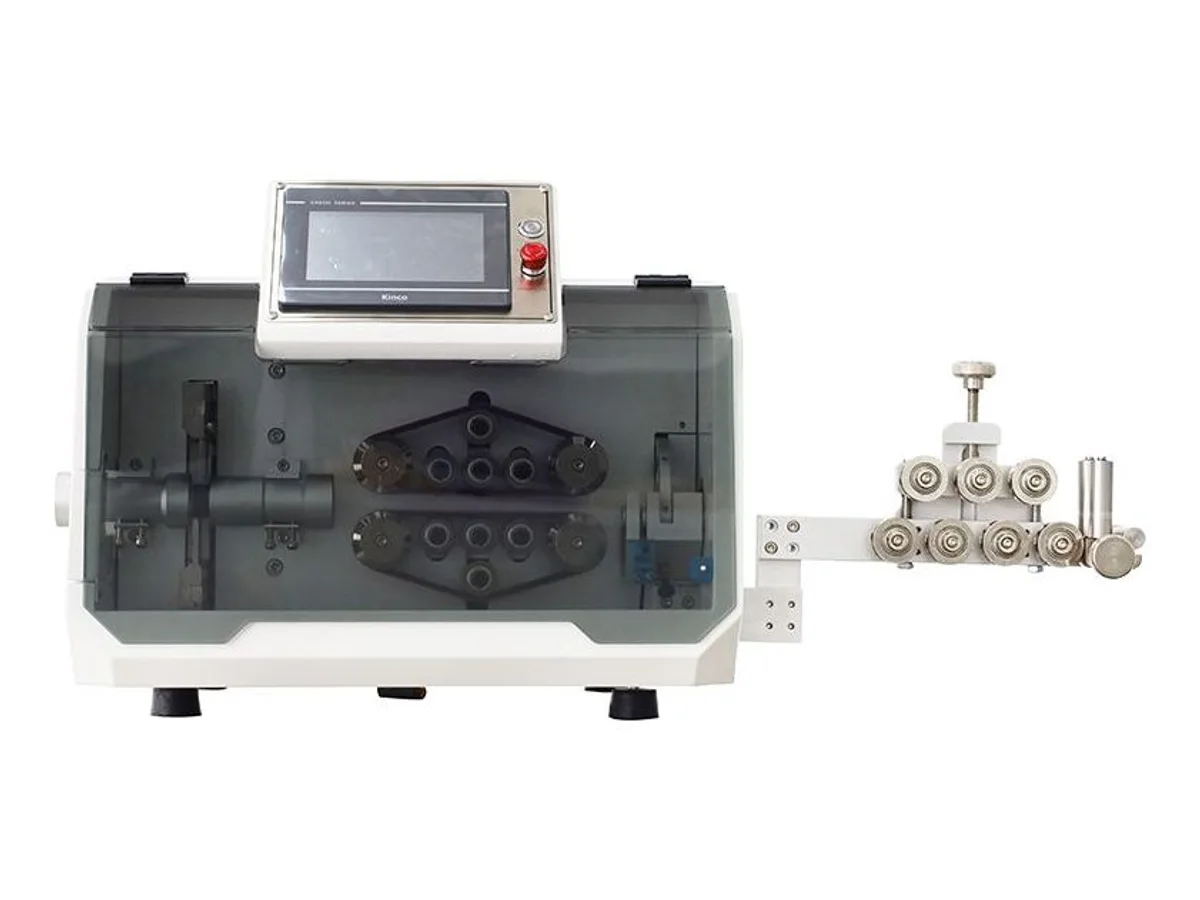
Automatic Cable and Hose Cutting Machine with 800 mm Front Cable Stripping
Model WM-1222
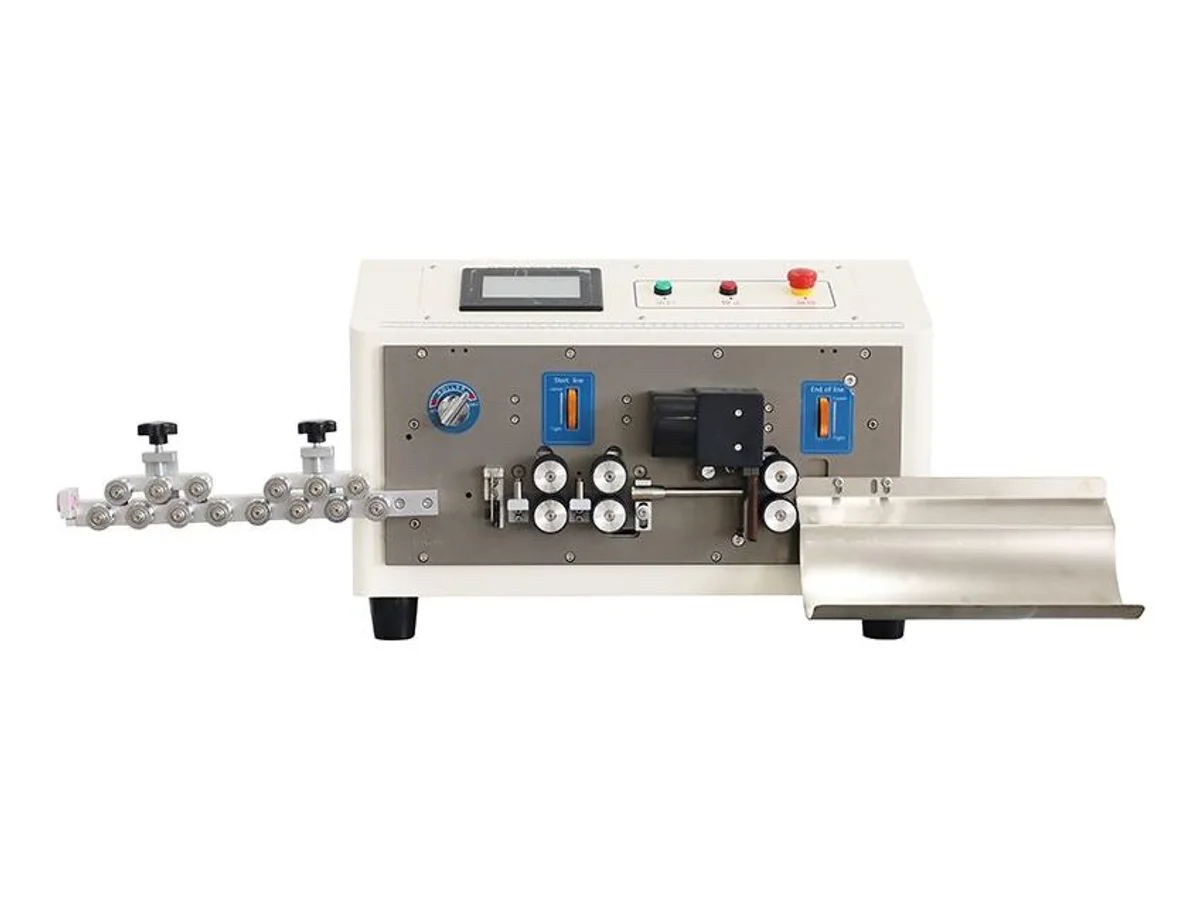
Automatic Sheathed Cable Cutting and Jacket Stripping Machine, Ø1–12 mm
Model WM-1306
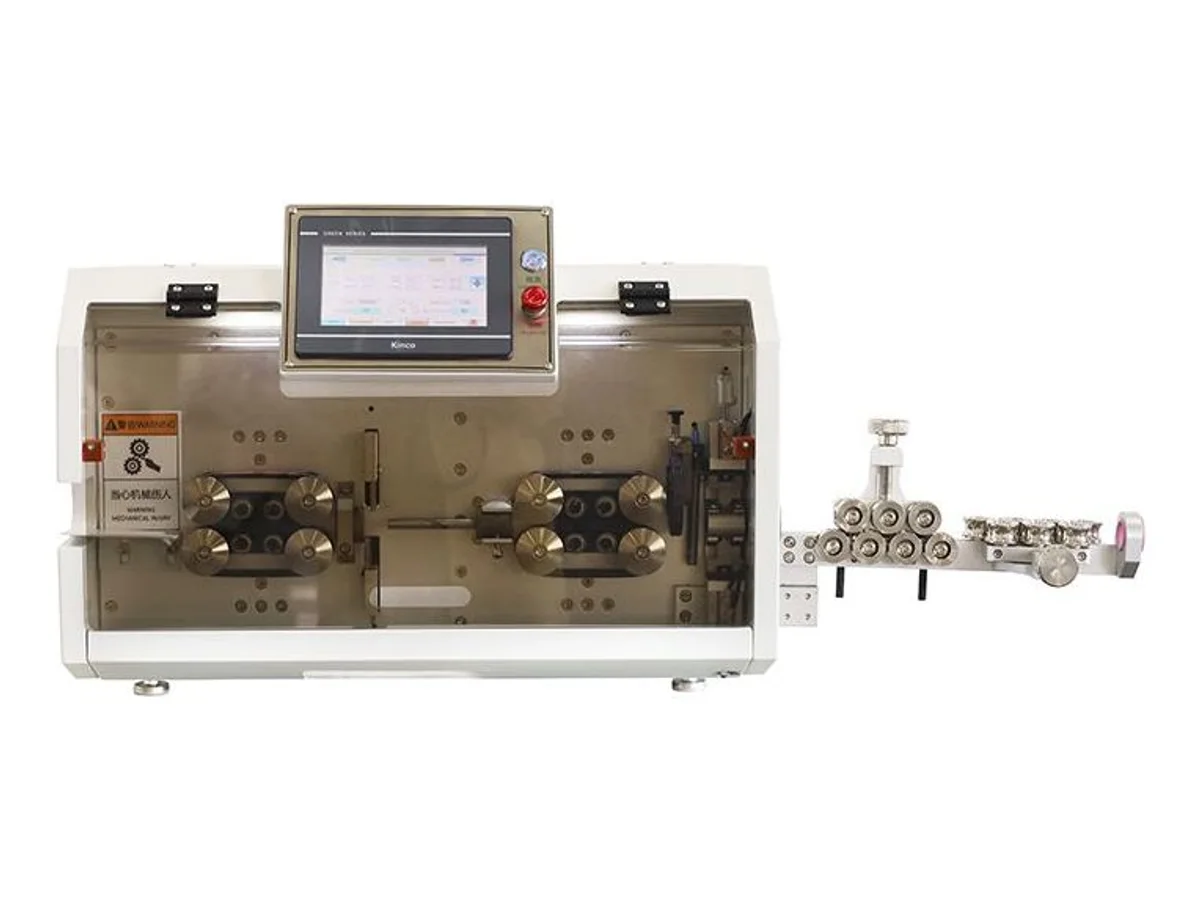
Automatic Cable Cut and Strip Machine with 50-Segment Middle Stripping
Model WM-190