Corrugated Tube Cutting and Longitudinal Slitting Machine, Ø5–30 mm WM-605
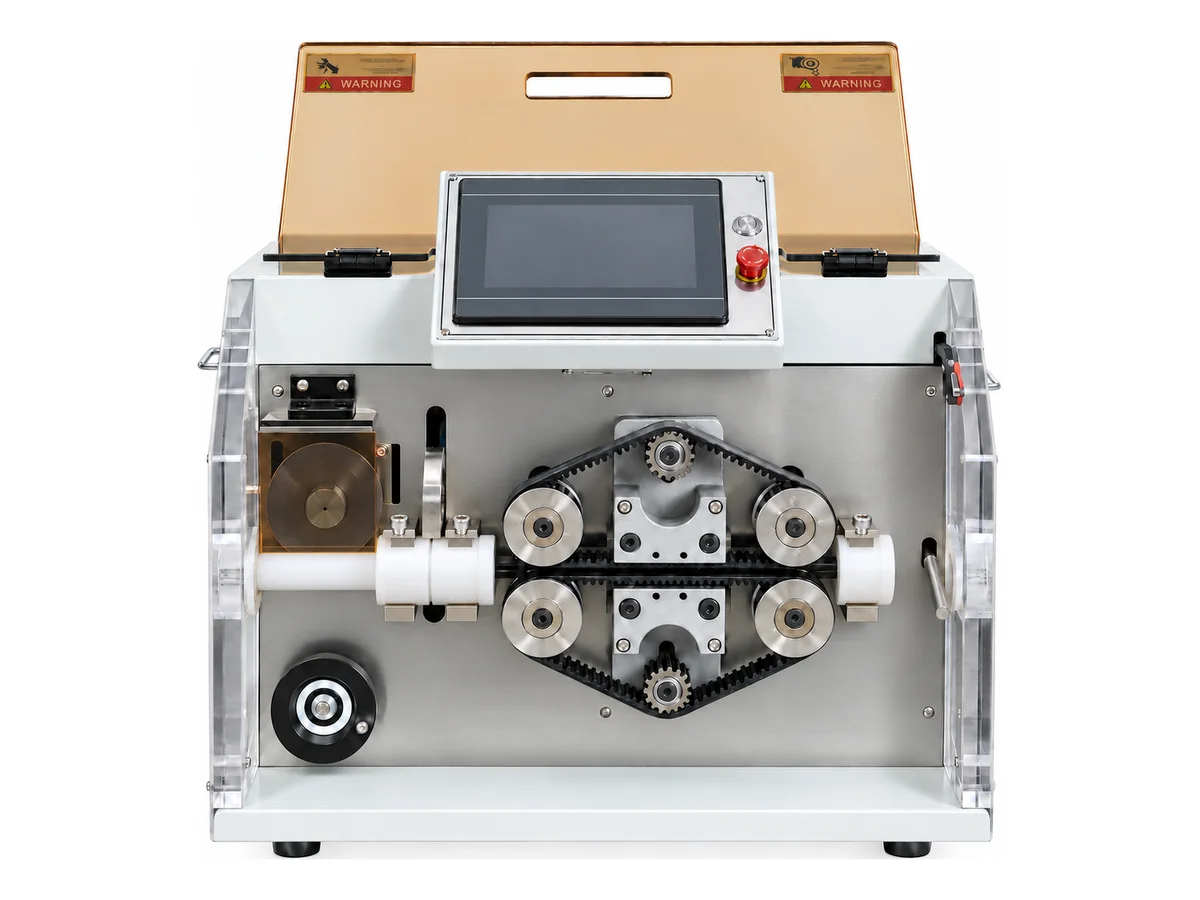
Our WM-605 cuts corrugated conduit to length and provides lengthwise slitting for fitting protective loom around assembled wire harnesses. This 5–30 mm benchtop configuration uses motor-driven cutting, belt feeding and a 7-inch PLC touchscreen. We supply the cutting machine without a tube payoff machine; the specified power is 700 W and length error is ±1% of cut length.
Specifications
| Model | WM-605 |
|---|---|
| Machine configuration | Cutting and slitting machine only; tube payoff machine not included |
| Display | 7-inch color touchscreen |
| Control system | PLC with HMI |
| Cutting method | Motor-driven cutting |
| Stroke | 30 mm |
| Cutting diameter | Φ5–30 mm |
| Length error | ±1% of cut length |
| Additional function | Lengthwise slitting |
| Power supply | Reference configuration: 220 V, 50–60 Hz |
| Power | 700 W |
| Dimensions | 580 × 470 × 500 mm |
| Weight | 70 kg |
| Electrical configuration | We configure the machine’s electrical supply for your installation before shipment. Your quote confirms the voltage, phase, frequency, current and the power cord with plug or industrial connection for your site. Common site supplies are 120 V, 60 Hz with grounded Type B outlets in the US and Canada, with 208 V or 240 V also found at industrial sites. The UK and Ireland use 230 V, 50 Hz with Type G. Australia and New Zealand use nominal 230 V, 50 Hz with Type I, and some Australian sites list 240 V. Three-phase installations in the UK, Ireland, Australia and New Zealand commonly use 400 V at 50 Hz, with 415 V at some Australian sites. |
| Lead time | Your quote confirms the machine configuration, included accessories and dispatch date. |
| Warranty and support | One-year machine warranty and free remote video support for the life of the equipment. |
| Wear parts | For wear parts, every quote lists them with unit price and the location they ship from. |
| Certification | CE (certificate provided with shipment) |
Key features
- Prepare protective loom for completed harnesses: lengthwise slitting lets the tube open around a bundle instead of requiring it to be threaded over the cable before connector assembly.
- Reduce repeated measuring and hand cutting: PLC-controlled feeding and cutting turn recurring conduit jobs into batches set up through the 7-inch touchscreen.
- Keep the tube guided through the working area: the paired belt assemblies and tube guides support feeding into the cutting head. We test the guide and blade setup on your conduit size and wall profile.
- Check cut length and slit quality before ordering: we run your sample, measure the finished pieces and send a video showing the cut ends and opened slit.
- Receive the setup for your destination: we set the voltage for your country and ship the English interface and manual. We confirm your coil supply arrangement and utilities on the quote.
What it processes
- Cut-to-length corrugated conduit for automotive and equipment wire harness protection
- Split loom preparation for dressing already-terminated cable bundles
- Repeated conduit batches for panel shops and harness assembly stations with an existing coil supply arrangement
Protective conduit is often fitted after the cable bundle has already been terminated. A lengthwise slit lets the loom open around that bundle. Our WM-605 combines conduit feeding, cut-to-length preparation and slitting in a benchtop unit, helping repeated loom jobs reach the assembly station as prepared pieces.
A reliable setup also starts before the tube enters the machine. This configuration has no separate tube payoff machine, so we review the way your coil supplies tube to the inlet. Coil drag, wall stiffness and corrugation profile are part of the sample trial, alongside finished length and the slit your assembly team needs.
Send your conduit outside diameter, material, wall thickness, required cut lengths, length tolerance and batch quantity. Include the coil weight and dimensions, plus a sample of the edge and opening you want. We use these to test the working setup and show the result before you order. Start a WM-605 quote with the outside diameter and cut length of your corrugated conduit. If the cut must land on a specific rib or valley, show us where on a photo of the tube.
Engineering knowledge
Choose and troubleshoot this process
- Split Loom Tubing: Cutting and Slitting vs Wire Harness InsertionChoose the machine for the missing step in split loom assembly. Compare conduit cutting and lengthwise slitting with fitting the loom to a terminated harness.
- Cutting 316 Stainless Wire Rope to 6 Inches with WM-9323A U.S. customer sent 1/8-inch 316 stainless wire rope for a 152.4 mm cut trial. See the cut ends and the checks needed for ferrule fit and length.
- Coated Steel Wire Rope Cutting: Check the End and Sleeve FitSpecify coated steel rope cutting by metal diameter, coating, strand containment and actual sleeve fit. Keep cutting acceptance separate from termination strength.
WM-605 — common questions
What tube payoff should I pair with the cutter?
The WM-605 configuration covers the cutting and slitting unit. Its internal belts feed tube through the head. Share your coil weight, outside diameter and current supply setup so we can confirm the feed arrangement and quote a separate payoff if needed.
How does this differ from the WM-583 set with a tube feeder?
Our WM-583 cutting and splitting set includes a separate powered tube feeder and specifies a 5–60 mm cutting range. WM-605 is the 5–30 mm benchtop configuration without that feeder, with motor-driven cutting, a 30 mm stroke and 700 W power. We quote the equipment included in each configuration explicitly.
Will the machine pull directly from any coil?
Coil drag and tube stiffness affect feeding, especially as the coil position changes. We check your coil and supply path during the application review. For a separate payoff solution, see our wire feeding and payoff equipment or send your coil details for a matched setup.
What does the ±1% length error mean for my part?
The specified error is ±1% of the cut length: at a 100 mm target that corresponds to ±1 mm, and at 500 mm to ±5 mm. Tell us your actual tolerance and we measure samples from your conduit before confirming the job.
What are the minimum cut length and production speed?
The usable length range and production rate are confirmed on the quote for your tube and required piece length. The 30 mm stroke describes the cutting mechanism, not the shortest or longest finished piece. Send the target lengths, tube diameter, wall thickness and batch quantity for a sample run.
Is automatic cutting worthwhile for an occasional batch of 1,000 pieces?
For an occasional small batch, a suitable hand cutter and length stop may be enough. Automatic feeding becomes more useful for recurring batches of many thousands or when manual length preparation and slitting consume time needed for assembly. We review the batch pattern as well as the maximum tube size.
How do we obtain blades and feeding parts?
For replacement blades, belts and other wear parts, every quote lists them with unit price and the location they ship from. We identify the parts for your supplied machine so replacement planning does not depend on guessing from a photograph.
Related machines in Tube, Tape & Material Cutting
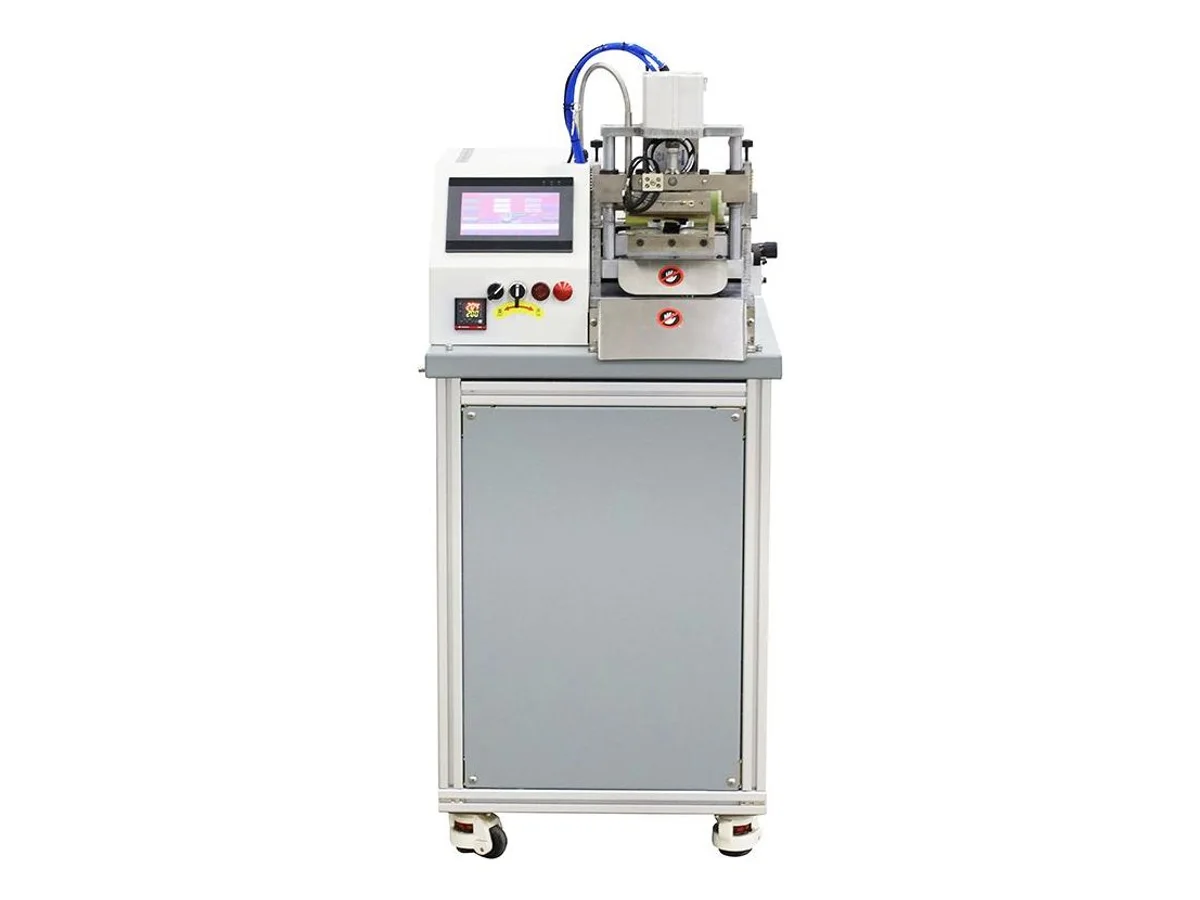
Hot and Cold Webbing Shape Cutting Machine, 45–135°
Model WM-566
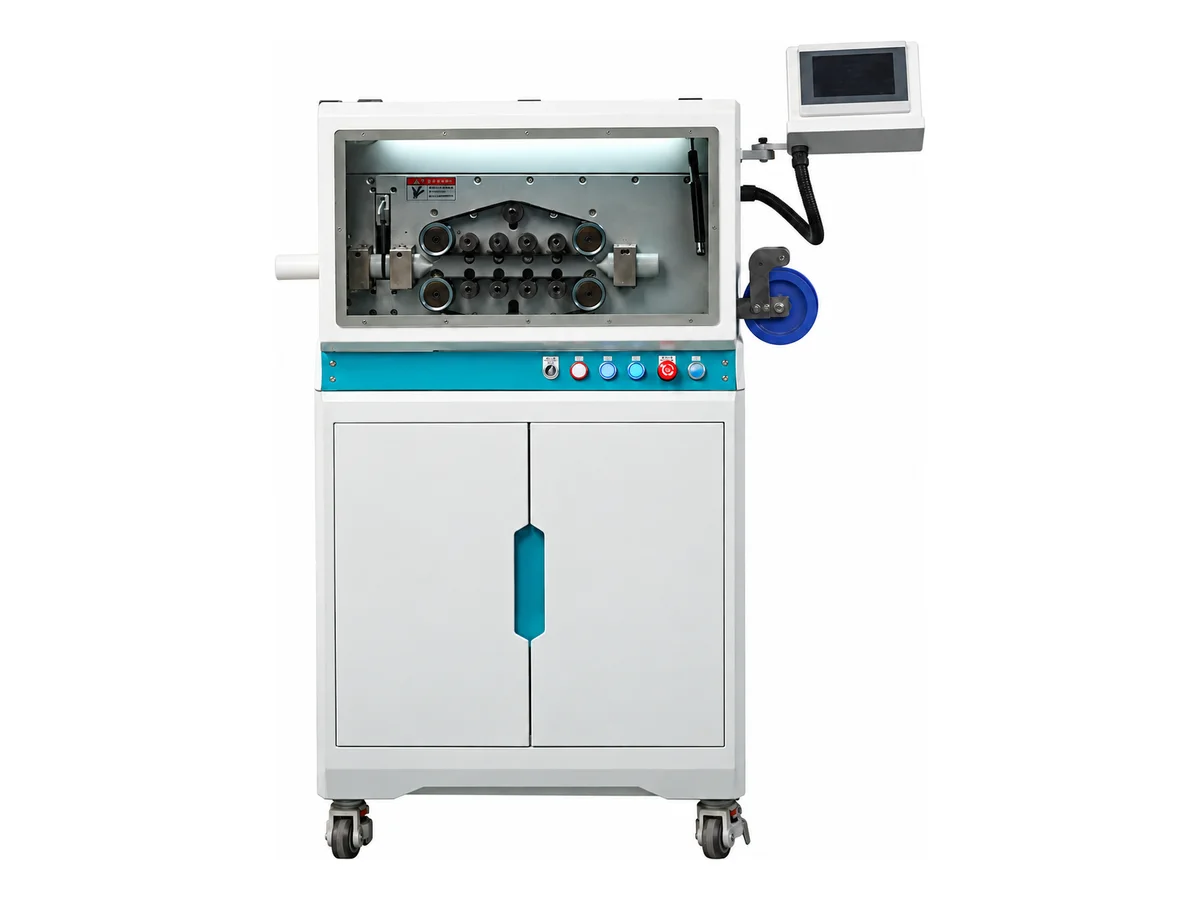
Automatic Plastic Tube Cutting Machine for Ø4–30 mm Tube
Model WM-606
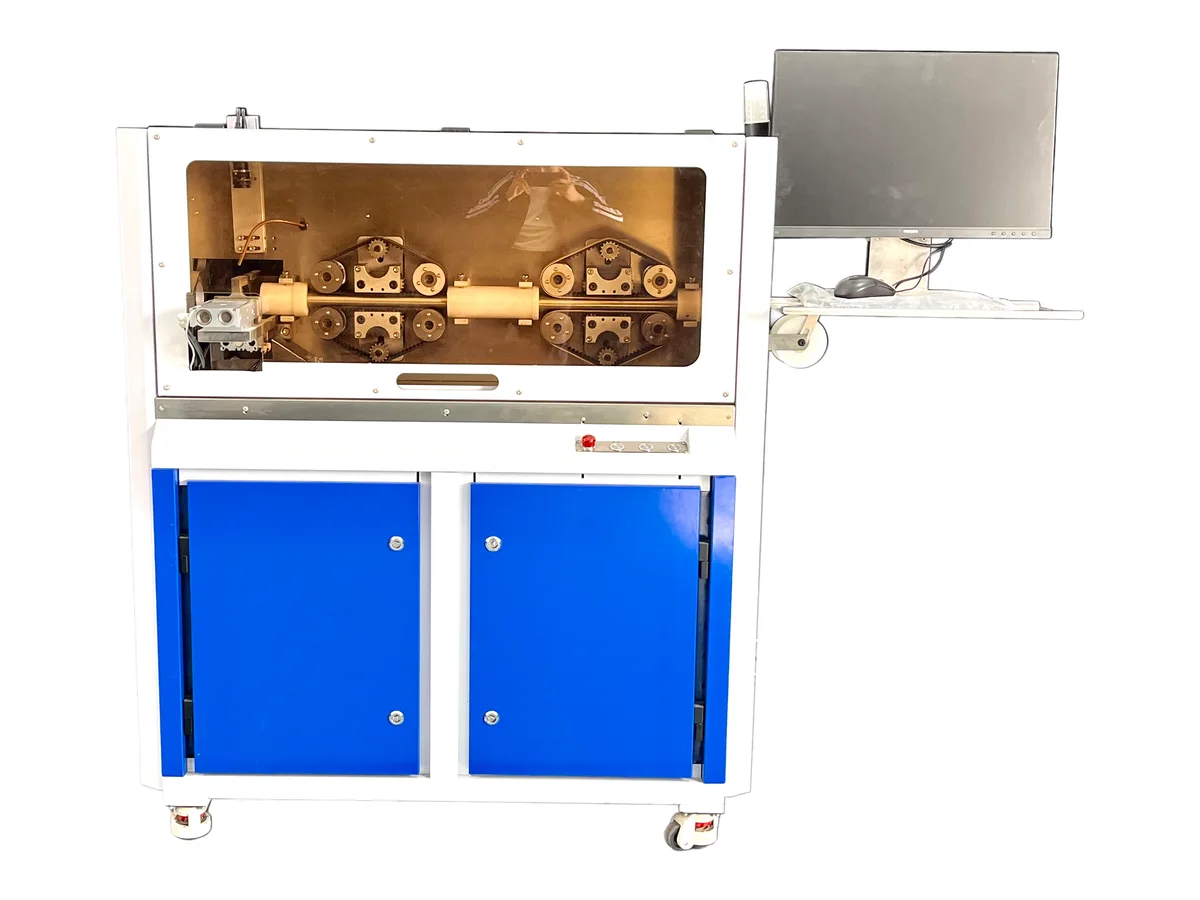
Automatic Braided Sleeve Taping and Cutting Machine for OD 8–30 mm Tube
Model WM-177