Ultrasonic Webbing Cutting and Sealing Machine for Straight, Angle and Dovetail Ends WM-596
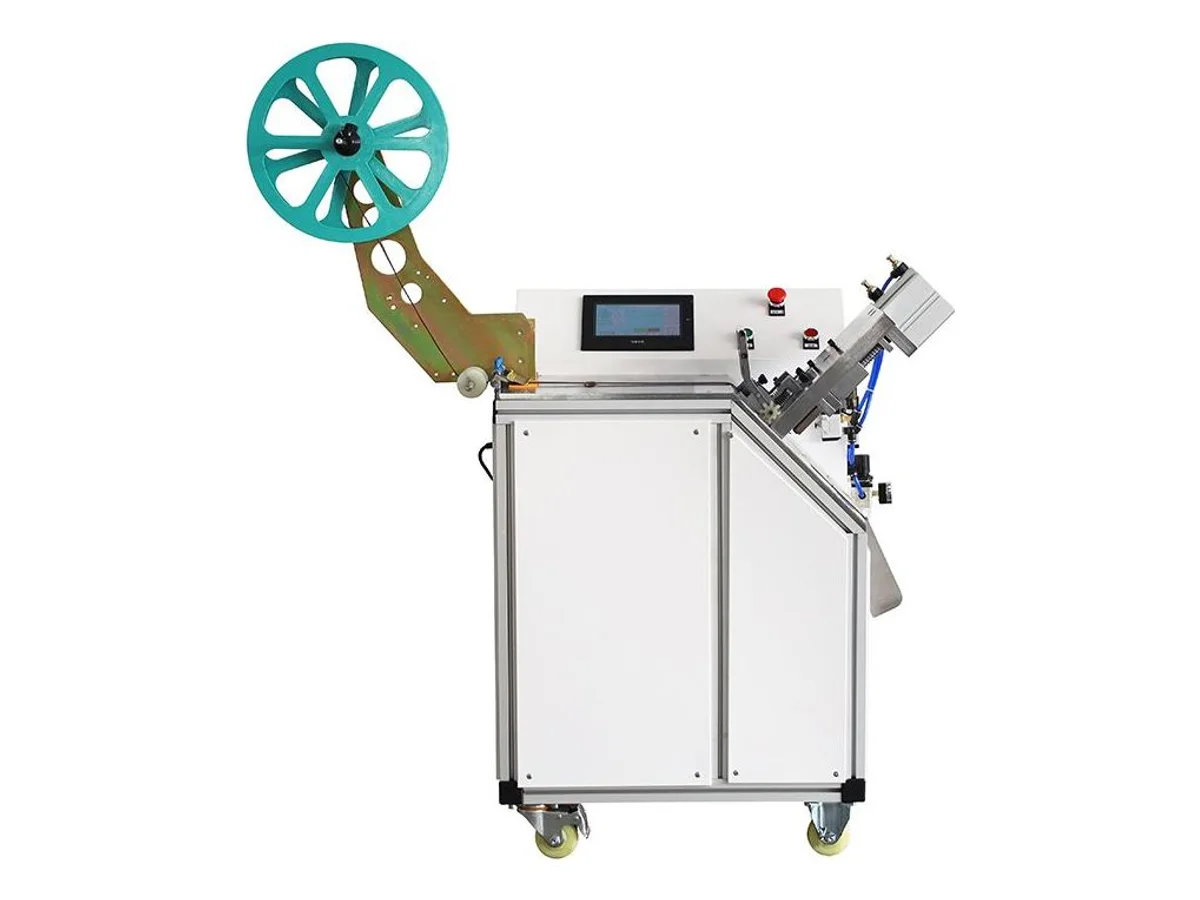
The WM-596 is a floor-standing 18 kHz ultrasonic cutting machine for synthetic ribbon, webbing and woven tape up to 70 mm wide. Its servo-driven feed measures programmed lengths from 1 to 99,999 mm, while the ultrasonic tooling cuts and seals straight, oblique or dovetail end profiles at a stated speed of 120 pieces per minute. The 220 V machine draws 2.4 kW, requires 0.5–0.6 MPa compressed air and measures 1,050 × 600 × 850 mm at 120 kg.
Specifications
| Model | WM-596 |
|---|---|
| Function | Automatic ultrasonic cutting and edge sealing for ribbon, webbing and woven tape |
| Ultrasonic frequency | 18 kHz |
| Speed | 120 pcs/min |
| Max. cutting width | 70 mm |
| Cutting length | 1 – 99,999 mm |
| Cutting shapes | Straight, oblique and dovetail ends |
| Feed drive | Servo motor |
| Control | PLC with touchscreen and automatic counting |
| Power | 2.4 kW |
| Voltage | Reference configuration: 220 V |
| Air supply | 0.5 – 0.6 MPa |
| Dimensions | 1,050 × 600 × 850 mm |
| Weight | 120 kg |
| Electrical configuration | We configure the machine’s electrical supply for your installation before shipment. Your quote confirms the voltage, phase, frequency, current and the power cord with plug or industrial connection for your site. Common site supplies are 120 V, 60 Hz with grounded Type B outlets in the US and Canada, with 208 V or 240 V also found at industrial sites. The UK and Ireland use 230 V, 50 Hz with Type G. Australia and New Zealand use nominal 230 V, 50 Hz with Type I, and some Australian sites list 240 V. Three-phase installations in the UK, Ireland, Australia and New Zealand commonly use 400 V at 50 Hz, with 415 V at some Australian sites. |
| Lead time | Your quote confirms the machine configuration, included accessories and dispatch date. |
| Warranty and support | One-year machine warranty and free remote video support for the life of the equipment. |
| Wear parts | For wear parts, every quote lists them with unit price and the location they ship from. |
| HS Code | 8515.80 (common reference — final classification confirmed by your customs broker) |
| Certification | CE (certificate provided with shipment) |
Key features
- The 18 kHz ultrasonic head generates heat at the cut line itself, severing synthetic webbing while fusing the fibres so the edge leaves the station sealed instead of fraying during sewing, buckle insertion or packing
- Straight, oblique and dovetail profiles are supported on the same machine platform; the installed cutting tool defines the end geometry, so the required profile is confirmed against a physical sample before production
- The specified speed is 120 pieces per minute, with servo-driven feeding and PLC counting for repeat production; actual output is verified against the requested length, width, thickness and end shape during the sample trial
- An integrated reel holder, adjustable entry guide and powered feed rollers keep flat tape aligned from the roll to the cutting station instead of relying on an operator to hand-feed every piece
- The English touchscreen exposes fixed length, production speed, cutting time, batch quantity and completed count, giving the operator one place to set the job and monitor output
- The floor-standing aluminium-frame cabinet carries the controls, pneumatic preparation and ultrasonic system in one mobile unit, with lockable casters for repositioning beside a sewing or assembly line
What it processes
- Polyester and nylon webbing cut to sealed lengths for luggage, bags, footwear and sporting-goods straps
- Satin ribbon, gift-wrapping tape and decorative woven trim requiring clean, non-fraying ends
- Synthetic fastening and pull straps requiring straight, angled or dovetail end profiles before sewing or buckle assembly
- Repetitive cut-to-length work where servo feeding and batch counting replace manual measuring and hot-knife trimming
Suited for: synthetic ribbon, webbing and woven tape up to 70 mm wide when the finished piece needs a straight, oblique or dovetail end with a fused, non-fraying edge. The integrated reel stand and servo feed make it a production machine for counted batches, not a hand-fed ultrasonic bench tool.
For other jobs and machine options: natural-fibre tape that cannot fuse, wire, cable, rigid tube or corrugated conduit. Natural-fibre and mixed-material jobs require a sample test; conductor work belongs on the wire cutting and stripping machines, while tubes and sleeves should be matched within the tube and pipe cutting category. If the real requirement is an adjustable hot/cold angle rather than a dedicated ultrasonic profile, use the WM-566 rotary blade shape cutter. For a lower-output ultrasonic line focused on straight, bevel and arrow ends, compare the WM-567 ribbon and tape cutter.
Send 2–3 metres of the actual tape plus the finished length, end-profile drawing and daily volume. Wiromac runs the material on the configured machine, records the measured output and edge appearance, and sends the video and cut samples for approval before final acceptance. For a WM-596 quote, start with your webbing, tape or strip width and the finish you need at the cut edge. If the end has to be sealed or cut to a shape, include a photo or sketch.
Engineering knowledge
Choose and troubleshoot this process
- Cutting 316 Stainless Wire Rope to 6 Inches with WM-9323A U.S. customer sent 1/8-inch 316 stainless wire rope for a 152.4 mm cut trial. See the cut ends and the checks needed for ferrule fit and length.
- Coated Steel Wire Rope Cutting: Check the End and Sleeve FitSpecify coated steel rope cutting by metal diameter, coating, strand containment and actual sleeve fit. Keep cutting acceptance separate from termination strength.
- Can One Cutter Process Bubble Wrap and Paper Rolls?Choose roll-to-sheet cutting for bubble wrap and paper by feed pressure, unwind control, complete separation and collection, rather than textile sealing.
WM-596 — common questions
Which materials can the WM-596 cut and seal?
It is intended for thermoplastic woven materials such as polyester and nylon ribbon, webbing and tape. These fibres soften at the ultrasonic cut line and fuse into a sealed edge. Pure cotton, paper and other non-thermoplastic materials may be cut but will not self-seal, so we require a material sample before confirming the process.
Can one setup produce straight, angled and dovetail ends?
The machine platform supports all three profiles, but the physical cutting tool determines the end geometry. We confirm the required shape, width and edge appearance from your drawing or sample, install the matching tool and run your material on video before shipment. A profile change may require a different tool rather than only a touchscreen setting.
How do I estimate output for my webbing and end shape?
Send your cut length, webbing width and thickness, and required end profile. We time a sample run and record the measured rate and trial conditions on the quote. The listed rate is 120 pcs/min; feed stability and the selected shape also affect output.
How does the WM-596 differ from the other webbing cutters?
Choose the WM-596 when you need a 70 mm, floor-standing ultrasonic platform with a stated 120 pcs/min output and dedicated shaped tooling. The WM-567 ultrasonic ribbon cutter is the simpler 60–80 pcs/min option for straight, bevel and arrow cuts. The WM-566 rotary blade cutter uses a programmable 45–135° hot/cold blade and reaches 100 mm on straight cuts, making it the better choice when adjustable angle and wider stock matter more than ultrasonic cutting.
What is this machine not designed for?
It is not a wire or cable cutter, and it is not for rigid tube or corrugated conduit. For conductor processing use the wire cutting and stripping machines. For printed ribbon that must register every cut to an artwork repeat, use the WM-580 mark-positioning ultrasonic cutter.
Related machines in Tube, Tape & Material Cutting
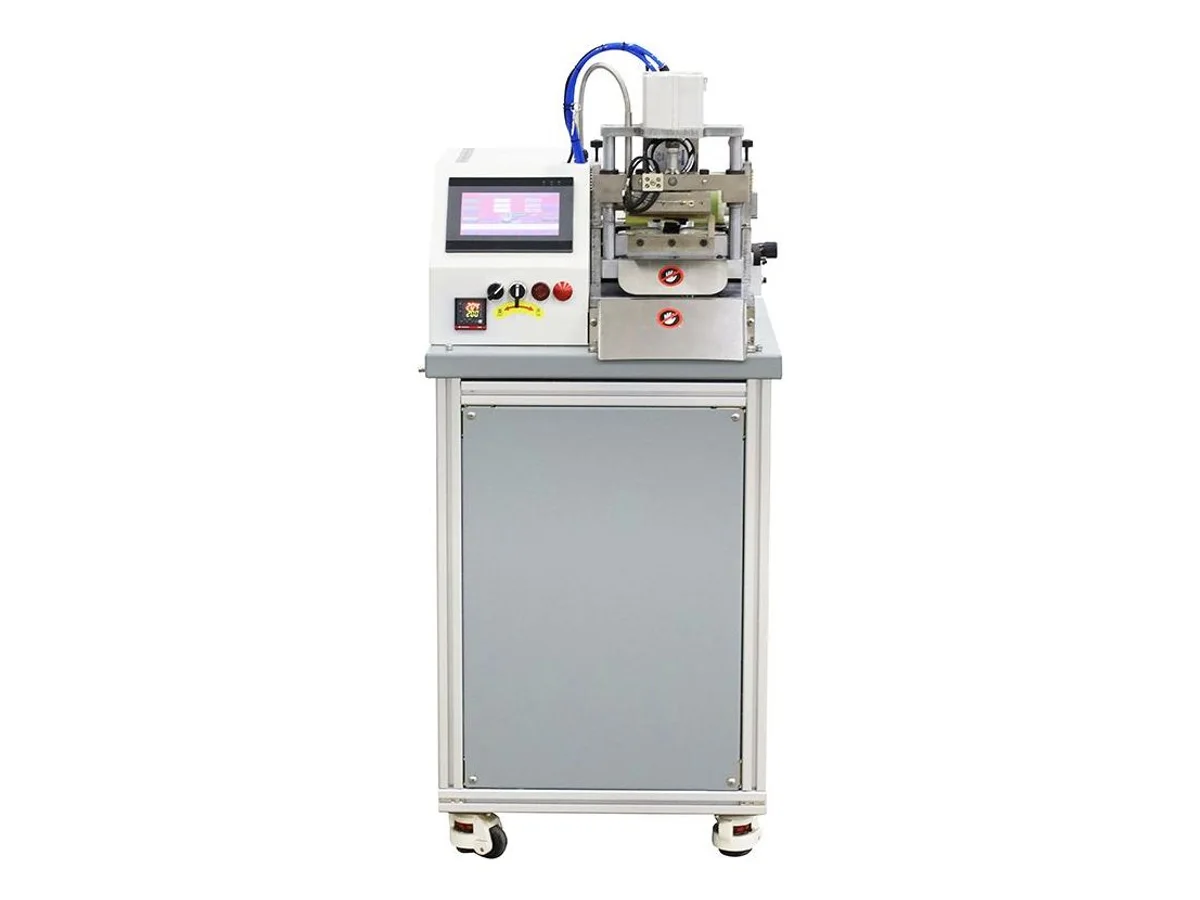
Hot and Cold Webbing Shape Cutting Machine, 45–135°
Model WM-566
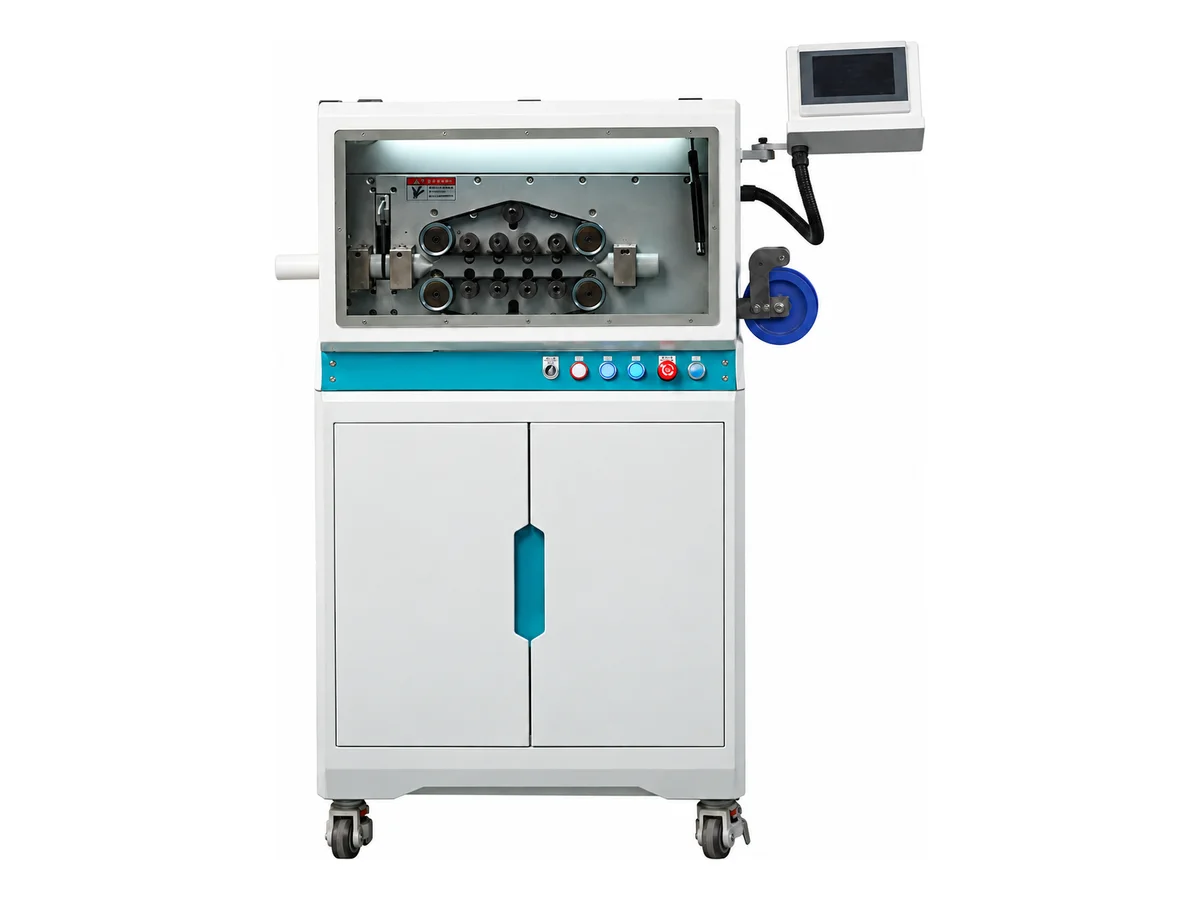
Automatic Plastic Tube Cutting Machine for Ø4–30 mm Tube
Model WM-606
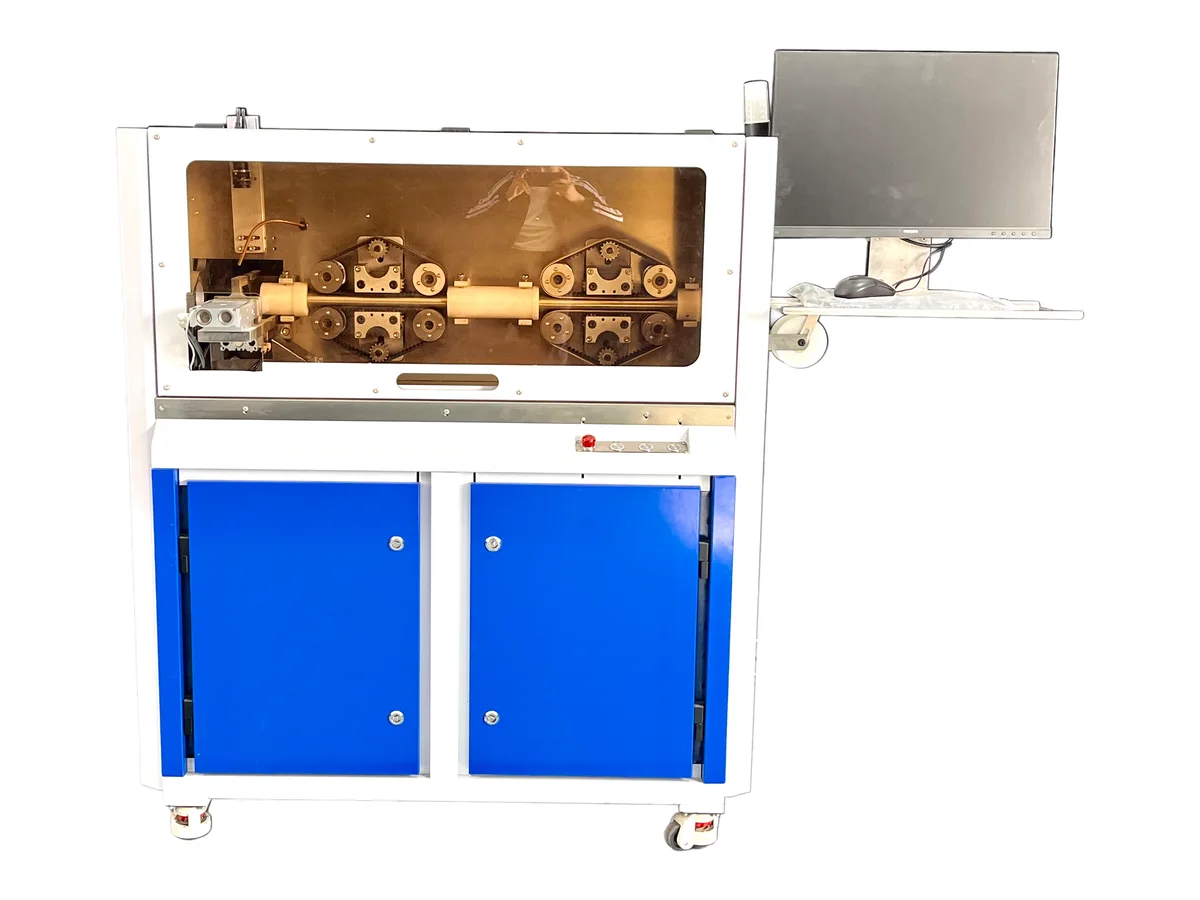
Automatic Braided Sleeve Taping and Cutting Machine for OD 8–30 mm Tube
Model WM-177