Automatic Double-End Wire Crimping, Seal and Housing Insertion Machine WM-3247
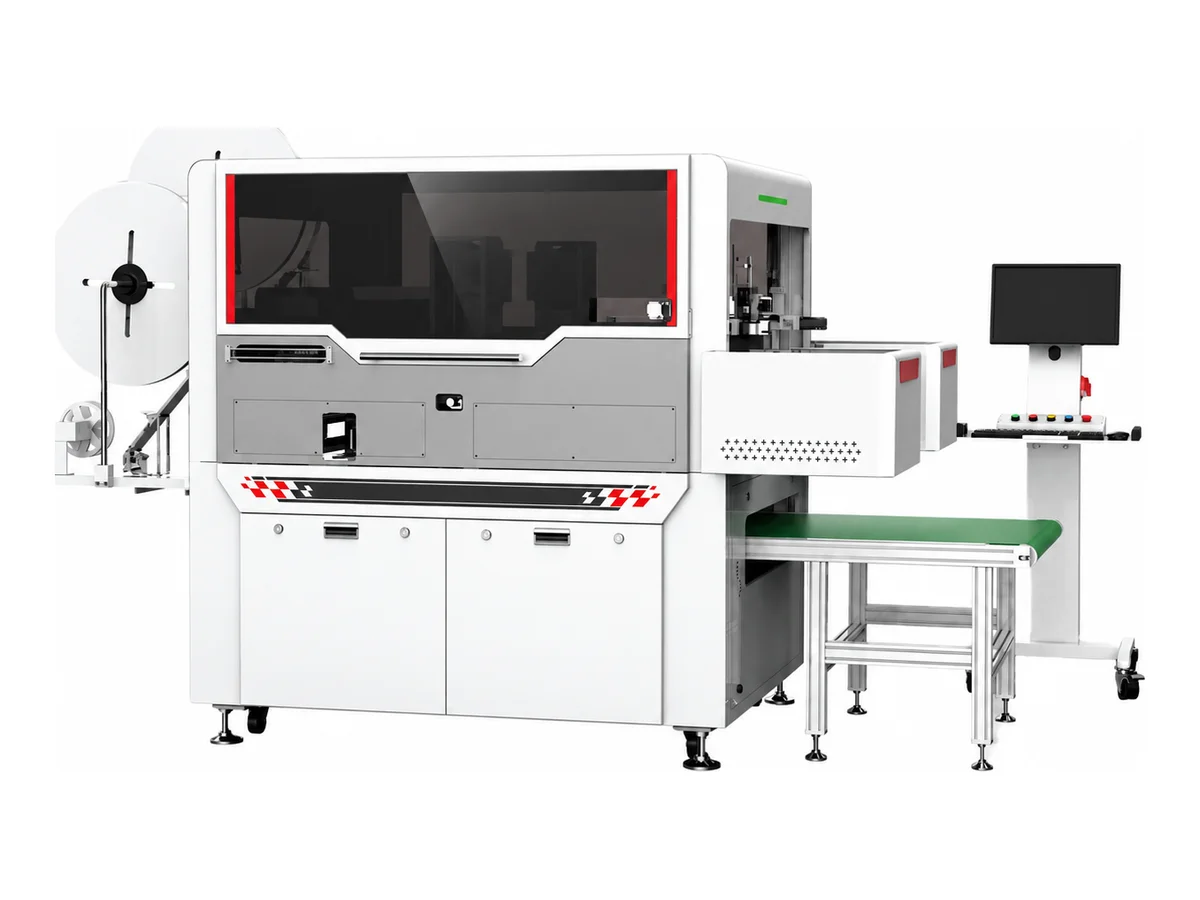
We configure the WM-3247 to cut and strip wire, crimp terminals and insert wire seals and connector housings at both ends. Its specified wire range is 0.35–2 mm², with standard processing lengths of 90–600 mm and a 2 T servo crimping unit. Vision, wire-presence, air-pressure, take-up and pressure checks support production of harnesses matched to your connector drawings and tooling.
Specifications
| Process | Wire cutting and stripping, double-end terminal crimping, double-end wire-seal and housing insertion |
|---|---|
| Wire range | 0.35–2 mm² |
| Wire processing length | 90–600 mm; customization available |
| Strip length | 0–10 mm at both ends; special dimensions can be adapted |
| Crimping unit | 2 T servo crimping press |
| Cycle reference | 2.3–2.59 s per wire insertion cycle; confirmed on actual samples |
| Detection | Vision, missing wire, air pressure, wire take-up and pressure monitoring |
| Electrical supply | 220 V, 50/60 Hz |
| Power | 4900 W |
| Compressed air | Dry air; listed as 4.5–6 kgf. Pressure unit and supply setting confirmed on the quote. |
| Dimensions | 1600 × 2200 × 2050 mm; first dimension identified as height |
| Weight | Approximately 1000 kg |
| HS Code | 8463.90 (common reference — final classification confirmed by your customs broker) |
| Certification | CE (certificate provided with shipment) |
Key features
- Combine wire preparation, seal handling, crimping and housing insertion at both ends to reduce manual transfers when building a defined connector-to-connector harness.
- Match the feed and insertion tooling to the connector cavities and wire seals. We check the pinout, terminal seating and seal position together on your sample assembly.
- Set wire lengths within the standard 90–600 mm range and stripping up to 10 mm at each end, with adaptations quoted for jobs outside those dimensions.
- Vision and process monitoring provide checkpoints during assembly. We define what each check detects and agree the acceptance criteria for your terminal, seal and housing combination.
- Send both housings, terminals, seals, wires and the complete pinout. We prepare the tooling and record the assembly sequence and finished harness before you order.
What it processes
- Automotive and equipment harnesses requiring terminal crimping, wire seals and connector housings at both ends
- Connector-to-connector wiring in the specified 0.35–2 mm² range
- Multicavity or mixed-length harness projects evaluated against housing geometry and insertion access
Automating connector assembly starts with the complete pinout. A terminal can look seated while occupying the wrong cavity, and a correctly crimped wire still needs the specified seal position. We use the two connector drawings, wire list and physical parts to configure the feeding, insertion and inspection sequence.
Agree on first-piece checks before planning shift output: wire length, cavity assignment, terminal seating and seal position. Then review the sample-run time with your expected batch size and changeover frequency. That ties the production estimate to the harness you actually need to make.
If the opposite end needs tinning for a later soldering operation, compare our WM-3245 crimping, housing-insertion and tinning machine. Our WM-396 double-end crimping and seal-insertion machine offers a different wire range and configuration for evaluation.
Include both connector part numbers, seals, wire sizes, pinout and target quantities in your inquiry. We will return a tooling proposal and video of the sample assembly so you can check the process and result before ordering.
The gallery includes pneumatic crimp applicators that we configure and quote as options for the selected terminal. Harness examples show connector, wire and end preparation arrangements; we confirm the process and tooling for your exact assembly using your drawing and parts.
Engineering knowledge
Choose and troubleshoot this process
- Ferrule Crimping: Strip Length, Terminal Fit and Chain-Fed vs Loose-Fed MachinesCompare chain-fed and loose-ferrule crimping machines by wire preparation, changeover, terminal fit and batch output. Check WM-3243 and WM-3246 specifications.
- How to Choose a Terminal Crimping MachineChoose a terminal crimping machine by terminal presentation, wire range, applicator standard, required process steps, inspection method and production mix.
- Terminal Crimp Defects: Causes, Inspection and Corrective ActionsTroubleshoot low pull force, incorrect crimp height, strand loss, bellmouth defects, insulation support problems and inconsistent terminal feeding.
WM-3247 — common questions
Can the same machine handle different connector housings?
Compatibility depends on the terminal, seal and housing geometry, not just wire size. A new connector can require different feeding, crimping and insertion tooling. We evaluate both ends of the drawing and list the tooling and changeover requirements on your quote.
Are seals and housings assembled at both ends?
The specified process covers double-end crimping, wire-seal insertion and housing insertion. We confirm the exact sequence and supplied tooling against your sample harness, including any end that does not require a seal.
Is the 2.3–2.59-second figure guaranteed for my harness?
It is the stated per-wire insertion cycle, subject to actual samples. Cavity count, wire length, connector geometry and inspection steps affect a finished harness cycle. We time a representative sample run and confirm the production estimate for your assembly.
Can it process multilayer housings or unequal wire lengths?
We evaluate these projects using the cavity layout, terminal locking features, wire lengths and insertion access. Send the drawing and actual housings. The configured tooling and sample result determine what we supply for the job.
What air supply should I prepare?
Use dry compressed air. The specification records 4.5–6 kgf without a complete pressure unit, so we confirm the operating pressure and supply setting on the quote before you prepare the installation.
How does it compare with the single-end crimping and tinning machine?
We configure WM-3247 for connector and seal assembly at both ends, in 0.35–2 mm² wire. Our WM-3245 combines a connector end with a twisted and tinned tail, using an eight-color selector and a listed 0.5–2.5 mm² range. Choose according to the two ends of the finished harness.
What support is included after delivery?
We set the voltage for your country and ship the English interface and manual. For blades, feeder wear parts and crimping or insertion tooling, every quote lists them with unit price and the location they ship from. We confirm the delivered electrical configuration against your installation requirements.
Related machines in Crimping & Connector Assembly
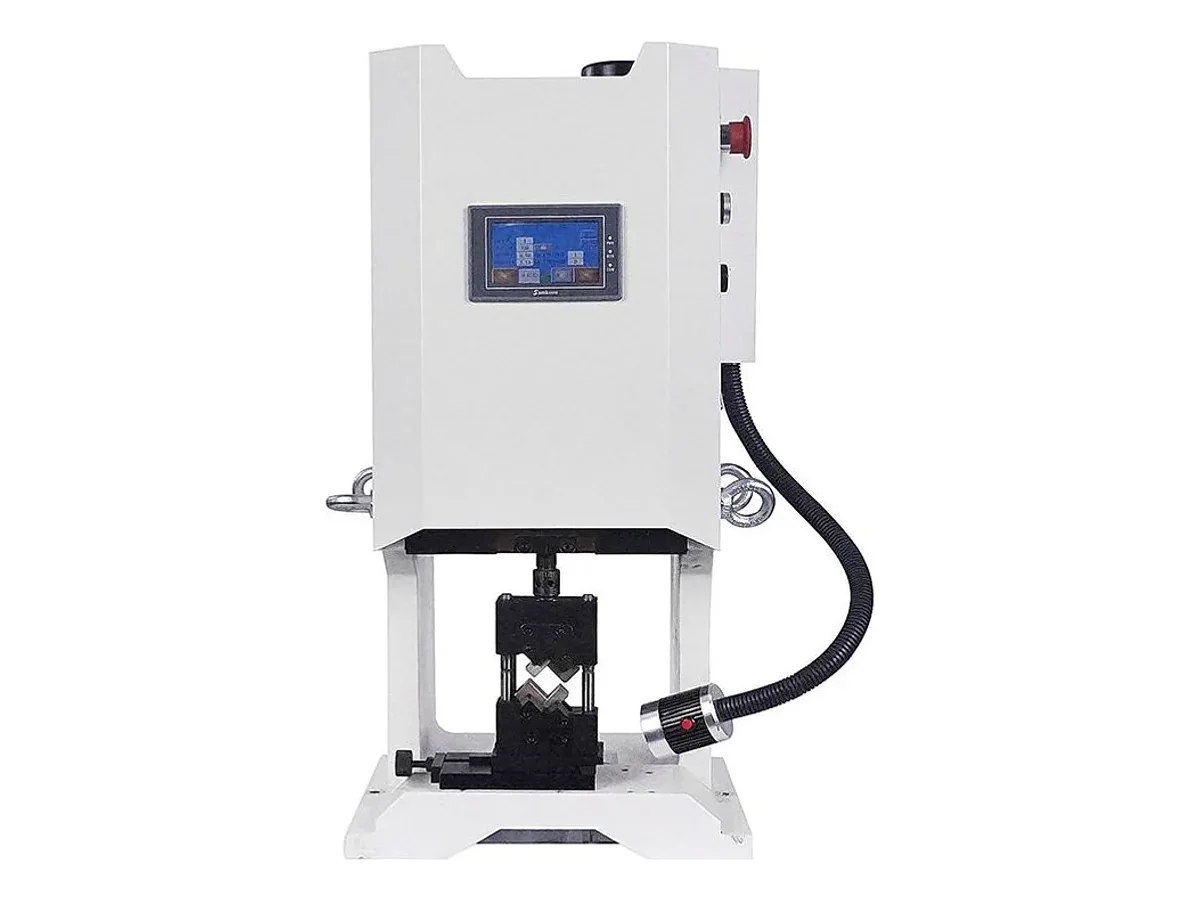
10-Ton Servo Terminal Crimping Machine, 100 kN Bench Press
Model WM-3110T
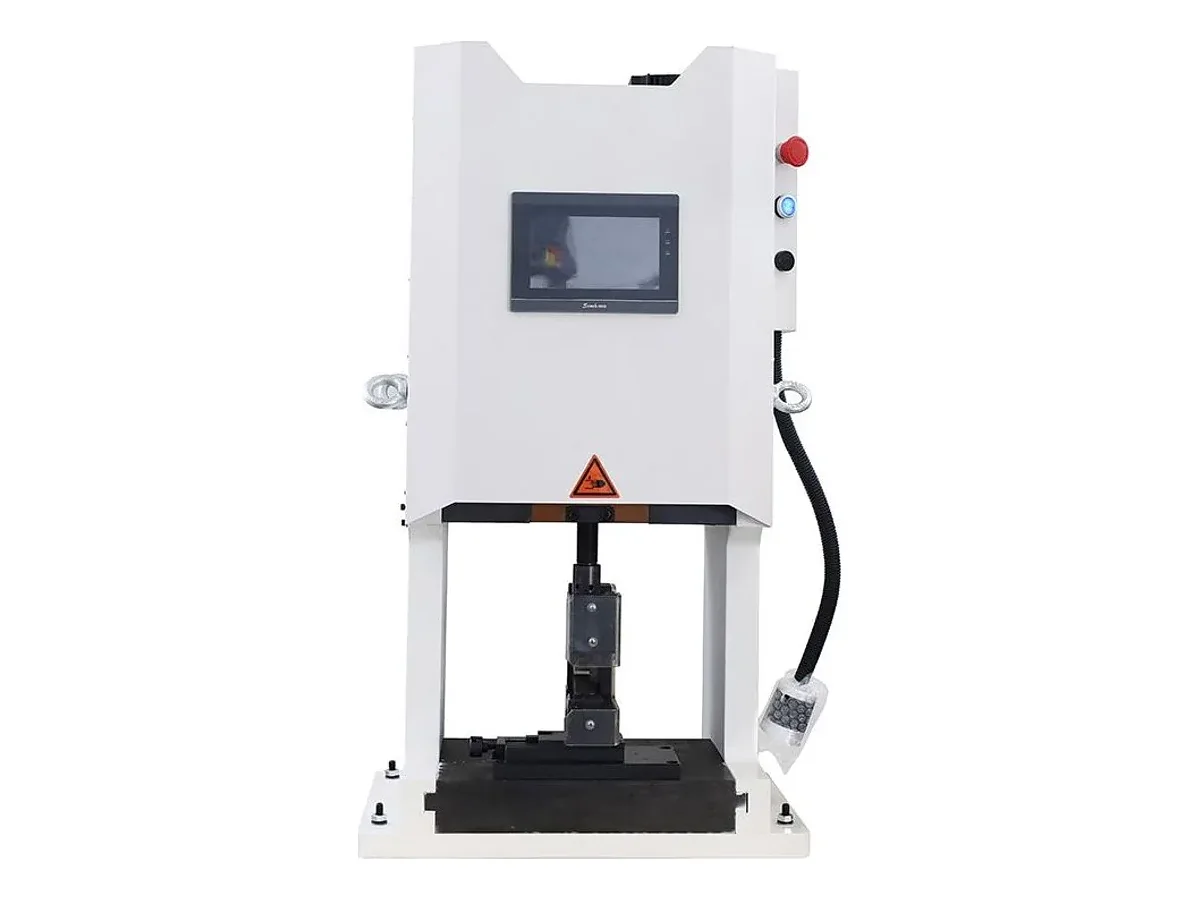
20-Ton Servo Cable Lug Crimping Machine, 200 kN and 40 mm Stroke
Model WM-3120T
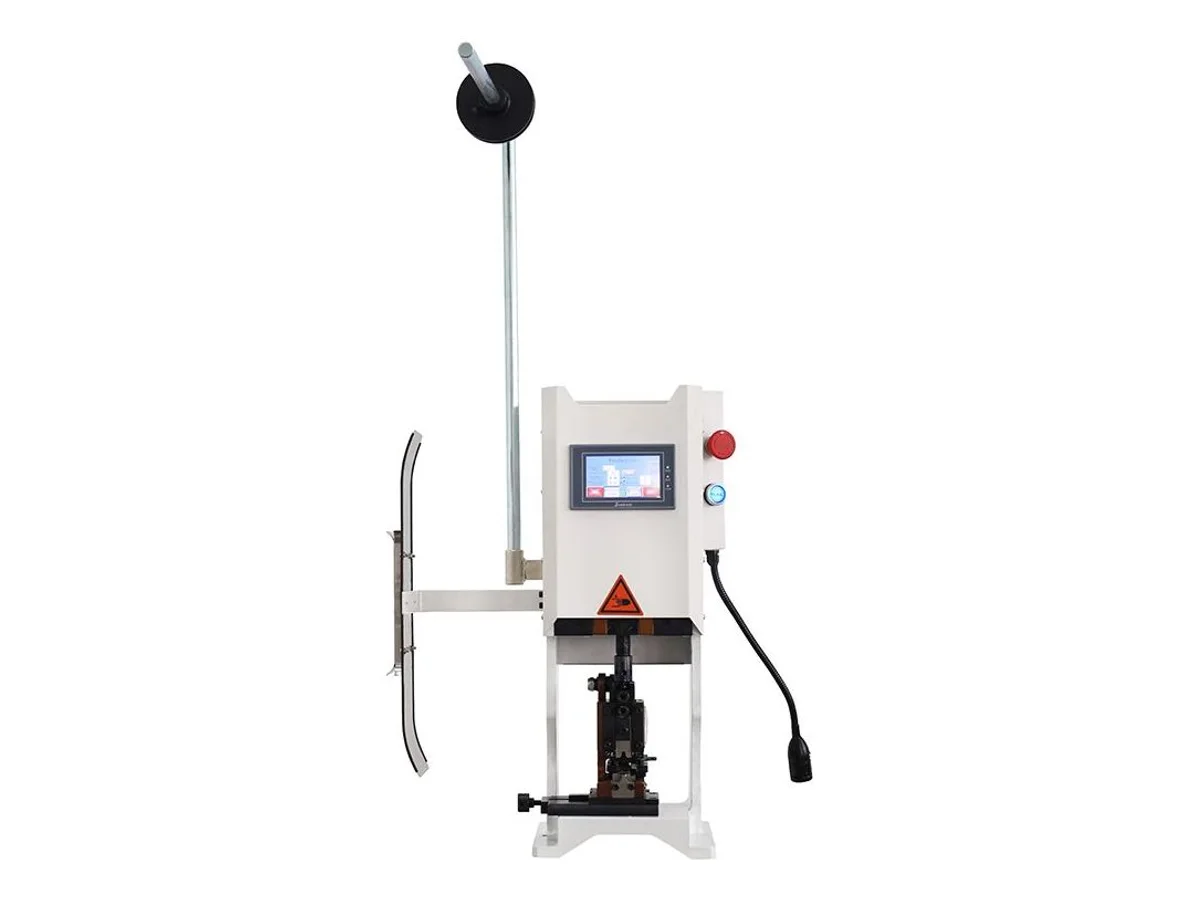
2-Ton Servo Terminal Crimping Machine, 20 kN Touchscreen Bench Press
Model WM-3102S