Automatic Double-End Wire Crimping, Seal & Housing Insertion Machine, AWG 24–12 WM-396
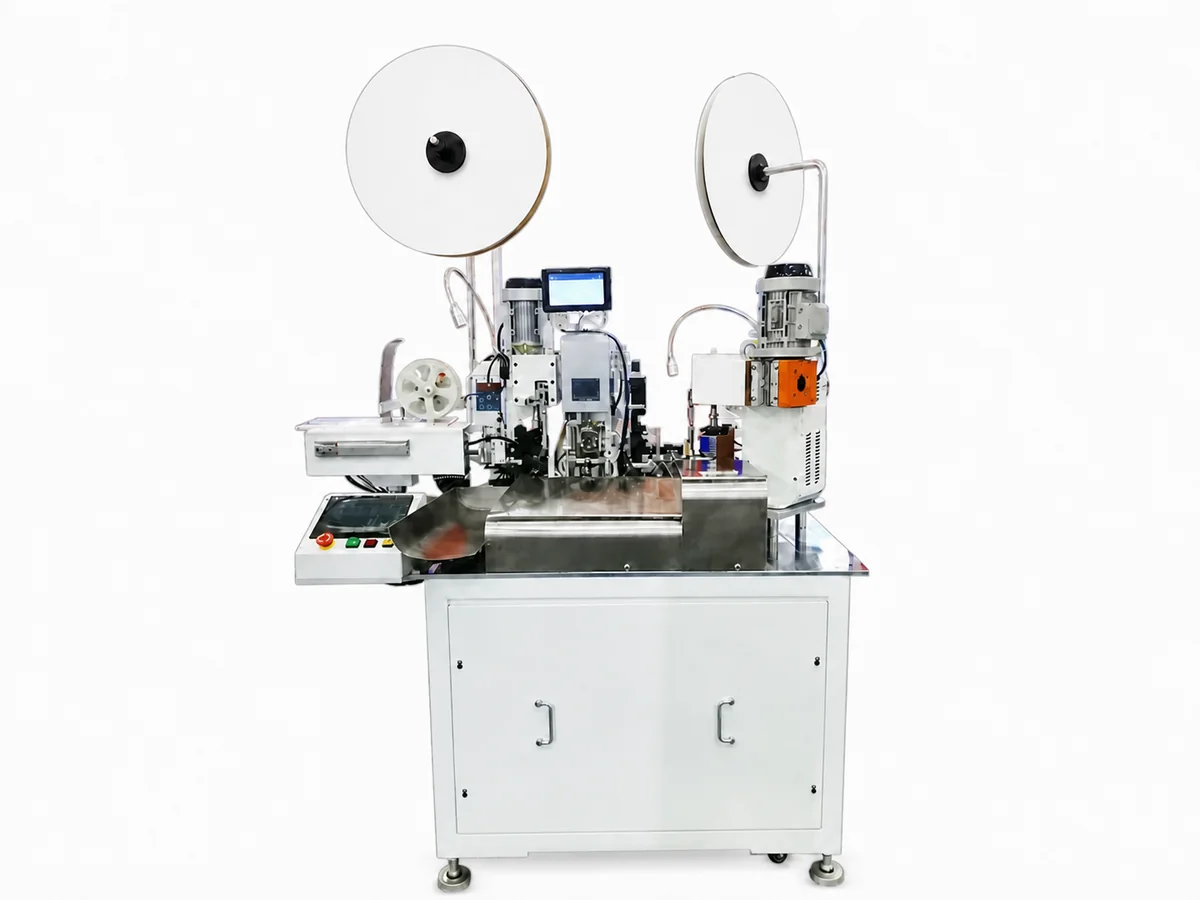
The WM-396 cuts and strips both ends of AWG 24–12 wire, crimps terminals on both ends, inserts a waterproof wire seal on one end and seats the crimped terminal into its connector housing in one automatic cycle; a double-end seal configuration is available as a custom build. It processes up to 2,000 leads per hour depending on the wire, terminal, housing and finished length, accepts jobs as short as 35 mm, and uses 2.0–4.0 T crimping stations. Low-air-pressure, terminal-presence and seal-presence checks stop incomplete cycles before the leads reach the output bin.
Specifications
| Function | Double-end wire cutting and stripping, double-end terminal crimping, single-end waterproof wire seal insertion, and automatic connector housing insertion; double-end seal insertion available as a custom configuration |
|---|---|
| Wire range | AWG 24 – AWG 12 |
| Production capacity | Up to 2,000 pcs/h (actual speed depends on the wire, terminal, seal, housing and finished length) |
| Minimum finished length | 35 mm standard; shorter lengths require customization |
| Stripping length | 1 – 10 mm |
| Processing accuracy | ±0.1 mm (source data-sheet value; verify against the selected wire and length during sample testing) |
| Crimping force | 2.0 – 4.0 T |
| Detection | Low air pressure, terminal presence and waterproof wire seal presence |
| Air pressure | 0.4 – 0.5 MPa |
| Dimensions | 1,980 × 900 × 1,380 mm |
| Weight | 400 kg |
| HS Code | 8463.90 (common reference — final classification confirmed by your customs broker) |
| Certification | CE (certificate provided with shipment) |
Key features
- AWG 24–12 coverage reaches automotive power leads that are too heavy for common AWG 28–16 seal-and-crimp lines
- A 35 mm standard minimum finished length suits compact sensor, actuator and lighting pigtails; shorter jobs can be reviewed as a custom configuration
- Both wire ends are cut, stripped and terminal-crimped automatically, while one end receives a waterproof seal before crimping and the crimped terminal is seated into its connector housing; specify a custom second seal station when both ends must be sealed
- Housing-specific feeding and insertion tooling turns the crimped lead into a connector-ready assembly in the same cycle instead of sending it to a separate manual insertion bench
- Selectable 2.0–4.0 T crimping capacity supports a wider mix of open-barrel terminals without forcing every job onto an oversized press
- Low-air-pressure, terminal-presence and seal-presence detection stops incomplete processing at the machine instead of passing it into harness assembly
- Real-machine video and sample-wire trials are available before shipment, using the customer's wire, terminal reel, seals and connector housings
What it processes
- Automotive and new-energy-vehicle sensor, lighting, actuator and auxiliary-power leads with a sealed terminal seated in its connector housing
- Motorcycle, e-bike and outdoor-equipment harnesses using open-barrel terminals and single-wire rubber seals
- Short waterproof pigtails from 35 mm and medium-gauge power leads up to AWG 12
- Contract harness plants combining cutting, stripping, seal insertion, double-end crimping and connector housing insertion in one workstation
Suited for: short and medium-gauge waterproof leads where both ends need terminals, one end normally takes a rubber wire seal, and the crimped terminal must be seated in a connector housing before the lead leaves the cell. The useful gap is AWG 24–12 wire and a standard minimum finished length of 35 mm, with a custom double-seal configuration available when the drawing calls for it.
Choose another machine when: both ends always need seals and AWG 16 is heavy enough—the WM-377 double-end seal insertion and crimping machine seals both ends as standard and is rated up to 3,000 short leads per hour. For power leads up to 6.0 mm², per-piece crimp-force records and MES integration, the WM-390 4-ton double-end crimping line is the heavier traceability-focused platform. If neither waterproof seals nor automatic housing insertion are required, a plain double-end crimper avoids paying for feeding and insertion stations you will not use; compare the other terminal crimping machines by wire range and terminal.
The applicator, seal tooling and connector-housing insertion tooling are part-specific. Send your wire, terminal reel, seals, housings and finished-lead drawing; we will run the actual combination, record the trial and define the cut, strip, crimp and insertion acceptance points before the machine is released for shipment.
Engineering knowledge
Choose and troubleshoot this process
- Ferrule Crimping: Strip Length, Terminal Fit and Chain-Fed vs Loose-Fed MachinesCompare chain-fed and loose-ferrule crimping machines by wire preparation, changeover, terminal fit and batch output. Check WM-3243 and WM-3246 specifications.
- How to Choose a Terminal Crimping MachineChoose a terminal crimping machine by terminal presentation, wire range, applicator standard, required process steps, inspection method and production mix.
- Terminal Crimp Defects: Causes, Inspection and Corrective ActionsTroubleshoot low pull force, incorrect crimp height, strand loss, bellmouth defects, insulation support problems and inconsistent terminal feeding.
WM-396 — common questions
Does the WM-396 insert waterproof seals on both ends?
The standard configuration inserts a seal on one end while cutting, stripping and crimping terminals on both ends. A double-end seal version can be customized. Send the wire, terminal and seal drawings—or physical samples—so we can confirm the feeder, insertion tooling and press configuration before quoting.
Does the WM-396 insert the crimped terminal into a connector housing automatically?
Yes. With the housing-specific feeder and insertion tooling installed, the machine seats the crimped terminal into the matching connector housing as part of the automatic cycle. Connector shape, cavity geometry, terminal locking lance and insertion direction are part-specific, so send the actual housings with the wire, terminal reel and seals for a recorded sample trial before the configuration is released.
How is the WM-396 different from the WM-377?
The WM-396 reaches AWG 12 and accepts standard finished lengths down to 35 mm, making it the better fit for shorter and heavier leads; its stated rate is up to 2,000 pieces per hour and the standard build seals one end. The WM-377 is faster at up to 3,000 pieces per hour on leads within 100 mm, seals both ends as standard, but stops at AWG 16 and has a 50 mm minimum cut length.
Is the published ±0.1 mm value guaranteed for every wire and length?
The source data sheet states ±0.1 mm as the machine accuracy but does not define a test length or material. We therefore verify cut length, strip length and crimp results on your actual wire during the sample trial and write the accepted tolerance into the order specification rather than applying one number blindly to every job.
What should I send for a sample test?
Send 2–3 meters of each wire, a usable strip of every terminal reel, the matching waterproof seals, connector housings and the finished-lead drawing. We install the corresponding applicators, seal tooling and housing-insertion tooling, record the machine running your parts, and check the finished samples against the agreed acceptance points before shipment.
Related machines in Crimping & Connector Assembly
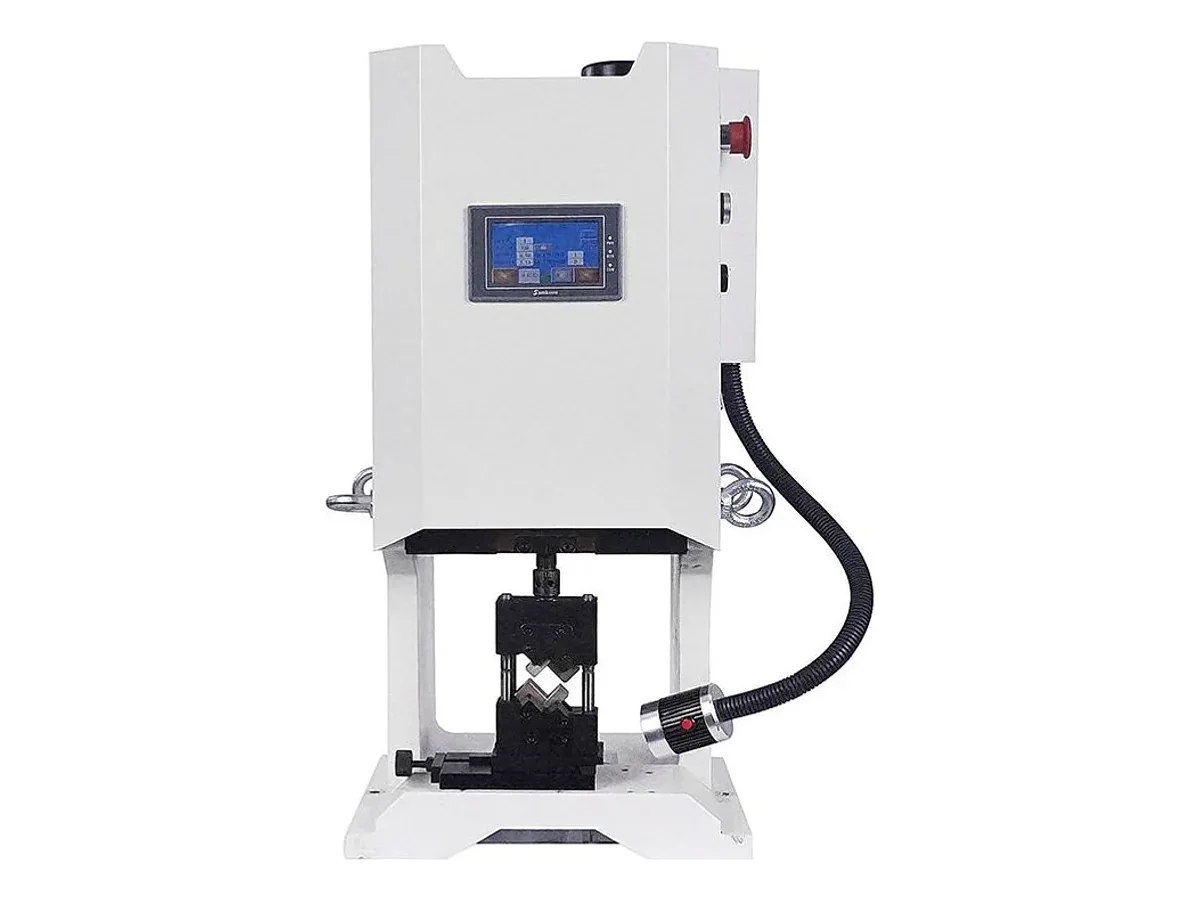
10-Ton Servo Terminal Crimping Machine, 100 kN Bench Press
Model WM-3110T
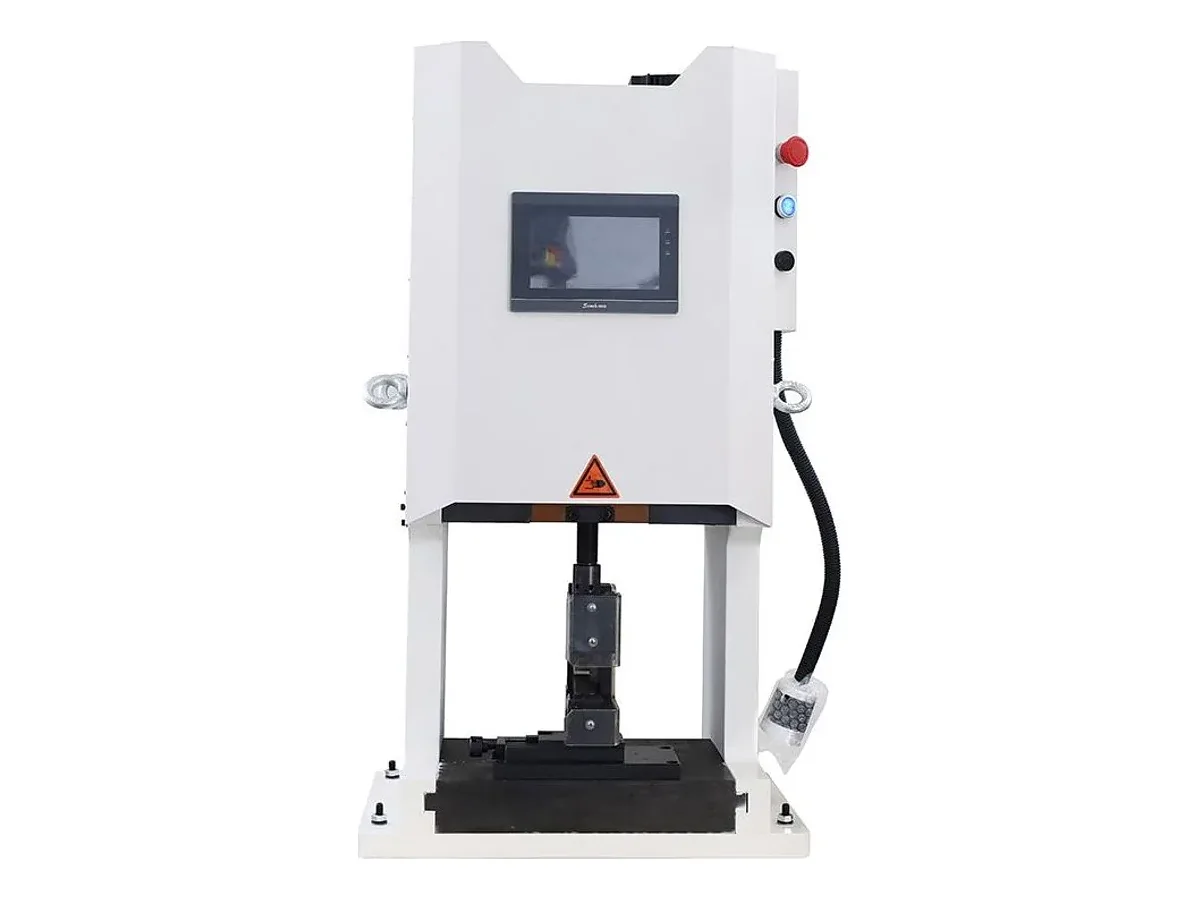
20-Ton Servo Cable Lug Crimping Machine, 200 kN and 40 mm Stroke
Model WM-3120T
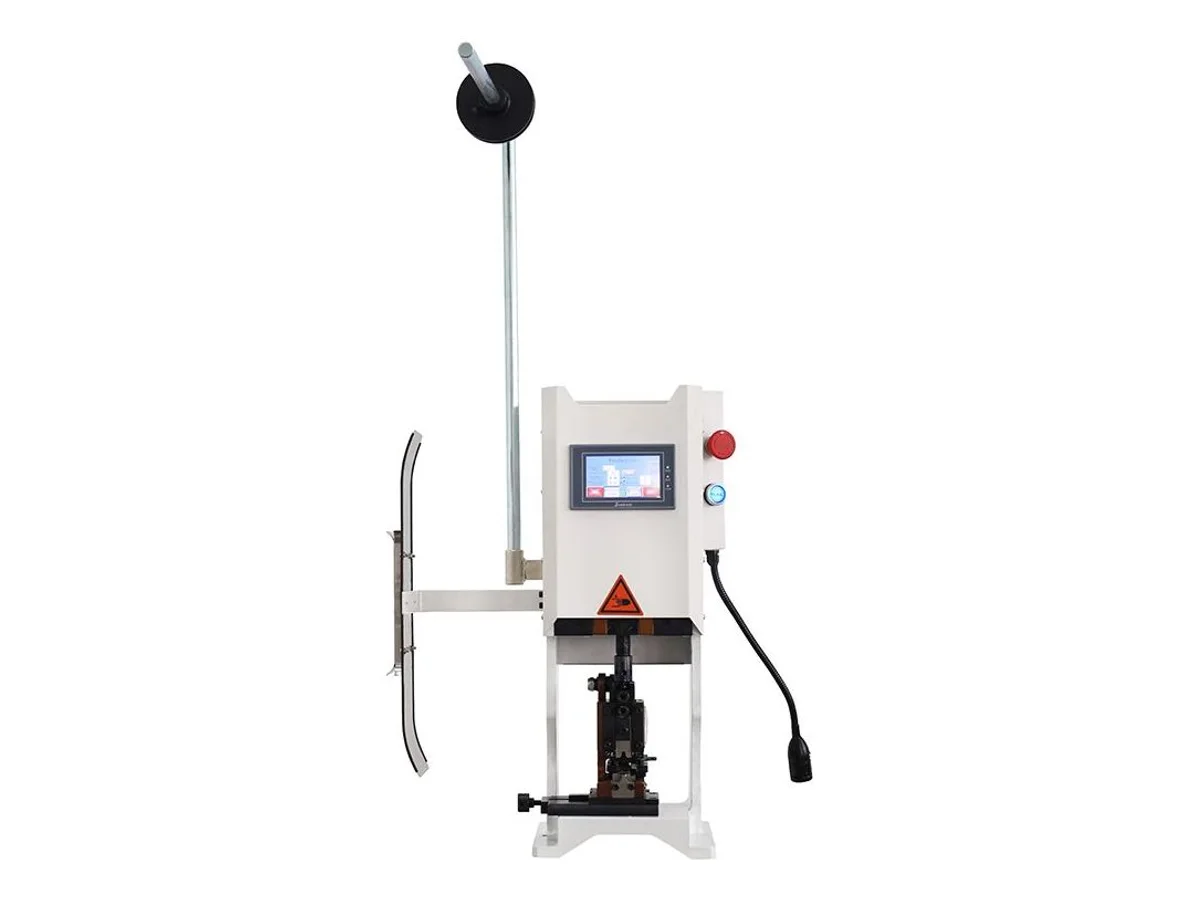
2-Ton Servo Terminal Crimping Machine, 20 kN Touchscreen Bench Press
Model WM-3102S