Fully Automatic Double-End Terminal Crimping and Single-End Soft Sleeve Inserting Machine, AWG 12–32 WM-3225
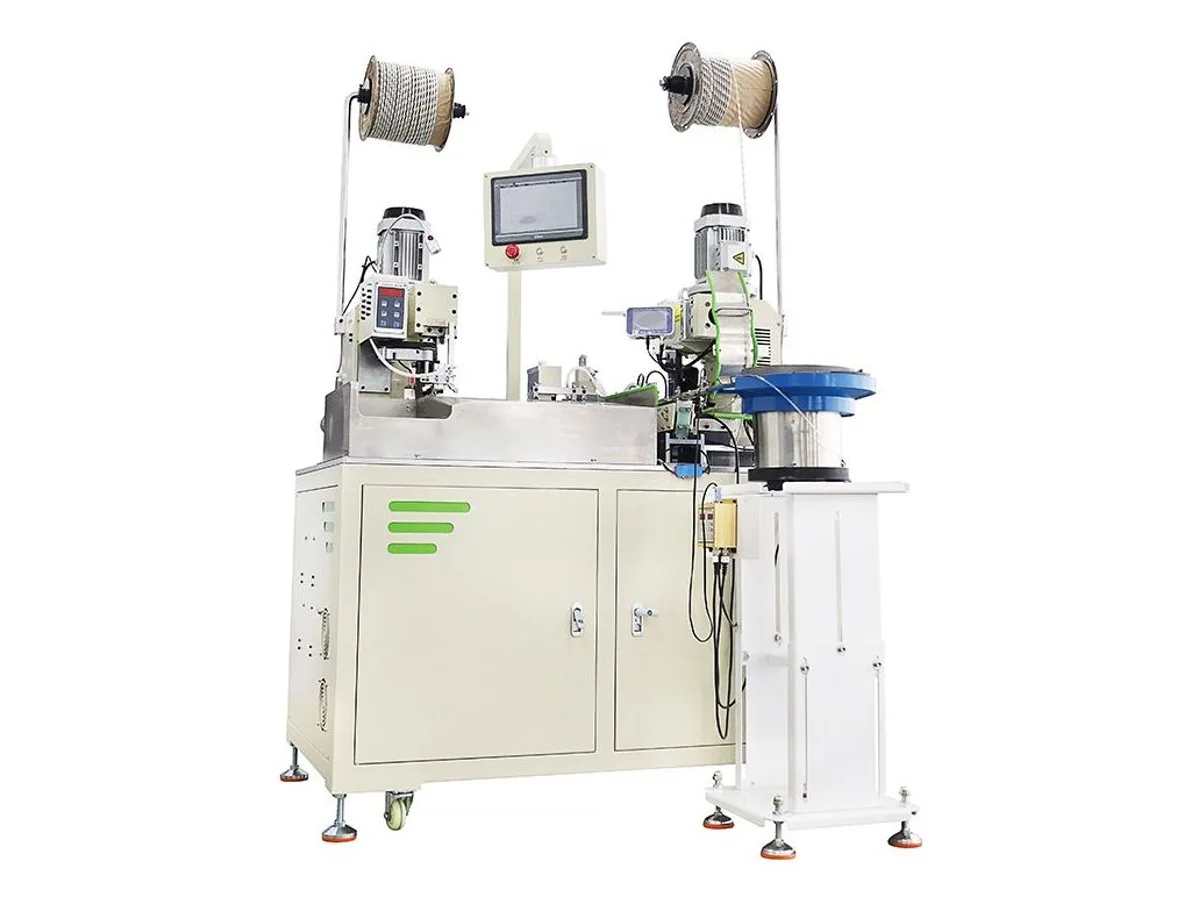
The WM-3225 builds a short finished lead in one pass — wire fed and stripped, a terminal crimped on each end, and a flexible plastic protective boot pushed over the terminal on one end. It runs AWG 12 to AWG 32 wire at 3,000 pieces per hour on 600 mm leads, with processing lengths from 18 to 600 mm and stripping from 0.1 to 18 mm. A 2.0 ton press handles the crimps, a vibratory bowl singulates and feeds the soft sleeves, and four sensors — knot, crimping, missing wire and air pressure — check every cycle. Waste carrier-strip winding and strip cutting are built in. The machine stands 1,340 × 850 × 1,700 mm and weighs about 450 kg on single-phase 220 V.
Specifications
| Function | Two-end terminal crimping with single-end plastic protective sleeve insertion |
|---|---|
| Production capacity | 3,000 pcs/hour (at 600 mm length) |
| Applicable wire diameter | AWG 12# – AWG 32# |
| Processing length | 18 – 600 mm (length of insulation left in the middle of the wire) |
| Stripping length | 0.1 – 18 mm (ideal range) |
| Cutting error | Correctable |
| Crimping capacity | 2.0 ton |
| Detection device | Knot detection, crimping detection, missing wire detection, air pressure detection |
| Auxiliary device | Waste paper winding device and material strip cutting device |
| Power supply | AC 220 V single phase, 8 A |
| Weight | About 450 kg |
| Dimensions | 1,340 (L) × 850 (W) × 1,700 (H) mm |
| HS Code | 8463.90 (common reference — final classification confirmed by your customs broker) |
| Certification | On request |
Key features
- Short-lead specialist — 18 to 600 mm jumpers come off crimped on both ends and booted on one, the volume band where hand-sleeving costs the most; the manufacturer publishes 3,000 pieces per hour at 600 mm, and we quote against a witnessed run on your wire rather than that headline
- AWG 12 to AWG 32 on one deck, so signal leads and power jumpers share the same machine without a second platform
- Vibratory bowl singulates the soft sleeves and a pusher seats each one over the crimped terminal — no operator handling the boot
- Four in-line sensors — knot, crimping, missing wire and air pressure — stop a fault at the station instead of letting it reach final inspection
- Waste carrier strip is wound up and cut automatically, so the terminal reels run unattended between changeovers
What it processes
- Appliance, lighting and power-tool jumpers where one crimped end ships inside a protective boot
- Battery, motor and control-panel leads in the 18–600 mm length band built at high volume
- Harness shops replacing a manual boot-fitting bench beside an automatic crimping machine
Suited for: short jumpers from 18 to 600 mm in AWG 12–32 that need a terminal on both ends and a soft protective boot over one of them — appliance, lighting, battery and control-panel leads produced in volume.
Not suited for: leads longer than 600 mm — for those, pick the WM-374 crimping and one-end sleeve inserting machine, which does the same double-crimp plus one-end sleeve job on AWG 16–24 wire from 50 to 9,900 mm. If you need the boot on both ends, the WM-388 double-end crimping and sleeve insertion machine sleeves both crimps on AWG 10–24 wire at 1,700 pieces per hour. For heavier wire than the 2.0 ton press here will take, the WM-384 cutting, crimping and sleeve inserting machine crimps 0.3–6 mm² at 2.0–4.0 tons and lets you switch sleeve placement between one end and both ends per recipe.
An output conveyor that carries finished leads away from the machine is available for this platform — mention it in your inquiry if your line collects parts into totes rather than a bin.
Engineering knowledge
Choose and troubleshoot this process
- How to Choose a Terminal Crimping MachineChoose a terminal crimping machine by terminal presentation, wire range, applicator standard, required process steps, inspection method and production mix.
- Terminal Crimp Defects: Causes, Inspection and Corrective ActionsTroubleshoot low pull force, incorrect crimp height, strand loss, bellmouth defects, insulation support problems and inconsistent terminal feeding.
WM-3225 — common questions
What kind of sleeve does the WM-3225 fit?
A soft, flexible plastic protective boot that slides over the crimped terminal on one end of the lead — the type used on spade and receptacle terminals to cover the exposed barrel. The boots are singulated from a vibratory bowl and pushed on automatically as part of the cycle. Sleeve tooling is matched to your exact boot and terminal dimensions, so send samples of the wire, terminal and boot together with your inquiry.
Why is the processing length capped at 600 mm?
This machine is built around short leads. Both crimping heads and the sleeve station work on a fixed transfer path, and the trade is that lengths run from 18 to 600 mm rather than metres. If your leads are longer, the machines listed below cover that range instead.
Does it crimp both ends or just one?
Both ends are crimped. The soft sleeve goes onto one end only, which is the normal configuration for jumpers that plug into a terminal block at one end and a covered spade at the other. Stripping is programmed separately for the front and rear ends on the English touch screen.
Can I run a trial on my own parts first?
Yes. Send 2–3 meters of your wire plus your terminals and boots, and we run the full strip, double crimp and sleeve cycle on this machine and send you the video before you commit to the order.
Is the 3,000 pieces per hour figure realistic for my job?
Treat it as the manufacturer's published rate at 600 mm, not a guarantee. On the sample machine we photographed, the HMI's own running counter read about 2,100 pieces per hour, and the supplier publishes the same 3,000 figure on more than one model in this family — so we do not repeat it as our own claim. Send us your wire, terminal and boot, and we will run your job on camera and give you the counted rate we actually see.
Related machines in Terminal Crimping
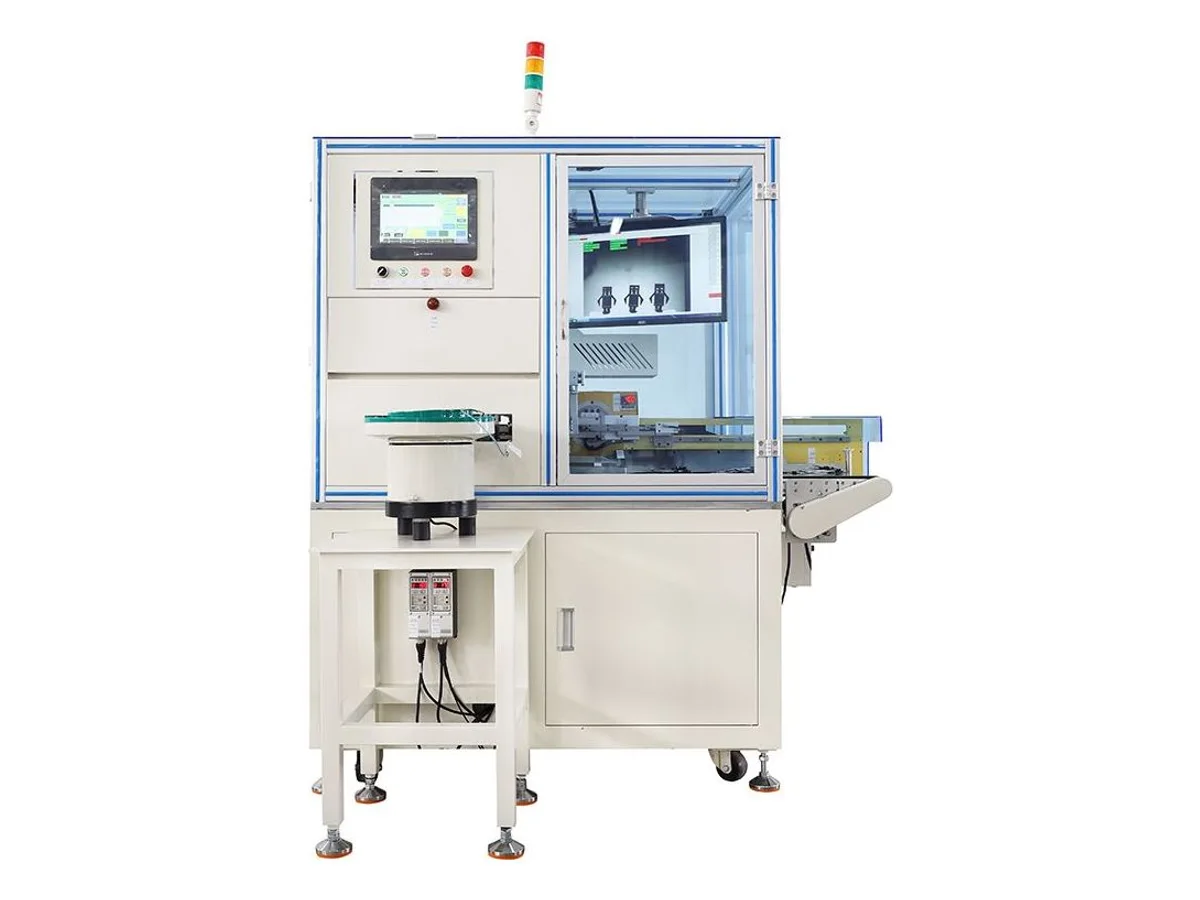
Automatic Connector Housing Insertion Machine with Tinning and Half-Stripping
Model WM-366
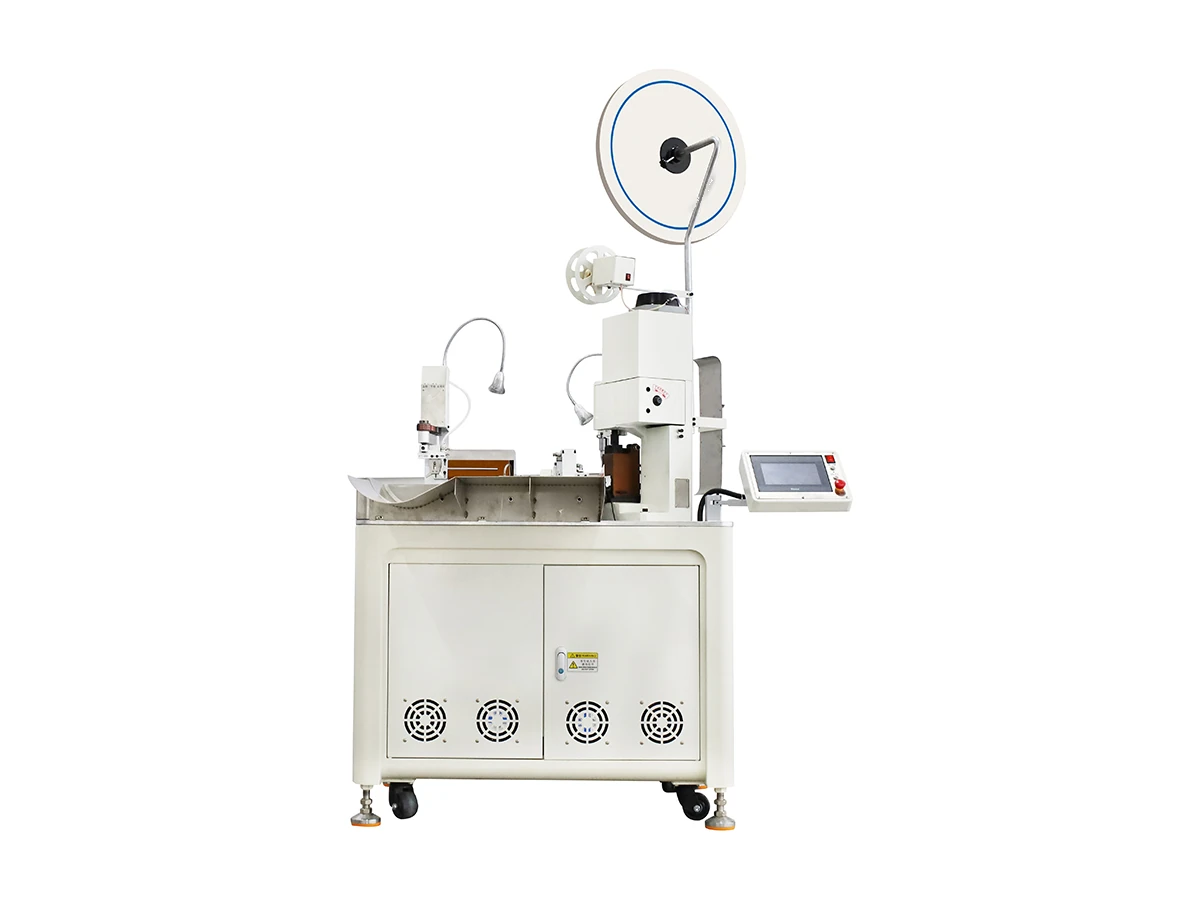
Automatic Wire Crimping and Tinning Machine for AWG 14–28 Leads
Model WM-3201
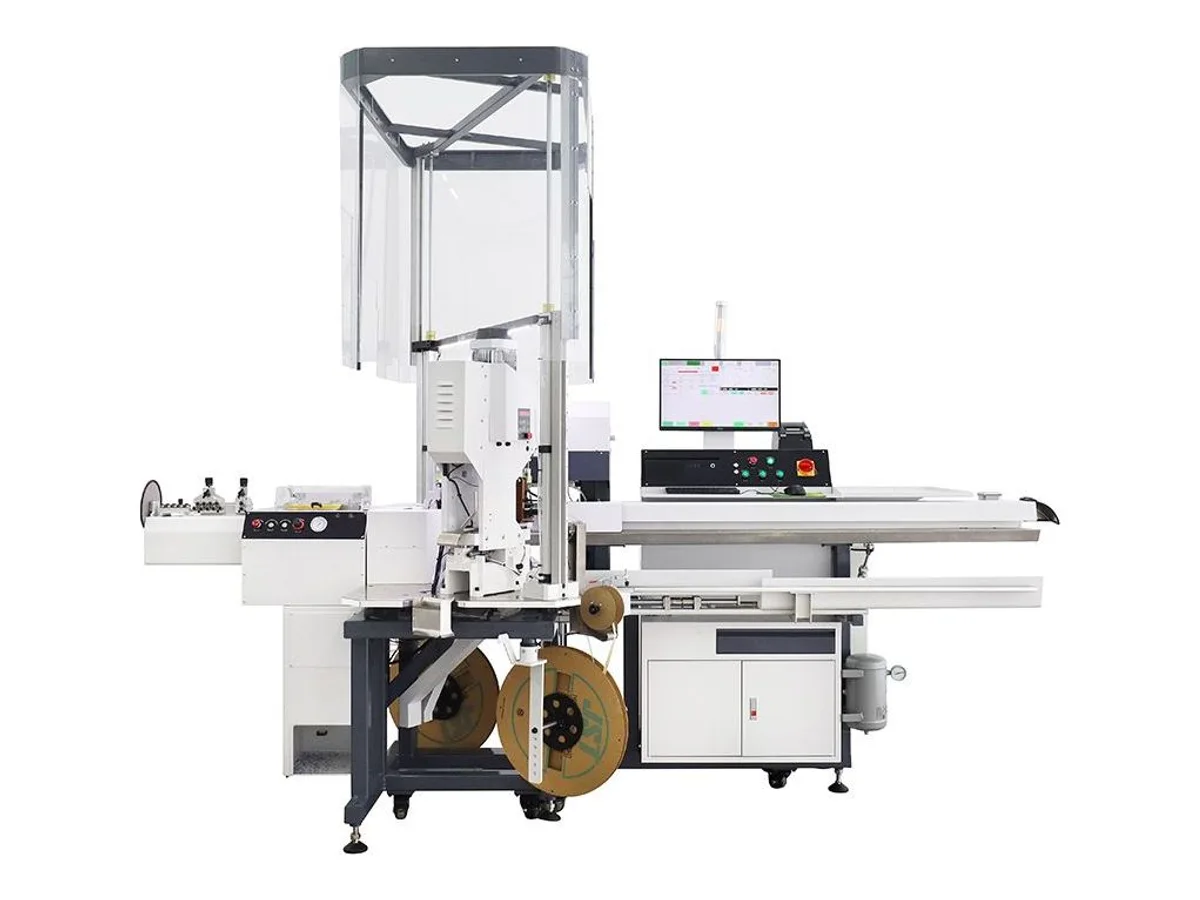
Fully Automatic Double-End Terminal Crimping Machine with Optional Waterproof Seal Stations
Model WM-390