EV Cable Stripping, Foil and Braid Cutting, and Shield Fold-Back Machine WM-199
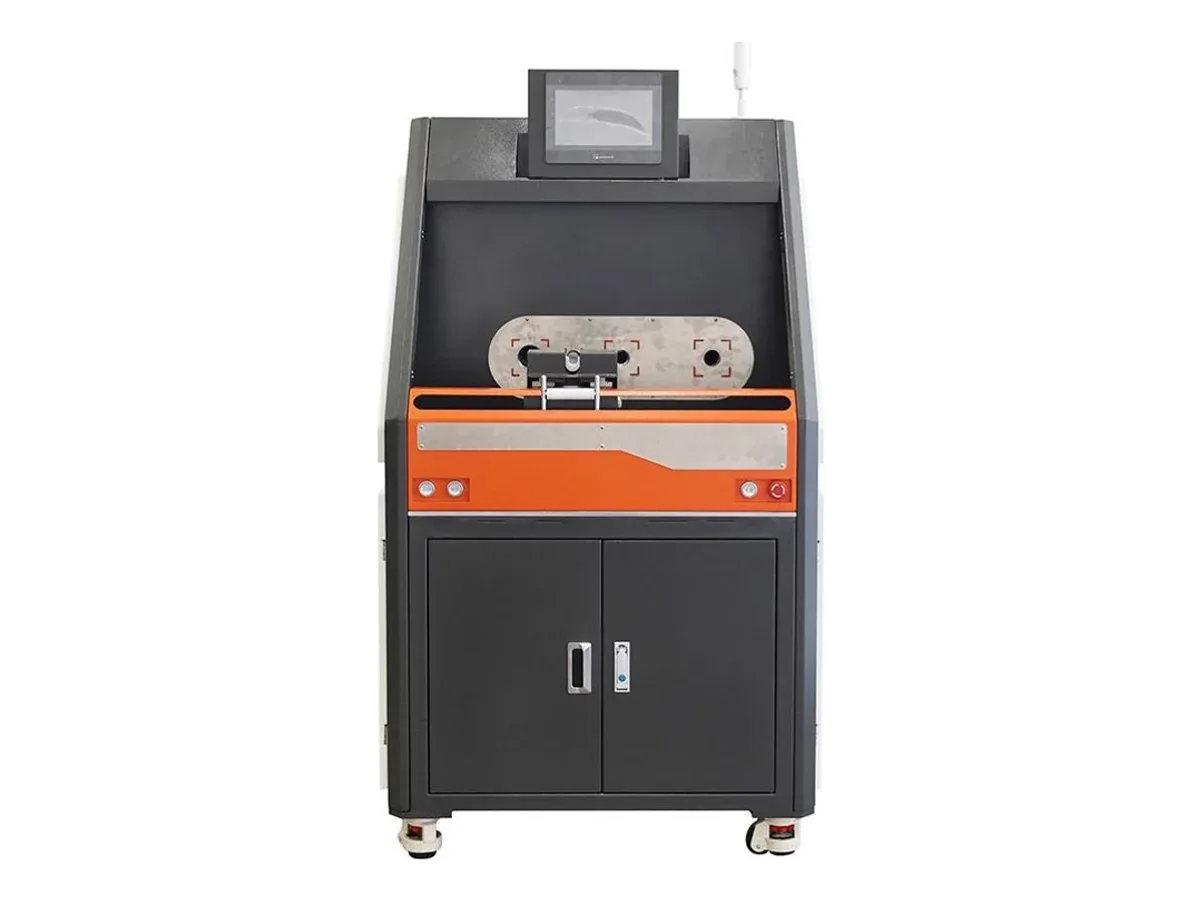
The WM-199 finishes the end of a high-voltage EV cable from 2.5 to 150 mm² in one automatic cycle — it strips the outer jacket, cuts back the aluminium foil, cuts the braided shield, folds that braid back over the jacket and strips the inner insulation. Cycle time is up to 15 seconds and the qualification rate is no less than 99%, with CCD cameras checking each piece and uploading the images to MES. The machine runs on 380 V/50 Hz, draws 3.5 kW and needs 0.5–0.7 MPa air.
Specifications
| Model | WM-199 |
|---|---|
| Function | Stripping off the outer jacket of high voltage cable, cutting off aluminium foil, cutting off braided shielding, stripping off inner insulation layer, and turning over braided shielding |
| Wire cross sections | 2.5 – 150 mm² |
| Cycle time | Up to 15 s (different products have differences) |
| Qualification rate | No less than 99% |
| CCD detection | CCD cameras detect defective products, save the pictures and upload them to the MES system |
| Reserved interfaces | Multiple interfaces reserved to expand scanning, printing and MES connection |
| Air supply | 0.5 – 0.7 MPa |
| Voltage | Reference configuration: 380 V / 50 Hz |
| Power | 3.5 kW |
| Dimensions | 1,020 (L) × 1,062 (W) × 1,720 (H) mm |
| Weight | 300 kg |
| Electrical configuration | We configure the machine’s electrical supply for your installation before shipment. Your quote confirms the voltage, phase, frequency, current and the power cord with plug or industrial connection for your site. Common site supplies are 120 V, 60 Hz with grounded Type B outlets in the US and Canada, with 208 V or 240 V also found at industrial sites. The UK and Ireland use 230 V, 50 Hz with Type G. Australia and New Zealand use nominal 230 V, 50 Hz with Type I, and some Australian sites list 240 V. Three-phase installations in the UK, Ireland, Australia and New Zealand commonly use 400 V at 50 Hz, with 415 V at some Australian sites. |
| Lead time | Your quote confirms the machine configuration, included accessories and dispatch date. |
| Warranty and support | One-year machine warranty and free remote video support for the life of the equipment. |
| Wear parts | For wear parts, every quote lists them with unit price and the location they ship from. |
| HS Code | 8463.90 (common reference — final classification confirmed by your customs broker) |
| Certification | CE (certificate provided with shipment) |
Key features
- Five operations in one clamping — jacket strip, foil cut, braid cut, braid fold-back and inner insulation strip run as one programmed cycle, so the cable end is never re-fixtured between steps
- Fold-back, not brush-out: the comb tool turns the trimmed braid back over the outer jacket and leaves a conductive collar that a shield ferrule or 360-degree backshell clamps onto directly
- CCD inspection on every piece — defective ends are photographed and the image is pushed to your MES, so a bad end is caught at the station instead of at final test
- Reserved interfaces for barcode scanning, label printing and MES connection, so the machine drops into a traceable EV harness line without a bolt-on PC
- Four fixed stations on one tool plate (load, braid cut, insulation strip, jacket cut) keep the cable on the same axis from first cut to finished end
- Free sample test — send 2–3 m of your high voltage cable, we run it on this machine and send you the trial video before you order
What it processes
- New-energy vehicle high voltage cable, 2.5–150 mm² conductor, aluminium foil plus braided shield construction
- Battery pack, motor and inverter harness ends terminating into 360-degree shielded connectors
- Energy storage and charging pile cable assemblies where the braid must be folded back onto the jacket before crimping
Suited for: shielded high voltage EV cable from 2.5 to 150 mm² whose ends must arrive at assembly already stripped, trimmed and with the braid folded back — battery, motor, inverter and charging cable in a traceable line. For other jobs and machine options: measuring and cutting cable to length — feed this station from the WM-163 vertical cut and strip machine for 1.5–50 mm² or the WM-1450 thick cable cut and strip machine for 10–150 mm². It also does not brush the braid out into loose strands; that job belongs to the WM-819 braid brushing machine. For a bench job that only cuts the shield off small braided cable, the foot-operated WM-192 pneumatic shielding layer cutting machine covers shield outer diameters of 3–16 mm.
Send 2–3 meters of your high voltage cable and we run your actual construction on this machine and film it before you commit. See where shielded end processing sits in a full EV wire harness line. For a WM-199 quote, tell us the cable outside diameter and how the shield should look after processing. A photo of the end is enough to begin the fit check.
Engineering knowledge
Choose and troubleshoot this process
- Braid Brushing vs Wire Untwisting: Choose the Right Cable Preparation ProcessSeparate braid opening, shield cutting, fold-back and wire-pair untwisting. Choose equipment from the finished cable end and connector requirements.
WM-199 — common questions
What is the difference between folding the shield back and brushing it open?
Brushing combs the braid mesh out into loose straight strands. Folding back turns the braid over the outer jacket so it forms a tight conductive collar that a ferrule, shield ring or backshell can clamp on directly — no strand grooming needed at assembly. The WM-199 cuts the braid to the programmed length first, then folds it, in the same cycle. If your process only needs the mesh combed straight, the WM-819 shielded cable braid brushing machine does that stage on shielded cable up to 100 mm².
Does the WM-199 cut cable to length?
It is an end-processing station and expects cable that has already been cut to length, so it pairs with a cut-and-strip machine upstream. The WM-163 vertical cutting and stripping machine covers 1.5–50 mm² new-energy cable and the WM-1450 thick cable machine covers 10–150 mm².
What does the machine need on the shop floor?
A 380 V/50 Hz supply at 3.5 kW and clean compressed air at 0.5–0.7 MPa. It stands 1,020 × 1,062 × 1,720 mm, weighs 300 kg and rolls on castors with levelling feet, so one operator loading from the front is enough. Program values are entered on the touch screen, which has an English interface.
How is quality checked on a shielded end?
CCD cameras inspect the finished end and the machine holds a qualification rate of no less than 99%. Pictures of defective parts are saved and uploaded to the MES system, and the reserved interfaces let you tie the result to a scanned barcode or a printed label on the same harness.
Related machines in Shield Brushing & Processing
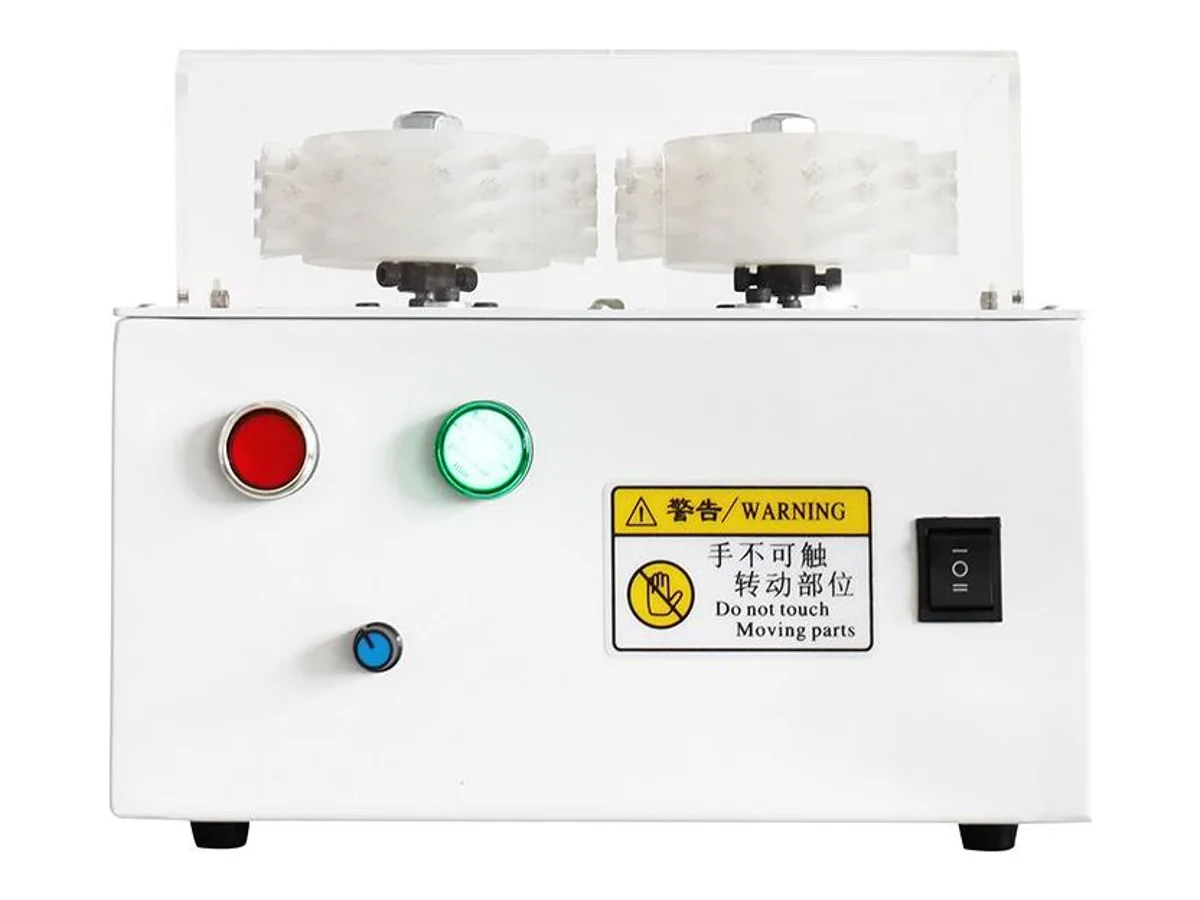
Shield Brushing Machine for Braided and Spiral-Served Cable, 50 mm Brushing Length
Model WM-821
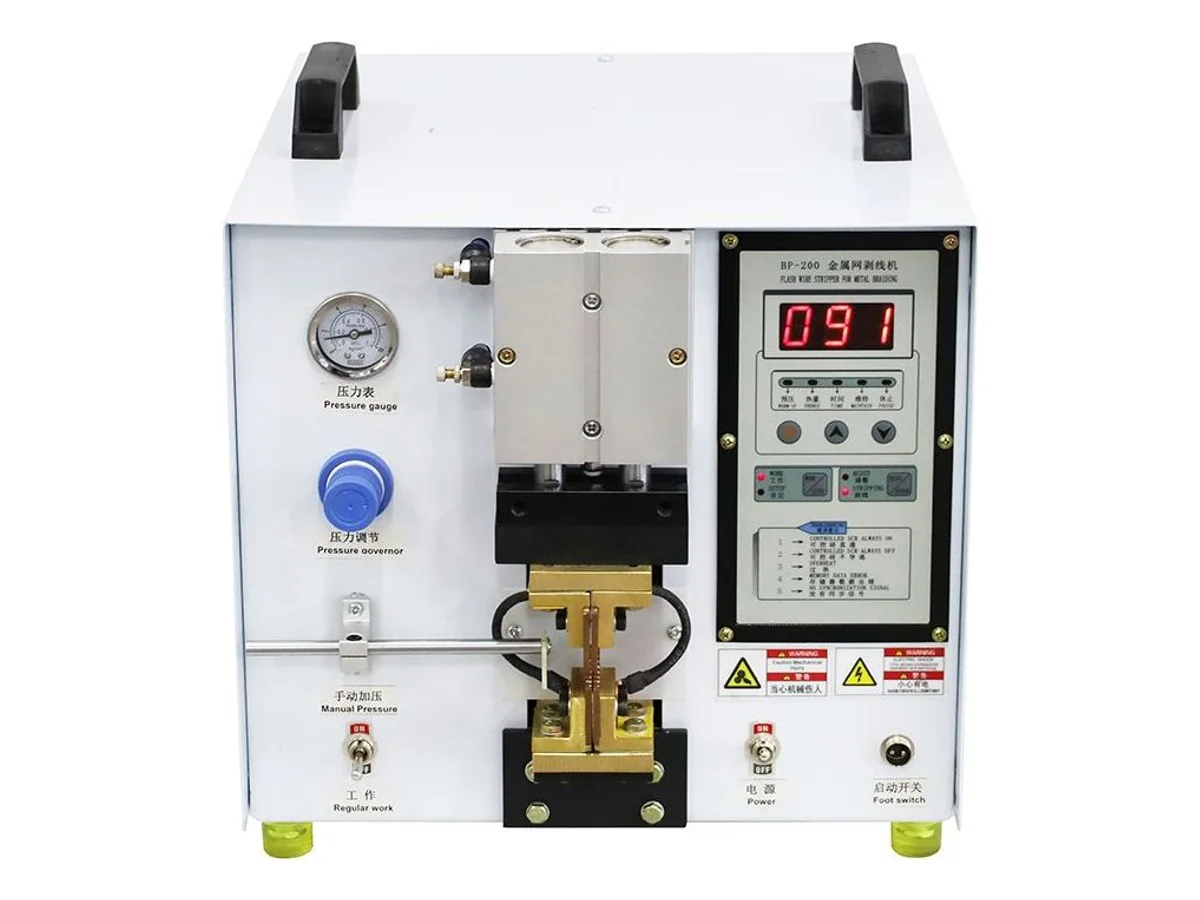
Electrode-Type Metal Braid Stripping Machine for Shielded and Thermocouple Wire
Model WM-166
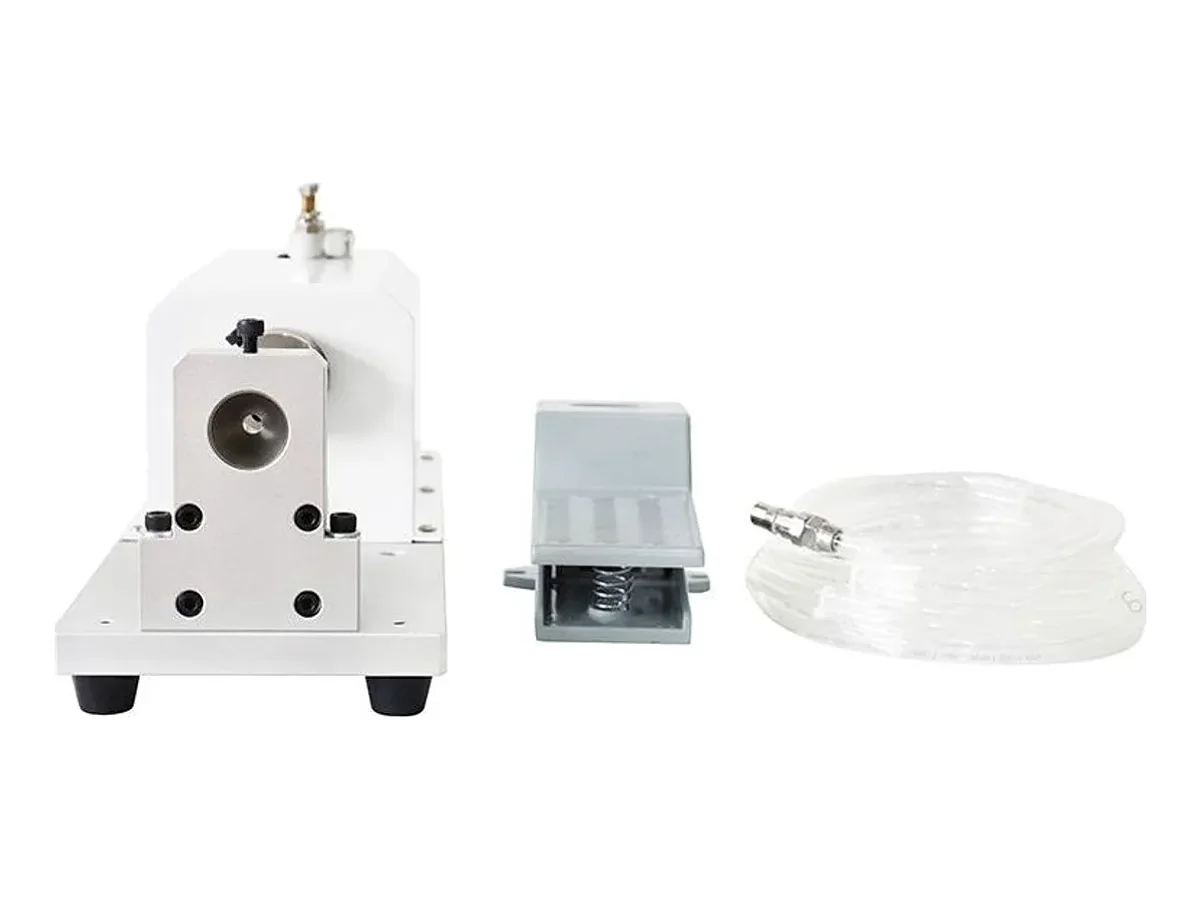
Pneumatic Cable Shield Braid Trimming Machine, Shield OD 3–16 mm
Model WM-192