Electrode-Type Metal Braid Stripping Machine for Shielded and Thermocouple Wire WM-166
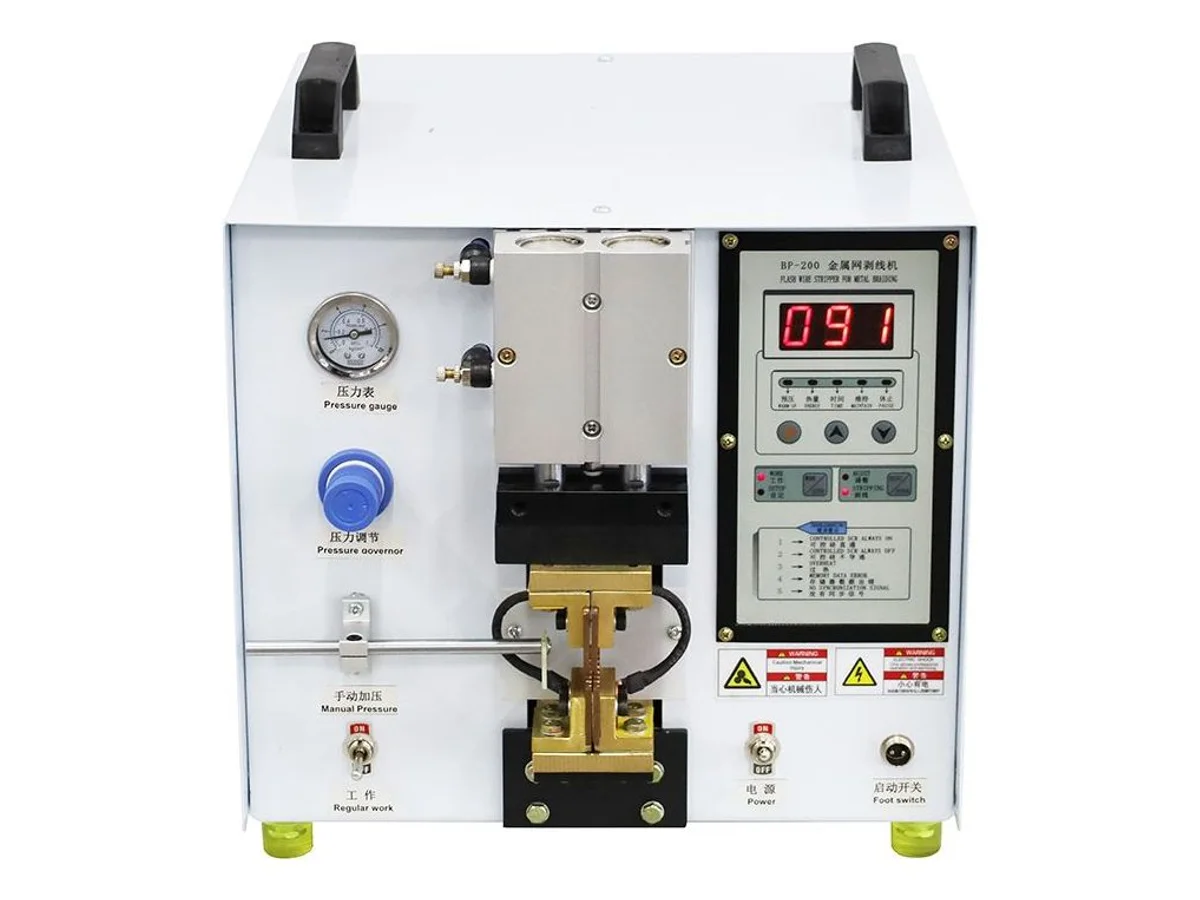
The WM-166 removes metal braid from shielded wire and thermocouple cable using serrated copper stripping electrodes instead of blades. The electrodes clamp the braid at up to 130 kgf under pneumatic pressure (0.5 MPa) and a controlled pulse from the 5 kVA transformer fuses the strands at the cut line — the waste braid slides off and the remaining end stays consolidated, with no flare-out or loose strands. It runs from a 220 V single-phase supply, weighs 45 kg, and is operated hands-free by foot pedal.
Specifications
| Rated power | 5 kVA |
|---|---|
| Power supply | 220 V, 50 Hz, single phase |
| Electrode force | Max. 130 kgf |
| Air pressure | 0.5 MPa |
| Weight | 45 kg |
| HS Code | 8463.90 (common reference — final classification confirmed by your customs broker) |
| Certification | CE (certificate provided with shipment) |
Key features
- Serrated copper electrodes fuse the braid ends as they strip, so nothing frays and no strands scatter into the harness
- Pneumatic pressurization with a solenoid valve keeps electrode force stable and adjustable up to 130 kgf
- SCR-controlled main circuit doubles as a small resistance welder for copper, nickel, stainless and aluminum parts
- Foot-pedal cycle leaves both hands free to position the wire; spare electrode plates swap with two screws
What it processes
- Thermocouple and compensation cable braid stripping
- Shielded signal and sensor harnesses where the braid end must stay fused
- Workshops that mix braid stripping with small-tab resistance welding jobs
Suited for: metal-braided shielded wire and thermocouple cable where the braid end must come off fused and tidy — and, with the same electrodes, light resistance-welding work on copper, nickel, stainless and aluminum tabs. Not suited for: cutting to length or stripping plastic insulation — for that, pair it with the WM-184X rotary blade cutting and stripping machine, which cuts braided and shielded cable to length and strips the jacket up to 30 mm² — everything before the braid reaches these electrodes.
Braid constructions vary; send 2–3 meters of your actual cable and we run it on this machine on video before you order, so you see the fused braid ends on your own wire.
Engineering knowledge
Choose and troubleshoot this process
- Braid Brushing vs Wire Untwisting: Choose the Right Cable Preparation ProcessSeparate braid opening, shield cutting, fold-back and wire-pair untwisting. Choose equipment from the finished cable end and connector requirements.
WM-166 — common questions
How does the WM-166 remove braid without fraying it?
The serrated electrodes clamp the braid at up to 130 kgf and pass a controlled pulse that fuses the strands at the cut line. The waste braid pulls away clean and the remaining braid end stays consolidated — the fused tips are visible on the sample photos in the gallery.
What utilities does it need?
A 220 V single-phase outlet (5 kVA rated) and clean compressed air at 0.5 MPa. The machine weighs 45 kg and sits on a workbench; the foot pedal and a set of spare electrode plates are included as pictured.
Can it cut wire to length or strip plastic insulation?
No — it processes only the metal braid layer. Cut to length and remove the outer jacket first on one of the cut and strip machines in this category, then finish the exposed braid on the WM-166.
Related machines in Shield Brushing & Processing
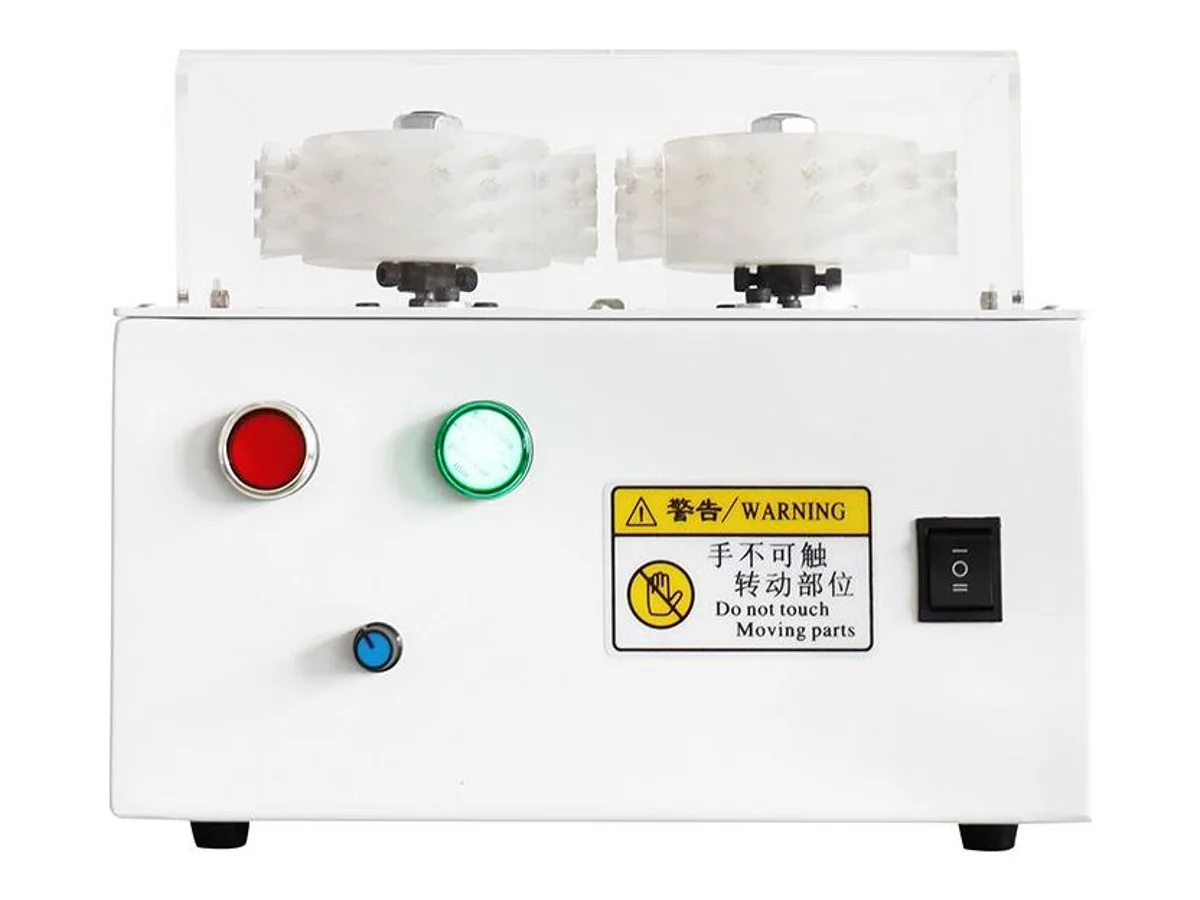
Benchtop Cable Shield Brushing Machine with Forward and Reverse Rotation
Model WM-821
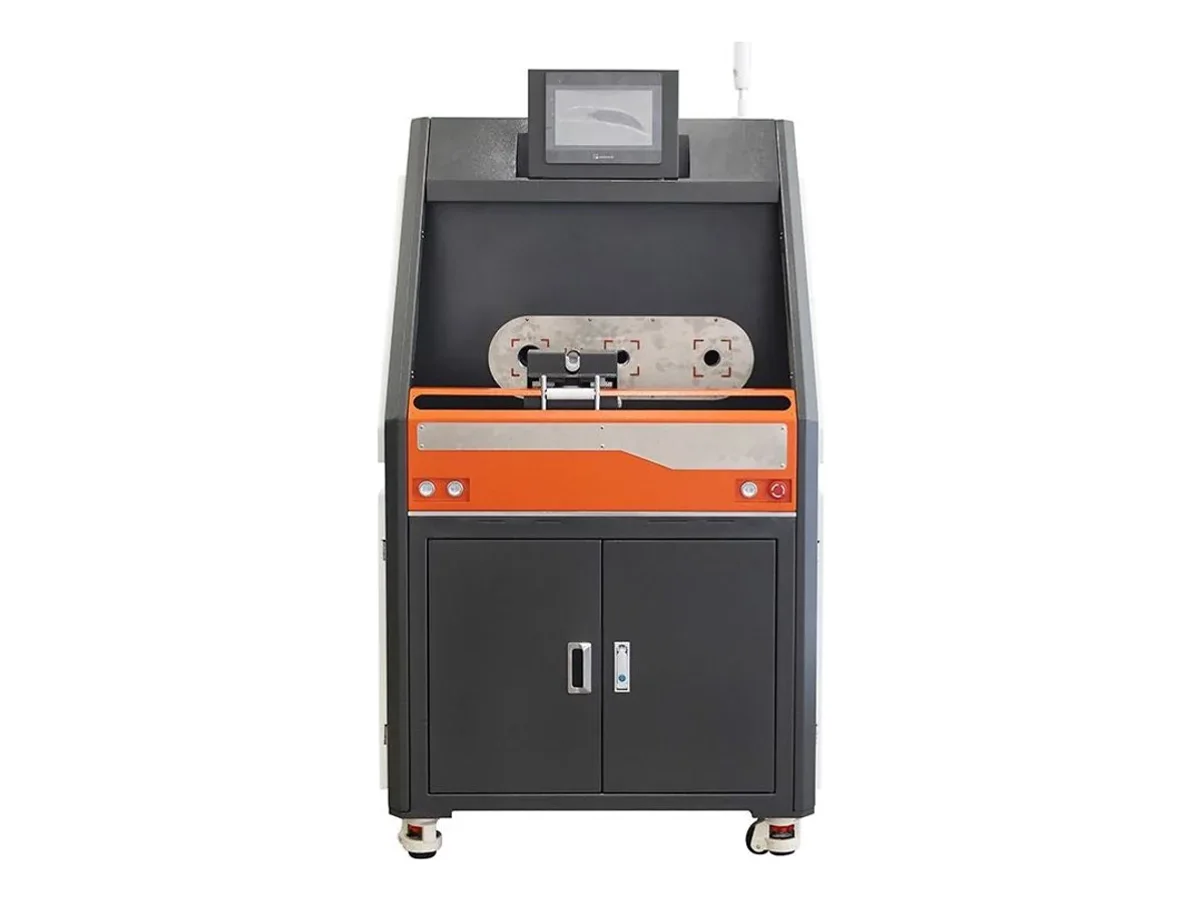
High Voltage EV Cable Stripping and Shield Folding Machine for 2.5–150 mm² Cable
Model WM-199
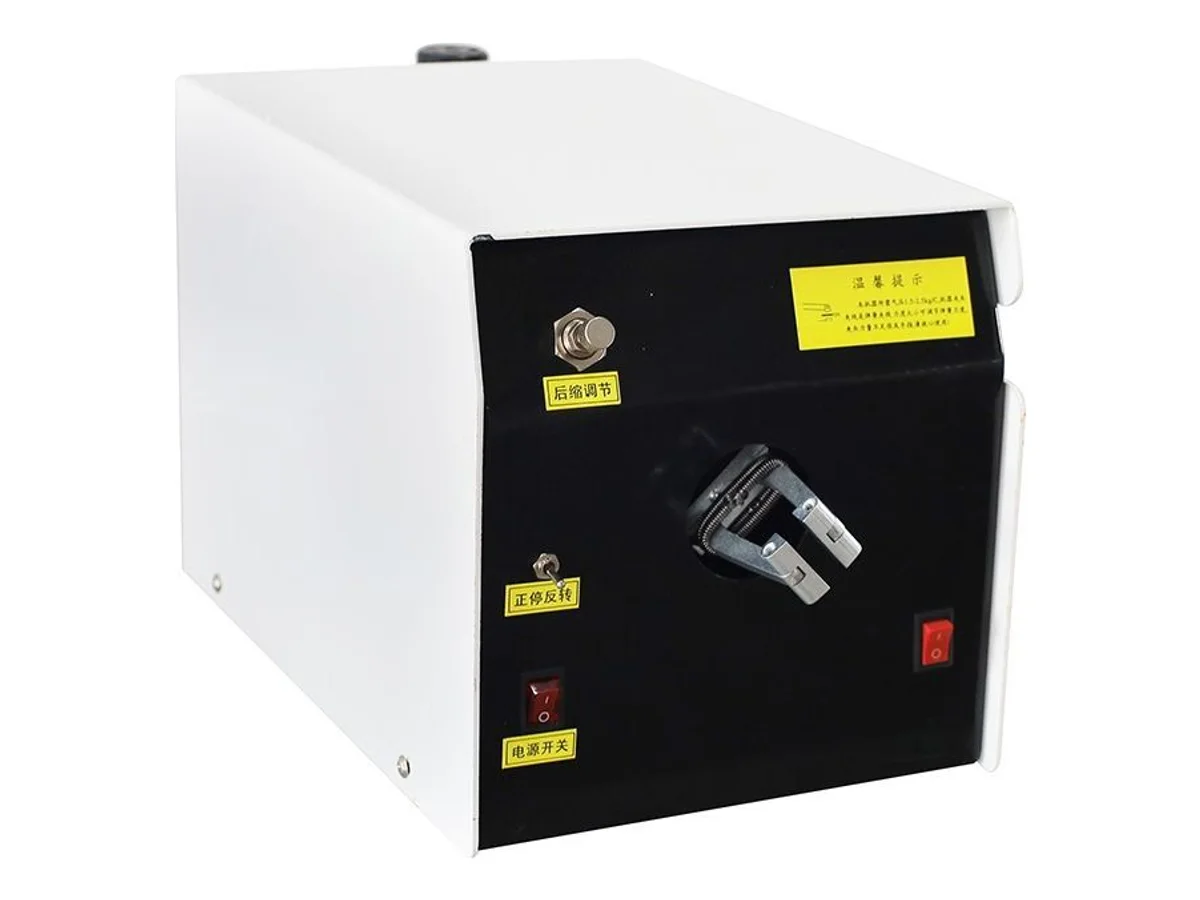
Pneumatic Shield Braid and Wire Twisting Machine
Model WM-822