Cable Shield Braid Brushing Machine, 10–200 mm Brushing Length WM-819
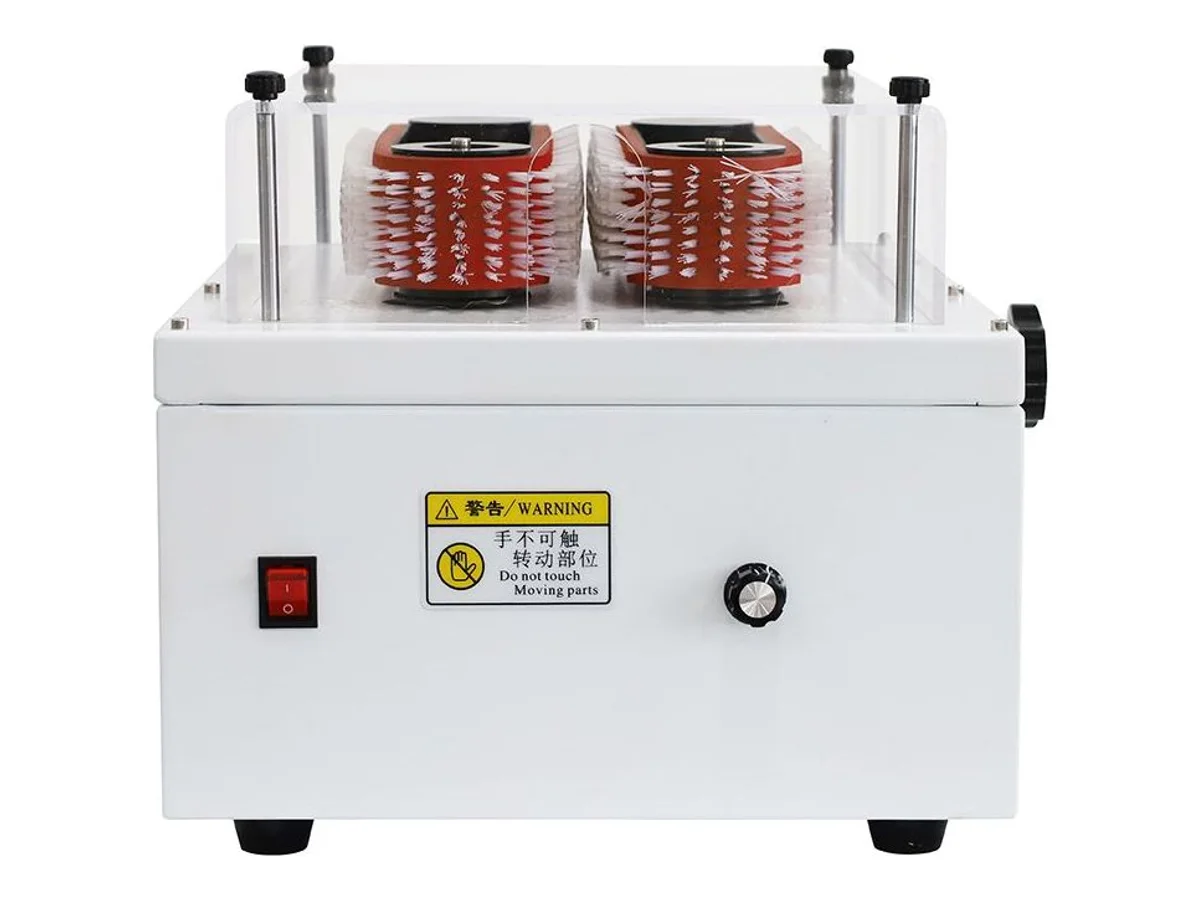
The WM-819 brushes open the braided shield of screened cable so the mesh can be folded back or terminated cleanly. Two rotating brush tracks comb the braid straight over a brushing length of 10–200 mm, on shielded cable up to 100 mm², at 100–200 pieces per hour depending on cable type and program. Rotation is electronically controlled and adjustable from 0 to 1800 (unit confirmed on the quote), the bench unit measures 420 × 480 × 320 mm and weighs 48 kg, and it runs on the reference 220–240 V single-phase supply with no air supply.
Specifications
| Model | WM-819 |
|---|---|
| Function | Brushing open the braided shield mesh of screened cable |
| Brushing wire length | 10 – 200 mm |
| Applicable wire size | Up to 100 mm² |
| Productivity | 100 – 200 pcs/h (depending on cable type and program) |
| Brushing structure | Rotating belt wheel (pulley) |
| Rotation mode | Electronic control, 0 – 1800 adjustable; unit confirmed on the quote |
| Belt wheel (pulley) | 2 pieces (circumference 750 × width 62; dimensional units confirmed on the quote) |
| Torque | 12.5 kg as listed; torque value and unit confirmed on the quote |
| Drive | Electric |
| Power supply | Reference configuration: AC 220 – 240 V, 50 – 60 Hz |
| Dimensions | 420 × 480 × 320 mm |
| Weight | 48 kg |
| Electrical configuration | We configure the machine’s electrical supply for your installation before shipment. Your quote confirms the voltage, phase, frequency, current and the power cord with plug or industrial connection for your site. Common site supplies are 120 V, 60 Hz with grounded Type B outlets in the US and Canada, with 208 V or 240 V also found at industrial sites. The UK and Ireland use 230 V, 50 Hz with Type G. Australia and New Zealand use nominal 230 V, 50 Hz with Type I, and some Australian sites list 240 V. Three-phase installations in the UK, Ireland, Australia and New Zealand commonly use 400 V at 50 Hz, with 415 V at some Australian sites. |
| Lead time | Your quote confirms the machine configuration, included accessories and dispatch date. |
| Warranty and support | One-year machine warranty and free remote video support for the life of the equipment. |
| Wear parts | For wear parts, every quote lists them with unit price and the location they ship from. |
| HS Code | 8479.89 (common reference — final classification confirmed by your customs broker) |
| Certification | CE (certificate provided with shipment) |
Key features
- Twin rotating brush tracks comb the braid open evenly around the cable, replacing hand picking that snaps strands and birdcages the mesh
- Electronically adjustable rotation lets the action stay gentle on fine signal braid and firm on heavy EV-cable shield, set per program
- Brushing length from 10 to 200 mm covers short pigtails through long fold-back preparations, repeatable piece after piece
- 48 kg electric benchtop format for the stripping station, with a 220–240 V reference supply and no compressed air line. We confirm the connection for your site.
What it processes
- Braid fold-back and 360-degree shield terminations on EV high-voltage cable
- Screened signal and data cable pigtails prepared before ferrule crimping
- Shielded control cable in industrial and appliance harnesses after jacket stripping
Suited for: brushing open the braided shield on screened and EV high-voltage cable up to 100 mm² — 10 to 200 mm of mesh combed straight for fold-back, ferrule and 360-degree shield terminations. For other jobs and machine options: stripping the outer jacket or trimming the braid to length — for that stage, pick the WM-2320 semi-automatic coaxial cable stripping machine, which strips Ø2–23 mm screened cable with strip lengths to 200 mm ahead of this brusher. And if the braid has to be folded back over the jacket rather than combed open, the WM-199 high voltage EV cable stripping and shield folding machine strips, trims and folds the shield on 2.5–150 mm² cable in one cycle.
Send 2–3 meters of your shielded cable and we brush your actual braid on video before you commit. See where shield preparation fits an EV wire harness line. For a WM-819 quote, tell us the cable outside diameter and how the shield should look after processing. A photo of the end is enough to begin the fit check.
Engineering knowledge
Choose and troubleshoot this process
- Braid Brushing vs Wire Untwisting: Choose the Right Cable Preparation ProcessSeparate braid opening, shield cutting, fold-back and wire-pair untwisting. Choose equipment from the finished cable end and connector requirements.
- Wire Stripping Defects: Causes and Corrective ActionsDiagnose conductor nicks, incomplete strips, pulled strands, insulation stretch, length variation and feed marks in wire stripping operations.
WM-819 — common questions
Why brush the braid by machine instead of by hand?
Hand picking with a scribe breaks strands, leaves kinks and takes minutes per end. The twin brush tracks comb every strand straight over the full programmed length in one cycle, so ferrules slide on and fold-backs lie flat — at 100 to 200 pieces per hour with finished brushing quality and consistency confirmed on your sample.
What cable will it take?
Shielded cable up to 100 mm² conductor size, with the brushing length set anywhere from 10 to 200 mm. The outer jacket must already be stripped back so the braid is exposed — the machine then combs the free mesh without cutting into it.
Does it strip the jacket or cut the braid to length?
No — it only brushes the exposed braid open. Jacket stripping and shield trimming happen upstream on our coaxial cable processing machines, and the brushed mesh is then folded or terminated at your next station.
Related machines in Shield Brushing & Processing
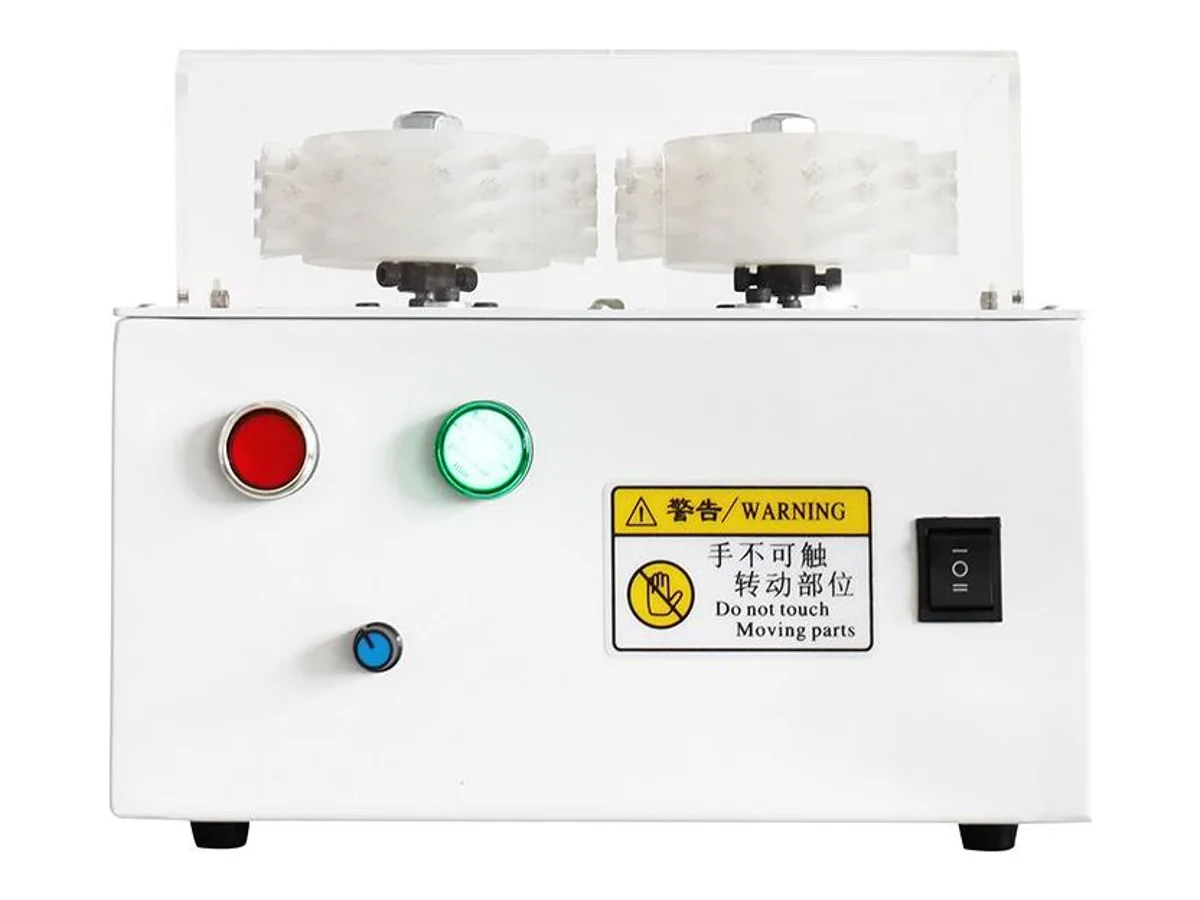
Shield Brushing Machine for Braided and Spiral-Served Cable, 50 mm Brushing Length
Model WM-821
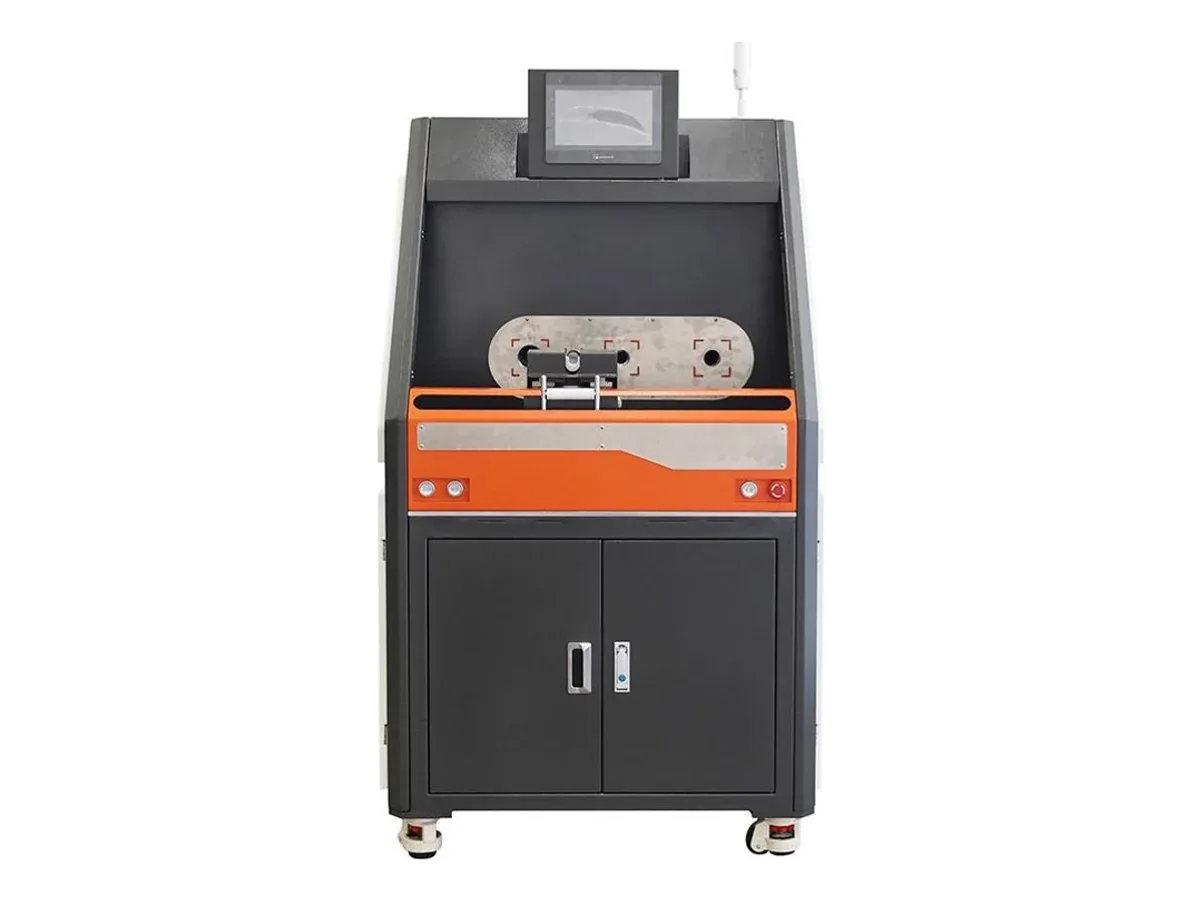
EV Cable Stripping, Foil and Braid Cutting, and Shield Fold-Back Machine
Model WM-199
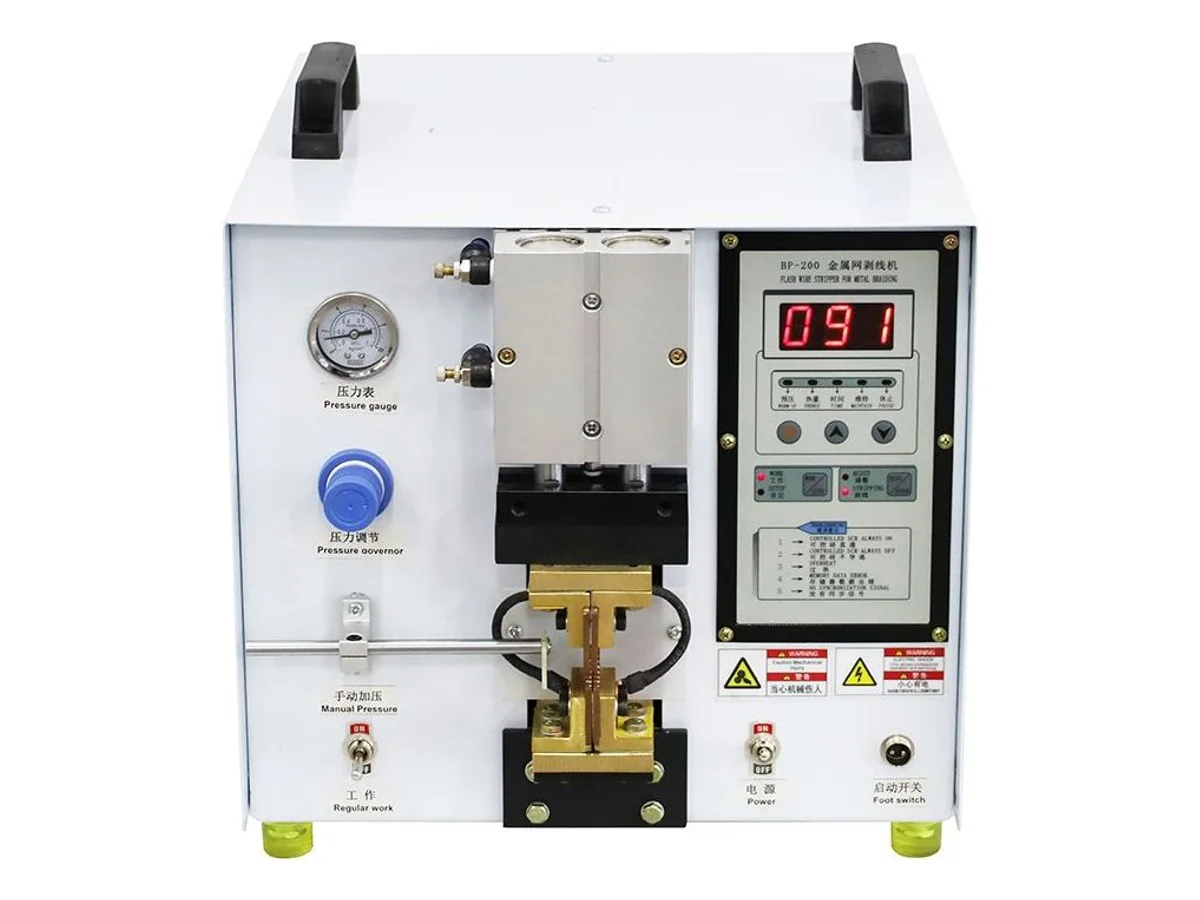
Electrode-Type Metal Braid Stripping Machine for Shielded and Thermocouple Wire
Model WM-166