Spiral Cable Winding Machine for Curly Cords and Spring Wire WM-4816
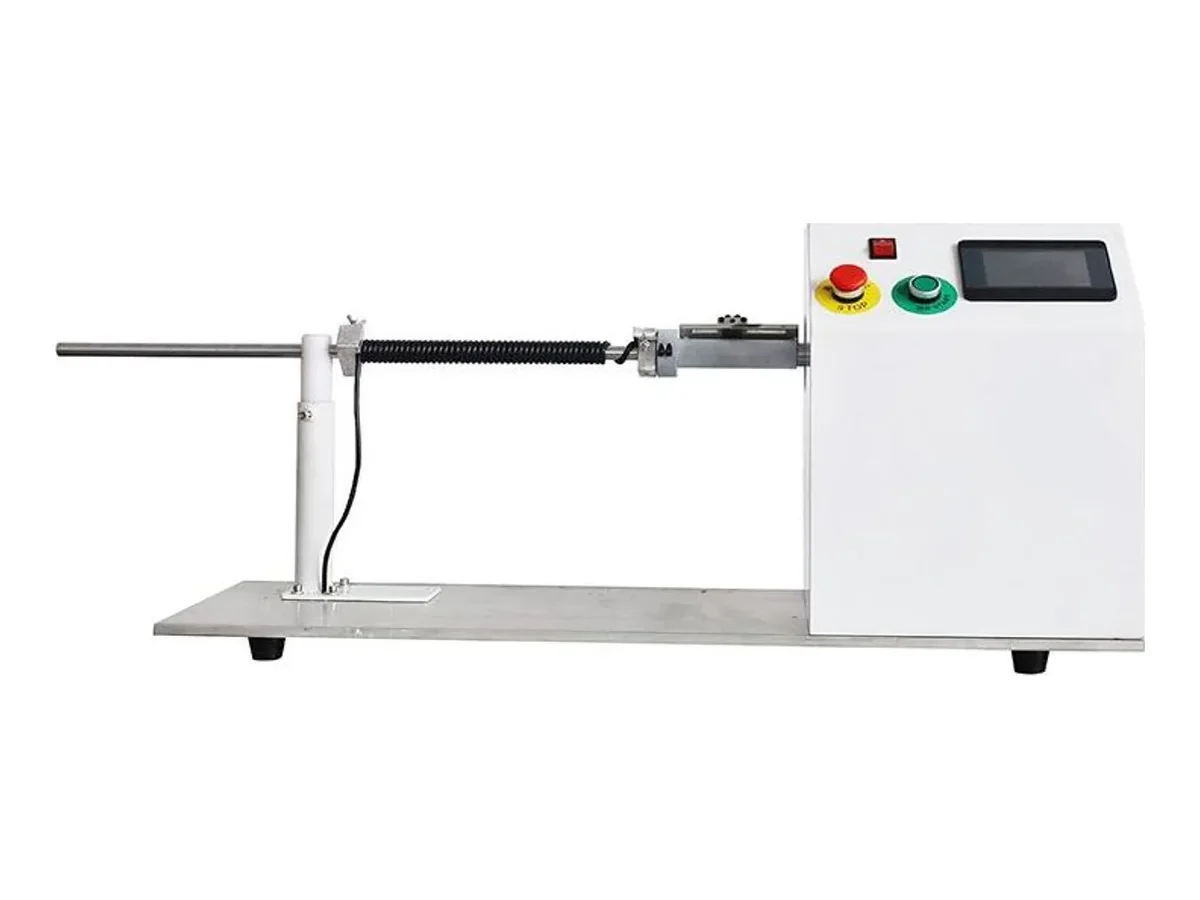
The WM-4816 turns straight cable into spiral spring wire. The cable is clamped to a rotating mandrel and wound helically along it, to form a helix; the final retained shape and retraction depend on the jacket and any required heat-setting process. Cable range is Φ1 to 8 mm (customizable), winding speed is 3,000–4,500 rpm with the servo motor or 600 rpm with the stepper motor, and the stated output is 3,000 to 5,000 pieces per day at 3 m per piece. Turn count is freely settable on the English touch screen, winding runs forward or reverse with an on-screen counter, and a brake stops the mandrel quietly.
Specifications
| Function | Spiral winding — forms straight cable into spring wire and telephone cord |
|---|---|
| Applicable wire diameter | Φ1 – 8 mm (can be customized) |
| Winding speed | 3,000 – 4,500 rpm (servo motor); 600 rpm (stepper motor) |
| Winding efficiency | 3,000 – 5,000 pieces/day (based on 3 m length) |
| Number of winding turns | Freely settable |
| Winding direction | Forward and reverse, adjustable |
| Counting | Winding count function |
| Brake | Fitted — low noise operation |
| Control | Touch screen, English interface |
| HS Code | 8479.89 (common reference — final classification confirmed by your customs broker) |
| Certification | CE (certificate provided with shipment) |
Key features
- This is a forming machine, not a packing coiler — it winds a straight lead into the helix for a curly cord; final shape retention depends on material and any required heat-setting, rather than packaging finished cable into a shipping coil
- Turn count is entered on the touch screen and reused for the batch; we confirm achievable coil pitch and length consistency on your cable sample
- Forward and reverse winding with an on-screen counter — the running page shows winding count, speed step and target turns in English
- Two drive options are quoted for the same platform: 3,000–4,500 rpm with a servo motor, or 600 rpm with a stepper motor when a slower, higher-torque wind suits the jacket
- Braked spindle stops the mandrel without overrun, so the last turn does not unwind and the machine stays quiet between cycles
- Height-adjustable tail support and a wing-nut clamp block hold the cable end against the mandrel — changeover needs no tools
- Free sample test — send us your cable and target coil, we wind it on this machine and send you the video before you order
What it processes
- Curly telephone handset cords and coiled headset or microphone leads
- Retractable spiral power cords for appliances, hand tools and workstations
- Coiled control, signal and charging leads that have to extend and spring back in service
- Spring-wire pigtails on cable assemblies where a straight lead would snag or hang loose
Suited for: making curly cord — telephone handset leads, retractable power cords, coiled control and charging cables — from straight cable of Φ1 to 8 mm, at a stated 3,000 to 5,000 pieces a day on 3 m pieces. Not suited for: packing work. This machine does not wind finished cable into shipping coils and does not tie them. For measured coils use the WM-4810 automatic wire coiling machine with meter counter (0.5–16 mm wire, 30–350 mm coil inner diameter); if the coil has to come off already bundled, the WM-4813 meter counting coil winding and tying machine counts, winds and ties 1–8 mm cable in one cycle. It also does not cut or strip — prepare the blanks on the WM-1306 automatic cable cutting and stripping machine (φ1–12 mm sheathed cable, up to 2,000 pcs/h).
Everything else in this category is a packaging machine: cable arrives finished and leaves as a tidy coil. The WM-4816 sits one step earlier in the plant, in the shop that actually manufactures the cord. A straight length of cable is wound into a helix on the mandrel as a forming step. Final shape retention and retraction depend on the jacket and any required heat-setting stage; the helix is the intended product geometry, not a packaging coil.
The layout is deliberately simple, and that is the point on a forming machine. The spindle and its chuck live in the control cabinet; the mandrel runs out from it along the base plate to a height-adjustable tail support, and an aluminium clamp block with a wing nut pins the cable end to the mandrel. Set the turn count on the touch screen, run it, and the cable lays itself along the mandrel in an even helix. Reverse is on the same screen for unloading, the counter tells the operator where the cycle is, and the brake stops the mandrel dead so the last turn does not spring back. Changeover between cord sizes is a wing nut and a mandrel swap.
Send us the cord you are copying — a physical sample is best — plus 3 to 5 meters of your cable and the jacket material. We wind it on this machine, confirm the mandrel and the turn count, and send you the video before you commit.
Engineering knowledge
Choose and troubleshoot this process
- Spiral Cable Production: Winding, Heat Setting, Cooling and Reverse WindingPlan a retractile cable process around winding, heat setting, cooling and finishing. Define coil dimensions and accepted shift output before buying machines.
- Cable Coiling Defects: Causes and Corrective ActionsTroubleshoot inconsistent coil diameter, crossed loops, stored twist, unstable lead length, loose binding and cable surface damage.
- How to Choose a Cable Coiling and Winding MachineChoose cable coiling equipment by cable construction, finished coil geometry, length control, binding method, product handling and batch mix.
WM-4816 — common questions
Does the WM-4816 wind finished cable into coils for packing?
No — and this is the main thing to get right about it. Every other machine in this category takes finished cable and winds it into a round or figure-8 coil for shipping. The WM-4816 does the opposite job: it winds the cable itself into a spiral on a mandrel for curly-cord production; permanent shape and retraction depend on the jacket and any required heat-setting stage. If what you actually need is measured coils for packing, use the WM-4810 automatic wire coiling machine with meter counter for 0.5–16 mm wire, or the WM-4813 meter counting coil winding and tying machine if the coil must leave the machine already tied.
Does the machine heat-set the spiral, or only wind it?
The published specification covers the winding machine only — no oven or heat-setting chamber is listed with it. The machine rotates the mandrel, lays the cable on in a tight helix and the clamp blocks hold both ends. Whether the loaded mandrel then needs a heat-set stage, and at what temperature and dwell, depends entirely on your jacket material. Tell us the jacket compound and the cord spec you are copying and we confirm the full process before you order.
What spiral diameter and pitch can it produce?
The spiral inner diameter is set by the mandrel fitted to the spindle, and the pitch follows the turn count you set on screen against the length of cable you load. The source specification does not publish a mandrel diameter range or a maximum cord length. Send us your target coil inner diameter, pitch, free length and extended length together with 3–5 meters of your cable, and we confirm the mandrel and the settings in a sample video.
How fast is it in practice?
The stated output is 3,000 to 5,000 pieces per day at 3 meters per piece. Winding speed itself is quoted two ways depending on the motor fitted — 3,000 to 4,500 rpm with the servo motor, 600 rpm with the stepper motor — so the daily figure moves with the drive you choose, your cord length and your turn count. We can time a real cycle on your own cable during the sample test.
Is the touch screen in English?
Yes. The running page in the photos is the English interface — winding count, winding speed step, winding turns, a winding motor reversal toggle and a point-detection function are all labelled in English. No separate language pack or dongle is needed.
What cable does it take, and can it cut the cord to length first?
The stated range is Φ1 to 8 mm and we can customize it. The WM-4816 does not cut or strip — it expects cable already cut to length with the ends prepared. For that upstream step on the same size range, the WM-1306 automatic cable cutting and stripping machine covers φ1–12 mm sheathed cable at up to 2,000 pcs/h.
What is the WM-4816B?
An alternate build of this machine with the same specification. The WM-4816B is quoted separately — tell us which page you are looking at when you ask for a price.
Related machines in Winding, Coiling & Binding
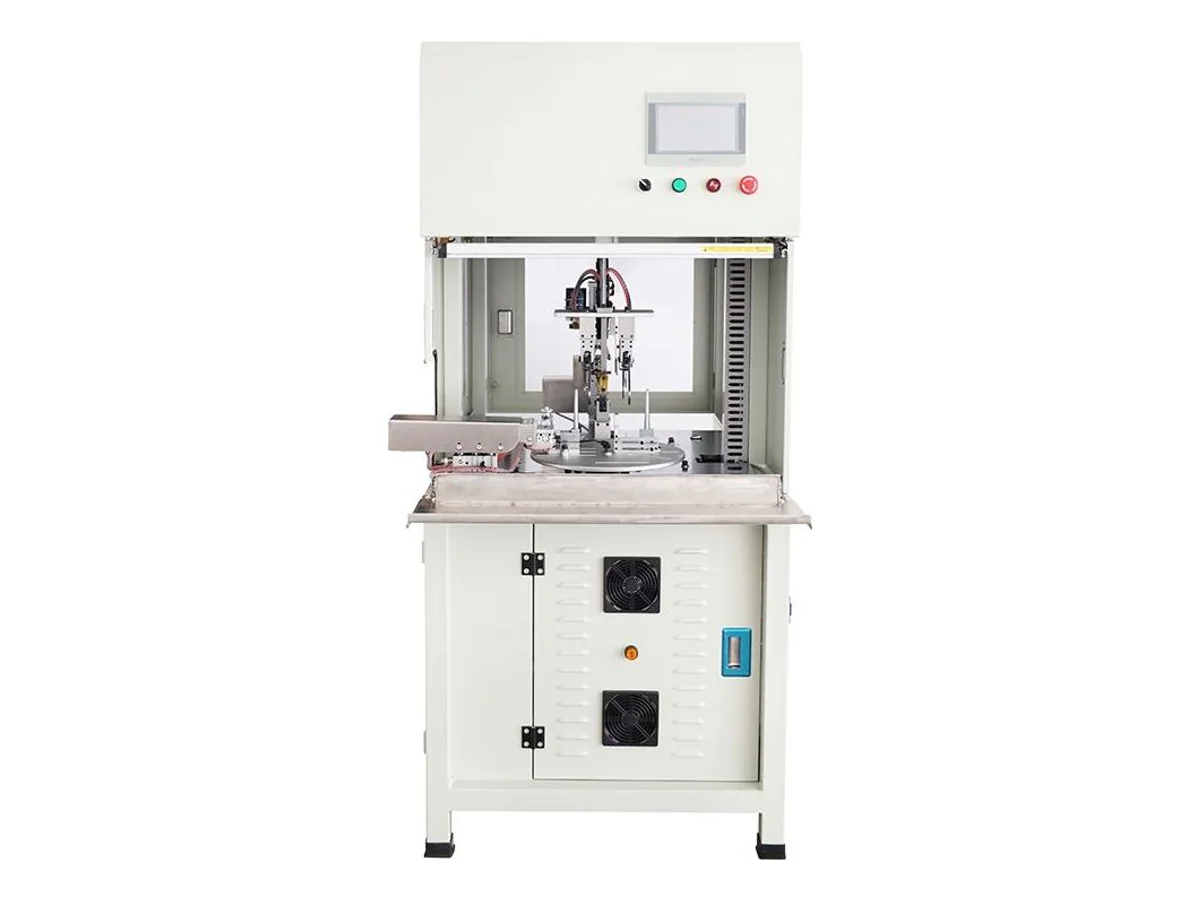
Automatic AC Power Cord Winding and Tying Machine
Model WM-4820
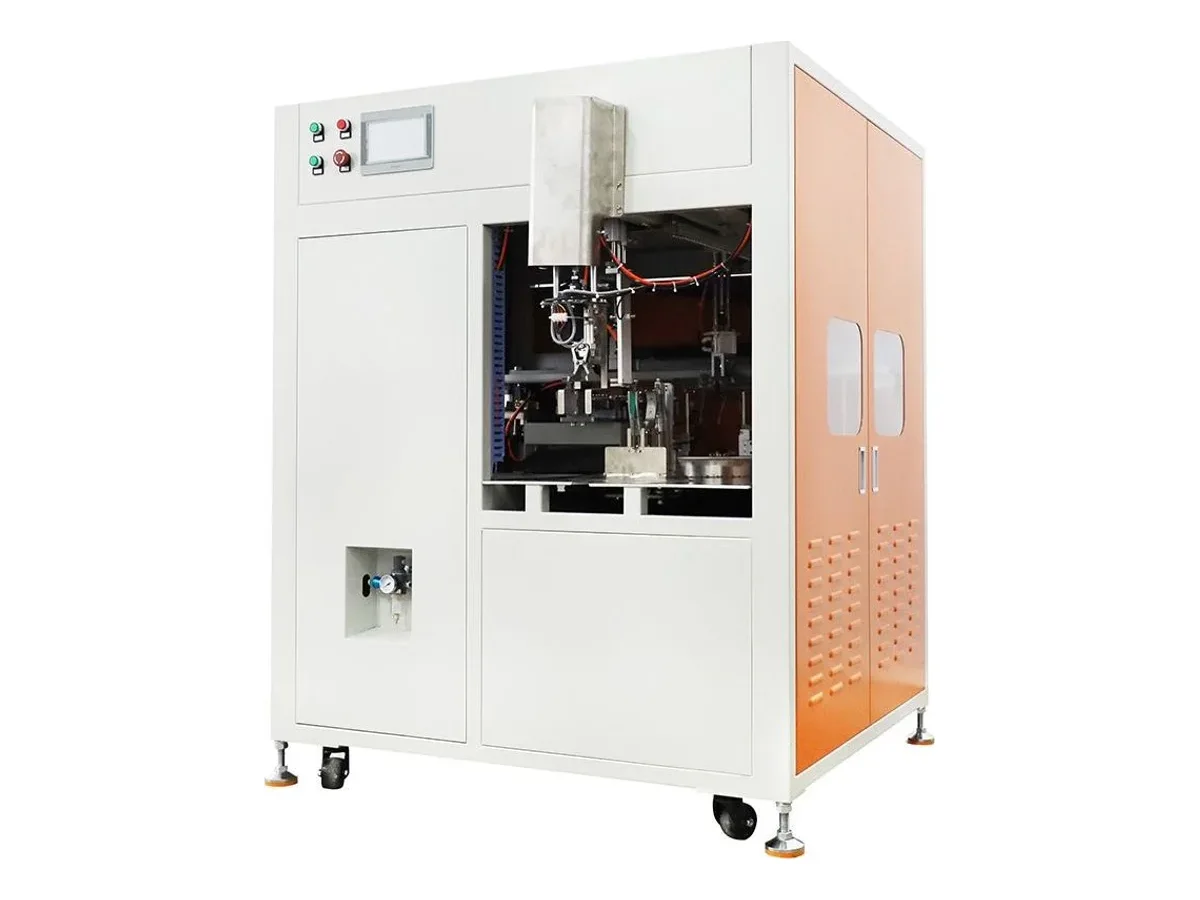
Automatic Cable Cutting, Figure-8 Coiling and Tying Machine
Model WM-4808
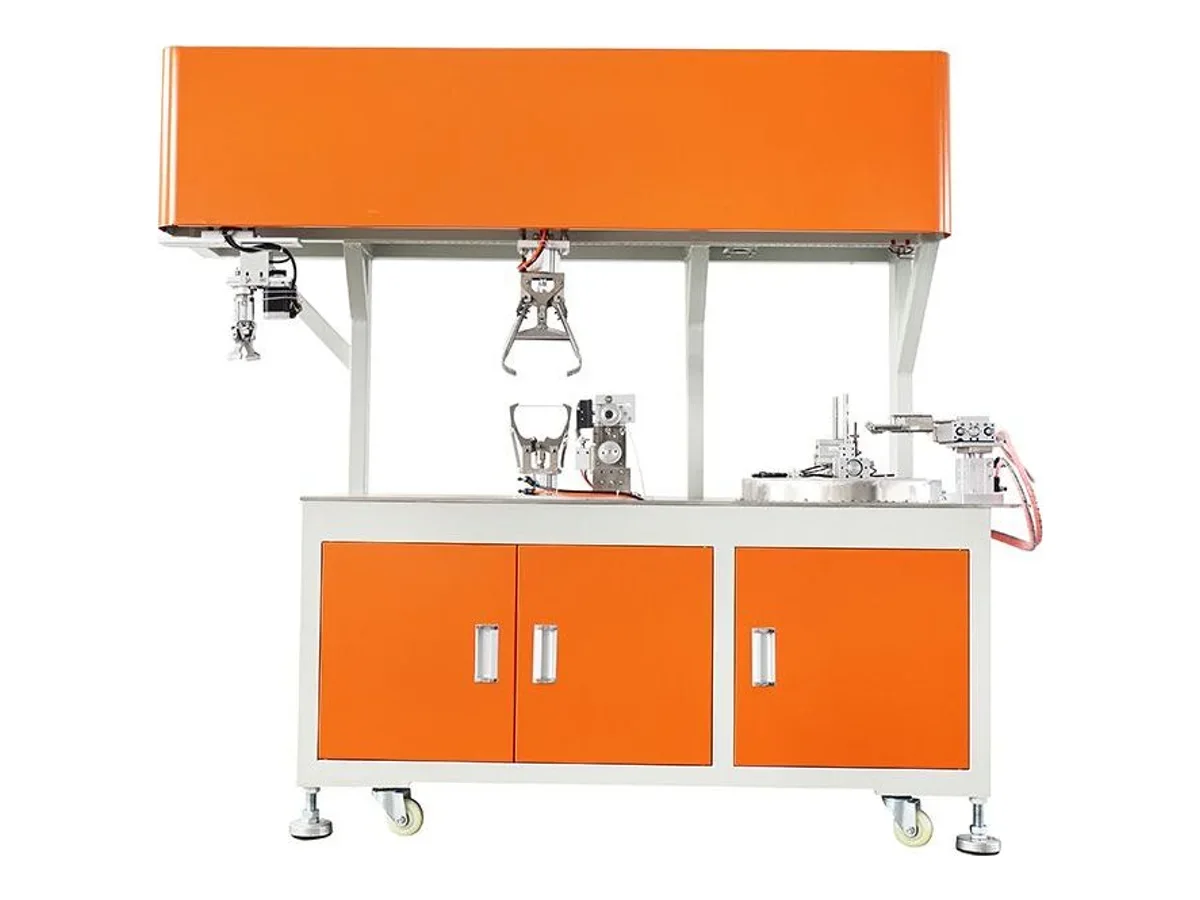
Automatic Cable Winding and Tying Machine for Figure-8 and Round Coils
Model WM-4811