Semi-Automatic Cable Coiling Machine with Automatic Level Winding WM-4817
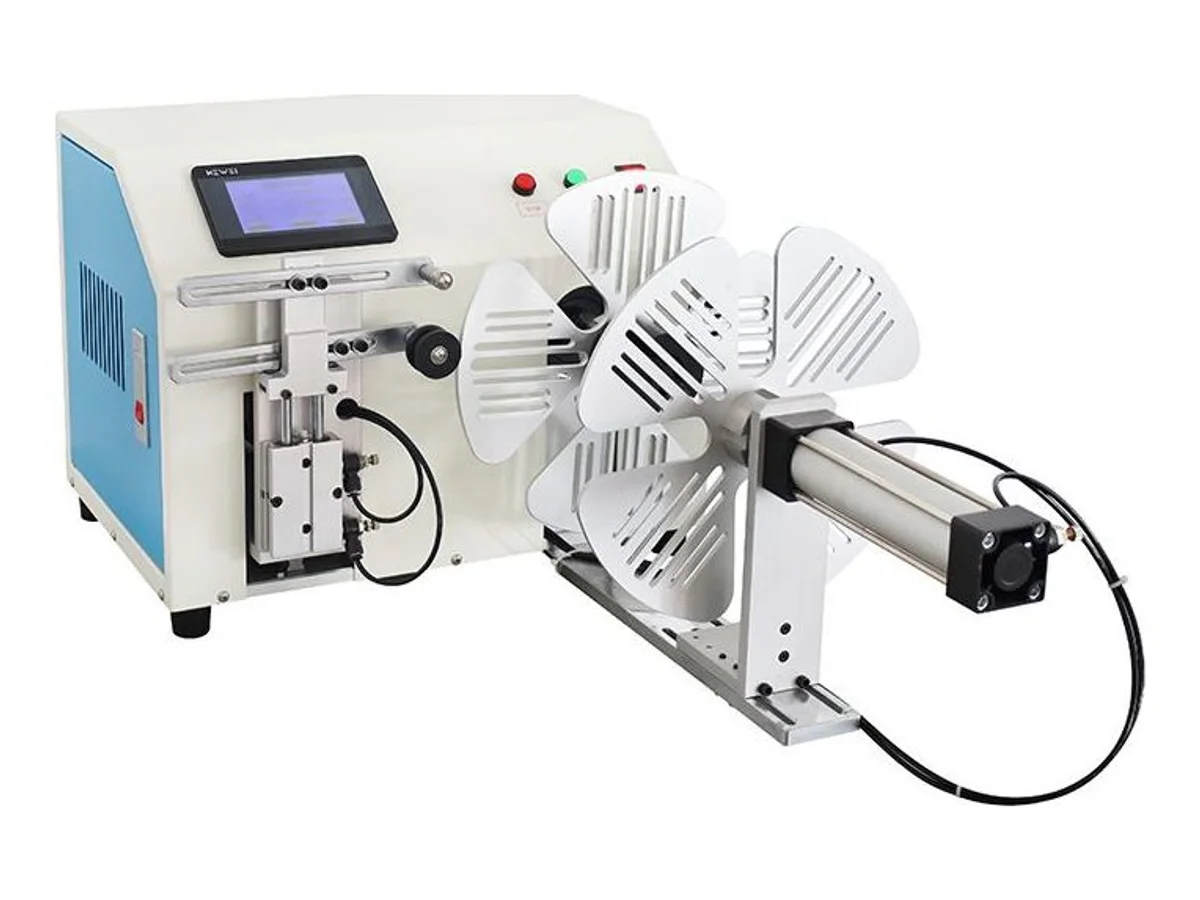
The WM-4817 is a 40 kg benchtop cable coiler that winds finished cords onto a collapsible flanged reel and lays every turn side by side by itself, so the coil comes off flat instead of tangled. It handles cable up to 13 mm diameter, a stated maximum cable width of 190 mm and coils up to 260 mm diameter, spinning at up to 999 rpm on 375 W. Winding speed, turn count, cable diameter, traverse width and start position are typed on the English touch screen, and a pneumatic flange releases the finished coil.
Specifications
| Function | Semi-automatic cable coiling with automatic level winding |
|---|---|
| Maximum cable width | 190 mm |
| Maximum wire diameter | 13 mm |
| Maximum winding speed | 999 revolutions/minute |
| Maximum coil diameter | 260 mm |
| Winding motor torque | 8.5 N·m |
| Input voltage | AC 200 – 230 V |
| Input air pressure | 0.45 – 0.65 MPa |
| Maximum power | 375 W |
| Dimensions | 600 × 400 × 450 mm |
| Weight | 40 kg |
| HS Code | 8479.89 (common reference — final classification confirmed by your customs broker) |
| Certification | CE (certificate provided with shipment) |
Key features
- Automatic level winding — the traverse arm walks the cable across the reel turn by turn, so the finished coil is flat and pays out without knotting
- Cable diameter and traverse width are entered on screen, and the traverse pitch follows them — no mechanical cam to swap when the cord changes
- Winding speed, number of turns, start position and end delay all live on the same English winding-parameter page
- Second screen holds the machine behaviour — AUTO or manual action mode, cylinder delay, run-up acceleration and the slow speed used for the last turns
- Pneumatic cylinder retracts the flange so the finished coil slides off the mandrel without being pulled out of shape
- Collapsible petal flanges adjust the coil face, and the whole head sits on a 40 kg benchtop frame that two people can move
- Free sample test — send us your cable, we wind your coil size on this machine and send you the video before you order
What it processes
- Coiling AC power cords and DC power cords before bagging
- Data cables, video cables and high-definition transmission cables up to 13 mm diameter
- Cord sets and assemblies that must arrive at the packing bench already flat-coiled
- Benchtop coiling stations that need level winding without the footprint of a floor-standing coiler
Suited for: benchtop coiling of finished cords and transmission cables up to 13 mm diameter — AC and DC power cords, data, video and HD cable — where the coil has to come off flat and evenly wound, up to 260 mm coil diameter. Not suited for: cable thicker than 13 mm or coils that must be built to a measured length — use the WM-4810 automatic wire coiling machine with meter counter (0.5–16 mm wire, coil inner diameter 30–350 mm, 25 mm counting tolerance). Coils that must leave the machine already bundled belong on the WM-4813 meter counting coil winding and tying machine (1–8 mm wire, bundle Ø 18–65 mm), or tie this machine’s coils afterwards on the WM-4807 semi-automatic winding and twist tie machine (bundle Ø 5–35 mm).
Level winding is the whole argument for this machine. A plain spooler drops turn on top of turn and the coil comes off as a spring that fights the packer; here the guide arm steps across the reel at the pitch your entered cable diameter implies, so each turn lands beside the last one. The result is a coil with a flat face that can be bagged, boxed and unwound by the end customer without a knot — and because the pitch is a screen value rather than a cam, switching from a 3 mm data cable to a 10 mm power cord is a number change, not a tooling change.
The rest of the machine is built around getting the coil off intact. The mandrel carries collapsible petal flanges that set the coil face, the machine drops to its slow speed for the last turns so the tail does not whip, and the air cylinder pulls the flange back on the delay you set — the coil slides off the hub instead of being wrestled over a fixed rim. At 40 kg and 600 × 400 × 450 mm it belongs on the bench next to the cutting or testing station, not in its own floor space.
Send us 20–30 meters of your actual cable together with the coil diameter and coil width you ship. Jacket stiffness and cable memory decide how tight the level winding has to be set, so we wind your material on this machine and send the video before you commit.
Engineering knowledge
Choose and troubleshoot this process
- Cable Coiling Defects: Causes and Corrective ActionsTroubleshoot inconsistent coil diameter, crossed loops, stored twist, unstable lead length, loose binding and cable surface damage.
- How to Choose a Cable Coiling and Winding MachineChoose cable coiling equipment by cable construction, finished coil geometry, length control, binding method, product handling and batch mix.
- Spiral Cable Production: Winding, Heat Setting, Cooling and Reverse WindingPlan a retractile cable process around winding, heat setting, cooling and finishing. Define coil dimensions and accepted shift output before buying machines.
WM-4817 — common questions
Does the WM-4817 count meters?
No. It winds by turns and by the parameters you set on screen — there is no meter counter and no published counting tolerance for this machine. If the coil has to contain a measured length, the WM-4810 automatic wire coiling machine with meter counter counts to a stated 25 mm tolerance on 0.5–16 mm wire, and the WM-4813 adds counting plus a tying head on 1–8 mm material.
Does it tie the coil?
No — this machine winds only, and the operator lifts the coil off after the pneumatic flange releases it. To tie the coils it winds, add the WM-4807 semi-automatic wire winding and twist tie machine or the WM-4804 semi-automatic twist tie binding machine, both rated for bundles 5–35 mm across.
What does "semi-automatic" mean on this machine?
The operator fixes the cable end on the mandrel and takes the finished coil off; everything between is automatic — the reel spins to the set turn count while the traverse lays the wire side by side, the machine slows for the last turns, and the pneumatic flange retracts on the programmed delay so the coil comes free.
What cable and coil sizes does it cover?
Maximum wire diameter is 13 mm, maximum coil diameter 260 mm, and the source states a maximum cable width of 190 mm — the width across the reel that the winding covers. Send us your target inner diameter, outer diameter and coil width; we confirm the mandrel setup and achievable coil dimensions on the quote.
Does it need compressed air?
Yes. The flange release runs on air at 0.45 to 0.65 MPa. Electrical supply is AC 200–230 V and maximum power draw is 375 W, so an ordinary bench outlet plus a shop air line is all the machine needs.
How fast is it?
Finished-coil output is confirmed on the quote. The specified maximum winding speed is 999 revolutions per minute with 8.5 N·m of winding torque; turn count, coil size and handling determine the achieved rate. We can time a real cycle on your own cable during the sample test and send you the video.
Related machines in Winding, Coiling & Binding
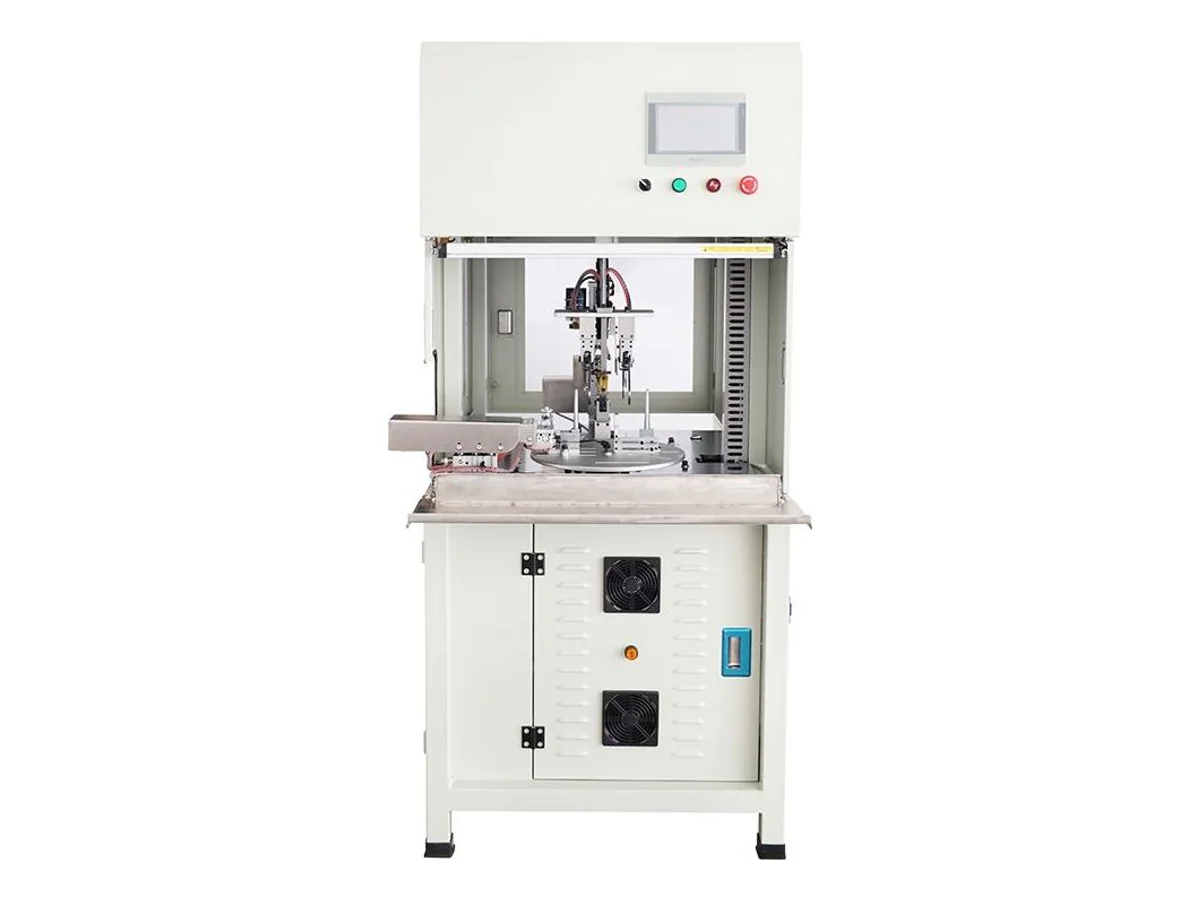
Automatic AC Power Cord Coiling and Twist Tying Machine
Model WM-4820
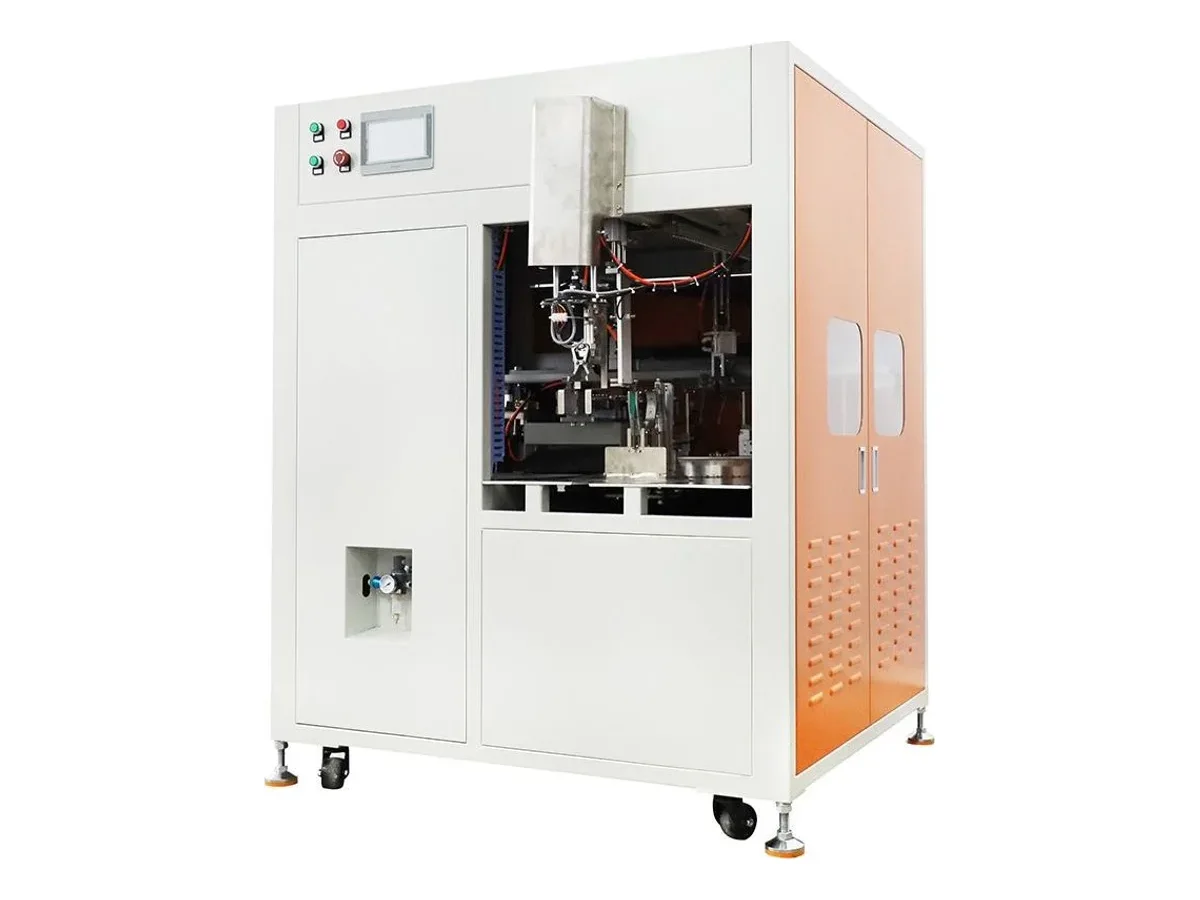
Automatic Cable Cutting, Figure-8 Coiling and Tying Machine
Model WM-4808
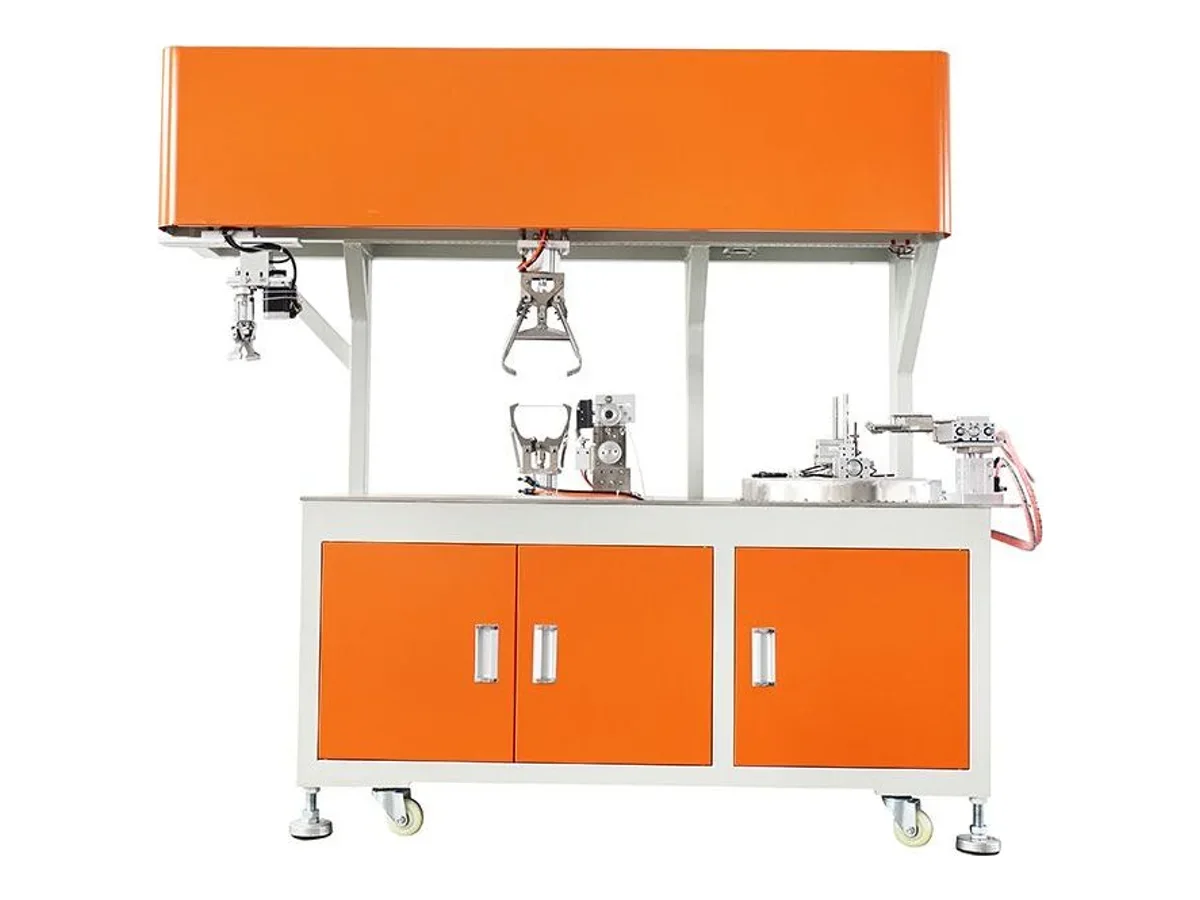
Automatic Cable Winding and Tying Machine for Figure-8 and Round Coils
Model WM-4811