Automatic XT60 and XT90 Connector Soldering Machine WM-726
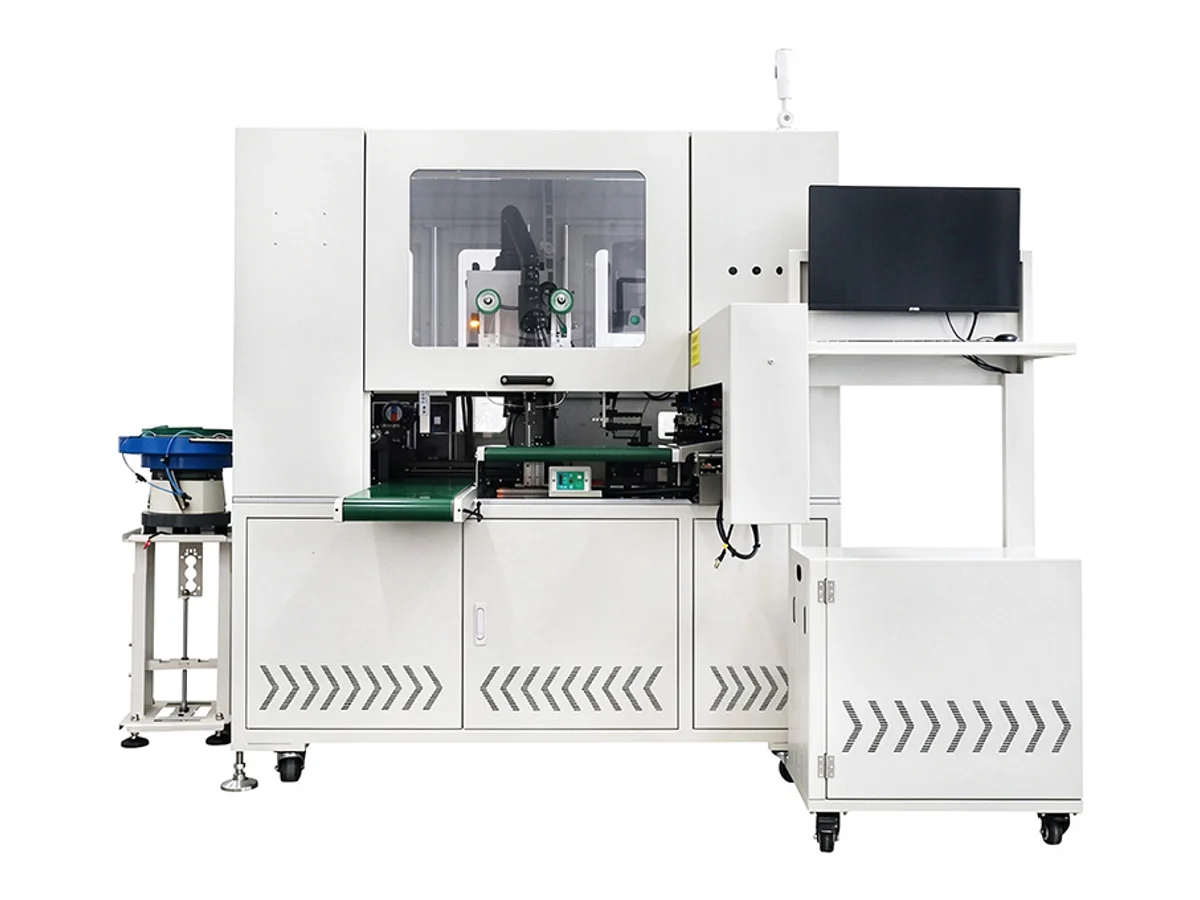
Our WM-726 prepares wire, feeds loose XT60 or XT90 battery connectors from a vibratory bowl and solders two joints at the same time. The standard cutting range is 30–600 mm. The specification lists about 350–450 cycles per hour, depending on wire length and pin count. We confirm the tooling and wire range with your samples before you order.
Specifications
| Model | WM-726 |
|---|---|
| Connector housings | XT60 and XT90. Other housings are confirmed by sample trial. |
| Wire and cable in the datasheet | AWG 28–22, 2P–8P flat cable excluding flexible flat cable (FFC) |
| Cut length | 30–600 mm standard. Custom minimum 18 mm. |
| Front end | 0–10 mm strip length and dip tinning |
| Rear end | 0–5 mm strip length, dip tinning and soldering |
| Twist length | 0–5 mm |
| Process functions | Soldering, dip tinning and wire twisting (up to 5 groups) |
| Cycle rate | Approx. 350–450 cycles/hour, depending on wire length and pin count |
| Working voltage | Reference configuration: 220 V AC, 50 Hz |
| Rated current | 40 A |
| Working air pressure | 0.5–0.7 MPa, dry compressed air |
| Dimensions (L × W × H) | (1435 + L) × 1650 × 1850 mm. Overall installed length is confirmed on the quote. |
| Machine weight | Approx. 795 kg |
| Installation conditions | Level, solid floor in a dry area away from direct sunlight |
| Electrical configuration | We configure the machine’s electrical supply for your installation before shipment. Your quote confirms the voltage, phase, frequency, current and the power cord with plug or industrial connection for your site. Common site supplies are 120 V, 60 Hz with grounded Type B outlets in the US and Canada, with 208 V or 240 V also found at industrial sites. The UK and Ireland use 230 V, 50 Hz with Type G. Australia and New Zealand use nominal 230 V, 50 Hz with Type I, and some Australian sites list 240 V. Three-phase installations in the UK, Ireland, Australia and New Zealand commonly use 400 V at 50 Hz, with 415 V at some Australian sites. |
| Lead time | Your quote confirms the machine configuration, included accessories and dispatch date. |
| Warranty and support | One-year machine warranty and free remote video support for the life of the equipment. |
| Wear parts | For wear parts, every quote lists them with unit price and the location they ship from. |
| HS Code | 8515.19 (common reference — final classification confirmed by your customs broker) |
| Certification | CE (certificate provided with shipment) |
Key features
- The vibratory bowl orients loose connector housings for loading, so the operator does not have to place every housing by hand.
- The soldering station works on both joints together, eliminating a separate pass for the second contact.
- Digital temperature control lets you set the soldering temperature for each wire and contact combination.
- The PLC and touchscreen store job settings so operators can recall a validated program for the next batch.
- Send us your wire and housings. We run your samples and send a video of the finished joints before you order.
What it processes
- XT60 and XT90 battery leads for drones and radio-controlled models
- Connector lead assemblies for electric bicycles
- Battery cable subassemblies for energy storage modules
Prepare and solder battery leads in one cycle
The wire preparation stations cut each lead and set the stripping length for both ends. The front end can be dip tinned. The rear end can be stripped, dip tinned and soldered to the contact. The bowl feeds the selected housing into position, and the soldering station works on both contacts together.
Qualify the wire and connector as a set
A housing designation gives us the connector family. We also need the exact housing and contact, conductor size, insulation diameter, finished lead length and strip lengths to select the feeder and fixture. Send production parts so we can check feeding, solder wetting and the finished joint on video.
For mixed connector or component jobs with manual loading, see our WM-722 benchtop soldering machine.
Engineering knowledge
Choose and troubleshoot this process
- How to Choose an Ultrasonic Wire Welding MachineChoose ultrasonic wire welding equipment by conductor material, gathered cross-section, splice geometry, weld power, tooling, recipe control and acceptance testing.
- How to Choose a Wire Twisting and Tinning MachineChoose wire twisting and tinning equipment by conductor construction, strip condition, tinning specification, flux control, finished-end geometry and automation level.
- Ultrasonic Wire Welding Defects: Causes and Corrective ActionsTroubleshoot weak wire splices, cut strands, excessive flash, incomplete bonding, unstable weld energy, tool marking and conductor contamination.
WM-726 — common questions
Which wire gauges can I use with XT60 and XT90 housings?
The datasheet lists AWG 28–22. Reference sample leads carry 10 AWG and 12 AWG jacket markings, which differ from that range. Send your conductor size, insulation diameter, contact and housing. We confirm the actual range for your setup by running your samples and recording the result on the quote.
Can I switch between XT60 and XT90?
The PLC stores separate programs. We confirm the bowl feeder and soldering fixture for each housing and contact you use. Send both sets of parts if you plan to run both jobs.
How many finished leads can I expect per hour?
The specified rate is approximately 350–450 cycles per hour. Wire length and pin count affect the cycle, and we measure finished output on your sample run.
Can the machine cut a lead shorter than 30 mm?
The standard range is 30–600 mm. A custom configuration can go down to 18 mm. We confirm the shortest usable length with your sample and tooling.
What utilities and space should I plan for?
The specification lists 220 V AC at 50 Hz, a rated current of 40 A and dry compressed air at 0.5–0.7 MPa. We confirm the installed length for your configuration on the quote. We set the voltage for your country and ship the English interface and manual.
How do I plan for replacement tips and wear parts?
Every quote lists them with unit price and the location they ship from.
Related machines in Tinning, Soldering & Welding
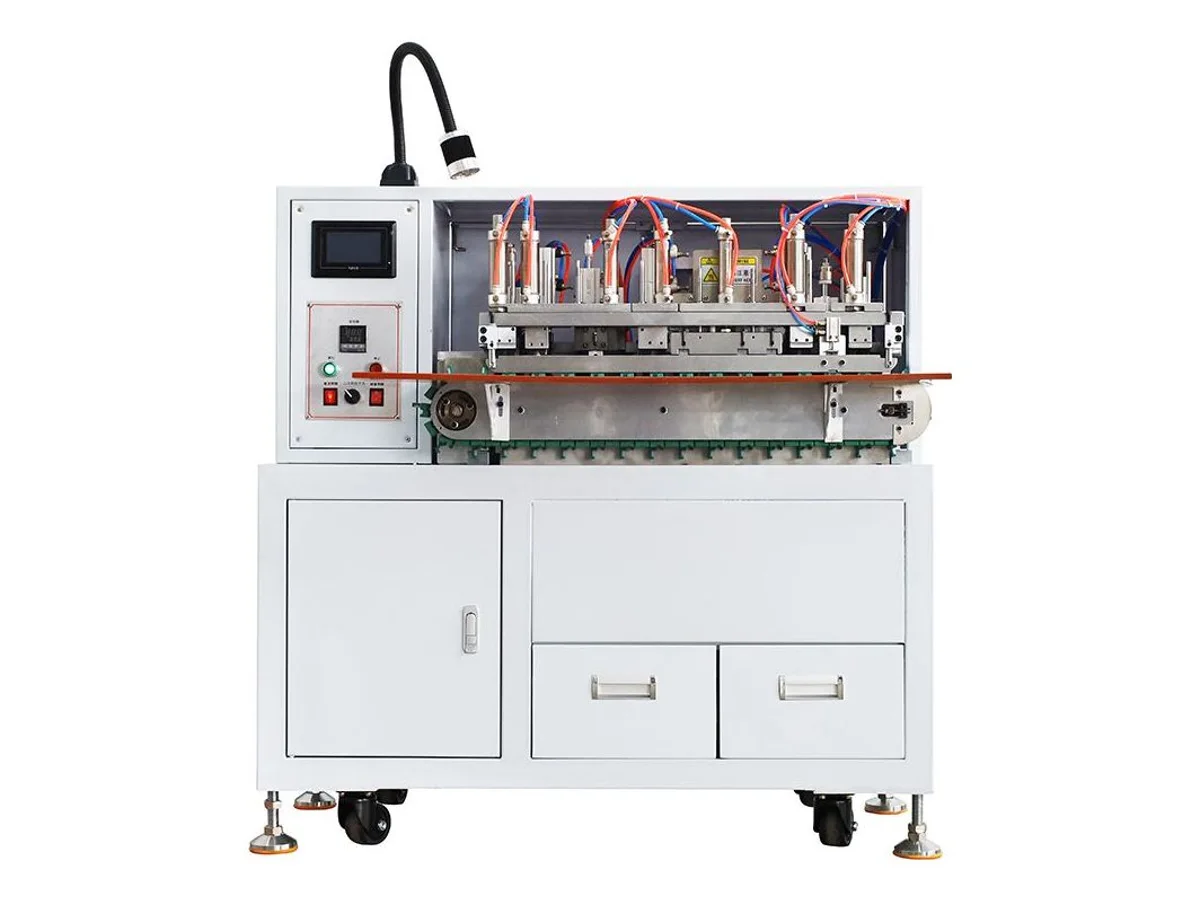
Automatic 3-Core Cable Cutting Stripping Twisting and Tinning Machine
Model WM-4710T
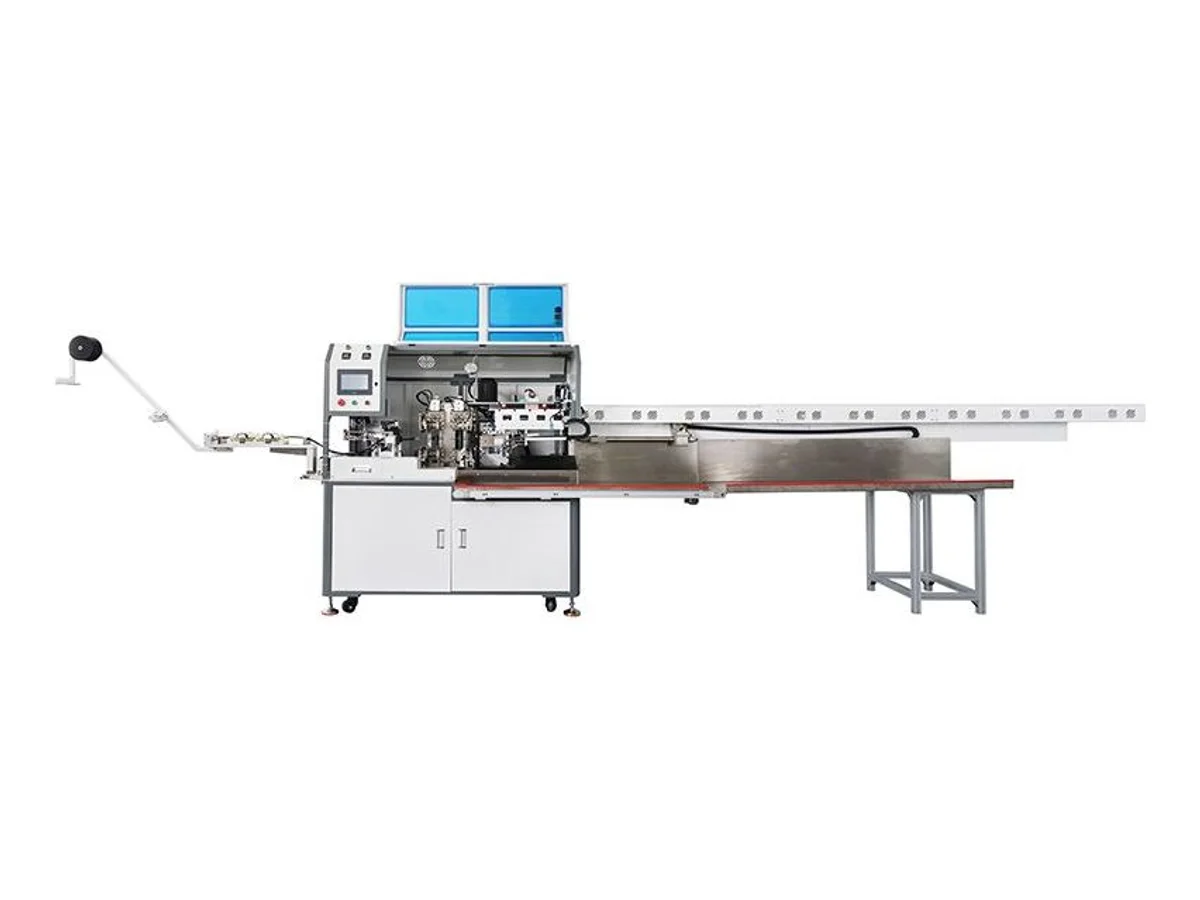
Automatic Multicore Cable Cutting Stripping and Two-End Tinning Machine
Model WM-4706S
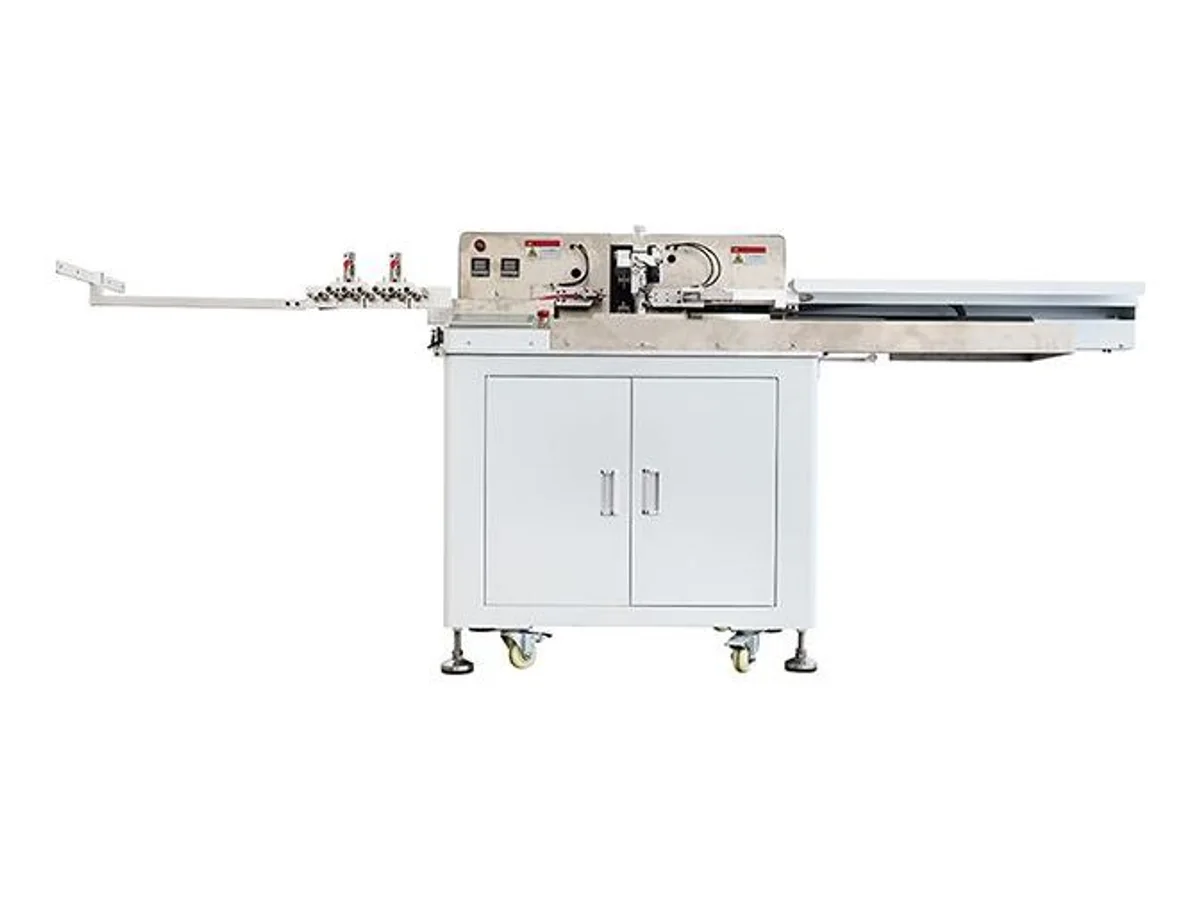
Multi-Wire Cutting, Stripping, Twisting and Tinning Machine, Up to 10 Wires
Model WM-4706W