Electric Busbar Peeling Machine for Flexible Copper Busbar, 1×10 to 8×80 mm WM-195
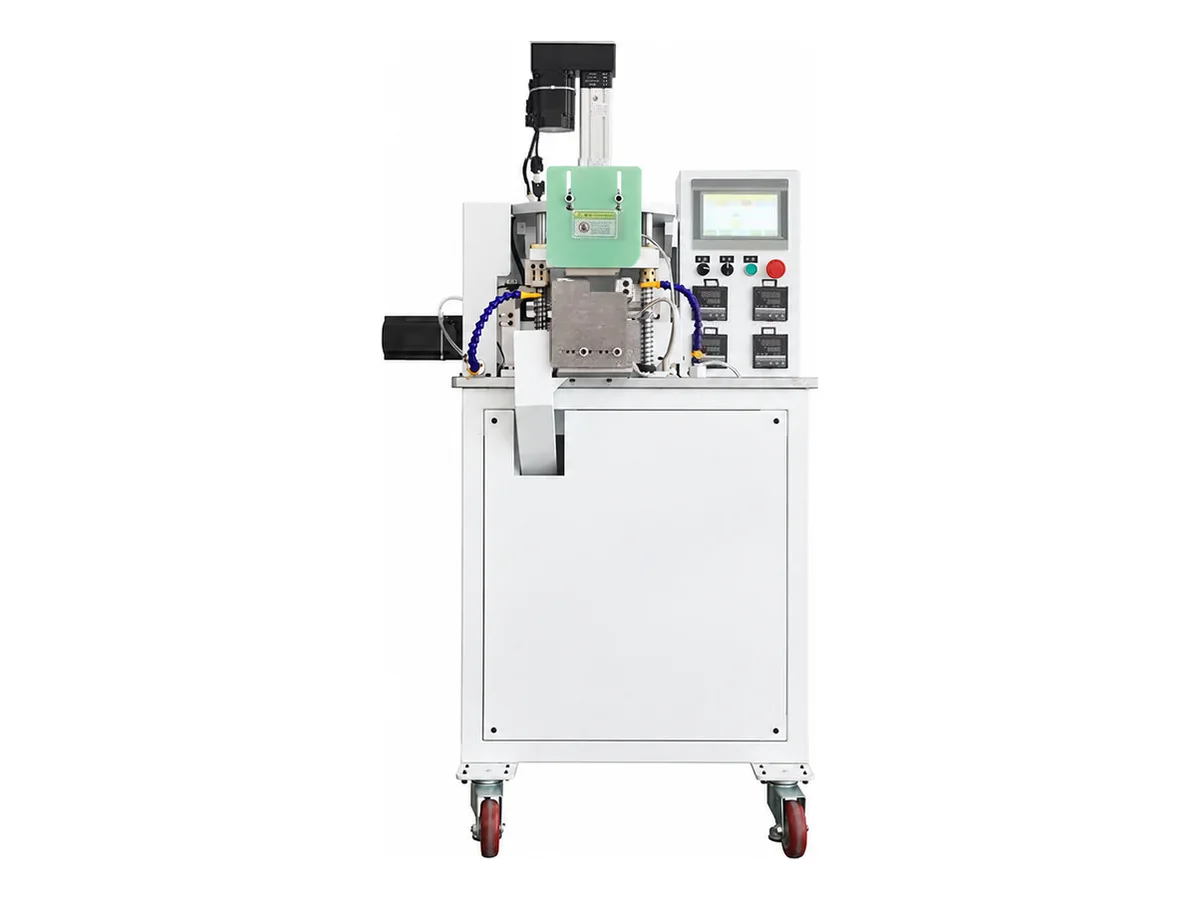
Our WM-195 removes the insulation sleeve from copper busbar and flexible copper connections from 1 × 10 to 8 × 80 mm (thickness × width). The PLC and touch screen set cutting depth, cutting width, stripping length and positioning points, with 100 stored recipe groups. Stripping distance is 2–150 mm; a separate cut-only mode reaches a 200 mm position without pulling the sleeve. The operator presents each workpiece to the stripping head.
Specifications
| Process | Copper busbar insulation sleeve cutting and stripping |
|---|---|
| Maximum busbar size | 8 × 80 mm (thickness × width) |
| Minimum busbar size | 1 × 10 mm (thickness × width) |
| Stripping distance | 2–150 mm |
| Cut-only position | 200 mm; pressing/cutting without pulling |
| Control system | PLC and touch screen |
| Programmable settings | Cutting depth, cutting width, stripping length and positioning points |
| Recipe storage | 100 groups |
| Cutting points | 2 settable points, with automatic position adjustment for each process |
| End settings | Separate A/B recipes with automatic alternation of settings |
| Waste handling | Insulation offcut collection |
| Power supply | AC 220 V |
| Dimensions | 110 × 65 × 58 cm (datasheet); confirm installation dimensions on the quote |
| Certification | CE (certificate provided with shipment) |
Key features
- An 80 mm maximum busbar width accommodates wider copper connections while keeping sleeve removal in a dedicated stripping station.
- Store up to 100 recipes to recall the cutting and stripping settings when a recurring busbar job returns to the bench.
- Separate A/B settings let you process ends with different requirements without re-entering the recipe for each pass; the operator turns and presents the part.
- Use the cut-only mode for a shaped part such as a T-shaped busbar when the sleeve must be scored without a pull-off movement.
- The offcut collection area gathers removed insulation so it can be cleared between batches.
What it processes
- Insulation sleeve removal from flat copper busbar and flexible copper connections
- End preparation of insulated copper connections for battery packs, energy-storage assemblies and electrical cabinets
- Shaped busbar parts requiring sample-matched workholding and stripping settings
Remove the sleeve where the copper connection needs to be exposed
The WM-195 prepares the ends of an insulated copper connection by cutting and pulling away its sleeve. The workpiece stays under the operator’s control during loading and unloading. Our demonstration shows hand loading, movement of the stripping head and a prepared end; the gallery also includes an example of an exposed copper contact area. These examples show the process, while the recipe for your sleeve and part geometry is established with your samples.
The width limit of 80 mm is a busbar dimension, not a round-cable diameter. Quote the thickness and width separately, together with the sleeve material, sleeve wall thickness and required exposed length. If your part has bends, holes or unequal ends, include the complete part drawing so we can check loading clearance and support.
Separate the pull-off length from the cut-only position
Normal stripping covers 2–150 mm. The 200 mm setting is a cut-only position and does not extend the pull-off stripping range. Two cutting points can be set, and A/B settings can alternate for ends that need different preparation. The operator turns the part between passes; recipe alternation does not imply automatic part rotation.
Agree the sample result and production cycle
Send several representative parts, the required strip-length tolerance and your target output. We run the samples on video and check the exposed length, sleeve-edge condition and copper surface against the agreed acceptance criteria. Production output includes manual loading, turning, unloading and offcut handling; the edited demonstration is not a timed capacity test.
We set the voltage for your country and ship the English interface and manual. The specified supply is AC 220 V; we confirm the delivery configuration and installation dimensions on the quote. For blades and other wear items, every quote lists them with unit price and the location they ship from.
Engineering knowledge
Choose and troubleshoot this process
- How to Choose a Busbar Punching, Shearing and Bending MachineChoose a copper busbar machine by operation-specific capacity, hole tooling, bend geometry and handling. Compare WM-9400 configurations and plan a sample trial.
- Automatic vs Semi-Automatic Wire Processing EquipmentCompare automatic lines and semi-automatic wire-processing cells using batch size, changeover, process integration, inspection and labor content.
- Cut Lengths Drifting on a Full Spool: Pay-Off Tension, Straightener Bearings and MisfeedWhy a cut-and-strip machine that held length on a loose coil walks 10–20 mm once a heavy reel goes on, how misfeed detection works, and how to check reel tension, straighteners, feed grip and encoder calibration.
WM-195 — common questions
What busbar sizes does the WM-195 handle?
The current specification covers 1 × 10 to 8 × 80 mm, stated as thickness × width. Pull-off stripping distance is 2–150 mm. Send the complete part drawing, sleeve material and required exposed length so we can confirm the workholding and settings on your samples.
Can it strip 200 mm of insulation?
The specified pull-off stripping distance is 2–150 mm. The 200 mm value belongs to the cut-only position, where the machine presses/cuts without pulling the insulation away. We confirm the required exposed length against your part before quoting.
Does it process both ends automatically?
It can alternate separate A/B recipes, but the operator presents and turns the workpiece. This is a hand-loaded stripping station; automatic part feeding and turning are separate requirements to review with us.
Can it process a bent or T-shaped busbar?
The cut-only mode is intended for shaped parts, including T-shaped busbar. Loading clearance, the position of bends and the section held by the tooling must match the actual part. Send the complete drawing and samples so we can demonstrate the agreed sequence.
Will it remove my insulation without marking the copper?
We set the cutting depth, width, stripping distance and heating controls for your sample, then check the exposed copper and the remaining sleeve edge. The material and wall thickness of the sleeve matter as well as the busbar dimensions. We send a trial video and agree the finished-part acceptance criteria before you order.
Is this a tube-cutting machine or a round-wire stripper?
It removes insulation sleeves from flat copper connections. For tube cutting, see our tube and material cutting machines; for round wire and cable, use the cutting and stripping category.
Which machine punches, shears and bends the copper bar itself?
See our WM-9400 busbar processing machine for three-station punching, shearing and bending. The WM-195 removes insulation sleeves; select the forming configuration separately against your bar dimensions and part drawing.
Related machines in Wire Cutting & Stripping
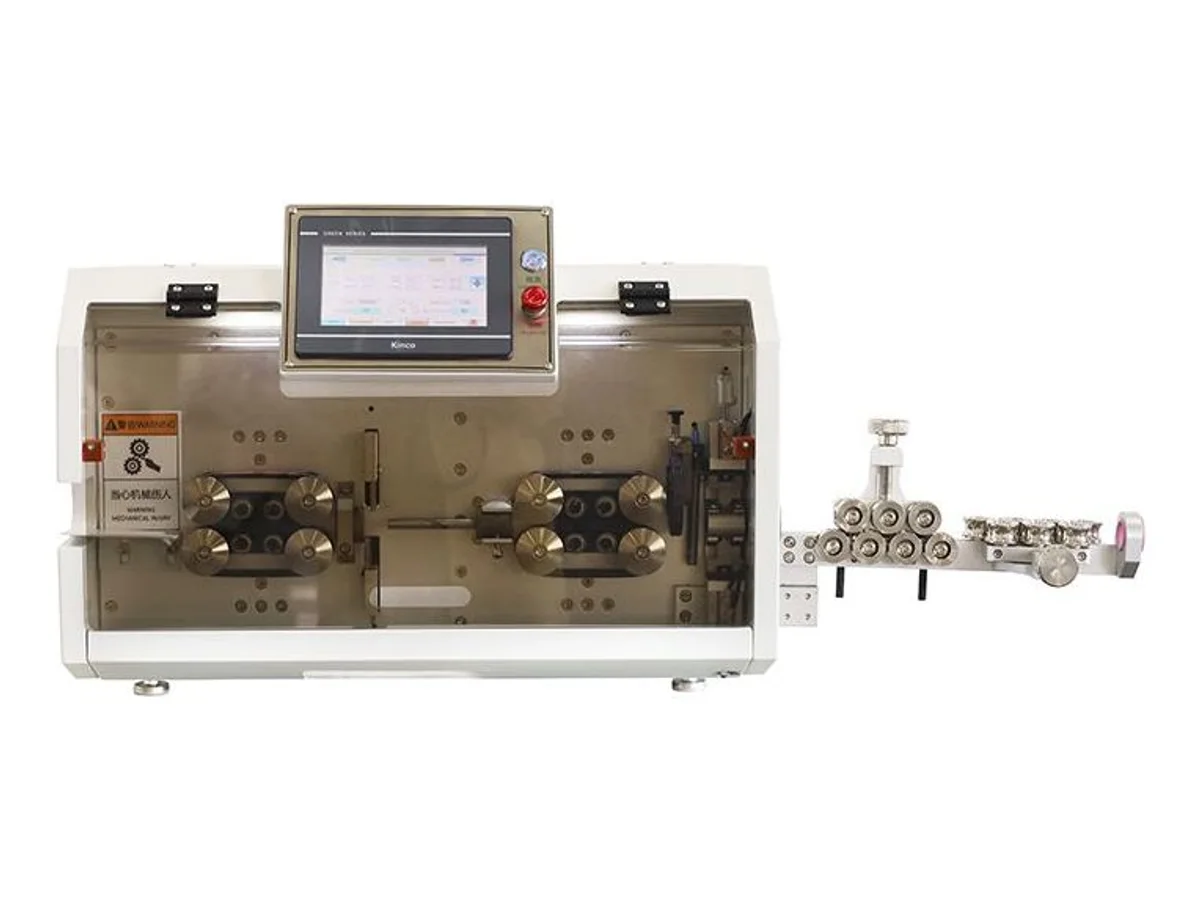
Automatic Cable Cut and Strip Machine with 50-Segment Middle Stripping
Model WM-190
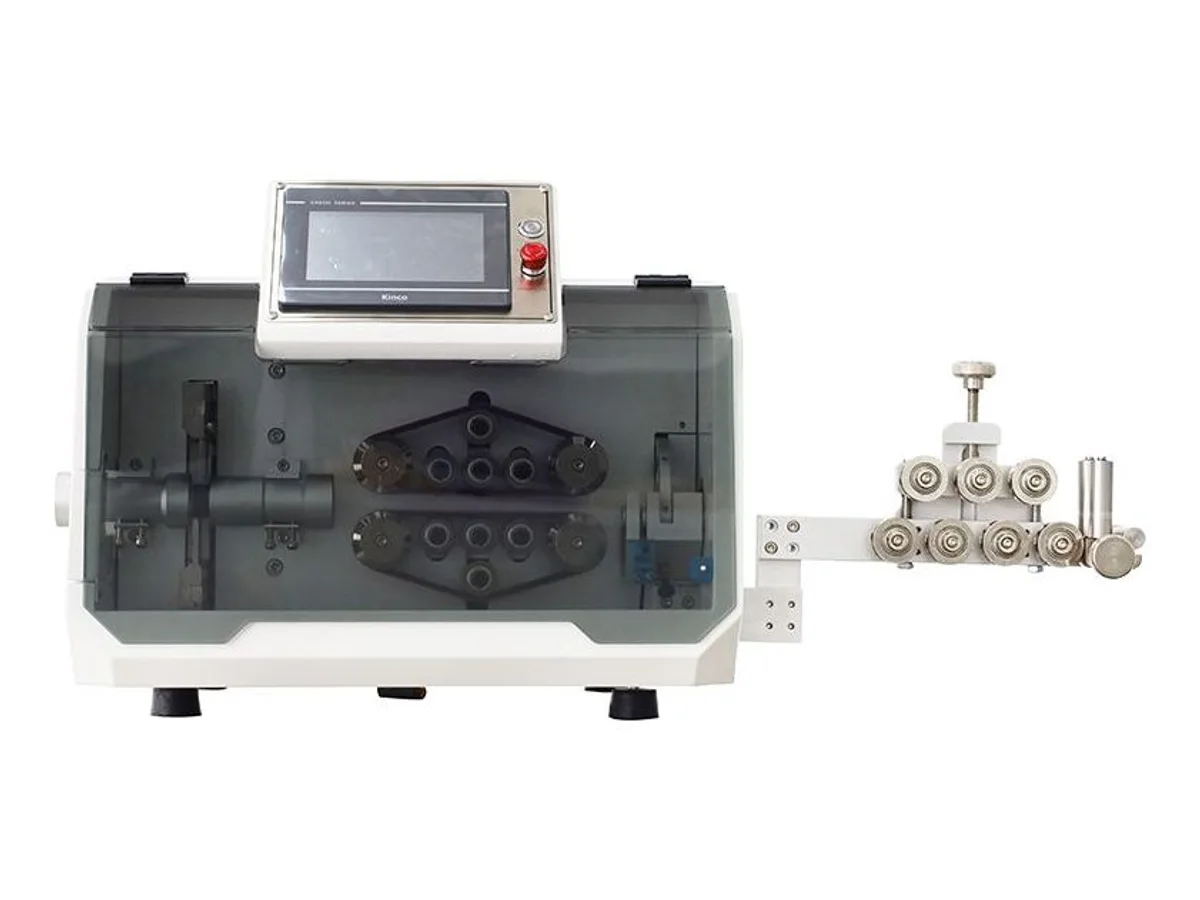
Automatic Cable Cutting Machine for 1–150 mm² Wire, Cable and Hose
Model WM-1222
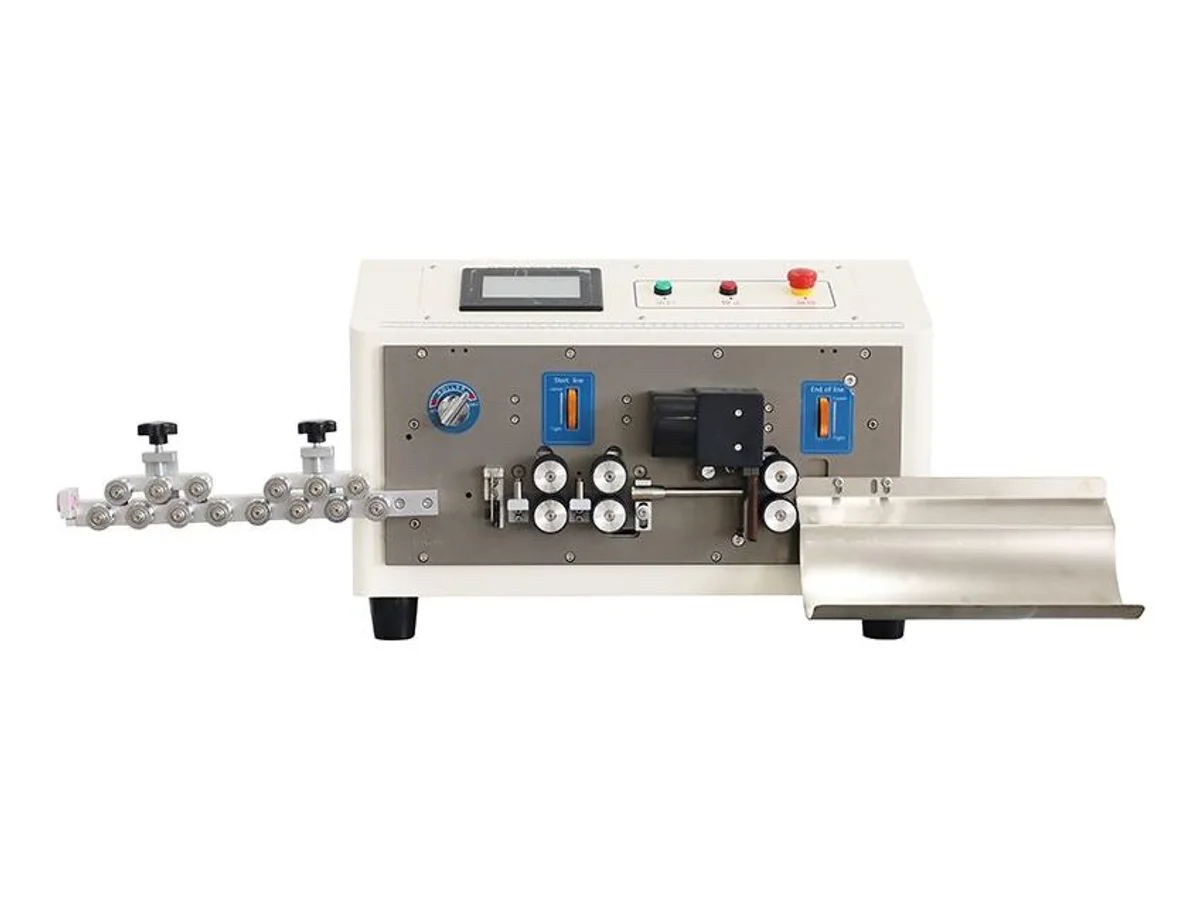
Automatic Cable Cutting and Stripping Machine for 1–12 mm Sheathed Cable
Model WM-1306