Automatic Webbing and Tape Cutting Machine with Pneumatic Blade, 80 mm Width WM-597
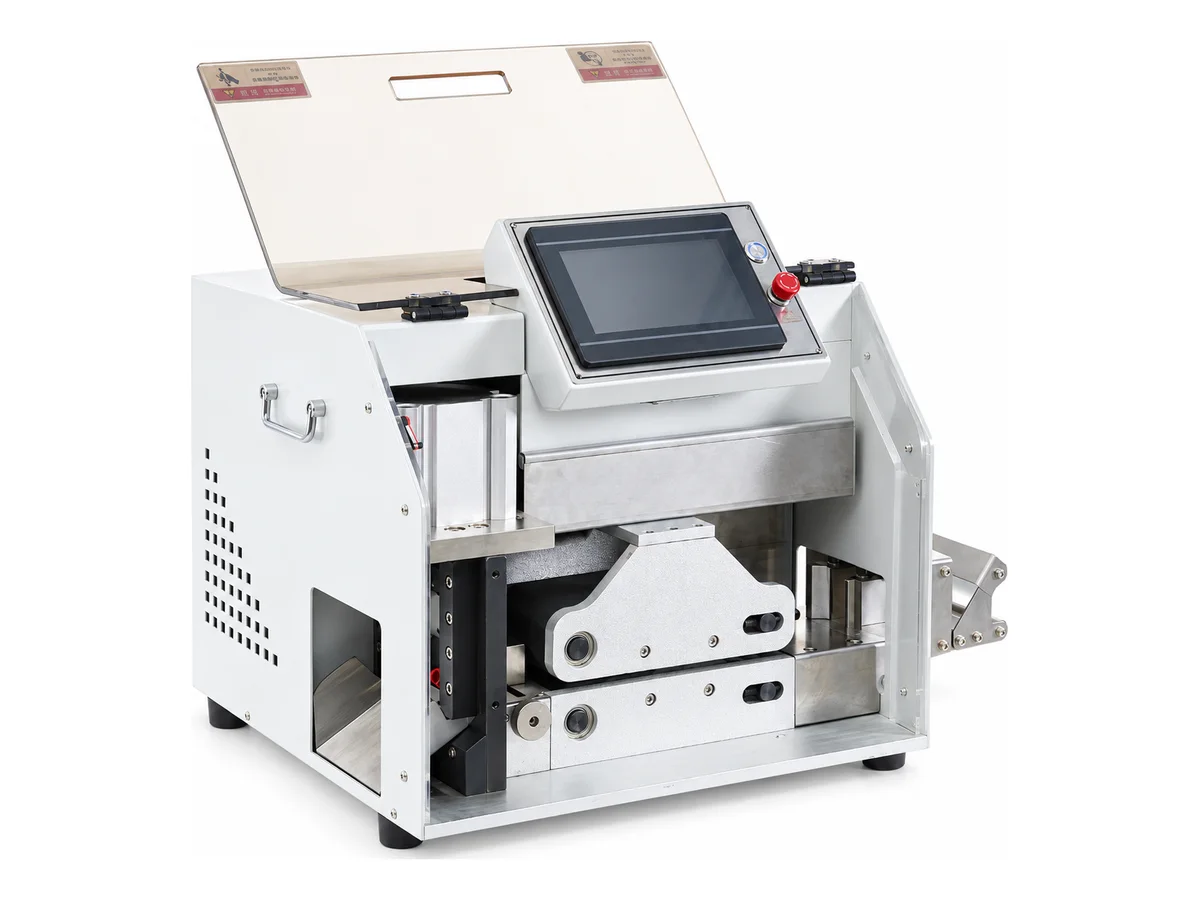
Our WM-597 feeds and cuts webbing and strip material up to 80 mm wide, helping repeated batches move beyond measuring and cutting each piece by hand. A pneumatic blade works with PLC control and a 7-inch color touchscreen. The specified speed is 10–60 pieces per minute depending on cut length; we test your material to confirm the cut edge and working rate for your job.
Specifications
| Display | 7-inch color touchscreen |
|---|---|
| Control system | PLC with HMI |
| Cutting method | Pneumatic cylinder-driven blade |
| Stroke | 50 mm |
| Cutting diameter | Φ1–30 mm |
| Cutting width | 80 mm |
| Length error | ±0.5 mm + 0.002 × L (L = cutting length in mm) |
| Cutting speed | 10–60 pcs/min, depending on length |
| Power supply | 220 V, 50–60 Hz |
| Power | 200 W |
| Dimensions | 570 × 490 × 460 mm |
| Weight | 70 kg |
| Certification | CE (certificate provided with shipment) |
Key features
- Reduce repeated measuring and hand cutting: automatic feeding and a pneumatic blade prepare consistent cut-to-length batches for the next assembly step.
- Use the 7-inch color touchscreen to set up the job and follow its count, keeping batch preparation visible to the operator.
- Guide flat material into the cutting area with the infeed bracket and belt feeding assembly, helping the strip enter in a controlled position.
- Check the result on your material before ordering: we run a sample and show the cut edge and measured pieces on video so you can assess fraying, deformation and length.
- Receive a usable setup: we set the voltage for your country and ship the English interface and manual. The electrical configuration is confirmed on your quote.
What it processes
- Repeated cut-to-length batches of flat woven tape and webbing up to 80 mm wide
- Strip preparation for assembly operations that require a defined piece length
- Suitable tubular material within the specified Φ1–30 mm range, following a material trial
Repeated strip cutting is more than a blade operation. Operators have to pull material from the roll, keep it aligned, measure the length and count finished pieces. Our WM-597 brings feeding and cutting into a PLC-controlled process for recurring batches of webbing, tape and suitable strip material.
The sample trial starts with the edge your next operation needs. A woven strip may fray, while a soft tube may change shape under feeding pressure. We inspect the cut result and measure finished pieces on your material, then confirm the setup rather than treating the maximum width as a promise for every material.
Send the material type, width or outside diameter, thickness, desired cut length and batch quantity. Include the required edge finish and reel dimensions. We use these to prepare a trial, confirm feeding and utilities, and quote the tooling and wear parts for the job.
Engineering knowledge
Choose and troubleshoot this process
- How to Choose a Tube and Pipe Cutting MachineChoose tube and pipe cutting equipment by material, diameter, wall thickness, rigidity, cut mechanism, tolerance, end quality and chip-control requirements.
- Spiral Cutting vs Rotary Cut-Off for Silicone TubeA 5 mm silicone-tube inquiry shows why a rotating blade does not prove spiral-cut capability. Define the helix, support and sample acceptance.
- Tube Cutting Defects: Causes and Corrective ActionsTroubleshoot angled cuts, crushed tube, burrs, stringing, length drift, corrugated-tube splitting errors and feed slippage.
WM-597 — common questions
Is this worthwhile for a one-off batch of about 1,000 pieces?
For an occasional short batch, a hand cutter with a stop may be enough. Automatic feeding becomes more useful when the same job repeats or operators spend substantial time measuring and cutting many thousands of pieces. Send the batch size, material and length so we can check whether WM-597 fits the work.
Will the cut webbing edge be sealed against fraying?
This configuration specifies a pneumatic blade. A cut edge and a heat-sealed edge are different results, so we check your material against the finish you need. If heat sealing is essential, see our tube, tape and webbing cutting range and tell us the material composition and required edge condition.
Can every material fit if it is below 80 mm wide or 30 mm in diameter?
Those dimensions describe the specified cutting envelope. Thickness, hardness, reinforcement and how a tube flattens during feeding also affect suitability. We test your actual material before confirming its processing range and tooling.
What length and speed should I expect in production?
The specified speed is 10–60 pieces per minute and changes with cut length. Send the required length and tolerance; we measure sample pieces and report the observed working rate for that setup. The shortest and longest usable lengths are confirmed on the quote.
How does this differ from WM-585?
Our WM-585 tubing cutter is a related configuration with a 90 mm cutting width and 300 W power. WM-597 specifies 80 mm and 200 W and is quoted for the configuration shown here. We match the choice to your material and sample result.
What does installation require?
The machine uses a pneumatic cylinder, so compressed air is required. We confirm the air pressure, connection and electrical configuration on the quote. Its specified weight is 70 kg; prepare a suitable supporting bench and handling arrangement.
How will I obtain replacement blades and feeding parts?
For blades, belts and other wear parts, every quote lists them with unit price and the location they ship from. We identify the parts for your supplied configuration so you can plan replacements before a worn blade interrupts the next batch.
Related machines in Tube, Tape & Material Cutting
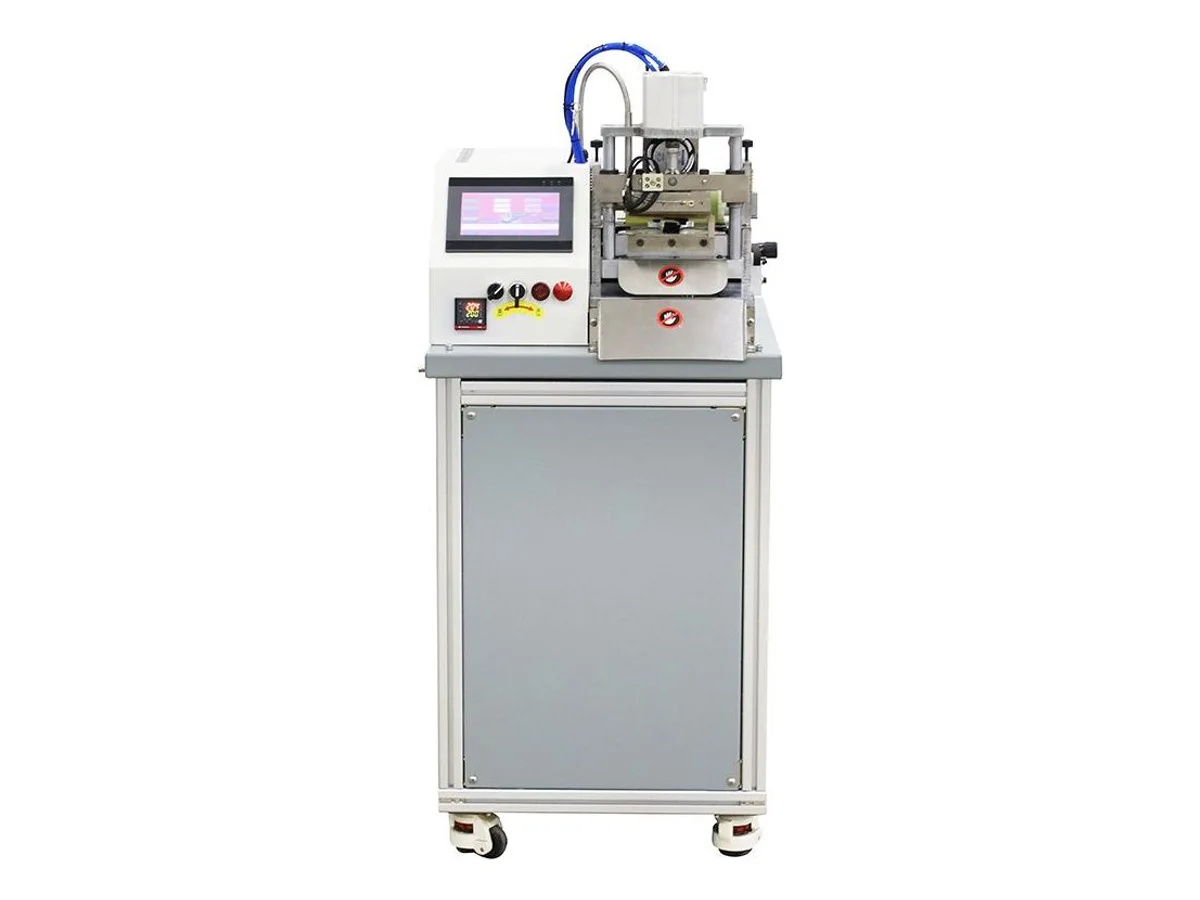
Rotary Blade Webbing Shape Cutting Machine with 45–135° Angle Adjustment
Model WM-566
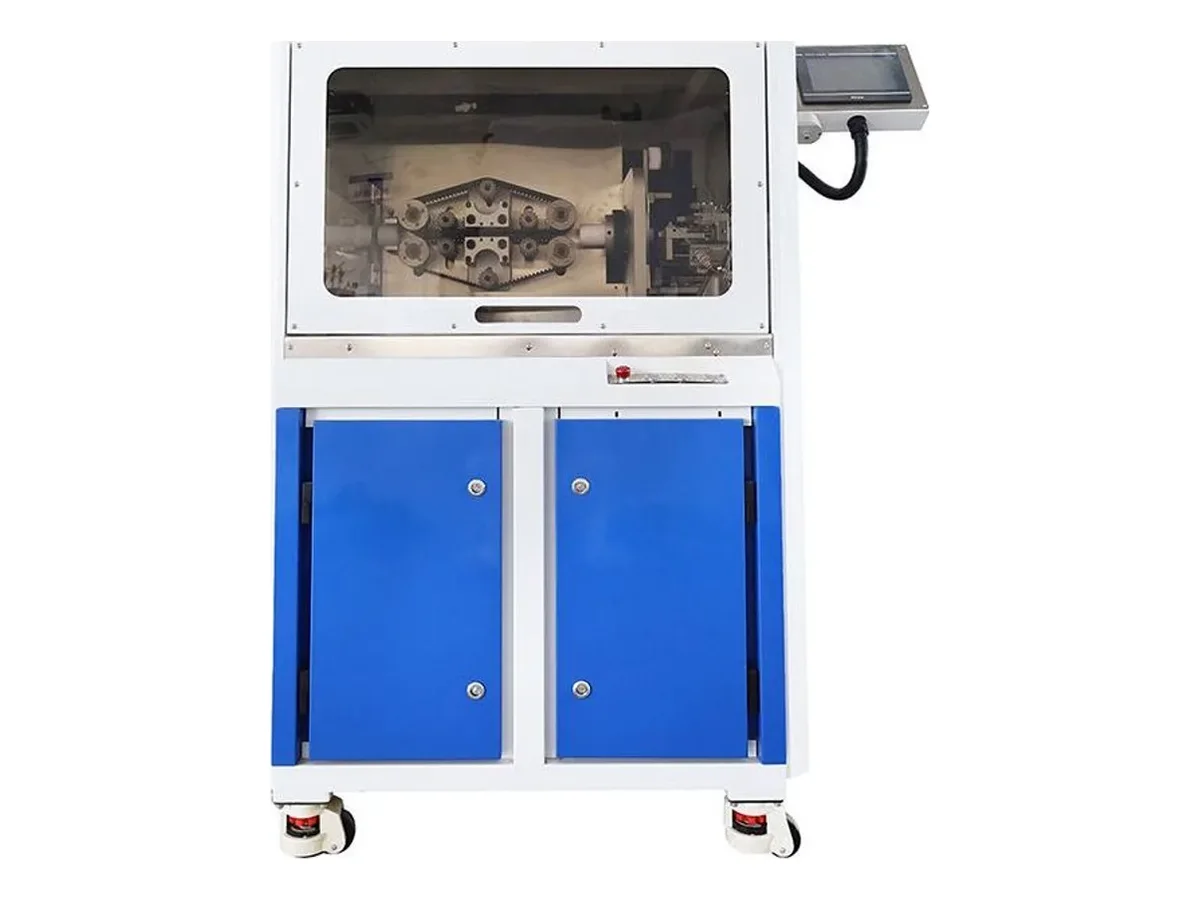
Automatic Braided Sleeve Taping and Cutting Machine for OD 8–30 mm Tube
Model WM-177
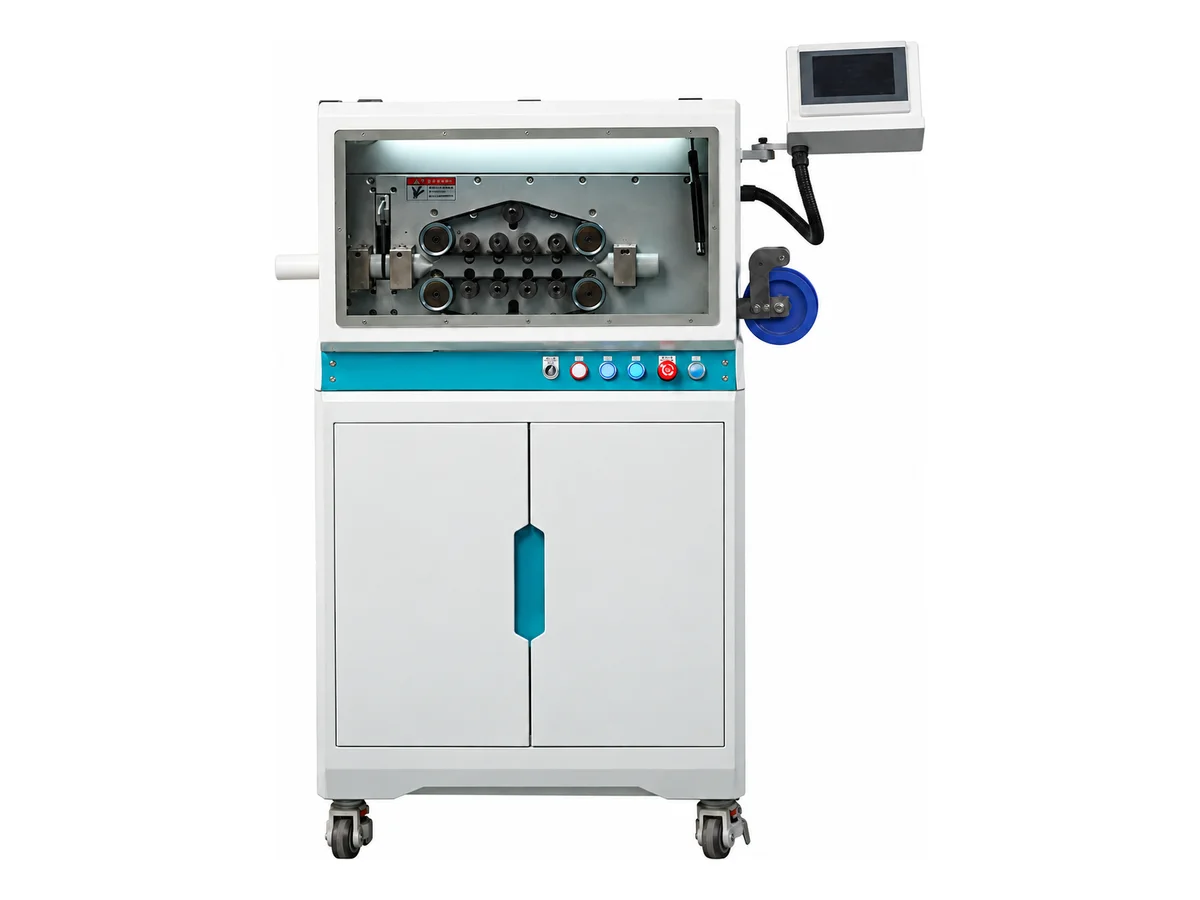
Automatic Belt-Feed Tube Cutting Machine, 4–50 mm
Model WM-606