Number Tube Printing, Inserting and Ferrule Crimping Machine, 0.5–4 mm² WM-3244
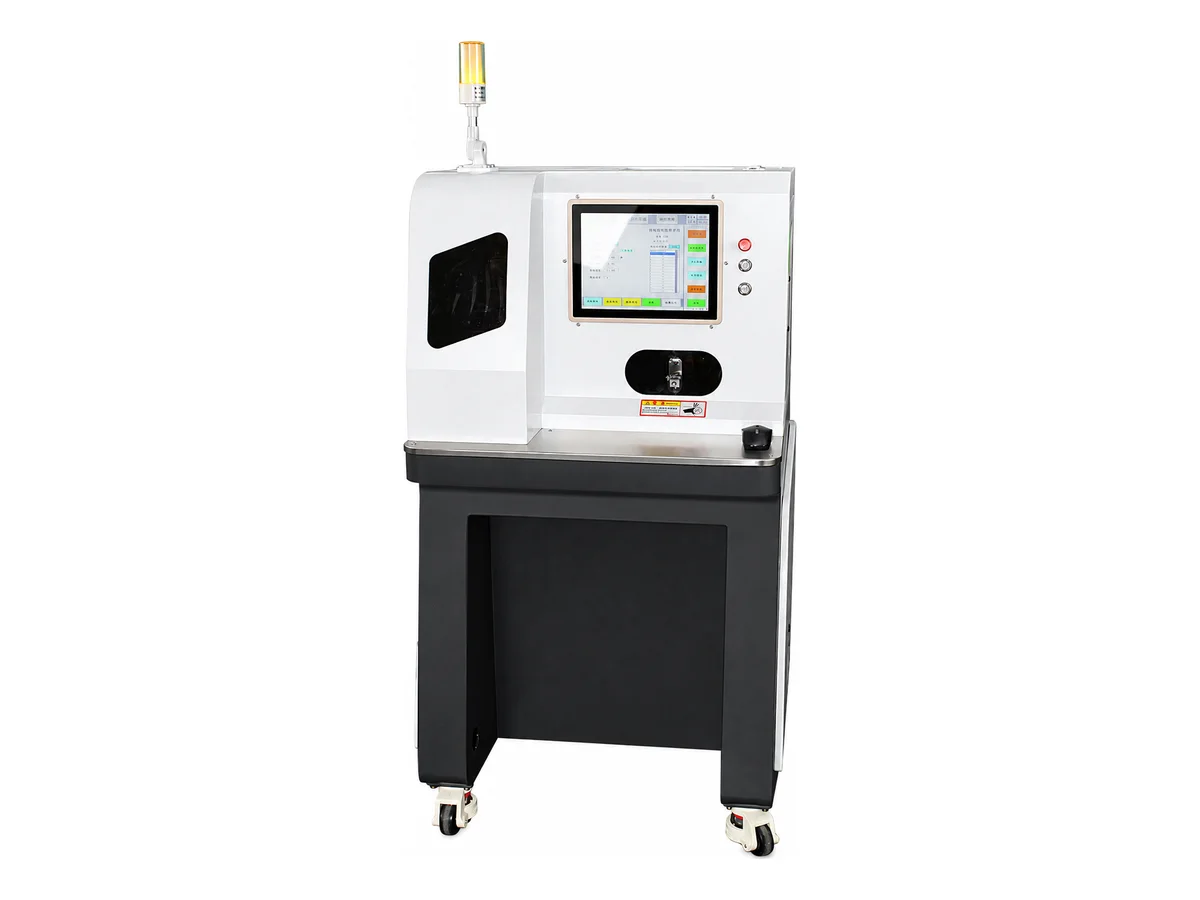
We combine wire stripping, printed number tube insertion and square ferrule crimping in the WM-3244, an operator-loaded workstation for control-panel leads. It handles the listed BVR wire sizes from 0.5 to 4 mm², with 8–16 mm stripping and 10–32 mm marker tubes. Stored job settings help operators return to repeat orders; the specified output is approximately 650 pieces per hour.
Specifications
| Process | Wire clamping and feeding, stripping, number tube printing and insertion, insulated tubular ferrule crimping |
|---|---|
| Wire sizes | BVR wire: 0.5, 0.75, 1.0, 1.5, 2.5 and 4.0 mm² |
| Strip length | 8–16 mm |
| Ferrule dimensions | Insulating collar length ≤7.5 mm; conductor barrel length ≤12 mm |
| Crimp profile | Four-sided square crimp |
| Number tube length | 10–32 mm |
| Sheath preparation length | ≥75 mm; confirmed with actual cable samples |
| Production rate | Approximately 650 pcs/h |
| Control | Touchscreen human-machine interface, electronic touch control and pneumatic control |
| Operating modes | Automatic triggering and manual operation |
| Changeover | Manual fixture replacement and vibratory bowl adjustment; stored strip length and depth; approximately 3 minutes to replace one set of terminal fixtures |
| Printing and programs | Stored material programs; programmable printed legends and cyclic production; MES interface optional |
| Detection | Ferrule presence; right-side safety door opening |
| Alarms | Air-pressure and fault alarms, with indicator beacon |
| Electrical supply | AC 220 V, 50 Hz, single phase, 10 A; internal DC 24 V |
| Compressed air | 0.5–0.8 MPa, stable, clean and dry; inlet pressure must remain ≥0.5 MPa |
| Dimensions | L730 × W760 × H1400 mm, excluding protruding parts |
| Weight | 100 kg |
| HS Code | 8463.90 (common reference — final classification confirmed by your customs broker) |
| Certification | CE (certificate provided with shipment) |
Key features
- Keep the wire identification with the termination: integrated number tube printing and insertion reduce separate handling between a sleeve printer, wire stripper and ferrule crimper.
- Return to repeat jobs with stored strip length and depth, material programs and programmed legends, so operators can recall the setup before checking the first finished lead.
- Match the exposed conductor to the ferrule barrel with 8–16 mm stripping and a square crimp. We test your wire, ferrule and terminal-block fit together to check strand capture and insertion.
- Ferrule-presence and right-side door detection, plus air-pressure and fault alarms, help operators identify missing material or an interrupted cycle at the workstation.
- Send us your wire, ferrules, number tubing and marking list. We set up the tooling, run your samples and send you a video of the finished leads before you order.
What it processes
- Control-panel and switchgear wiring with printed identification sleeves and insulated bootlace ferrules
- Electrical equipment assembly using repeat batches of marked BVR leads in the listed 0.5–4 mm² sizes
- Prepared multicore cable tails requiring individual core identification and ferrule termination, subject to sample confirmation
A panel lead has to carry the right number and make a sound connection. A legible sleeve cannot compensate for trapped insulation, and a neatly crimped ferrule cannot correct a swapped wire label. We bring these steps into one workstation so you can check the marking, conductor preparation and finished termination together.
For repeat orders, recall the saved program and inspect the first lead against your wiring list. For frequent changes, count the time spent replacing fixtures, adjusting the bowl and checking the first piece as well as the running time. That gives a more useful production estimate than multiplying the hourly rating by the shift length.
Compare the WM-393 number tube and ferrule workstation if your job calls for a different wire range or longer marker sleeves. For ferrule termination without number-tube printing, see our WM-3116 servo ferrule crimping machine.
Send your wire sizes, ferrule dimensions, marking list and usual batch quantities with your inquiry. We will return a matched tooling proposal and a sample-run video showing the result on your materials.
Engineering knowledge
Choose and troubleshoot this process
- Ferrule Crimping: Strip Length, Terminal Fit and Chain-Fed vs Loose-Fed MachinesCompare chain-fed and loose-ferrule crimping machines by wire preparation, changeover, terminal fit and batch output. Check WM-3243 and WM-3246 specifications.
- How to Choose a Terminal Crimping MachineChoose a terminal crimping machine by terminal presentation, wire range, applicator standard, required process steps, inspection method and production mix.
- Terminal Crimp Defects: Causes, Inspection and Corrective ActionsTroubleshoot low pull force, incorrect crimp height, strand loss, bellmouth defects, insulation support problems and inconsistent terminal feeding.
WM-3244 — common questions
Does this machine cut wire from a reel?
We supply the WM-3244 as an operator-loaded termination workstation. Prepare the wire lengths before loading; it combines stripping, number tube printing and insertion, and ferrule crimping. For multicore cable tails, prepare the outer sheath first. The specified sheath preparation length is at least 75 mm, with access and handling confirmed on your samples.
Can one setup handle all six wire sizes?
The listed BVR sizes are 0.5, 0.75, 1.0, 1.5, 2.5 and 4.0 mm². Changing products involves replacing the relevant fixtures and adjusting the vibratory bowl. Approximately three minutes refers to replacing one set of terminal fixtures; include setup checks and first-piece inspection when planning a full changeover.
Will my ferrules and marker tubes fit?
Check more than the wire cross-section: the ferrule insulating collar must be no longer than 7.5 mm, its conductor barrel no longer than 12 mm, and the number tube length must be 10–32 mm. Send the actual parts and the mating terminal-block details. We confirm the tube bore, tooling, strip length and finished fit during the sample run.
How do you help prevent poor ferrule terminations?
We match the stripping setup and square crimp tooling to your actual wire and ferrule. The sample check covers conductor exposure, stray strands and fit in the intended terminal block. Ferrule-presence detection confirms a part is present; acceptance requirements such as pull strength are agreed separately for your application.
What output should I use for production planning?
The specified rate is approximately 650 pieces per hour. Your marking sequence, wire handling, material changes and inspection routine affect shift output. Send a representative batch and we will record a sample run so you can assess the actual workflow.
Can I store printing programs or connect to MES?
Material programs and printed legends can be stored for recall and cyclic production. An MES interface is optional. Share the fields and job-transfer workflow you need so we can confirm the interface on the quote.
How is this different from WM-393?
Our WM-3244 specifies BVR wire sizes of 0.5–4 mm², 8–16 mm stripping, 10–32 mm number tubes and approximately 650 pcs/h. Our WM-393 has a different operating workflow and specification, including 0.3–6 mm² wire coverage and 10–40 mm printed tubes. We select the workstation against your ferrules, wire preparation and operator sequence.
What arrives with the machine, and how do I order wear parts?
We set the voltage for your country and ship the English interface and manual. The listed standard supply is 220 V, 50 Hz single phase; we confirm the delivered configuration on your quote. For the matched blades, gripping parts and crimp tooling, every quote lists them with unit price and the location they ship from.
Related machines in Crimping & Connector Assembly
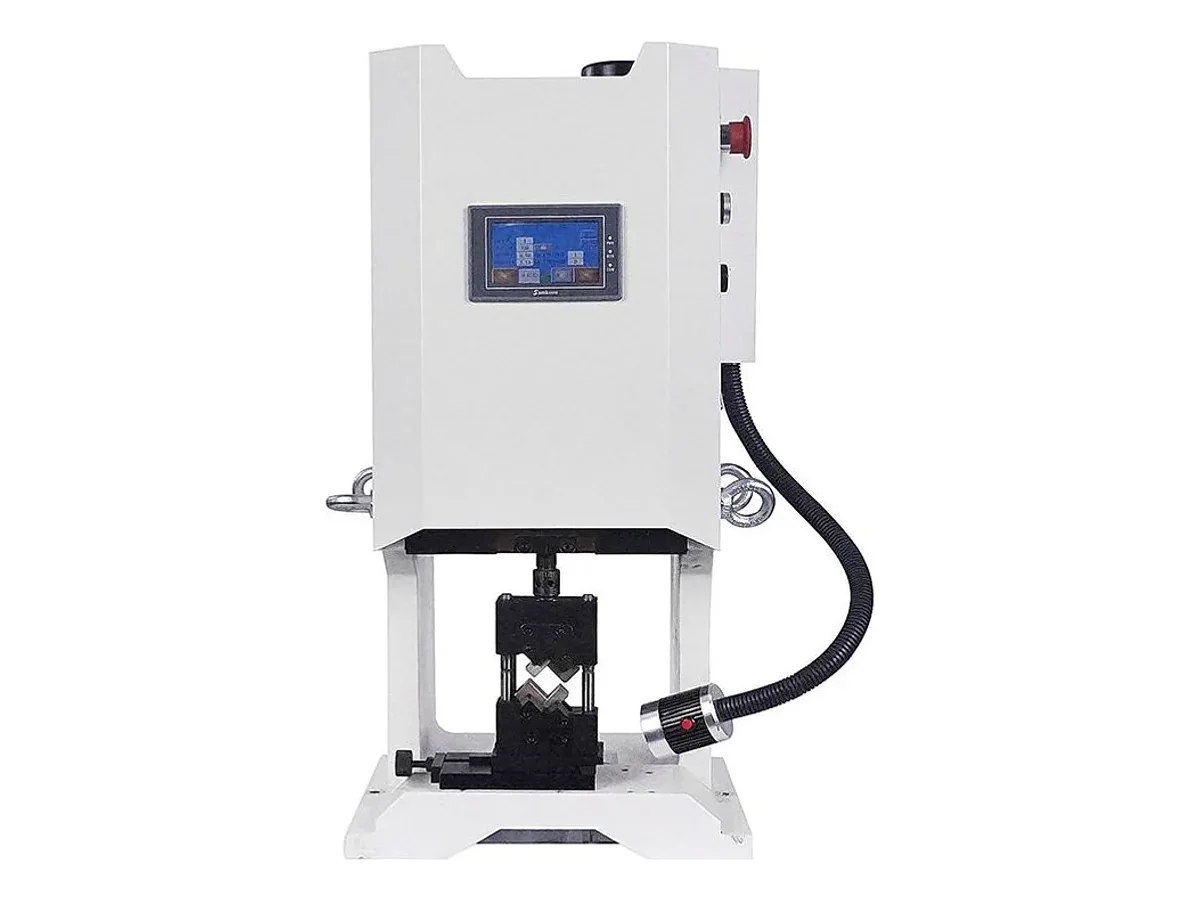
10-Ton Servo Terminal Crimping Machine, 100 kN Bench Press
Model WM-3110T
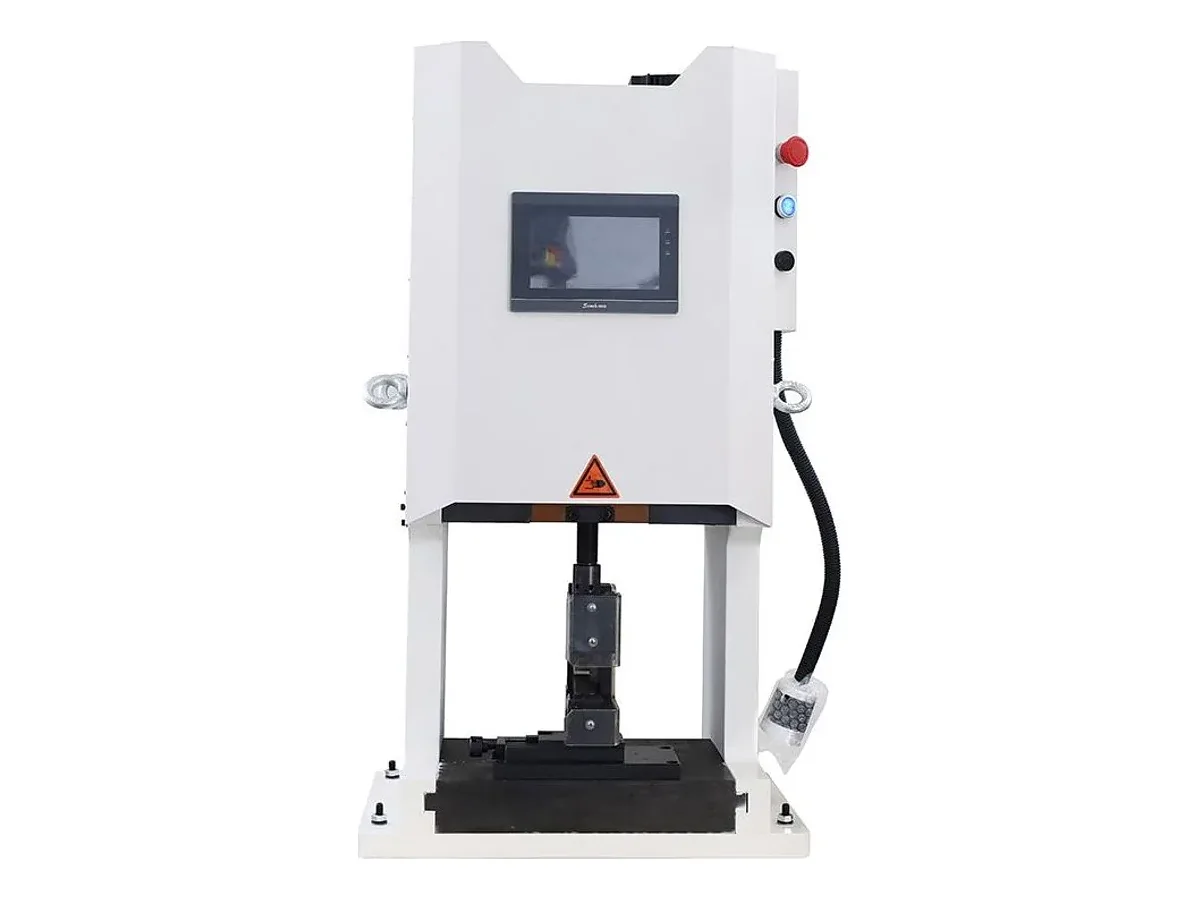
20-Ton Servo Cable Lug Crimping Machine, 200 kN and 40 mm Stroke
Model WM-3120T
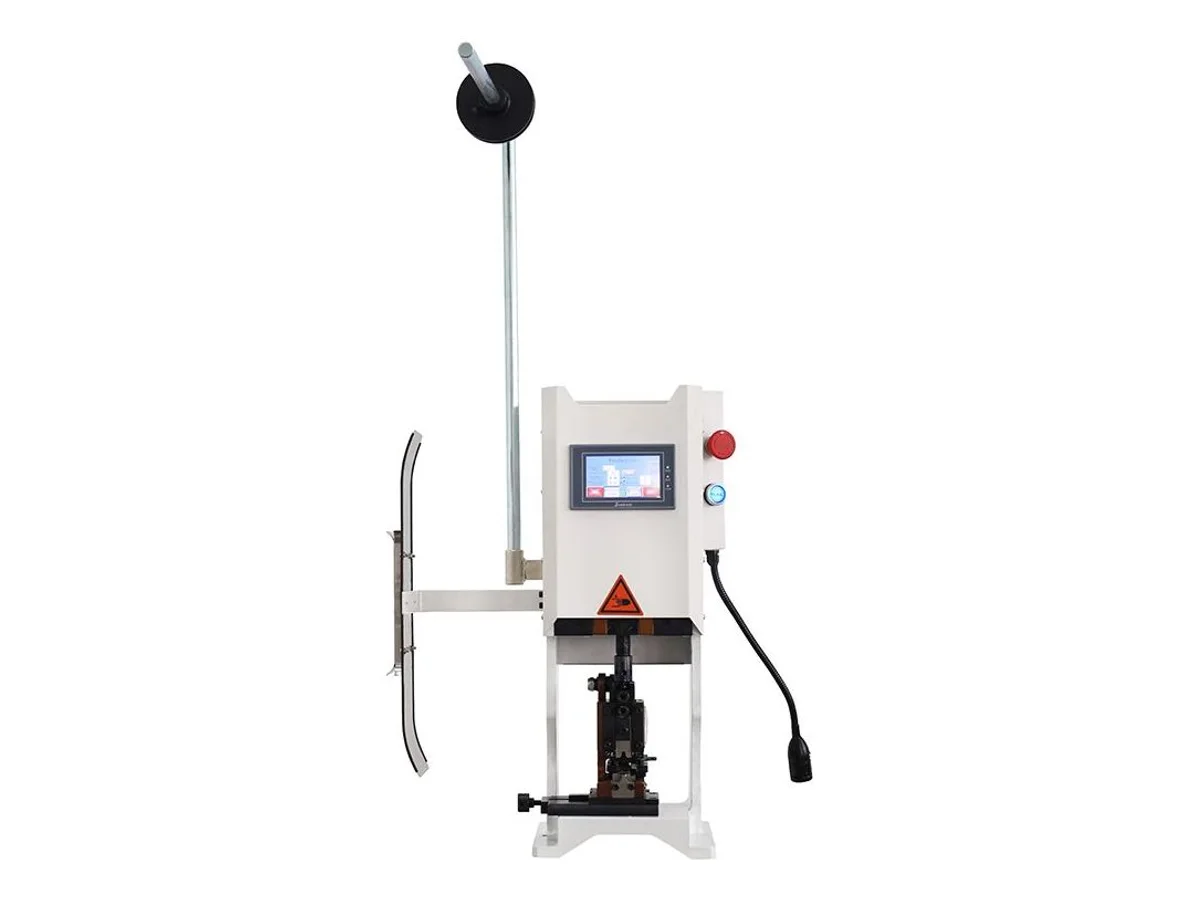
2-Ton Servo Terminal Crimping Machine, 20 kN Touchscreen Bench Press
Model WM-3102S