Wire Stripping and Ferrule Crimping Station with Number Tube Printing and Manual Threading WM-393
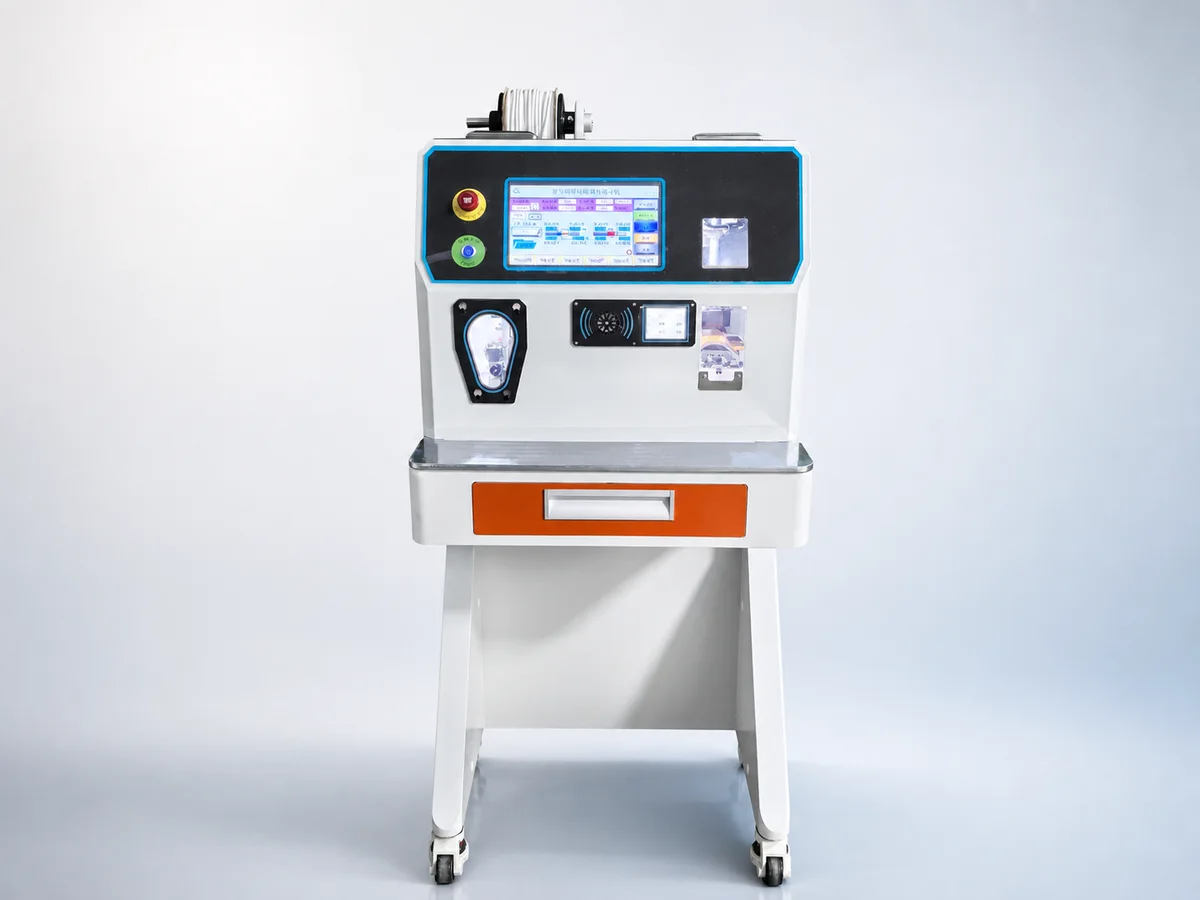
The WM-393 turns a plain RV wire into a marked, ferruled lead at one seated workstation — it thermal-prints the PVC number tube, feeds it out, and the operator threads it onto the wire by hand. The machine handles stripping, twisting, ferrule insertion and servo crimping, with a listed machine cycle of about 3.2 seconds. We confirm the actual stripping, placement and crimping sequence during your sample run. Wire range 0.3–6 mm², tube legends typed on the 10-inch touchscreen or loaded by USB, ferrules fed from a universal vibratory bowl. Color-coded wire prompts on a dedicated display plus voice announcements keep untrained operators in sequence.
Specifications
| Function | Number tube thermal printing, tube feeding, manual tube threading, wire stripping, twisting, ferrule inserting and servo crimping — integrated station |
|---|---|
| Wire range | 0.3 – 6 mm² RV flexible wire and most similar wire types (below 0.5 mm² requires dedicated fixtures matched to your material) |
| Number tube | 0.5 – 6 mm² PVC sleeve, printable length 10 – 40 mm |
| Tube printing | Thermal-transfer ribbon (50 m and 100 m loose rolls); Chinese/English characters, forward or reverse printing |
| Print content input | On-screen entry or USB download |
| Ferrule range | 0.5 – 6 mm² (0.3 mm² by customization); insulation collar ≤ 11 mm, conductor barrel ≤ 20 mm |
| Stripping | 6 – 30 mm strip length; rotary or parallel stripping, rotary twisting, forward and reverse |
| Ferrule feeding | Vibratory bowl, one universal bowl adjusted across sizes |
| Crimping | Square four-sided crimp, servo-driven, crimp height freely adjustable; custom crimp dies available |
| Cycle time | ≈ 3.2 s per lead (machine cycle); ≈ 4 s per lead in manual-paced operation, depending on wire |
| Detection | Ribbon presence, tube presence, wire take-out and ferrule presence monitoring |
| Control | 10-inch touchscreen HMI, electric + pneumatic integrated control; auto trigger by wire sensing, manual trigger, optional foot pedal |
| Operator guidance | Wire color prompt display and voice announcements |
| Power | AC 220 V / 50 Hz single phase, 10 A, total 1,500 W |
| Air supply | 0.5 – 0.6 MPa clean dry air |
| Working environment | 0 – 35 °C, 30 – 80 %RH non-condensing |
| Dimensions & weight | W600 × L650 × H1200 mm, approx. 140 kg, floor-standing with casters |
| HS Code | 8463.90 (common reference — final classification confirmed by your customs broker) |
| Certification | CE (certificate provided with shipment) |
Key features
- Printing, feeding, stripping, twisting, inserting and crimping live in one floor-standing station — the operator only threads the printed tube, and the color prompt screen plus voice announcement tell them which wire comes next
- Servo crimping with freely adjustable crimp height produces the square four-sided ferrule crimp control-cabinet inspectors expect, and custom die shapes are available
- One universal vibratory bowl covers the ferrule range with simple adjustments instead of per-size bowls, and job parameters are stored for recall when products change
- Ribbon, tube, wire take-out and ferrule sensors halt the cycle on missing material, so a distracted moment costs one lead rather than a batch of unmarked or empty crimps
- Free sample test — send 2–3 meters of your wire with your ferrule spec, we run it on this machine and send you the video before you order
What it processes
- Control cabinet and switchgear wiring where every ferruled lead must carry a printed number tube per the wiring list
- Panel builders replacing separate tube printers, strippers and crimping tools with one seated workstation
- Electrical equipment plants producing marked internal leads in 0.3–6 mm² sizes in repeat batches
Suited for: marked ferrule leads — every wire that needs a printed PVC number tube and a servo-crimped bootlace ferrule, produced at one seated station by one operator. Not suited for: ferrule crimping without marking tubes — the WM-3116 bootlace ferrule servo crimping machine covers 0.3–16 mm² ferrules in a simpler benchtop format — nor fully automatic double-end crimping of small unmarked wires, which belongs to the WM-3202 automatic double-end crimping machine at 3,800+ pcs/h on AWG 18–28.
Number-tube work lives or dies on sequence discipline — the wrong legend on the right wire is worse than no legend at all. This machine’s answer is to keep the operator in the loop for threading while the screen shows the next wire’s color and a voice prompt calls it out, and sensors confirm ribbon, tube, wire and ferrule before each crimp. Send us your wiring list and wire samples, and we will run your actual job on camera before you order.
Engineering knowledge
Choose and troubleshoot this process
- How to Choose a Terminal Crimping MachineChoose a terminal crimping machine by terminal presentation, wire range, applicator standard, required process steps, inspection method and production mix.
- Ferrule Crimping: Strip Length, Terminal Fit and Chain-Fed vs Loose-Fed MachinesCompare chain-fed and loose-ferrule crimping machines by wire preparation, changeover, terminal fit and batch output. Check WM-3243 and WM-3246 specifications.
- Terminal Back-Out After Housing Insertion: What to CheckFind why a crimped terminal backs out of its connector housing. Check part matching, orientation, crimp shape, primary retention and secondary locks.
WM-393 — common questions
How does the number tube get onto the wire?
The machine prints the tube legend, cuts and presents the tube, and the operator threads it onto the wire by hand — insertion depth is set by motor, not by a mechanical stop. We confirm the actual stripping, placement and crimping sequence during your sample run. The workstation combines manual tube placement with machine processing, with a listed machine cycle of about 3.2 seconds and about 4 seconds per lead in manual-paced operation, depending on the wire.
Can it print my own wire numbers and letters?
Yes. Legends are typed directly on the 10-inch touchscreen or downloaded by USB, in Chinese or English characters, printed forward or reverse on 10–40 mm of PVC tube by thermal-transfer ribbon. Ribbon comes in 50 m and 100 m rolls and the machine warns when ribbon or tube runs out.
My wires are below 0.5 mm² — will it still work?
0.3 mm² wire and ferrules are supported by customization — the machine needs fixtures matched to your material. Send 2–3 meters of your actual wire and your ferrule samples; we fit the tooling, run it on camera and send you the video before you commit.
Related machines in Crimping & Connector Assembly
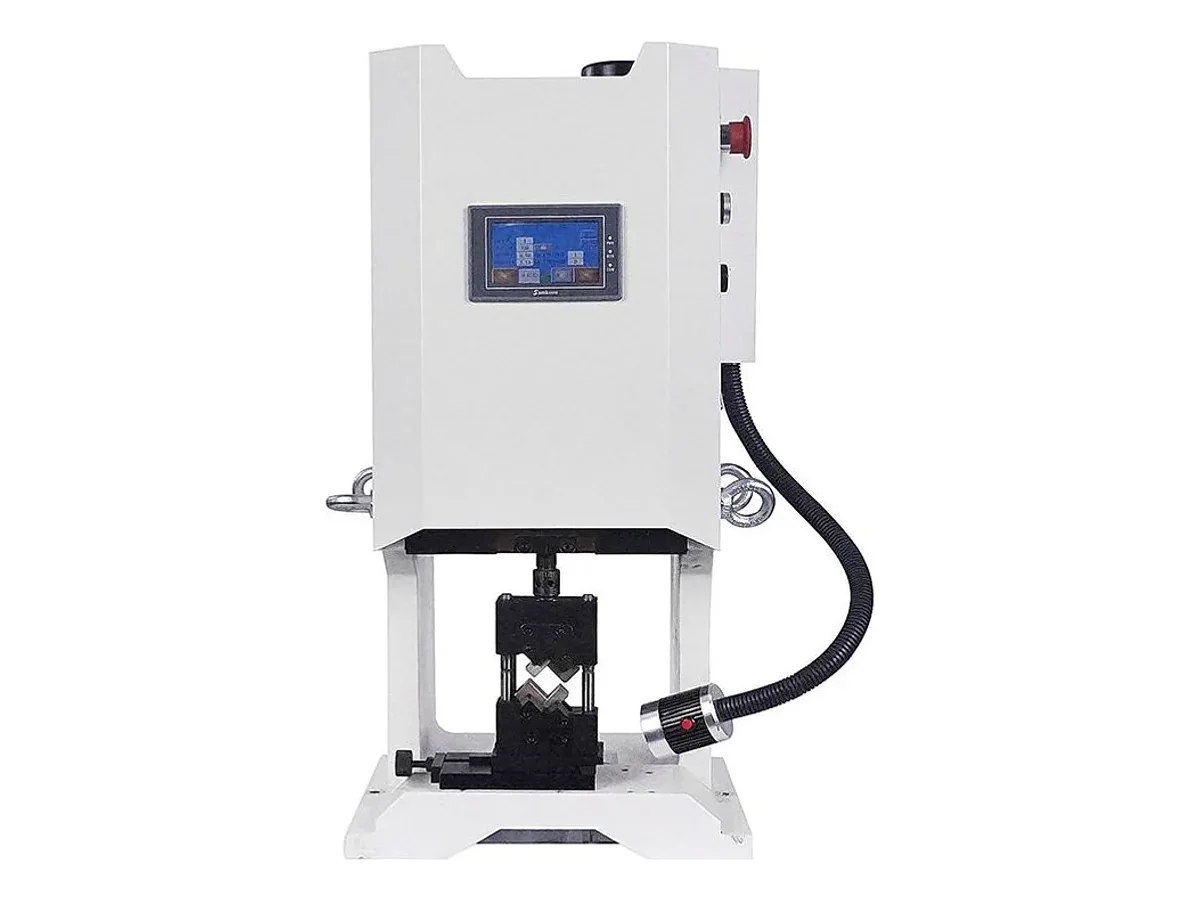
100 kN Semi-Automatic Servo Terminal Crimping Machine
Model WM-3110T
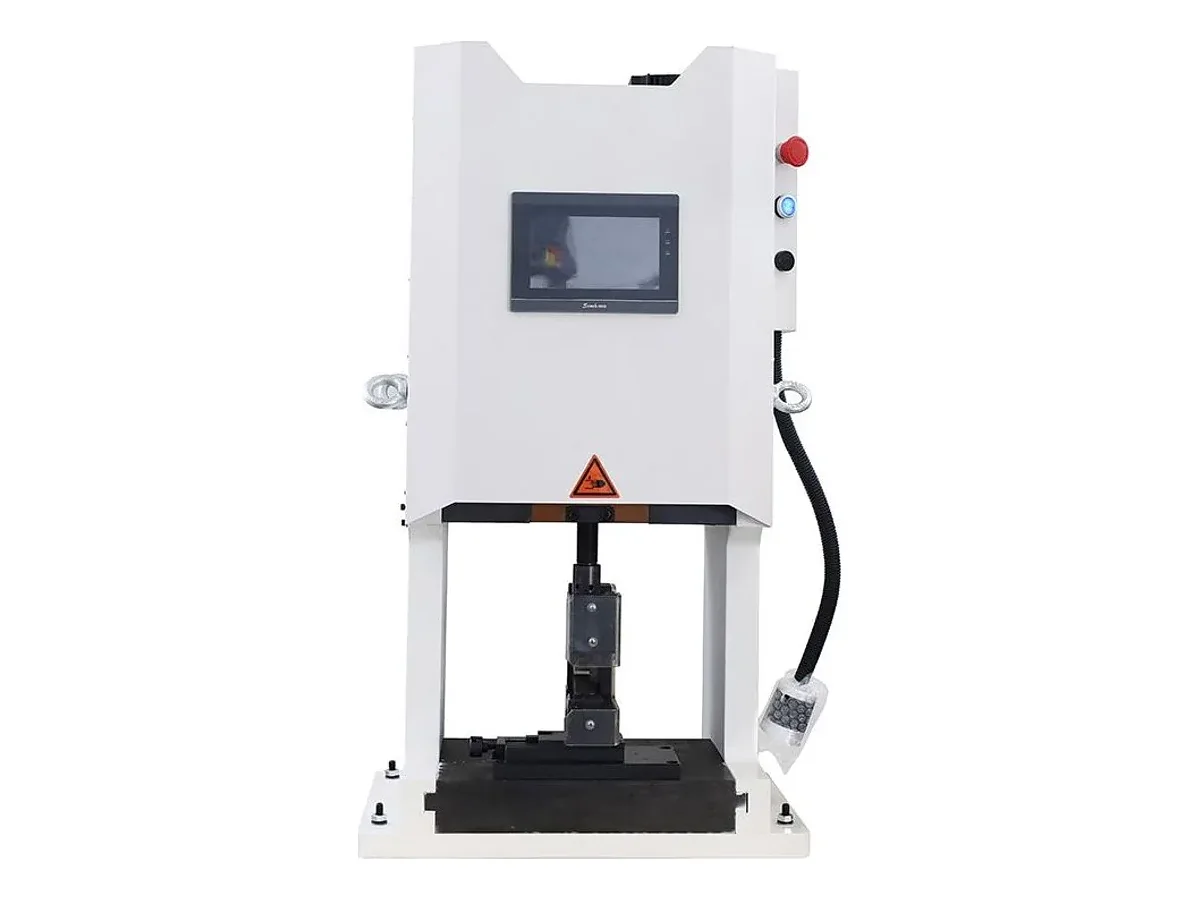
200 kN Semi-Automatic Servo Cable Lug Crimping Machine
Model WM-3120T
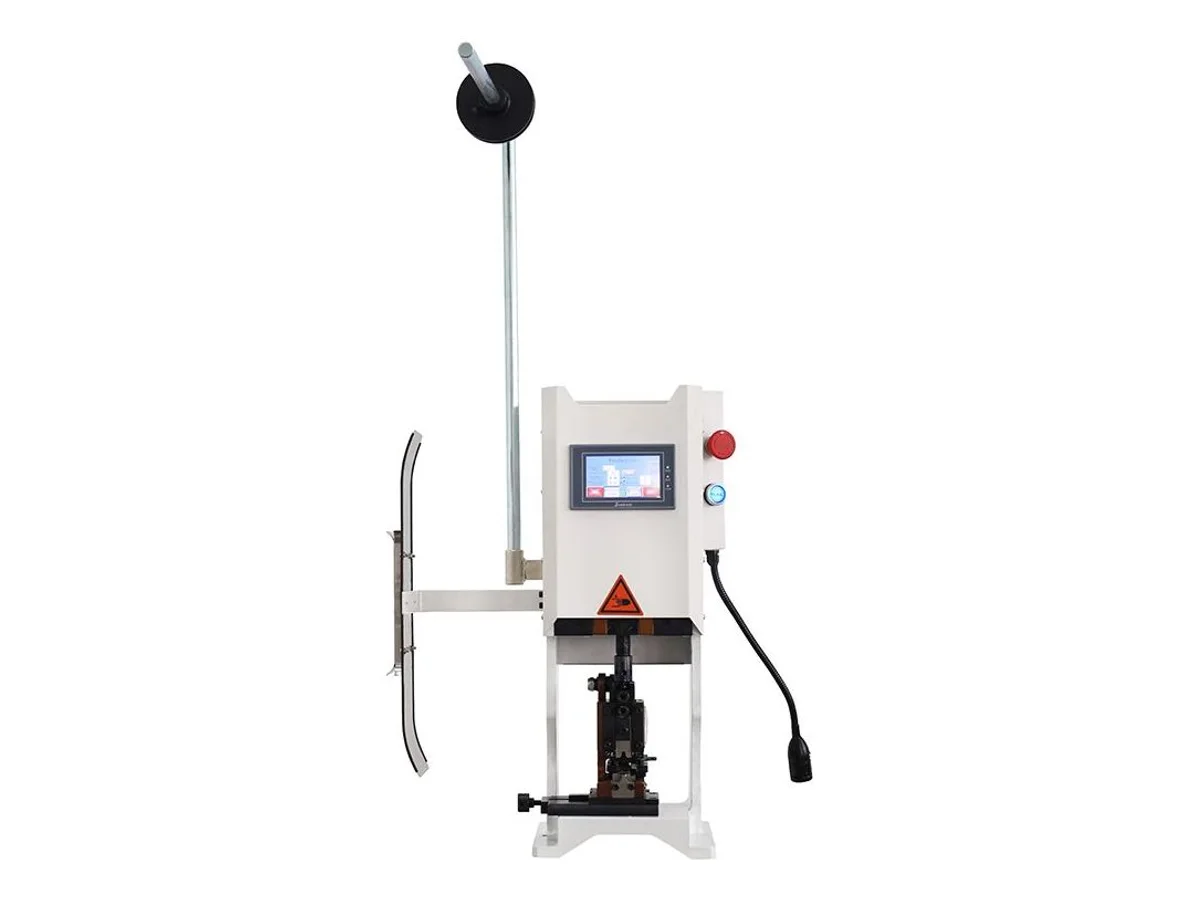
20 kN Semi-Automatic Servo Terminal Crimping Machine
Model WM-3102S