Automatic Connector Housing Insertion Machine with Tinning and Half-Stripping WM-366
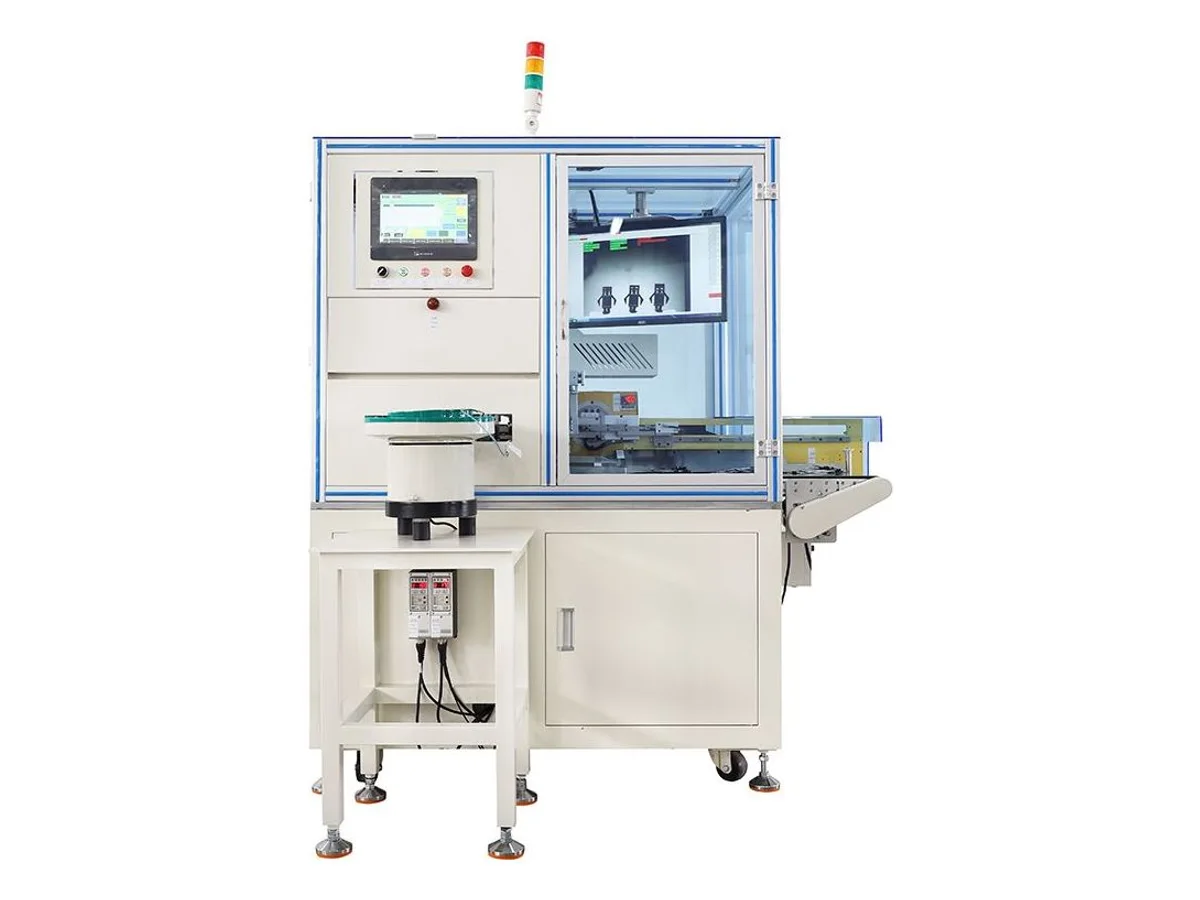
The WM-366 turns loose wire into finished connector leads in one pass: it cuts and strips AWG 30–18 wire, crimps terminals on two inline 2.0 T presses, snaps the crimped end into a connector housing and tins or half-strips the other end — up to 6,000 holes/hour on AWG 28–24. Wire-lack, terminal-lack, CFM and CCD visual checks gate every cycle, programmed on a 10-inch touch screen with PLC control.
Specifications
| Applicable wire | AWG 30 – 18 |
|---|---|
| Capacity | AWG 30 about 4,000 holes/h; AWG 28 – 24 about 6,000 holes/h; AWG 22 – 18 about 5,000 holes/h (wire length < 100 mm) |
| Cutting length | Standard 45 – 500 mm (special needs customized — shortest 15 mm, longest 2,500 mm); parallel cable standard 80 – 500 mm |
| Cutting accuracy | Length < 100 mm: deviation < 0.3 mm + (length × 0.002); length > 100 mm: deviation < 0.3 mm + (length × 0.002) |
| Stripping length | Front end 1.0 – 4.0 mm (half-stripping 2.0 – 6.0 mm); rear end 1.0 – 8.0 mm (half-stripping 2.0 – 8.0 mm) |
| Applicable applicator | Horizontal feeding card applicator |
| Crimping unit | Two sets of 2.0 T crimping machines |
| Control mode | 10-inch touch screen + PLC control |
| Detection device | Wire lack detection, terminal lack detection, CFM (crimp force monitoring), visual CCD detection |
| Power supply | Single-phase AC 210 – 230 V, 50/60 Hz, 10 A |
| Compressed air | 0.6 – 0.8 MPa (clean, dry air source) |
| Dimensions | 1,600 (W) × 1,250 (L) × 1,750 (H) mm |
| Weight | About 700 kg |
| HS Code | 8463.90 (common reference — final classification confirmed by your customs broker) |
| Certification | On request |
Key features
- One wire, two finished ends per cycle — the crimped end is inserted into the connector housing, the other end is tinned or half-stripped; a twisting function is available as an option
- Two inline 2.0 T crimping presses with horizontal-feed card applicators crimp ahead of the insertion station, so terminal insertion runs from reel terminals, not pre-terminated wire
- Housings arrive oriented from a vibratory bowl feeder tooled to your connector — swap bowls and recipes to change over
- Four detection gates on every cycle — wire lack, terminal lack, crimp force monitoring (CFM) and CCD visual inspection — keep empty cavities and bad crimps out of the output tray
- Servo and stepping motor motion with recipe storage on the 10-inch touch screen; batch counts, defect counts and hourly rate are tracked on screen
- Free sample test — send your wire, terminals and housings; we tool up, run them on this machine and send you the trial video before you order
What it processes
- Snap-in connector leads with one tinned or half-stripped free end — LED lighting pigtails, appliance and electronics harnesses
- AWG 30 – 18 hookup wire processed to length from 45 to 500 mm as standard (15 – 2,500 mm by customization)
- Board-in leads where the free end is soldered — tinned ends go straight to hand or wave soldering
Suited for: high-volume single-wire connector leads in AWG 30 – 18 — crimped end seated in the housing, free end tinned or half-stripped — where inline CFM and CCD checks matter. Not suited for: jobs that only need crimped terminals on both ends with no housing — the WM-3202 fully automatic double-end crimping machine (AWG 18–28, 3,800+ pcs/h) is the simpler, faster fit there. If your volumes don’t justify a dual-press CCD-inspected cell, the WM-362S single-head crimping, housing insertion and tinning machine does the same crimp-insert-tin job on AWG 28–20 wire at 2,200 pcs/hour in a smaller footprint.
Wire feeds from a multi-spool pay-off stand, and a wire twisting function ahead of tinning is available as an option — mention twisted-and-tinned ends in your inquiry if your leads need them.
Engineering knowledge
Choose and troubleshoot this process
- How to Choose a Terminal Crimping MachineChoose a terminal crimping machine by terminal presentation, wire range, applicator standard, required process steps, inspection method and production mix.
- Terminal Crimp Defects: Causes, Inspection and Corrective ActionsTroubleshoot low pull force, incorrect crimp height, strand loss, bellmouth defects, insulation support problems and inconsistent terminal feeding.
WM-366 — common questions
What exactly comes out of the WM-366?
A finished single-wire lead. In one automatic cycle the machine cuts the wire to length, strips both ends, crimps a terminal on each end that needs one, inserts the crimped end into the connector housing, and tins or half-strips the free end (twisting before tinning is optional). Parts drop onto the output conveyor ready for packing or board assembly.
Which connector housings can it feed and insert?
Housings are fed by a vibratory bowl and guide rail tooled to your specific connector — the sample photos show a small-pitch SM-style 2-pin housing. Changing connector type means changing the bowl tooling and insertion recipe, so send us your housing, terminal reel and wire samples first; we confirm feasibility on the actual machine and send you the trial-run video.
What if I need terminals or housings on both ends instead?
The WM-366 dedicates one end to housing insertion and the other to tinning or half-stripping. If you need crimped terminals on both ends without housings, the WM-3202 double-end crimping machine covers AWG 18–28 at 3,800+ pcs/hour. For housing insertion on both ends, tell us your connector spec through the quote form and we will match the right platform.
Related machines in Terminal Crimping
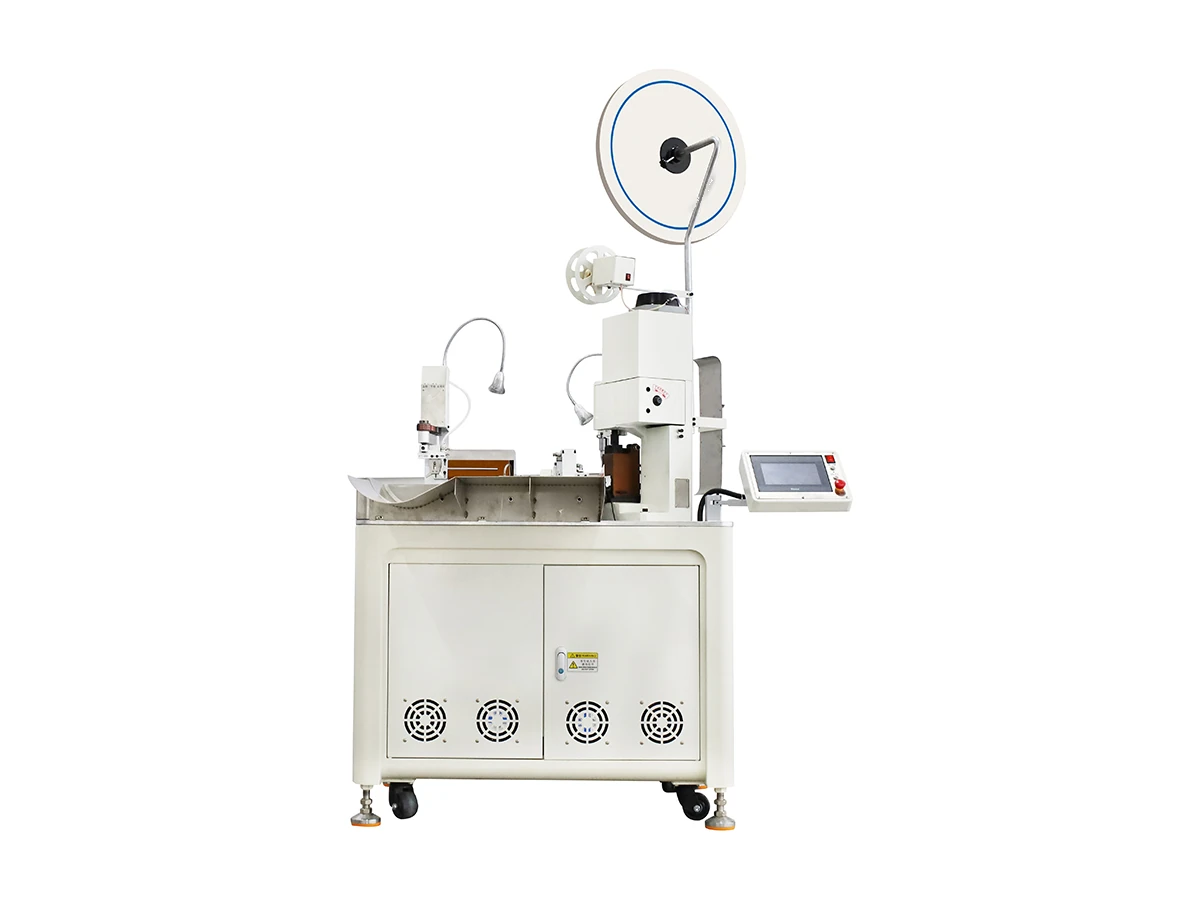
Automatic Wire Crimping and Tinning Machine for AWG 14–28 Leads
Model WM-3201
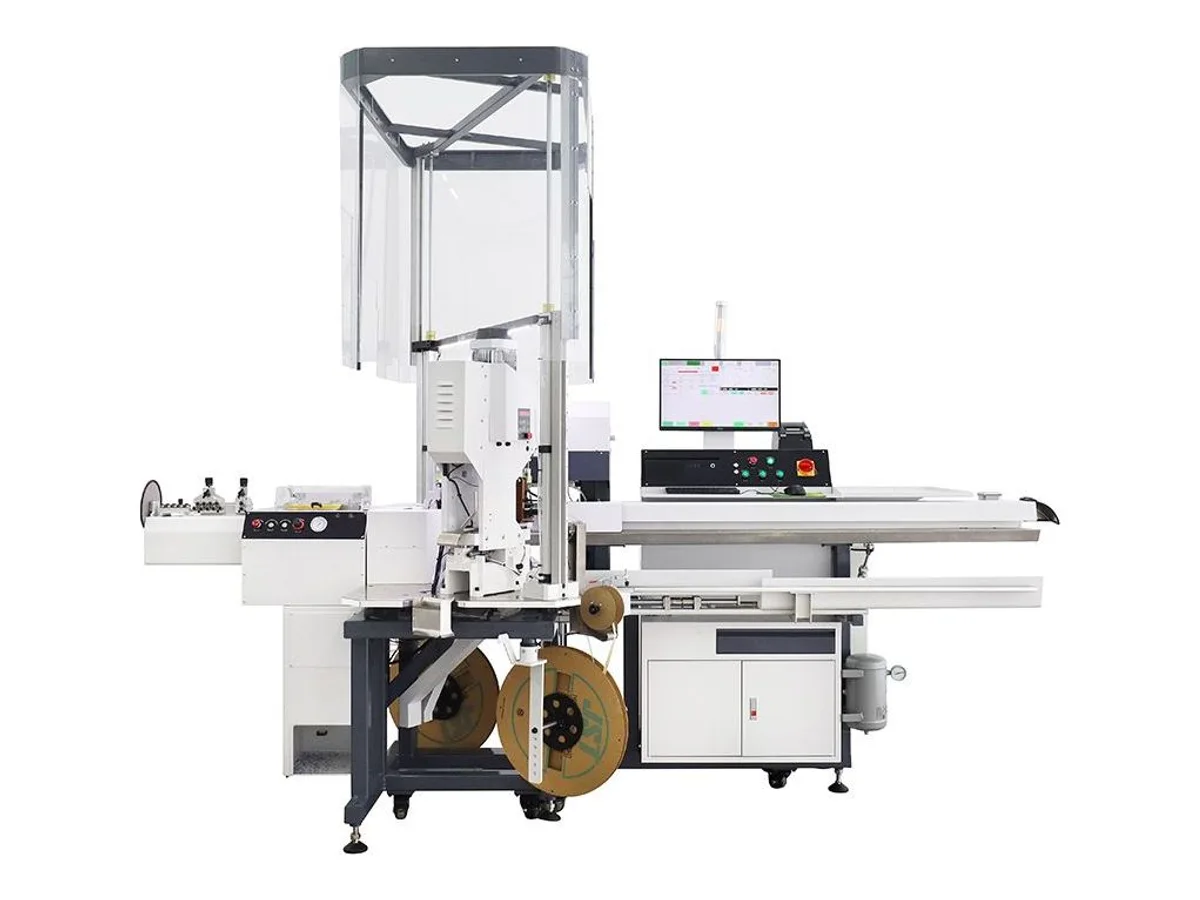
Fully Automatic Double-End Terminal Crimping Machine with Optional Waterproof Seal Stations
Model WM-390
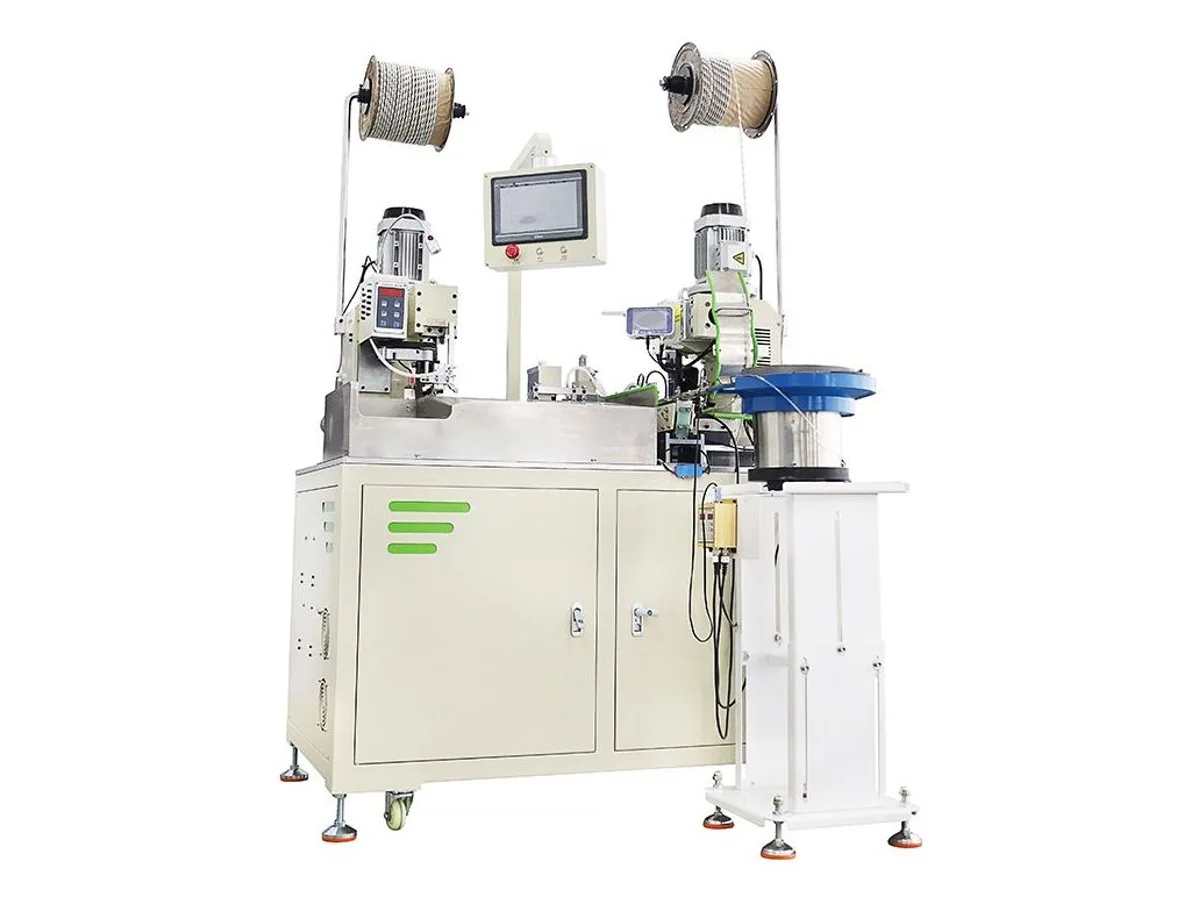
Fully Automatic Double-End Terminal Crimping and Single-End Soft Sleeve Inserting Machine, AWG 12–32
Model WM-3225